Key takeaways
- September is the best month to scarify and aerate
- If the spongy layer of thatch is over 1cm thick, it's time to scarify
- Hollow-tine aerating, which pulls out little plugs of soil, works best on packed-down lawns
- Have grass seed ready and overseed straight after scarifying
- Your lawn will look rough for a few weeks, then come back thicker
- Aerate busy areas every year and the rest of the lawn every two or three years
Every lawn picks up two problems over time. Dead stuff builds up on the surface, and the soil underneath gets packed down by feet, rain and mowing. Together they starve the grass of air and water. The lawn thins, moss moves in and bare patches appear.
Scarifying and aerating fix both. One clears out the dead layer, the other opens up the soil. A tired, patchy lawn in September can be thick and green by the next spring.
Here’s when and how to do each job, which tools to use and how to help your lawn recover. To see where these jobs fit with mowing and feeding through the year, see our lawn care calendar. If weeds and moss are a problem too, read our guide to lawn weed identification and control.
What is thatch and why does it build up?
Thatch is the layer of dead grass, moss and old roots that collects between the green blades and the soil. Every lawn makes some, as grass naturally sheds old growth.
A thin layer is actually good for a lawn. It cushions it and helps keep moisture in. Trouble starts when it gets more than about 1cm thick. Then it turns into a spongy mat that:
- Stops water soaking into the soil, so rain runs off
- Keeps feed from reaching the roots
- Holds damp at the surface, which moss and lawn diseases love
- Starves the roots of air
Thatch builds up faster on lawns that are fed heavily or watered a lot. Wondering about clippings? Our guide on whether to leave grass clippings on the lawn explains why short clippings from regular mowing rarely cause thatch.
Tip: Push your finger into the lawn. If you feel a spongy, fibrous layer between the grass and the firm soil, that’s thatch. Anything over 1cm needs sorting.
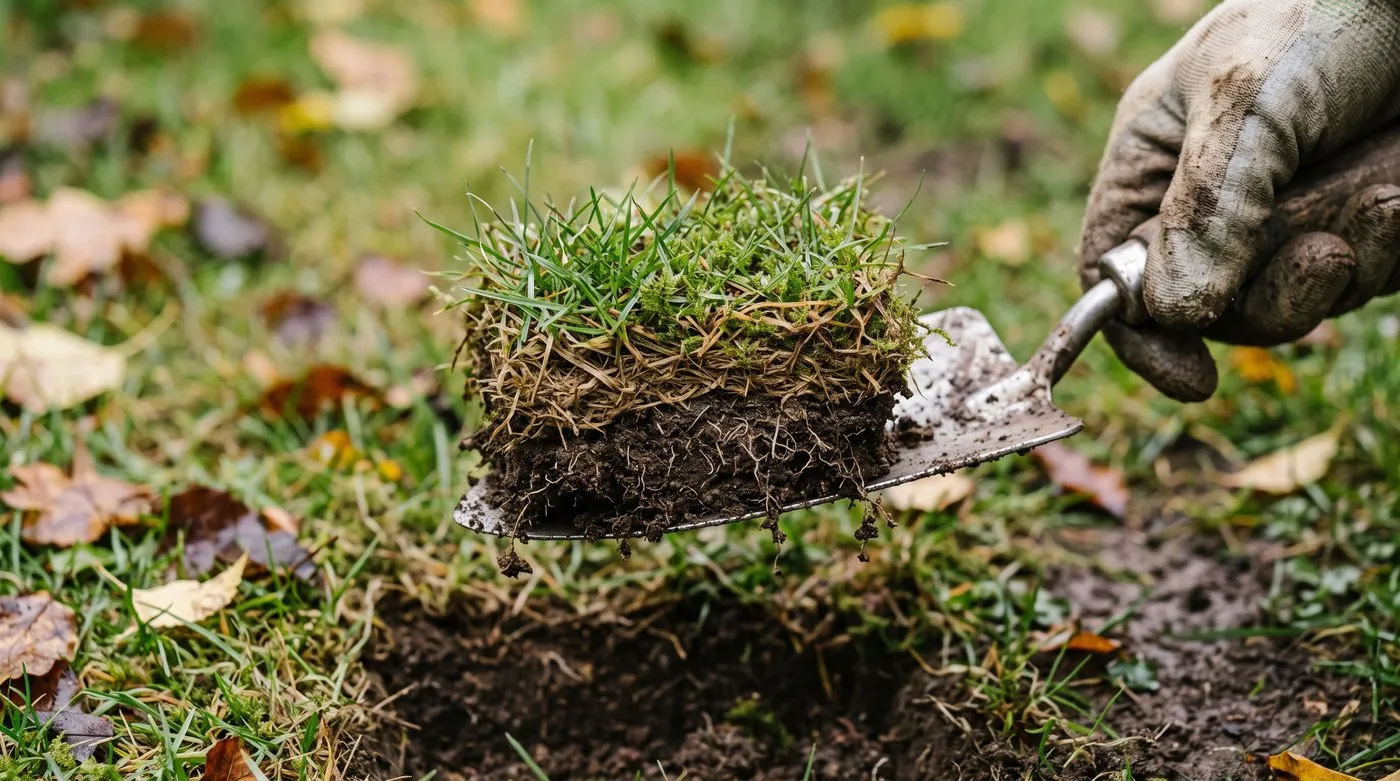
A thin layer of thatch is fine. Once it’s more than about 1cm thick it soaks up water and feed before they reach the roots.
When to scarify your lawn
September is the best month to scarify in the UK. The soil is still warm from summer, the rain is back and the grass is growing strongly. That gives it plenty of time to recover before growth slows in November.
Autumn scarifying (September to early October)
This is the main time. A thorough scarify clears most of the thatch and opens up the surface for new seed. Seed sprouts quickly in the warm soil and settles in before winter, ready to thicken the lawn in spring.
Spring scarifying (March to April)
In spring, just do a light scarify to clear winter moss and bits. Don’t go deep, as the lawn won’t have time to recover before summer heat and dry spells. Use a spring-tine rake rather than a machine, and work in one direction only.
It fits in nicely with your other spring gardening jobs. Give the lawn a spring feed afterwards to get it growing.
When not to scarify
Skip it in summer (June to August), when the grass is struggling with heat and drought. Never scarify frozen or waterlogged ground. If your lawn is brand new, sown or turfed in the last 12 months, give it time to settle in first.
Scarifying tools compared
The right tool depends on the size of your lawn and how much thatch there is.
Spring-tine rake
The simplest option. A spring-tine rake has bendy, curved tines that comb through the grass and drag out thatch. It’s fine for small lawns and a light spring scarify, but hard work on anything bigger.
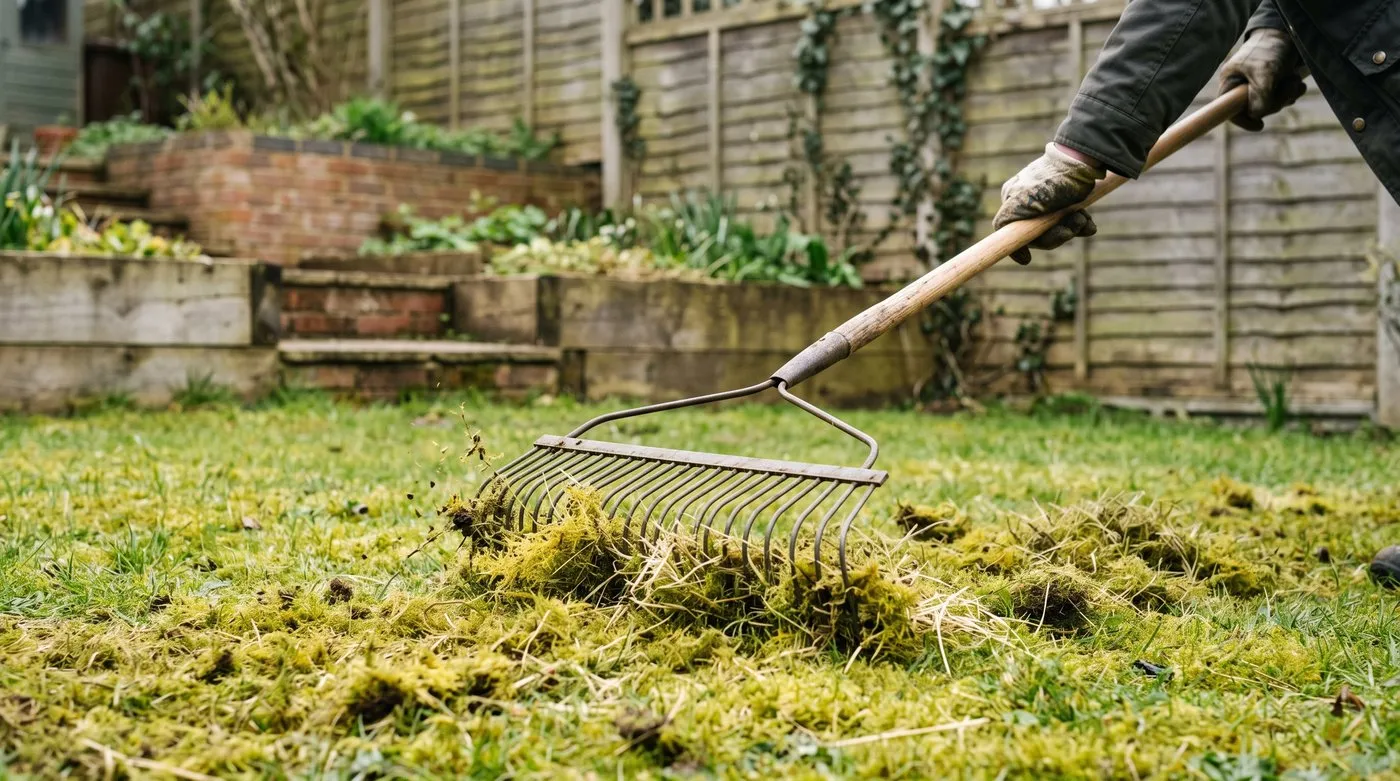
A spring-tine rake is all you need for a light spring scarify. Work in one direction only so the grass isn’t torn up.
Electric scarifier
A machine with spinning blades or tines that cut through the thatch. Electric scarifiers cope well with an average garden lawn. Most let you set the depth, so you can control how hard they work.
Petrol scarifier
For large lawns, a petrol scarifier has more power and cuts a wider strip. It’s heavier and noisier, but clears thick thatch in one go.
Tip: If you only scarify once a year, hiring a machine usually makes more sense than buying one. Hire shops tend to have them from late August through October.
How to scarify a lawn step by step
Here’s the order to do it in.
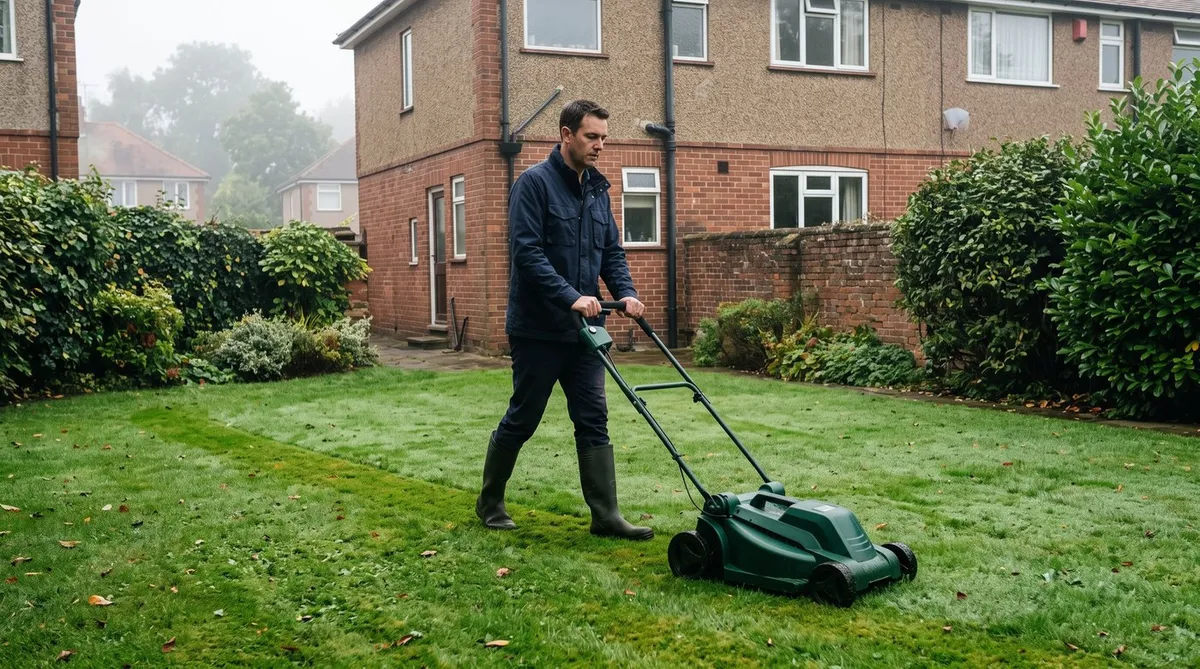
1. Mow short. Cut to 2-3cm, about half the usual summer height, and collect the clippings. This lets the scarifier reach the thatch without clogging.
2. Set the depth. Start with the blades just scratching the surface, then go a little deeper on later passes. Too deep at first and you tear out healthy grass with the thatch.
3. Work in straight lines. Go up and down in overlapping rows, as if you were mowing. Keep moving, as stopping in one spot can gouge the lawn.
4. Go across. Do a second pass at right angles to the first. This catches the thatch you missed.
5. Rake it all up. You’ll be amazed how much comes out. Add it to your compost heap in thin layers, mixed with green material.
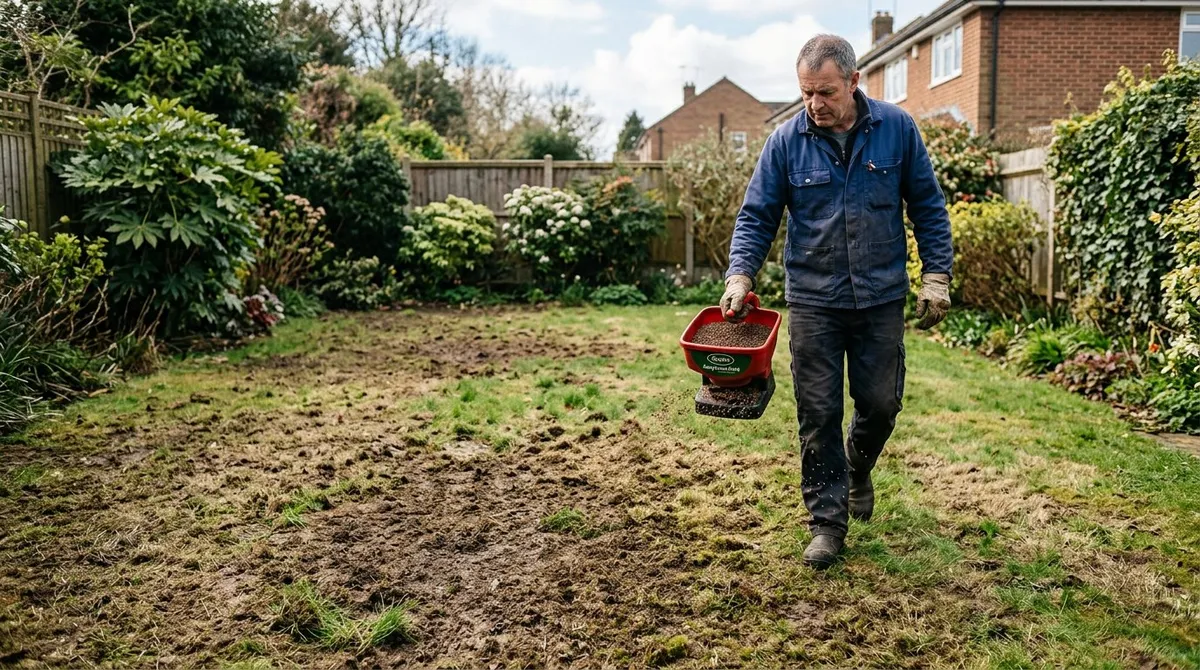
6. Overseed straight away. The bare soil is perfect for new seed. Scatter grass seed at 25-35g per square metre and rake it in lightly. There’s more on this below.
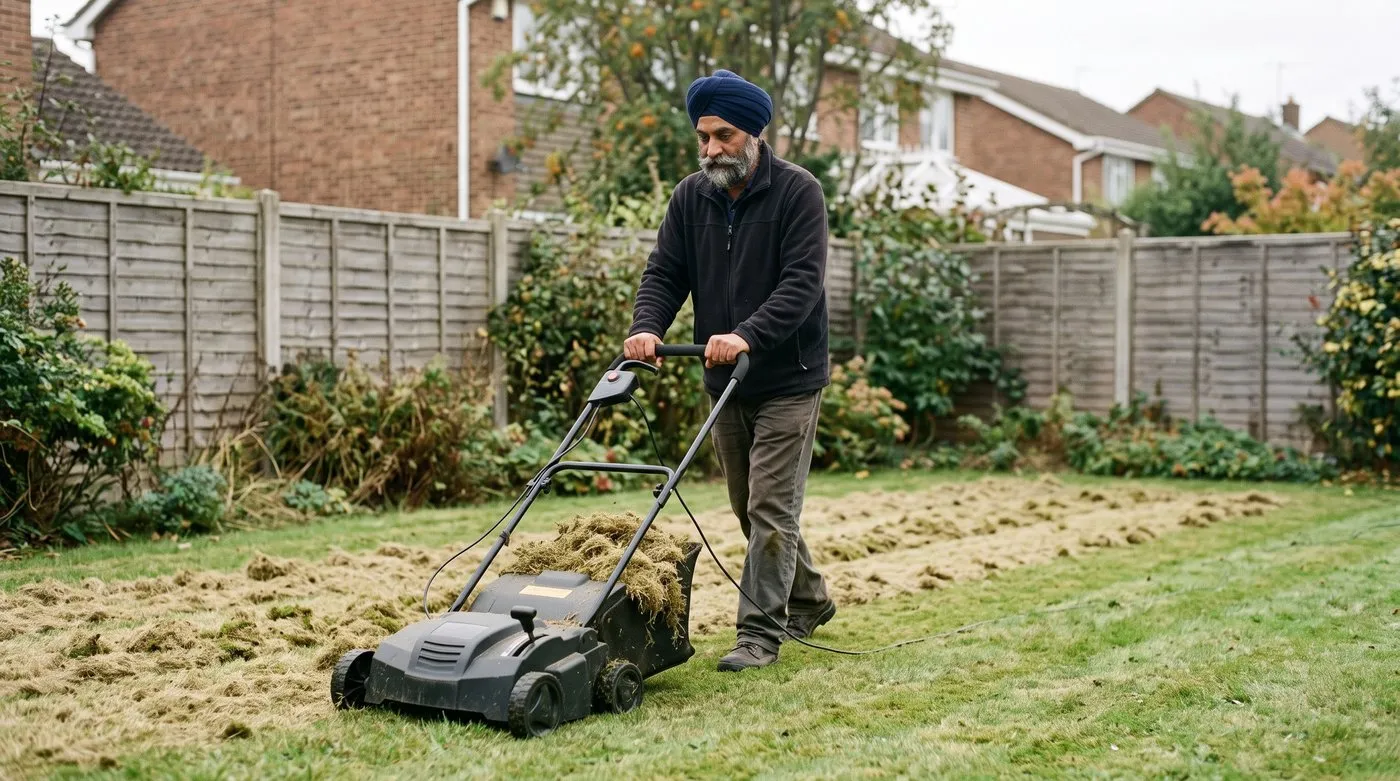
Mow short first, then go up and down in overlapping rows and do a second pass at right angles. Keep moving so it doesn’t gouge.
What is lawn aeration?
Aerating makes holes in the soil so air, water and food can get down to the roots. Over time, feet, mowing, play and rain pack the soil down. Packed soil has fewer air spaces, so roots struggle and water can’t drain away.
Signs your soil is packed down:
- Puddles sitting on the lawn after rain
- Moss growing even in sunny spots
- Grass thinning even though you feed it
- Soil that feels rock-hard when you push in a screwdriver
It’s worst on clay soils and on busy routes, such as paths across the lawn, round the washing line and near doors. Greater plantain often shows up on these worn routes, so check our greater plantain lawn guide before deciding how to tackle it. On heavy clay, our guide on how to improve clay soil has more ideas that work well alongside aerating.
Hollow-tine vs solid-tine aeration
There are two main ways to aerate, and they suit different lawns.
Hollow-tine aeration
A hollow-tine aerator pushes hollow tubes into the ground and pulls out little plugs of soil. The holes left behind stay open, so air, water and roots can get in.
It’s the best choice for badly packed soil. You can leave the plugs on the lawn to crumble away over a few weeks, or rake them up and compost them.
Best for: clay soils, busy family lawns, lawns that puddle or drain poorly.
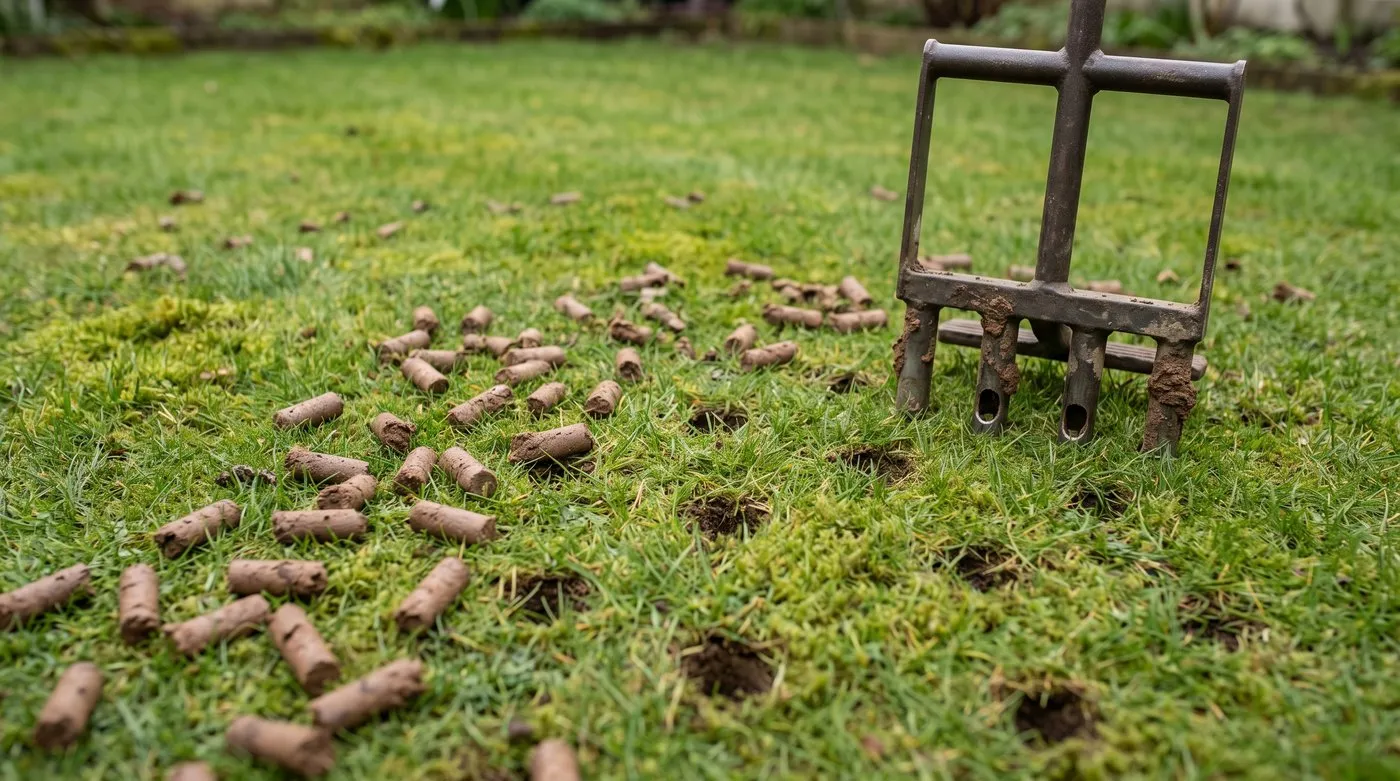
Hollow tines pull out plugs of soil, leaving holes that stay open for air, water and roots. Leave the plugs to crumble or rake them up.
Solid-tine aeration
A solid-tine aerator pushes solid spikes into the ground, squeezing the soil sideways. It’s quicker and easier, but doesn’t do as much on badly packed soil, and can even squash the soil round each hole.
A garden fork is the simplest version. Push it 10-15cm deep every 15cm or so across the lawn. Spiked rollers and machines speed things up.
Best for: lightly packed lawns, sandy soils, a yearly once-over on lawns that don’t get much wear.
Scarifying vs aerating at a glance
| Scarifying | Aerating | |
|---|---|---|
| What it does | Clears thatch and moss from the surface | Loosens packed soil underneath |
| Best time | September (thorough), March to April (light) | September to October, or March to April |
| Tools | Spring-tine rake, electric or petrol scarifier | Garden fork, hollow-tine aerator |
| How often | Once a year | Every 1-2 years, busy areas every year |
| How it looks after | Thin and rough for a few weeks | Small holes for a couple of weeks |
| Follow up with | Overseeding and a feed | Top-dressing and a feed |
When to aerate your lawn
Autumn (September to October) is the best time, the same as scarifying. Aerate straight after scarifying in the same session. The soil is soft enough to work but not waterlogged.
Spring (March to April) is the second chance. Aerate before your spring feed so it gets down to the roots. It goes well with a light scarify and some lawn sand to tackle moss.
Avoid aerating in summer drought or a soggy winter. Dry soil is too hard to get into, and wet soil smears and seals the holes shut.
How to aerate a lawn step by step
1. Mow the lawn. Cut it to its normal height first.
2. Water if it’s dry. Damp soil is much easier to aerate. If the ground feels hard, water the day before. The tines should go in smoothly with a firm push of your foot.
3. Work in rows. Go in straight lines, with holes 10-15cm apart. On a small lawn, a garden fork does the job. Push it in fully, rock it gently back and forth, then pull it out.
4. Leave the plugs (hollow tines only). They crumble away in a few weeks. If they bother you, run a rake over them once they’re dry.
5. Top-dress. Brush a mix of sharp sand and fine compost into the holes. This stops them closing up and helps drainage for the long run.
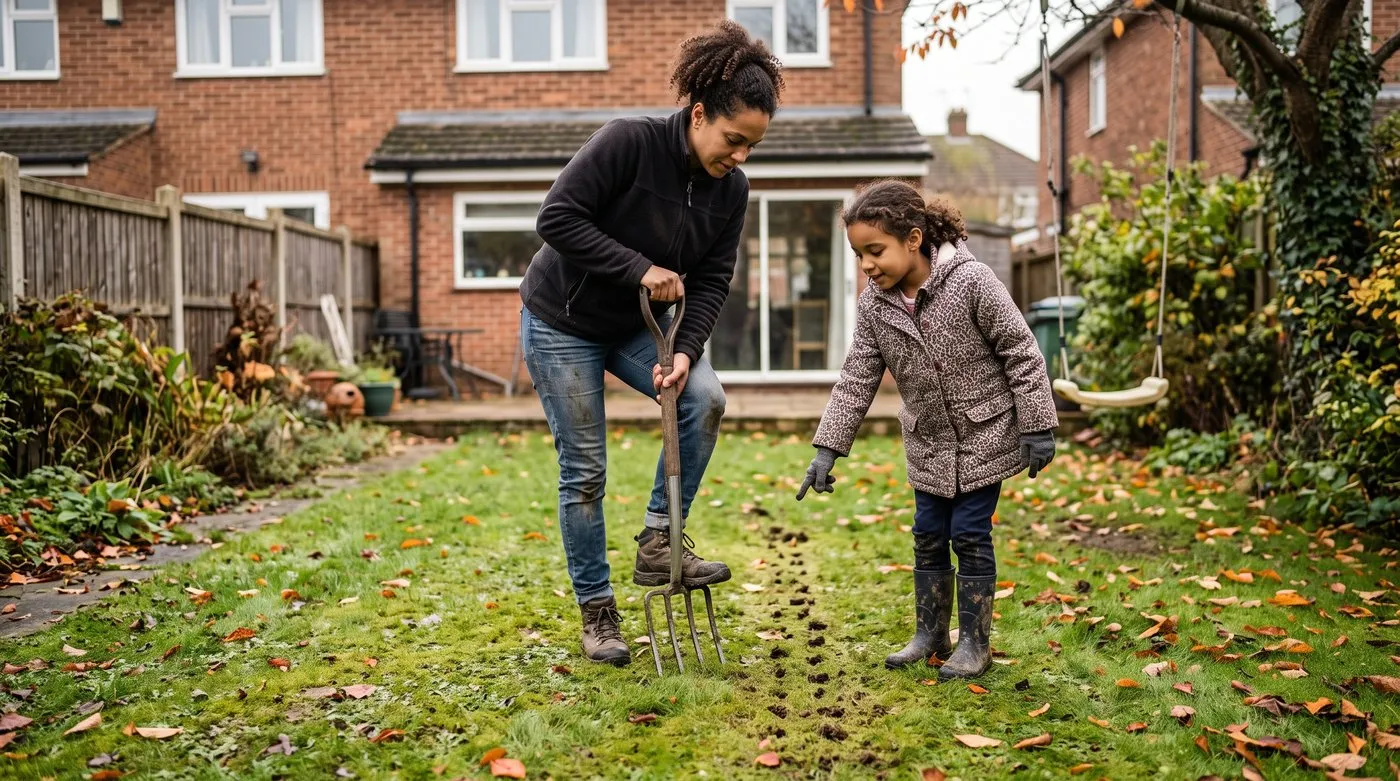
On a small lawn a garden fork does the job. Push it in fully every 10-15cm, rock it gently and pull it out.
Top-dressing after aeration
Top-dressing fills the holes and smooths out small bumps. A good mix is:
- 3 parts sharp sand (horticultural, not builders’ sand)
- 1 part loam (sieved topsoil)
- 1 part garden compost or peat-free compost
Mix it well and spread about 2-3kg per square metre. Brush it into the holes with a stiff broom or the back of a rake. The sand helps drainage, especially on clay, and the compost feeds the soil.
On badly drained lawns, add a bit more sand. On sandy soils that already drain fast, use more compost to hold moisture. You can make your own compost for the mix too, and our guide on how to make compost shows you how.
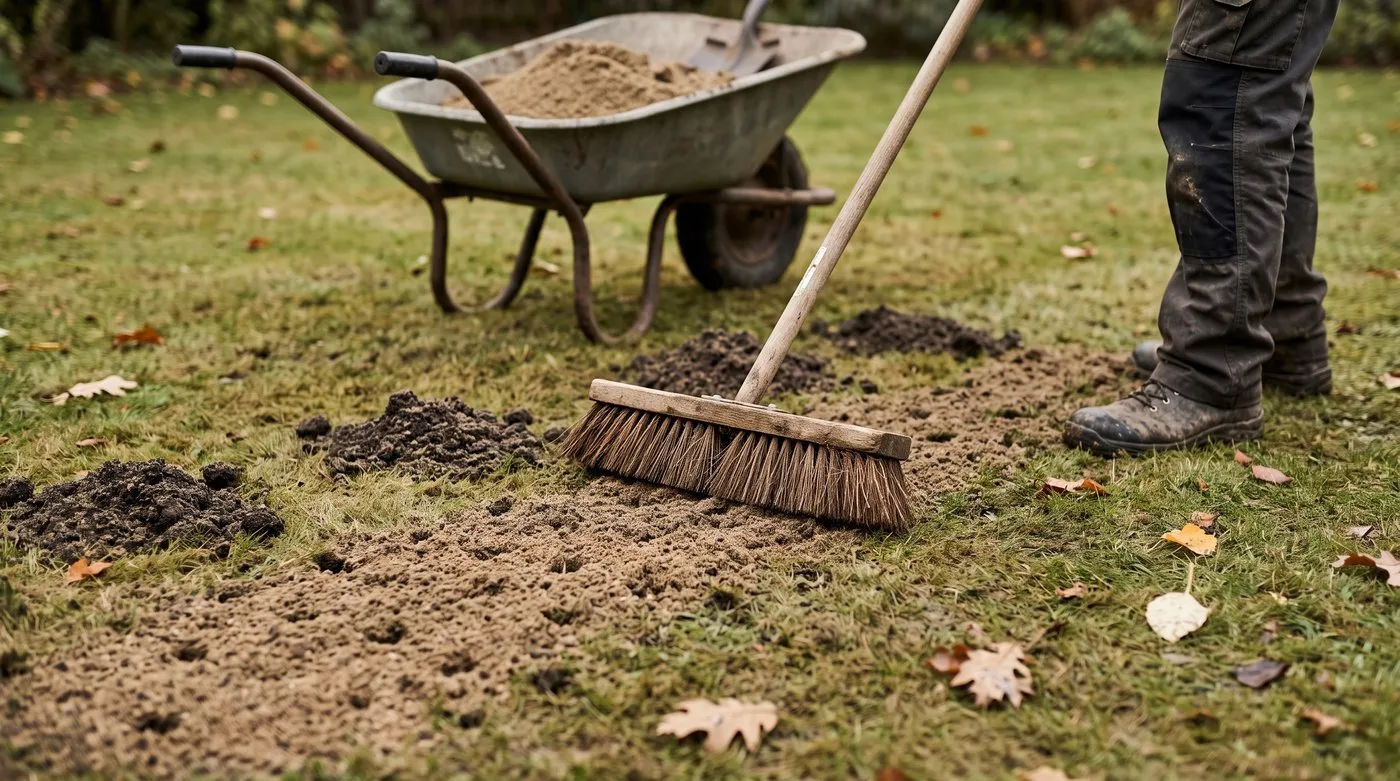
Brushing a sand and compost mix into the holes stops them closing up. Use more sand on clay and more compost on sandy soil.
Overseeding after scarifying
Scarifying leaves bare soil, which is perfect for new grass seed. Sow within a couple of days of scarifying, while the surface is open and nothing else has moved in.
Choosing grass seed
Pick a mix that suits your lawn. Most UK garden lawns are a mix of ryegrass and fescues. Shade mixes have more fescue. Hard-wearing family mixes have more ryegrass.
How much to sow
Scatter 25-35g per square metre, a little less than you’d use for a new lawn. Spread by hand or with a small spreader for even cover, then rake lightly so the seed touches the soil.
Aftercare
- Water gently and often for the first two or three weeks. Keep the surface damp until the seedlings get going. A light sprinkle twice a day in dry weather beats one big soak.
- Don’t mow until the new grass is 5-6cm tall. Set the mower high, at about 4cm, for the first couple of cuts.
- Don’t use lawn weedkiller on newly sown grass. Most will kill young grass along with the weeds, so check the label for how long to wait.
Month-by-month lawn renovation calendar
Here’s how scarifying, aerating and the other jobs fit through the year.
| Month | What to do |
|---|---|
| January | Nothing on the lawn. Order supplies and get the mower serviced. |
| February | Clear leaves and bits. Look for soggy patches and improve drainage if needed. |
| March | Light scarify with a spring-tine rake to clear winter moss. First mow at 4cm. Lawn sand for moss. |
| April | Spring feed. Overseed bare patches. Light aerating with a fork if needed. |
| May | Mow regularly at 2.5-3cm. Water seedlings from April. Spot-treat weeds. |
| June | Mow weekly. Water in dry spells. No scarifying or heavy aerating. |
| July | Keep mowing. Raise the cut to 4cm in hot, dry weather. No renovation jobs. |
| August | Late August: plan your autumn renovation. Book a scarifier and buy seed and top-dressing. |
| September | Main renovation time. Mow short. Scarify. Hollow-tine aerate. Overseed. Top-dress. Autumn feed. |
| October | Keep watering new seed if it’s dry. Aerate now if you missed September. Mow less often. |
| November | Last mow at 4cm. Clear fallen leaves every week. No scarifying or aerating. |
| December | Keep off the lawn when it’s wet. Nothing else to do. |
What to expect as your lawn recovers
Your lawn will look worse before it looks better. That’s completely normal.
Day 1: The lawn looks stripped, thin and patchy, with bare soil showing. It’s a bit of a shock, but it’s the start of a healthier lawn.
Week 1 to 2: In warm, damp weather, the first tiny shoots from new seed appear. The old grass starts to recover and spread.
Weeks 2 to 3: Seedlings are easy to see now, and the lawn starts to green up as gaps fill.
Weeks 4 to 6: The lawn already looks better than before. The new grass blends in. It’s time for a first light mow, with the blades at 4cm.
After two or three months: The lawn is thicker and greener than before. Rain soaks in instead of sitting on top, and moss has less of a chance.
Tip: Take a photo before you start and another a couple of months later. Seeing the difference will spur you on to do it every year.
Common mistakes to avoid
Scarifying too hard in spring
A deep scarify in March or April leaves the lawn struggling through summer before it has recovered. Keep spring to a light rake and save the big job for September.
Going too deep on the first pass
Blades set too low rip out healthy grass along with the thatch. Start shallow and go a little deeper each time. Two gentle passes beat one brutal one.
Skipping the seed
Scarifying leaves bare soil. If you don’t sow it, weeds and moss will fill the gaps faster than your grass can. Have seed ready before you start.
Aerating soggy soil
In waterlogged soil, the tines smear the holes shut. Wait until the ground is damp but not squelchy.
Forgetting to feed
Scarifying and aerating are hard on the grass. An autumn lawn feed helps the roots and toughens the grass for winter. Put it on within a week or so of finishing.
Walking on the new grass
Keep off newly seeded areas for about four weeks. Mark them with string or canes if children, dogs or shortcut-takers are likely to wander over.
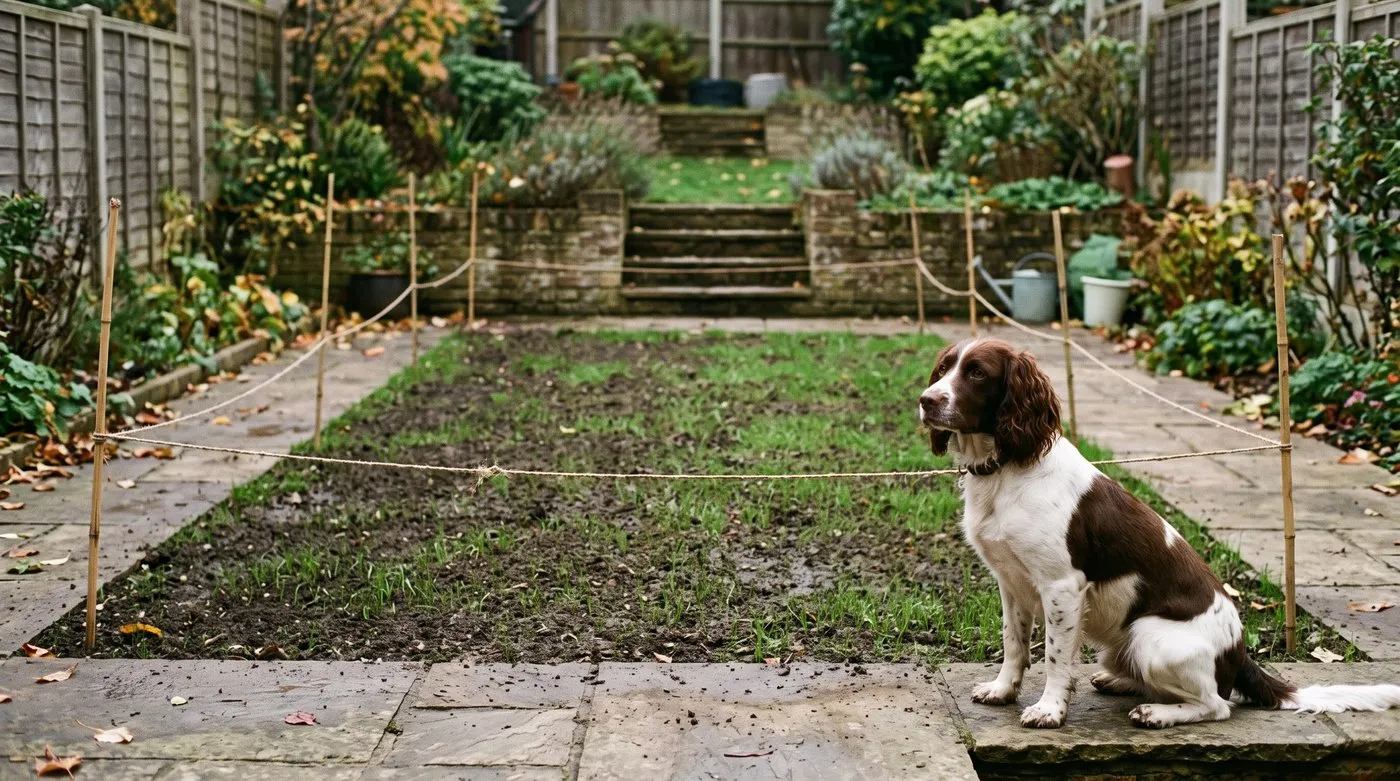
Keep feet and paws off new grass for about four weeks. A few canes and some string make it clear where not to walk.
How compost and mulch help your lawn
Good compost makes better top-dressing. Your own homemade compost, sieved fine, is perfect for the mix and costs nothing.
On heavy clay, the soil packs down again quickly. Our guide on improving clay soil explains how organic matter and sand help over time. In the beds next to the lawn, using mulch stops soil washing onto the lawn edges.
The RHS lawn care pages are handy for feeding, watering and seasonal jobs through the rest of the year. For the full year’s plan, see our lawn care calendar for UK gardens.
Putting it all together
One autumn session can transform a tired lawn. Block out a Saturday in September. Mow short, scarify in two directions, hollow-tine aerate the packed areas, overseed, top-dress with sand and compost, and give it an autumn feed. Allow a few hours for an average garden.
The lawn will look alarming for a fortnight. A few weeks later it’ll be thicker and healthier than it’s been all year. By spring you’ll have a dense, green lawn that drains well, keeps moss at bay and bounces back from summer use.
It’s noisy, messy and tiring work, but nothing else does more for a lawn.
Frequently asked questions
When is the best time to scarify a lawn in the UK?
Early autumn, usually September. The soil is still warm, the rain is back and the grass keeps growing for weeks, so it can recover before winter. A light spring scarify can clear moss. Avoid a heavy one in spring, as the lawn may not recover before dry summer weather.
How often should I scarify my lawn?
Once a year for most UK lawns. Mossy or badly drained lawns may like a light spring scarify plus a deeper one in autumn. Doing it too often weakens the grass. If the thatch is thin, skip a year. Part the grass and look at the spongy layer above the soil to check.
What is the difference between scarifying and aerating?
Scarifying clears the surface, while aerating loosens the soil underneath. Scarifying pulls out thatch and moss. Aerating makes holes to ease packed-down soil. They fix different problems but work well together. Scarify first, then aerate, then overseed and top-dress.
Can I scarify and aerate on the same day?
Yes, and it saves time. Scarify first to clear thatch and moss. Then aerate while the surface is open. Finish by overseeding and top-dressing, so the lawn recovers from everything at once. Pick a mild day when the soil is damp but not soggy.
How long does a lawn take to recover after scarifying?
Several weeks, so be patient. It looks thin and rough at first. If you overseed, new grass usually shows within a couple of weeks. Getting back to a thick, even lawn takes longer and needs moisture and mild weather. Water in dry spells to help the new grass along.
Should I use a hollow-tine or solid-tine aerator?
Hollow tines are better for packed-down lawns. They pull out small plugs of soil, leaving room for air, water and roots. Solid tines push soil sideways, which is fine on lightly packed ground but can make heavy compaction worse. Use hollow tines on clay and busy lawns, then brush top-dressing into the holes.
Do I need to water the lawn after aerating?
Only if it stays dry for a couple of days. The holes help water reach the roots, so you need less than usual. Don’t flood it. A gentle, steady watering encourages roots to grow down into the loosened soil. Autumn rain often does the job for you.
Our team produces practical UK gardening guidance from source research, contributor records and established horticultural practice. Editorial standards are overseen by Matt W.