Key takeaways
- Moth orchids are the easiest orchids and great for beginners
- Soak the roots for 10-15 minutes every 7-10 days, then drain well
- Silver or grey roots mean water now, green roots mean wait
- Cooler nights of 13-16C for 3-4 weeks in autumn help it flower again
- An east or west-facing windowsill gives the right light without scorching
- Repot every 1-2 years in orchid bark, never ordinary compost
Orchids have a fussy reputation, but that belongs to rare collectors’ plants. The moth orchid (Phalaenopsis), sold in every garden centre and supermarket, is very forgiving. It’s one of the easiest house plants for beginners. All it asks for is good light, a regular soak and a cool spell once a year to flower again.
Here’s how to keep a moth orchid healthy and flowering in a UK home. The same tips work for most orchids sold on the high street.
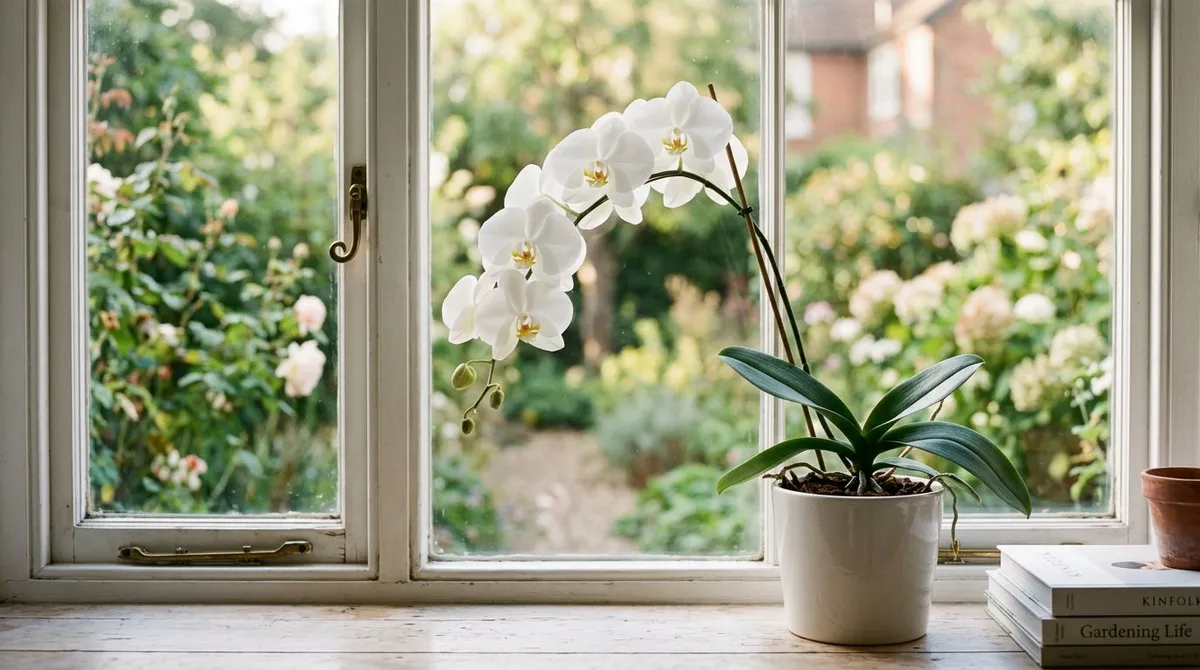
 A moth orchid in flower on a UK windowsill. East-facing windows give gentle morning light.
What light do orchids need indoors?
Give your orchid bright light without hot direct sun. In the wild, moth orchids grow on tree branches under a leafy canopy. An east or west-facing windowsill is perfect in the UK. Morning sun from the east is gentle, and late afternoon light from the west is warm but not too strong.
Avoid south-facing windows unless you have a net curtain. Strong midday sun scorches the leaves, leaving brown or yellow patches that never go away. North-facing windows are usually too dark, especially in winter. If your orchid grows leaves but never flowers, not enough light is a likely reason.
A low light houseplant like a ZZ plant copes with shade. Orchids don’t.
How to water orchids correctly
Water by soaking every 7-10 days. Skip the ice cube trick you may have heard about. Orchids come from warm places, and a tepid soak suits them much better.
Lift the inner pot out of its decorative pot and stand it in tepid water for 10-15 minutes. Let it drain completely before putting it back. Water left sitting in the bottom of the outer pot rots the roots, which is the most common way orchids die.
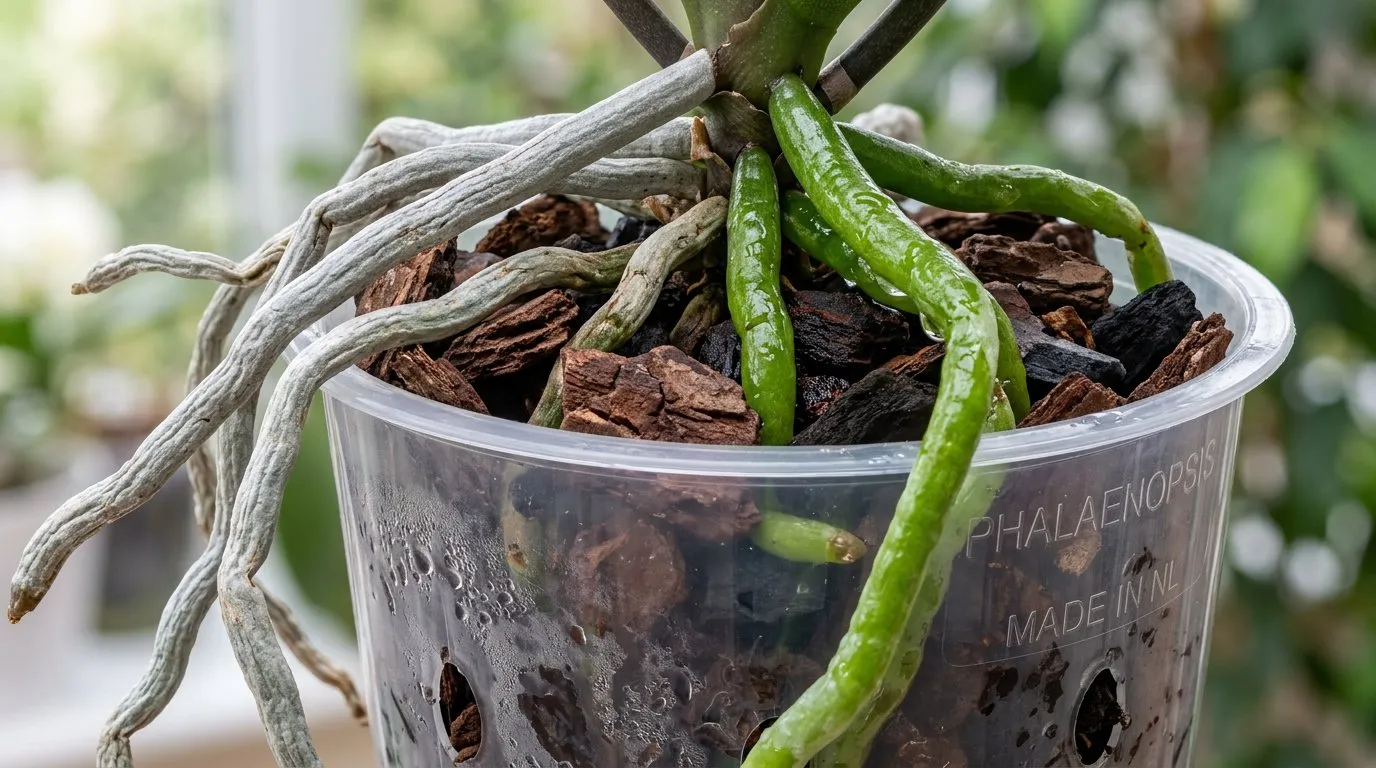 Root colour tells you when to water. Silver or grey means thirsty. Green means it’s fine.
Reading root colour
The roots are your best watering guide. Green roots are happy. Silver or grey roots are dry and need a drink. Dark brown or mushy roots are rotten and should be snipped off with clean scissors. Healthy roots feel firm. Once you can read the roots, there’s no more guesswork. For more on watering wisely, see our water efficient gardening guide.
Seasonal watering adjustment
In summer, homes are warmer and the bark dries faster, so water about every 7 days. In winter, growth slows, so every 10-14 days is usually enough. Always check the roots rather than sticking to a strict timetable.
How to make an orchid rebloom
The secret to new flowers is a cooler spell. Moth orchids need nights of about 13-16C for 3-4 weeks to start a new flower spike. Without it, they just grow leaves.
Autumn is the perfect time. In September or October, move your orchid to a bright spot in a cooler room, such as an unheated spare bedroom or porch. Keep days around 18-24C. Warm days and cool nights tell the plant it’s time to flower.
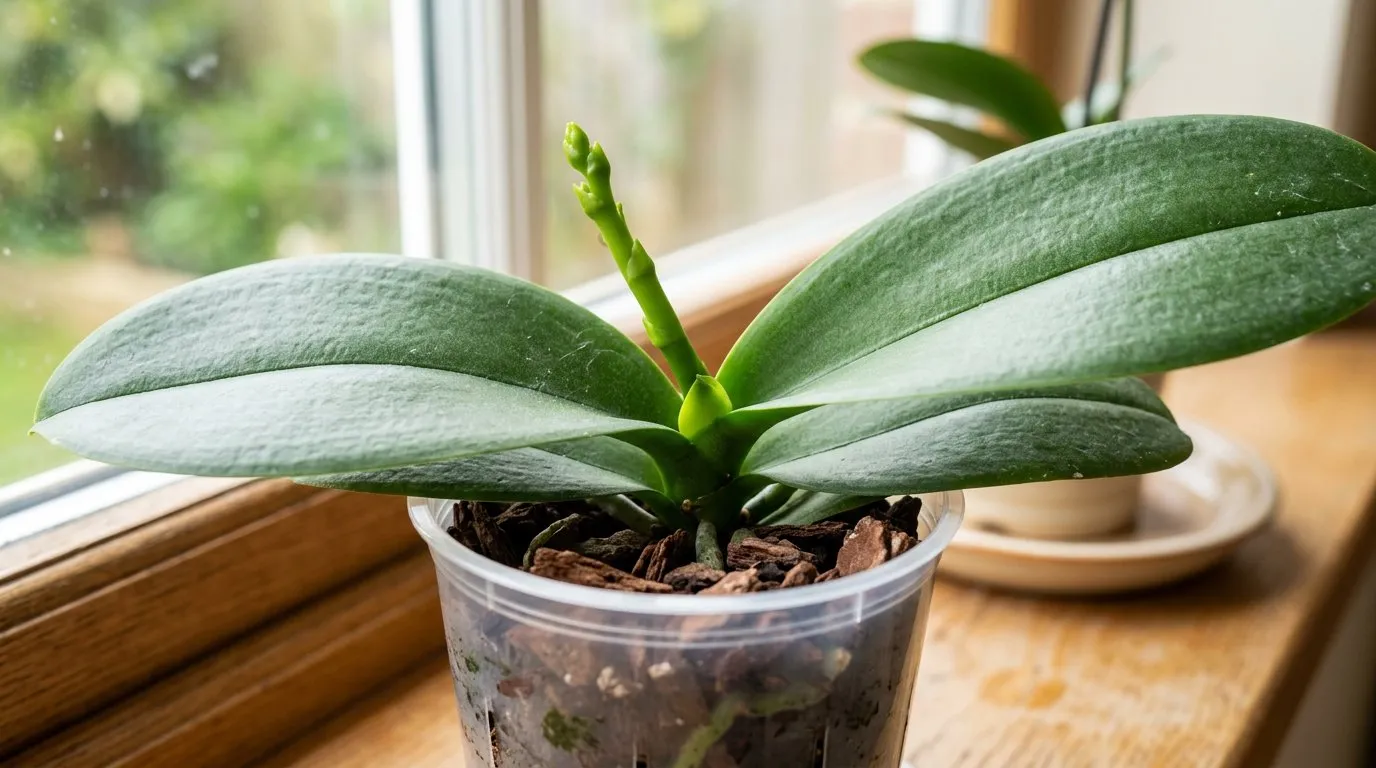 A new flower spike appearing after a cool autumn spell.
After 3-4 weeks you should spot a new spike pushing out from between the leaves. Move the plant back to its usual bright spot. The spike takes a couple of months to grow and open its first flower. Tie it loosely to a cane as it grows. The RHS orchid growing guide has more help with getting orchids to flower again.
Feeding and fertiliser
Orchid bark has hardly any food in it, so feeding matters. In spring and summer, use an orchid feed at half strength when you water.
Every few waterings, use plain water only to rinse out any build-up of feed in the bark. In winter, feed once a month or stop if the plant is resting.
How to repot an orchid
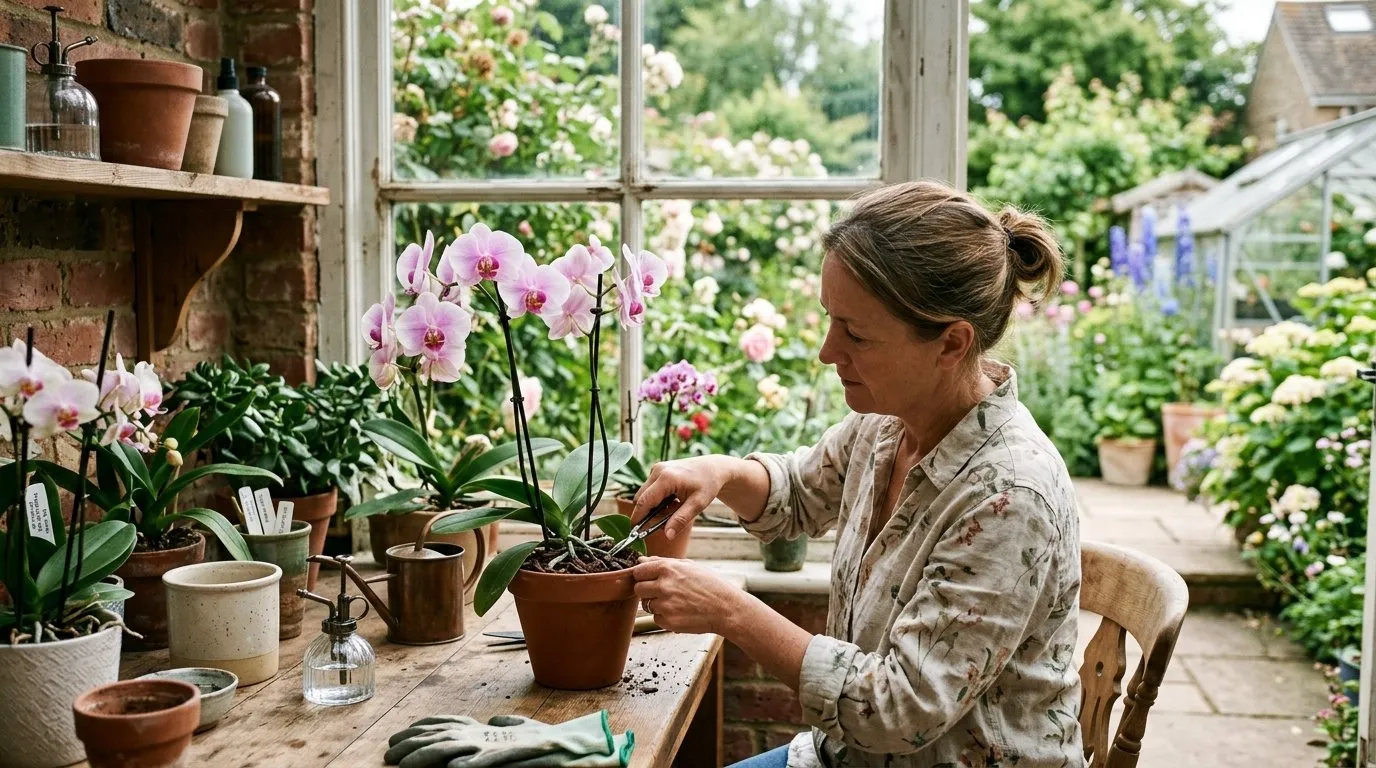
Repot every 1-2 years, or sooner if the bark has broken down into soggy mush. Old bark holds too much water and smothers the roots. Spring, just after flowering, is the best time.
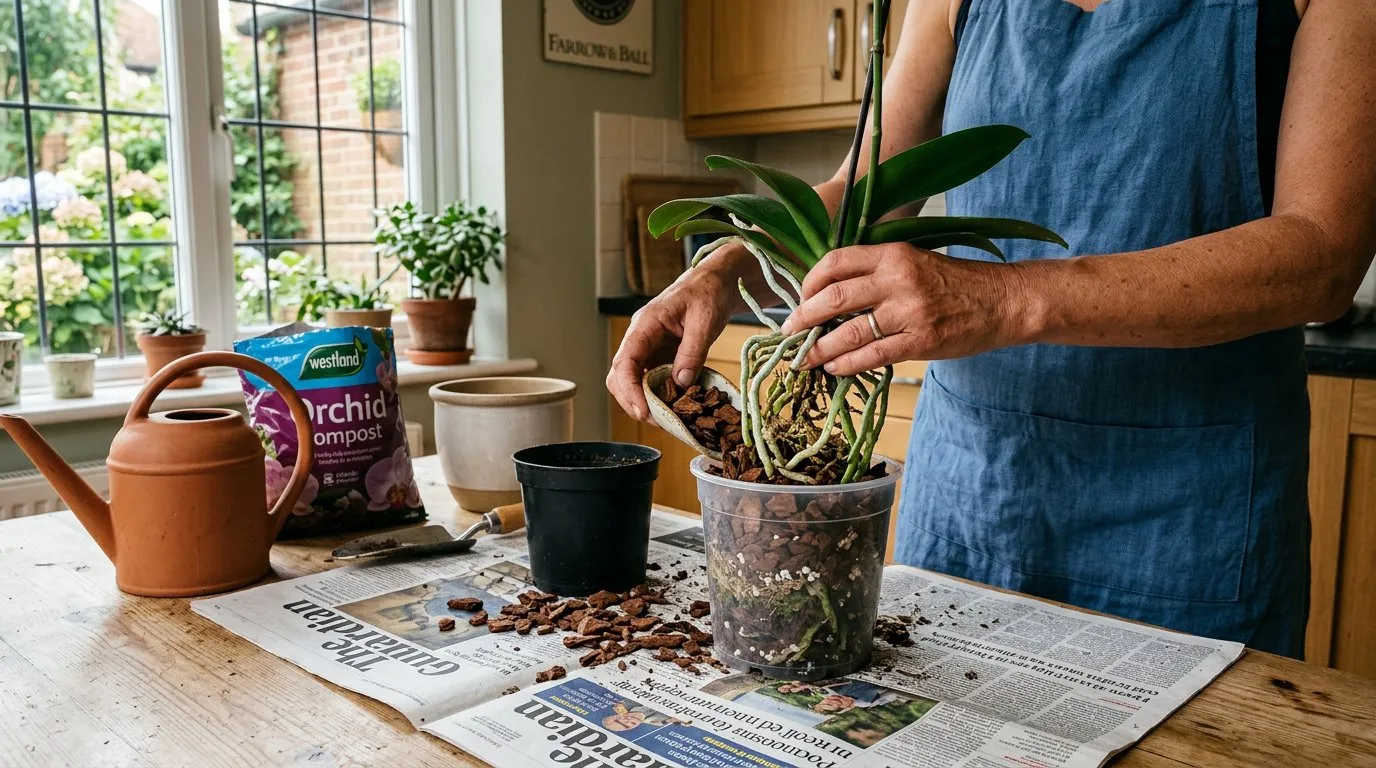 Repotting into fresh orchid bark. A clear pot lets you see the roots.
Step-by-step repotting
- Ease the orchid out of its pot and gently shake off the old bark.
- Snip off any dead or mushy roots with clean scissors. Healthy roots are firm and green or white.
- Choose a clear plastic pot only a little wider than the old one. Orchids like a snug pot.
- Put some fresh orchid bark in the base, sit the plant in and fill around the roots.
- Wait about a week before watering, so any cut roots can heal.
Never use ordinary multipurpose compost. Orchid bark gives the roots the air and drainage they need. Clear pots let light reach the roots and let you check them at a glance. It’s a small change that makes looking after indoor plants much easier.
Month-by-month UK orchid care calendar
| Month | Job | Tip |
|---|---|---|
| January | Water less | Every 10-14 days. Growth is slow. |
| February | Check for pests | Mealybugs look like white fluff in leaf joints. |
| March | Start feeding | Half-strength orchid feed when you water. |
| April | Repot if needed | Swap old bark for fresh and trim dead roots. |
| May | Water more | About every 7 days as it warms up. |
| June | Move off south windows | The midday sun is now strong enough to scorch. |
| July | Keep the air moist | Stand it on a tray of wet pebbles in hot weather. |
| August | Keep buds safe | Keep away from fruit bowls and draughts. |
| September | Start the cool spell | Move it somewhere with 13-16C nights. |
| October | Keep it cool | Watch for a new spike after 3-4 weeks. |
| November | Back to warmth | Return it to its usual spot and stake the spike. |
| December | Leave it be | Keep the spike in one spot and feed less. |
Shift the timings a little to suit your home and how you heat it.
Common orchid problems and fixes
Crown rot
Water sitting in the crown, where the leaves meet, can rot the plant from the middle. Water by soaking the pot, never by pouring over the top. If water lands in the crown, dab it out with kitchen paper straight away.
Bud blast
Buds form on the spike but dry up and drop before opening. Draughts, sudden temperature changes and ripening fruit nearby can all cause it, and so can moving the plant once buds have formed. Once buds appear, leave the orchid where it is.
Mealybugs
These look like little white cotton tufts in the leaf joints and on the roots. Wipe them off with a damp cotton bud, and repeat every few days until they’re gone. For a bad attack, use a bug spray that’s authorised for houseplants, exactly as the label says. Home-made sprays aren’t authorised as pesticides in the UK. Check new plants before you put them near your others, as mealybugs spread quickly between plants for shade and orchids grouped on a shelf.
Yellow leaves
One lower leaf yellowing and dropping now and then is normal, as orchids shed old leaves as new ones grow. If the top leaves go yellow, suspect too much water, too much sun or hunger. Check the roots first. Healthy roots rule out a watering problem.
Getting started with orchids
A moth orchid is a great first houseplant. For a modest price you get a plant that flowers for weeks and can reflower for years. Start with one, pop it on an east-facing windowsill, check the roots before you water and give it a cool autumn spell. That’s really all there is to it.
Orchids like company. A spider plant or pothos nearby keeps the air around them a little moister. If you’d like to grow your own plants from scratch, see our guide on how to sow seeds indoors. And if you fancy a challenge, vanilla is an orchid too, and a warm, bright room can take one all the way to pods.
Now your orchid is happy, read our guide to the best house plants for beginners for more easy indoor plants for UK homes.
Frequently asked questions
How often should I water an orchid?
Every 7-10 days for a moth orchid. Soak the roots in tepid water for 10-15 minutes, then let it drain completely. Check the roots first. Silver or grey means it’s ready for a drink, green means it’s still fine. In winter, every 10-14 days is usually enough.
Why is my orchid not flowering?
It usually needs a cooler spell to start new flower spikes. Move it somewhere with nights of 13-16C for 3-4 weeks in autumn, such as a spare bedroom or bright porch. Without that cool spell, most moth orchids grow leaves but no flowers. Too little light can stop flowering too.
Should I cut the orchid stem after flowering?
Yes, cut it just above the second node below where the lowest flower was. A node is a small bump on the stem. A new flower branch may grow from there. If the whole stem turns brown and dry, cut it right back to the base.
Can orchids grow in normal potting soil?
No, they need orchid bark compost instead. Their roots need air and fast drainage. Ordinary compost stays too wet and the roots soon rot. Look for a bark-based orchid mix.
How long do orchid flowers last?
Moth orchid flowers often last for a couple of months. The flowers open one after another along the stem, so the show goes on for ages. Keep the plant away from fruit bowls, draughts and radiators to make them last.
Do orchids need direct sunlight?
No, they like bright light without hot direct sun. An east or west-facing windowsill is ideal. Strong midday sun through a south-facing window can scorch the leaves, leaving yellow or brown patches. A net curtain softens it nicely.
Our team produces practical UK gardening guidance from source research, contributor records and established horticultural practice. Editorial standards are overseen by Matt W.