Key takeaways
- Vanilla is a tropical orchid: grow it indoors at 18C or more, and never let it drop below 15C
- It wants high humidity and bright, filtered light, so a heated conservatory or greenhouse suits it best
- Start from a rooted cutting and give it a moss pole to climb
- Expect three to five years before the first flowers appear
- Each flower opens for one morning and must be hand-pollinated that day
- Pods ripen on the vine for about nine months, then need a few months of curing
You can grow vanilla in the UK, but only indoors, and it is a project that takes years. Vanilla is a climbing orchid from the forests of Mexico and Central America. Its green pods become the vanilla in your kitchen once they are cured. Outside here it would die on the first cold night. Under glass, warm and humid, it grows fast.
This guide is for anyone with a heated conservatory, greenhouse or warm, bright room who fancies the challenge. Keeping it alive is fairly easy. Getting flowers and pods takes maturity, good timing and a steady hand with a cocktail stick.
Can you grow vanilla in the UK?
Yes, as long as you can keep it warm all year. Vanilla planifolia is a tender orchid that grows as a vine, not a bush. Given a support, it climbs several metres. It has no chance outdoors in Britain, but under cover it can eventually flower and fruit.
It is one of very few orchids grown as a food crop rather than for its flowers. If you already grow tender crops under glass, it slots in nicely. People who enjoy growing saffron at home or growing turmeric under cover will recognise the patience it needs. Vanilla just asks for more warmth and a lot more time.
What temperature and humidity does vanilla need?
Keep vanilla at 18-30C and never let it drop below 15C. Steady warmth matters more than anything else. Cold nights blacken the leaves, and a long cold spell can kill the plant.
That rules out an unheated greenhouse in winter. You need a heater on a thermostat, or a warm room in the house. The greenhouse heating guide explains the options. Heating is the real cost of this crop, so many growers keep vanilla in a conservatory or spare room they already heat.
Humidity comes a close second. Vanilla grows in moist forest air, while a heated house is often quite dry. Dry air shrivels the aerial roots, yellows the leaves and makes buds drop. Mist the plant daily, stand the pot on a tray of damp gravel and group it with other leafy plants. A cheap hygrometer helps you check.
Light should be bright but filtered. Direct summer sun through glass scorches the leaves, while deep shade stops it flowering. An east or west window, or a lightly shaded greenhouse in summer, is about right.
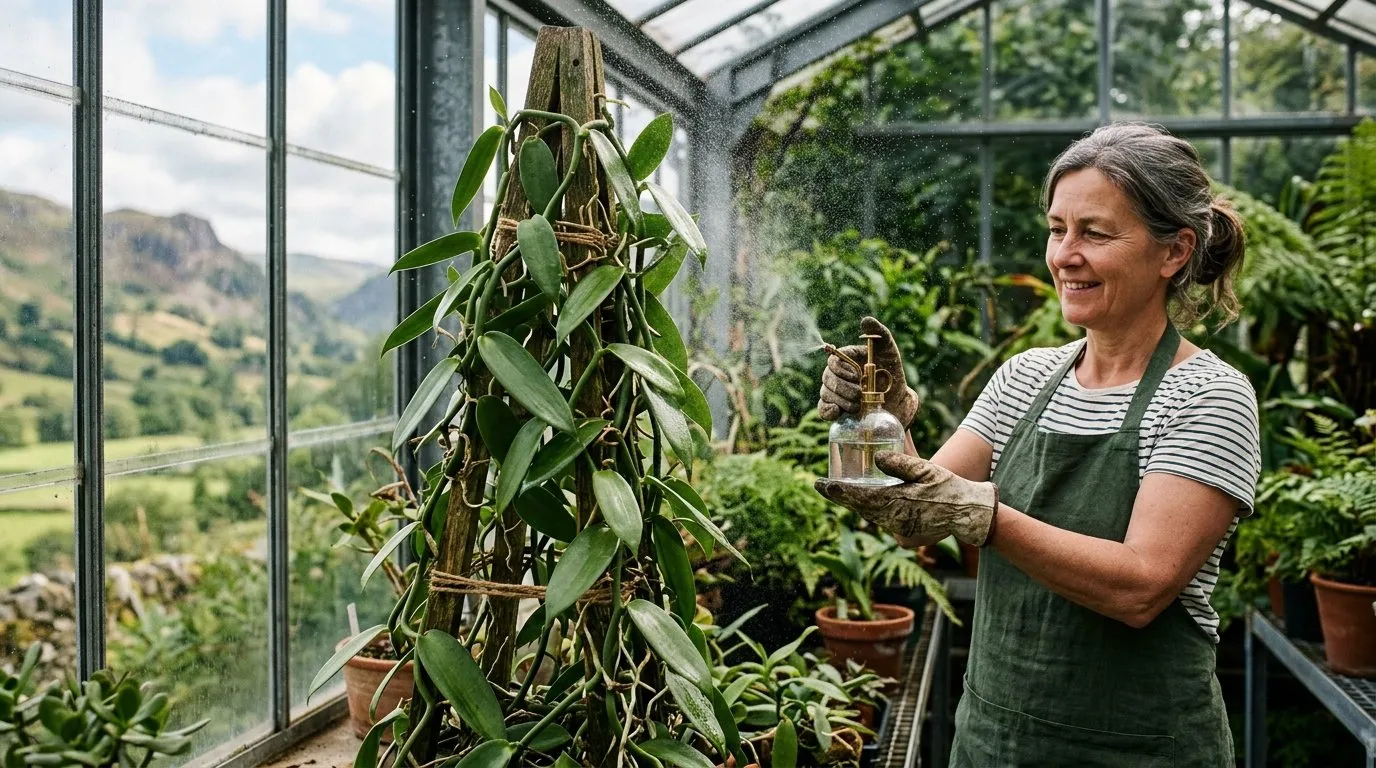
A daily misting keeps the air moist around the vine. Dry air is the quickest way to shrivel vanilla’s climbing roots.
How do you plant and support a vanilla orchid?
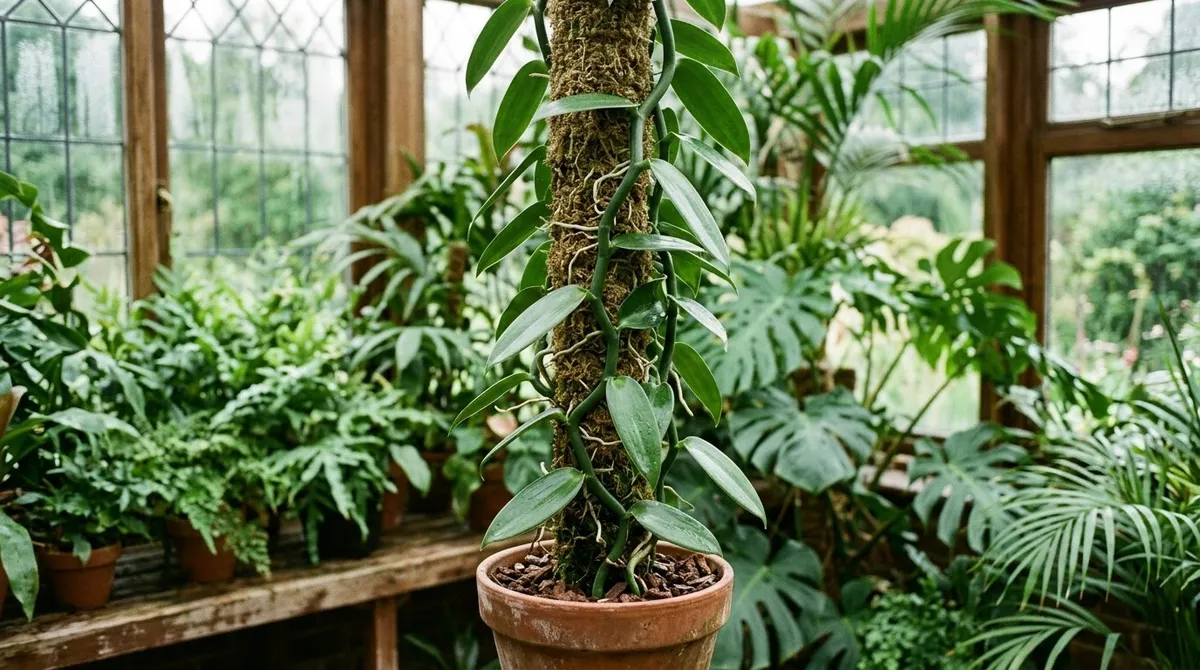
Pot vanilla in a coarse orchid mix and give it a tall support from day one. The vine climbs by gripping bark with aerial roots, the white roots that grow along the stem. A moss pole, a slab of tree fern bark or a rough wooden post does the job of a forest tree.
Use a bark-based orchid mix, or orchid bark mixed with perlite and coarse coir. Ordinary compost stays too wet and the roots rot. Choose a pot only a little bigger than the root ball.
Start with a rooted cutting from a specialist orchid or houseplant nursery. Vanilla seed is almost impossible to germinate at home. A cutting of 30-60cm settles in quickly.
Tie the stem loosely to the pole and tuck new aerial roots against the moss. When the vine reaches the roof, loop it back down. Growers find hanging, looped stems flower more readily than straight upright ones.
Water when the top of the mix is nearly dry: roughly twice a week in summer and weekly in winter. Feed every couple of weeks from spring to late summer with a half-strength orchid feed. Other indoor orchids follow the same watering and feeding rhythm.
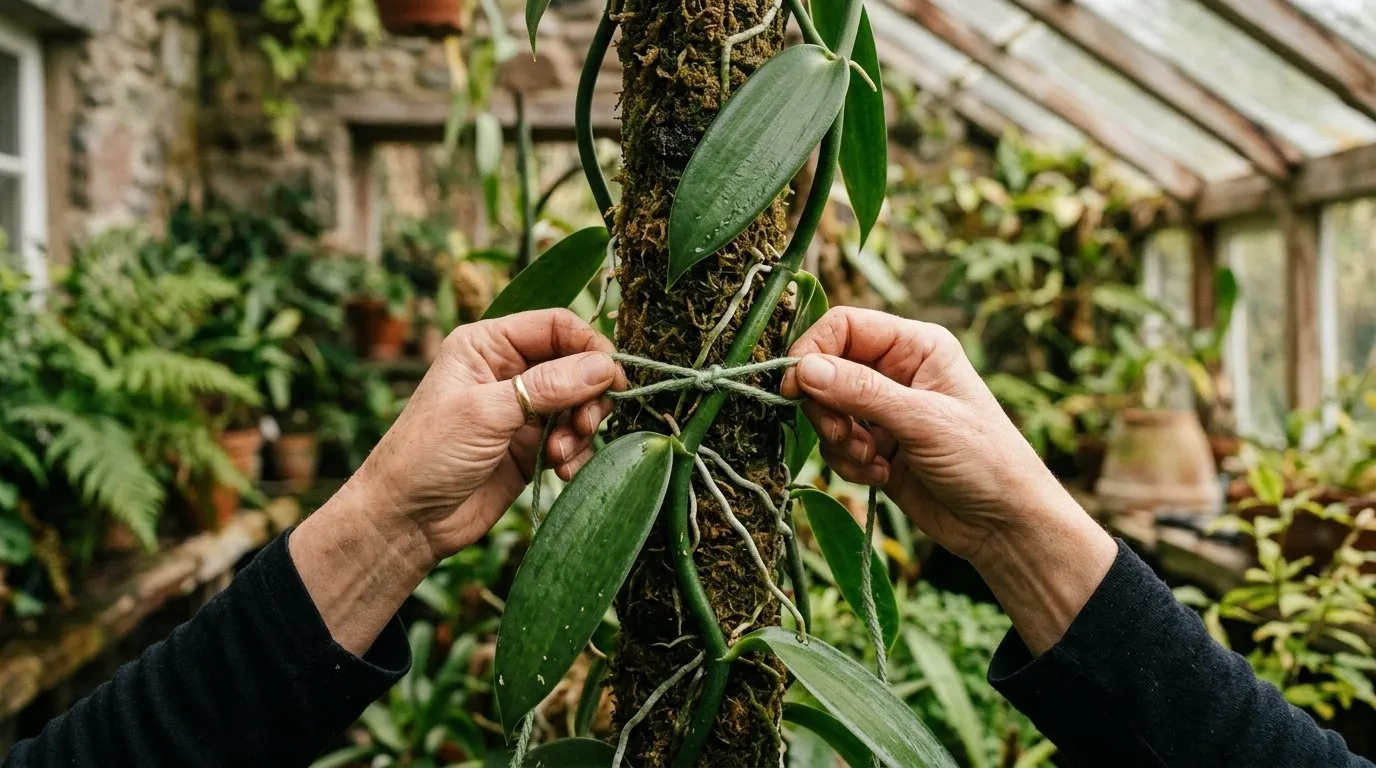
Tie the stem loosely and tuck the aerial roots against the moss. They grip on their own within a few weeks.
How long does vanilla take to flower and fruit?
Vanilla takes three to five years to flower from a rooted cutting, then about nine months to ripen a pod. There is no shortcut. The vine needs to be mature, usually a few metres long, before it forms buds. Extra feed or heat cannot force flowers on a young plant.
Mature plants produce clusters of buds that open a few at a time over several weeks, usually in spring. Each flower is pale greenish-yellow, waxy and roughly 10cm across. Each one lasts a single day.
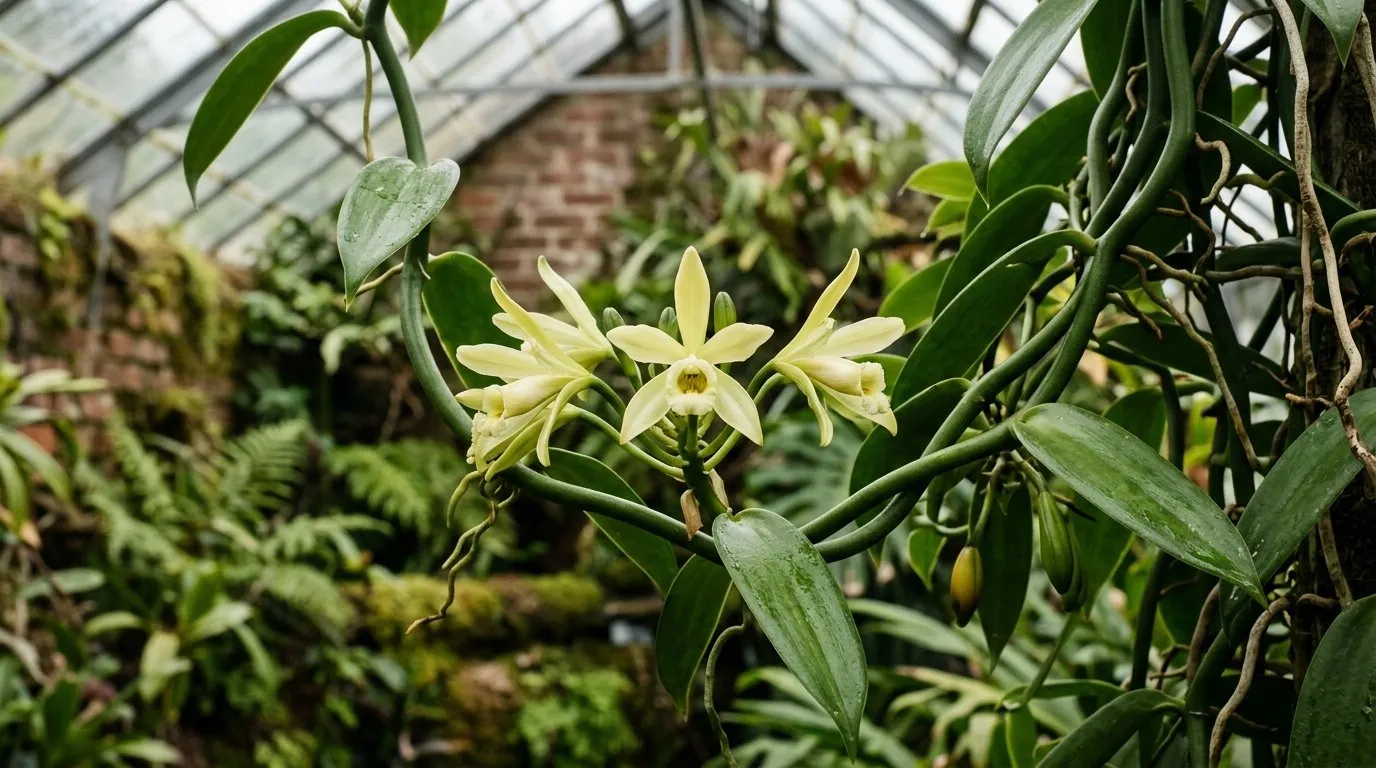
Each waxy vanilla flower opens for one morning only, so check the plant every day once buds appear.
A pollinated flower soon starts to form a slim green pod. It reaches full length, around 15-20cm, within a couple of months. The flavour comes much later, so leave it on the vine for about nine months. Picked early, it never develops its scent.
| Stage | How long | What happens |
|---|---|---|
| Rooting the cutting | A few months | Roots take hold and the vine starts to climb |
| Growing to maturity | 3-5 years | No flowers until the vine is big enough |
| Flowering | A few weeks, usually spring | Flowers open one or two a day |
| Pollination | One morning per flower | Hand-pollinate each flower the day it opens |
| Ripening | About 9 months | The pod stays on the vine and turns yellow at the tip |
| Curing | A few months | Sweating and drying bring out the vanilla scent |
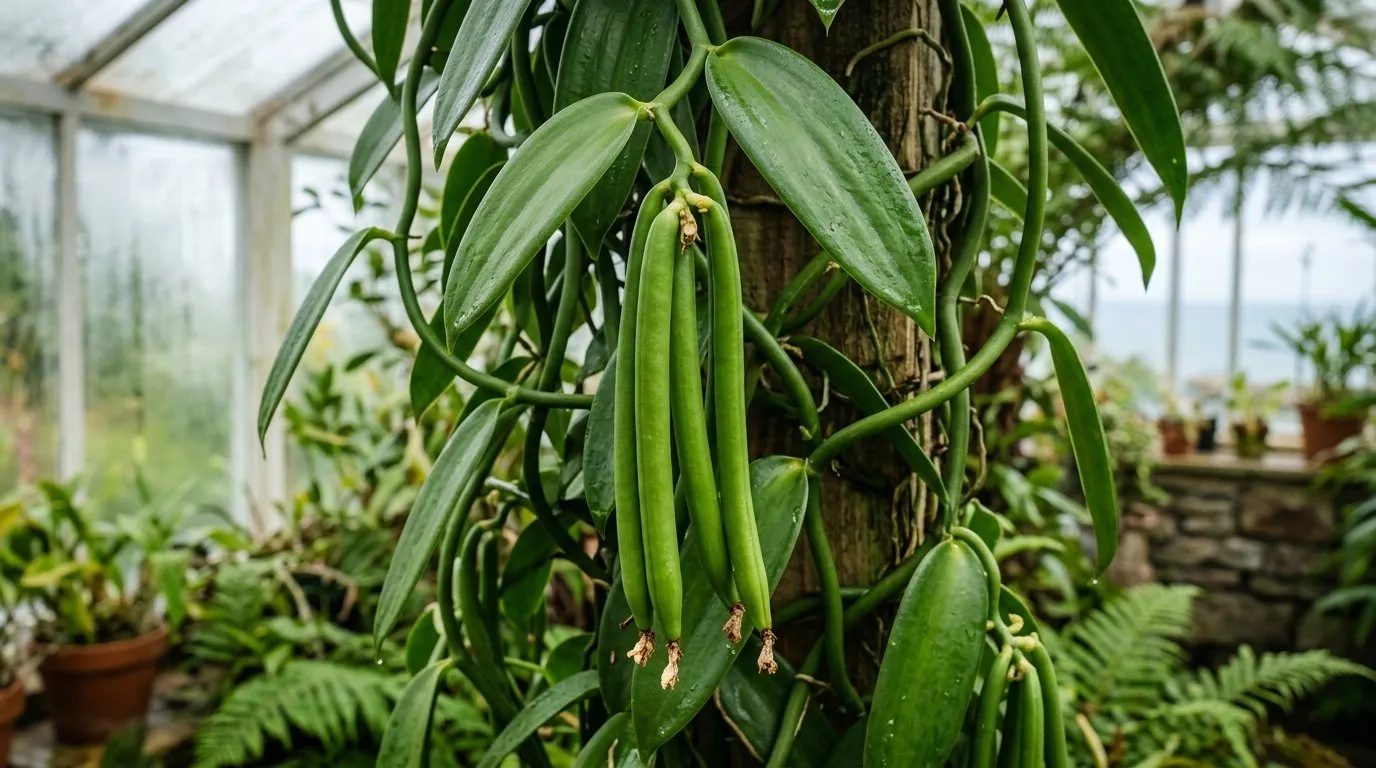
The pods reach full length quickly but stay green for months. Leave them be until the tips start to yellow.
How do you hand-pollinate a vanilla orchid?
Hand-pollinate each flower on the morning it opens. In the wild, bees in Central America do the job. They don’t live here, and even commercial growers pollinate by hand.
Flowers open early and close by the afternoon, never to reopen, so check the plant every morning. Inside each flower, a small flap called the rostellum keeps the pollen away from the sticky stigma. Your job is to lift the flap and press the two together.
- Hold the open flower gently and find the central column.
- With a cocktail stick, ease back the little cap at the tip to expose the pollen.
- Lift the rostellum flap up and out of the way.
- Press the pollen down onto the stigma below with your fingertip.
If it worked, the flower wilts but stays attached to the stem. Within a week or two the stalk behind it starts to swell. An unpollinated flower simply drops off.
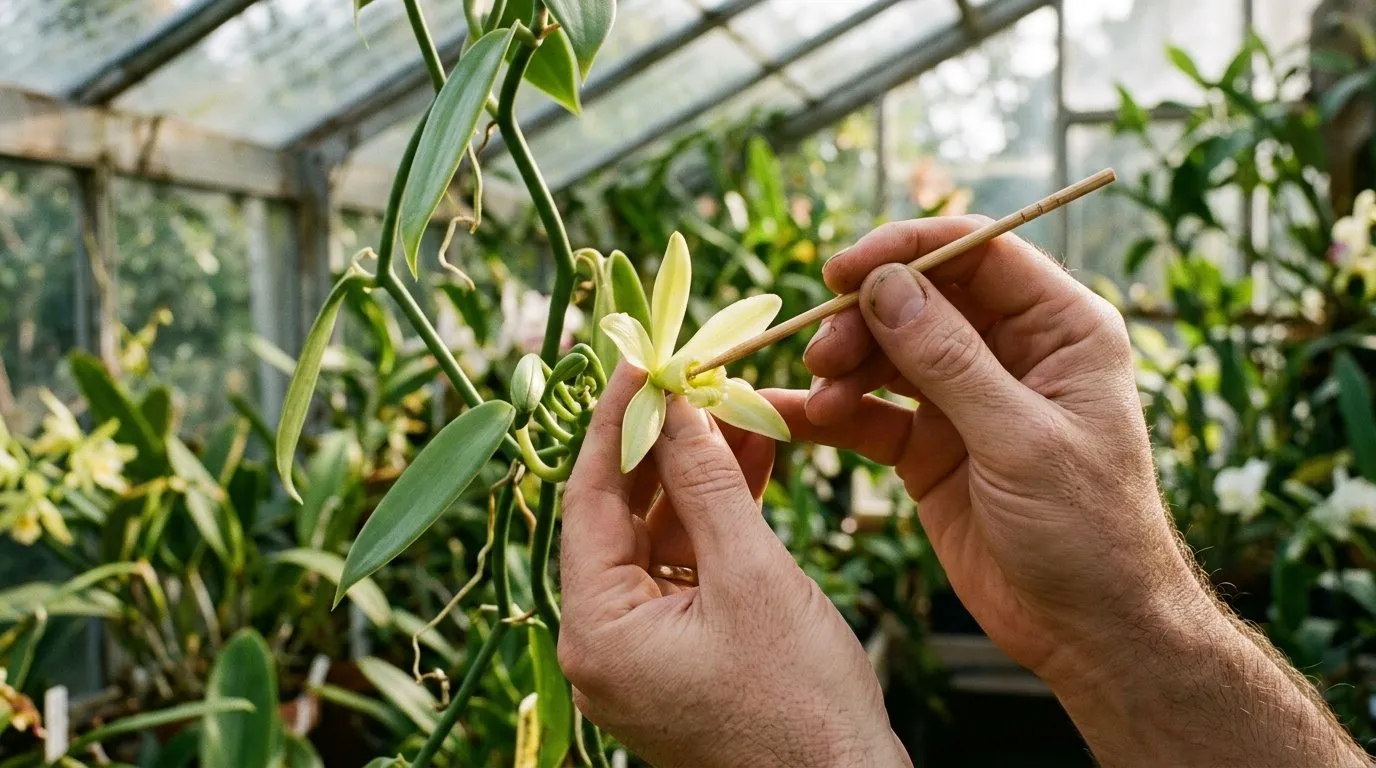
A cocktail stick is all you need. Do it in the morning, while the flower is fresh.
How do you cure vanilla pods at home?
Curing turns a scentless green pod into fragrant vanilla over a few months. Pick pods when the tips start turning yellow. A freshly picked pod smells of very little. The scent develops as it sweats and dries.
Scald. Dip the pods in hot water, around 65C, for two or three minutes. This stops them growing and starts the curing.
Sweat. Wrap the warm pods in a cloth or towel each night. Lay them out somewhere warm by day. Repeat for a week or two until they turn dark brown and supple.
Dry. Spread them somewhere warm, dry and airy, out of direct sun, for a couple of months. They become leathery. An airing cupboard shelf or a warm windowsill works at home.
Mature. Store the dried pods in a sealed jar or box for a month or more. Check now and then for mould. A well-cured pod is dark, bendy and unmistakably vanilla.
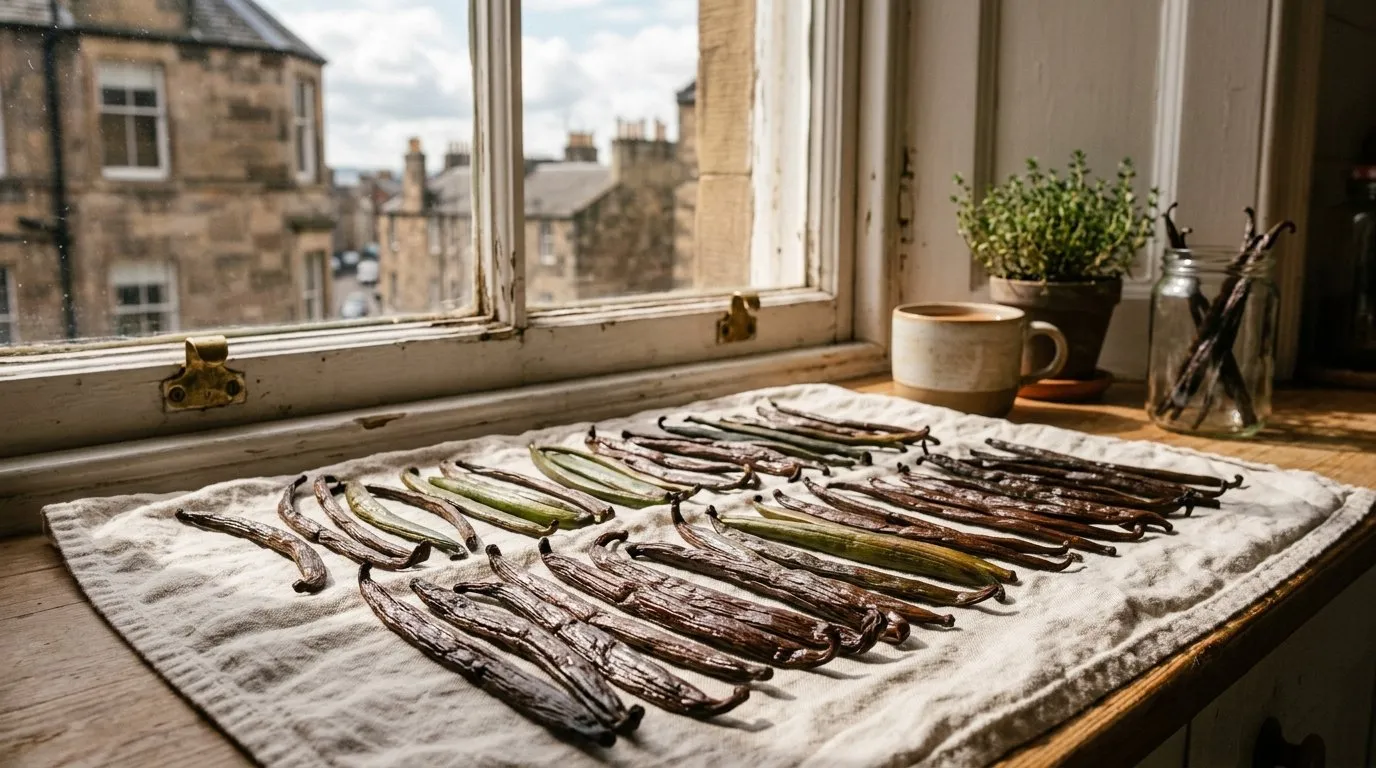
Curing pods go from green to deep brown over a few months. A warm windowsill or airing cupboard does the job.
Common vanilla growing mistakes
Most problems come down to cold, dry air or expecting flowers too soon.
- Letting it get cold. A night below 15C in winter is the commonest way to lose a plant. Use a max-min thermometer and add heat if it dips.
- Dry air. Thin, papery or brown aerial roots mean the air is too dry. Mist daily and use a gravel tray.
- Soggy compost. Rot at the base means the mix is too wet. Repot into coarse orchid bark and water less.
- Expecting flowers too early. A young plant will not flower however well you treat it. Let it grow, give it light and loop the top growth down.
- Ignoring pests. Warm, dry air under glass suits red spider mite, mealybug and scale. Check leaf undersides each month. The spider mite control guide covers the fixes.
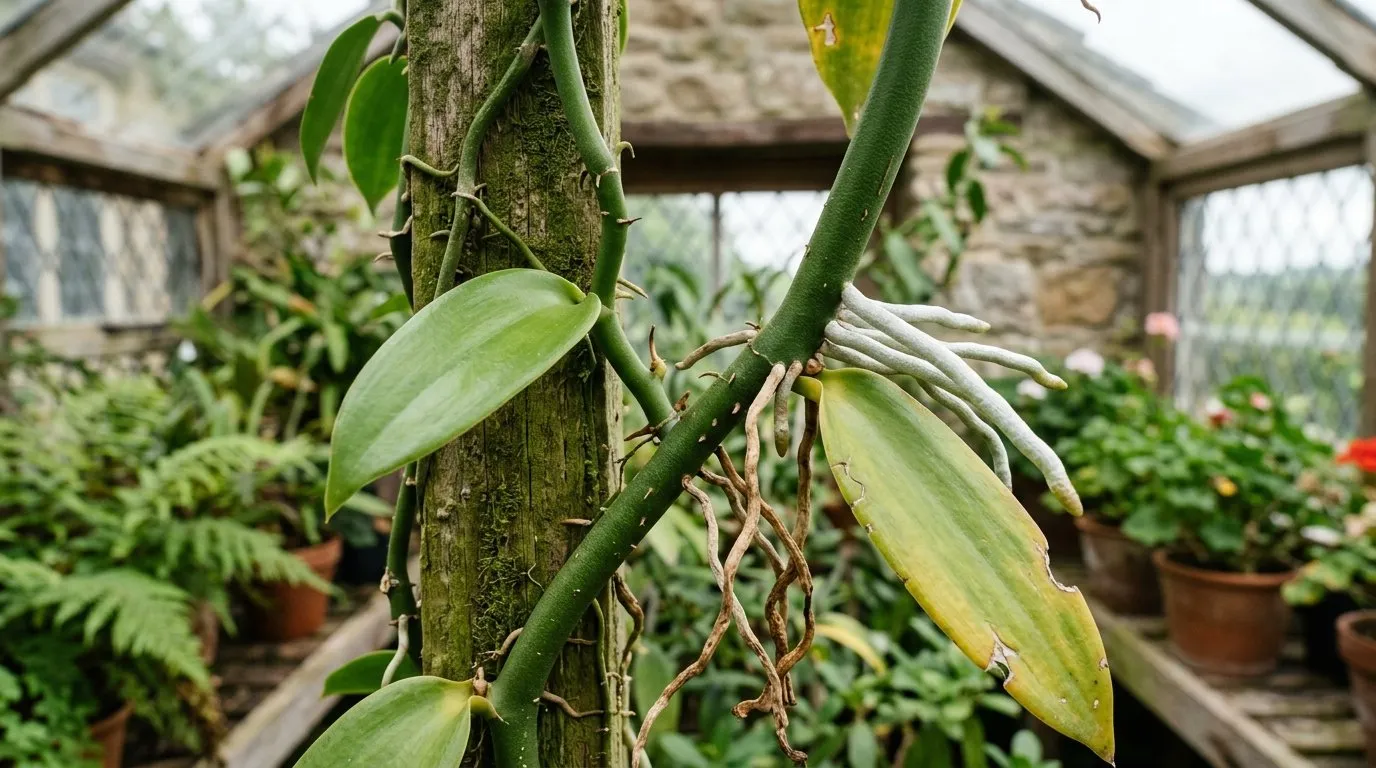
Yellow leaves and papery roots like these point to dry air or cold. Raise the humidity and check the night temperature.
Is growing vanilla at home worth it?
Not to save money, but it is a lovely long-term project. A shop-bought pod is far cheaper than years of winter heating. You grow vanilla for the fun of fruiting something most people think is impossible in Britain.
It also makes a striking foliage plant while you wait. If you enjoy long-haul crops, growing citrus trees in the UK works on a similar timescale. Vanilla also fits in well among other conservatory houseplants that like warm, humid air. Find more ideas on the growing hub.
Frequently asked questions
Can you grow vanilla in the UK?
Yes, but only indoors with steady heat and humidity. Vanilla is a tropical orchid that dies in cold weather. A heated greenhouse, conservatory or warm, bright room kept at 18C or more suits it. It grows happily as a foliage vine, but pods take years and hand-pollination.
How long does vanilla take to grow pods?
Usually four to six years from cutting to cured pod. The vine takes three to five years to reach flowering size. A pollinated flower then gives a pod that ripens on the vine for about nine months. Curing adds a few more months before it smells of vanilla.
Why won’t my vanilla orchid flower?
It is most likely still too young or too small. Vanilla only flowers once the vine is mature, usually after several years and a few metres of growth. Cold and low light delay it further. Keep it warm, humid and in bright filtered light, and let the vine ramble.
Do you have to hand-pollinate vanilla?
Yes, every flower needs hand-pollinating in the UK. The bees that pollinate it in Central America do not live here. Each flower opens for one morning only, so check daily. Lift the small flap inside the flower and press the pollen onto the sticky stigma with a cocktail stick.
What temperature does vanilla need to grow?
Aim for 18-30C, and never below 15C. Cold nights damage the leaves and a long cold spell can kill the plant. It also needs high humidity and bright, filtered light, which is why a heated greenhouse or conservatory is the usual home for vanilla in Britain.
How do you cure vanilla pods at home?
Scald the pods, then sweat and dry them slowly for a few months. Dip them briefly in hot water, then wrap them warm each night and air them in gentle warmth by day for a week or two. Dry them slowly somewhere warm and airy until leathery, then store sealed to mature.
Ready to get your vanilla vine settled in? Start with the guide to caring for orchids indoors for the watering and feeding basics it shares with its cousins.
Our team produces practical UK gardening guidance from source research, contributor records and established horticultural practice. Editorial standards are overseen by Matt W.


