Key takeaways
- Conservatories get far hotter in summer and colder in winter than a normal room, so pick tough plants
- Citrus, bird of paradise, pelargoniums and succulents suit the hot, bright side
- Clivia and streptocarpus suit a cooler, shadier or north-facing conservatory
- Fit blinds or shade paint before May and open vents on every warm day
- Keep most plants at 5-10°C minimum in winter and water far less from November to March
The best conservatory houseplants are tough sun-lovers such as citrus, pelargoniums, bird of paradise and succulents. A conservatory gets much hotter in summer and colder in winter than the rest of the house. So the trick is picking plants that cope with both, then putting each one on the right side of the room.
This guide is for plants living under glass all year. For ordinary rooms in the house, the guide to the best indoor plants for UK homes is a better starting point.
Why are conservatories so hard on houseplants?
The big problem is the temperature swing. Glass lets heat in fast on a sunny day and loses it just as fast on a clear night. A south-facing conservatory can top 40°C in summer and drop close to freezing in winter if it isn’t heated.
Light is the second thing. South and west-facing conservatories get fierce direct sun, which suits Mediterranean and desert plants. North-facing ones stay cooler and shadier, which suits a different group.
Before you buy anything, note which way the conservatory faces. A simple max-min thermometer left in there for a few weeks tells you its real summer high and winter low. That decides what will survive far more than the plant label does.
The best plants for a hot, sunny conservatory
Sun-loving plants come from hot, bright places, so they shrug off the heat behind glass as long as you shade and ventilate.
- Citrus: lemon, calamondin and kumquat want bright light, citrus compost and a cool, frost-free winter, ideally about 10°C. They flower with a lovely scent and fruit over a long season. The guide to growing citrus trees covers feeding and watering in detail.
- Bird of paradise (Strelitzia reginae): big paddle-shaped leaves and orange and blue flowers once the plant is several years old. Keep it above 10°C in winter.
- Pelargoniums: flower from spring to autumn in a hot spot and ask only for sun and sparing water.
- Bougainvillea: a climber with papery bright bracts all summer, then a cooler, drier rest in winter.
- Abutilon and plumbago: easy flowering shrubs for the same bright, warm conditions.
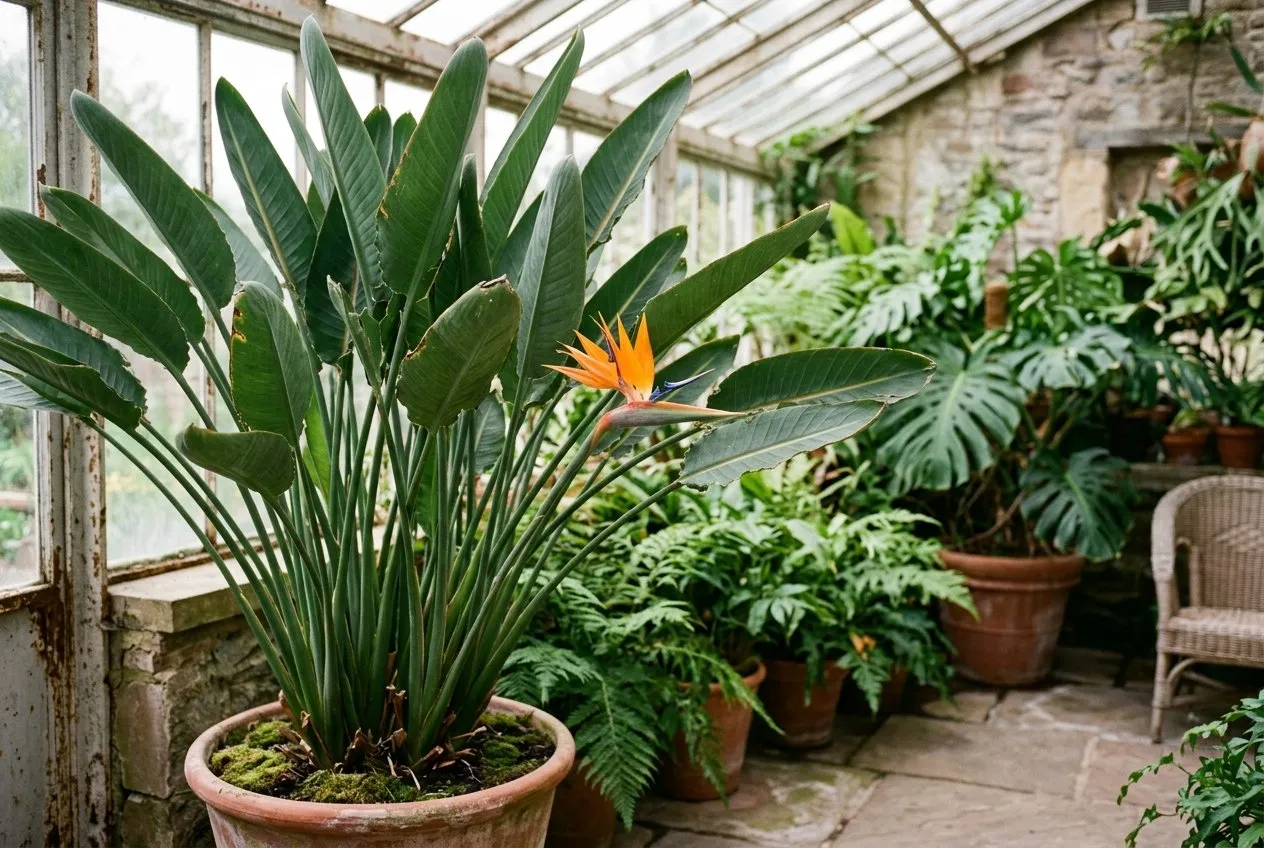
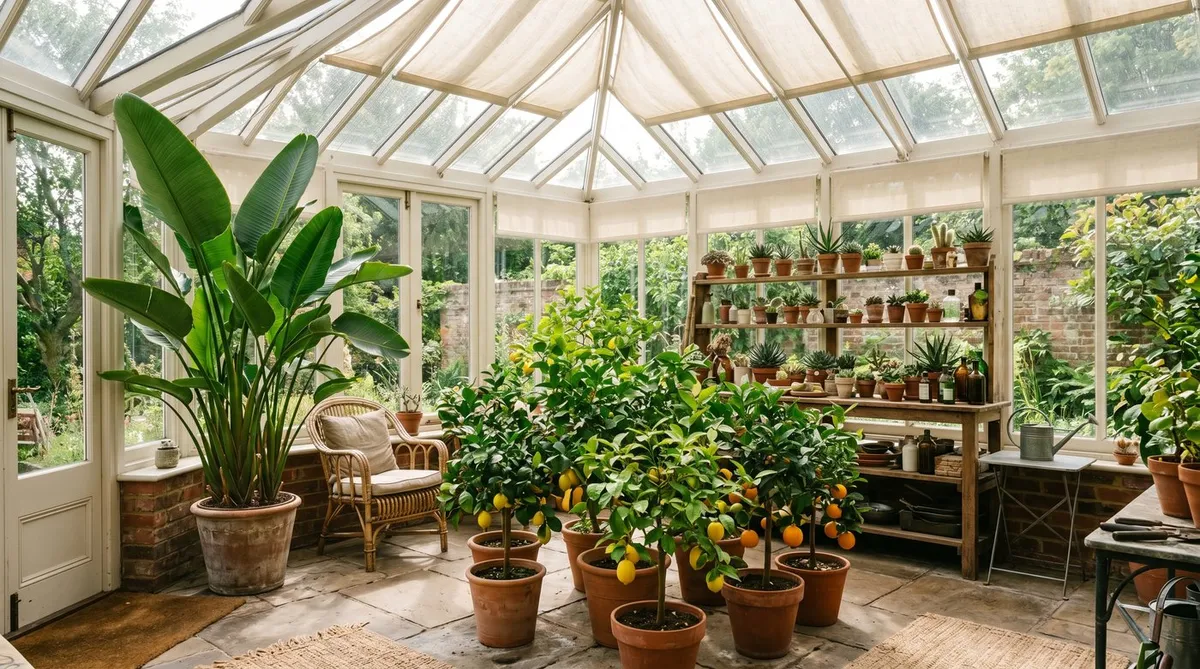
Bird of paradise loves a bright, warm conservatory. Be patient, as it usually takes a few years to flower.
Gardener’s tip: Stand citrus outside on a sunny patio once nights stay above about 10°C, usually June. The fresh air toughens the growth and helps keep scale insects down.
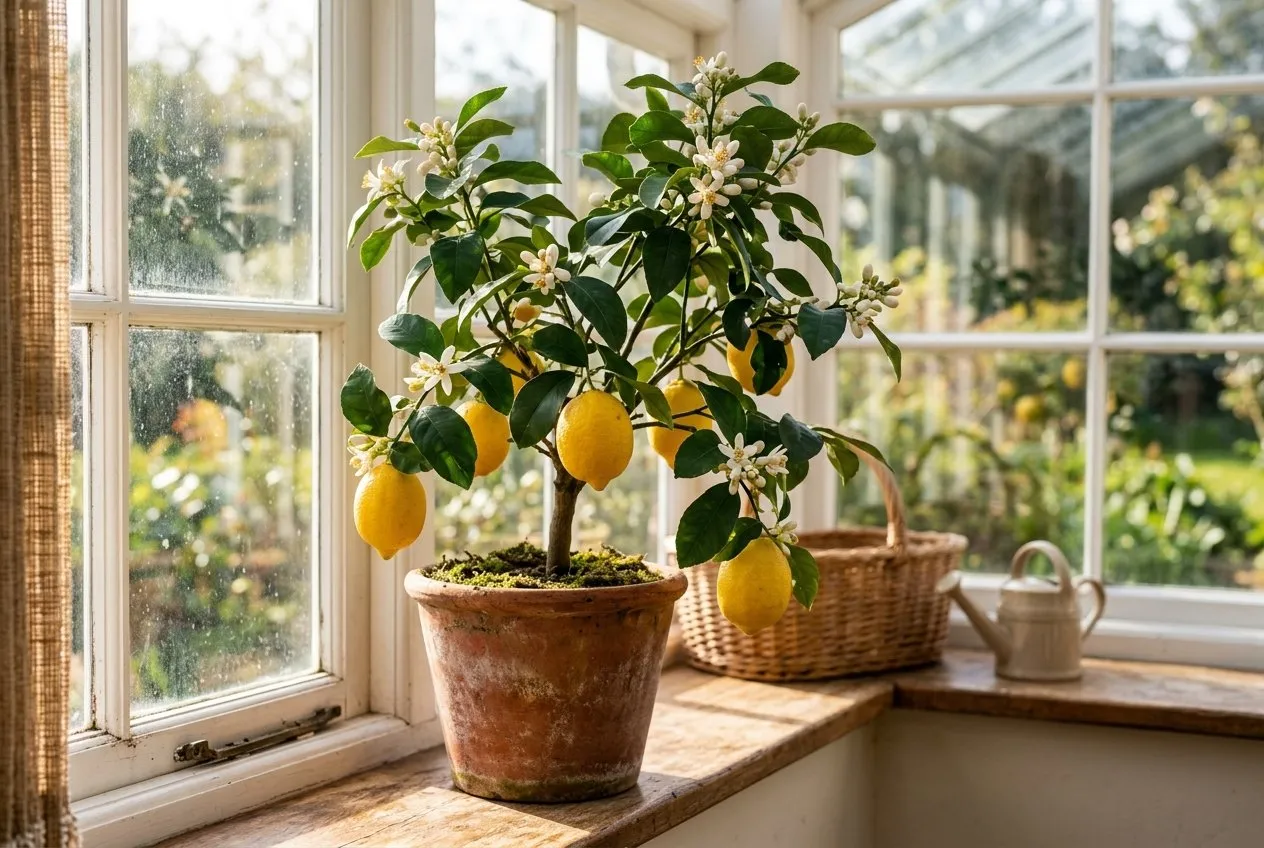
A lemon in fruit and flower at the same time. Bright light, citrus compost and a cool, frost-free winter keep it happy.
Succulents and cacti for the hottest spots
Succulents and cacti are the toughest conservatory plants of all. They store water in their leaves and stems, so heat and a forgetful waterer bother them least.
Agave, aloe and echeveria love the brightest, hottest shelf. Grow them in gritty, free-draining compost and water only when it has dried out. Snake plant (Sansevieria) copes with heat, drought and lower light, so it also works further back from the glass. Ponytail palm (Beaucarnea) stores water in its swollen base and puts up with long gaps between drinks.
The one thing that kills them is wet compost in winter. Keep them almost dry from November to March, especially in an unheated conservatory. Many succulents cope with a short cold spell when dry, but the same chill in wet compost rots the roots. The guide to caring for succulents indoors covers potting mixes and watering.
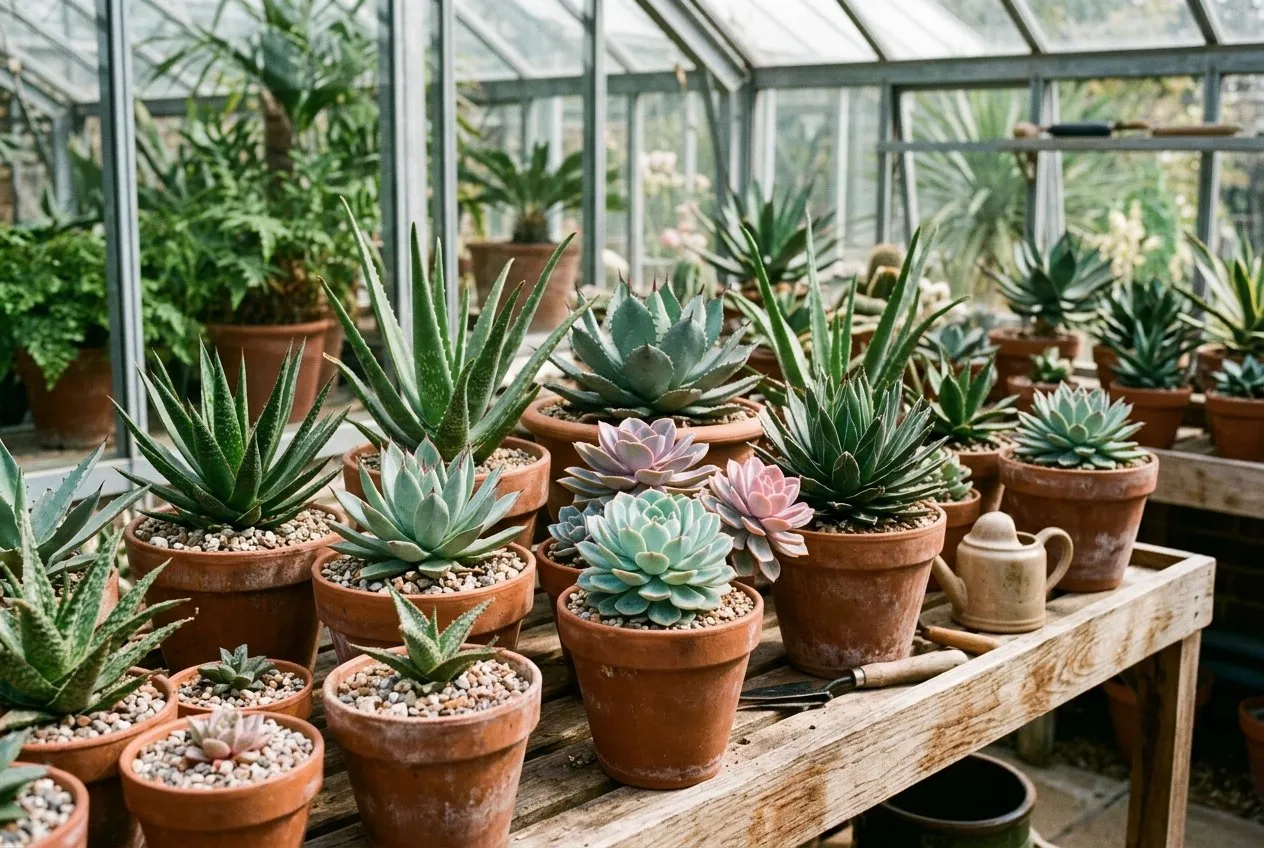
Gritty compost and terracotta pots let succulents dry out fast. That’s what keeps them alive through a cold winter.
Flowering plants for colour behind glass
A warm, bright conservatory lets you grow flowers that would never manage outdoors in a British summer.
Pelargoniums flower for months in red, pink, white and salmon. Hibiscus rosa-sinensis opens big tropical flowers that last a day or two each. Mandevilla and passionflower climb and flower through the warm months. The guide to growing bougainvillea in a pot covers pruning and overwintering that one.
For winter and spring colour, clivia sends up orange flower heads from a clump of dark strap leaves. It likes the cooler, shadier side. Streptocarpus (Cape primrose) flowers for months in bright light without direct sun, so it suits a north-facing room. The streptocarpus growing guide explains how to keep it flowering.
Deadhead regularly and feed every week or two in summer with a high-potash liquid feed, such as a tomato feed.
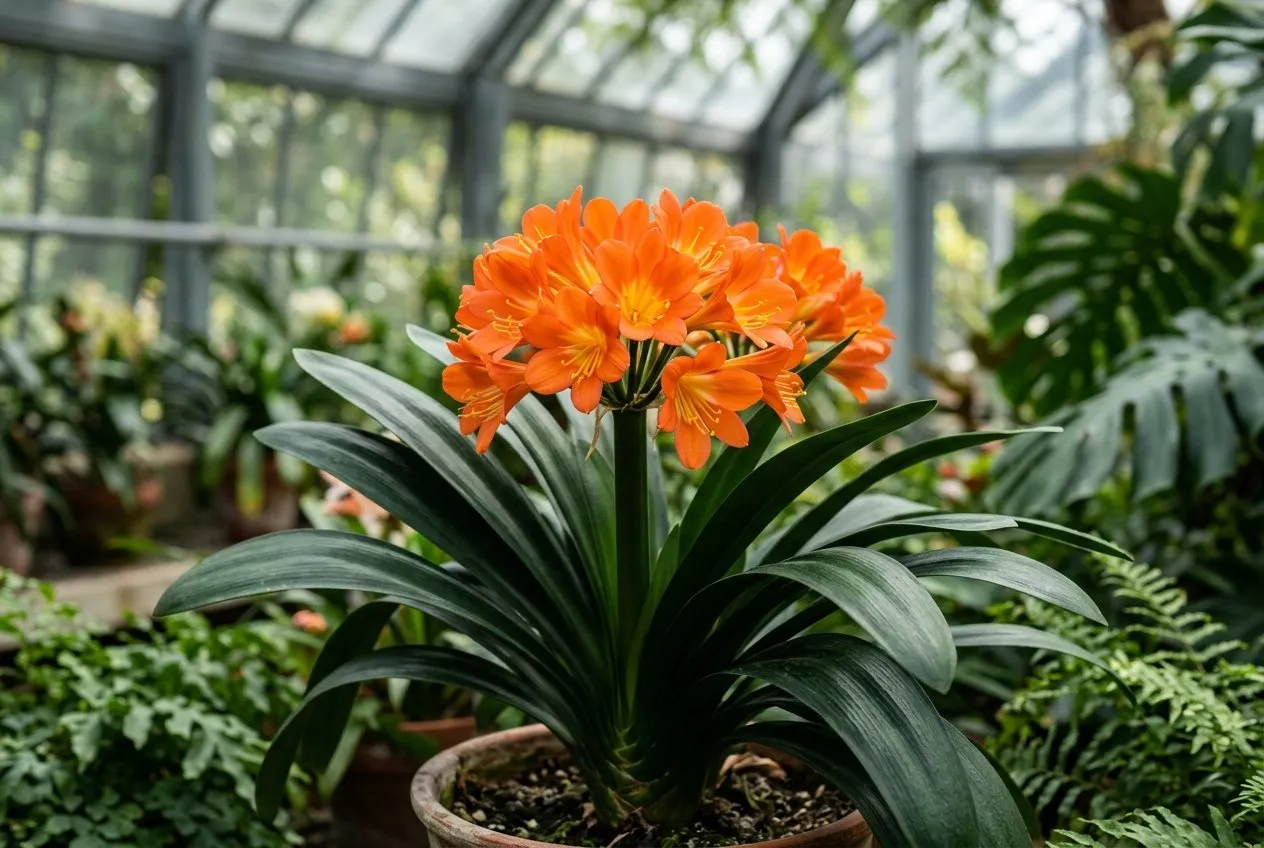
Clivia flowers in late winter and spring on the cooler, shadier side, where sun-lovers would sulk.
Conservatory plants compared by light and winter minimum
Use this table to match plants to your room’s light and its coldest night.
| Plant | Light | Winter minimum | Good for |
|---|---|---|---|
| Snake plant | Bright to part shade | 10°C | Toughest all-rounder |
| Citrus | Bright sun | 5°C, ideally 10°C | Scented flowers and fruit |
| Agave and aloe | Bright sun | 5°C if kept dry | Bold shapes, no fuss |
| Bird of paradise | Bright sun | 10°C | A dramatic centrepiece |
| Pelargonium | Bright sun | 5°C | Months of summer flowers |
| Bougainvillea | Bright sun | 7°C | Summer colour on a climber |
| Clivia | Bright, no direct sun | 10°C | Winter and spring flowers |
| Streptocarpus | Bright, no direct sun | 10°C | Long flowering in cool rooms |
Put succulents and citrus in the hottest, brightest zone. Give climbers a wall or roof wire where they can reach the light. Keep clivia and streptocarpus on the cooler, shaded side.
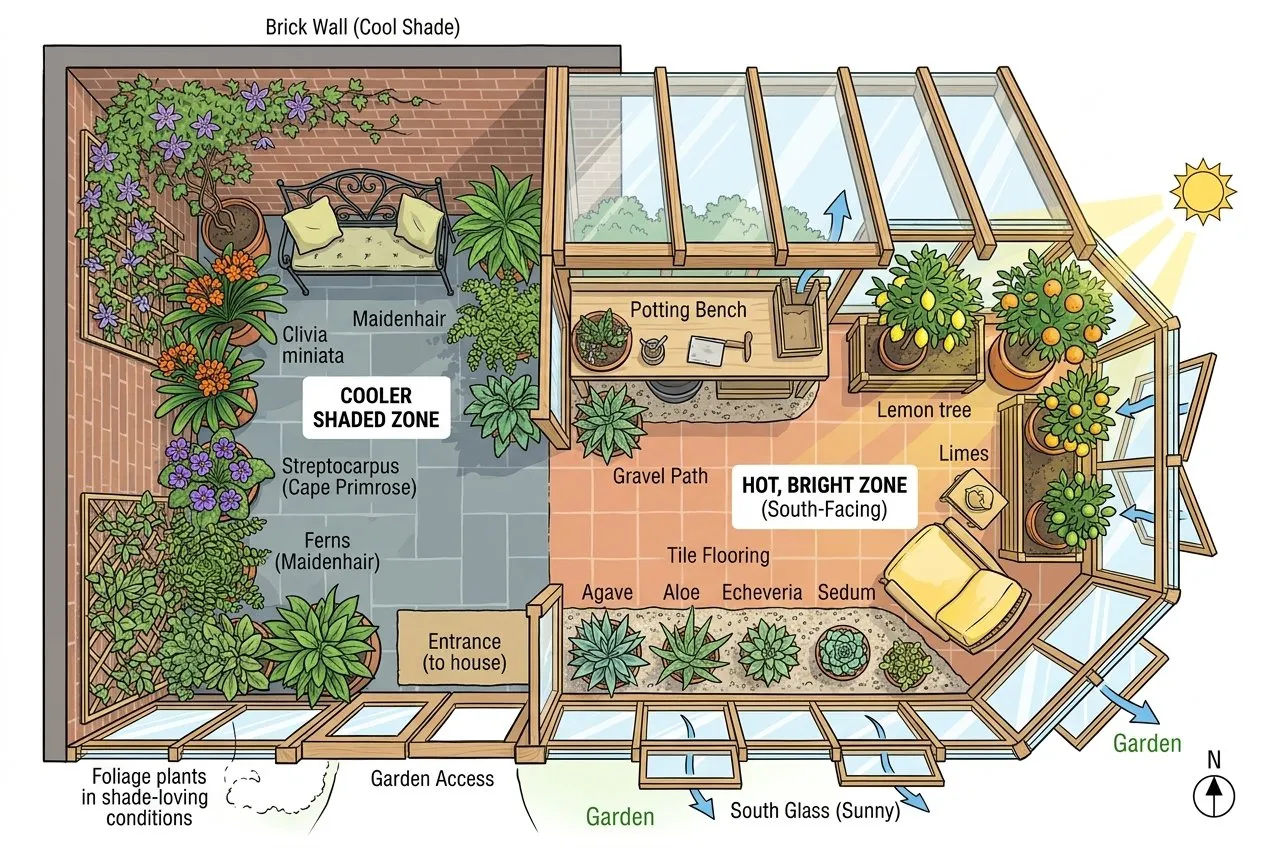
A simple way to plan it: sun-lovers by the south glass, clivia, streptocarpus and ferns where it stays cooler.
Pet note: citrus, aloe, clivia, pelargoniums, snake plant and bird of paradise are all toxic to cats and dogs. Streptocarpus is a safer choice if you have a nibbler.
How to keep a conservatory cool and plants healthy
Shading and ventilation matter more than any single plant choice. Get these right and most of the plants above need little fuss.
- Shade: fit roller blinds, shade netting or shade paint on the outside of the glass before the first hot spell, usually by May.
- Ventilate: open roof vents and doors on warm days. An automatic vent opener helps if you’re out at work.
- Damp down: on very hot days, splash water on a tiled or stone floor to cool and moisten the air.
- Winter care: cut watering right back, stop feeding, and use a frost protection heater if the room drops below your plants’ minimum.
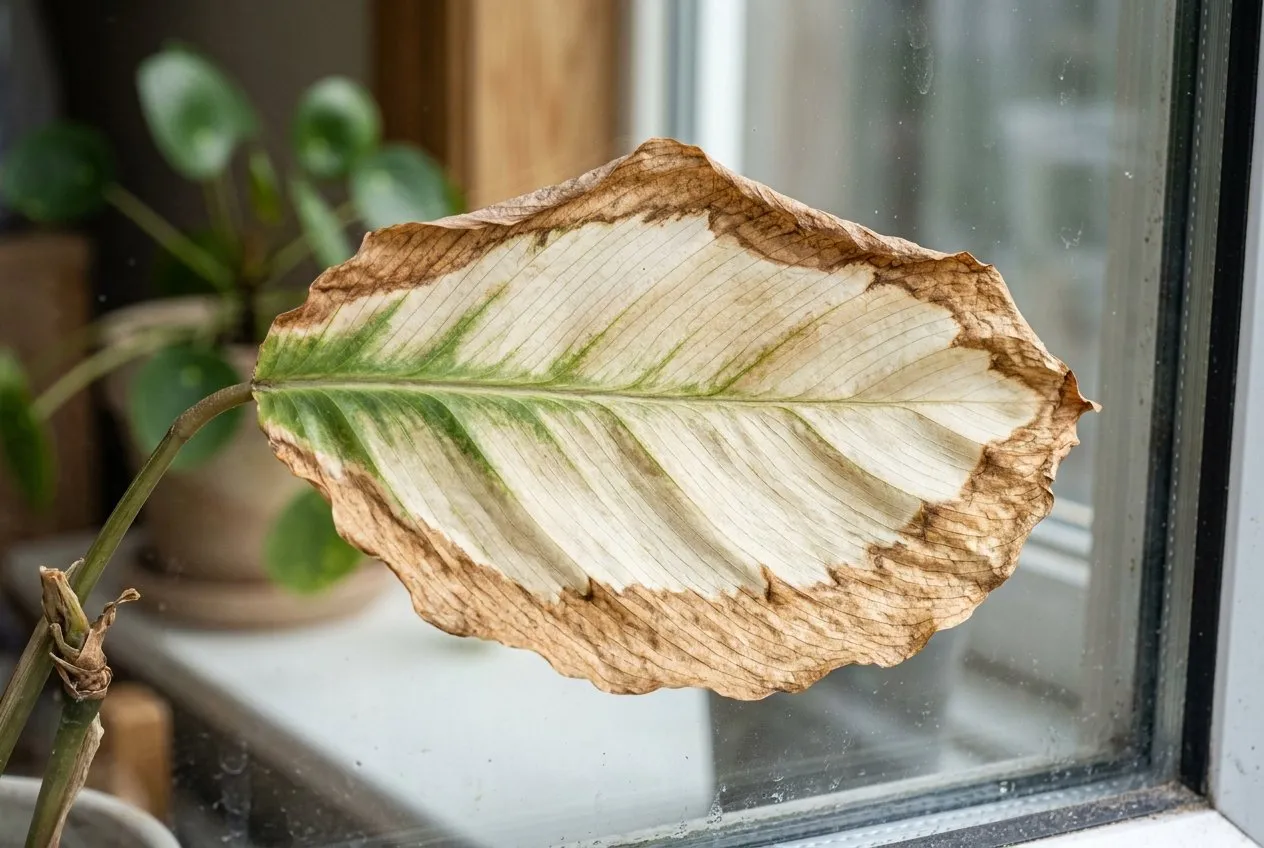
Bleached patches and crisp brown edges mean scorch. Move the plant back from the glass or shade it.
Pests love warm, dry air under glass. Check plants weekly for scale insects, mealybug and red spider mite. Wipe off scale and mealybug with a damp cloth, and see the guide to mealybug and how to clear it. For mites, raise humidity and try the predatory mite Phytoseiulus in summer, as explained in spider mite control under glass. Fungus gnats can appear in damp compost, so let the surface dry between waterings.
Month-by-month conservatory plant calendar
The glass makes every season stronger, so care changes a lot through the year.
| Month | What to do |
|---|---|
| January | Keep succulents almost dry, water citrus sparingly, watch for frosty nights |
| February | Check for scale and mealybug, ventilate on mild sunny days |
| March | Water a little more as light returns, repot pot-bound plants |
| April | Start feeding, put up blinds or shade paint before the heat |
| May | Shade and ventilate daily as the sun strengthens |
| June | Move citrus outside once nights stay above about 10°C |
| July | Damp down floors on hot days, never let pots dry to wilting |
| August | Keep feeding and deadheading, watch for red spider mite |
| September | Bring tender plants back in before cold nights |
| October | Water and feed less as growth slows, clean the glass for more light |
| November | Stop feeding, keep succulents dry, check heating works |
| December | Water just enough to stop shrivelling, air the room on bright days |
Common mistakes with conservatory plants
- No summer shade. Sun behind glass scorches even sun-lovers. Shade before the first heatwave, not after the damage.
- Overwatering in winter. Cold, wet compost rots roots. Water far less from November to March.
- Choosing fussy leafy plants. Calathea, ferns and many leafy houseplants crisp up on the sunny side. Keep them for the shady side or the house.
- A sealed room. A shut conservatory cooks plants on a hot day. Open vents every warm morning.
- Ignoring the coldest night. A plant that needs 10°C won’t survive a room that drops to 2°C. Check before you buy.
Frequently asked questions
What houseplants are best for a conservatory?
Citrus, bird of paradise, pelargoniums and succulents suit a bright conservatory. They handle strong light and heat that would scorch most leafy houseplants. For a shadier or north-facing conservatory, choose clivia or streptocarpus instead.
Why do my conservatory plants keep dying?
Usually summer scorch, winter cold or winter overwatering. Glass heats up fast and loses heat just as fast. Fit blinds, open vents on warm days, and cut watering right back in winter. Choose plants that can cope with your room’s coldest night.
What temperature can conservatory plants survive?
Most of the plants here need a winter minimum of 5-10°C. Pelargoniums and citrus cope with about 5°C if kept on the dry side. Bird of paradise, snake plant and streptocarpus prefer 10°C or more. A cheap max-min thermometer shows what your room really does.
Do conservatory plants need shade in summer?
Yes, almost all need some shade in summer. Even sun-lovers like citrus can scorch behind glass on a hot afternoon. Roller blinds, shade netting or shade paint on the outside of the glass cut the worst of the heat.
Can I grow citrus in a UK conservatory?
Yes, citrus are among the best conservatory plants. Give them bright light, citrus compost and a cool, frost-free winter, ideally around 10°C. Many do even better if you stand them outside on a sunny patio from June to September.
What plants suit a north-facing conservatory?
Clivia, streptocarpus and ferns suit a cooler, shadier conservatory. They like bright light without hot sun and steady moisture. Avoid succulents and citrus there, as they stretch and flower poorly without strong light.
Now your conservatory plants are sorted, read the guide to putting houseplants outside for summer to give them a summer break, or browse more ideas in the plants section.
Our team produces practical UK gardening guidance from source research, contributor records and established horticultural practice. Editorial standards are overseen by Matt W.