Key takeaways
- Cape primrose can flower from spring to autumn on a bright windowsill
- An east or north-facing sill is ideal; hot summer sun scorches the leaves
- Let the top 2-3cm of compost dry before watering, as soggy compost rots the crown
- Feed with a high-potash feed, such as tomato feed, from spring to late summer
- A cooler, drier rest at about 10-13°C over winter sets it up for next year
- One healthy leaf can be cut up to grow lots of new plants
Streptocarpus, the Cape primrose, is one of the best flowering houseplants for a UK home. It throws up trumpet flowers in blue, purple, pink, red or white for months, often from spring into autumn. It asks for a bright windowsill out of hot sun, water when the compost dries and a potash feed in summer.
It comes from shady, rocky spots in South Africa, so it’s happy in the bright but indirect light many British rooms already have. This guide covers which varieties to pick, how to water without rotting the crown, the winter rest and the leaf cuttings that turn one plant into lots.
What is a Cape primrose?
Streptocarpus is a relative of the African violet. Its common name, Cape primrose, comes from its primrose-like flowers and its home in South Africa. It grows as a rosette of long, soft, crinkly leaves, with flower stems rising from the base.
Most plants sold in Britain are named hybrids bred to flower freely indoors. Dibleys Nurseries in North Wales has bred many of them and is well known for its Chelsea displays. Named varieties are a safer bet than unnamed plants, which can be shy to flower. For more plants that suit British light levels, see the roundup of the best indoor plants for UK homes.
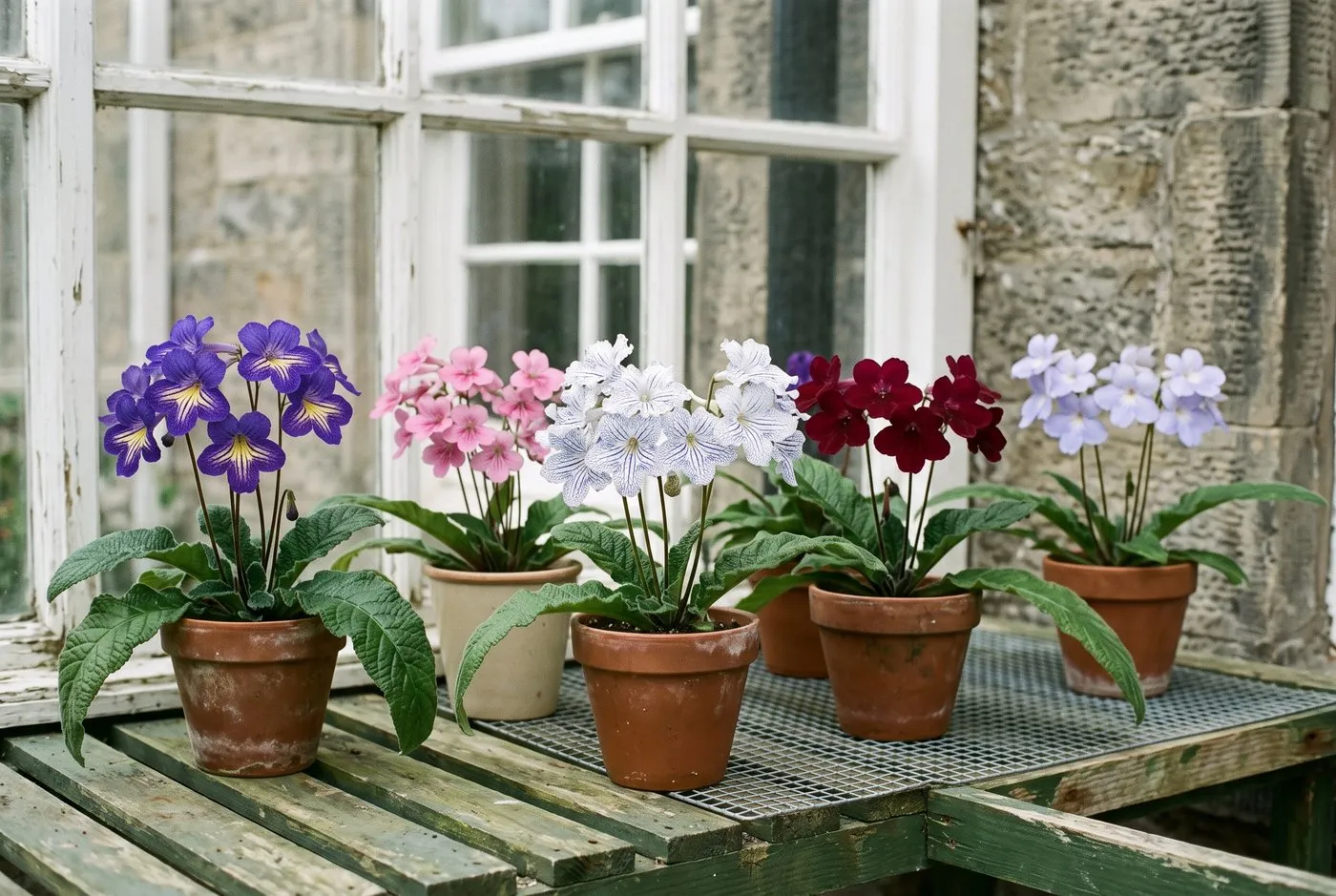
Purple, pink, white, wine-red and lilac: Cape primrose comes in plenty of colours. Pick one you love and it’ll flower for months.
Which streptocarpus varieties to grow
For a first plant, Harlequin Blue or Crystal Ice are easy, popular choices. Both are widely sold and flower freely.
| Variety | Flowers | Good for |
|---|---|---|
| Harlequin Blue | Blue upper petals, yellow lower petals | A cheerful first plant |
| Crystal Ice | White with lilac-blue veins | A bright, cool room |
| Falling Stars | Lots of small blue flowers | A massed display |
| Ruby | Deep red | Warm colour schemes |
Where to put streptocarpus: light and temperature
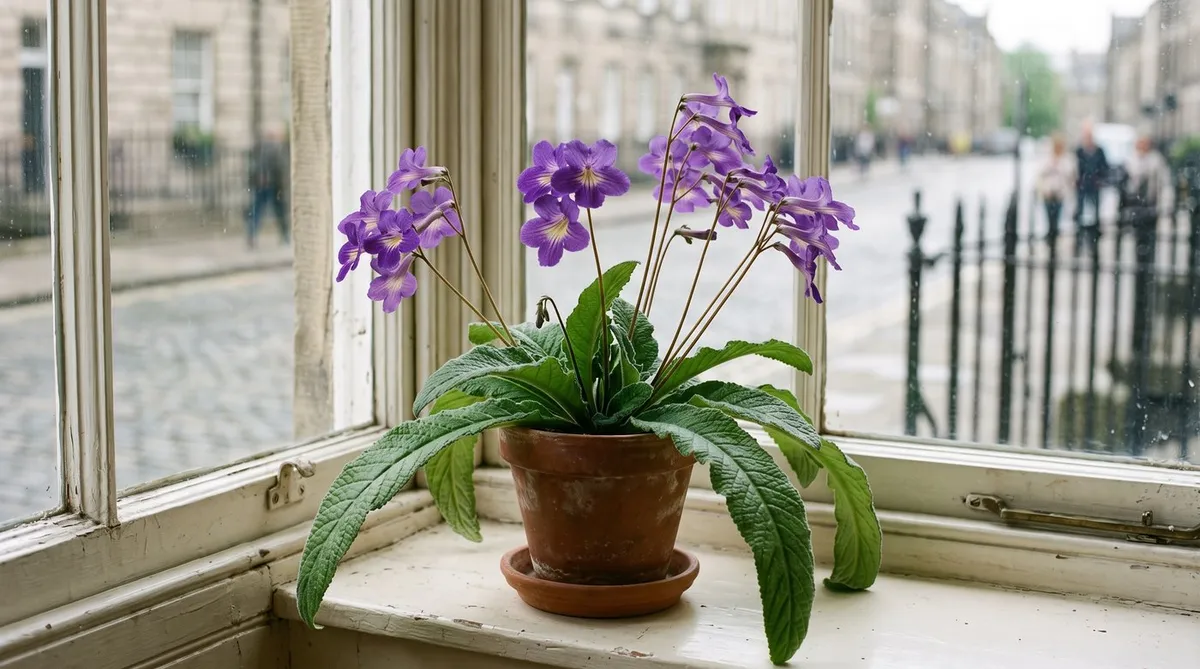
Light makes or breaks Cape primrose. It wants bright but indirect light. An east or north-facing windowsill is close to perfect. East gives gentle morning sun, and north gives steady light with no risk of scorch.
A south or west sill can work in winter. In summer, move the plant back from the glass or put up a net curtain.
A normal heated home suits it, roughly 15-25°C while it’s growing. Keep it away from cold draughts and hot radiators. A cool, bright room beats a hot, dark corner. If your room is darker than that, the guide to the best low-light houseplants lists plants that cope with less.
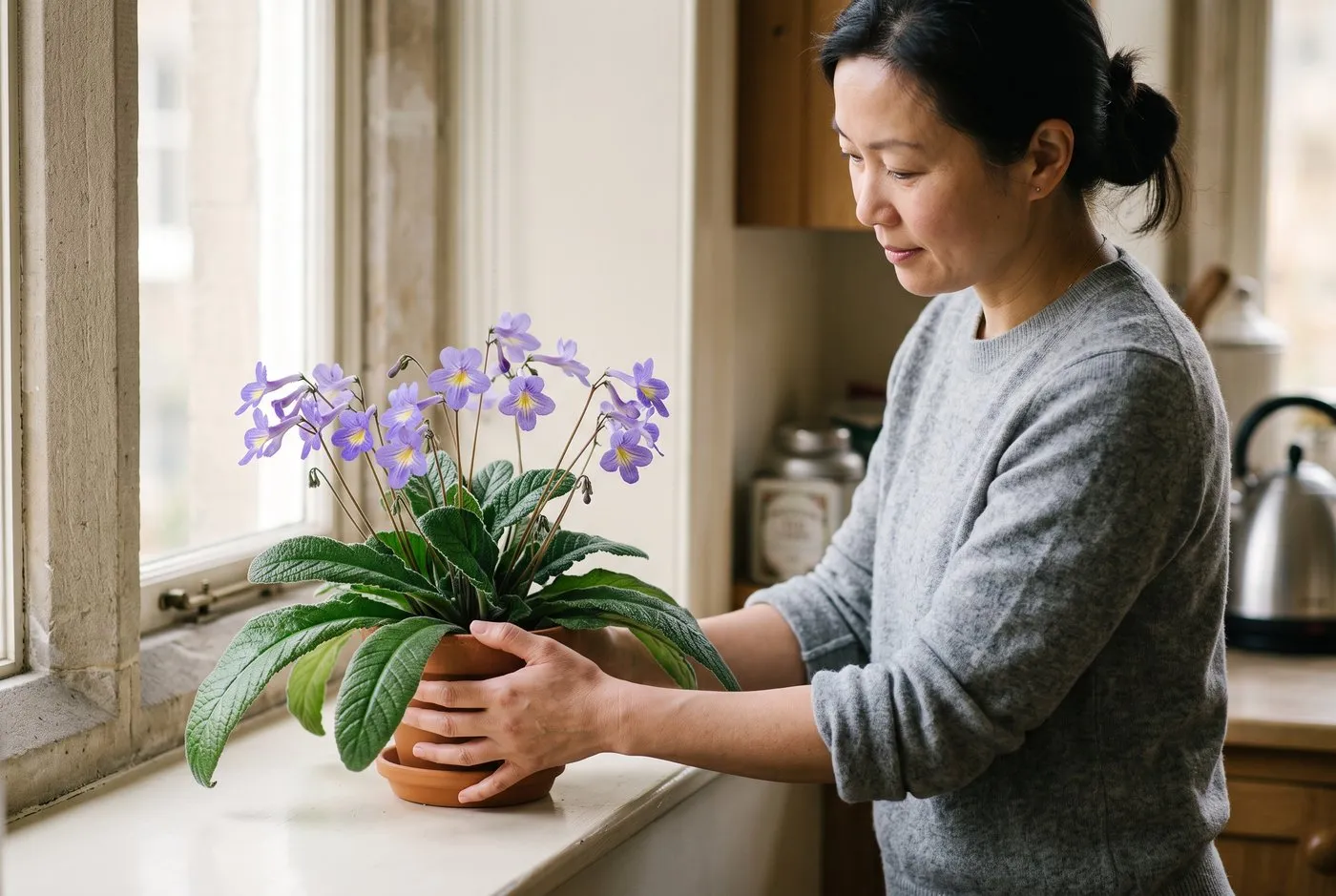
Give the pot a quarter turn every few days so the plant grows evenly towards the light.
How to water streptocarpus without rotting it
Overwatering kills more Cape primroses than anything else. The fleshy crown rots if it sits wet. The rule is simple: let the top 2-3cm of compost dry before you water. Push a finger in to check.
In summer that’s often about once a week. In winter it’s much less. Use room-temperature water, pour it round the edge of the pot rather than over the crown, and tip away anything left in the saucer.
Bottom watering suits it well. Stand the pot in a couple of centimetres of water for about 20 minutes, then let it drain fully. The guide to bottom watering uses the same soak-and-drain idea.
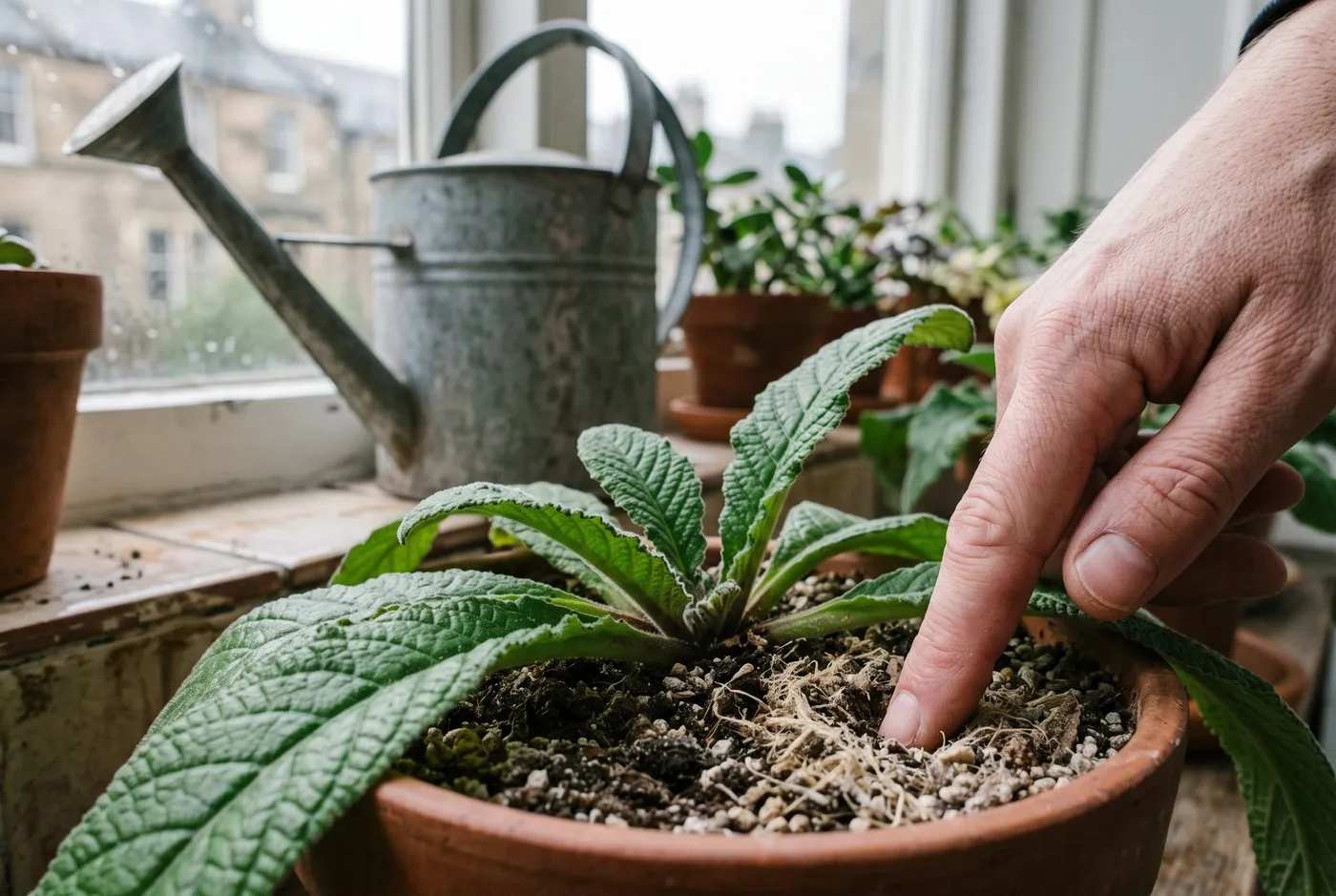
The finger test settles every watering. Dry 2-3cm down? Water round the edge. Still damp? Wait a day or two.
Warning: A soft, see-through or browning crown means rot from overwatering. Cut away the mushy parts with a clean knife, let it dry for a day and repot into fresh, gritty compost. If most of the crown has gone, take leaf cuttings from a healthy leaf instead.
How to feed Cape primrose for more flowers
Use a high-potash liquid feed, the sort sold for tomatoes, at about half strength every couple of weeks from spring to late summer. Potash encourages flowers. A high-nitrogen houseplant feed gives lush leaves and fewer buds.
If your plant is all leaf and no flower, check the feed first, then the light. The guide to feeding houseplants through the year explains the different feeds.
Is streptocarpus safe for cats and dogs?
Yes. Cape primrose is listed as non-toxic to cats and dogs, so it’s a good choice for a shared windowsill. Discourage nibbling anyway, as eating lots of any leaf can upset a pet’s stomach.
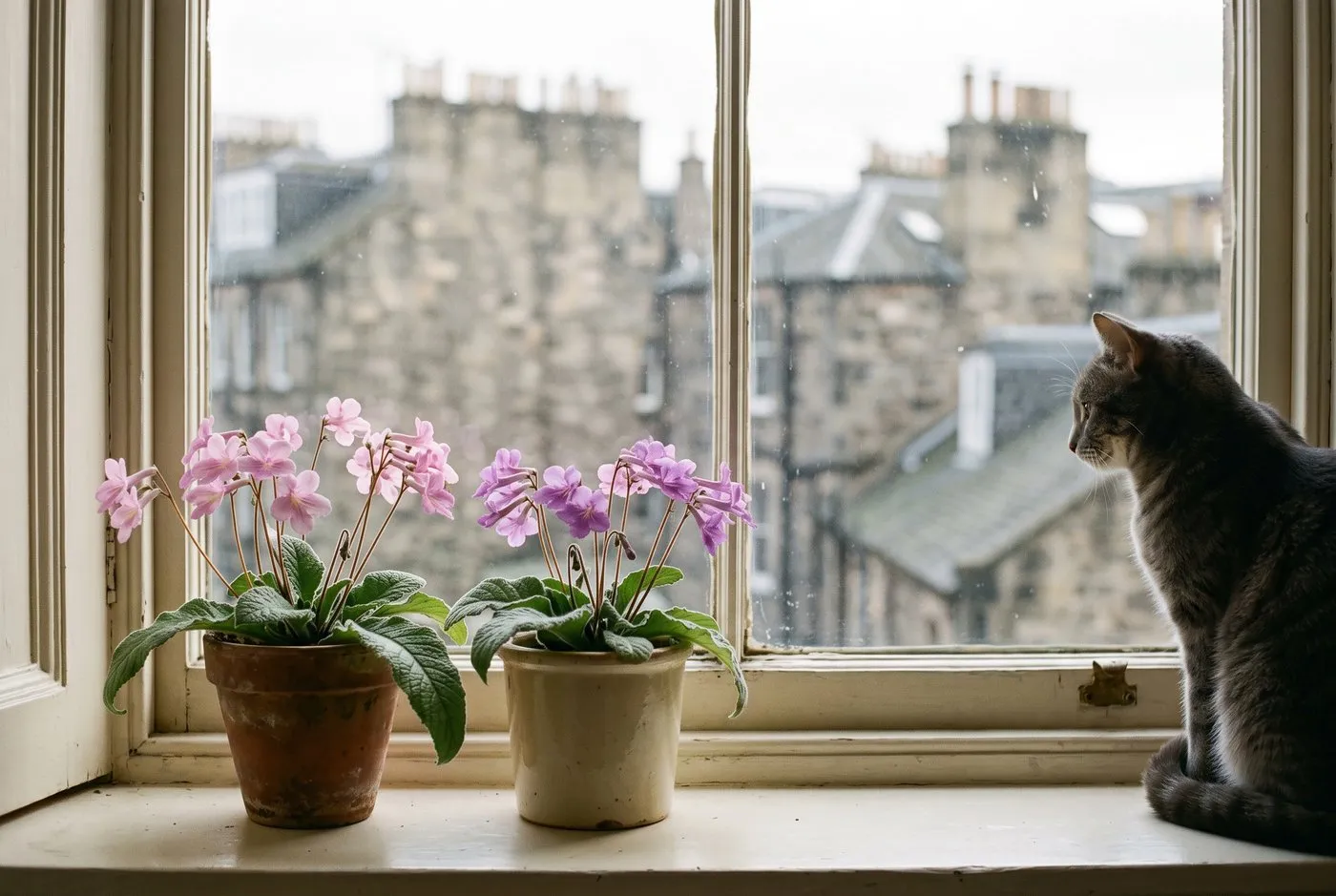
Cape primrose is a pet-safe flowering houseplant, so it can share the windowsill with the cat.
Streptocarpus through the year and the winter rest
Match your care to the season and the plant will reward you.
- Spring (March to April): new leaves appear. Water more as the compost dries and start feeding. Repot now if needed.
- Summer (May to September): the main flowering season. Water when the top dries, feed every couple of weeks and remove spent flower stalks.
- Autumn (October): flowering slows. Stop feeding and water a little less.
- Winter (November to February): growth stops. Keep it cooler, at about 10-13°C, and water only enough to stop the leaves flopping.
A cool, fairly dry winter keeps the plant healthy and ready to flower well in spring. A warm, wet winter leaves it soft and prone to rot.
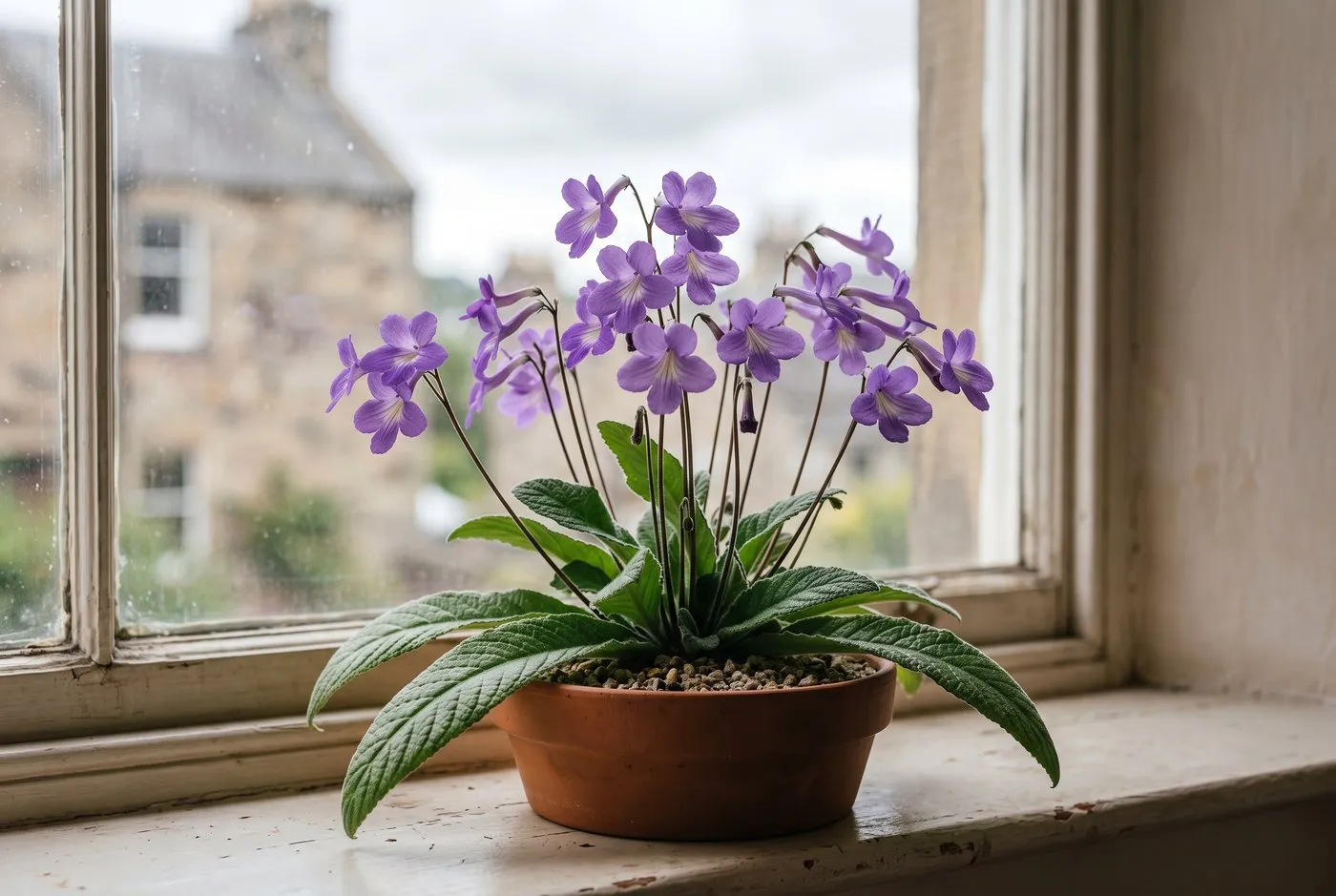
A happy plant in summer, with plenty of flower stems above the leaves. Snap off each stalk at the base once it fades.
How to grow streptocarpus from leaf cuttings
One healthy leaf can give you plenty of new plants. Take cuttings in late spring or summer, when the plant is growing well. Root them in gritty, peat-free cutting compost, cover with a clear lid or bag, and keep them somewhere warm and bright but out of direct sun.
Whole-leaf method
Cut a healthy leaf from the base. Trim off the tip to leave a piece 6-10cm long. Push the base about 2cm into the compost, keeping the leaf upright. Small plants form at the buried end.
Midrib method
This gives the most plants. Lay a leaf face down and cut out the central midrib, leaving two long strips. Push each strip cut edge down about 1cm into the compost. Tiny plants form all along the cut, usually within a couple of months.
Pot each young plant on once it has a few leaves of its own. The guide to propagating houseplants covers hygiene and humidity for any cutting.
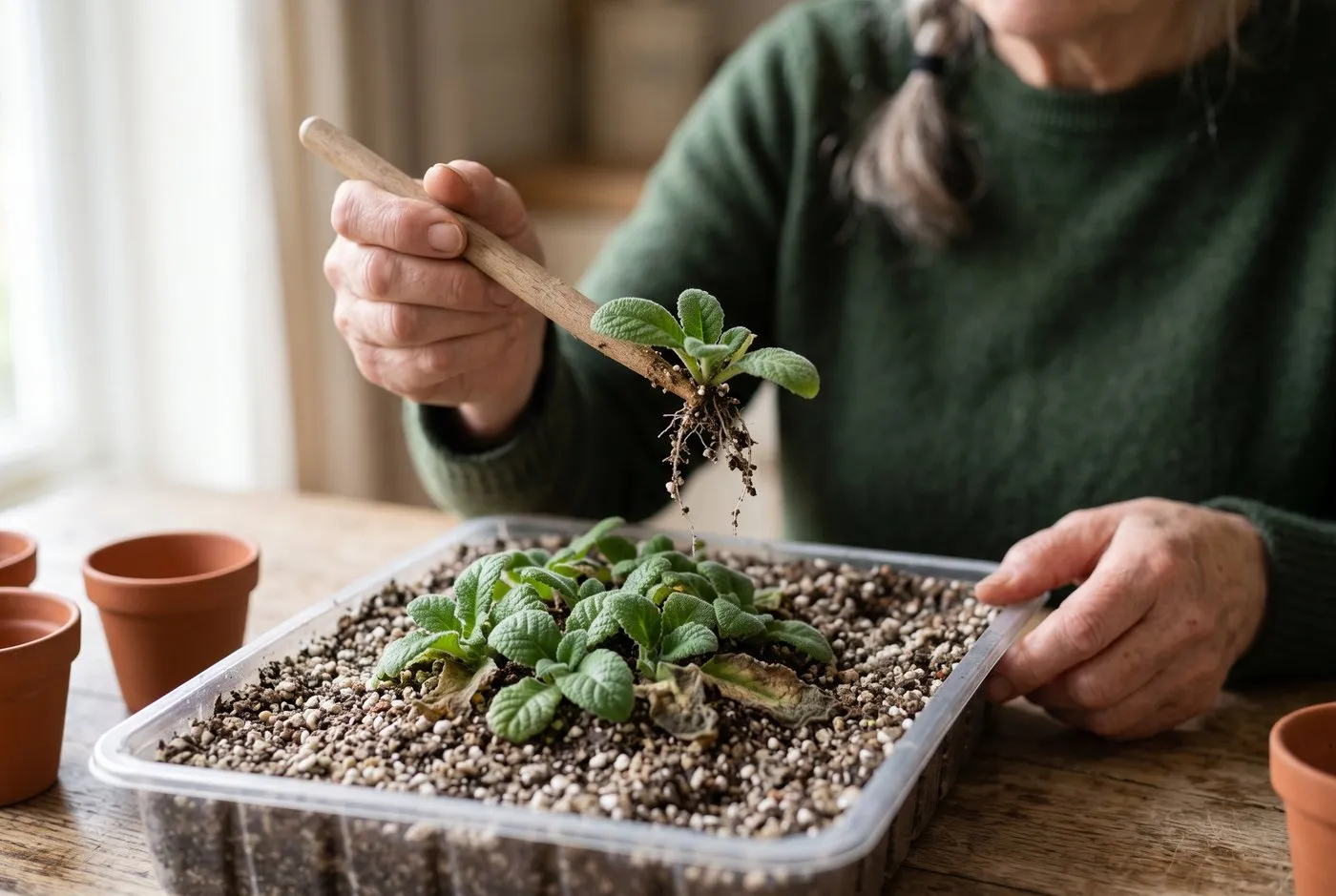
Young plants from leaf cuttings, ready to pot on. Lift each one gently with a dibber once it has a few leaves.
Repotting streptocarpus and why it stops flowering
Cape primrose has shallow roots, so it likes a wide, shallow pot. Repot every year or two in spring, going up just one pot size. A pot that’s too big stays wet and encourages leaf rather than flower.
Tired old compost and a cramped root ball both slow flowering. A spring repot into fresh peat-free houseplant compost, mixed with some perlite or fine grit, sorts most shy plants. Keep the crown sitting at the surface, not buried. If roots are circling the pot, the guide to fixing root-bound houseplants shows how to loosen them.
Cape primrose care month by month
| Month | Task |
|---|---|
| January | Resting. Keep cool, water sparingly, no feed |
| February | Still resting. Check the crown is firm. Look out for vine weevil grubs |
| March | Growth starts. Water more often and begin half-strength potash feeds |
| April | Repot if needed. Give it the brightest indirect light you have |
| May | Feed every couple of weeks. Take leaf cuttings |
| June | Water when the top dries. Remove spent flower stalks |
| July | Main flowering. Keep it back from hot glass |
| August | Keep feeding and deadheading. More cuttings if you like |
| September | Flowering slows. Ease off the feed late in the month |
| October | Stop feeding. Water a little less |
| November | Move to a cooler spot. Water just enough |
| December | Resting. Keep cool and bright. Pick off yellowing old leaves |
The RHS streptocarpus growing guide is handy if you want more detail.
Common mistakes with Cape primrose
- Overwatering: constantly damp compost rots the crown. Let the top dry and empty the saucer.
- Hot summer sun: a south sill in July bleaches and crisps the leaves. Use indirect light or a net curtain.
- The wrong feed: high-nitrogen feed gives leaves, not flowers. Switch to a high-potash feed.
- No winter rest: kept warm and wet all winter, plants get weak. Give them a cooler, drier spell.
- Burying the crown: it traps moisture and invites rot. Keep the crown at the compost surface.
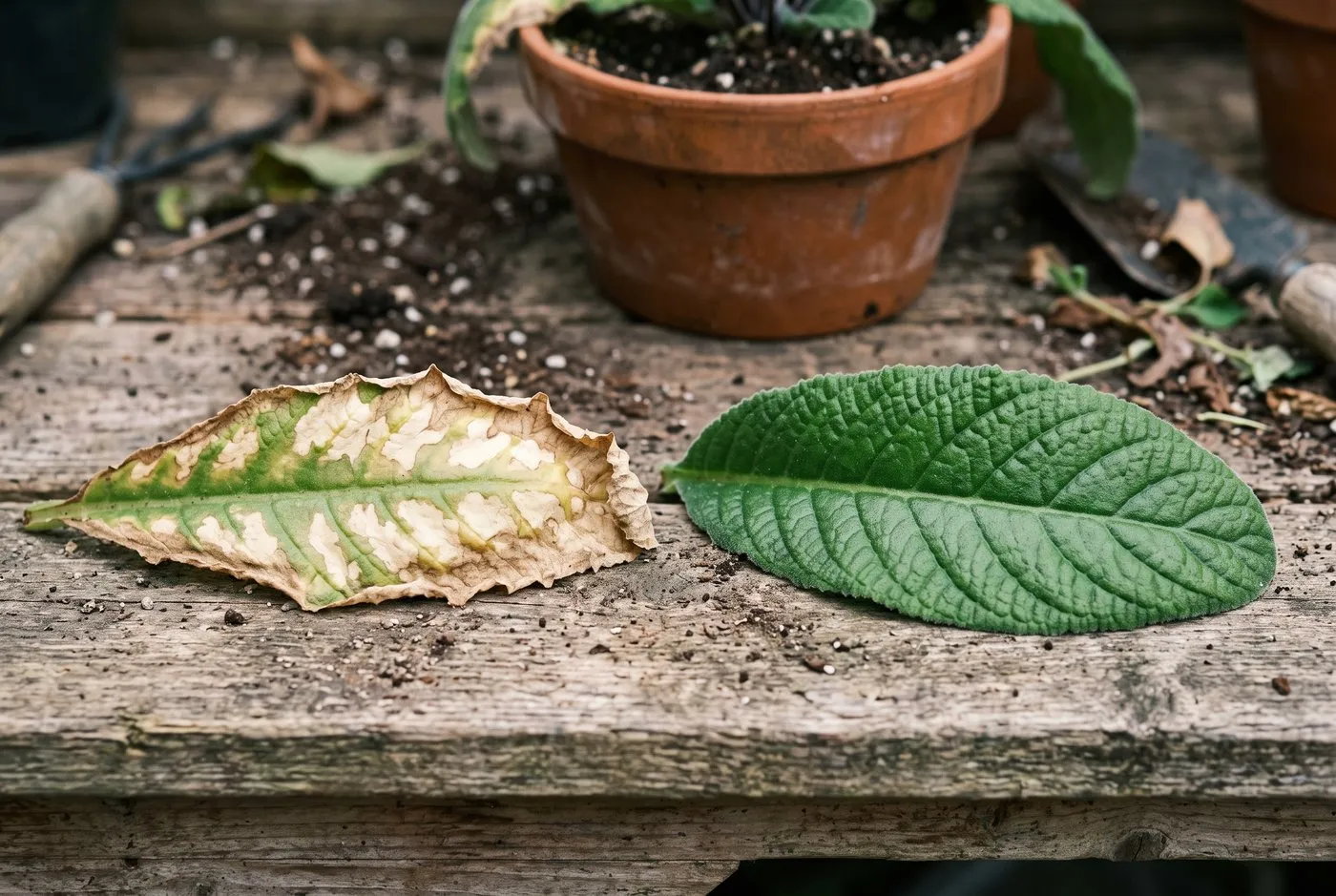
Left, a leaf scorched by summer sun through glass. Right, a healthy leaf grown in bright, indirect light.
Frequently asked questions
How do you grow streptocarpus indoors in the UK?
Grow it in bright indirect light on an east or north windowsill. Use peat-free compost in a shallow pot and water when the top 2-3cm dries. Feed with a high-potash feed through spring and summer, then keep it cooler and drier over winter.
How often should I water Cape primrose?
Water only when the top 2-3cm of compost feels dry. In summer that’s often about once a week; in winter, much less. Tip away any water left in the saucer. Overwatering is the most common way to lose one.
Why is my streptocarpus not flowering?
Too little light or the wrong feed is the usual cause. It needs bright indirect light and a high-potash feed to set buds. Tired compost, a cramped pot and no cool winter rest also cut flowering.
How do you propagate streptocarpus from a leaf?
Root leaf pieces in gritty compost in a warm, bright spot. Either stand a whole leaf upright with its base buried, or cut out the midrib and stand each half cut-edge down. Tiny plants form along the cut, usually within a couple of months.
Is streptocarpus poisonous to cats and dogs?
No, Cape primrose is listed as non-toxic to cats and dogs. That makes it a good flowering houseplant for homes with pets. Any pet chewing lots of leaves may still get a mild upset tummy, so discourage nibbling.
What temperature does streptocarpus need?
A normal heated home suits it, roughly 15-25°C in the growing season. Over winter, a cooler spot at about 10-13°C gives it a rest. Keep it above 10°C and away from cold draughts and radiators.
Should I cut off dead streptocarpus flowers?
Yes, remove each spent flower stalk at its base. Taking the whole stalk, not just the flower, keeps the plant tidy. It also stops old stalks rotting into the crown.
How long do streptocarpus plants live?
A well-grown plant lasts for several years. Repot every year or two into fresh compost to keep it going. When an old plant finally tires, replace it with young plants grown from its leaves.
Now your Cape primrose is settled, read our guide on how to repot houseplants for next spring’s refresh, or browse more houseplant guides.
Our team produces practical UK gardening guidance from source research, contributor records and established horticultural practice. Editorial standards are overseen by Matt W.