Key takeaways
- Buy oxalis only by name. Purple shamrock, Iron Cross and alpine O. adenophylla are safe to grow
- Avoid creeping wood sorrel and bulbil-forming pink sorrels, which spread fast and are hard to clear
- Purple shamrock is tender, so grow it indoors or bring it in before the first frost
- Alpine oxalis want gritty compost, full sun and no winter wet
- Weedkillers rarely clear weedy oxalis. Lift clumps whole, smother and keep hand-weeding
- Never rotavate or home-compost weedy oxalis, as both spread the bulbils
Oxalis can be a treasured houseplant or a weed you’ll battle for years. It all depends on the species. Purple shamrock, with its deep purple leaves that fold shut at dusk, is a lovely, easy pot plant. Creeping wood sorrel, seeding into gravel and paving cracks, is one of the most stubborn garden weeds.
The leaves look alike across the whole group, which is how people get caught out. This guide shows you which oxalis to grow, how to look after them, and how to spot and clear the weedy ones.
Is oxalis a weed or a garden plant?
Both. Oxalis, sometimes called wood sorrel, is a big group of plants. A handful are sold as ornamentals. Several more are among the most persistent weeds in UK gardens.
All oxalis have clover-like leaves, usually with three heart-shaped leaflets, sometimes four. The flowers have five petals, in yellow, pink, white or purple. A pretty pink flower can belong to a garden treasure or a weed, so colour alone won’t tell you. You need the name and to know how it spreads.
The safe rule is simple. Buy only a named ornamental oxalis, and be wary of free clumps from other gardens. The spreading kinds are the ones people have plenty of to give away.
Which oxalis to grow and which to avoid
| Oxalis | Common name | Grow or avoid? | How to spot it | How it spreads |
|---|---|---|---|---|
| O. triangularis | Purple shamrock | Grow | Purple triangular leaflets, pale pink flowers | Slow clump of small rhizomes |
| O. tetraphylla | Iron Cross | Grow | Four leaflets with a dark cross, pink flowers | Small bulbs, stays put |
| O. adenophylla | Silver shamrock | Grow | Low, silvery crinkled leaves, pink flowers | Bulb, stays put |
| O. versicolor | Candy cane sorrel | Grow | White flowers striped red underneath | Small bulb, tidy clump |
| O. corniculata | Creeping wood sorrel | Avoid | Tiny yellow flowers, small bronze-tinged leaves, creeping stems | Exploding seed pods, roots as it creeps |
| O. debilis and O. latifolia | Pink sorrels | Avoid | Pink flowers, broad leaflets | Lots of tiny bulbils |
| O. pes-caprae | Bermuda buttercup | Avoid | Bright yellow flowers, in mild areas | Bulbils |
| O. articulata | Pink sorrel | Think twice | Dense clump, bright pink flowers | Woody rootstock, regrows from pieces |
The pattern helps. Tiny yellow flowers on a low creeper mean creeping wood sorrel. Pink flowers on a spreading clump that pops up where you didn’t plant it mean one of the pink sorrels. The ones you want are the purple shamrock, the four-leaved Iron Cross and the low, silvery alpines.
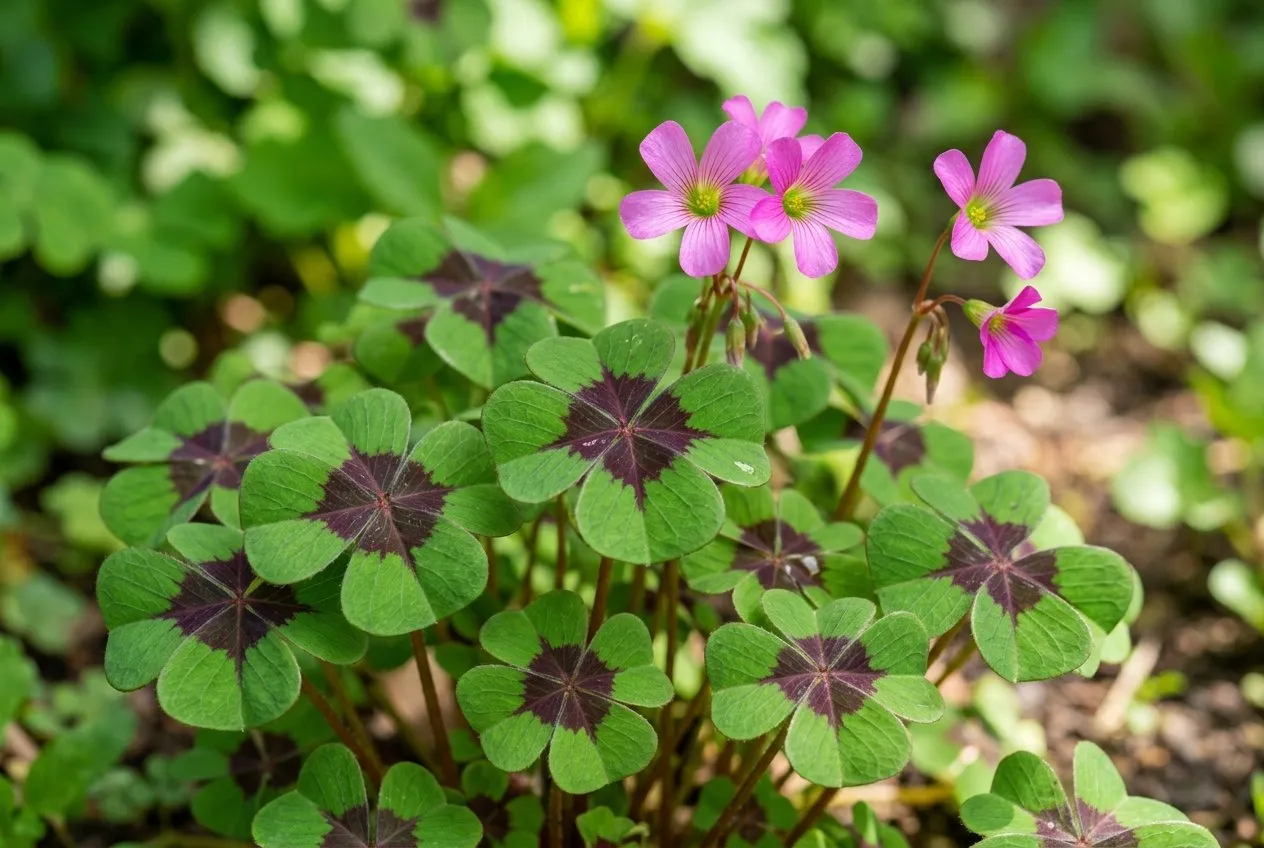
Iron Cross oxalis is easy to recognise by its four leaflets and dark central cross. It stays neatly where you plant it.
The best ornamental oxalis
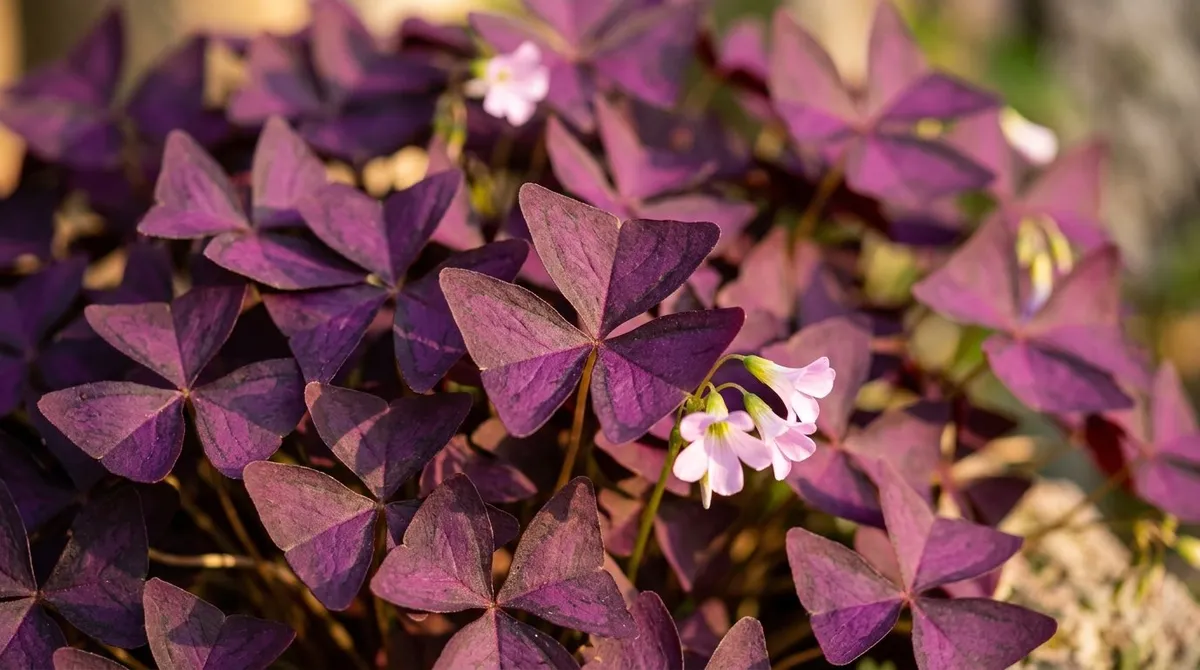
Purple shamrock (Oxalis triangularis) is the most popular. It has deep purple leaves split into three triangular leaflets, with pale pink or lilac flowers through summer. It grows 15-30cm tall from small rhizomes and makes a great houseplant. It’s tender, so it needs a frost-free winter.
Iron Cross (Oxalis tetraphylla), sometimes sold as O. deppei, is the four-leaf clover of the group. Each leaflet has a dark maroon blotch, and together they form a cross. Pink flowers rise above in summer. It grows from small bulbs and isn’t reliably hardy, so lift the bulbs or bring the pot in for winter.
Oxalis adenophylla is a hardy alpine. It forms a low tuft of silvery, crinkled leaves with pink, cup-shaped flowers in late spring. It holds an RHS Award of Garden Merit and suits a gritty trough or rock garden. Oxalis ‘Ione Hecker’ is a similar alpine with violet-blue flowers. Oxalis versicolor, candy cane sorrel, has white flowers striped red underneath, so the furled buds look like little sweets. It’s less hardy, so grow it in a pot you can shelter.
How to grow purple shamrock
Grow purple shamrock as a houseplant, or put it outside for summer and bring it in before frost. It’s the easiest ornamental oxalis.
Give it bright, indirect light. An east-facing windowsill keeps the purple colour rich. Harsh midday sun through south-facing glass can scorch the thin leaves. Outdoors from late May, stand it in partial shade. Use free-draining compost, such as peat-free multipurpose with some grit or perlite mixed in. Water when the surface dries and feed monthly through summer with a balanced liquid feed.
Purple shamrock takes rests. After a flush of growth the leaves may tire and flop. Cut the whole lot back to the compost, water very little, and wait a few weeks. Fresh leaves push up from the rhizomes. Plenty of new growers bin it at this stage, thinking it’s dead. It isn’t. It sits happily alongside the other best indoor plants on a bright shelf.
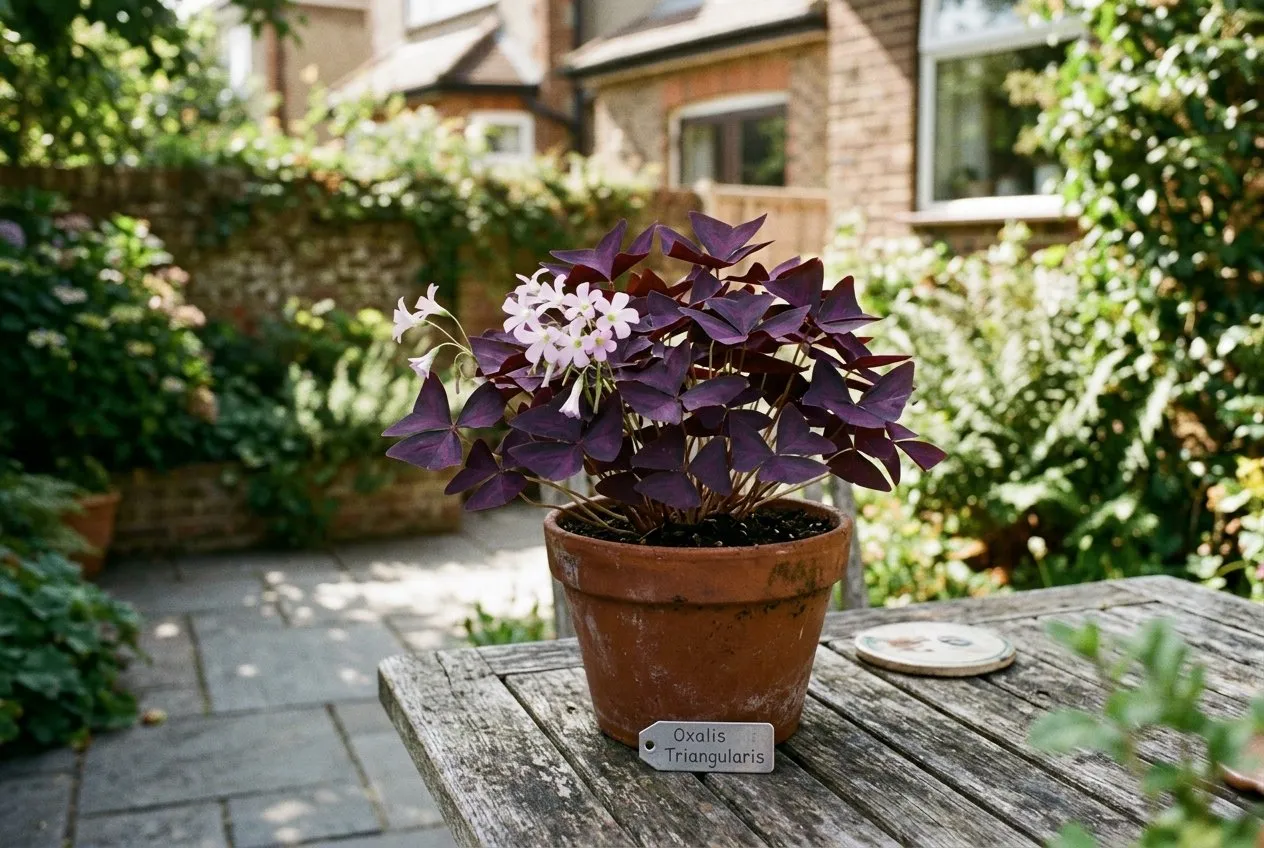
Purple shamrock enjoys a summer outside in partial shade. Bring it back in before the first autumn frost.
Why oxalis leaves fold up at night
Purple shamrock folds its leaves down every evening. This movement is called nyctinasty. As light fades, the leaflets drop into a closed umbrella shape, then open again in the morning. A sudden knock or deep shade can set it off too. It’s completely normal, and children love watching it happen.
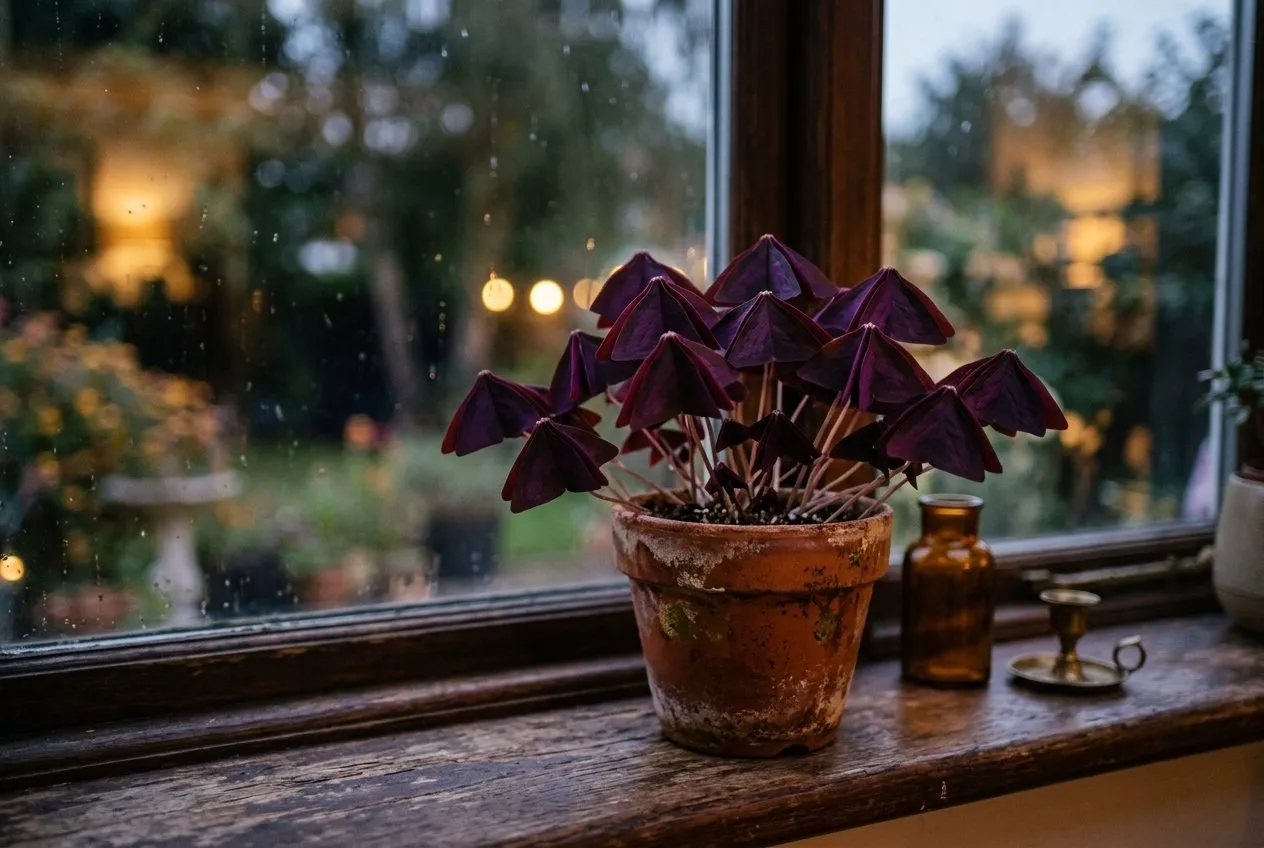
At dusk purple shamrock folds its leaves shut. By morning they’re open again.
How to grow alpine oxalis
Alpine oxalis want sharp drainage, full sun and lean compost. They rot quickly in rich, wet ground. Grow them in a gritty pan, a trough or a raised rock garden.
Mix equal parts loam-based compost, leaf mould and coarse grit. Plant the small bulbs about 3-4cm deep in autumn. Top the surface with a layer of grit and stand the pan in full sun, never in a saucer of water. In open ground, plant on a slope or raised bed where winter rain drains away fast. Our guide to alpine trough displays has ideas for planting partners.
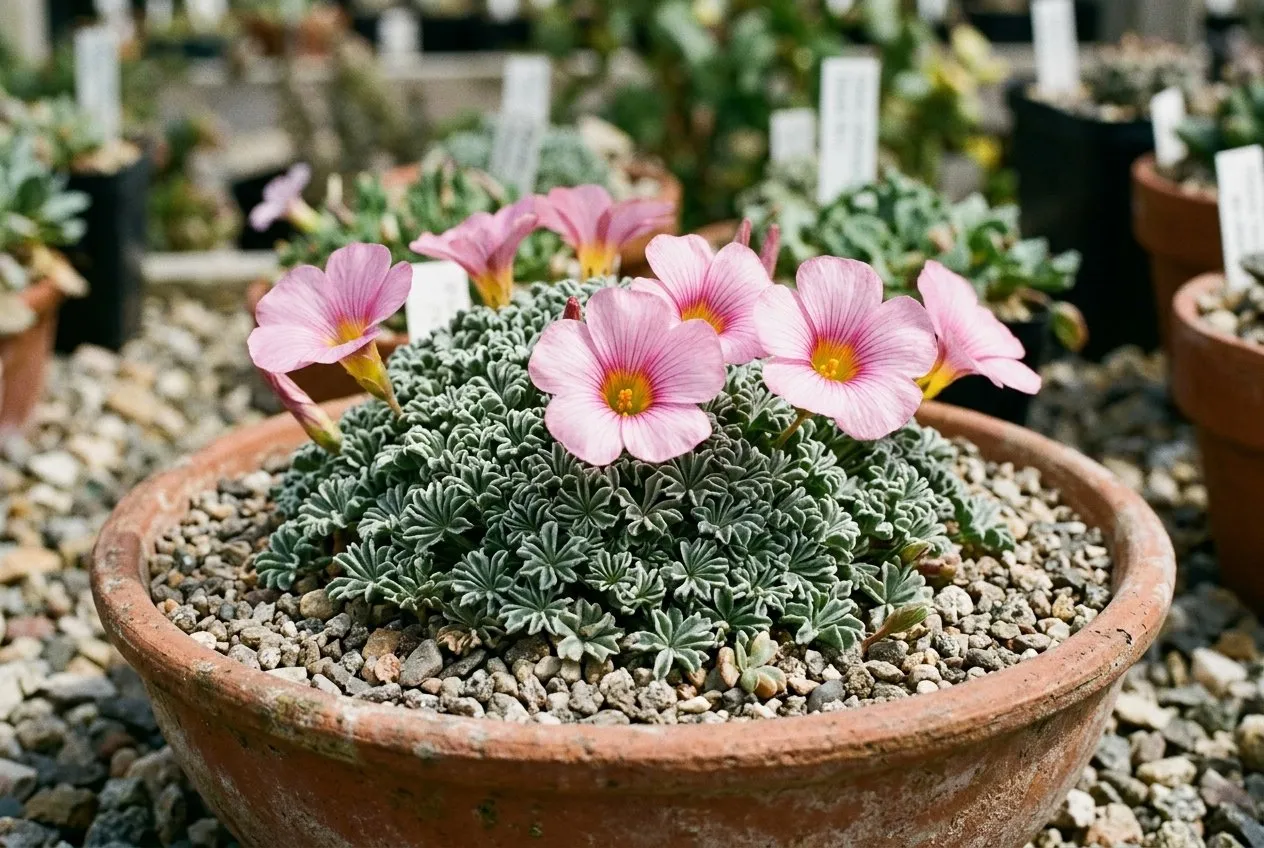
Oxalis adenophylla in a gritty pan. Full sun and sharp drainage keep this hardy alpine happy.
Overwintering tender oxalis
Purple shamrock, Iron Cross and candy cane sorrel all need protection from frost. Move pots under cover, somewhere frost-free, before the first hard night.
For bulbous types like Iron Cross, you can lift the bulbs instead. Wait until the leaves yellow in autumn, dig up the small bulbs, brush off the soil and store them dry in a paper bag in a frost-free shed. Replant about 4cm deep in spring once frosts are over. Label them, as small dry bulbs are easy to lose. Our guide to overwintering tender plants covers the basics.
How to spot invasive oxalis
Weedy oxalis are among the hardest garden weeds to clear, so keeping them out is far easier than getting rid of them. Check the rootball of any bought plant for tiny bulbils and creeping stems.
Creeping wood sorrel (Oxalis corniculata) is the worst in most gardens. It’s a low creeper with tiny yellow flowers and small leaves, often bronze or purple-tinged. Its stems root as they run. Its upright seed pods burst and fling seed well away from the plant, which is how it gets into pots, greenhouse gravel and paving so fast. It behaves a lot like hairy bittercress, another exploding weed.
The pink sorrels, such as Oxalis debilis and Oxalis latifolia, make lots of tiny bulbils around the parent. These break off and scatter the moment you dig. Bermuda buttercup (Oxalis pes-caprae) is a bright yellow weed in mild areas such as Cornwall and the Isles of Scilly. Oxalis articulata is sometimes grown on purpose, but it can spread and is hard to remove once settled. All of them can behave like the garden thugs that take over borders.
Look at behaviour, not just looks. An ornamental oxalis stays as a neat clump where you planted it. A weed turns up where you planted nothing and spreads into cracks, gravel and pot edges.
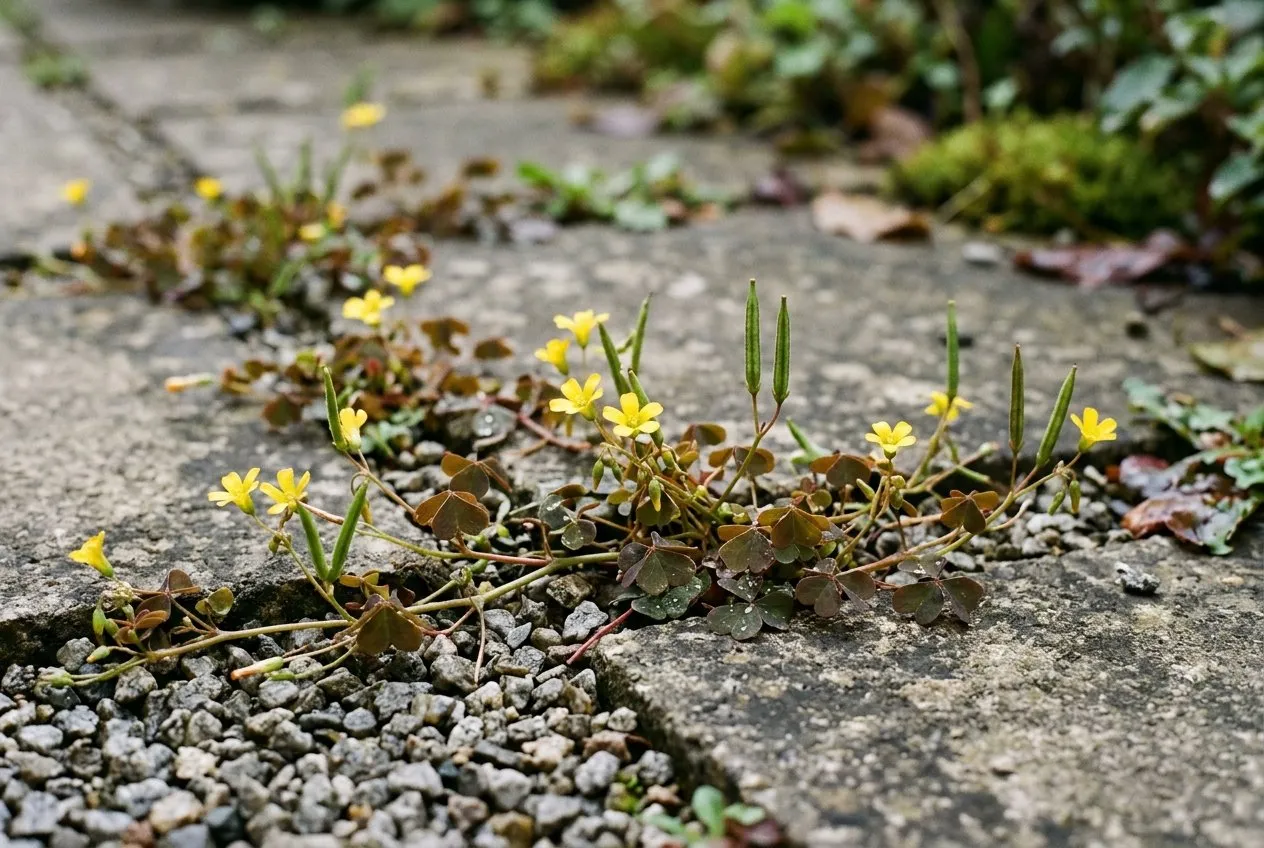
Creeping wood sorrel in a paving crack. Those upright pods burst and scatter seed, so pull it before they ripen.
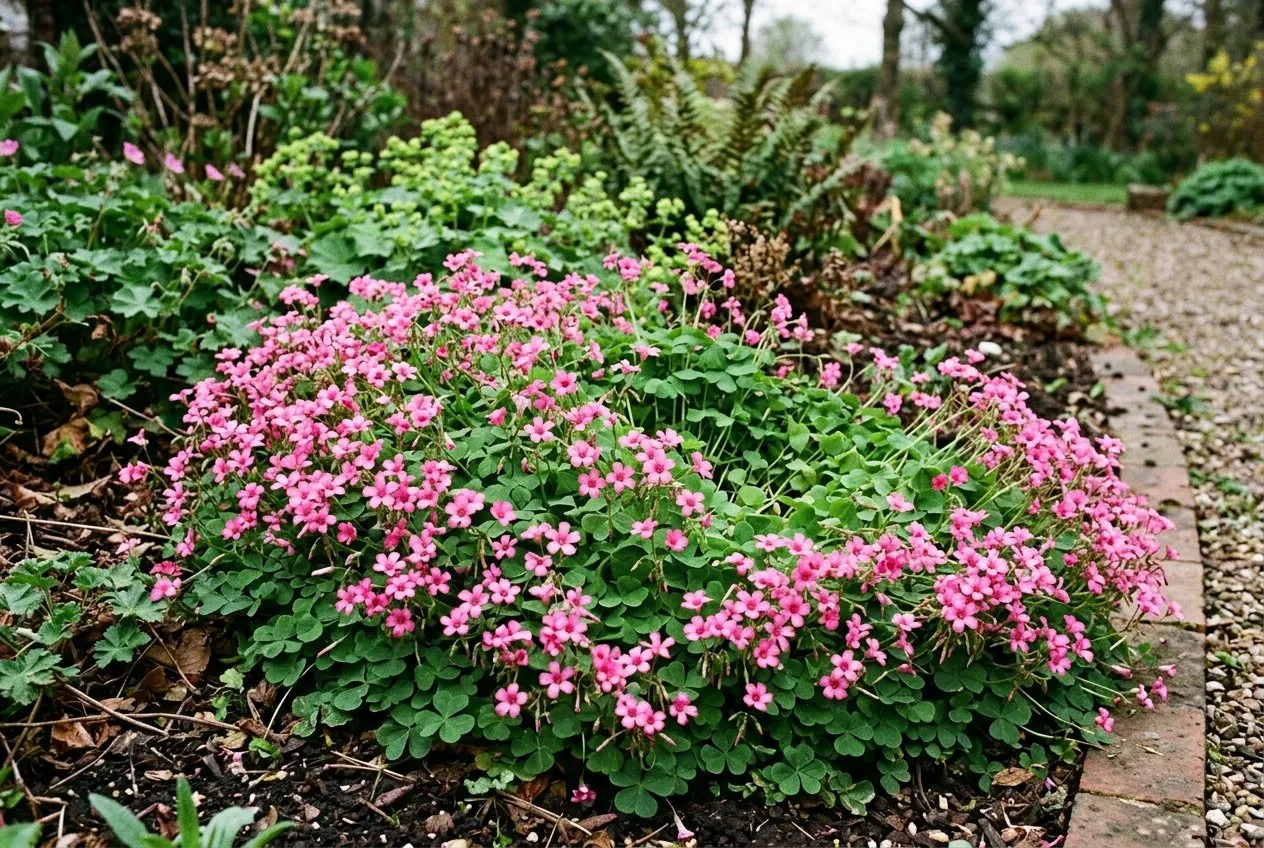
A pink sorrel spreading along a border edge. If clover-leaved plants appear where you planted nothing, act early.
How to get rid of oxalis weeds
Getting rid of weedy oxalis means lifting, smothering and stopping seed. Weedkillers rarely clear it, as the bulbils and root pieces survive. If you do use one, choose an approved product for that use and follow the label. Expect repeat treatments.

Lift the whole clump onto a sheet so the tiny bulbils don’t scatter, then pick out every one you can see.
Hand-weeding. Pull creeping wood sorrel, roots and all, before the seed pods ripen. For the bulb-forming pink sorrels, don’t just dig. Ease a fork under the whole clump, lift it in one piece onto a sheet, and pick out every bulbil you can see. Come back every few weeks for regrowth, because you won’t get every bulbil first time.
Smothering. For a big patch, cover the ground with cardboard and a thick layer of mulch, and leave it for at least a full season. Without light the plants run out of steam. Our guide to cardboard mulching shows how to do it.
Two rules matter most. Never rotavate ground with bulb-forming oxalis, as the blades spread bulbils everywhere. And never put it on the home compost heap. Bulbils and seed can survive and spread wherever the compost goes. Bag roots, bulbils and seed heads and put them in the bin.
For help telling oxalis apart from other weeds, see our common garden weeds identification guide.
Is oxalis safe for pets?
Oxalis contains soluble oxalates. A nibble usually causes no more than a mild stomach upset, but large amounts can affect the kidneys of cats, dogs and rabbits. Keep purple shamrock out of reach of pets that chew plants.
Oxalis calendar
| Month | What to do |
|---|---|
| January to February | Keep tender pots frost-free and barely moist. Check stored bulbs |
| March | Start watering tender pots as light returns. Divide crowded purple shamrock |
| April | Pot up stored Iron Cross bulbs. Alpine oxalis start growing |
| May | Alpine oxalis flower. Move tender pots outside after the last frost |
| June to July | Feed purple shamrock monthly. Pull creeping wood sorrel before it seeds |
| August to September | Keep weeding seedlings. Bag weed seed heads. Water ornamentals less |
| October | Bring tender pots in before frost. Lift Iron Cross bulbs |
| November to December | Smother heavy weed patches with cardboard and mulch |
Common mistakes with oxalis
Accepting an unnamed oxalis. A free clump of pretty pink oxalis is often a weedy sorrel. Buy only named ornamentals.
Leaving purple shamrock out in frost. It’s tender. Bring outdoor pots in every autumn.
Binning purple shamrock when it flops. It’s resting. Cut it back, water less and wait.
Digging weedy oxalis carelessly. A fork through a patch scatters bulbils. Lift clumps whole and pick out every bulbil.
Rich, wet compost for alpines. Alpine oxalis rot in rich soil. Give them grit, full sun and little water in winter.
Frequently asked questions
Is oxalis a weed or a garden plant?
It’s both, depending on the species. Purple shamrock and Oxalis adenophylla are lovely ornamentals. Creeping wood sorrel and the bulbil-forming pink sorrels are stubborn weeds. Always buy a named ornamental and learn to spot the weedy ones.
How do you grow purple shamrock oxalis?
Grow it as a houseplant or a summer patio plant. Give it bright, indirect light and free-draining compost. Water when the surface dries. It’s tender, so bring outdoor pots in before the first frost. If it flops, cut it back and rest it.
Why is oxalis so hard to get rid of?
Because it spreads by exploding seed pods or tiny bulbils. Creeping wood sorrel flings seed well away from the plant. Pink sorrels make lots of tiny bulbils that scatter when you dig. Weedkillers rarely clear it, so lift clumps whole, smother and keep weeding.
Can you compost oxalis weeds?
No, keep weedy oxalis off the home compost heap. Bulbils and seeds can survive and spread wherever the compost goes. Bag the roots, bulbils and seed heads and put them in the bin.
Are the alpine oxalis hardy in the UK?
Yes, Oxalis adenophylla and ‘Ione Hecker’ are hardy outdoors. They need gritty, free-draining soil or a trough in full sun. Oxalis versicolor is less hardy and best in a pot you can shelter. All of them hate sitting wet in winter.
Why do oxalis leaves fold up at night?
It’s a normal nightly movement, called nyctinasty. As light fades, the leaflets fold down like a closed umbrella. They open again in the morning. A sudden knock or deep shade can trigger it too. It’s a sign of a healthy plant, not stress.
Is oxalis poisonous to pets?
Yes, it can be harmful if pets eat a lot. Oxalis contains soluble oxalates. A nibble usually causes no more than a mild stomach upset, but large amounts can affect the kidneys. Keep purple shamrock out of reach of chewing pets.
Now you can tell the good oxalis from the bad, find more weed help in our problems hub, or keep weeds down for good with our guide to preventing weeds without chemicals.
Our team produces practical UK gardening guidance from source research, contributor records and established horticultural practice. Editorial standards are overseen by Matt W.