Key takeaways
- Hairy bittercress is a fast little annual weed of pots, gravel, staging and bare soil
- Ripe pods flick seed a metre or two when touched, so act before they form
- Hoe or pull rosettes every week or two from late winter through spring
- It often arrives in the compost of bought pot plants, so weed the top before planting
- A 5-8cm mulch on bare soil stops most seedlings coming up
- The young leaves are edible and taste like mild, peppery cress
Hairy bittercress is the little weed that fires its seeds at you when you brush past. Hairy bittercress (Cardamine hirsuta) is a fast-growing annual that loves pots, gravel, greenhouse staging and bare soil. The good news is that it has shallow roots and comes up easily. The trick is to remove it before the pods ripen. And if some escapes, the young leaves make a tasty, peppery salad.
This guide covers how to spot it, why it spreads so fast, how to keep on top of it and how to stop it arriving in the first place. For other weeds that look similar when small, see the visual guide to common garden weeds.
How to identify hairy bittercress
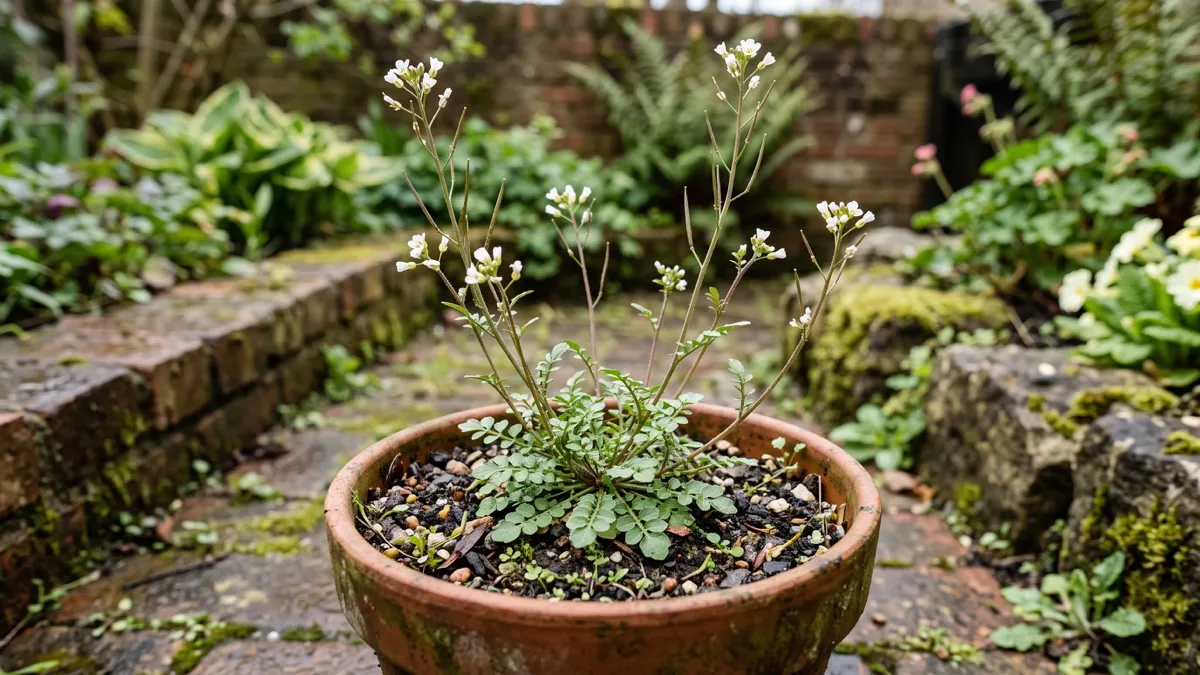
Look for a flat rosette, tiny white flowers and thin, upright seed pods. The rosette sits close to the soil. Each leaf is split into several small, rounded leaflets along a stalk, with a slightly bigger one at the tip. Despite the name, it doesn’t look very hairy.
Thin stems rise from the middle, usually less than 30cm tall. They carry clusters of tiny white flowers with four petals each. The slender green seed pods stand upright around and above the flowers. Those pods are the real giveaway, and the source of all the trouble.
A close cousin, wavy bittercress (Cardamine flexuosa), looks very similar. It’s usually a bit taller, with a slightly zigzag stem and more leaves up the stem. It likes damper, shadier spots. You don’t need to tell them apart, as the control is exactly the same. Small seedlings can also be mistaken for chickweed, which has plain oval leaves instead.
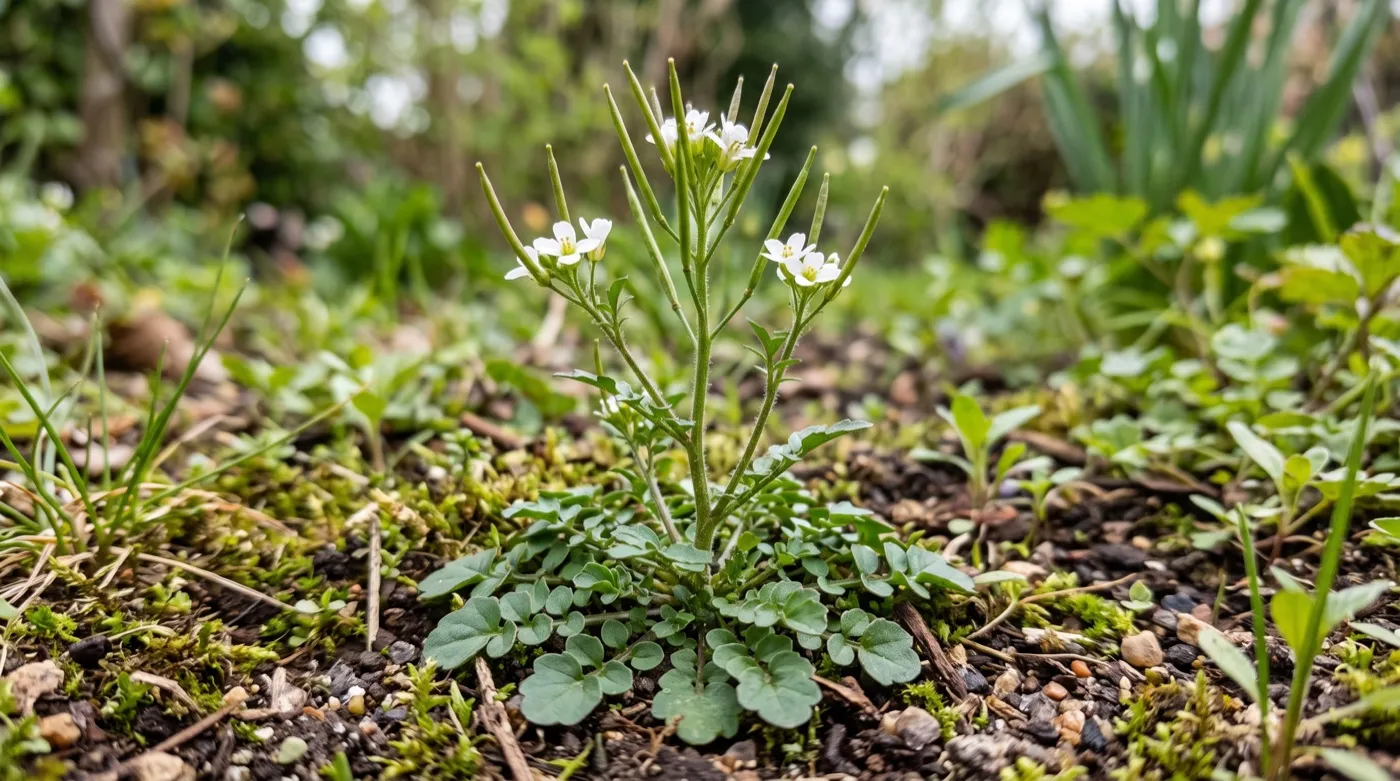
The flat rosette of little rounded leaflets is the key thing to look for. Catch it at this stage and it’s a two-second job.
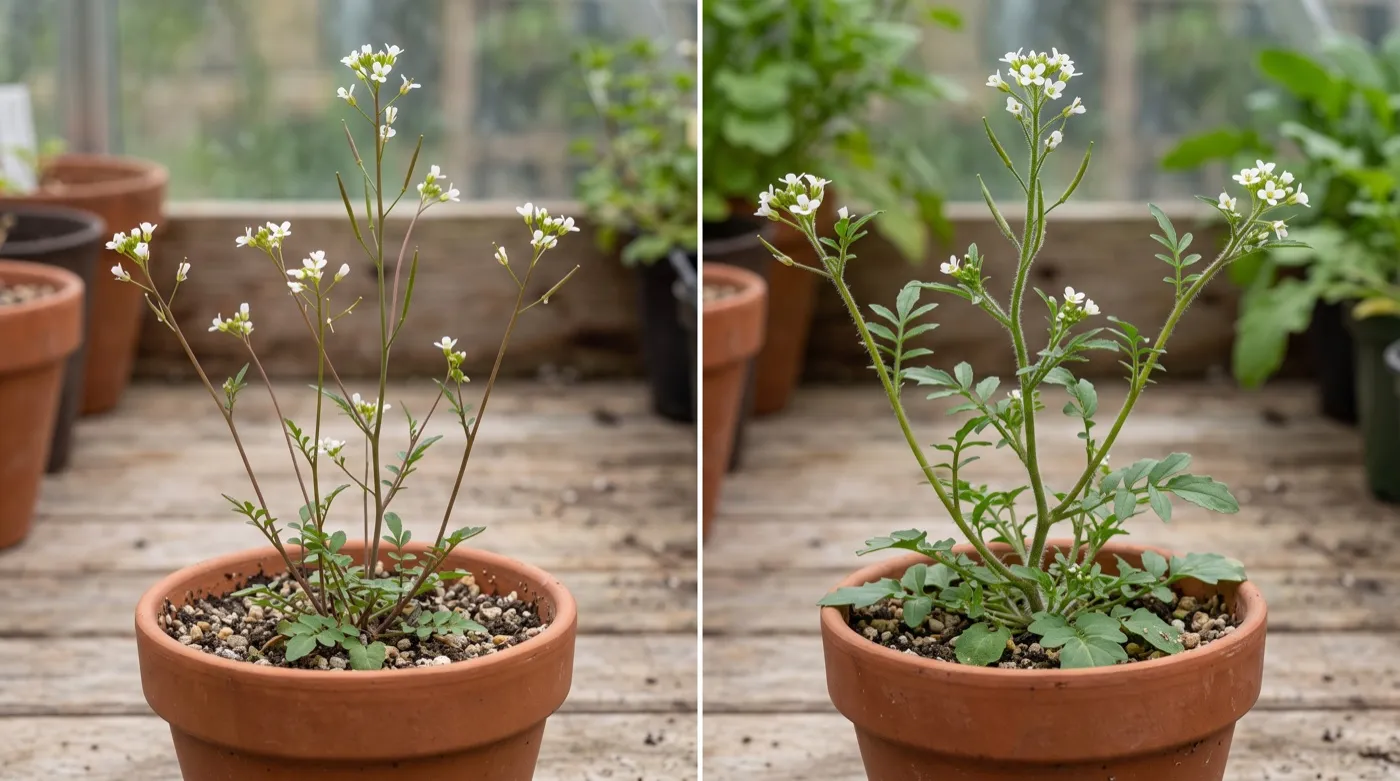
Hairy bittercress (left) and wavy bittercress (right) are hard to tell apart. Happily, you deal with both in exactly the same way.
Why does bittercress spread so fast?
It grows quickly and fires its seeds. A plant can go from seedling to seed in just a few weeks in mild weather. Several generations can come and go in a single year, from late winter right through to autumn.
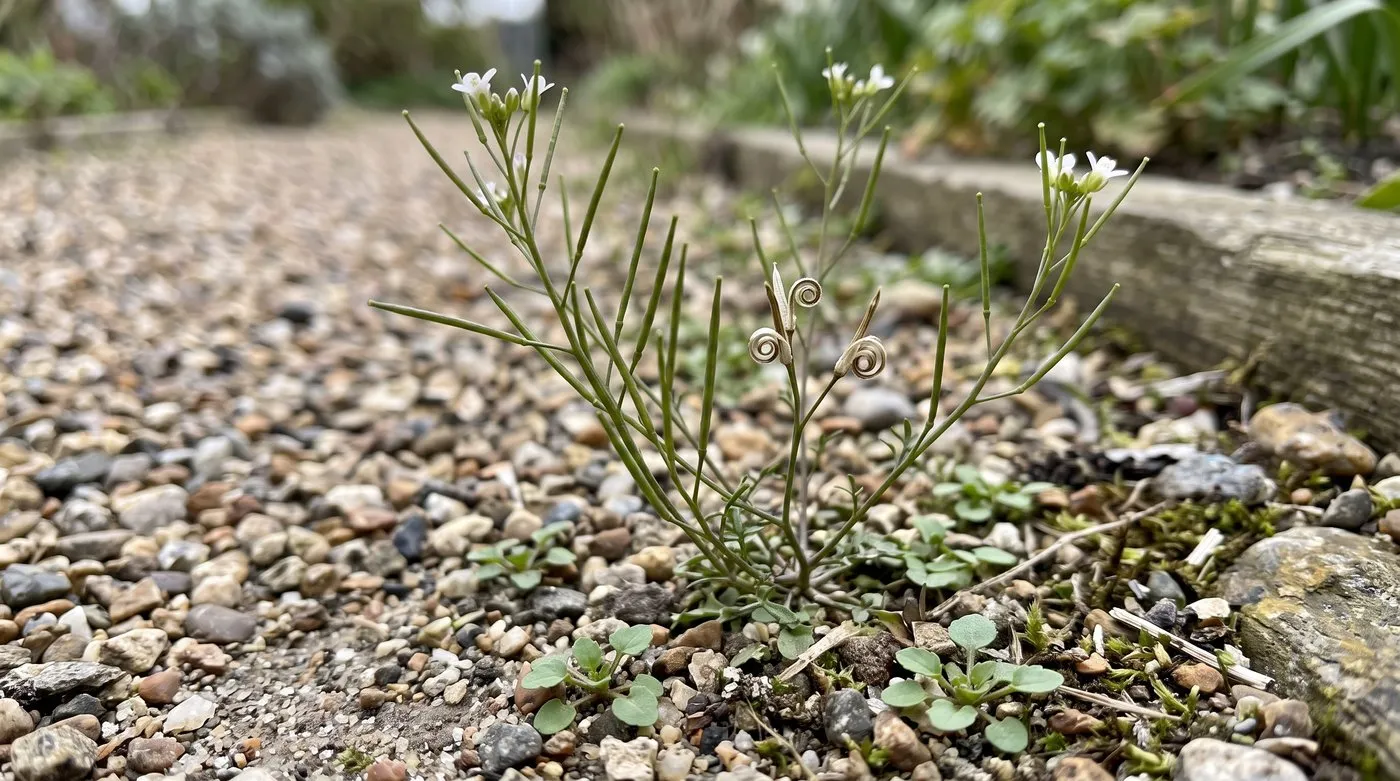
Spent pods curl back like springs after firing their seed. Spot these and you know seedlings are on the way.
As each pod ripens, tension builds in its walls. When it’s touched, or simply dries, the pod splits and its two halves curl back in a flash. The tiny seeds are flung a metre or two. That’s why brushing past a ripe plant on the greenhouse bench can seed every pot nearby.
Seeds sprout best on bare, damp soil and pot compost. So the answer to all that speed is simple: never let the pods ripen, and don’t leave soil bare.
How to get rid of hairy bittercress
Hoe or pull it while it’s young, before the seed pods form. It’s a shallow-rooted annual with no deep roots to come back from. The challenge is keeping it up, not the effort.
- Hoe little and often. Run a sharp hoe over gravel, paths and bare border soil on a dry day. It slices off seedlings in seconds. The guide to hoeing borders covers which hoe to use and when.
- Pull by hand in pots. Pinch out rosettes from the tops of pots and seed trays. They lift with barely a tug.
- Go round every week or two. New seedlings come up in waves, especially after rain. One clear-up is never enough.
- Be gentle with seeding plants. If pods have already formed, don’t yank the plant out. Cup your hand round it, lift it carefully and drop it straight into a bag. Then watch for seedlings over the next few weeks.
Pop seeding plants in the green waste bin rather than the compost heap, as a cool heap won’t kill the seeds.
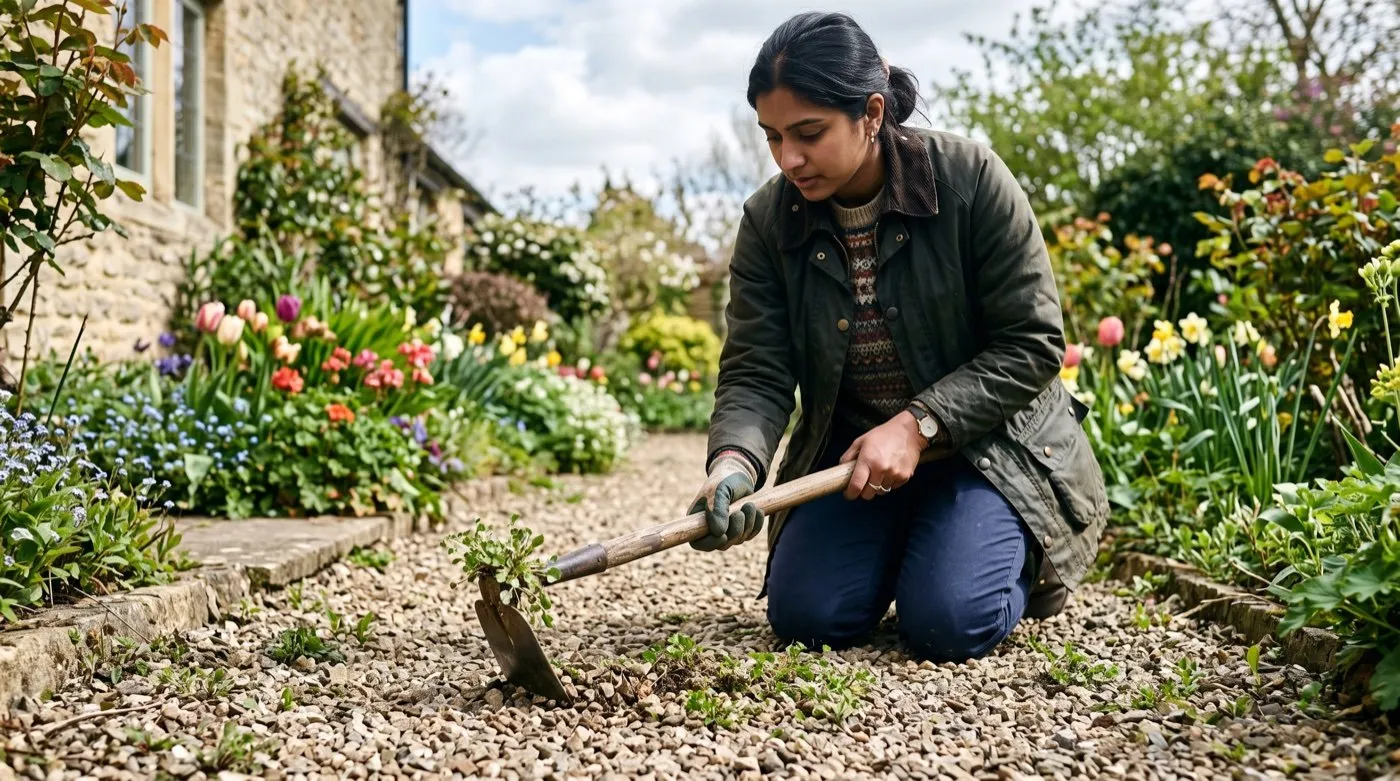
A quick pass with the hoe on a dry day slices off seedlings in seconds. Do it every week or two in spring.
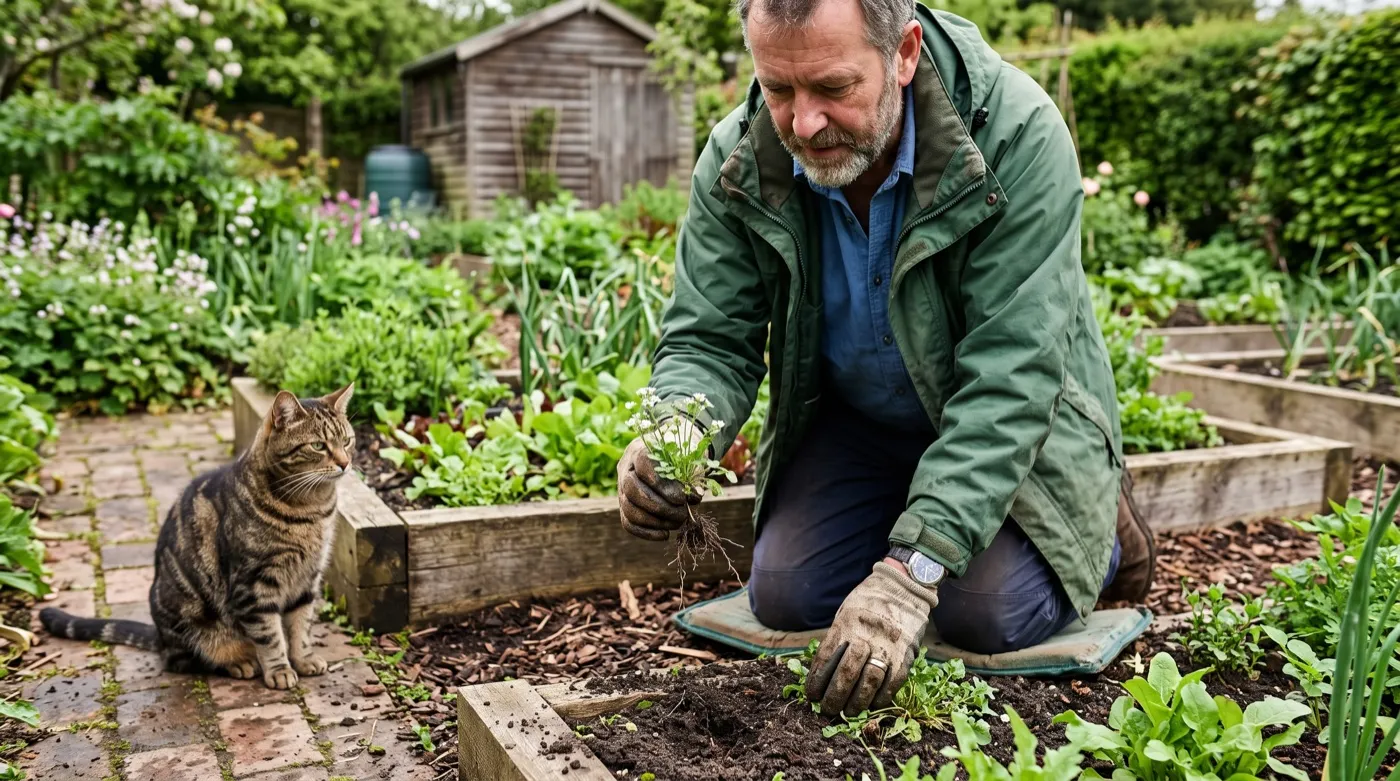
Young plants lift out with a gentle tug. Get them before those upright seed pods have a chance to ripen.
How to stop bittercress coming back
Cover bare soil and check every plant you bring home. These two habits cut the problem down far more than any amount of weeding.
Mulch bare soil. A 5-8cm layer of garden compost, bark or leaf mould on borders stops most seedlings from coming up. Top it up as it thins. The guide to mulching with cardboard and grass clippings covers a cheap option for larger areas.
Check bought plants. Bittercress often hitches a ride in the top of the compost in garden-centre pots. Pull out any rosettes before you plant, and scrape off the top centimetre of compost if it’s full of seedlings. Do the same with plants from friends and plant swaps.
Keep seed trays clean. Use fresh compost for sowing, and give the greenhouse staging a quick check whenever you pass. Watering seed trays from below helps keep the surface drier, so fewer weed seeds sprout. The guide to bottom-watering seed trays shows how.
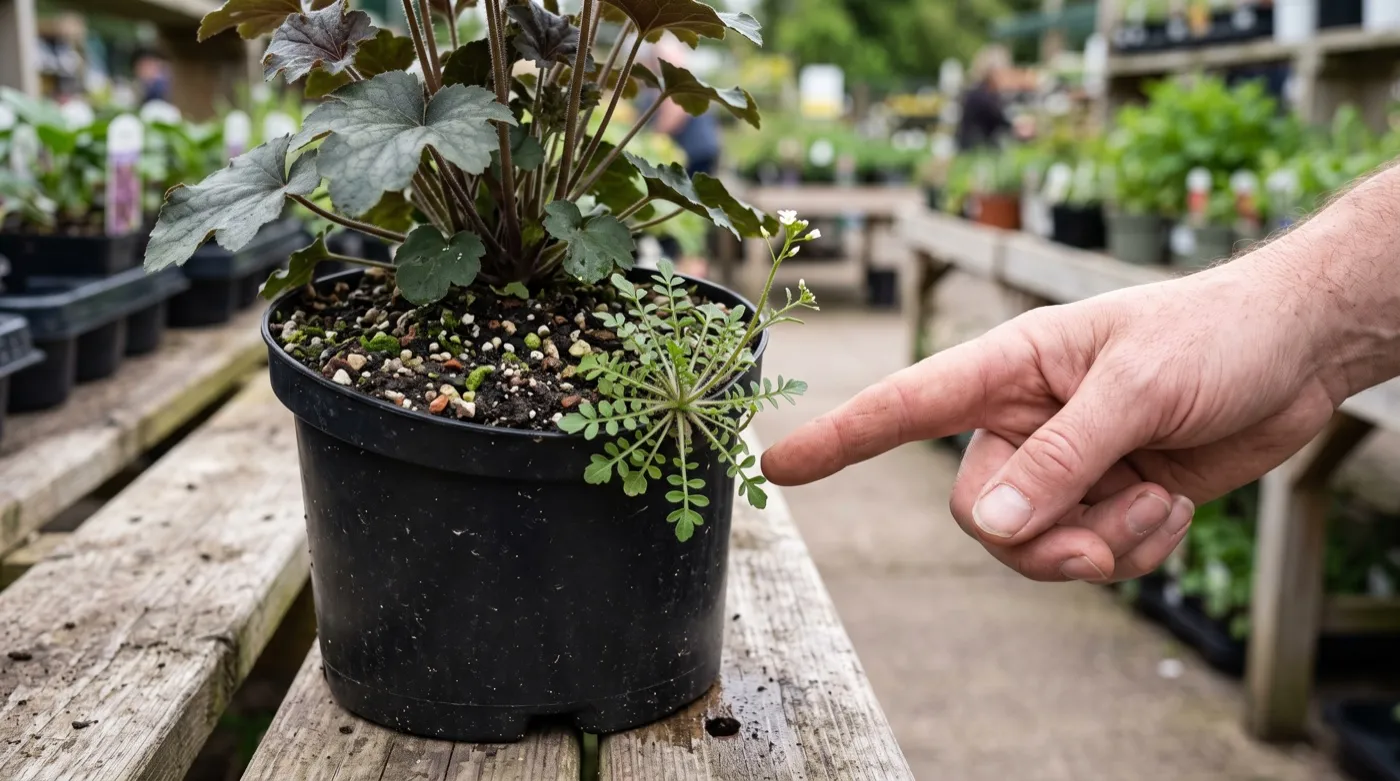
Spot the stowaway. Weed the top of every new pot before planting, or it’ll seed itself all round your garden.
Gardener’s tip: Keep an old fork or a small hoe by the greenhouse door. Give the staging and pot tops a quick once-over whenever you’re in there. Bittercress control is a habit, not a job you book in.
Can you eat hairy bittercress?
Yes, the young leaves are edible and taste like mild, peppery cress. Despite the name, they aren’t bitter. It belongs to the cabbage family, the same family as watercress.
Use the small rosette leaves in salads, sandwiches or as a garnish. They’re at their best in late winter and early spring, when there’s little else fresh in the garden. Pick from plants that haven’t been sprayed and aren’t where pets or other animals go to the toilet. Wash them well, and use young leaves rather than tough older stems. The guide to edible garden weeds has more weeds worth eating.
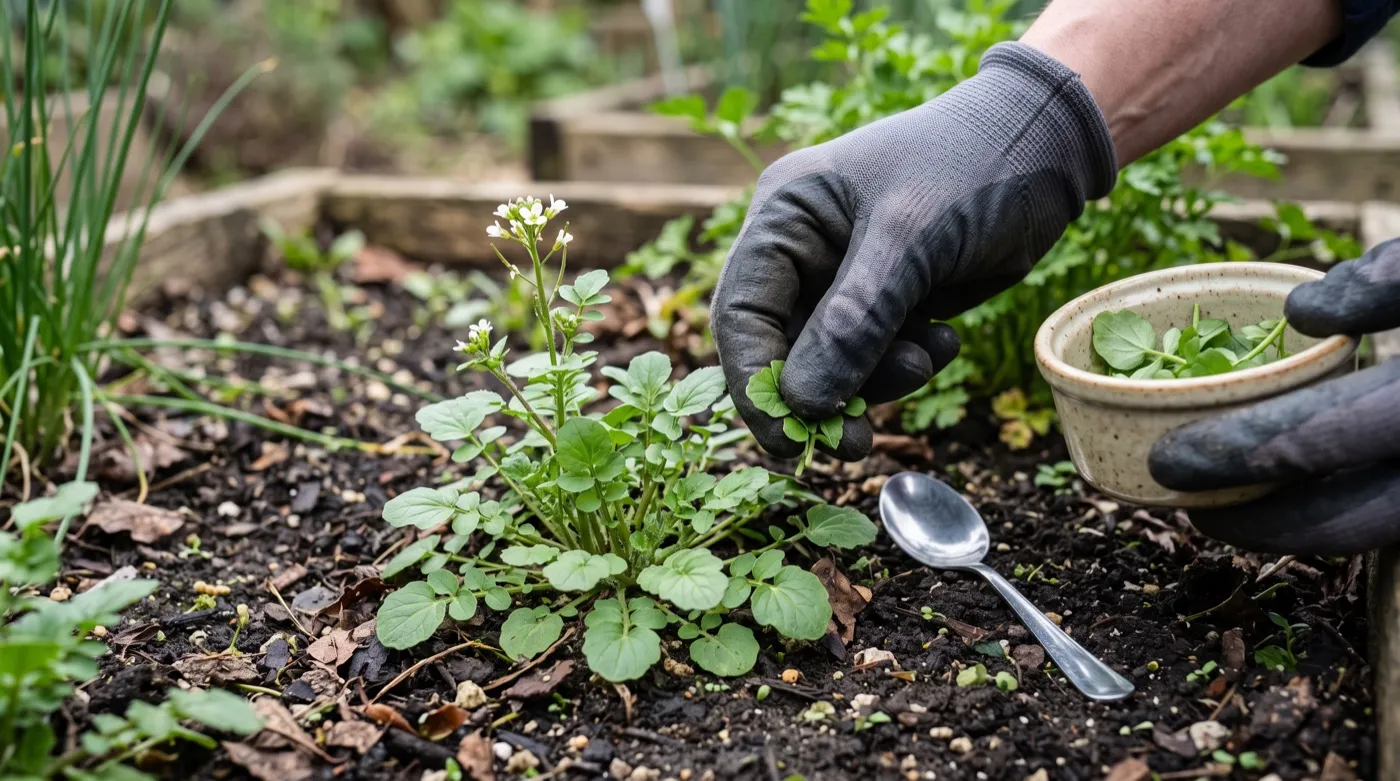
Weeding and lunch in one go. Pick the young leaves for a peppery cress-like salad in late winter and spring.
Which bittercress control works best?
| Method | Good for | Watch out for |
|---|---|---|
| Hoeing every week or two | Gravel, paths, bare borders | Needs keeping up in spring |
| Hand-pulling | Pots, seed trays, staging | Gentle with plants already in pod |
| Mulching 5-8cm deep | Borders and beds | Doesn’t help on gravel or staging |
| Weeding bought plants | Stopping new arrivals | Only works if you do it every time |
| Letting it flower, then pulling | Nothing | Spreads seed everywhere |
The winning combination is the first three together: hoe little and often, pull from pots and mulch bare soil.
Month-by-month bittercress calendar
| Month | What to do |
|---|---|
| January to February | First rosettes and early flowers. Hoe in mild spells. Pick young leaves to eat |
| March | Main flush of seedlings. Check pots, gravel and staging every week or two |
| April | Plants racing to seed. Keep hoeing after every wet spell. Mulch bare borders |
| May | Keep on top of new flushes. Weed the tops of bought plants before planting |
| June to August | Fewer seedlings in dry weather, more after rain. Quick checks as you pass |
| September to October | Autumn flush. Clear seedlings before they overwinter |
| November to December | Hoe overwintering rosettes on mild days. Top up mulch |
Common mistakes with hairy bittercress
- Waiting until it flowers. By the time you notice the pods, the next lot of seed is loaded. Remove the rosettes while they’re tiny.
- Yanking out seeding plants. That sets the pods off. Cup the plant and lift it gently into a bag.
- Leaving soil bare. Bare, damp soil is exactly where seedlings come up. Mulch it.
- Planting bought plants without checking. The top of the pot is often full of bittercress. Weed it first.
- Weeding once and stopping. New seedlings appear in waves. Little and often wins.
Frequently asked questions
How do I identify hairy bittercress?
Look for a flat rosette, tiny white four-petalled flowers and thin upright seed pods. Each leaf is split into small rounded leaflets, with a slightly bigger one at the tip. The plant is usually under 30cm tall in flower.
Why does bittercress spread so fast?
It grows quickly and its ripe pods fling seed when touched. Several generations can flower in one year. The seeds land a metre or two away, often in neighbouring pots.
How do I get rid of hairy bittercress?
Hoe or pull the young plants before the seed pods form. The roots are shallow, so it comes up easily. Keep at it every week or two through spring, as new seedlings appear in waves.
Does mulching stop bittercress?
Yes, a 5-8cm mulch stops most seedlings coming up. Use garden compost, bark or leaf mould on bare soil. Top it up as it thins and pull any seedlings that root in the surface.
Is hairy bittercress edible?
Yes, the young leaves are edible and taste like mild, peppery cress. Despite the name, they aren’t bitter. Pick clean young leaves from plants that haven’t been sprayed, wash them and use them in salads or sandwiches.
Where does bittercress keep coming from?
Often from the compost of newly bought pot plants. It also seeds itself into any bare, damp soil, gravel or staging nearby. Weeding the top of every bought plant before you plant it shuts off a common route in.
When should I control bittercress?
From late winter onwards, and always before the pods form. It can flower as early as February. Hoe every week or two through spring and again after wet spells in autumn.
Find more weed fixes in the garden problems hub. Once the bittercress is under control, read our guide to preventing weeds without chemicals to keep the rest at bay.
Our team produces practical UK gardening guidance from source research, contributor records and established horticultural practice. Editorial standards are overseen by Matt W.