Key takeaways
- Weekly hoeing eliminates 95% of UK weed problems
- Best timing: dry sunny mornings, March-October
- Hoe at weed seedling stage (under 25mm)
- Best tools: Dutch hoe, oscillating stirrup hoe, onion hoe
- Hoe shallow (25-40mm depth) to avoid disturbing crop roots
- Avoid wet soil hoeing; cut weeds re-root
Hoeing borders is the single highest-impact UK garden weed control technique. A weekly 15-minute routine catches weeds at the 2-4 leaf stage before they ever need pulling. This guide covers when to hoe, how often, which tools to choose, and the dry-weather rule that decides success.
When to Hoe in UK Gardens
The single biggest factor in successful UK hoeing is timing within the season.
| Period | Hoe frequency | Reason |
|---|---|---|
| November-February | Monthly check | Most weeds dormant; minimal growth |
| March-April | Weekly | Spring flush of seedlings |
| May-June | Weekly | Peak germination and growth |
| July-August | Weekly | Continued growth in warm wet weather |
| September-October | Weekly | Autumn weed flush |
| December-January | Skip in heavy frost | Frozen soil; hoeing damages structure |
Best time of day: dry sunny morning. Cut weeds wilt in the sun by afternoon and die by evening. Hoeing in late afternoon or evening leaves cut weeds in cool damp conditions where re-rooting is likely.
Soil condition test: if you can walk on the soil without leaving deep footprints, it’s dry enough to hoe. Squelchy soil ruins the technique.
The Best UK Hoes
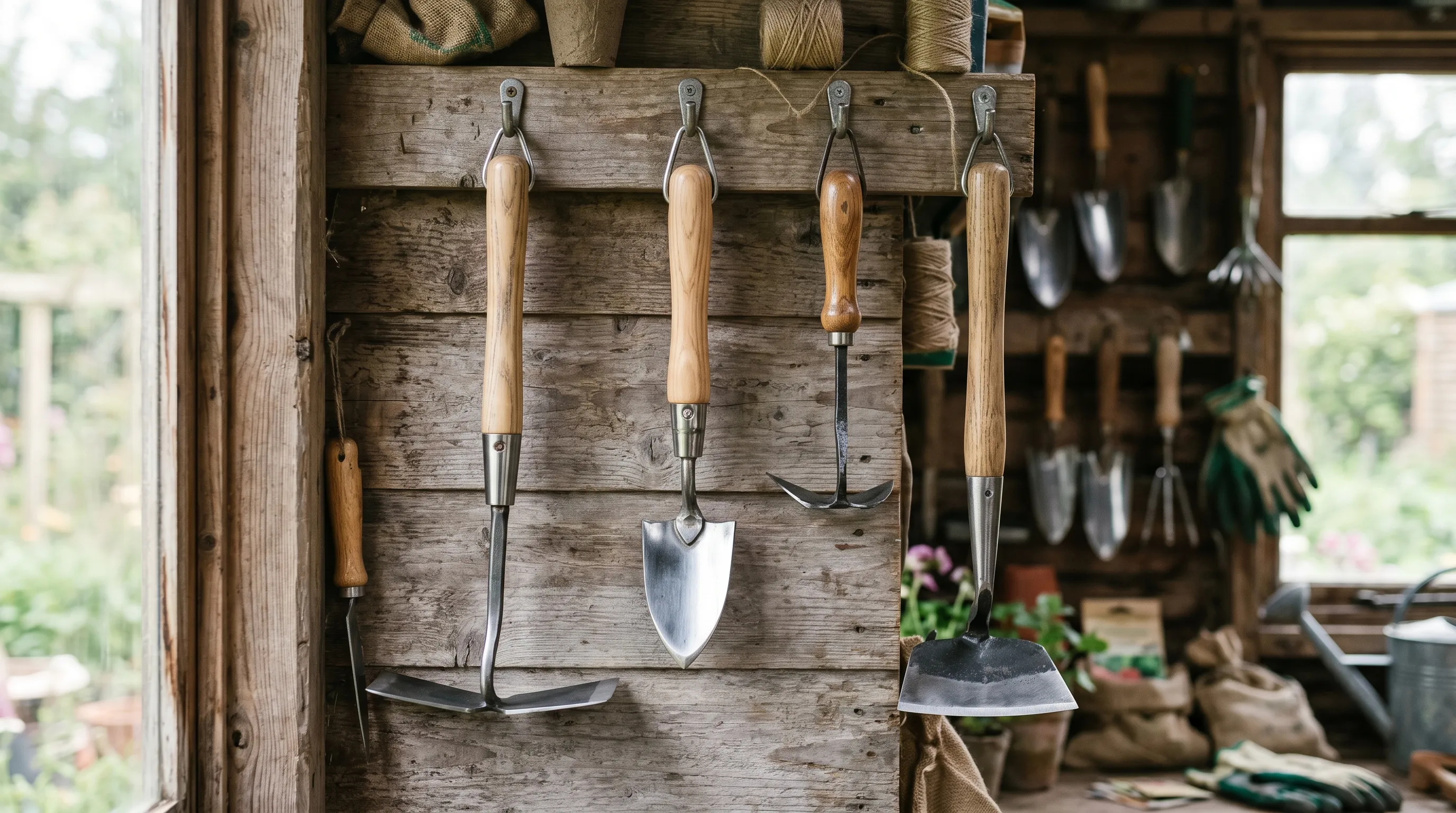
Four hoe types cover all UK garden needs.
| Hoe type | Best for | Cost | Lifespan |
|---|---|---|---|
| Dutch hoe (push-pull) | Border beds, allotment rows | £25-£40 | 15-20 years |
| Stirrup/oscillating hoe | Vegetable plots, both-direction cutting | £18-£35 | 10-15 years |
| Onion hoe (handheld) | Tight spaces between plants | £8-£15 | 10-15 years |
| Draw hoe (chopping) | Earthing-up potatoes, heavy weeds | £18-£30 | 15-20 years |
Dutch hoe is the UK standard. Push-pull motion at the soil surface cuts weed seedlings at the base. Wolf-Garten and Burgon and Ball both make excellent UK Dutch hoes.
Stirrup hoe (also called oscillating hoe or hula hoe) has a hinged blade that cuts on both push and pull strokes. Faster across open beds but slightly more expensive.
Onion hoe is a small handheld version for tight inter-row spacing in vegetable beds. Essential alongside crops.
Draw hoe (the chopping hoe) is for heavier work: cutting through established roots, earthing-up potatoes, breaking up packed surfaces. Less useful for weekly weed control.
The Hoeing Technique
Dutch hoe technique:
- Stand with feet apart, blade in front
- Hold blade at shallow angle (10-15° from horizontal)
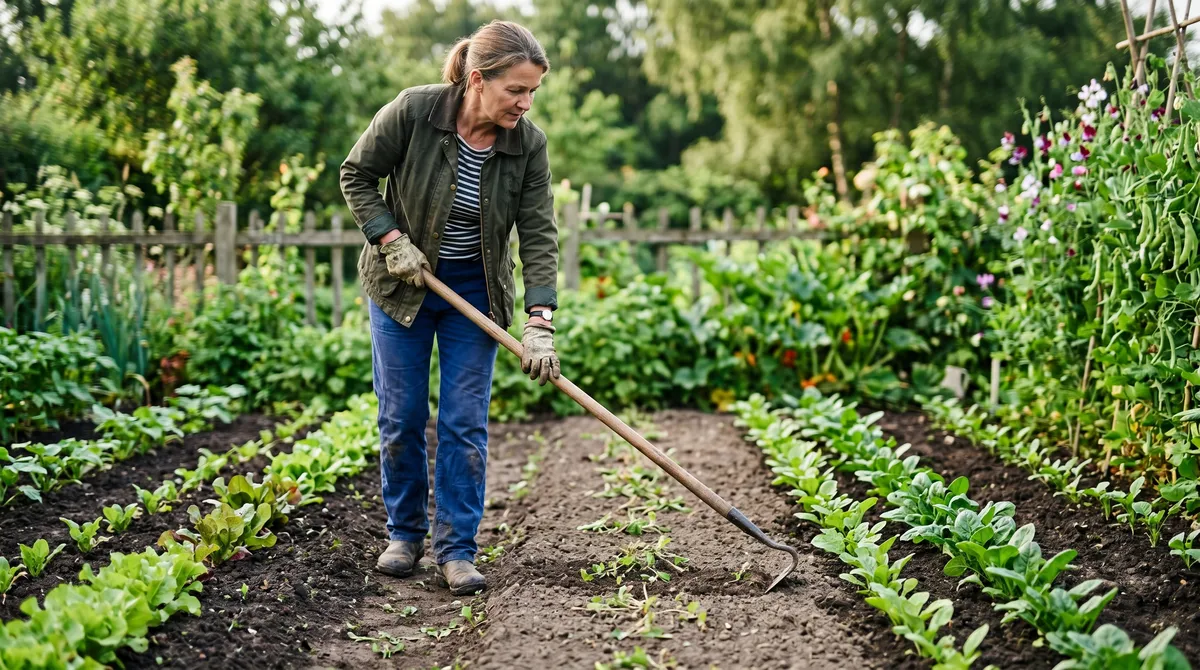
- Push gently forward 200-300mm at 25-40mm depth
- Lift slightly and pull back the same distance
- Move forward one shoe-width
- Repeat across the bed
The motion is slide, not chop. The blade should slice through stems at soil level, not gouge into the soil.
Stirrup hoe technique:
- Same stance
- Push-pull motion
- Blade oscillates and cuts on both strokes
- Faster than Dutch hoe across open ground
- Slightly deeper cut due to hinged blade
Onion hoe technique:
- Kneel or squat beside the row
- Hold the small blade like a trowel
- Pull toward you with light wrist motion
- Cut at soil surface between plants
For UK established hoes, sharpen the blade every 4-6 weeks during the active season with a flat file. Sharp blades cut cleanly; dull blades tear and require more force.
What Hoeing Achieves
Weekly hoeing produces three benefits beyond immediate weed removal.
2. Soil structure improvement. Shallow surface cultivation creates a “dust mulch” that retains soil moisture and reduces evaporation by 15-25%.
3. Microbe stimulation. Light surface disturbance aerates the top 30mm, supporting beneficial bacteria and fungi.
For the wider weed control approach beyond hoeing, our organic weedkillers guide covers chemical-free options.
Common Mistakes With UK Hoeing
Mistake 1: hoeing wet soil. Cut weeds re-root within 24-48 hours. Wait for dry weather.
Mistake 2: hoeing too deep. Damages crops and brings dormant seeds to the surface. Stay at 25-40mm.
Mistake 3: leaving big weeds for hoeing. Plants over 100mm need pulling, not hoeing. Catch them at 2-4 leaf stage.
Mistake 4: hoeing too close to crops. Stay 50-75mm from stems to avoid root damage. Use onion hoe for tight spaces.
Mistake 5: weekly skipping. Miss a week in May-June and you double the next week’s work. Set a calendar reminder.
Hoeing Calendar UK Month-by-Month
| Month | Hoeing task |
|---|---|
| January | Monthly check for winter weeds |
| February | Light hoeing in mild weather |
| March | Begin weekly routine |
| April | Continue weekly through spring flush |
| May | Peak hoeing season |
| June | Continued weekly hoe |
| July | Maintain weekly through summer |
| August | Continue weekly |
| September | Weekly hoe through autumn flush |
| October | Final autumn hoeing |
| November | Switch to monthly checks |
| December | Sharpen blades for next year |
Frequently asked questions
How often should I hoe my UK garden borders?
Weekly from March to October, the active UK growing season. A 15-30 minute weekly hoe catches weeds at the 2-4 leaf stage before they establish. Skip a week and weeds grow into bigger plants needing pulling. Outside the growing season (November-February), monthly check is enough.
What is the best hoe for UK garden borders?
A Dutch hoe (push-pull blade) is the UK standard for borders and beds. Add a stirrup hoe (oscillating, cuts both directions) for vegetable plots and an onion hoe (small handheld) for tight spaces between plants. Total kit cost: £40-£80 for all three. Lasts 15-20 years.
Should I hoe in wet or dry weather?
Dry weather only. Wet soil causes cut weeds to re-root within 24-48 hours. Sunny mornings are ideal: weeds wilt by afternoon, dry by evening. If you must hoe damp soil, rake the cut weeds off the bed immediately rather than leaving them on the surface.
How deep should I hoe?
Shallow: 25-40mm only. Deeper hoeing damages crop roots and brings dormant weed seeds to the surface where they germinate. The Dutch hoe naturally cuts at the right depth when held at a shallow angle. Stirrup hoes can go too deep if pushed hard; ease back.
Can hoeing damage my crops?
Yes if too deep or too close. Stay 50-75mm from crop stems and hoe at 25-40mm depth maximum. Root vegetables (carrots, beetroot) need extra care; switch to onion hoe for tight rows. Established perennials tolerate weekly hoeing safely; seedlings need 14-21 days to establish before hoeing close to them.
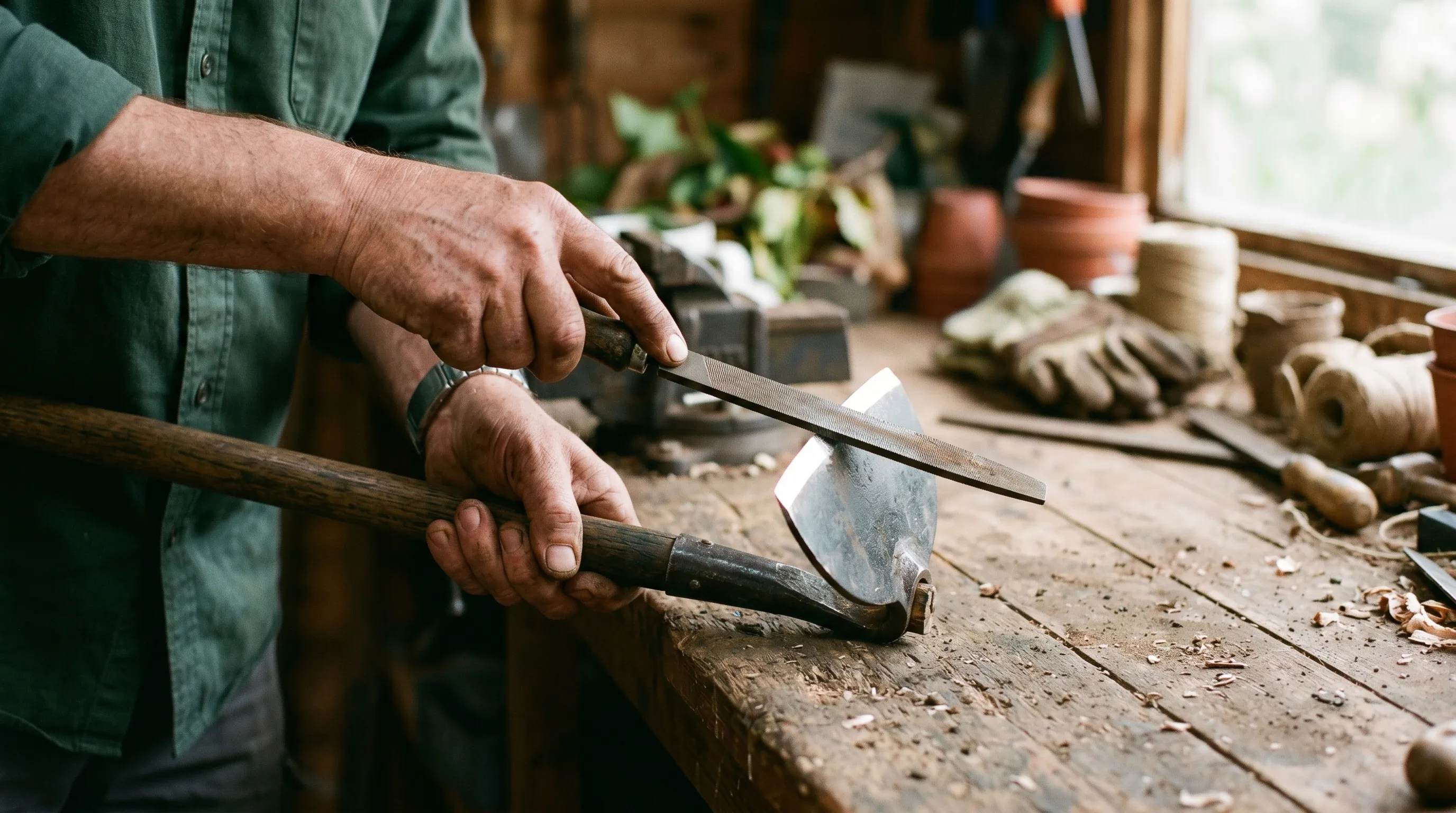 Sharpening the Dutch hoe on the Staffordshire workbench. Flat file at the factory bevel angle, 8-10 strokes one direction. Sharp blades slice cleanly; dull blades tear and demand more force.
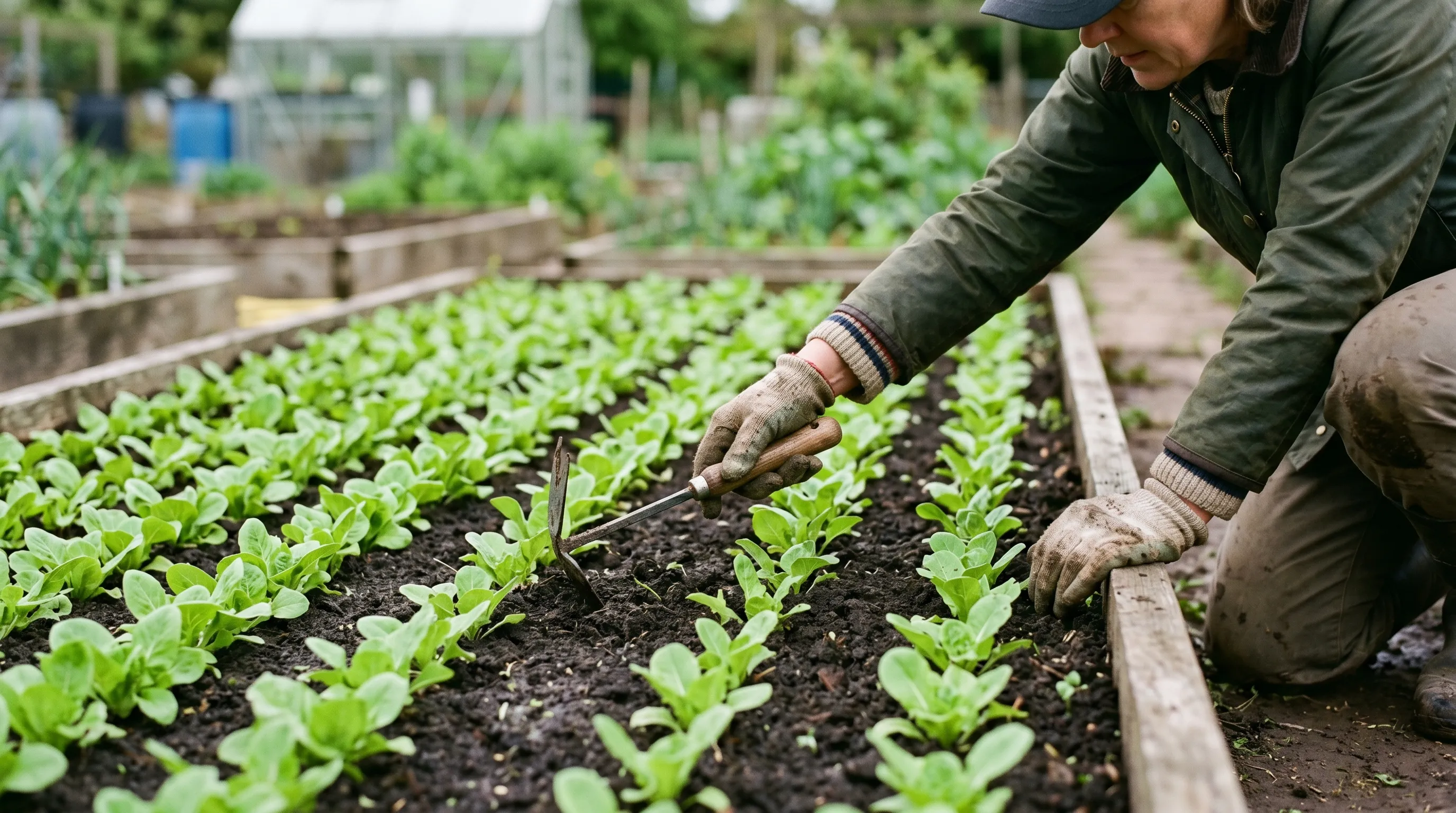 Onion hoe in use between lettuce seedlings. The small handheld blade fits between closely spaced rows where Dutch and stirrup hoes would damage crops. Essential tool for inter-row weed control in vegetable plots.
Now plan the wider weed defence
Our team produces practical UK gardening guidance from source research, contributor records and established horticultural practice. Editorial standards are overseen by Matt W.