Key takeaways
- Torn, whitish grass tips a day or two after mowing mean the blade is blunt
- Sharpen at the start of the season and again around midsummer for most lawns
- Stony ground, big lawns and twiggy debris blunt blades faster
- Always remove the spark plug cap or battery before touching the blade
- Follow the existing bevel and balance the blade before refitting it
- Replace a blade that's cracked, bent or worn thin rather than sharpening it
Sharpen a lawn mower blade when the grass tips look torn and whitish a day or two after mowing. For most UK lawns that means once at the start of the season and again around midsummer. A sharp blade cuts the grass cleanly, which keeps the lawn looking fresh and helps it stay healthy.
This guide covers the signs of a blunt blade, how often to sharpen it, and how to file and balance it safely at home. For secateurs, shears and other hand tools, see our guide on how to sharpen garden tools.
What are the signs of a blunt mower blade?
Look at the lawn a day or two after mowing. A sharp blade leaves clean, green tips. A blunt blade tears the grass, and the torn ends dry out and turn whitish, then brown. From a distance the lawn looks dull and greyish rather than fresh green.
Other signs:
- The cut is uneven, with some grass left longer than the rest.
- Some grass is pulled out in small tufts instead of cut.
- You need extra passes to get a tidy finish.
- The mower labours more than usual, and a battery mower runs down sooner.
For a quick check, pick a few cut blades of grass and look closely. Clean, flat tips mean a sharp blade. Ragged, split tips mean it’s time to sharpen.

Left: clean tips from a sharp blade. Right: torn, whitish tips from a blunt one, a day or so after mowing.
Does a blunt blade harm your lawn?
Yes, a little. Torn grass loses more moisture than cleanly cut grass, so the tips brown off, especially in dry weather.
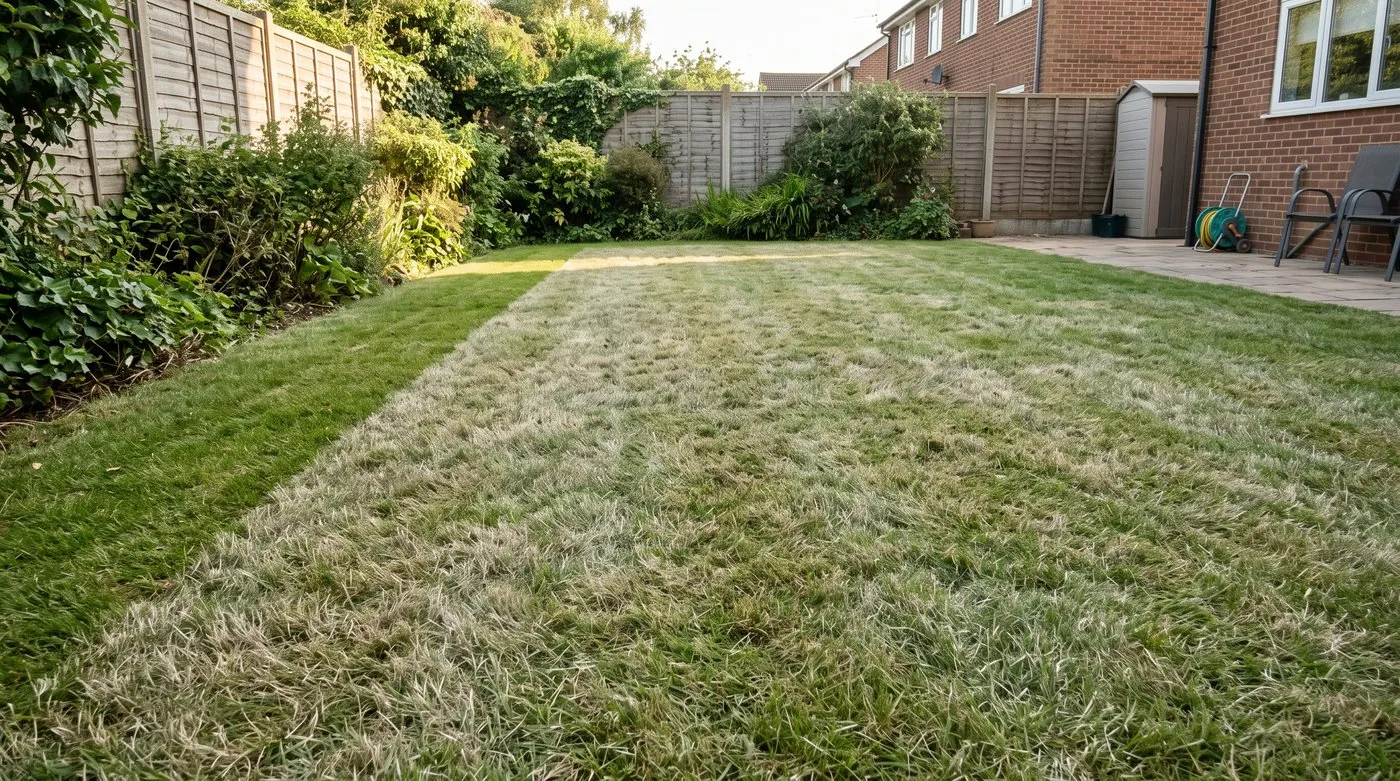
The dull haze is torn tips drying out. The greener strip was cut with a freshly sharpened blade.
Ragged tips can also make it easier for lawn diseases such as red thread to take hold. A sharp blade won’t prevent every problem, but it helps. Our guide to lawn diseases explains what to look for.
A blunt blade also makes the mower work harder, so you’ll use more fuel or battery for the same lawn.
How often should you sharpen a mower blade?
For a typical UK lawn mown weekly from spring to autumn, sharpen twice a season. Do it before the first cut of spring and again around midsummer. A common rule of thumb is roughly every 20-25 hours of mowing.
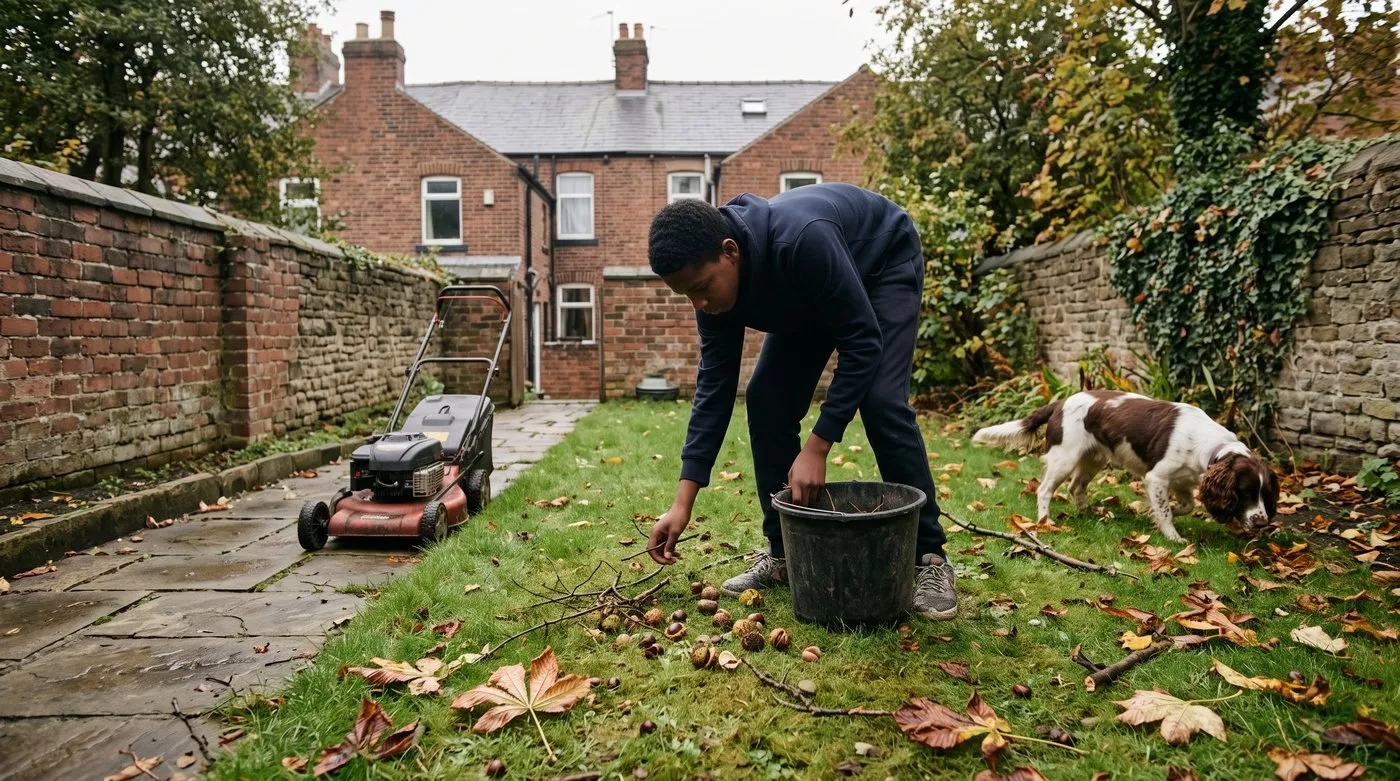
Clearing stones, twigs and conkers first saves the blade from nicks and keeps it sharp for longer.
Some lawns blunt blades much faster:
- Stony or sandy ground. Grit and small stones wear the edge, and one stone can nick it.
- Big lawns. More mowing means more wear.
- Debris. Twigs, conkers, acorns and fir cones all knock the edge about.
If any of these apply, check the edge every few weeks and sharpen when it looks rounded or nicked. Picking up stones and twigs before you mow helps a lot. For the bigger picture on mowing, see our guide on when to mow your lawn.
Cylinder and robot mowers
The advice above is for rotary mowers, the common type with one spinning blade under the deck.
Cylinder mowers cut with a scissor action, like a pair of shears. They rarely need full sharpening. Instead they’re usually set up and backlapped, which means running a grinding paste between the blades to restore a clean cut. Follow your mower’s handbook, or ask a dealer.
Robot mowers usually have small, cheap blades that you replace rather than sharpen. Our robot mower guide covers this.
What you need to sharpen a mower blade
You don’t need much:
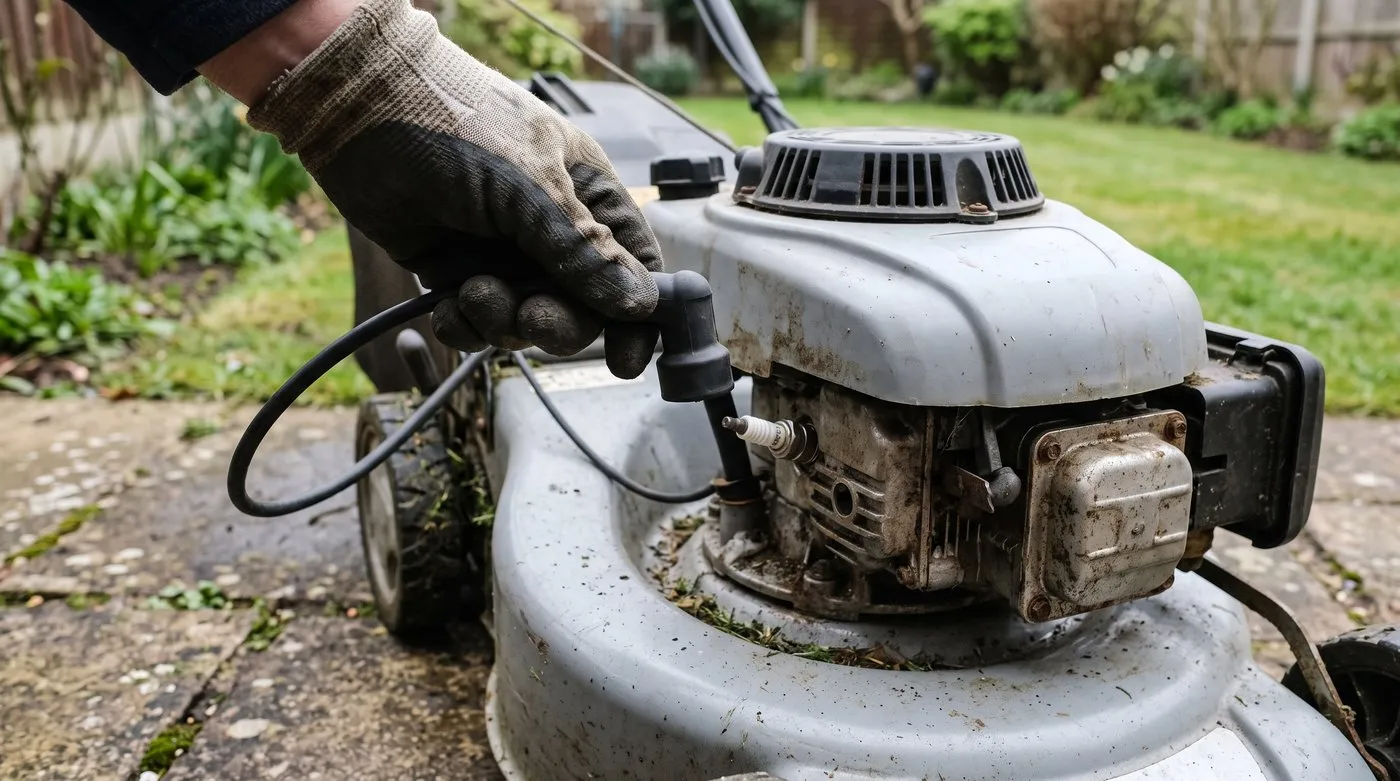
Job one, every time. With the plug cap off, the engine can’t fire while your hands are near the blade.
- A spanner or socket for the central blade bolt.
- A flat metal file.
- A vice or sturdy clamp to hold the blade.
- Thick gloves and eye protection.
- A nail in a wall, or a simple blade balancer.
An angle grinder or bench grinder is quicker, but it’s easy to take off too much metal or overheat the edge. A file is slower but very hard to go wrong with, so it’s the better choice for a first go.
Warning: Always pull the spark plug cap off, or remove the battery on a cordless mower, before you touch the blade. Turning the blade by hand can start a petrol engine. Wear thick gloves throughout, as even a blunt blade has sharp corners.
How to sharpen a rotary mower blade step by step
With a file, the job takes about half an hour.

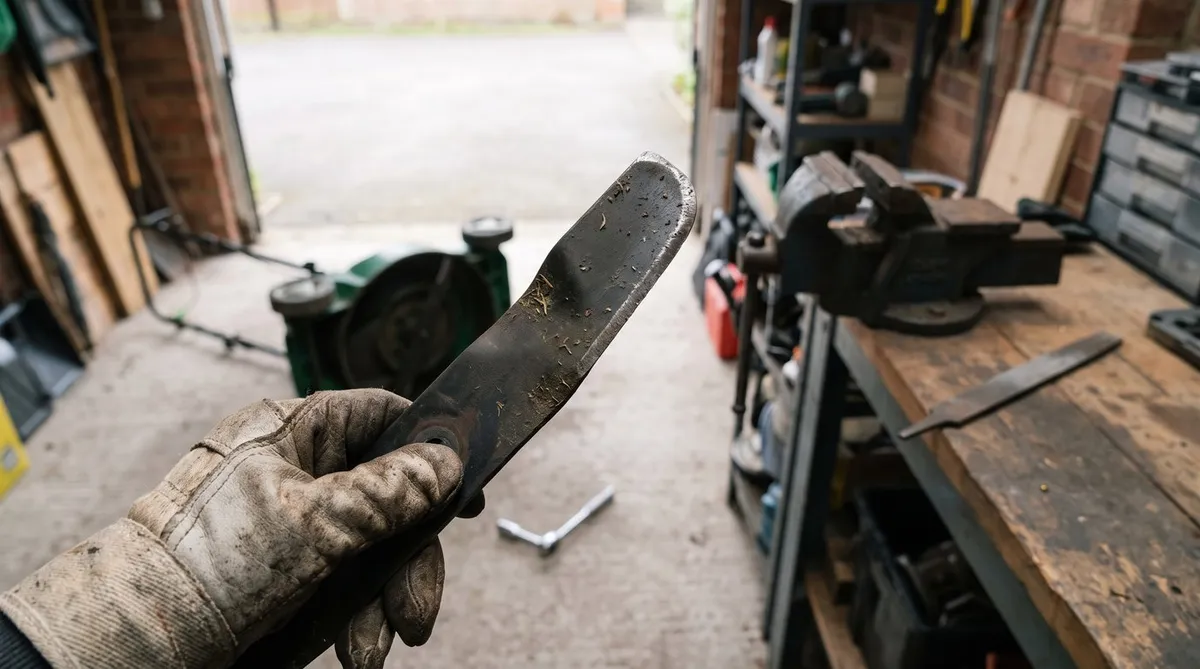
Lay the file along the slope that’s already there and push in long, even strokes.
- Disconnect the power. Pull off the spark plug cap, or take out the battery.
- Tip the mower safely. On a petrol mower, tip it so the air filter and carburettor face up, so oil and fuel can’t leak into them. Your handbook shows which way.
- Mark the blade. Mark the underside with a paint pen before you take it off. It must go back the same way up.
- Remove the blade. Wedge a block of wood against it to stop it turning, then undo the central bolt. Note the order of any washers.
- Clamp it in a vice. Hold it firmly with one cutting edge facing you.
- File along the existing bevel. The edge is sharpened on one face only. Lay the file flat on that slope and push in long, even strokes. File on the push stroke only. Don’t file the flat back.
- Stop before it’s razor sharp. Aim for an edge like a butter knife. A very fine edge chips and blunts quickly.
- Do the other end the same. Give both ends a similar number of strokes.
Why you need to balance the blade
Balancing is the step people skip, and it matters. You rarely take exactly the same amount of metal off each end. A blade that’s heavier at one end shakes the mower as it spins. That gives a poor cut and wears the engine and deck.
To check, hang the blade on a nail through the centre hole. A balanced blade hangs level. If one end drops, file a little metal from the back of that end, not the sharp edge, until it hangs level.
Then refit the blade the right way up, with the washers in their original order. Tighten the bolt firmly, to the figure in the handbook if there is one. Only then reconnect the spark plug or battery.

The nail test. A balanced blade hangs level. If one end dips, take a little more off that end.
When to replace a mower blade instead
Sometimes a new blade is the safer choice. Replace it if you find:
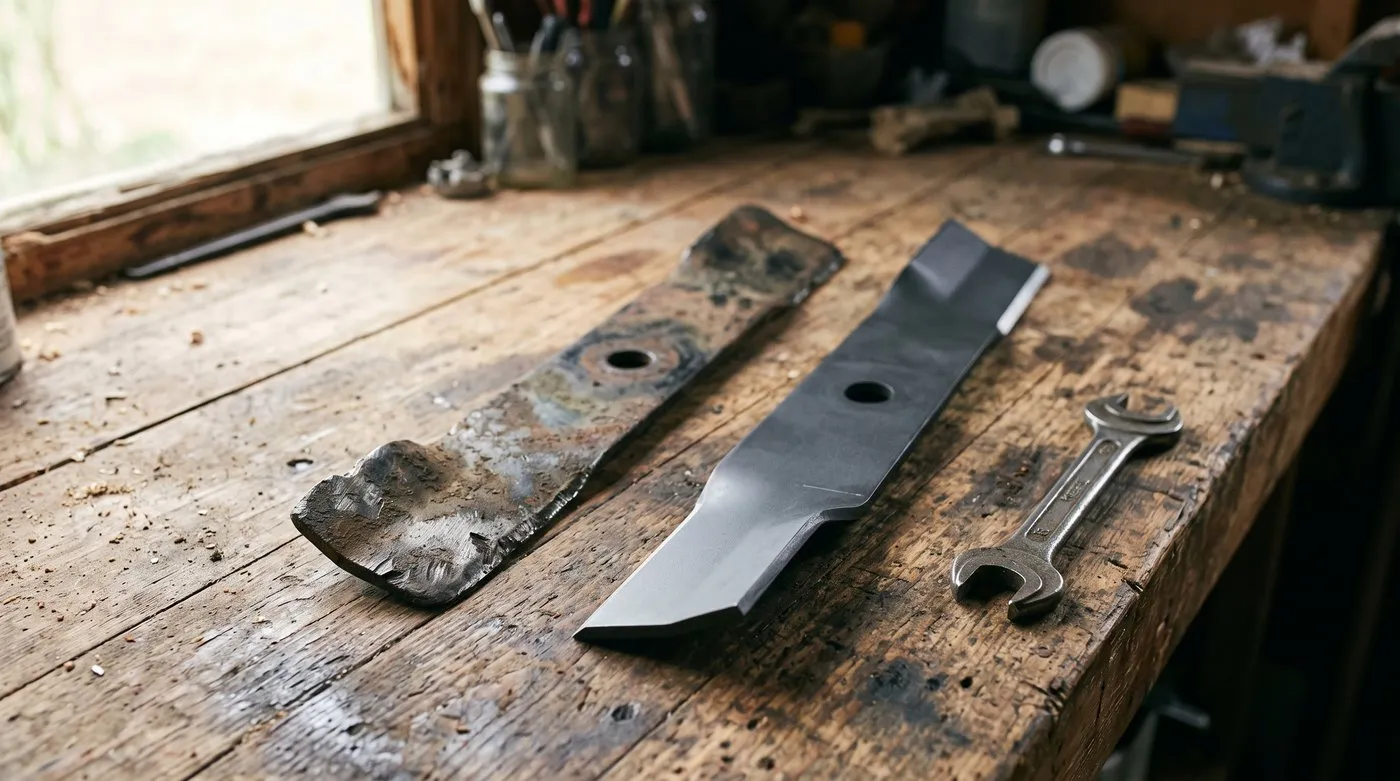
Once the edge is worn back and the wing is ground down, a new blade will cut far better than any sharpening.
- A crack, however small. A cracked blade can break apart at speed.
- A bend. Lay it on a flat surface. If it rocks, it’s bent.
- Deep nicks that a few file strokes won’t remove.
- A worn blade. Years of sharpening wear the edge back. The raised wing at the back, which lifts the grass, also wears down.
Always buy the right replacement blade for your model.
Common mower blade sharpening mistakes
Not disconnecting the power. This is the dangerous one. Pull the plug cap or remove the battery every time.
Changing the angle. Guessing the angle or going for a razor edge weakens it. Follow the bevel that’s already there.
Filing both faces. The blade is sharpened on one side only. Filing the back makes a thin edge that chips.
Skipping the balance check. An unbalanced blade shakes the mower and cuts badly.
Taking off too much metal. Remove only what’s needed for a clean edge, especially with a grinder.
Mower blade sharpening calendar
This suits a typical UK lawn mown weekly through the growing season.
| Month | Blade job |
|---|---|
| March | Sharpen and balance before the first cut. Check for cracks after winter |
| April | Check the edge after the first few cuts, especially if the grass was long |
| May | Pick up stones and twigs before mowing |
| June | Look for torn, whitish tips. Touch up the edge if needed |
| July | Mid-season sharpen and balance |
| August | Watch for a ragged cut in dry spells |
| September | Quick touch-up if the cut looks rough |
| October | After the last cut, clean the blade and oil it lightly |
| November to February | Store the mower dry. Get the blade sharpened ready for spring |
The first cut of spring is when a sharp blade matters most. Our guide to the first lawn cut after winter explains how to get it right.
Should you pay someone to sharpen it?
If you don’t have a vice or don’t fancy taking the blade off, a garden machinery dealer can sharpen and balance it for you. Many will do it quickly, often as part of a spring service. It’s a sensible option if your mower also needs a general check-up.
Frequently asked questions
How do I know if my lawn mower blade is blunt?
The grass tips look torn and turn whitish a day or two after mowing. A sharp blade leaves clean, green tips. A blunt one tears the grass, so the lawn looks dull and the cut is uneven. You may also need extra passes to get a tidy finish.
How often should I sharpen a lawn mower blade?
Twice a season suits most UK lawns, or about every 20-25 hours. Sharpen before the first cut of spring and again around midsummer. Big lawns, stony or sandy ground and twiggy debris blunt blades faster, so check the edge every few weeks.
What angle should a lawn mower blade be sharpened to?
Follow the angle that’s already on the blade. Most rotary blades are sharpened on one face only, so keep that single bevel. Don’t try to make it razor sharp. A slightly blunter, sturdy edge lasts longer and cuts well.
Do you need to balance a mower blade after sharpening?
Yes, always balance it after sharpening. If one end ends up heavier, the spinning blade shakes the mower and gives a poor cut. Hang it on a nail through the centre hole. File a little off the heavy end until it hangs level.
When should I replace a mower blade instead of sharpening it?
Replace it if it’s cracked, bent or badly nicked. A cracked blade can break at speed, which is dangerous. Also replace it once years of sharpening have worn it thin, or the raised wing at the back of the blade is worn down.
Can I sharpen a mower blade without taking it off?
It’s best to take it off. You can’t file evenly or balance it while it’s on the mower, and working under the deck is awkward and risky. Removing it takes a few minutes with a spanner, as long as you disconnect the power first.
With a sharp blade fitted, our guide on how low to mow your lawn helps you get the best finish, or browse more lawn care guides.
Our team produces practical UK gardening guidance from source research, contributor records and established horticultural practice. Editorial standards are overseen by Matt W.