Key takeaways
- A half-moon edging iron re-cuts the edge; long-handled shears maintain it every 2-3 weeks
- Cut a 7-8cm deep gutter with the blade vertical against a plank or hosepipe
- Re-cut edges once or twice a year, ideally in March or April
- Grass rhizomes and stolons creep 5-10cm into borders each season without a gutter
- Steel strip edging costs £8-15 per metre and lasts 20-plus years
Which lawn edging tool do you actually need?
Four tools cover every edging job, and they split into two camps: re-cutting and maintaining.
A half-moon edging iron (£15-30) is the re-cutting tool. Its crescent blade, usually 230-250mm wide, slices a fresh vertical face through turf and root. You use it once or twice a year to define the profile. Nothing else cuts as clean a line.
A border spade is the substitute most people already own. It works, but the blade is slightly dished, so every cut curves a fraction. Over a 10m run the line wanders unless you press the blade hard against a plank.
Long-handled edging shears (£20-35) are the maintenance tool. The blades sit at 90 degrees to the handles, so you trim grass overhanging the vertical face while standing upright. They cut leaves, never soil.
Re-cut with the iron. Maintain with shears or strimmer. Muddling the two jobs is why so many edges fail.
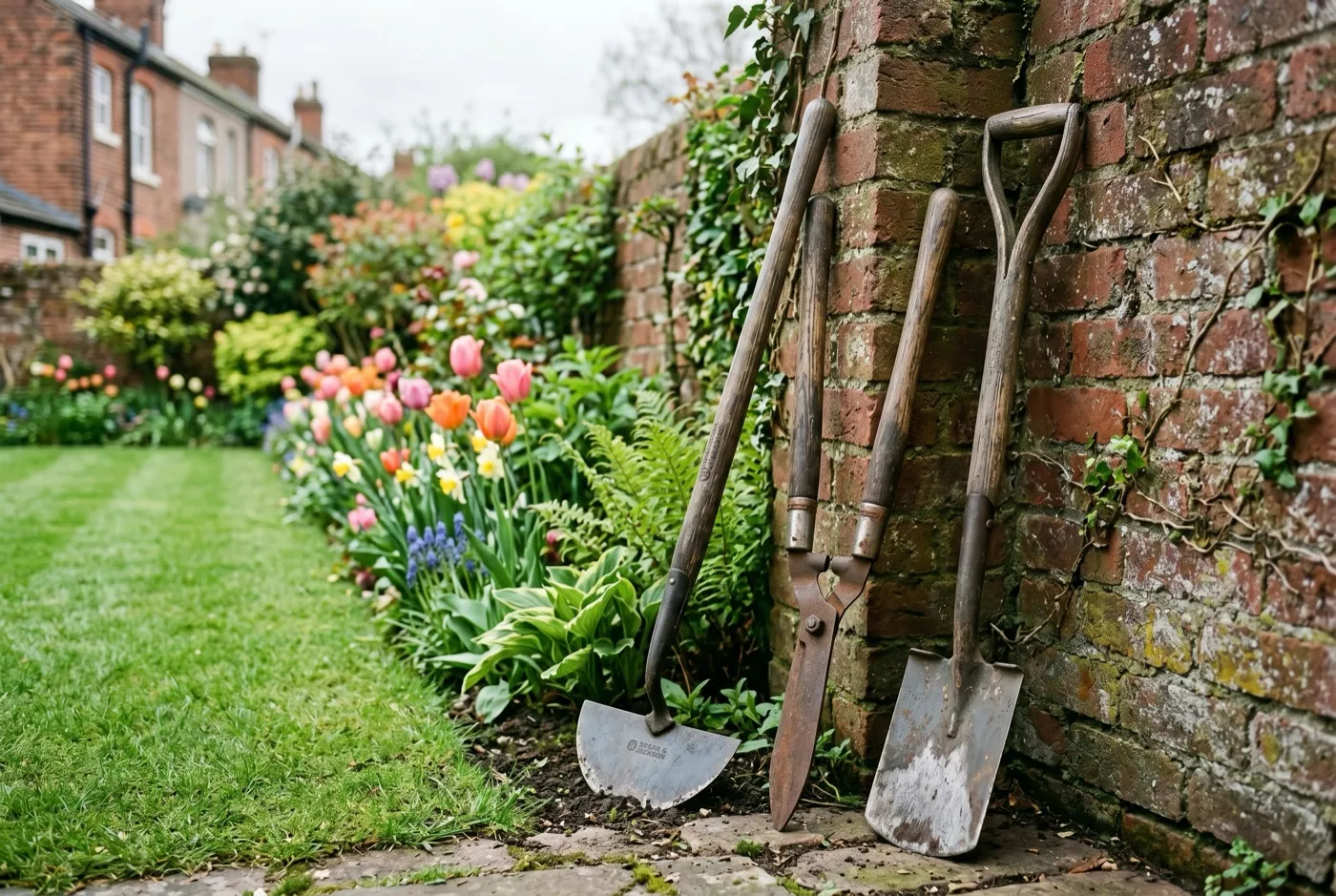 The full edging kit: a half-moon iron for re-cutting, long-handled shears for maintenance and a border spade as the stand-in.
How to cut a crisp lawn edge step by step
Pick a day in March or April when the soil is moist but firm. If the ground squelches underfoot it will smear rather than slice, the same rule that applies to mowing a wet lawn.
- Set your line. Lay a scaffold plank along straight runs. For curves, use a hosepipe left in the sun for 20 minutes so it softens and holds shape.
- Cut vertical. Hold the half-moon blade upright against the plank and drive it 7-8cm deep with your boot. A vertical face resists crumbling far better than a sloped one, which is why the Royal Horticultural Society teaches the same upright cut.
- Overlap each cut by 2-3cm so the line reads as one continuous slice, not a row of bites.
- Clear the spoil. Working from the border side, lift the cut turf and loose soil away with a trowel. You want an open gutter, not a refilled trench.
- Add the back-cut if you like. A second cut angled at 30-45 degrees from the border side widens the gutter at the top. Rain then sheds soil away from the face instead of against it.
A 20-metre edge takes about 40 minutes the first time. Re-cuts in later years take half that, because you are only refreshing the line.
 Boot pressure drives the half-moon iron 7-8cm down. The plank keeps the blade vertical and the line dead straight.
How often should you edge a lawn?
Re-cutting happens once or twice a year. The main cut is in March or April, when soil is moist, growth is starting and the new edge knits quickly. A second light re-cut in September repairs summer damage but is optional on a sound edge.
Shearing is little and often: every 2-3 weeks from April to October, ideally straight after mowing while the clippings are already out. The two jobs share a rhythm, so tie them to the same schedule you use for when to mow the lawn. Grass leaves extend over a cut face at roughly 1-2cm a week in peak growth, so a month of neglect puts 4-8cm of overhang between you and a crisp line.
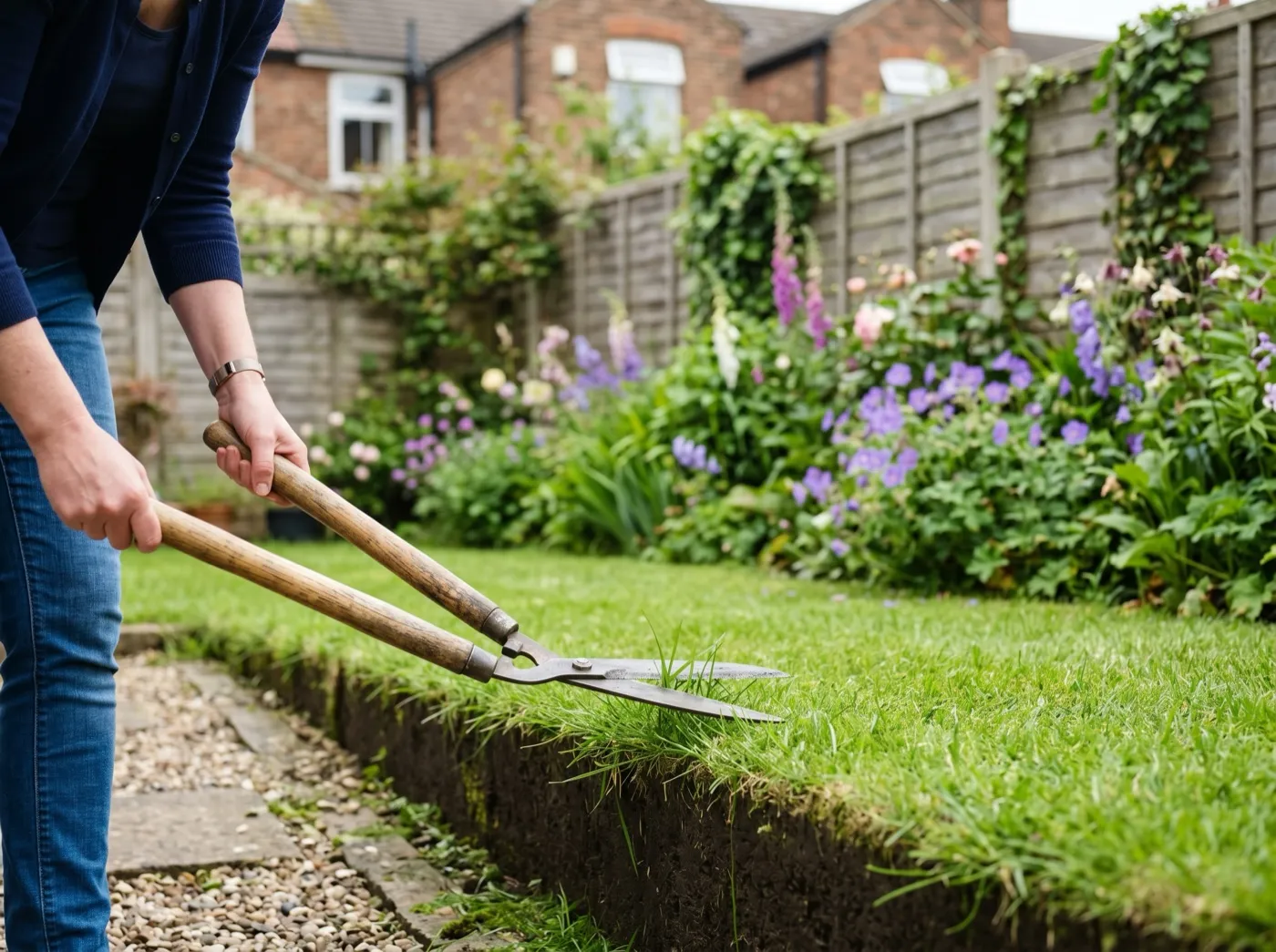 Long-handled shears trim the overhang in passing. Two or three minutes a week keeps the line sharp between re-cuts.
Permanent lawn edging materials ranked
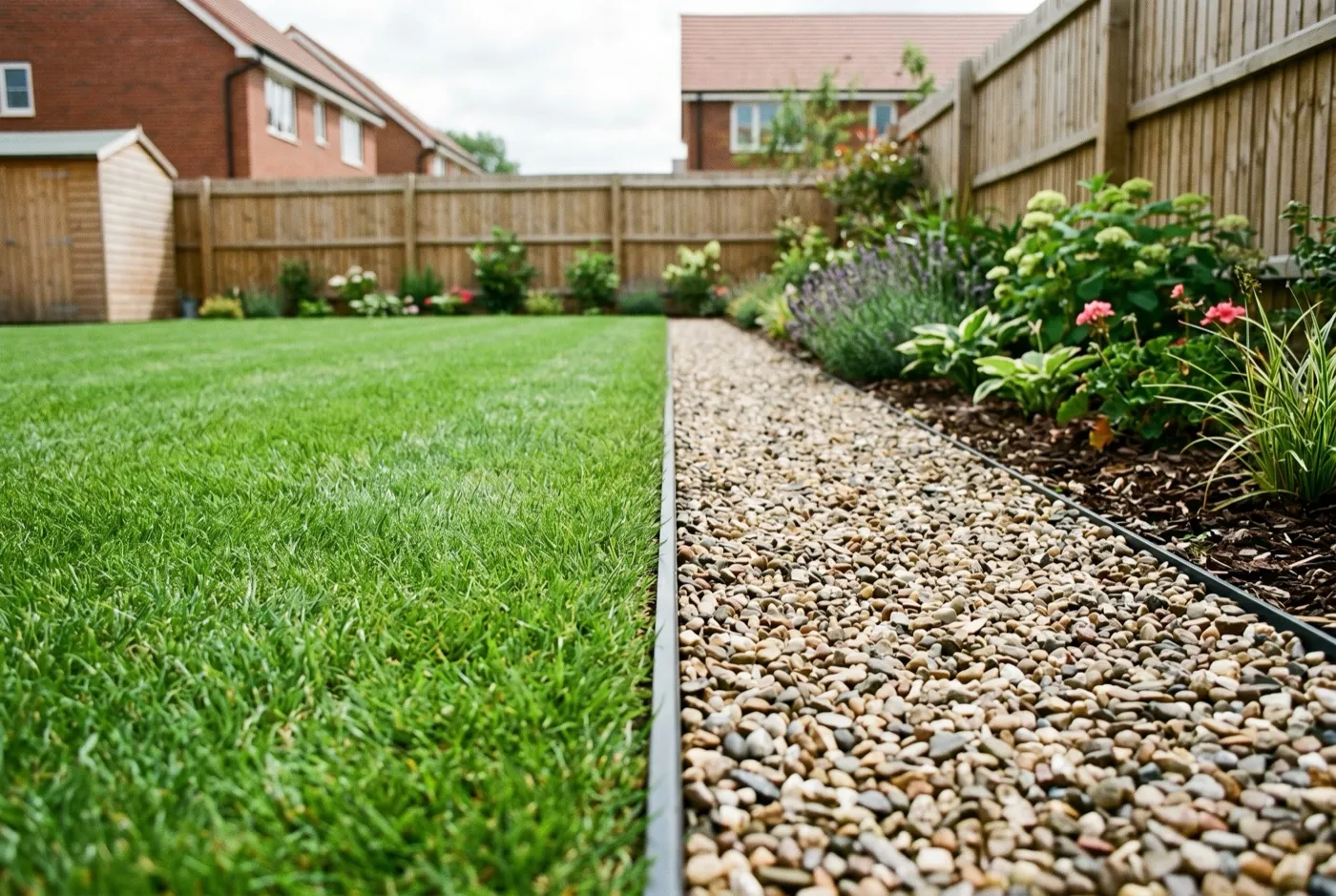 Steel strip set flush with the turf. The mower wheel rides straight over it, and the line has not moved in two winters.
Why lawn edges break down
A cut edge is a wound in a living mat of grass, and the grass spends all season trying to close it. The breakdown runs in stages.
- Weeks 1-4: roots probe the face. Fine feeder roots reach the bare cut soil within 3-4 weeks of cutting. The face is still firm, so nothing visible changes.
- Months 2-6: rhizomes and stolons cross. Couch grass and smooth meadow-grass spread by underground rhizomes; bents creep by surface stolons. Both advance 5-10cm per season, rooting into the border as they go.
- Winter: frost heave. Freeze-thaw cycles expand soil water by around 9%, lifting and crumbling the cut face a little with every hard frost. By March the crisp profile is a rounded slump.
- All season: mower scalping. A mower wheel dropping over a collapsed edge tilts the deck and scalps a bare strip, which weeds then colonise. A dull blade makes the tearing worse, so check our guide to sharpening a mower blade. Bare scalped patches repair the same way as any thin area, covered in fixing a patchy lawn.
The critical mistake is treating shears as the whole job. Shears cut leaves. They never touch the rhizomes crossing 7cm down. Only a full-depth re-cut severs them, which is why a sheared-but-never-re-cut edge still feeds grass into the border all summer.
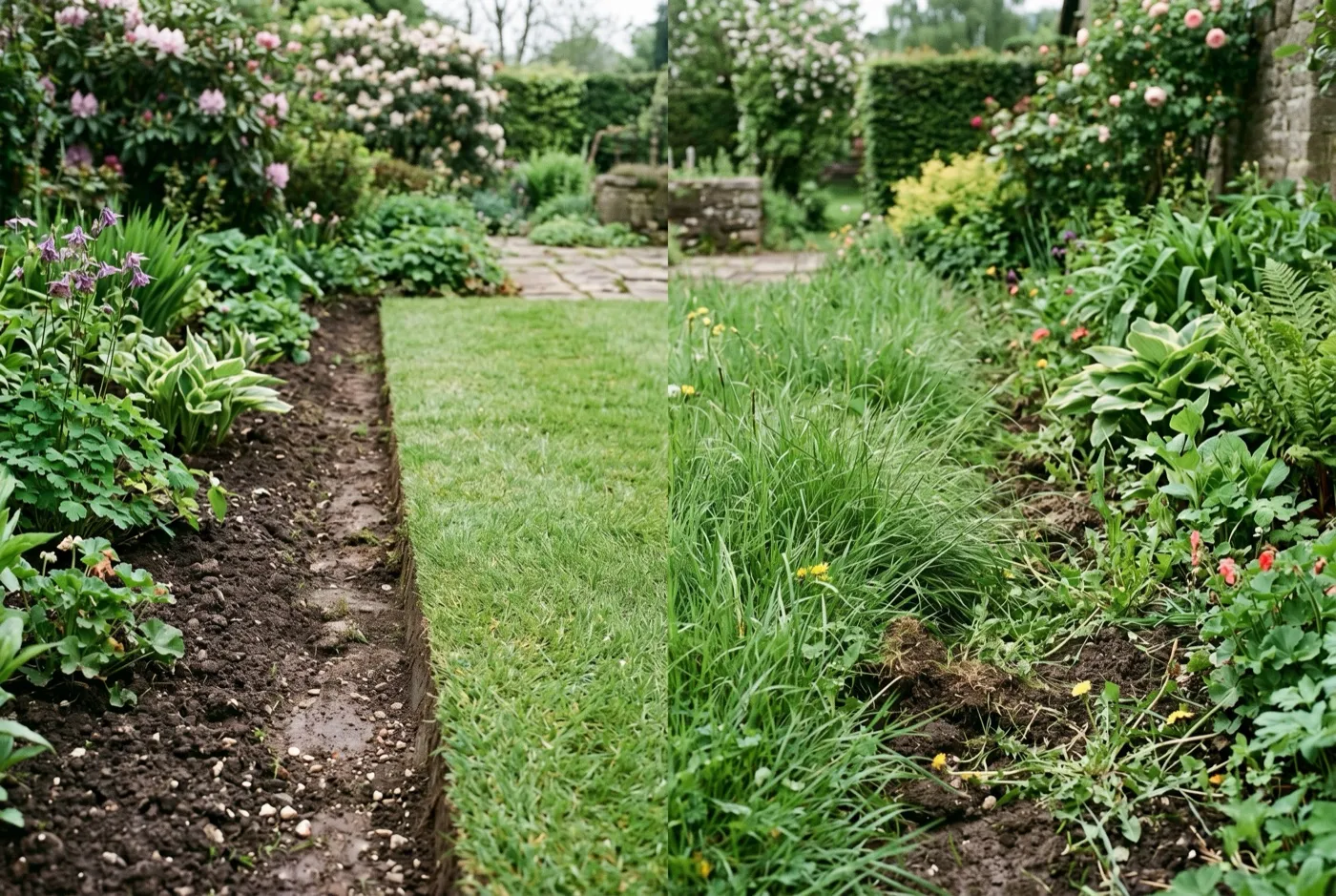 Left: a maintained edge with an open gutter. Right: two seasons of neglect, with the face slumped and grass rooting into the bed.
Edge care month by month
Edges follow the same growth curve as the rest of the lawn, so the calendar is light in winter and busy from April. The September slot pairs well with autumn jobs like scarifying and aerating, since the lawn is already being renovated.
| Month | Edge task |
|---|---|
| January | Keep off frosted edges; note any frost heave on plastic or timber strips |
| February | Service tools; sharpen the half-moon blade with a flat file |
| March | Main re-cut: 7-8cm deep, blade vertical, soil moist but firm |
| April | First shear of the season; clear winter spoil from the gutter |
| May | Shear every 2-3 weeks as growth peaks |
| June | Shear fortnightly; check edging strips still sit flush |
| July | Shear every 2-3 weeks; watch for drought gaps opening along the face |
| August | Shear; tidy any wavy strimmer lines by eye against a plank |
| September | Optional light re-cut of damaged sections; last full shear cycle |
| October | Final shear; rake leaves out of the gutter |
| November | Clear the gutter again; avoid treading the edge in wet weather |
| December | Stay off the lawn; inspect edging after each hard frost |
Stop grass invading your borders for good
Permanent prevention is three habits, not one purchase. Keep mulch 2-3cm below the top of any edging strip. Clear the gutter whenever soil or leaves fill it, which takes seconds during a normal shear. Re-cut to full depth each spring so anything that crossed in summer is severed. Do those three and the border stays clean regardless of which material, if any, you paid for.
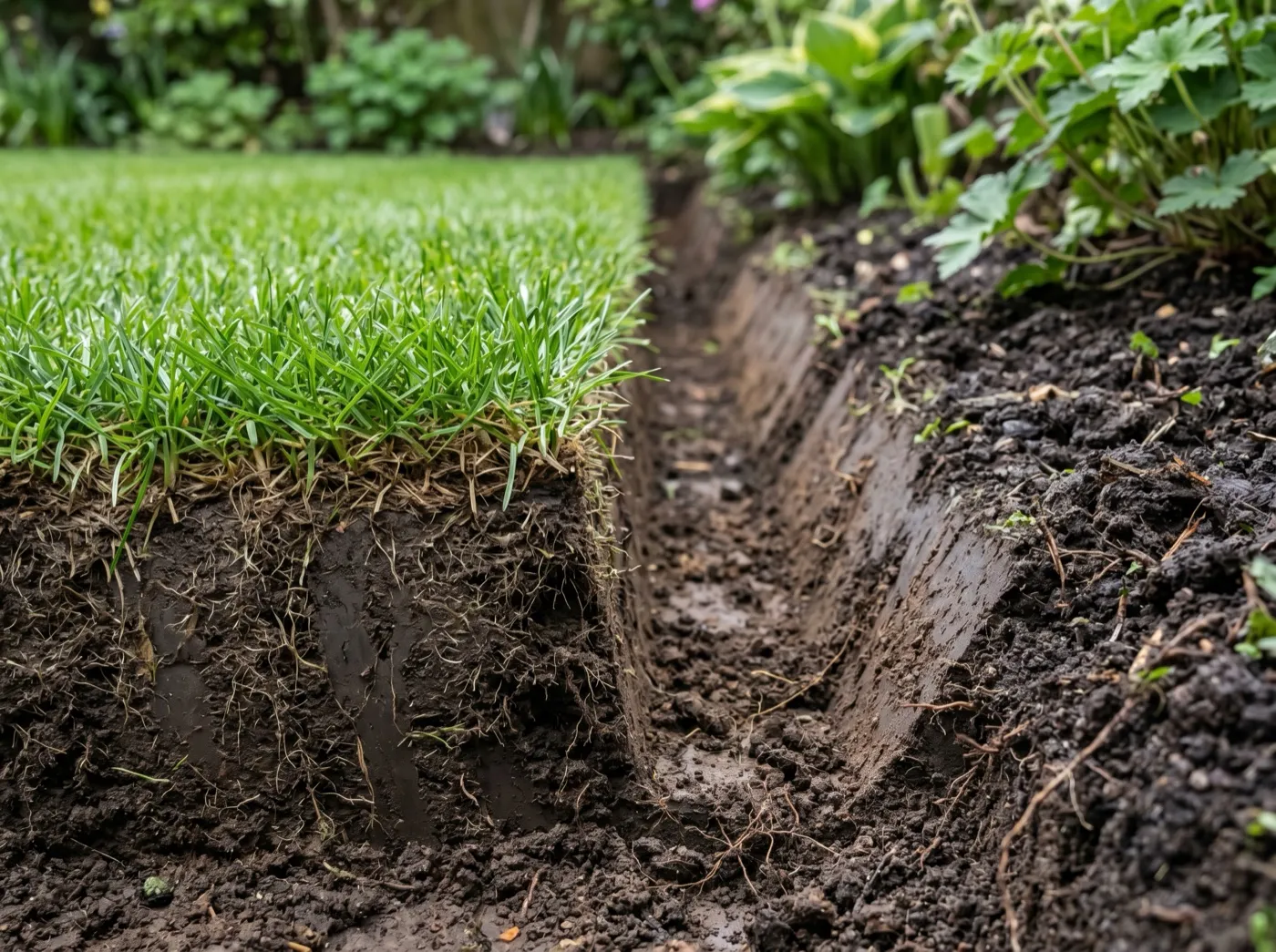 The gutter in cross-section: a 7-8cm vertical face on the lawn side and an angled back-cut that grass roots cannot bridge.
Common mistakes with lawn edging
- Edging waterlogged ground. Wet soil smears instead of slicing, and the face slumps within weeks. Wait until a handful of soil crumbles rather than smears.
- Cutting too shallow. A 3-4cm cut looks identical to an 8cm one for about a month. Then rhizomes pass underneath. Drive the blade in to 7-8cm every time.
- Plastic edging sitting proud of the lawn. Anything above turf level catches the mower blade and gets levered further by frost. Set edging flush or 5mm below the turf.
- Letting the gutter fill in. A refilled gutter is a soil bridge for roots. Clear spoil at install and rake it out through the season.
- Shearing for years without re-cutting. Shears keep the overhang tidy while the profile rounds off underneath. Without a spring re-cut the edge is gone within 2-3 seasons.
Frequently asked questions
What is the best tool for edging a lawn?
A half-moon edging iron cuts the cleanest, longest-lasting lawn edge. Use it to re-cut the profile once or twice a year. Long-handled shears then maintain the edge every two to three weeks. A border spade works at a push, but its dished blade makes the line wander.
How often should you edge a lawn in the UK?
Re-cut once or twice a year, then shear every two to three weeks. The main re-cut happens in March or April while the soil is moist. Shearing runs through the mowing season, roughly April to October. A 20-metre edge takes about 10 minutes to shear.
How deep should a lawn edge be?
Cut the gutter 7-8cm deep with the blade held vertical. Shallower cuts of 3-4cm let grass rhizomes pass underneath into the border. An optional back-cut at 30-45 degrees widens the gutter top and sheds soil. Re-cut to full depth once or twice a year.
Can you mow over lawn edging?
Yes, if the edging sits flush with or just below the turf. Steel strip and brick mowing strips both carry a mower wheel cleanly. Timber gravel board works when set level with the lawn. Plastic edging usually sits proud, so the blade catches it.
What is the cheapest permanent lawn edging?
Why does my lawn edge keep collapsing?
Shallow cuts, frost heave and creeping grass roots break edges down. Rhizomes and stolons advance 5-10cm into borders each season. Freeze-thaw cycles lift and crumble the cut face through winter. A 7-8cm gutter, re-cut each spring, deals with all three.
A crisp edge is the cheapest upgrade a lawn can get, and ten minutes a fortnight keeps it. Slot the jobs above into your year with our UK lawn care calendar, or browse the full how-to section for more practical guides.
Our team produces practical UK gardening guidance from source research, contributor records and established horticultural practice. Editorial standards are overseen by Matt W.