Key takeaways
- Fill shallow dips with sandy top-dressing, about 1cm at a time
- Always leave the grass tips showing, or you'll smother it
- Lift the turf and add soil underneath for hollows deeper than about 3cm
- Work in April to May or September, when grass recovers quickly
- Rolling squashes the soil and doesn't level a lawn
- Find the cause, such as moles or a sunken trench, or the bumps come back
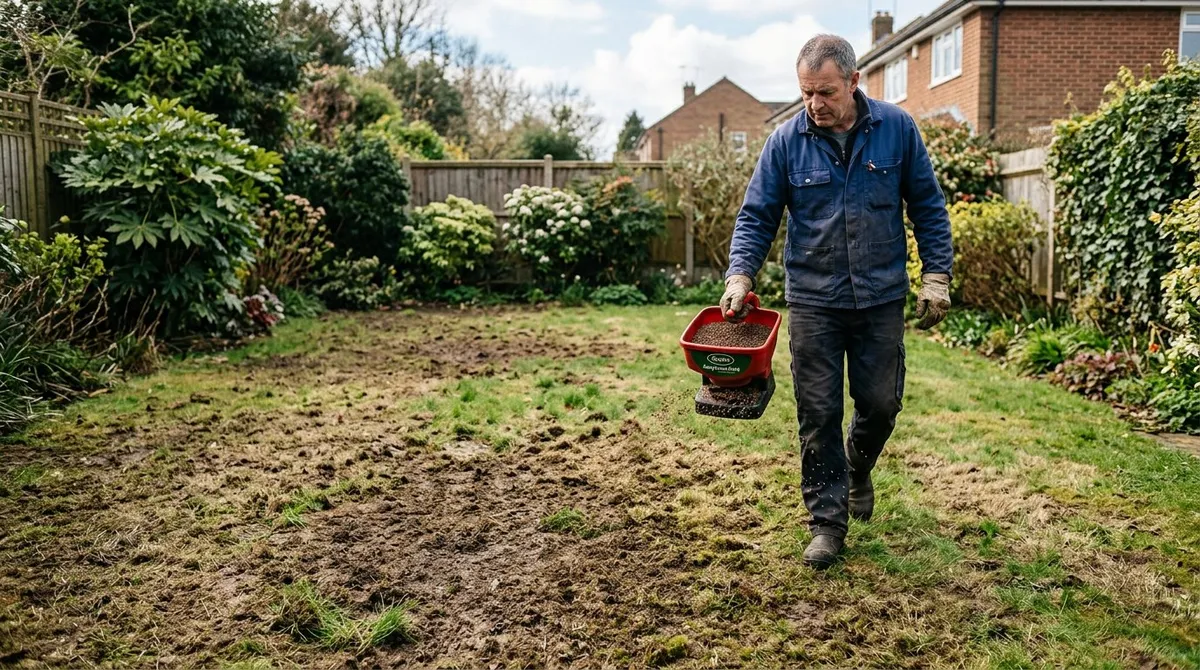
To level a bumpy lawn, match the fix to how deep the bumps are. Shallow dips fill up with thin layers of top-dressing. Deeper hollows and lumps need the turf lifting so you can sort the soil underneath. A roller, sadly, doesn’t level anything.
This guide helps you work out why your lawn is lumpy, pick the right method and get it done at the right time. For the full detail on spreading top-dressing over a whole lawn, see our guide on how to top-dress a lawn.
Why is my lawn bumpy?
Most lumpy lawns have sinking soil, worm casts or moles behind them, often more than one at once. Knowing the cause tells you whether levelling will last.
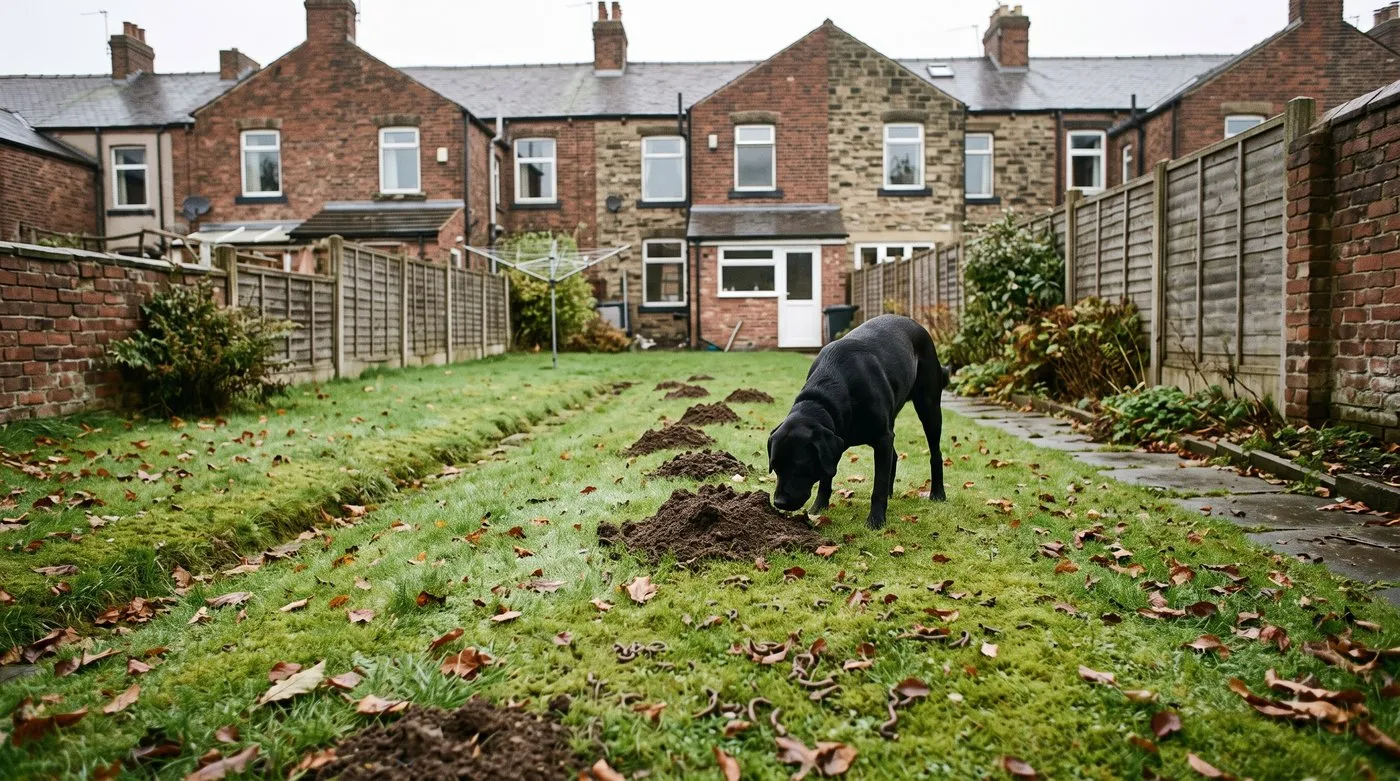
A line of fresh molehills makes a lawn lumpy fast. Sort the cause before you level.
Sinking ground. Soil that wasn’t firmed when the lawn was laid slowly settles. Old trenches, filled-in planting holes and removed paths or sheds leave long, shallow dips.
Worm casts. Little muddy piles that smear when you mow. Brush them off when dry. Our guide to worm casts on the lawn explains how to live with them.
Moles. Ridges and soft mounds that appear overnight. Deal with them first, or new bumps arrive within weeks. See how to get rid of moles for humane options.
Other causes. Frost lifting wet clay, tree roots near the surface, worn paths where everyone walks, and dogs digging.
Gardener’s tip: Walk the lawn after heavy rain and mark where water sits. Those dips are your first job, as fixing them helps drainage too.
Which levelling method do you need?
Measure your dips first. Lay a straight plank across the hollow and measure the gap underneath. Then pick your method.
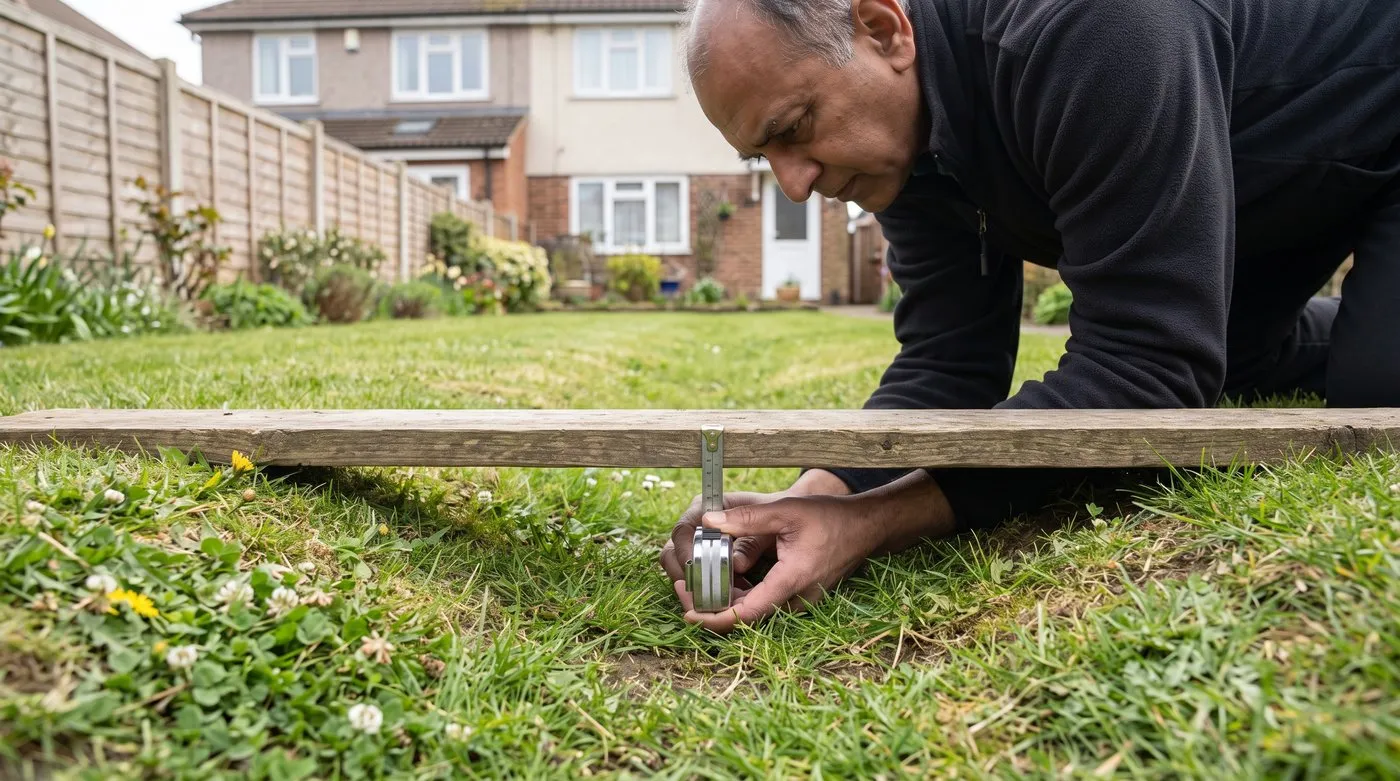
A straight plank and a tape measure tell you how deep the dip is, and so which fix you need.
| How deep | Method | When you’ll see a result |
|---|---|---|
| Up to about 2-3cm | Top-dressing in thin layers | Over one or two seasons |
| About 3-8cm, in patches | Lift the turf and adjust the soil | Same day, knits back in a few weeks |
| Deeper, or the whole lawn | Strip, re-level the soil and returf or reseed | One season |
| Any | Rolling | Won’t level it |
How to level shallow dips with top-dressing
Spread a thin, sandy top-dressing over the dips and let the grass grow up through it. The grass keeps growing, the dips slowly fill, and nothing dies.
The golden rule is thin layers. Bury grass under too much soil and it can’t get light, so it yellows and dies in patches. Aim for about 1cm at a time.
- Mow the lawn first.
- Spread about 1cm of dry, crumbly top-dressing, mostly into the dips.
- Work it in with a stiff brush or the back of a rake until grass tips show everywhere.
- Water lightly if no rain is due.
- Wait a few weeks for the grass to grow through.
- Repeat until the dip is level. A 3cm dip needs two or three goes.
What to use. A sandy, free-draining top-dressing is best, as it flows into hollows and lets the grass push through. Bagged lawn top-dressing makes it easy. Avoid plain topsoil, which can set into a crust that seals the surface. Lawn sand is a different product, used for moss, so don’t mix them up.

Keep working the dressing in until you can see grass tips everywhere. A solid sheet of soil means too much.
How to level deeper hollows by lifting the turf
For hollows deeper than about 3cm, or for lumps, lift the turf and fix the soil underneath. It’s quick, and the lawn barely notices.
- Cut a cross through the turf over the dip or bump with a half-moon edger or sharp spade, about 4-5cm deep.
- Peel back the flaps gently, like opening a book.
- For a dip, add sandy soil to raise the base. For a bump, scrape soil out to lower it.
- Firm the soil well with your heel so it won’t sink again.
- Fold the turf back and press it down so it sits level with the rest.
- Brush a little top-dressing into the cuts and water well.
In spring or early autumn, the cuts disappear within a few weeks. If the lawn also has thin or bare spots, our guide on fixing a patchy lawn shows how to overseed them at the same time.

Cut a cross, fold the turf back, add soil and firm it. Then lay the flaps back down level.
What if the whole lawn is uneven?
If the whole lawn is lumpy, or the dips are very deep, it’s usually quicker to start again. Strip the turf, level and firm the soil, then lay new turf or sow seed.
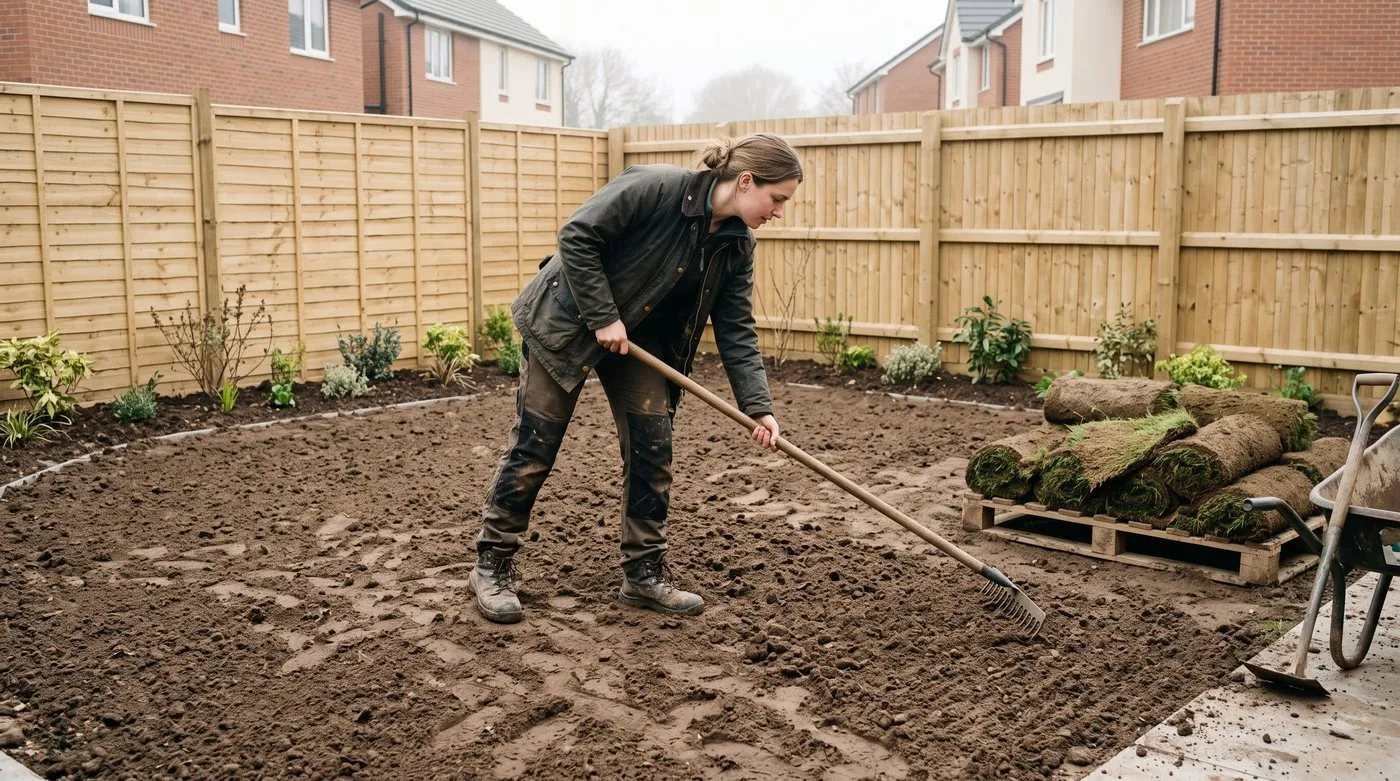
Rake, tread, rake again. Firm, level soil is what keeps a new lawn flat for years.
Rake the soil level, firm it by treading across it in small steps, then rake again. Repeat until it feels even underfoot. Then follow our guide on how to lay turf or sow seed. It’s a bigger job, but you get a flat lawn in one season.
Why rolling won’t level a lawn
A roller presses the high spots down for a while, but it doesn’t fill the hollows. What it does do is squash the soil, which slows drainage and makes roots struggle.
Light rolling has its uses, such as firming soil before sowing or giving stripes. It just isn’t a levelling tool.
When to level a lawn in the UK
Level a lawn in April to May or September, when the grass grows fastest and recovers quickly. In summer heat or winter wet, it can’t grow through top-dressing and may die off.
| Month | What to do |
|---|---|
| March | Mark the dips and get your top-dressing ready |
| April | First top-dressing. Scarify and aerate first if the lawn is mossy or hard |
| May | Second top-dressing. Lift turf on deep hollows. Overseed thin patches |
| June to August | Rest. Water in dry spells rather than levelling |
| September | Best month for top-dressing and lifting turf |
| October | A last light top-dressing if the weather is mild |
| November to February | Leave it. The grass isn’t growing and the soil is wet |
If your lawn is spongy or compacted, scarify and aerate before you top-dress. Our guide on how to scarify and aerate a lawn explains the order.

A season or two of patient top-dressing gives you a lawn that mows evenly and drains properly.
How to stop a lawn going bumpy again
Fix the cause as well as the surface. Otherwise the same dips come back.
- Firm the soil well whenever you add any beneath the turf.
- Sort drainage if water sits on the lawn. Wet, soft ground sinks and lumps more easily. Our guide to a waterlogged lawn on clay soil has the fixes.
- Deal with moles before levelling.
- Brush off worm casts when dry instead of mowing over them.
- Vary your route across the lawn, or lay stepping stones on the path everyone takes.
Common lawn levelling mistakes
Too much at once. More than about 1cm of top-dressing smothers the grass. Go thin and repeat.
Using a roller. It squashes the soil but leaves the dips.
Using plain topsoil. It can crust over and seal the surface. Use a sandy top-dressing.
Working at the wrong time. Top-dressing in a heatwave or in winter can kill the grass underneath. Stick to spring and early autumn.
Ignoring the cause. Filling a dip over an active mole run or a soft trench only buys you a few weeks.
Frequently asked questions
How do I level a bumpy lawn without digging it up?
Top-dress it with a sandy mix in thin layers. Spread about 1cm at a time, brush it into the dips and let the grass grow through. Repeat in spring and autumn until the dips are level.
What is the best material to level a lawn with?
A sandy, free-draining lawn top-dressing is best. It flows into dips and lets grass grow through. Plain topsoil tends to set hard and smother the grass. Ready-mixed lawn top-dressing saves you mixing your own.
Will rolling a lawn make it level?
No, rolling squashes the soil but doesn’t fill hollows. It can make drainage and root growth worse. Top-dressing or lifting the turf are the ways to really level a lawn.
When is the best time to level a lawn in the UK?
April to May, or September. The grass is growing strongly then, so it grows through top-dressing and lifted turf knits back quickly. Avoid hot, dry summer spells and wet winter months.
How deep a hollow can top-dressing fix?
Top-dressing is best for dips of about 2-3cm. You can only add around 1cm at a time, so deeper dips take ages. For anything deeper, lift the turf and add soil underneath.
Why is my lawn so bumpy and uneven?
Usually sinking soil, worm casts or moles. Old trenches and planting holes sink over time. Foot traffic, frost on clay and tree roots add to it. Fix the cause first or the bumps come back.
Once your lawn is level, read our guide on how to feed your lawn to keep it thick and green, or browse more lawn jobs on the lawn care hub.
Our team produces practical UK gardening guidance from source research, contributor records and established horticultural practice. Editorial standards are overseen by Matt W.