Key takeaways
- Top-dress from late August to early October, while the grass is still growing
- Use a dry, sieved mix of mostly sand with some loam and compost
- Spread about 2-3kg per square metre, thin enough to see the grass through it
- Scarify and aerate first, or the dressing just sits on the thatch
- Overseed at the same time for the best results
- The lawn looks tired for a week or two, then thickens up
Top-dressing is one of the best things you can do for a tired lawn, and hardly anyone bothers. You brush a thin layer of sandy mix into the grass in early autumn. The materials are cheap, the job takes an afternoon, and the lawn gets flatter and thicker year after year.
What top-dressing actually does
Top-dressing means spreading a few millimetres of soil mix over the lawn and brushing it in. Over the next few weeks it sinks down and becomes part of the soil.
Here’s what you get:
Hollows fill in. Small dips from worms, moles or settled ground slowly level out. Do it for a couple of years and a bumpy lawn becomes flat.
Thicker grass. Fresh soil around the base of the grass encourages new shoots, so the lawn fills out.
Better drainage. A sandy layer helps water soak in rather than sit on top. Handy on heavy clay.
Thatch rots down faster. Mixing soil into the dead material at the base of the grass helps it break down.
New seed gets a good start. If you overseed at the same time, the dressing covers the seed, keeps it moist and hides it from birds.
What it won’t do on its own: fix compaction (aerate first), bare patches (sow seed) or moss (scarify first). Think of it as the finishing touch to an autumn lawn makeover, not a shortcut.
When to top-dress a UK lawn
Best: late August to early October. The soil is warm, the grass is growing and autumn rain settles everything in. Seed comes up well too.
Fine: mid-April to mid-May. Recovery is a bit slower, and you may need to water new seed.
Avoid: June to early August. Heat and dry weather stress the grass.
Avoid: November to March. The grass isn’t growing, so the dressing just sits there.
Avoid: waterlogged or frozen lawns. Walking on soggy grass squashes the soil.
If you only do one lawn job this year, scarify, aerate, overseed and top-dress in mid-September. Our lawn care calendar UK shows how it fits with everything else.
The right mix for a UK lawn
Top-dressing isn’t ordinary garden topsoil. It’s a sandy blend that trickles down between the grass blades without smothering them.
Most lawns: a common blend is 6 parts lime-free washed sand, 3 parts sieved sandy loam and 1 part sieved, well-rotted compost.
Heavy clay: use a bit more sand and keep the compost small. The sand helps drainage.
Sandy or dry soil: use less sand and more loam and compost. They hold on to moisture.
Shady lawns: stick to a normal mix and go easy on the amount, as shady grass is slower to grow through.
Two golden rules. The mix must be dry and crumbly, so mix it on a dry day and keep it under cover. And sieve everything to 6mm or finer, or lumps will sit on top of the grass.
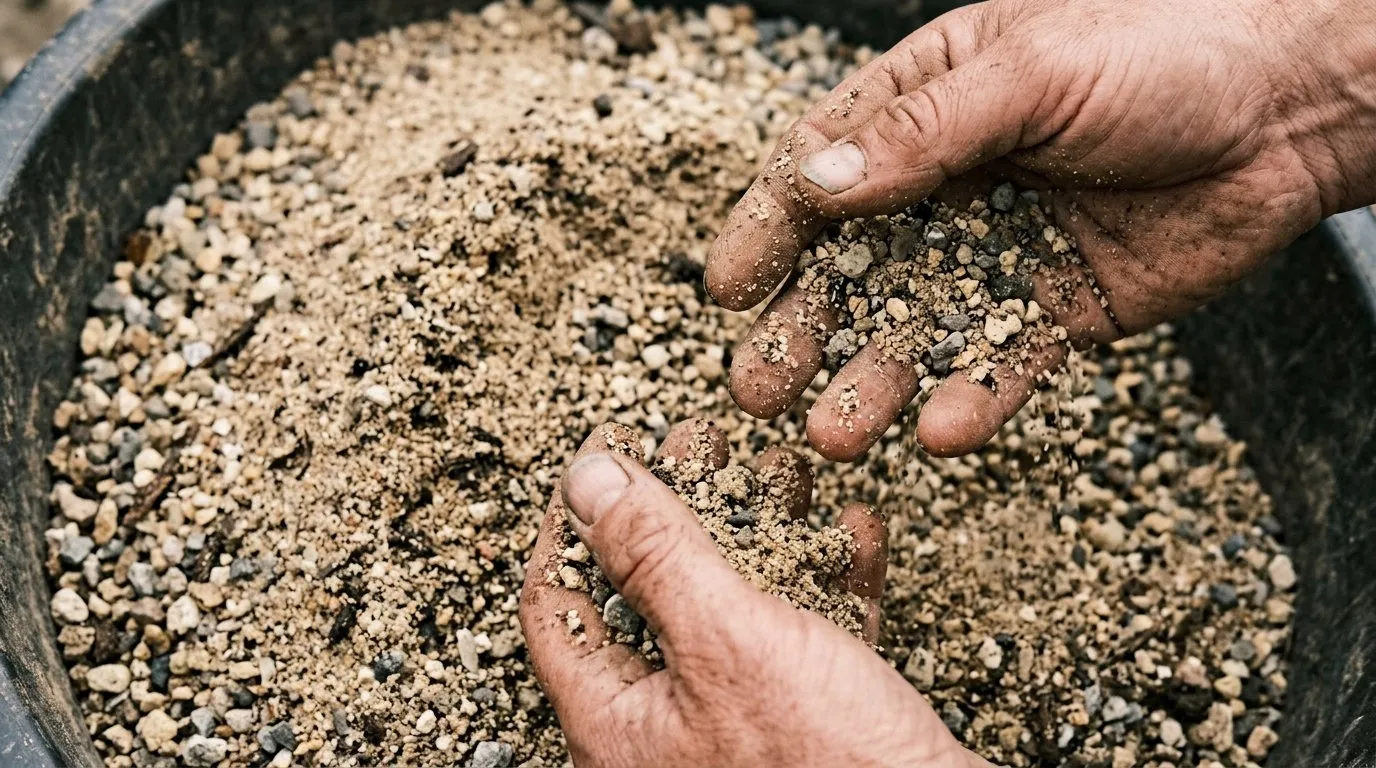 A good mix is dry and crumbly and runs through your fingers like coarse breadcrumbs.
Where to source the mix
Bags of ready-mixed top-dressing are easiest for small lawns. Turf suppliers and garden centres sell them. Check the bag for how much area it covers.
A bulk bag from a builder’s merchant works out cheaper for medium lawns. Buy sandy loam and add sieved compost from your own heap.
A loose load from a turf supplier is cheapest for big lawns, but you need somewhere to tip it.
If you mix your own, choose washed sand from a turf supplier over cheap builder’s sand. Builder’s sand can be too fine and silty for lawns.
How to apply top-dressing
Allow an afternoon for an average back lawn.
- Mow short. About 25mm. Shorter than usual, but don’t scalp it.
- Scarify. Use a spring-tine rake, or hire a powered scarifier for anything bigger than a small lawn. Rake up the moss and dead grass.
- Aerate. A hollow-tine aerator is best, as it pulls out little plugs of soil for the dressing to fill. A garden fork works too. Aim for holes about 7-10cm deep and 10-15cm apart.
- Sweep up the cores. If you used a hollow-tine aerator, clear the plugs off and pop them on the compost heap.
- Load the barrow. Have plenty of mix ready so you’re not running back and forth.
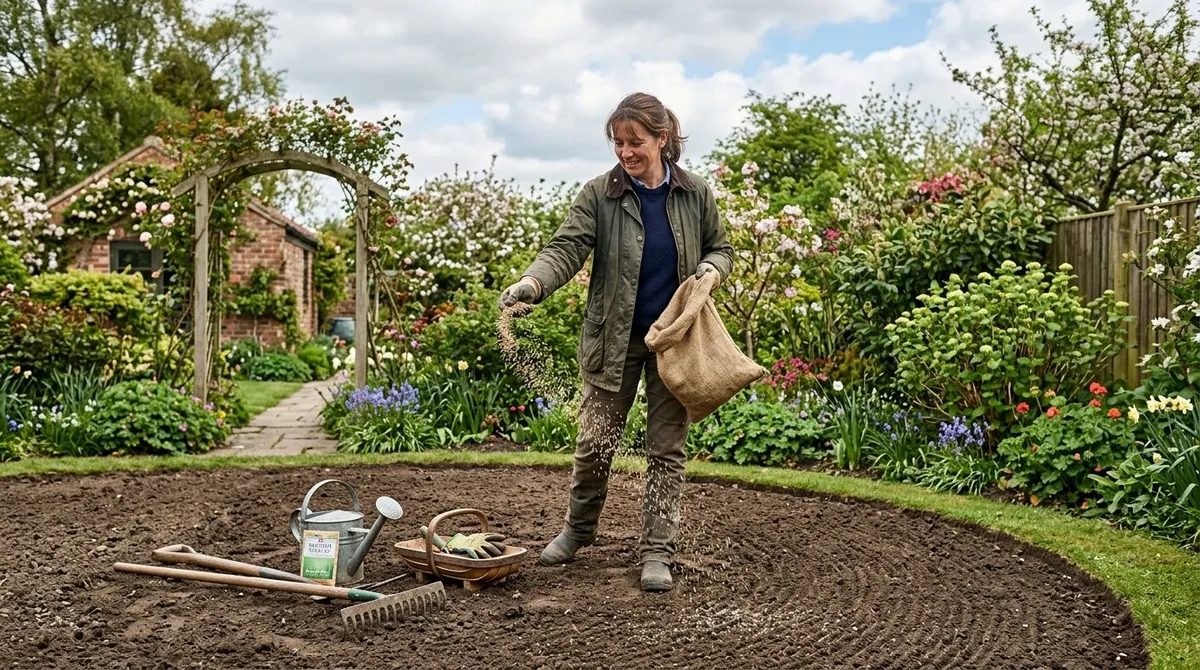
- Spread it thinly. Flick small shovelfuls across the lawn in a sweeping motion. Aim for about 2kg per square metre. You should still see grass poking through.
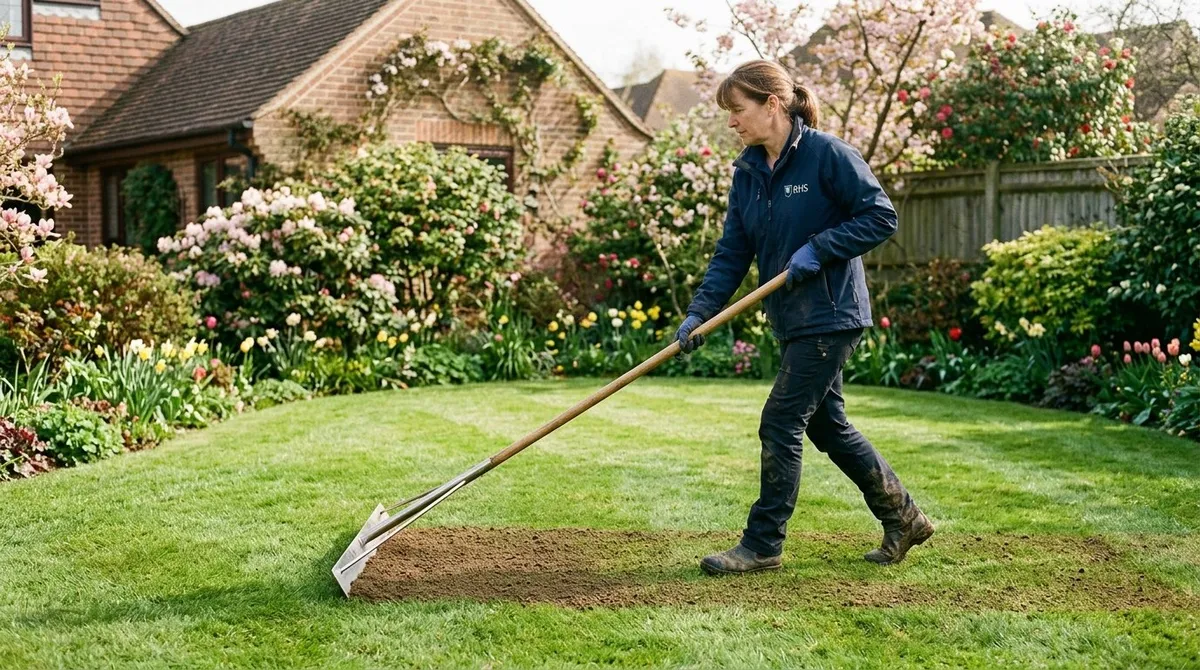
- Work it in. Drag a lute or drag mat across the lawn in two directions, so the dressing drops down between the blades.
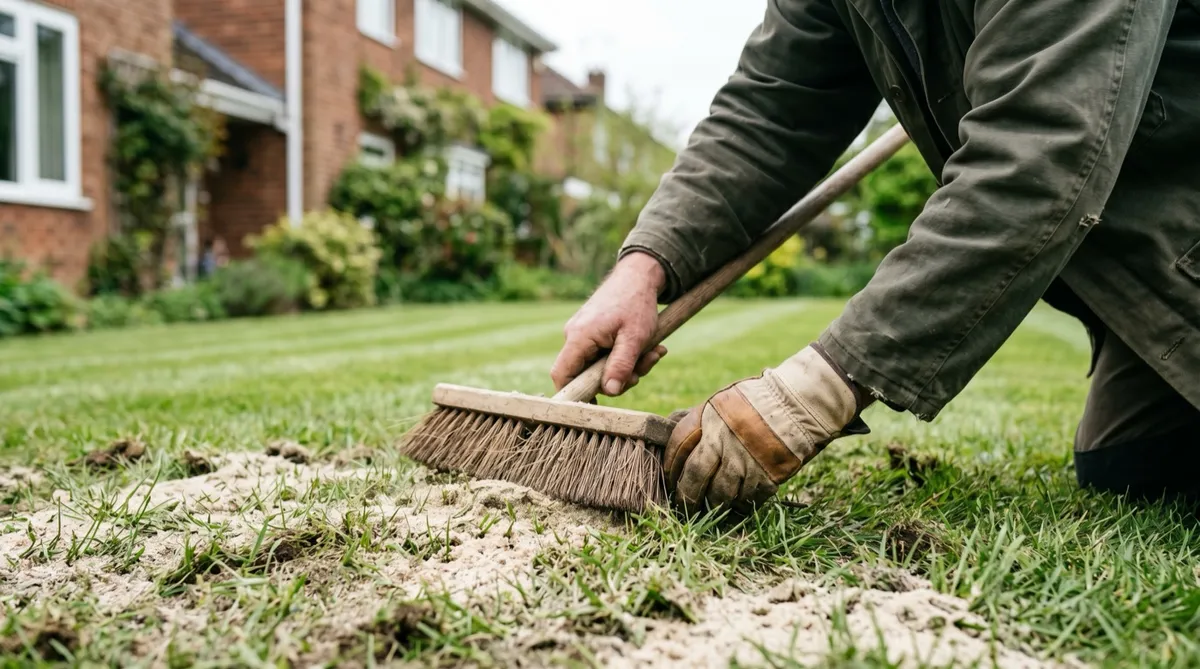
- Brush off the excess. Use a stiff broom. Most of the grass should be visible again.
- Water if dry. Skip this if rain is on the way.
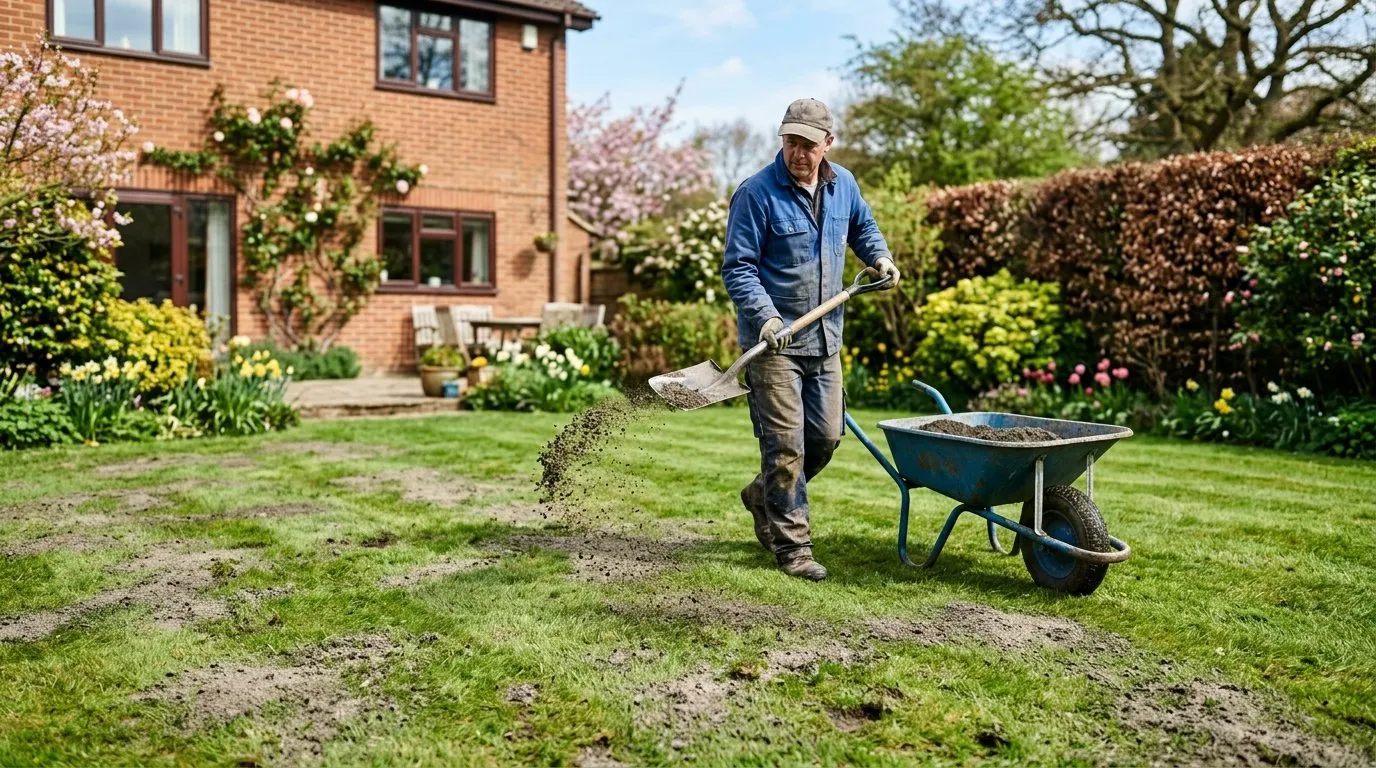 Flick small amounts across the lawn rather than dumping piles. Thin is best.
The lute or drag mat: the make-or-break tool
This is what turns “soil thrown on the lawn” into a neat job.
A lawn lute is a wide rake with a flat metal blade. You drag it across the grass and it works the dressing down between the blades. Turf suppliers sell them.
A drag mat is a flexible metal mat you pull across the lawn. It’s cheaper than a lute and quicker on big lawns, but fiddly near edges.
A stiff yard broom does the job on small lawns. It’s just harder work.
Without one of these, you get clumps on the surface that look messy for weeks. You can hire a lute or mat if you don’t want to buy one.
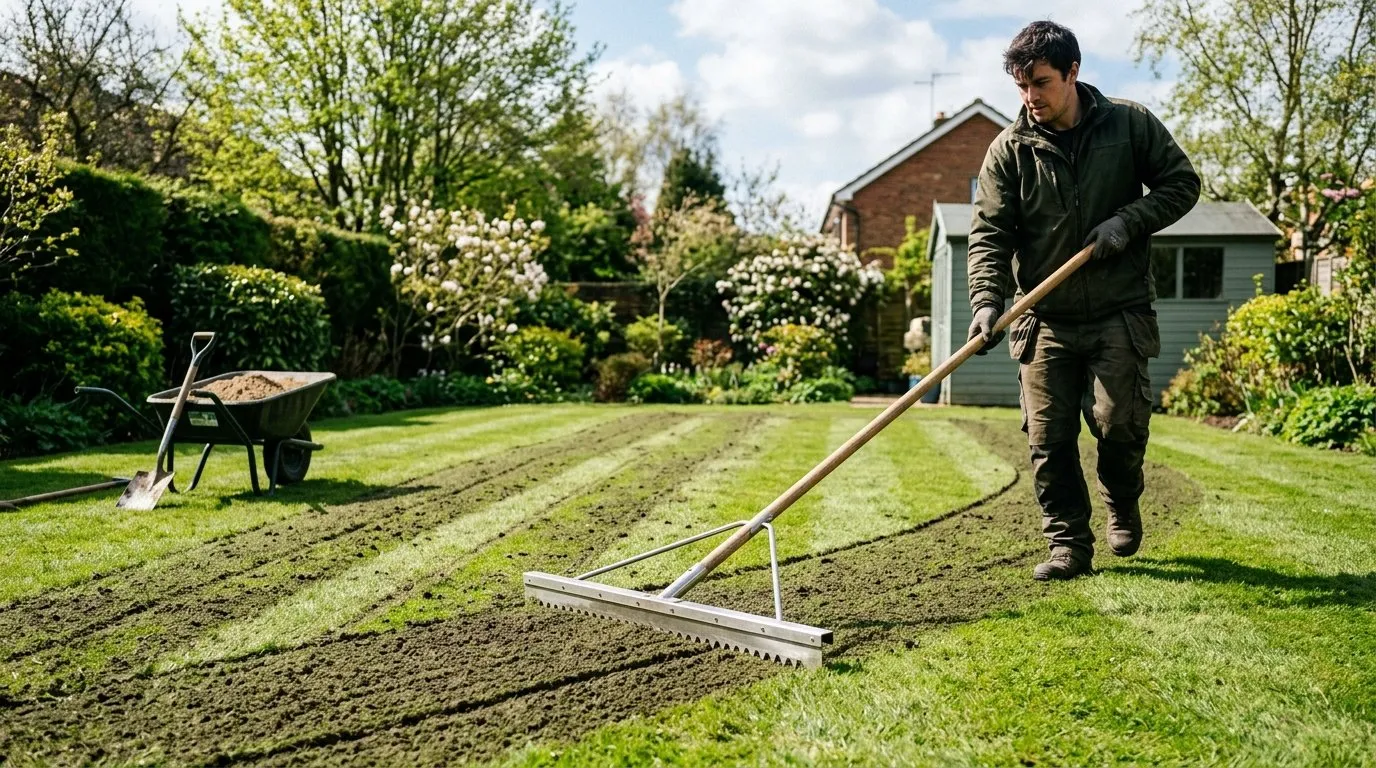 A lute pulls the dressing across the lawn and down between the grass. Go over it in two directions.
Combining top-dressing with overseeding
Doing everything in one session gives you the biggest improvement:
- Mow short (about 25mm)
- Scarify
- Aerate
- Sweep up cores and debris
- Sow seed at the rate on the pack
- Top-dress at 2-3kg per square metre
- Lute or drag it in
- Water gently
The dressing covers the seed at just the right depth, keeps it damp and hides it from birds. In autumn, seed usually comes up in a week or two. Our how to fix a patchy lawn guide covers the seeding side in more detail.
What to expect after dressing
Your lawn will look a bit worse before it looks better. Don’t panic.
First week: a little dusty and grey. That’s normal.
Weeks 1-2: the dressing disappears into the grass and it turns green again. New seed starts to show.
Weeks 2-6: new growth fills in and the lawn looks normal, with fewer dips.
Next spring: this is the payoff. Thicker grass, a flatter surface and fewer puddles.
Do it every autumn and the improvement keeps building. Most problems come from spreading too much and then worrying in the first fortnight.
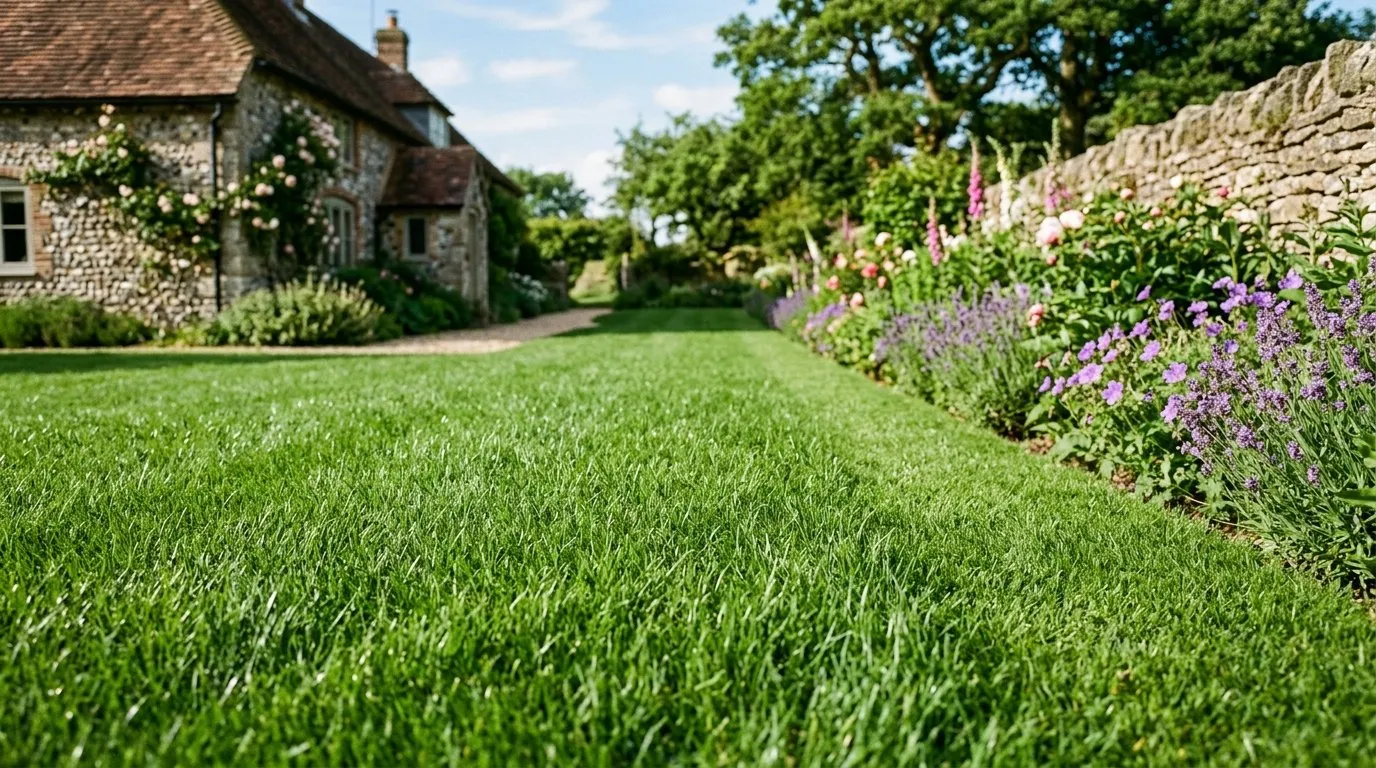 Six weeks after top-dressing and overseeding: thicker, greener and nicely even.
Annual programme: where top-dressing fits
| Month | Job |
|---|---|
| March | First mow on a high setting, light rake if mossy |
| April | Spring feed |
| May | Regular mowing begins |
| June | Summer feed if needed |
| July | Keep the mower set higher in dry weather |
| August | Spot the hollows, plan your autumn work |
| September | Scarify, aerate, overseed, top-dress |
| October | Last light mow, autumn feed |
| November | Rake up fallen leaves |
| December-February | Rest, keep off frosty grass |
For the full year, see our lawn care calendar UK. Our guide to how to scarify and aerate covers steps 2 and 3 in more detail.
Tools you actually need
- Lawn mower
- Spring-tine rake, or a hired powered scarifier
- Hollow-tine aerator or garden fork
- Wheelbarrow and shovel
- Lawn lute or drag mat (buy or hire)
- Stiff yard broom
- Top-dressing mix, about 2-3kg per square metre
- Grass seed, if you’re overseeding
Most of this you’ll already have. Hire the bigger kit for a day, and doing it yourself costs far less than a lawn-care company.
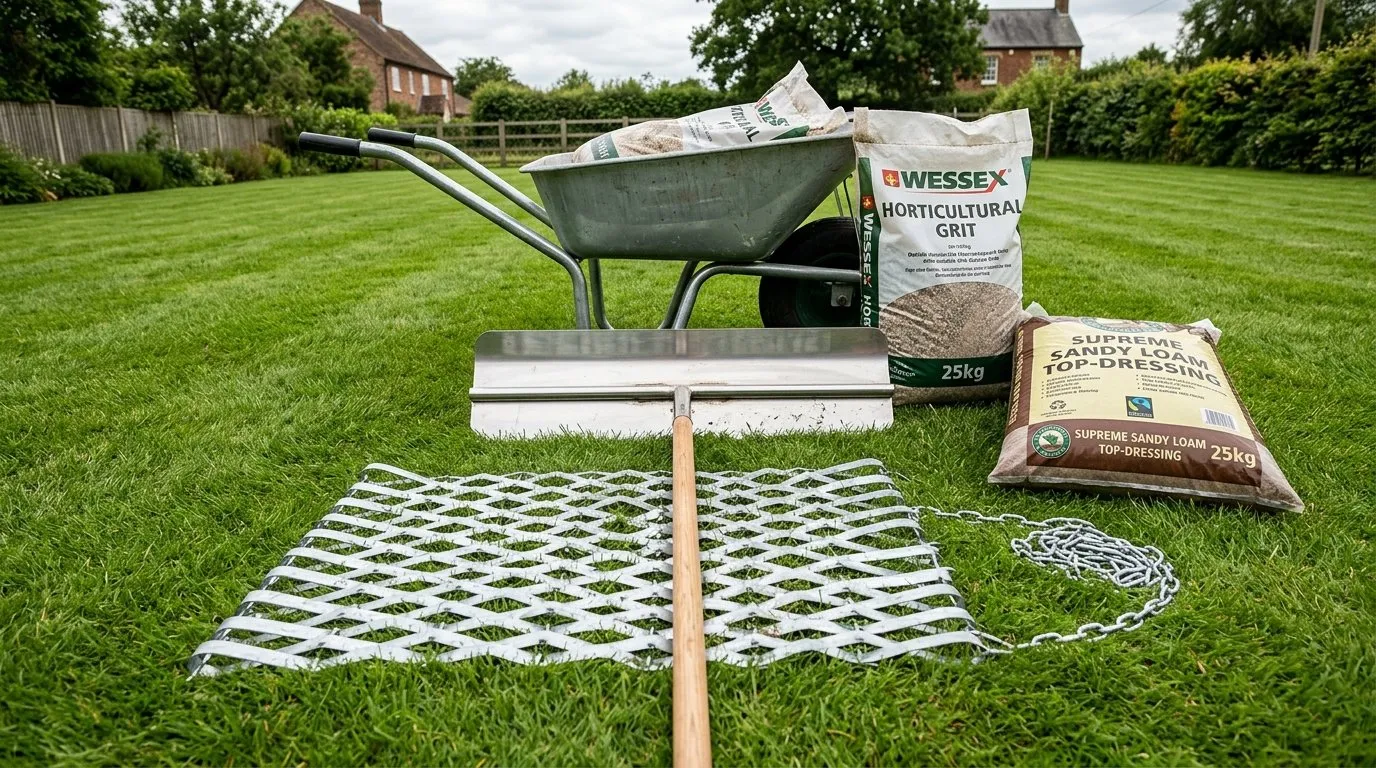 The basic kit: lute, drag mat, wheelbarrow and bags of mix. Hire what you don’t need to own.
What goes wrong (and how to fix it)
Too much dressing. You’ll see clumps and brown patches. Rake off the extra, water and wait. Next time, go thinner.
Wrong time of year. The dressing just sits there. Try again in the next autumn or spring window.
Skipping the scarifying. The dressing sits on the thatch and nothing improves. Scarify first.
Walking on it when wet. You’ll leave footprints. Choose a dry day.
Wet mix. It clumps and won’t work in. Always use dry, crumbly mix.
If your lawn has other troubles, our guide to lawn diseases identification and treatment UK can help.
Quick checklist
- The lawn is dry, not waterlogged
- The mix is dry, crumbly and sieved
- You have a lute, drag mat or stiff broom
- You’ve worked out about 2-3kg of mix per square metre
- The mower is set to about 25mm
- The scarifier and aerator are ready
- The forecast is dry for a day, ideally with rain soon after
Get it done in mid-September and you’ll see the difference by spring.
Frequently asked questions
When is the best time to top-dress a UK lawn?
Early autumn, from late August to early October. The grass is still growing and the soil is warm enough for seed if you overseed too. Autumn rain helps settle the dressing. Mid to late spring is a second choice. Avoid hot, dry summers and cold winters.
What top-dressing mix should I use on a UK lawn?
A sandy mix that suits your soil. A common blend is mostly sand with some sieved loam and fine, well-rotted compost. On heavy clay, use more sand. On sandy soil, add more loam and compost. Ready-mixed lawn top-dressing is easy to buy in bags.
How much top-dressing do I need per square metre?
About 2-3kg per square metre. Once worked in, that leaves a layer just a few millimetres deep. Any heavier and you can smother the grass. If you can still see clumps on the lawn after a couple of days, you’ve used too much.
Should I scarify before top-dressing?
Yes, if your lawn has thatch or moss. Otherwise the dressing just sits on top of the dead material. Scarify first, then aerate with a fork or hollow-tine aerator. Finally, brush the dressing into the holes and down to the base of the grass.
Can I overseed and top-dress at the same time?
Yes, and it’s a great way to thicken a thin lawn. Scarify, aerate, then sow seed at the rate on the pack. Spread a light top-dressing straight after to cover the seed and keep birds off. Water gently if it’s dry. Seedlings usually pop up within a couple of weeks in warm, moist soil.
Related articles
Our team produces practical UK gardening guidance from source research, contributor records and established horticultural practice. Editorial standards are overseen by Matt W.