Key takeaways
- Stripes are a trick of the light: pale grass leans away from you, dark grass leans towards you
- A homemade striking board or drag mat does the same job as a roller
- Cut at 25-40mm and mow weekly in the growing season for the best contrast
- Cylinder mowers stripe best, hover mowers worst, and rotary mowers sit in between
- Mow a strip across each end first, then walk straight lines up and down
How lawn stripes actually work
Lawn stripes are a trick of the light, not a difference in cut height. Every blade is cut to the same length. What changes is the way the grass leans.
As you push a mower, anything pressing on the grass behind it bends it over in the direction you’re walking. Grass bent away from you shows you the flat, shiny side of each blade, so it looks pale. Grass bent towards you shows you the cut tips and shady base, so it looks dark green.
Walk up the lawn and the grass leans up and looks light. Walk back down and it leans down and looks dark. Do that back and forth and you get the classic stripes. Stand at the other end of the lawn and the colours swap over.
So you’re not really cutting a pattern. You’re bending grass in straight, even rows. Anything that presses the grass flat will stripe a lawn, roller or not.
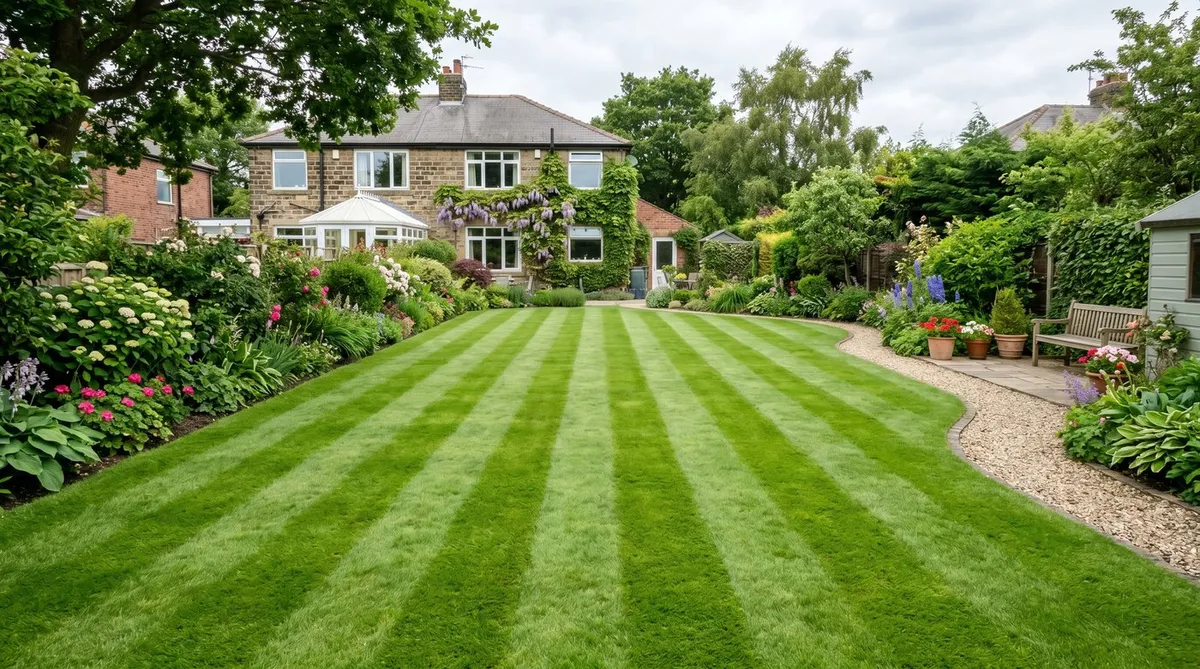
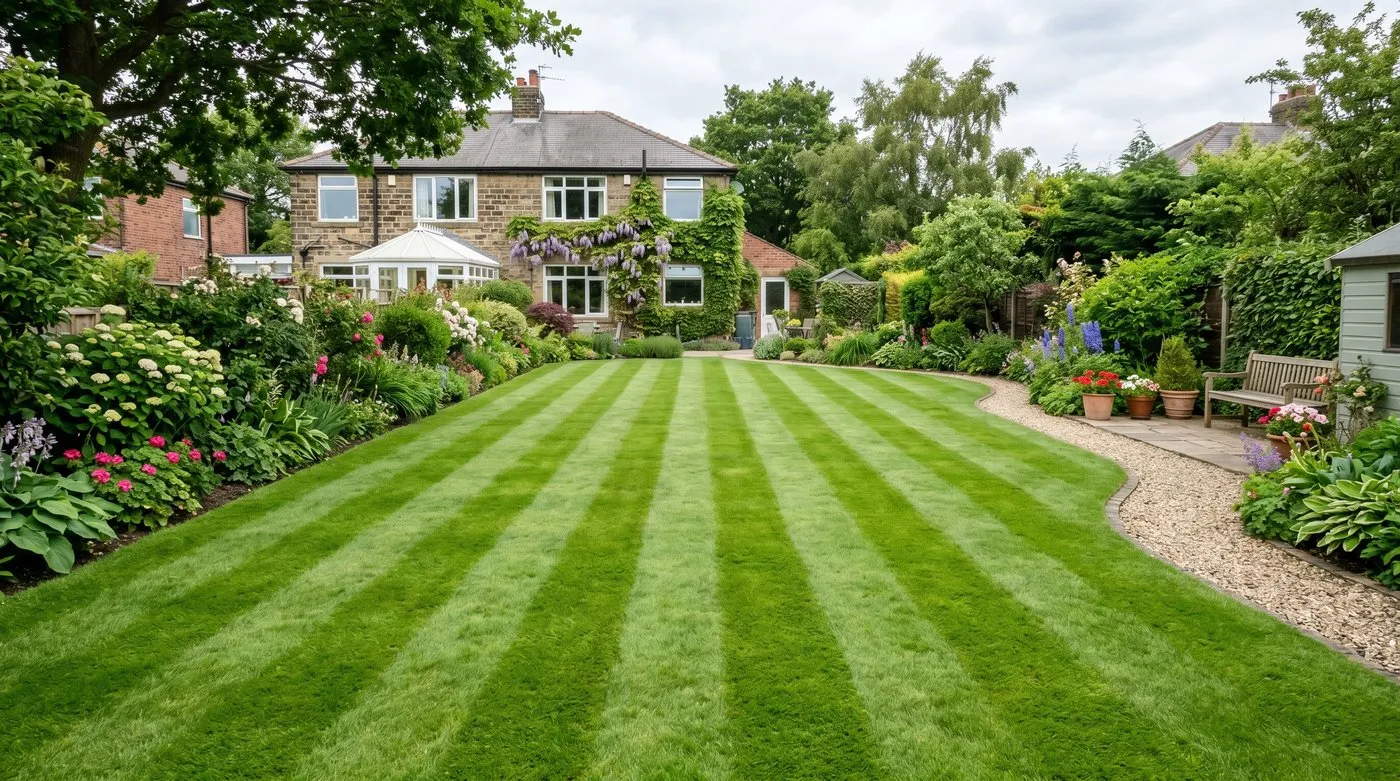 Lovely light and dark bands on a West Yorkshire lawn. The difference is all in how the light hits the grass.
Gardener’s tip: Admire your stripes on a bright but slightly cloudy day. Soft, even light shows them off best. Harsh midday sun washes out the contrast.
What the roller on a mower actually does
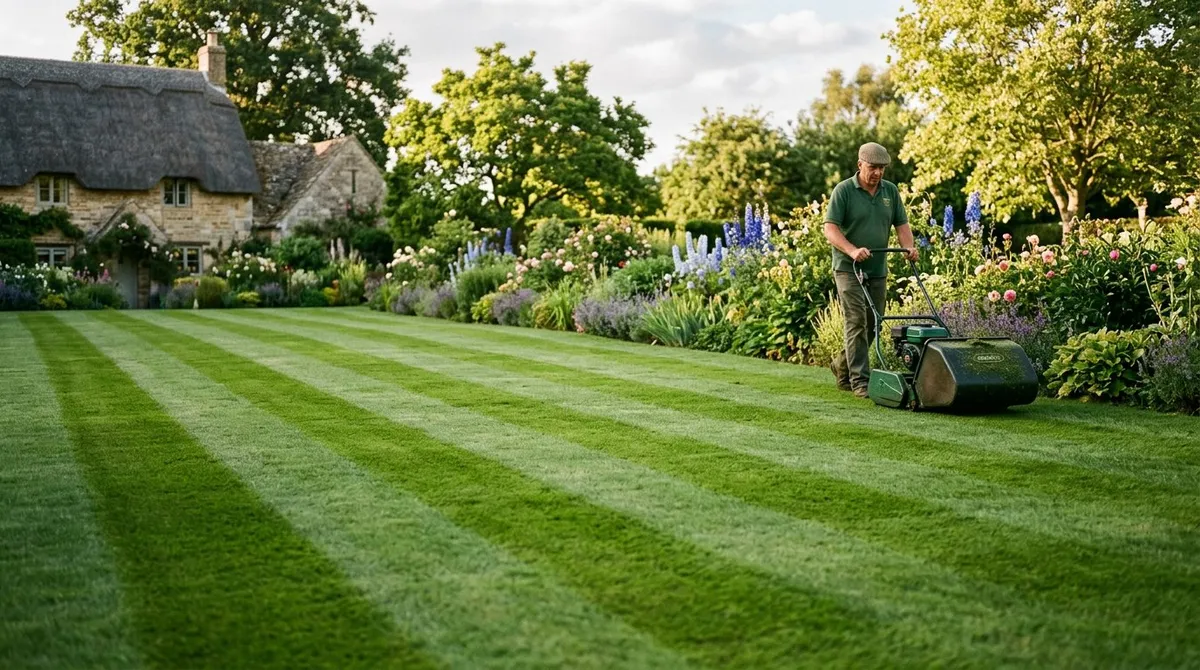
A rear roller has one job: pressing the grass flat in the direction you’re walking. That’s why striping mowers have one.
The roller sits behind the blades and rolls over the freshly cut grass, pushing every blade the same way. A wide, heavy roller gives a firm, even press, which is why cylinder mowers with full-width rollers give the crispest stripes.
A roller also helps you cut neatly right to the lawn edge, and on many mowers it’s part of how you set the cutting height.
But it isn’t magic. It’s just a way of flattening grass in a straight line. A plank of wood dragged behind the mower does that too. So does a stiff rubber mat. Once you know that, a mower without a roller isn’t a problem at all.
Can you stripe a lawn without a roller?
Yes, and there are three easy ways. Make a striking board to drag behind your mower. Make or buy a drag mat. Or get a mower with a clip-on striping kit. All three bend the grass just like a roller.
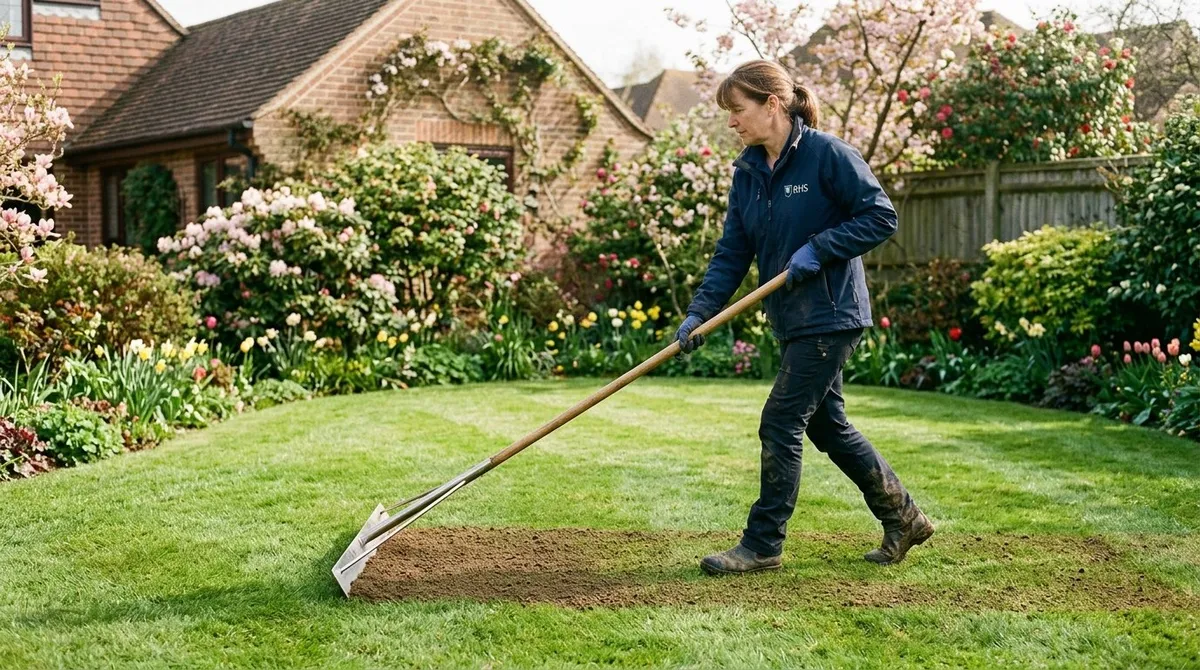
The roller is the easy way, not the only way. A homemade striker gets you most of the look for very little money.
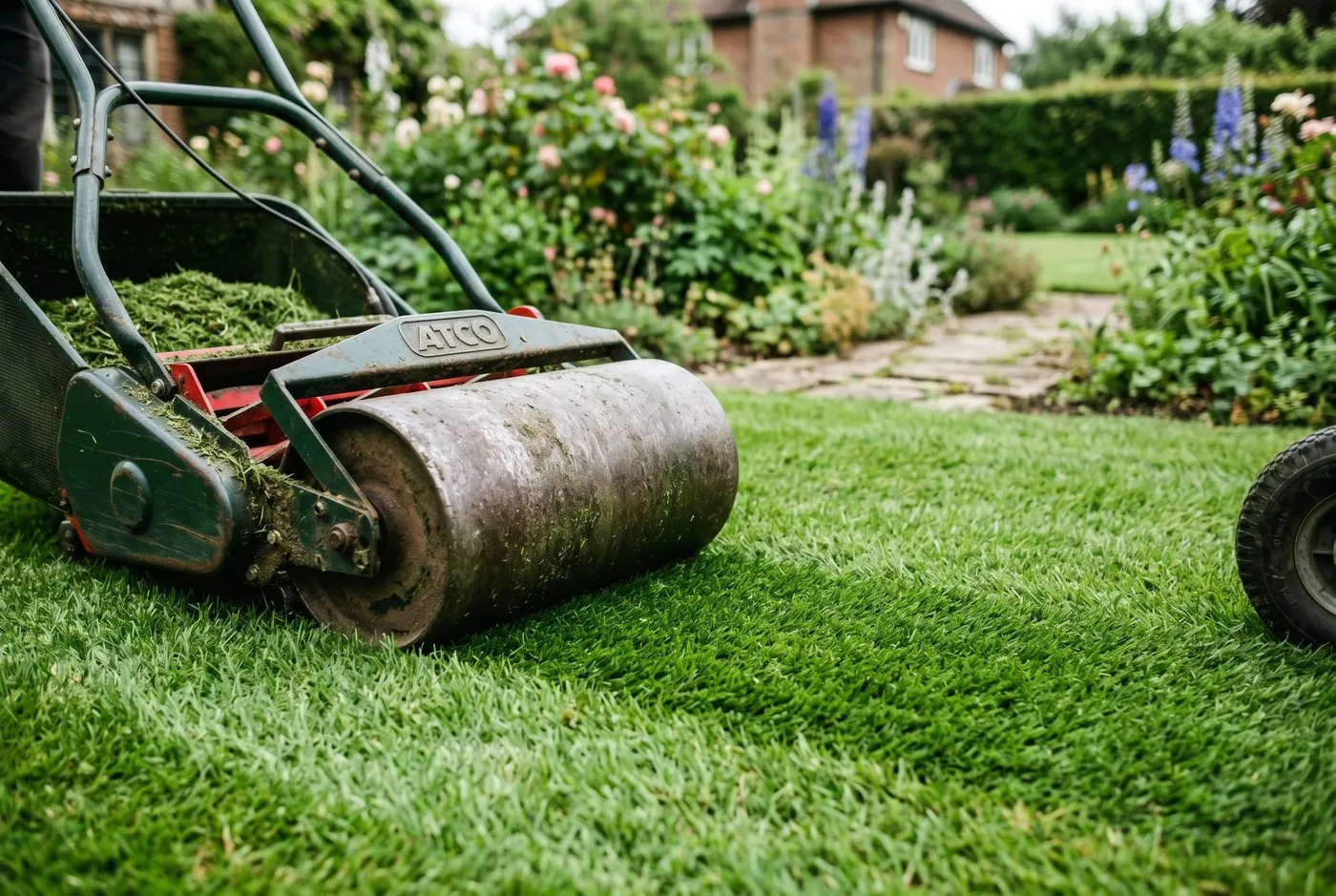 A rear roller presses each row flat in one direction. A striking board copies exactly this.
Gardener’s tip: Don’t stripe a newly sown lawn or one suffering in a drought. Pressing dry, brittle grass snaps it and leaves bruises instead of stripes. Wait until it’s green and growing.
How to build a striking board or drag mat
A striking board is a weighted bar you drag behind the mower to press the grass flat. You can make one in an afternoon from guttering or timber.
The easiest version uses plastic guttering. Cut it to the width of your mower, cap both ends and part-fill it with dry sand for weight. Drill two holes near the top, thread a rope through and tie it to the mower so it drags along the ground behind.
A timber version works just as well. Cut a length of planed softwood to the width of your mower and screw a smaller batten on top to stiffen it. Add two eye bolts and a rope.
A drag mat is even simpler. Take a heavy rubber-backed doormat or an offcut of rubber stable mat. Tie a rope to one end and clip it to the mower. The mat slides over the cut grass and presses it down.
| Method | What you need | How easy | Stripe strength |
|---|---|---|---|
| Guttering striking board | Guttering, sand, end caps, rope | Easy | Strong |
| Timber striking board | Planed softwood, eye bolts, rope | Easy | Strong |
| Rubber doormat drag mat | Heavy rubber-backed mat, rope | Very easy | Medium |
| Stable mat drag mat | Rubber stable mat offcut, rope | Very easy | Strong |
| Shop-bought striping kit | A kit made for your mower | Just fit it | Very strong |
The trick is getting the rope length right. Too short and the striker bounces over bumps. Too long and it wanders sideways. Aim for it to lie flat about 20-30cm behind the mower. Add or take away weight until it presses firmly without being a struggle to push.
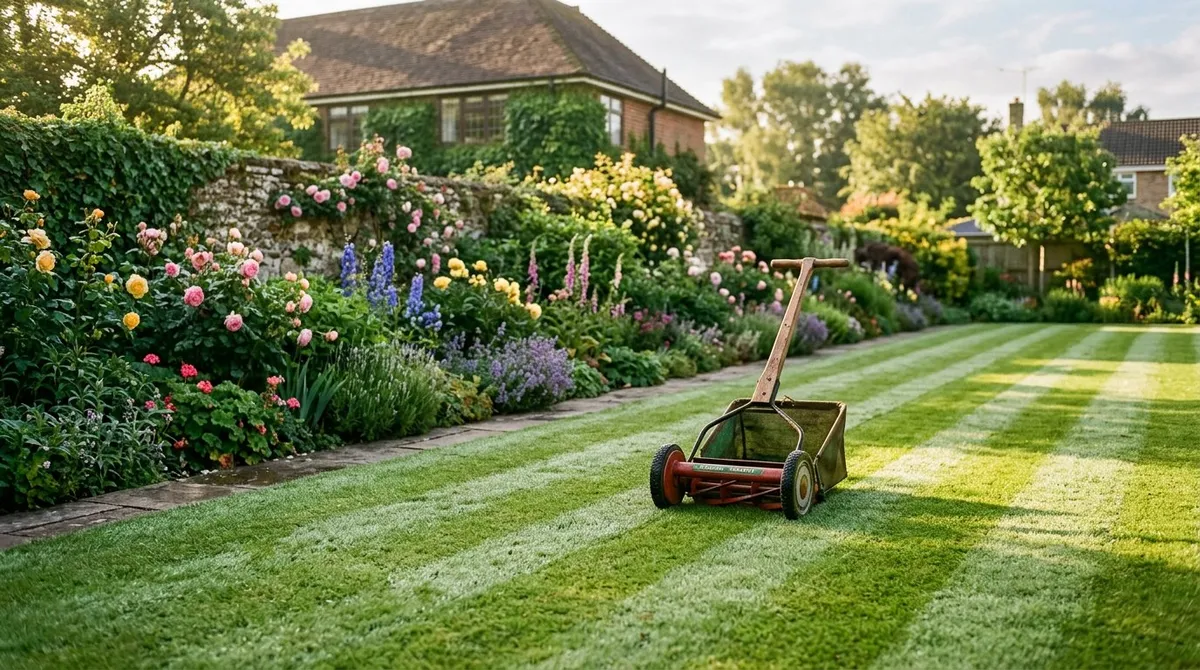
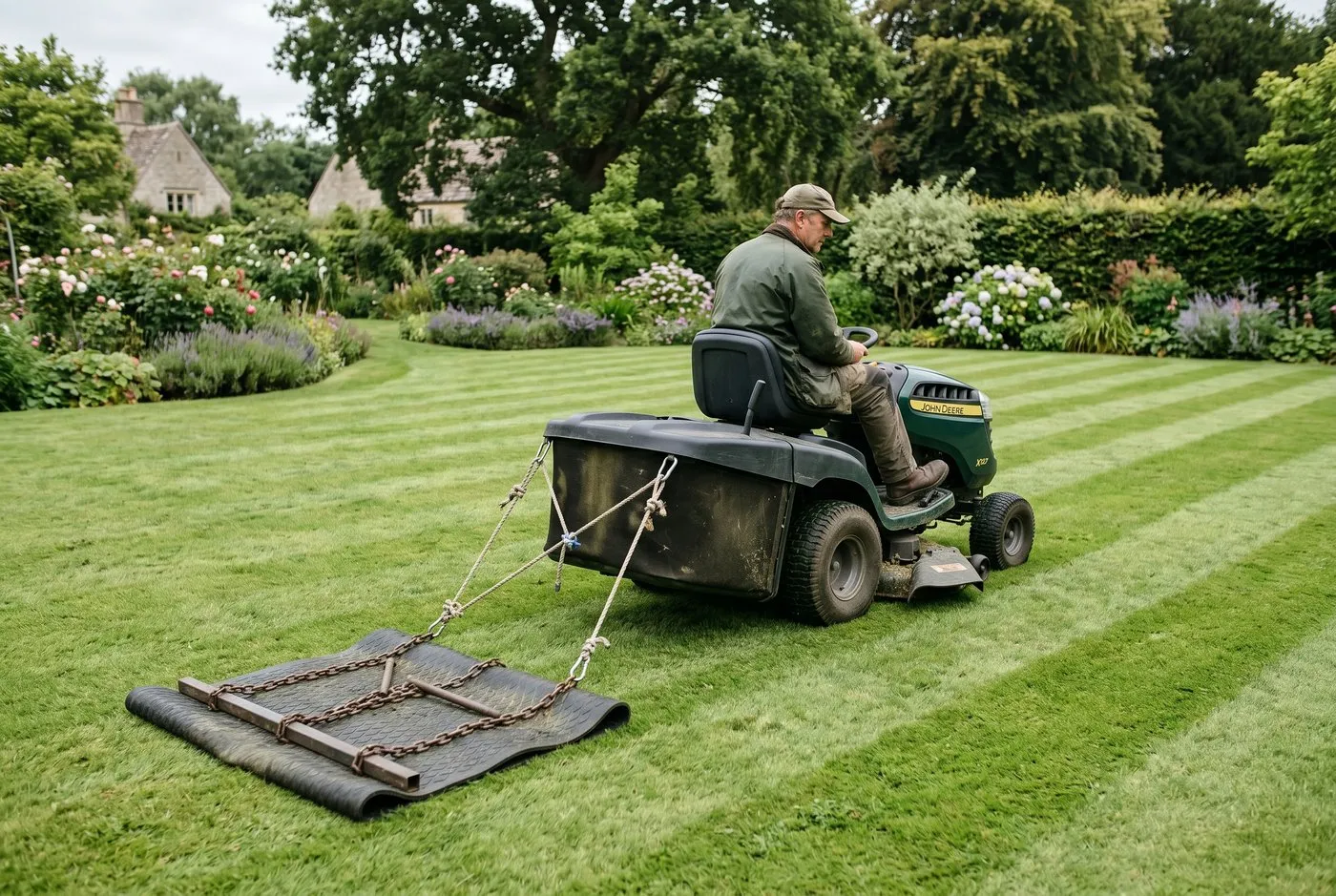 A homemade drag mat cut from rubber stable matting, pressing the grass flat on a Cornish seaside lawn.
A striker works best on thick, healthy grass. Thin or patchy lawns give uneven stripes. It’s worth taking time to feed your lawn in spring so the grass is dense enough to hold a good lean.
Which mowers stripe and which do not
Cylinder mowers stripe best, hover mowers worst, and rotary mowers sit in between. It all comes down to whether the mower presses the grass flat.
A cylinder mower cuts with a spinning reel, and nearly all of them have a full-width rear roller. That gives the sharpest stripes you can get, which is why they’re used on bowling greens.
A rotary mower cuts with a flat spinning blade. Some have a rear roller and many don’t. Without one, you’ll only get faint stripes from the back wheels. Add a striking board or a striping kit and it stripes nearly as well as a cylinder mower.
A hover mower floats on air and touches nothing, so on its own it leaves no stripes. A few take a striping kit, which helps a bit.
Robot mowers mostly cut in a random pattern and leave no stripes. A few newer models mow in straight lines, but the stripes are weak compared with a pushed mower and striker.
| Mower | Rear roller? | Stripes | Best for |
|---|---|---|---|
| Cylinder | Yes, full width | Excellent | Fine, flat ornamental lawns |
| Rotary with roller | Yes | Very good | Family lawns with stripes |
| Rotary plus homemade striker | Added on | Good | Stripes on a budget |
| Plain rotary | No | Faint | Everyday cutting |
| Hover | No | None to faint | Slopes and rough edges |
| Robot | Rarely | Weak | Hands-off cutting |
So you don’t need a cylinder mower to get stripes. A plain rotary with a homemade striker beats a hover mower and comes close to a roller mower.
The mowing technique that makes stripes sharp
Sharp stripes come from straight lines and steady direction, not just the machine. Wobbly steering spoils even the best roller mower.
Start by mowing a strip across each end of the lawn. These are where you’ll turn, so turning there won’t mess up your stripes.
Now pick something straight to follow, like a fence, a path edge or a washing line. Line up your first stripe against it and walk straight, looking 3-4 metres ahead rather than at your feet. Looking ahead keeps you straight. Looking down makes you wander.
Mow the next stripe in the opposite direction, overlapping the first by a couple of centimetres so you don’t miss a bit. Keep going back and forth across the lawn, turning on the end strips each time.
Finish by going round the end strips and edges again to tidy up the turns. The whole effect comes from bending the grass in just two directions: up the lawn and back down.
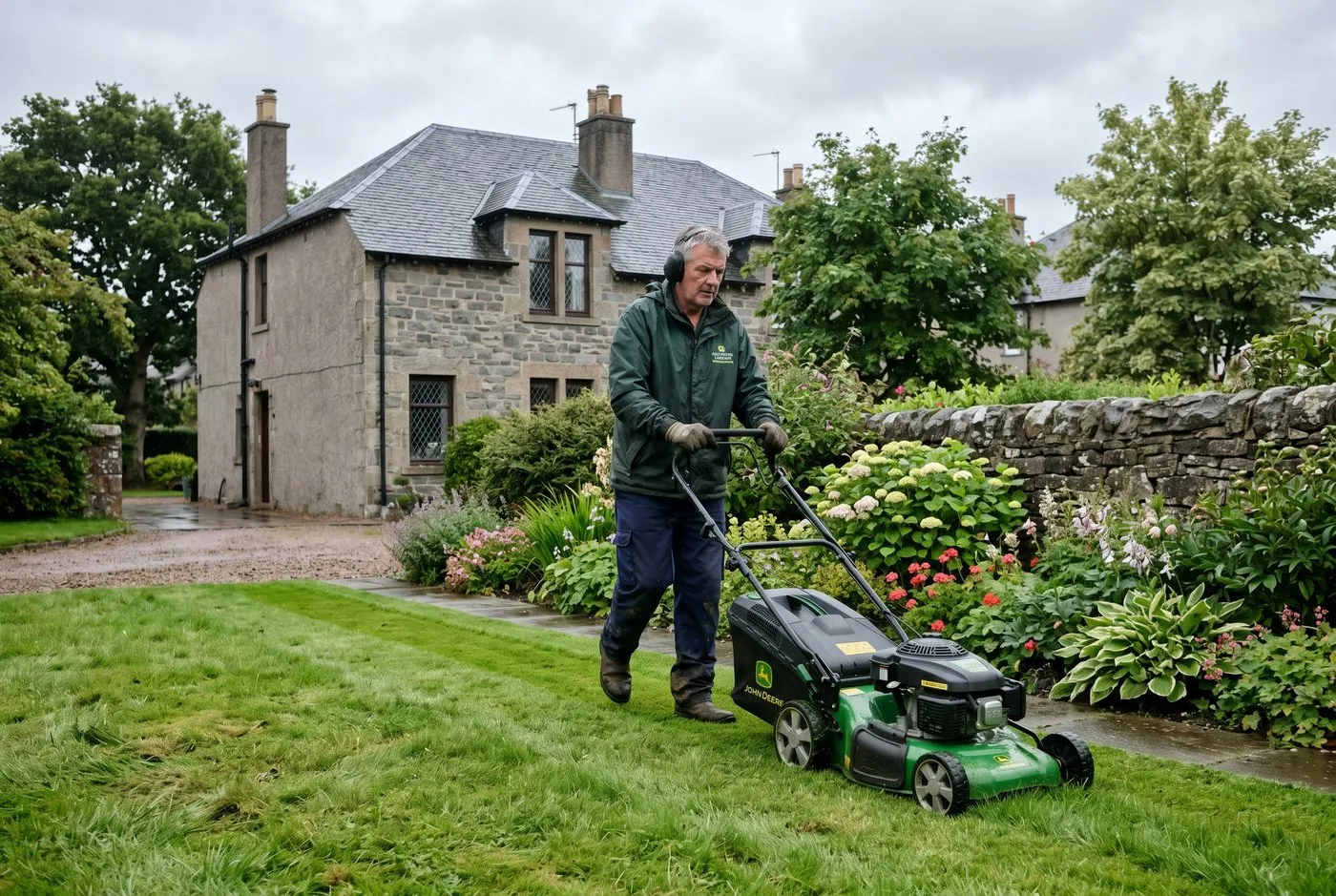 Keep your eyes on a point ahead to walk a dead straight line. A fence makes a handy guide for the first stripe.
For a checkerboard, stripe the whole lawn one way, then mow it again straight across. Where the two directions cross, you get squares of light and dark. It takes twice as long, so save it for when the lawn is looking its best.
Once you’re confident, try diagonals or curves. Diagonal stripes make a small square lawn look bigger, and curves around a flower bed soften a formal look. Same rule: bend the grass the same way along each line.
For a refresher on the basics, our guide on when to mow your lawn covers timing, how often and the weather, which all affect your stripes.
Height and frequency that hold the pattern
Cut at 25-40mm and mow weekly in summer for stripes that last.
Grass that’s too short can’t lean, so the stripes fade. Grass that’s too long flops and blurs the lines. For most UK lawns, 25-40mm is just right. A fine ornamental lawn can go to the lower end, while a family lawn is happier at 35-40mm.
Pick a height and stick with it all season, as changing it breaks up the pattern. And remember the one-third rule: never take off more than a third of the height in one go.
Mowing often keeps stripes crisp. In May and June, when grass grows fastest, mow every five to seven days. Leave it a fortnight and the grass stands back up and the bands blur. In a summer drought, raise the cut to 40mm and mow less often to protect the grass. The stripes will be softer for a few weeks, and that’s fine.
Thick, well-fed grass stripes far better than a hungry lawn. Following a lawn care calendar keeps feeding and mowing on track through the year. In autumn, top-dress the lawn to even out bumps, so your striker presses evenly next spring. The RHS lawn maintenance advice is a good read before you set your mower height.
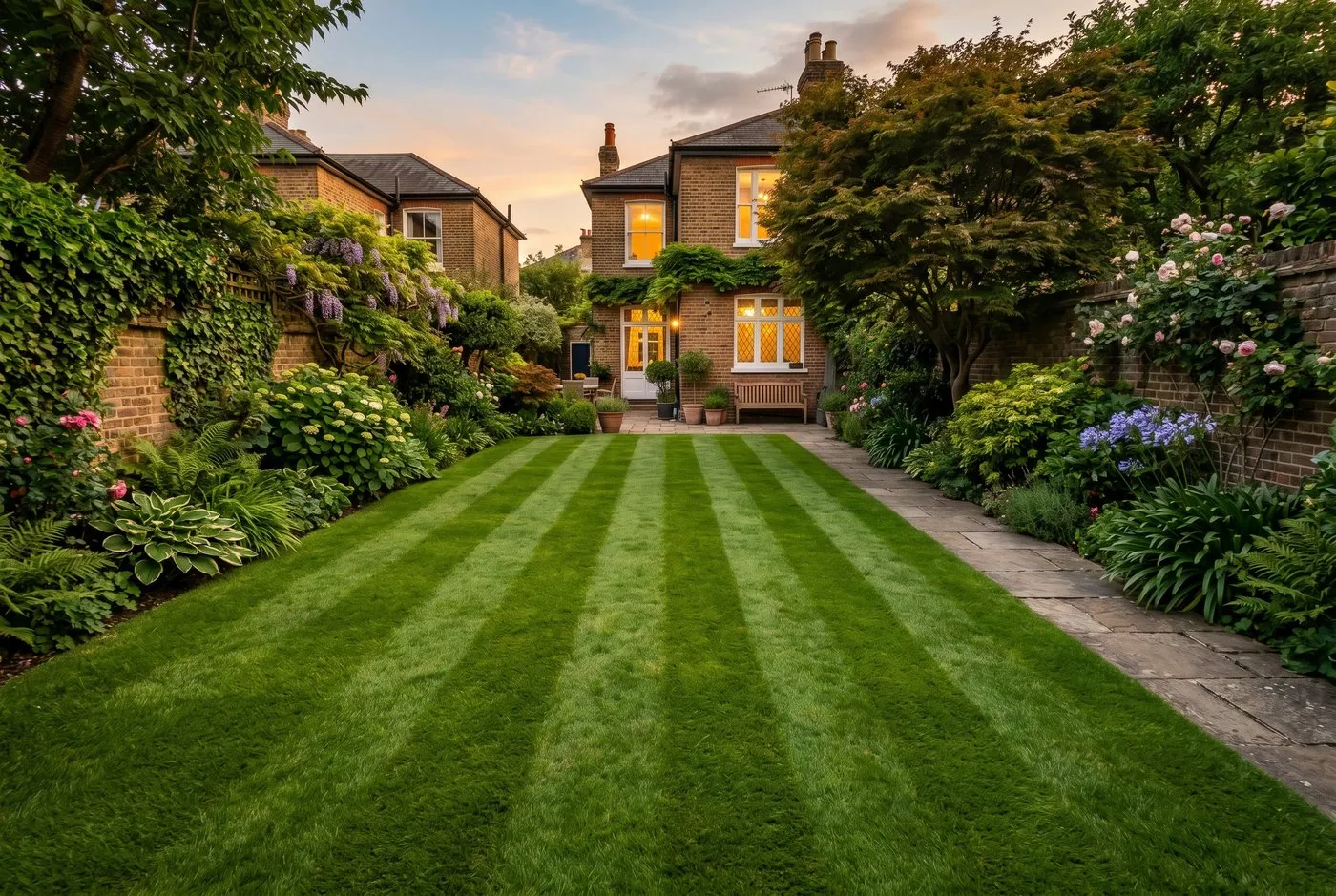 Even stripes on a Yorkshire back lawn, seen from an upstairs window, where they always look their best.
Gardener’s tip: Take a photo of your stripes from upstairs. From the ground they always look weaker than they are, and the higher view shows up any wobbly lines to fix next time.
Common striping mistakes and how to fix them
Most stripe problems come down to wobbly lines, the wrong height or a stressed lawn. Each one is easy to fix.
The most common mistake is watching your feet. You end up with wavy stripes. Pick a point at the far end and walk towards it, eyes up.
Next is cutting too short. Very short grass has nothing to bend, so the stripes vanish. Raise the cut to 30mm or more and they come back.
Then there’s mowing too rarely. Leave it a fortnight in June and the pattern washes out. Mow weekly while the grass is growing.
Striping a weak lawn is another. Thin, dry or scalped grass stripes patchily, so get it healthy first. In spring, scarify and aerate to thicken it up. If you’re striping for the first time after winter, wait for the first cut after winter once the grass is properly growing, never on cold, sleepy turf.
Last is a lopsided striker. If one side of your board or mat is heavier, the stripes look uneven. Balance the weight, level the rope and check it lies flat.
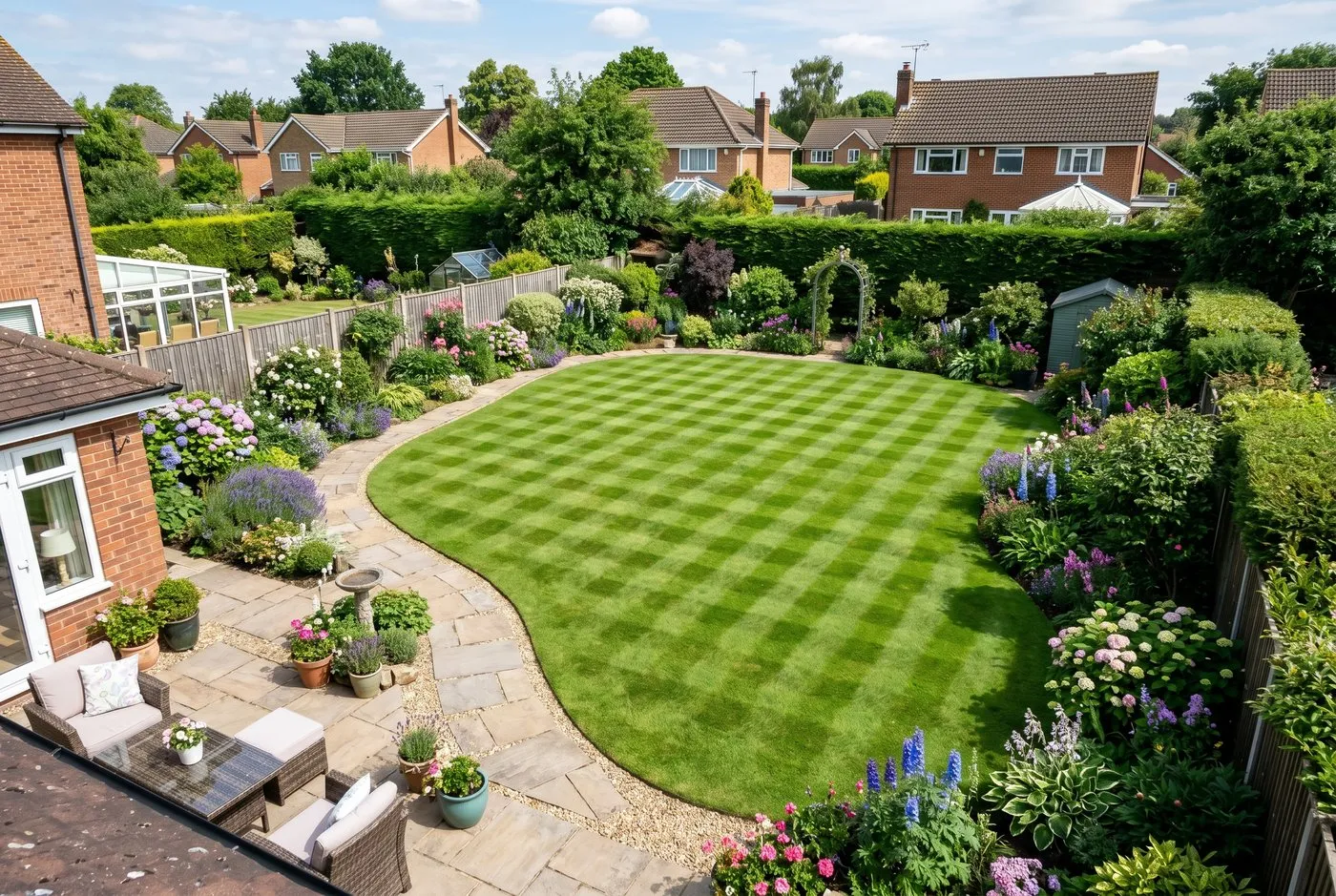 A checkerboard needs two passes straight across each other and thick, healthy grass.
Get these right and a mower with no roller can still give you a lawn that makes the neighbours look twice. The roller was never the secret. Straight lines and even pressure are, and a homemade board does that brilliantly.
Next step
Once your stripes are looking good, keep the grass thick with a good feeding routine. Our guide on how to feed your lawn covers when and what to use through the UK growing season.
Frequently asked questions
Can you stripe a lawn without a roller?
Yes, easily. Tie a homemade striking board or drag mat behind your mower. It bends the grass just like a roller does. A mower with a clip-on striping kit works too.
How do stripes appear on a lawn?
It’s all about light bouncing off bent grass. Grass leaning away from you looks lighter, and grass leaning towards you looks darker. A roller bends each row the way you walk. Mow rows in opposite directions and you get light and dark bands.
What can I use instead of a lawn roller?
A striking board, a drag mat or a weighted brush behind the mower. Anything that presses the grass one way will make stripes. A length of timber or a rubber mat tied on with rope works well, and it’s far cheaper than a new mower or a lawn roller.
Do rotary mowers leave stripes?
Most leave only faint stripes, as they have no rear roller. Some rotary models do have a roller and stripe well. On the others, fit a striping kit or drag a weighted mat or board behind. Walking straight lines with a small overlap helps too.
How do you make a checkerboard lawn pattern?
Mow stripes one way, then mow again straight across them. Where the two sets cross, you get squares of light and dark. Mow the ends first so you have room to turn, and keep every pass straight.
What height should I cut a striped lawn?
Around 25-40mm gives clear stripes. Very short grass is too short to bend, so the stripes look faint. Very long grass flops over and blurs the lines. Keep the same height all season, and never take off more than a third of the height in one cut.
How often should I mow to keep stripes?
About once a week in spring and summer. In late spring and early summer, when grass grows fastest, you may need to mow twice a week. Leave it longer and the grass stands back up, so the pattern fades. Mow less often in dry spells and in autumn.
Our team produces practical UK gardening guidance from source research, contributor records and established horticultural practice. Editorial standards are overseen by Matt W.