
Key takeaways
- Start with easy crops: potatoes, courgettes, runner beans and salad leaves
- Move crop families round four beds each year to keep the soil healthy
- Sow short rows of lettuce and radish every 2-3 weeks for steady harvests
- Spread compost or well-rotted manure on the beds every autumn
- Little and often beats a big session once a fortnight
An allotment gives you something most back gardens can’t: room to grow lots of food. A half plot can keep a household in vegetables through summer and into autumn.
This guide covers the practical side of getting your plot going and keeping it growing. If you haven’t got a plot yet, our guide on how to start an allotment covers applying, waiting lists and first costs.
How an allotment differs from a back garden
The big differences are size, time and the people around you. A full plot is traditionally 10 rods, about 250 square metres, and a half plot about 125. That’s a lot of ground to weed, with no kitchen handy. If you’re curious how it all began, read our history of UK allotments.
All that space means room for proper crop rotation, fruit bushes and big crops like potatoes and onions. The catch is time. An allotment loves regular visits. Leave it for a fortnight in June and the weeds will move in.
If you’re brand new to growing food, our beginner guide to growing your own vegetables is a good place to start. It’s worth reading up on companion planting early too.
And then there are your neighbours. Allotment sites are full of friendly, experienced growers who share tips, spare plants and sometimes tools. They know the local soil better than any book.
How do you clear an overgrown allotment plot?
Clear it a bit at a time, starting with a patch small enough to finish. The RHS allotment basics guide suggests winter is a good time to start. Cut down tall growth, then dig out the roots of tough weeds like couch grass, bindweed, docks and brambles. Even small bits of couch and bindweed root regrow, so pick them out by hand.
Cover any area you can’t tackle yet with cardboard or black sheeting, weighed down. Potatoes, courgettes and squash help on rough ground, as their big leaves shade out weeds. If you use a weedkiller, only use one sold for home gardens, follow the label and check your site rules first. Many sites limit chemicals.
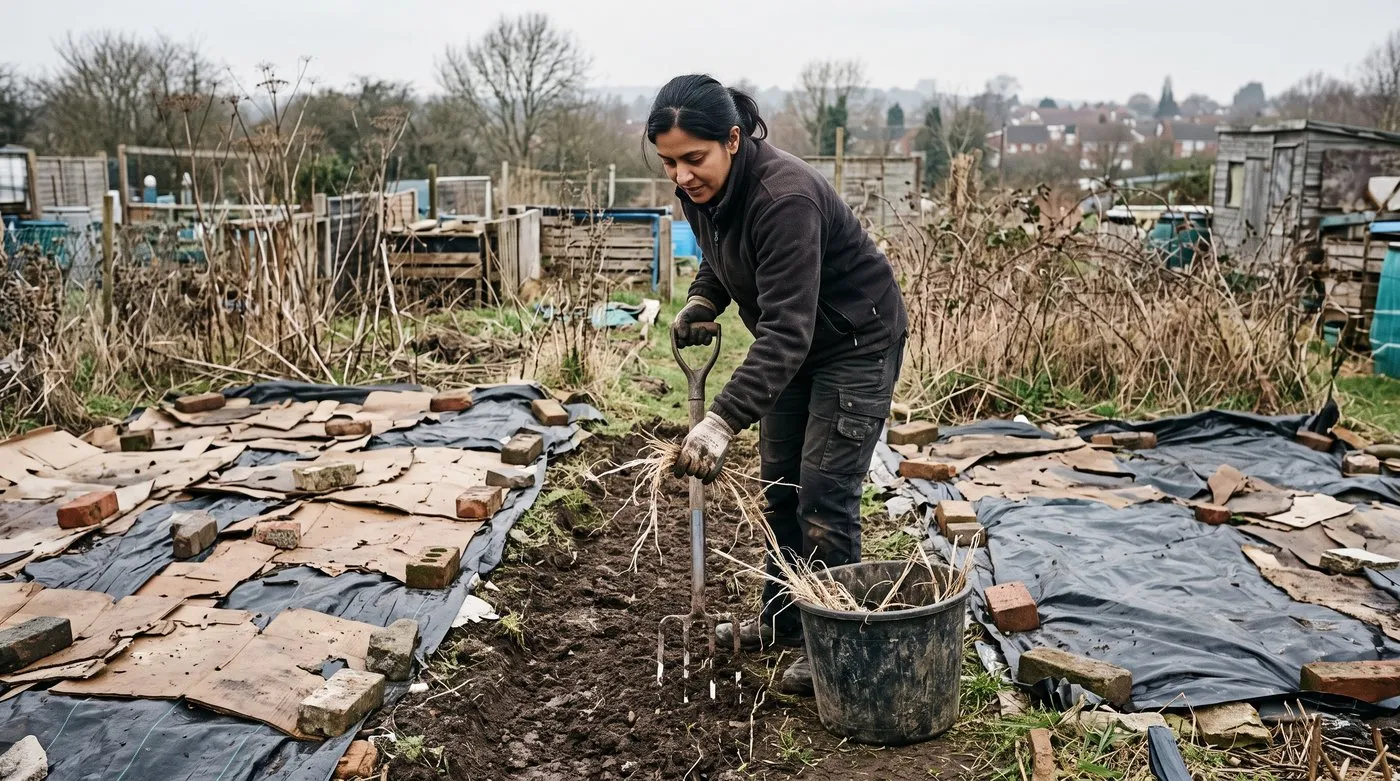
Clear one patch you can finish, picking out every bit of couch root. Cover the rest with cardboard or sheeting until you’re ready.
Getting to know your allotment soil
Good soil makes everything easier, so feed it before you worry about what to plant.
Testing your soil
Squeeze a handful of damp soil. Clay holds its shape and feels sticky. Sandy soil falls apart straight away. Loam holds together loosely and feels a bit gritty. A cheap pH kit tells you if it’s acid or chalky, which matters for crops like cabbages.
Clay is rich but heavy and slow to warm in spring. Sandy soil warms fast but dries out quickly. Both get better with the same treat: plenty of compost or manure.
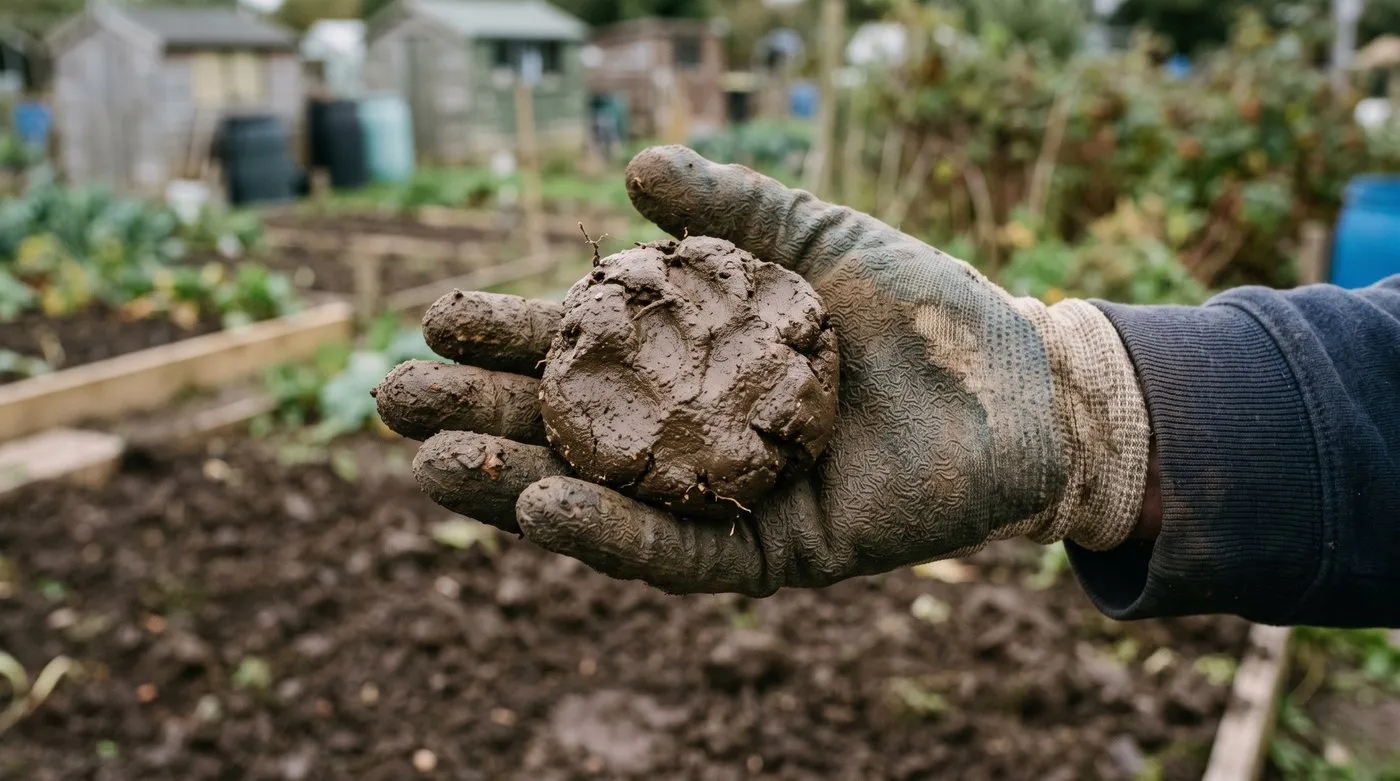
If a squeezed handful holds its shape like this, you’ve got clay. It’s rich soil that gets easier every year with compost.
Improving your soil
Spread 5-8cm of well-rotted manure or compost on every bed each autumn. Leave it on top and the worms will pull it in. It helps clay drain and helps sandy soil hold water. Our guide on how to make compost shows how to make plenty. Local stables often give manure away. Let it rot down for six months or more before you use it.
Keep off the beds, as treading squashes the soil. Make beds no wider than 1.2 metres so you can reach the middle from the path. For layouts and building tips, see our raised bed gardening guide.
Tip: Got heavy clay? Read our guide on improving clay soil. Adding organic matter and staying off it when wet makes it easier every year.

Four beds, four crop families. Each one moves along a bed every year.
The four-bed crop rotation system
Crop rotation means moving each crop family to a new bed every year. Growing the same thing in the same spot lets diseases and pests build up and wears out the soil.
How it works
Split your growing space into four beds of about the same size. Each bed grows a different family each year, then they all shuffle along.
| Year | Bed 1 | Bed 2 | Bed 3 | Bed 4 |
|---|---|---|---|---|
| 1 | Potatoes | Peas and beans | Cabbage family | Roots and onions |
| 2 | Peas and beans | Cabbage family | Roots and onions | Potatoes |
| 3 | Cabbage family | Roots and onions | Potatoes | Peas and beans |
| 4 | Roots and onions | Potatoes | Peas and beans | Cabbage family |
Why this order works
Peas and beans leave extra goodness in the soil. The cabbage family are hungry and love what the beans leave behind. Roots like carrots and parsnips prefer soil that hasn’t just been manured. Potatoes break up the ground nicely for the beans that follow.
Moving crops also stops diseases building up, such as clubroot in cabbages, eelworm in potatoes and white rot in onions.
Best crops for beginners
Courgettes, beans, potatoes, beetroot, onion sets and salad leaves give the most for the least effort. Some other crops take months and give you a handful, so save those for later.
Easy, generous crops
| Crop | How much you get | When | Effort |
|---|---|---|---|
| Courgettes | Loads | May to September | Low |
| Runner beans | Loads | July to October | Low |
| Maincrop potatoes | Lots | March to September | Low |
| Beetroot | A good amount | March to October | Low |
| Cut-and-come-again lettuce | Picks again and again | March to October | Very low |
| French beans | Lots | June to September | Low |
| Onions from sets | A good amount | March to September | Very low |
| Broad beans | A good amount | Sow Nov or March, pick to July | Low |
Courgettes are wonderfully generous, and two plants are plenty for most families. Runner beans on a wigwam crop heavily from a tiny patch of ground. Our UK harvest calendar shows when each one is ready to pick.
Crops that save you the most money
Grow the things that are pricey in the shops or taste far better fresh. Cherry tomatoes, herbs and bagged salad cost a lot to buy and very little to grow. Potatoes are cheap in shops, but freshly dug new potatoes are a real treat.
Asparagus takes patience. Don’t cut any spears for the first two years after planting. After that, a bed can crop every spring for many years.

Sowing a short row every two to three weeks keeps the harvests coming all season.
Sowing little and often for steady harvests
Sow small amounts every few weeks rather than everything at once. Sow it all in March and you’ll have a glut in July and empty beds by September.
Instead of one long row of lettuce, sow a 1-metre row every two to three weeks from March to August. By the time one row is finished, the next is ready.
| Crop | Sow every | When | Ready in |
|---|---|---|---|
| Lettuce | 2 weeks | March to August | 4-8 weeks |
| Radish | 2-3 weeks | March to August | 4-6 weeks |
| Spring onions | 3 weeks | March to July | 8-12 weeks |
| Beetroot | 3-4 weeks | April to July | 8-12 weeks |
| French beans | 3 weeks | May to July | 8-10 weeks |
Our vegetable planting calendar has sowing times for everything through the year.
Tip: Set a phone reminder for each sowing. Sowing a short row takes five minutes, but forgetting costs you weeks of salad.
Watering and feeding
When and how to water
Water in the morning if you can, so leaves aren’t wet overnight. Aim for the soil, not the leaves. Take the rose off your can to get water right to the base of each plant.
Water these first:
- Seedlings and new plants for their first couple of weeks
- Beans, courgettes and tomatoes once they start flowering
- Lettuce and spinach, which bolt when dry
Settled carrots, parsnips and beetroot need less water than you’d think. Too much gives you leafy tops and split roots. Water them only in long dry spells.
Feeding
If you add compost or manure every year, most crops need nothing more. The hungry ones are courgettes, pumpkins and tomatoes. Give them a liquid seaweed or comfrey feed every two weeks once fruits start to form.
Grow a patch of comfrey (‘Bocking 14’) in a corner. Soak the leaves in a bucket of water for about four weeks and you’ve got a free, rich feed for fruiting crops.
Dealing with allotment pests
The main pests are slugs, pigeons, carrot fly and aphids, plus rabbits on open sites. The good news is that allotments are also full of helpful hoverflies, ladybirds and ground beetles.
The main culprits
Slugs love young plants. Beer traps sunk into the soil catch plenty overnight. Nematodes watered on in spring, once the soil is above 5C, help knock numbers back. Water in the morning so the ground is drier at night. See our guide to getting rid of slugs for more.
Pigeons can strip cabbages to stalks in days. Netting is the only real answer. Use 20mm mesh on a frame so it doesn’t touch the leaves, or they’ll peck through.
Carrot fly maggots tunnel into carrots and parsnips. The flies stay low, so a 60cm-high fence of fine mesh round the bed keeps them out. Covering the crop with insect mesh works too.
Aphids cluster on broad bean tips and cabbage leaves. Once the bean pods have set, pinch out the top 10cm of each plant. That removes the aphids and the soft growth they love.
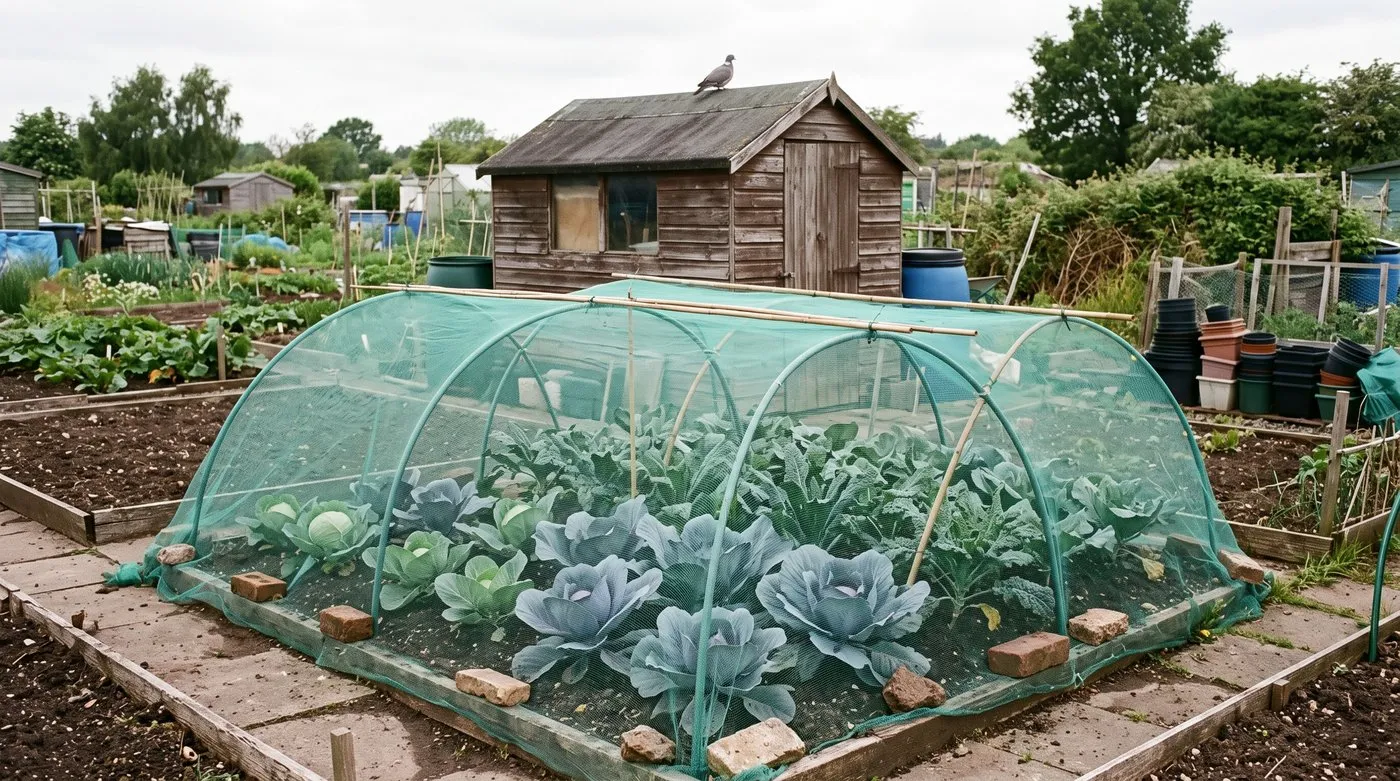
Keep the netting well clear of the leaves, or pigeons will peck straight through. A frame of canes and hoops does the job.
Making your allotment pay
You save the most by growing crops that are pricey in shops but cheap to grow. How much you save depends on what you grow, your rent and what you spend.
Where the savings come from
- Salad leaves and herbs, which are expensive in bags
- Soft fruit, like raspberries, strawberries and gooseberries
- New potatoes, which taste so much better freshly dug
- Runner and French beans, which crop heavily and freeze well
Keeping costs down
- Save seed from tomatoes, beans, peas and lettuce. Let a few plants go to seed, dry the seeds and keep them for next year. Skip F1 varieties, which don’t come true.
- Swap plants with neighbours instead of composting spares.
- Get free manure from local stables and let it rot for 6-12 months first.
- Catch rainwater from your shed roof in a water butt.
- Sow green manures like field beans, crimson clover or phacelia over winter, then dig them in come spring.

A midsummer haul of courgettes, beans, beetroot, new potatoes and salad.
What are you not allowed to do on an allotment?
The rules are in your tenancy agreement, so read it before you sign. Allotments are for growing food for your own household, not for running a business. You’ll usually need to keep the plot cultivated, and a neglected plot can lead to a warning and then losing it.
Common rules cover bonfires, sheds, greenhouses and polytunnels, planting trees, hosepipes and fences. The law lets you keep hens and rabbits, but not as a business or where they cause a nuisance, and many sites add conditions. If a rule is unclear, ask the site secretary or council. The National Allotment Society supports plot holders too.
Storing and preserving your harvest
Storing and freezing turn summer gluts into winter meals. You’ll grow more than you can eat fresh at the peak.
Storage
Keep potatoes in paper sacks somewhere cool and dark. Dry onions and garlic in the sun for a couple of weeks, then hang them in nets in a cool shed. Store beetroot in boxes of damp sand in a cold garage. Leave carrots and parsnips in the ground and dig them as you need them. Parsnips taste sweeter after a frost.
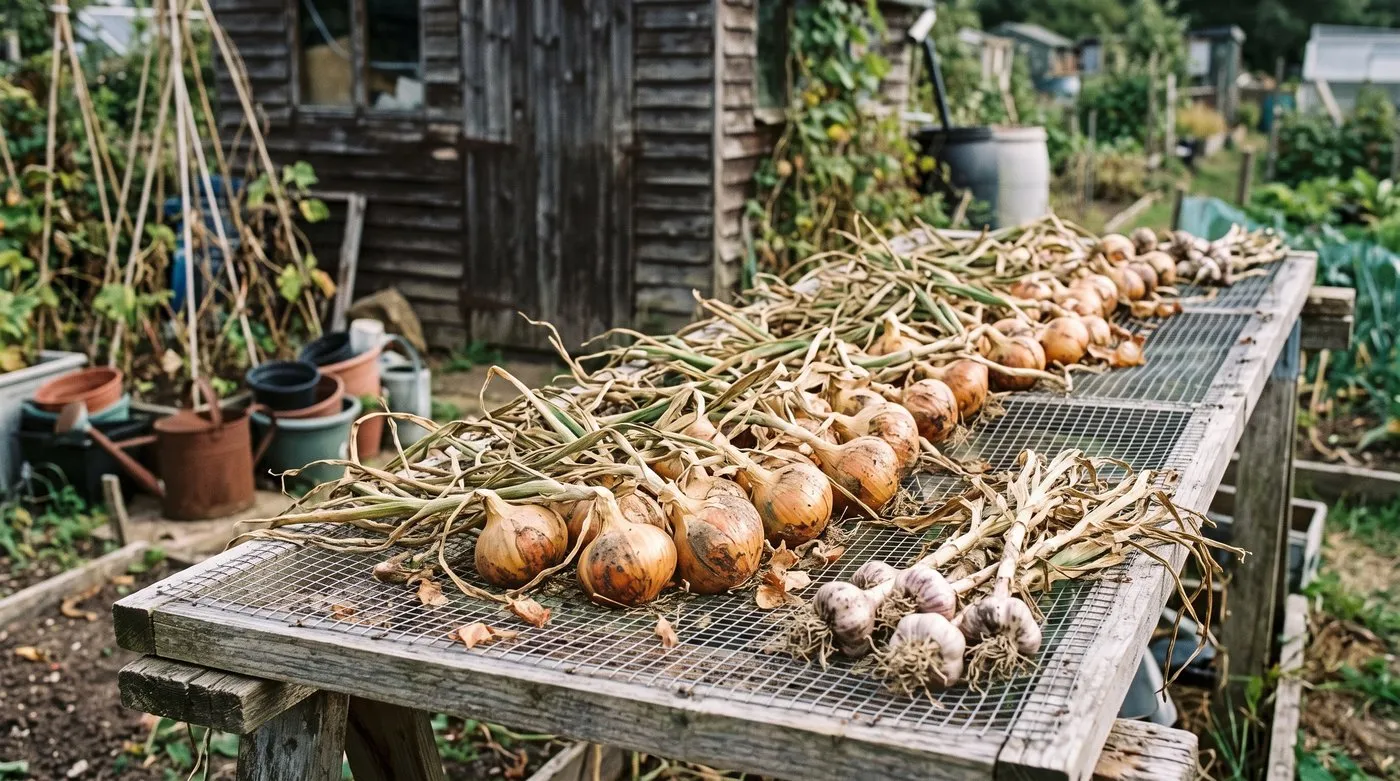
Let onions and garlic dry in the sun for a couple of weeks first. Then hang them in nets in a cool shed.
Freezing
Blanch runner and French beans for two minutes, then freeze. Pod broad beans and freeze them on a tray before bagging. Grate courgettes and freeze in portions for soups and sauces. Kale freezes well after blanching.
Simple preserving
Chutneys, pickles and jams turn gluts into gifts. Runner bean chutney and pickled beetroot are classic ways to use up a glut.
Your first-year plan
| When | What to focus on |
|---|---|
| January to February | Clear the plot, plan, order seeds and chit potatoes |
| March to April | Plant potatoes, sow broad beans, peas, lettuce and beetroot |
| May to June | Plant out courgettes and runner beans, sow French beans, start little-and-often sowing |
| July to August | Pick every day, water and weed, sow autumn crops, save seed |
| September to October | Clear finished crops, add compost, plant garlic, sow green manure |
| November to February | Mend the shed and paths, plan next year, think about what worked |
Year one is about getting to know your plot. You’ll learn what grows well, where the wet patches are and how much time you really have. Don’t try to dig the whole thing at once. Start with a quarter or half and grow from there.
Tip: Keep a simple notebook of what you planted, where, when and how it did. It’s gold when planning next year. Note your first and last frosts too, as they vary even within one town.
Now you’re up and running, read our guide on growing your own vegetables as a beginner for the basics behind every crop.
For a fun experiment, try our guide to growing your own grain, from plot to flour.
Frequently asked questions
What are the best crops to grow on an allotment for beginners?
Potatoes, courgettes, runner beans, lettuce and beetroot are the easiest. They cope with less-than-perfect soil, crop generously and don’t need any special know-how. Potatoes also help break up rough ground in your first year. Add onion sets and broad beans for variety without extra fuss.
How many hours a week does an allotment need?
The RHS suggests about eight hours a week for a beginner’s half plot. An experienced grower needs about half that, and winter needs much less. Several short visits work better than one long weekend session. Weeds grow fast in warm weather, and runner beans need picking every few days.
What is crop rotation and why does it matter?
It means moving each crop family to a different bed each year. That stops soil diseases building up, shares out the goodness in the soil and keeps pests guessing. The four groups are potatoes, peas and beans, the cabbage family, and roots with onions.
How do I improve allotment soil quickly?
Spread 5-8cm of compost or well-rotted manure each autumn. Leave it on top and let the worms pull it down. Sow green manures like field beans or clover on empty beds over winter. Keep off the beds so the soil doesn’t get squashed. You’ll see a difference within a season.
Can I grow fruit on an allotment?
Yes, most sites allow fruit and many encourage it. Raspberries, gooseberries, strawberries and blackcurrants are the easiest to start with. Plant them along one edge of the plot so they don’t get in the way of your rotation. Fruit bushes keep cropping for many years once settled.
How do I deal with slugs on an allotment?
Beer traps and nematodes are good wildlife-friendly options. Water in the morning, not the evening, so the ground is drier at night when slugs come out. Clear rubbish from paths where they hide by day. Welcome hedgehogs, frogs and ground beetles, which all eat slugs.
What should I do with my allotment in winter?
Feed the soil and plan for next year. Spread compost or manure on empty beds and sow green manure on bare soil. Plant garlic in October or November. Mend paths, sheds and bed edges while it’s quiet. Then order seeds and plan where everything goes.
How much does an allotment cost to rent?
Usually a fairly small yearly charge, set by the council or site association. Some sites add a water charge or a membership fee. Ask your council or site secretary for current prices. Set a little aside for seeds, tools and manure too.
Our team produces practical UK gardening guidance from source research, contributor records and established horticultural practice. Editorial standards are overseen by Matt W.


