
Key takeaways
- Sow outdoors once the soil reaches 7°C, from late March or April to July
- Each seed cluster produces several seedlings, so thin to 10cm apart for full-sized roots
- Boltardy is a reliable bolt-resistant variety for early sowings in UK conditions
- Harvest at 4-7cm across for the sweetest, most tender roots
- Beetroot leaves are tasty too and cook just like spinach
- Store sound roots in boxes of dry sand, compost or coir in a cool shed or garage
Beetroot is one of the easiest and most rewarding veg you can grow in a UK garden. It grows quickly, copes with most soils and is usually ready about two months after sowing. You can eat the lot: roots in salads, soups and pickles, and leaves cooked like spinach.
Below you’ll find everything from picking a variety to storing roots for winter. New to growing veg? Our guide to starting a vegetable garden covers soil preparation, tools and planning.
Which beetroot varieties grow best in the UK?
For most UK gardens, start with Boltardy for early sowings, then add one round all-rounder and one unusual type. All the varieties below are widely sold by UK seed suppliers.
Boltardy is the default choice and the one to start with if you are new to beetroot. It holds an RHS Award of Garden Merit (AGM) and is slow to bolt, so it suits early sowings. The roots are smooth, round and deep red.
Detroit Dark Red is another all-rounder. It produces uniform, globe-shaped roots with intense colour and smooth skin.
Cylindra and Forono (AGM) grow long, cylindrical roots rather than round ones. Every slice is the same diameter, which makes them good for pickling and neat rounds.
Chioggia is an Italian heirloom with pink and white rings when sliced. The colour fades slightly when cooked, so it is best raw or lightly roasted.
Golden produces yellow-orange roots that do not bleed or stain like red varieties. The flavour is milder. Germination can be patchier, so sow a few extra seeds.
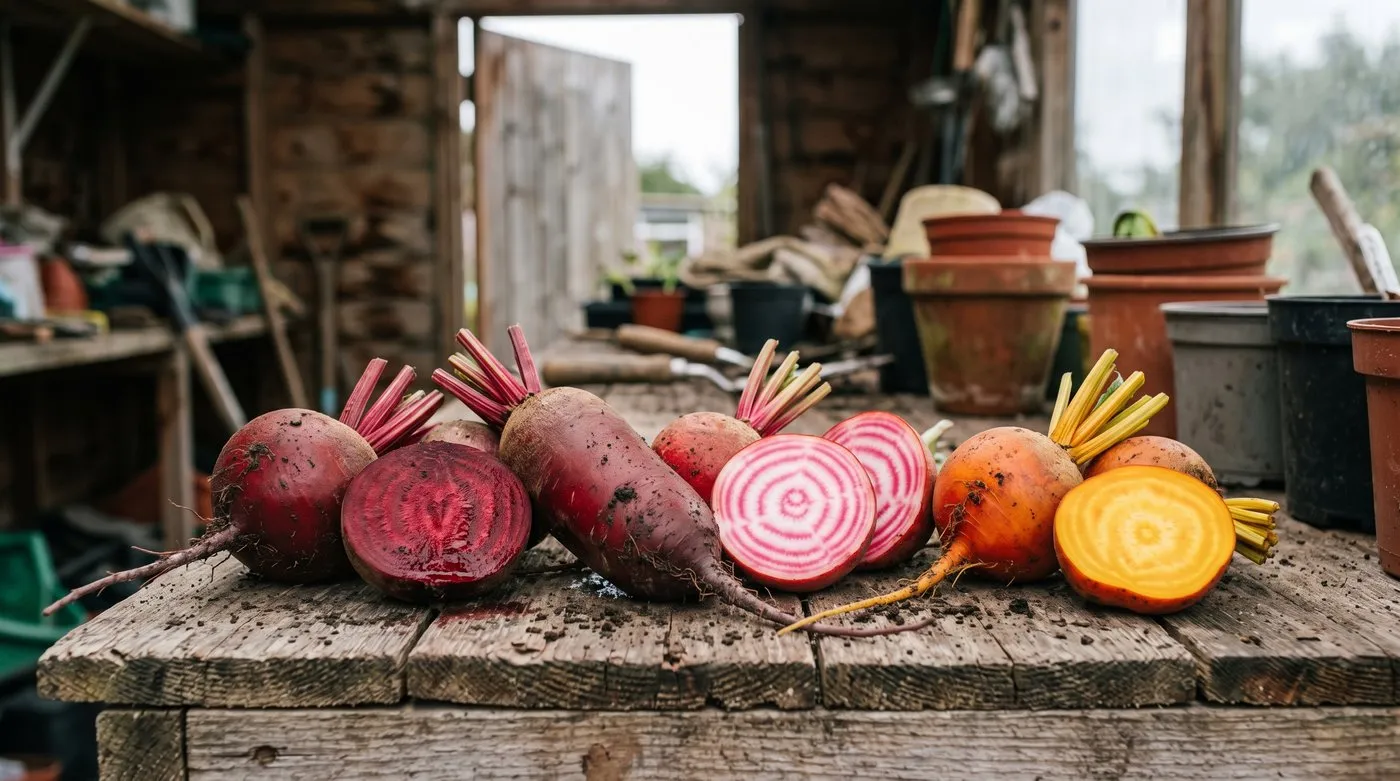
Round, long, ringed or golden, there’s a beetroot for every plate. Golden types are handy if you’d rather not stain your chopping board pink.
Variety comparison
| Variety | Shape | Colour | Best for |
|---|---|---|---|
| Boltardy (AGM) | Round | Deep red | Early sowings, beginners |
| Detroit Dark Red | Round | Dark red | All-round use, storing |
| Cylindra / Forono (AGM) | Cylindrical | Dark red | Pickling, uniform slices |
| Chioggia | Round | Pink and white rings | Salads, raw use |
| Golden | Round | Yellow-orange | Non-staining, mild flavour |
| Bull’s Blood | Round | Dark red, red leaves | Salad leaves as well as roots |
Gardener’s tip: Grow at least two varieties. Boltardy gives reliability and an early start. Add one unusual type, such as Chioggia or Golden, for variety on the plate.
When and how to sow beetroot
Sow beetroot outdoors once the soil reaches at least 7°C, usually from late March or April until July. The key to a steady supply is succession sowing: a short row every few weeks rather than one large sowing.
Sowing timetable
| Month | Action | Notes |
|---|---|---|
| Late February to March | Sow under cloches or fleece | Bolt-resistant varieties only, such as Boltardy |
| April | Main outdoor sowings begin | Soil usually warm enough in most areas |
| May | Succession sowing | Good germination in warmer soil |
| June | Succession sowing | June sowings give roots for autumn storage |
| July | Final sowings | Late crops for autumn |
Wait until the soil reaches at least 7°C before sowing outdoors. Cold, wet soil gives poor germination and raises the risk of bolting. On heavy clay, warm the soil under cloches for a couple of weeks before early sowings. In northern England and Scotland, sow a little later than in the south. The UK vegetable planting calendar has regional timings.
Sowing method
- Rake the soil to a fine tilth and remove stones from the top few centimetres
- Draw a drill 2.5cm deep using a cane or the edge of a hoe
- Water the base of the drill if the soil is dry
- Place seed clusters 10cm apart along the drill
- Cover with fine soil and firm gently
- Space rows 30cm apart
Each beetroot “seed” is a corky cluster holding several true seeds, so several seedlings emerge from each point. For full-sized roots, thin each cluster to the strongest plant once seedlings are about 2.5cm tall. The thinnings are tasty in salads.
Gardener’s tip: If seed is slow to come up, try soaking it in warm water for an hour before sowing. This softens the corky outer shell.
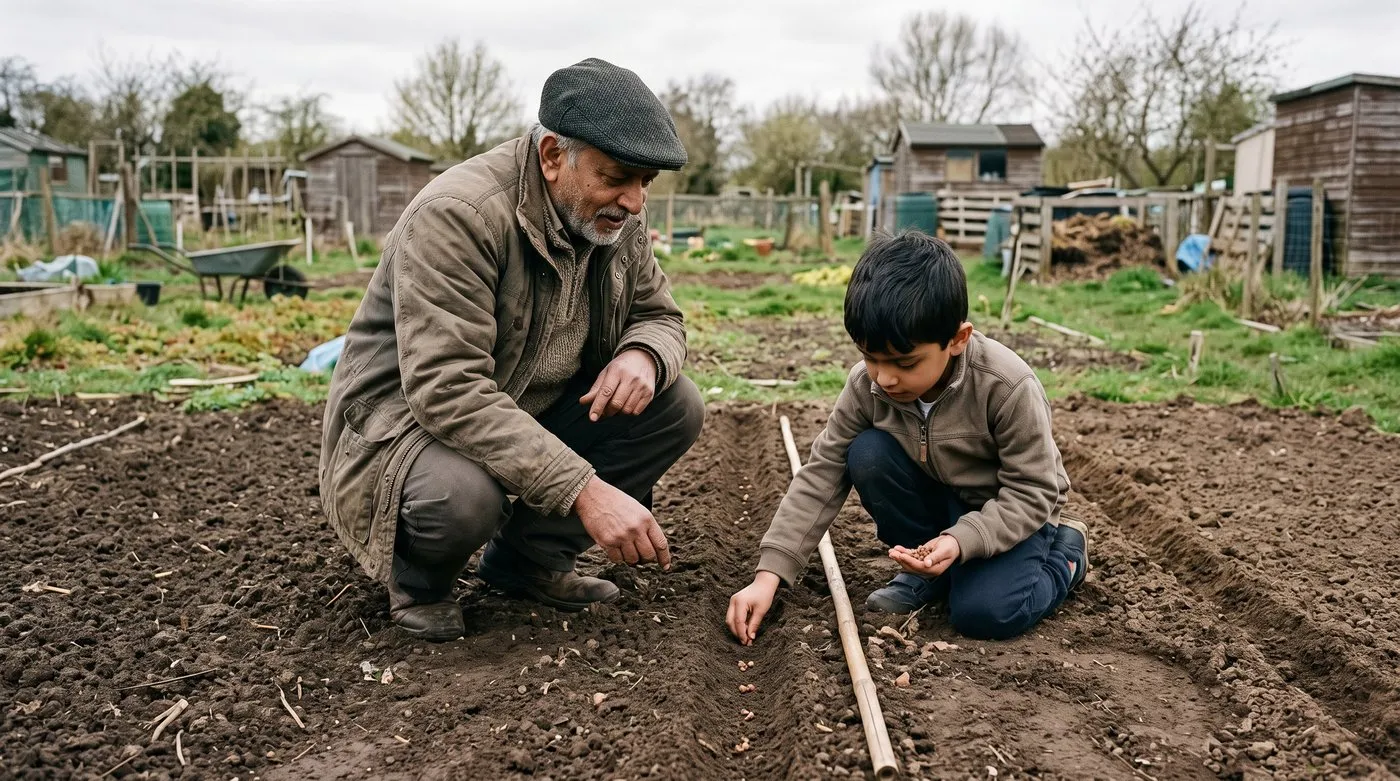
Each knobbly beetroot seed is really a cluster of several seeds, so space them about 10cm apart. You’ll thin the seedlings later.
Can you start beetroot in modules and transplant it?
Yes. Despite what you may hear, beetroot moves well if raised in modules and planted out young. It’s a handy way to get an early crop.
Sow one seed cluster per module, 2.5cm deep, in peat-free seed compost. Thin to the strongest seedling for single roots. Alternatively, sow up to four seeds per module and leave them unthinned to grow a clump of smaller roots. Plant out when seedlings are at least 5cm tall and well rooted, after hardening off. Space single plants 10cm apart and multi-sown clumps 15cm apart, without splitting them. Modules let you start in a greenhouse or on a windowsill while the soil outside is still cold. The guide to multi-sowing vegetables explains the clump method in more detail.
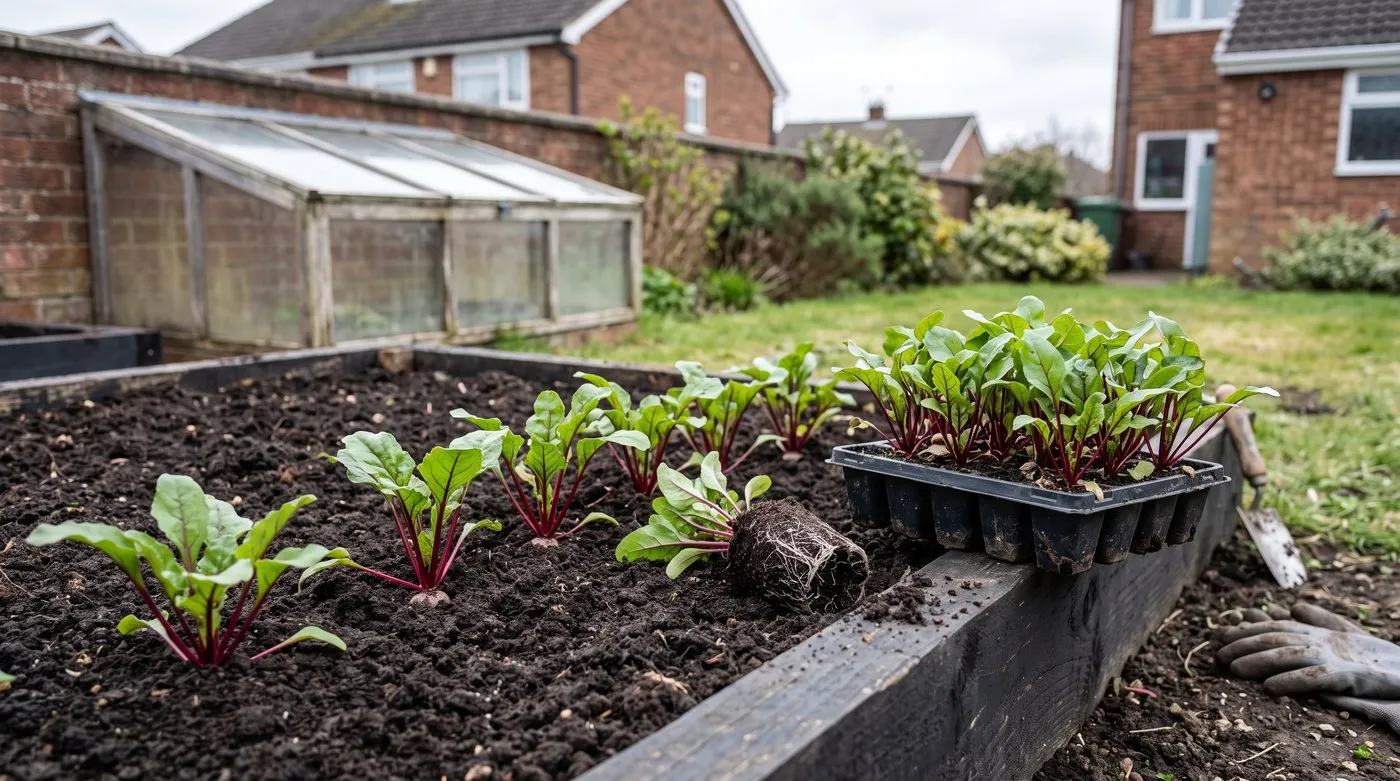
Plant multi-sown clumps out whole without splitting them. Each clump grows into a little bunch of tasty, smaller roots.
Preparing the soil for beetroot
Beetroot grows best in light, well-drained soil with plenty of organic matter, in a sunny spot. Stony or heavy clay soil gives misshapen roots. On heavy soil, consider growing beetroot in raised beds where you control the soil mix.
Dig the bed over in autumn or early spring, adding well-rotted compost. Do not add fresh manure just before sowing, as it pushes leafy growth at the expense of the root.
Beetroot does best in soil that is not strongly acidic. Most UK garden soils are fine. If you suspect very acidic soil, test it with a simple pH kit before adding lime.
Remove large stones from the top 10-15cm. Stones deflect growing roots. For the smoothest roots, aim for a fine, crumbly surface at sowing time.
Growing beetroot in containers
Beetroot grows well in pots, especially round varieties. Use a pot at least 40cm wide and deep, in a sunny spot.
Fill with peat-free multipurpose compost, with a handful of perlite or grit for drainage. Sow seeds 10cm apart and cover with about 2.5cm of compost. Thin to one seedling per station once they are about 2.5cm tall.
Water regularly, as containers dry out far faster than open ground. In warm weather you may need to water daily. If plants look weak, give a liquid feed.
Round varieties such as Boltardy, Detroit Dark Red and Chioggia are the best choices for pots. Avoid Cylindra and other long-rooted types unless the container is deep.
Caring for beetroot through the season
Beetroot needs steady moisture, weed-free ground and little else. Overwatering is as much a problem as drought.
Watering
Steady moisture gives sweet, tender roots. Uneven watering causes woody or split roots. Water seedlings regularly in dry spells until established. After that, water about every 10-14 days in dry spells, or more often on very free-draining soil. Mulching with compost reduces water loss.
Feeding
Beetroot does not need heavy feeding. If you prepared the soil with compost, extra fertiliser is usually unnecessary. If plants look weak and pale, give an organic high-nitrogen liquid feed. Do not overdo it, as too much nitrogen gives leaves rather than roots.
Weeding
Keep the bed weed-free, especially while seedlings are small. Hand-weed close to plants to avoid damaging the roots. A mulch between the rows suppresses weeds and holds in moisture.
Common pests and problems
Beetroot is pleasingly trouble-free compared with many vegetables. The main issues are:
- Bolting: running to flower before forming a usable root. Caused by very cool early sowings or hot, dry weather. Use Boltardy for early sowings and water in dry spells.
- Beet leaf miner: a fly whose larvae tunnel inside the leaves, leaving pale blotches that turn brown. Remove mined leaves and check leaf undersides for clusters of white eggs. Insect netting and moving the crop to a new bed each year help. The RHS beet leaf miner page has pictures.
- Birds: sparrows and other birds peck at or pull up seedlings. Cover newly sown rows with fleece or netting until plants are established.
- Slugs: graze on young seedlings at night. The guide to getting rid of slugs covers controls for vegetable beds.
- Downy mildew: causes discoloured, distorted leaves in damp weather. Good spacing and airflow help.
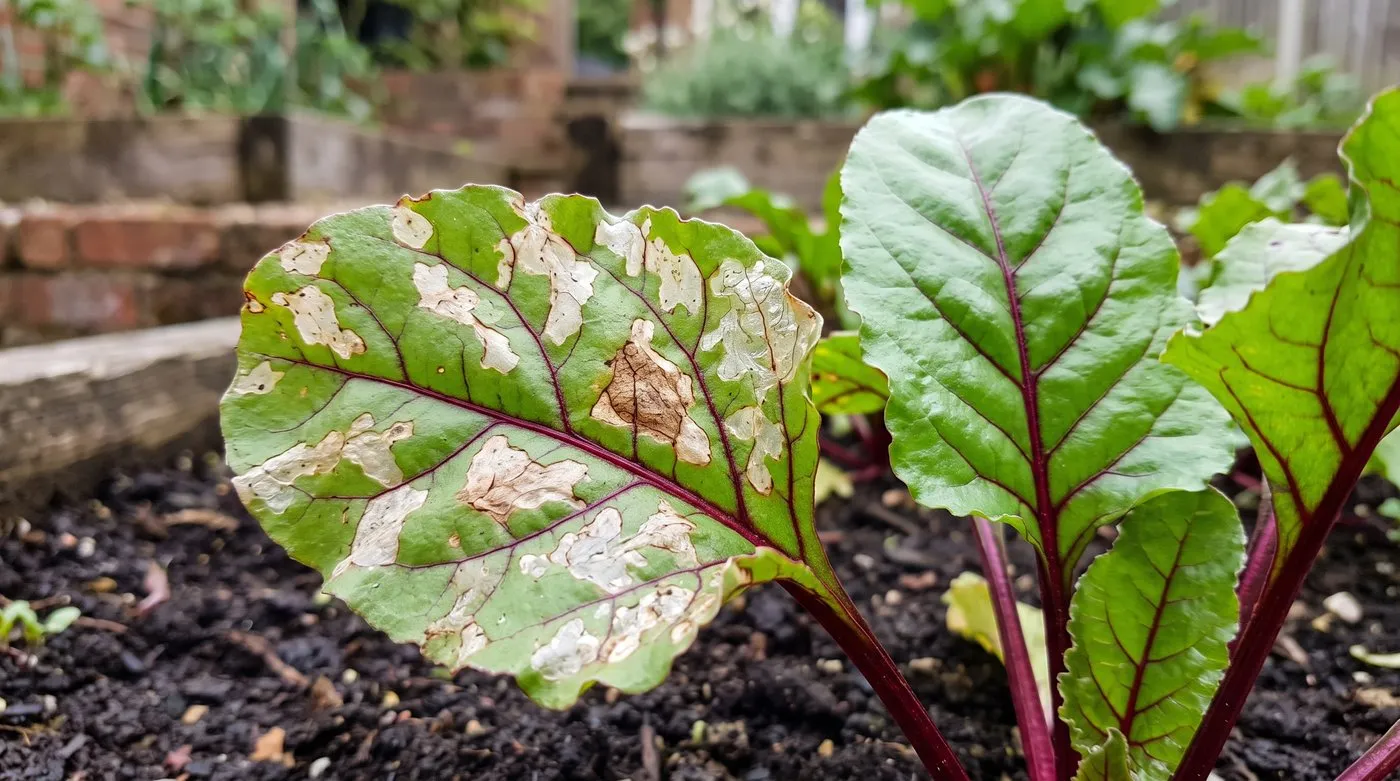
Pale blotches that turn brown are a sign of beet leaf miner. Pick off mined leaves and the roots usually carry on growing fine.
Why is my beetroot all leaves and no root?
Leafy beetroot with tiny roots usually comes down to overcrowding, overwatering or too much nitrogen. Each pushes the plant to grow foliage instead of swelling its root.
Unthinned clusters are the most common cause. Several seedlings competing in one spot cannot all form roots, so thin to 10cm apart. Overwatering also encourages leaves rather than roots. Water only in dry spells once plants are established. Fresh manure or a high-nitrogen feed has the same effect. Heavy shade and late sowings can also leave roots small going into autumn. If a crop has stalled, thin it hard and stop feeding. Remaining plants often swell within a few weeks.
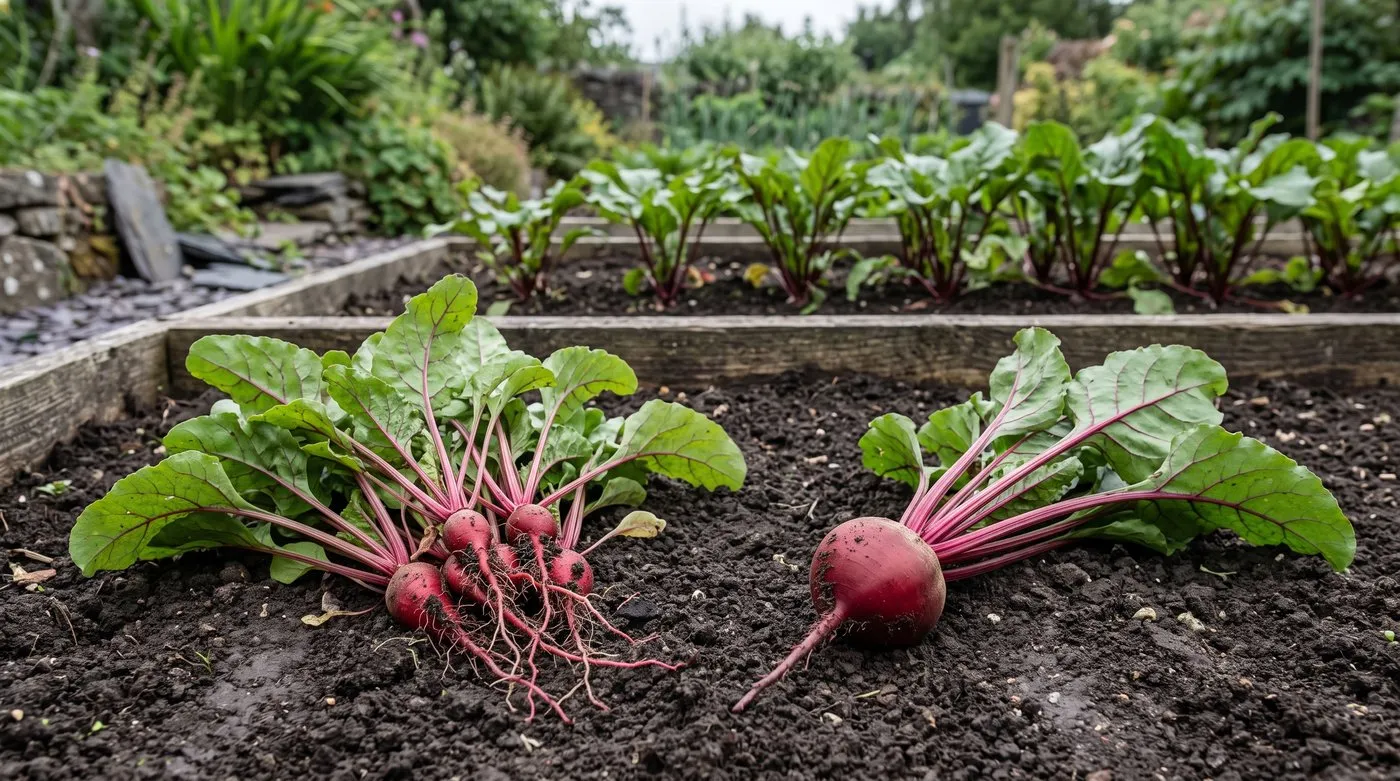
A cluster left unthinned gives plenty of leaf but no proper roots. Thin to one plant every 10cm and the survivors soon start to swell.
Month-by-month beetroot growing calendar
This calendar covers the full beetroot season. Adjust timings about two weeks later for northern England and Scotland.
| Month | Task |
|---|---|
| February | Order seeds. Add compost to beds. In mild areas, sow Boltardy under cloches late in the month |
| March | Sow in modules indoors, or outdoors under cloches. Warm heavy soil with cloches |
| April | Main outdoor sowings begin. Plant out module-raised seedlings |
| May | Succession sowing. Thin earlier sowings. Water in dry spells |
| June | Succession sowing for autumn storage. First roots from early sowings |
| July | Final sowings. Keep harvesting. Water in dry spells |
| August | Main harvest. Lift roots at 4-7cm across. Eat leaves as a side vegetable |
| September | Keep harvesting. Pick leaves lightly |
| October | Lift remaining roots for storage. Pickle surplus |
| November | Check stored roots. In mild areas, late crops can stay in the ground |
How to harvest beetroot at the right time
Harvest beetroot when the roots measure 4-7cm across, usually 50-60 days after sowing. At this size the flesh is sweet and tender.
Leaving roots too long is the most common mistake, as oversized roots can turn woody. A good trick is to lift every other plant at golf-ball size. The RHS beetroot growing guide has more tips. That gives the rest room to grow, up to cricket-ball size.
To harvest, grasp the foliage close to the root and pull firmly with a slight twist. In heavy soil, loosen the ground with a fork first so the root does not snap.
Baby beetroot can be pulled even earlier. These small roots are sweet and tender, and a good use for crowded rows.
Twist the leaves off about 2.5cm above the root rather than cutting close to it. Cutting into the root makes it “bleed” colour when cooked.
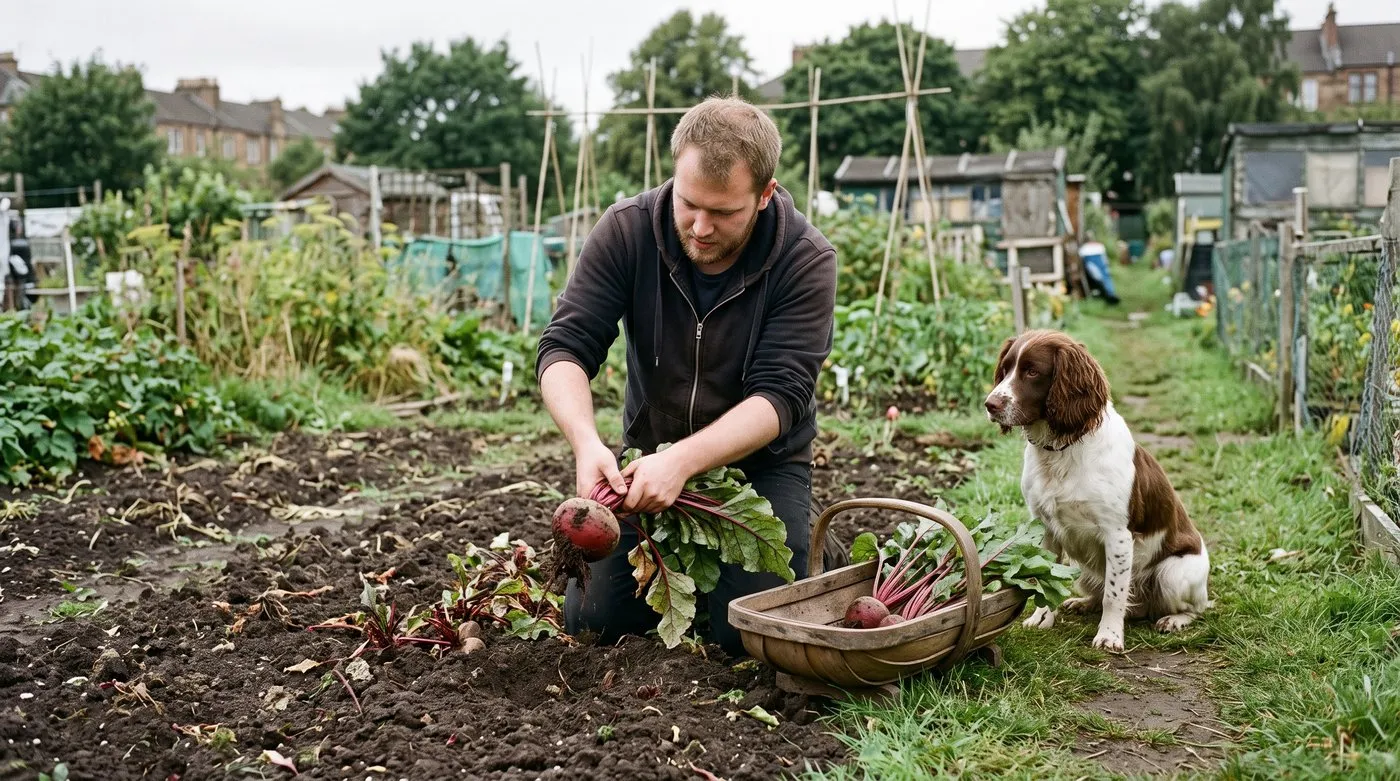
Lifting every other root at golf-ball size gives the rest room to grow. Grip the leaves low down and pull with a gentle twist.
How to store beetroot for winter
Beetroot stores well for several months if handled correctly. The three main methods are boxes of sand or compost, pickling and freezing.
Storing in sand or compost
This traditional method keeps roots in good condition for the longest.
- Lift sound roots in autumn. Larger roots store better than small ones
- Brush off loose soil. Do not wash the roots
- Twist off the leaves about 2.5cm above the root
- Layer the roots in a box of dry sand, potting compost or coir, so they do not touch
- Store in a cool, frost-free garage or shed
Roots keep for at least a couple of months this way. Check them regularly and remove any that soften or show mould. The guide to storing root vegetables over winter covers clamps and other options.
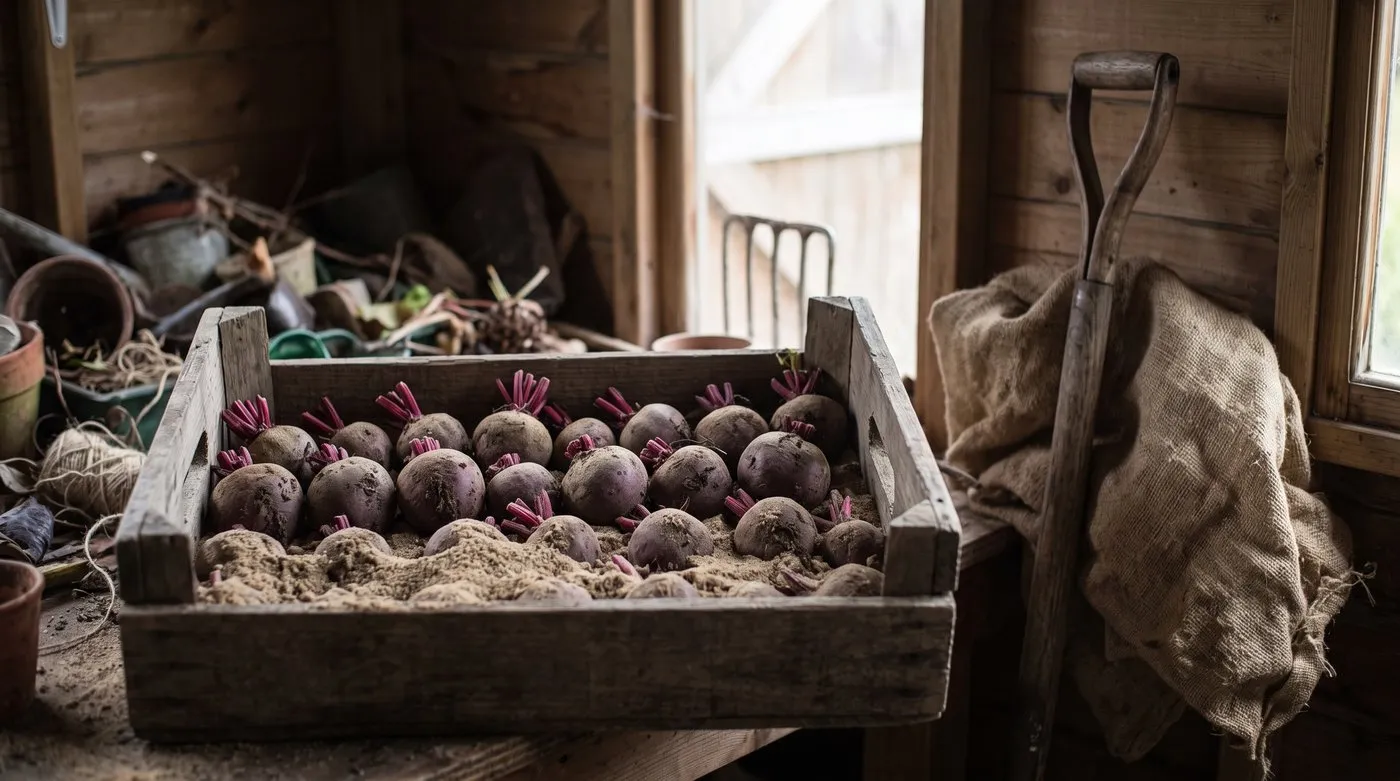
Leave the soil on and keep the roots apart in the sand. Check the box every few weeks and take out any that go soft.
Pickling
Pickling in vinegar is the classic way to keep beetroot.
- Cook whole roots in boiling water until tender
- Cool, then slip off the skins by hand
- Slice into rounds or dice into cubes
- Pack into sterilised jars
- Cover with spiced vinegar
- Seal and store in a cool, dark cupboard
Freezing
Cook beetroot until tender, cool, slice or dice, and freeze in portions. It loses some texture on thawing, so frozen beetroot is best in soups and cooked dishes rather than salads.
Can you leave beetroot in the ground over winter?
Only in mild areas. Late crops can stay in the ground until needed where the soil won’t freeze.
Elsewhere, lift beetroot by mid-autumn and store it. Frozen soil damages roots, and slugs and mice target roots left in the ground for months. If you leave a row in, choose a well-drained spot. Cover it with a thick layer of straw or fleece in cold spells, and use those roots first. Sowings from June onwards give the best roots for lifting and storing. Earlier crops are usually eaten long before winter.
Eating beetroot leaves as a spinach substitute
Beetroot leaves are edible and cook just like spinach, so home growers get two crops from one row. Supermarket beetroot usually arrives with the leaves removed.
Young leaves are tender enough to eat raw in salads. They have a mild, slightly earthy flavour similar to baby spinach. Bull’s Blood has glossy deep red leaves that add colour to a salad bowl.
Older leaves cook like spinach. Wash, remove the thick central stem, and wilt in a pan with a little butter for a few minutes. Season with salt, pepper and a squeeze of lemon.
Take a few leaves from each plant through the season rather than stripping one plant. Leave at least four or five leaves on each plant so it keeps growing and swelling its root.
Common mistakes when growing beetroot
The most common beetroot mistakes are sowing into cold soil, not thinning, sowing everything at once, harvesting too late and watering unevenly.
Sowing too early
Beetroot seed germinates poorly in cold soil, and very cool early sowings are more likely to bolt. Wait until the soil reaches 7°C. For an early start, use Boltardy under cloches or sow in modules indoors.
Not thinning
Each seed cluster produces several seedlings. Unthinned, they form a tangle of small, misshapen roots. Thin to 10cm apart for full-sized roots, and eat the thinnings.
Sowing everything at once
A single large sowing gives a glut that all matures together. Many roots grow too big before you can use them. Sowing a short row every few weeks gives a steady supply at the right size.
Harvesting too late
Leaving roots to grow larger rarely improves them. Lift at 4-7cm across. For winter storage, use roots from June sowings, as larger roots store better.
Irregular watering
Dry spells followed by heavy watering cause roots to split and turn woody. Water steadily in dry spells and mulch to hold in moisture. This matters most for container-grown beetroot.
Companion planting with beetroot
Beetroot grows well alongside lettuce, onions, garlic, brassicas and dwarf beans. Fast lettuce between rows shades the soil and is picked before the beetroot needs the space.
Avoid planting beetroot on the shady side of runner beans or other tall climbing beans, which cast heavy shade. Spinach and chard are close relatives and share pests such as beet leaf miner. Keep them apart where possible.
In a crop rotation, grow beetroot with the other root crops, such as carrots and parsnips. Moving the group to a new bed each year reduces the build-up of soil pests and diseases.
Use the UK vegetable planting calendar to plan succession sowings alongside carrots, parsnips and other root vegetables.
Frequently asked questions
When should I sow beetroot in the UK?
Sow outdoors from late March or April to July. Wait until the soil reaches at least 7°C. You can start from late February with a bolt-resistant variety under cloches or fleece. For a long harvest, sow a short row every few weeks. This gives fresh roots from early summer to mid-autumn.
Why has my beetroot bolted instead of forming roots?
Bolting means the plant has run to flower instead of swelling its root. Very cool early sowings and hot, dry weather both set it off. Use a bolt-resistant variety such as Boltardy for early sowings, and water in dry spells. A bolted root soon turns woody, so pull it and re-sow.
Do I need to thin beetroot seedlings?
For full-sized roots, yes. Each beetroot seed is a cluster of several seeds, so several seedlings come up together. Thin to one plant every 10cm once they are about 2.5cm tall, and eat the thinnings in salads. If you only want small roots, you can leave clusters unthinned.
Can I grow beetroot in pots and containers?
Yes, use a container at least 40cm wide and deep, in a sunny spot. Round varieties suit pots better than long types. Sow seeds 10cm apart and cover with about 2.5cm of compost. Pots dry out much faster than open ground, so check them often in warm weather.
How do I know when beetroot is ready to harvest?
Most roots are ready 50-60 days after sowing. For the best flavour and texture, lift them at 4-7cm across, roughly golf-ball to cricket-ball size. Gently pull back the soil to check. Oversized roots can turn woody. Lifting alternate plants early gives the rest room to grow.
Can you eat beetroot leaves?
Yes. Young leaves work raw in salads, and older leaves cook like spinach in a few minutes. Take a few leaves from each plant through the season, but leave at least four or five on each so the root keeps swelling. Bull’s Blood is grown partly for its deep red leaves.
How should I store beetroot over winter?
Store beetroot in boxes of dry sand, compost or coir. Lift sound roots in autumn, brush off the soil and twist off the leaves about 2.5cm above the root. Keep the boxes in a cool garage or shed. They keep for at least a couple of months this way. Larger roots store better than small ones.
Our team produces practical UK gardening guidance from source research, contributor records and established horticultural practice. Editorial standards are overseen by Matt W.


