Key takeaways
- Store roots cool, dark and frost-free, ideally 1-4C
- Don't wash roots before storing, just brush off the worst of the soil
- Boxes of barely damp sand in an unheated shed keep carrots for months
- Parsnips taste sweeter after frost and can stay in the ground until March
- Twist off beetroot leaves rather than cutting close, so they don't bleed
- Check stored roots every two weeks and remove any going soft or mouldy
Most root vegetables will keep for months if you give them somewhere cool, dark and frost-free. A box of damp sand in the shed, a straw clamp on the allotment, or simply leaving them in the ground can keep you in carrots and parsnips well into spring.
Which root vegetables store best over winter?
Some roots keep much better than others. Carrots, parsnips and beetroot are the best keepers, lasting three to five months. Turnips and swede keep well for a couple of months or more. Celeriac lasts a couple of months but goes spongy sooner. Radishes and Jerusalem artichokes don’t store well once lifted.
Use this table to plan which crops to eat first and which to keep for later.
| Root | Best way to store | Keeps for | Good to know |
|---|---|---|---|
| Carrots | Damp sand in a box | 4-5 months | Don’t wash before storing |
| Parsnips | In the ground or damp sand | 3-4 months | Sweeter after frost |
| Beetroot | Damp sand in a box | 3-4 months | Twist off tops, don’t cut close |
| Turnips | Damp sand in a box | 2-3 months | Use smaller roots first |
| Swede | Damp sand, a clamp or the ground | 3-4 months | Thick skin protects it well |
| Celeriac | Damp sand in a box | 2-3 months | Goes spongy after a while |
| Jerusalem artichoke | Leave in the ground | All winter | Dries out fast once lifted |
| Radishes | Fridge, in a damp cloth | 1-2 weeks | Not for long storage |
What matters most is temperature, moisture and air. Too warm and roots sprout or shrivel. Too dry and they go rubbery. Too damp and mould sets in. The RHS guide to storing vegetables is a handy reference, and the methods below make getting it right easy.
How do I store carrots in sand?
What you need
- Wooden crates or sturdy boxes, at least 30cm deep
- Sharp sand or builders’ sand (not fine play sand)
- A cool, dark, frost-free spot, such as an unheated shed, garage or cellar
Step by step
- Lift carrots carefully with a fork, trying not to spear or snap them.
- Leave them on the soil to dry for a couple of hours. Don’t wash them.
- Twist off the green tops, leaving 1-2cm of stalk.
- Brush off any heavy clumps of soil.
- Set aside any with fork damage, splits or signs of carrot root fly for eating soon.
- Spread about 3cm of damp sand over the bottom of the box.
- Lay a row of carrots on top, spaced so they don’t touch.
- Cover with another 2-3cm of sand.
- Repeat until the box is full, finishing with a layer of sand.
- Put the box in your storage spot.
The sand should feel only just damp when you squeeze it. If water drips out, let it dry a bit first. Check the box every two weeks and pull out any carrots with soft spots, odd colours or white mould. One rotting root can soon spoil its neighbours.

Carrots and parsnips layered in damp sand on a shelf in an unheated shed.
The same sand method works for beetroot, parsnips, and turnips and swede. With beetroot, twist off the leaves rather than cutting them, leaving about 5cm of stalk so they don’t bleed. Parsnips can also stay in the ground, as you’ll see below.
What is a root vegetable clamp?
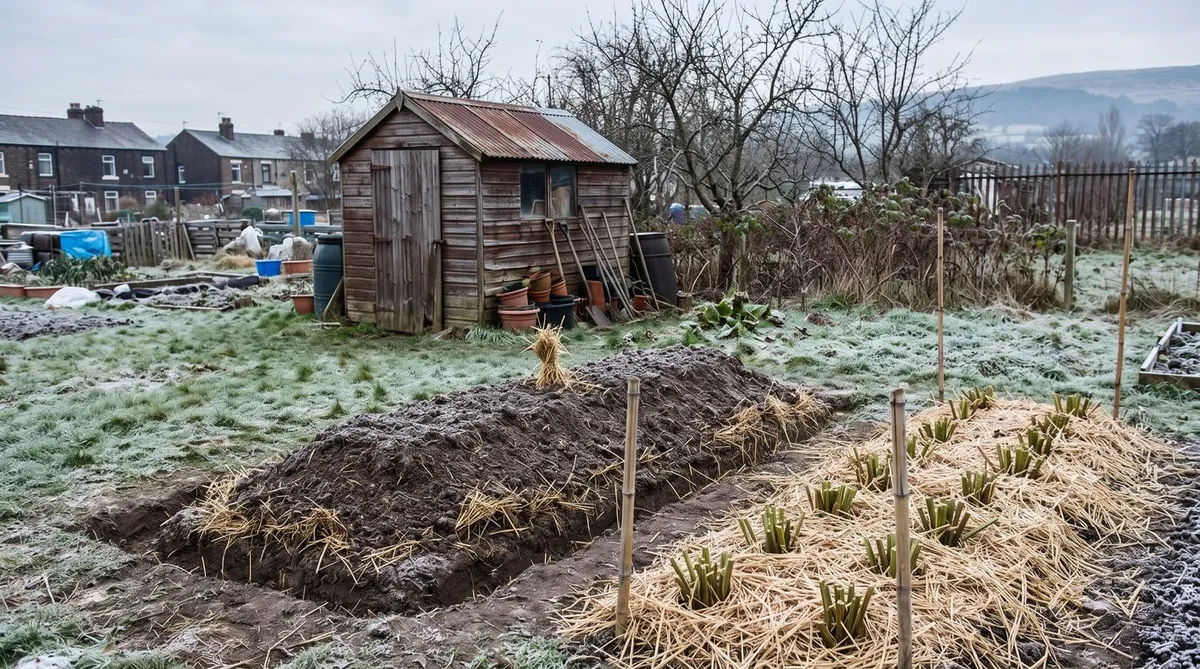
A clamp is an old-fashioned outdoor mound for storing big harvests. It’s been used for centuries and still works well if you’ve grown a lot on the allotment and have no shed space.
How to build a clamp
- Pick a sheltered, well-drained spot, not a dip where water collects.
- Lay a 20cm bed of dry straw on the ground, about 1m wide and as long as you need.
- Stack the roots on the straw in a neat pyramid, biggest at the bottom.
- Cover the whole pile with 15-20cm of straw.
- Pack about 15cm of firm earth over the straw, pressing it down with a spade.
- Leave a twist of straw poking out of the top to let air out.
- Dig a shallow trench round the base to carry rain away.
The straw keeps out frost and the earth keeps the moisture in. The straw “chimney” lets damp, warm air escape. Even in a hard frost, the thick earth layer stops the roots freezing.

Building a clamp on an allotment. Straw goes on first, then the earth is packed down firmly, with a twist of straw at the top for air.
Opening a clamp
Open the clamp from one end when you need roots. Take what you want, then seal the gap again with fresh straw and earth. Once a face is open, use those roots within a week or so. A well-built clamp lasts from late October into March in most of the UK.
The main worry is mice tunnelling into the straw. A sheet of wire mesh under the straw bed helps. Rats can be a problem on allotments too. If rodents are a nuisance, sand boxes in a shed are safer, and our guide to preserving fruit and vegetables has other ideas.
How long do stored root vegetables last?
Parsnips and swede are the toughest. Both shrug off hard frost in the ground and keep well in sand or a clamp. Turnips go off soonest of the main roots, so eat them first. Carrots are somewhere in between: excellent in sand, but they don’t last as well left in wet soil.
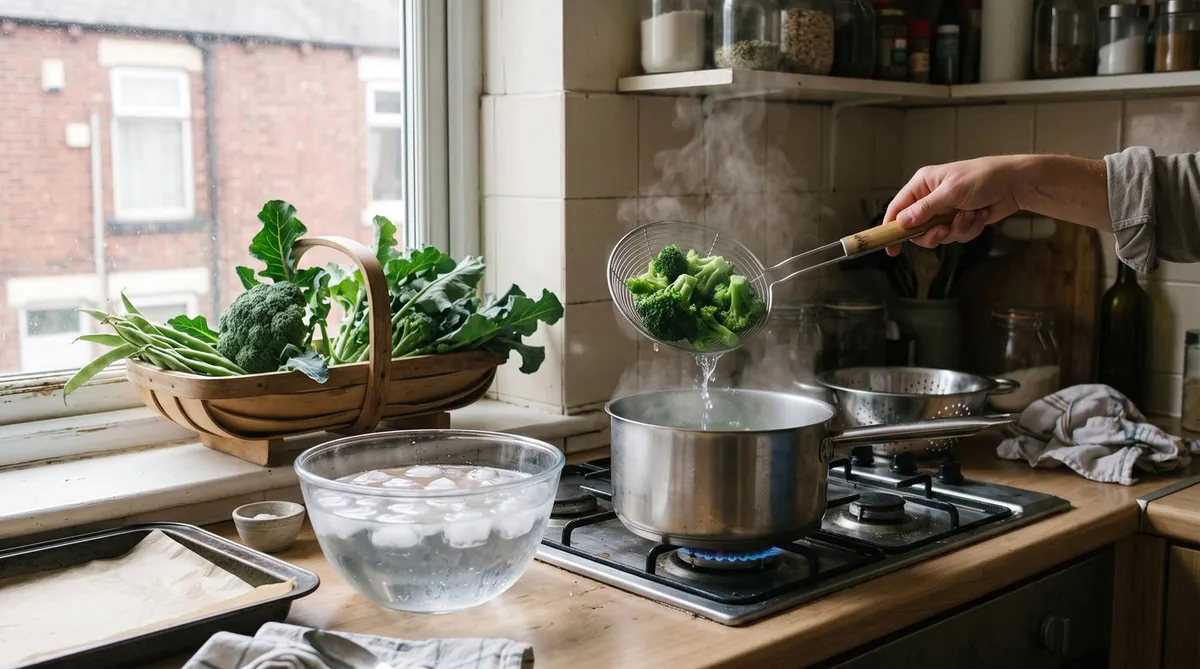
For anything you won’t eat within a few months, freezing is the better bet. Blanch the roots for 2-3 minutes, cool them in iced water and freeze in portions. They’ll keep for many months in the freezer.
For most gardeners, boxes of sand in an unheated shed are the easiest way to go. A clamp suits bigger harvests but takes more effort.
Month-by-month storage calendar
Here’s the storage season from harvest through to spring.
October: Lift maincrop carrots, beetroot and turnips. Leave parsnips and swede in the ground for now. Get your boxes and sand ready, and build a clamp if you have a big surplus. It’s also a good time to start picking winter salads.
November: Finish lifting before the ground freezes hard. Move boxes into the shed or garage. Mulch any parsnip and swede rows left in the ground with 10-15cm of straw or bracken. Give your stored roots their first check.
December: Sheds are nice and cold now. Check boxes every fortnight and remove any roots going soft. Open clamps from one end as needed.
January: Usually the coldest month. If a hard frost is forecast, cover boxes with hessian or old blankets. Parsnips from the ground taste their best now. Lift swede as needed for stews and mash.
February: Start using up turnips, which go off faster than the rest. If the sand feels dry and dusty, mist it lightly with water. Potatoes chitting on the windowsill will soon be ready to plant.
March: The last month of storage. Warmer days make roots sprout, so use them up within a few weeks once you spot green shoots. Blanch and freeze anything left over.

Carrots and parsnips lifted on a frosty November morning. Leave the soil on and twist the tops off rather than cutting.
How to get roots ready for storing
Good preparation makes all the difference. Follow these simple rules for every root:
Don’t wash them. A little soil protects the skin from drying out. Brush off the heaviest clumps once they’ve dried for a few hours.
Twist, don’t cut. Twist the leafy tops off by hand, leaving 1-2cm of stalk on carrots, parsnips and turnips, and about 5cm on beetroot so it doesn’t bleed.
Be strict. Any root with fork holes, splits, slug damage or soft patches goes to the kitchen to eat now. One damaged root can spread mould through a whole box.
Let them dry. Leave lifted roots on the soil or on newspaper in a cool room for a few hours, so small scrapes can dry over before they go into sand.
Sort by size. Keep big and small roots in separate boxes. Small ones dry out faster, so use them first.
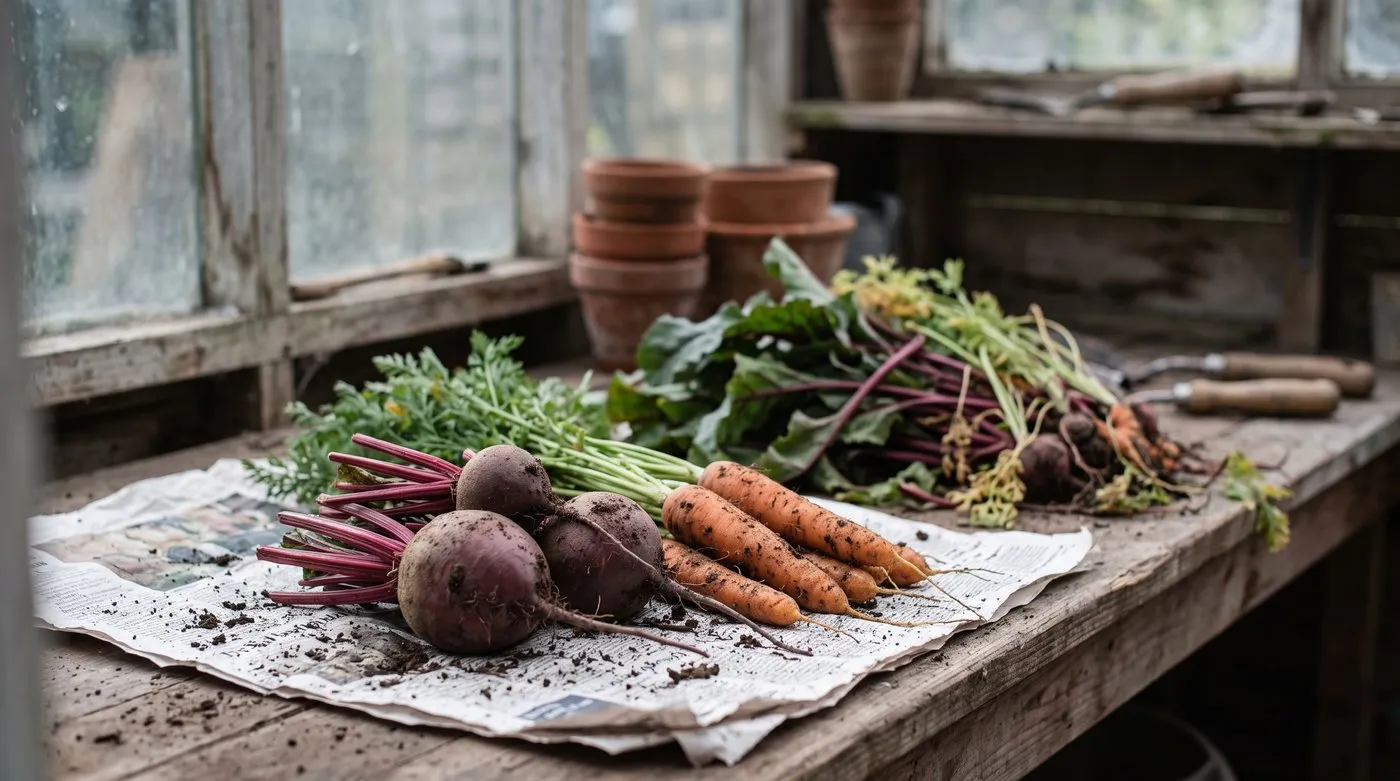
Twist the tops off rather than cutting, leaving about 5cm on beetroot so it doesn’t bleed. Let roots dry for a few hours before they go into sand.
Common storage problems and fixes
| Problem | Why | What to do |
|---|---|---|
| Roots shrivelling | Air or sand too dry | Mist the sand lightly with water |
| White mould | Poor air flow or damaged roots | Remove affected roots and space the rest further apart |
| Roots sprouting | Store too warm | Move somewhere cooler and use sprouted roots soon |
| Soft, slimy patches | Rot from damage or sand that’s too wet | Remove straight away and let the sand dry a little |
| Frozen roots | A hard frost got in | Wrap boxes in hessian or bubble wrap, or bring them indoors |
| Gnawed roots | Mice or rats | Set traps, put mesh under clamps and block gaps in the shed |
The most common mistake is storing damaged roots alongside perfect ones. One soft carrot can set off mould right through a box, so be strict when you sort.
Which storage method should you choose?
It depends on how much you’ve grown, how much space you have and how much effort you fancy.
Sand in boxes (best for most gardeners): Easy, tidy and safe from rodents in a shed or garage. Works for carrots, beetroot, turnips, swede, parsnips and celeriac.
A clamp (best for big allotment harvests): Takes lots of roots but needs outdoor space, straw and some work to build. More at risk from rodents. Great if you’ve no shed or grow a lot.
Leaving them in the ground (best for parsnips and swede): No effort beyond a straw mulch over the row. Only for roots that cope with hard frost. Not a good idea for carrots or beetroot in wet soil, where slugs get at them and they rot.
The fridge (short-term only): Keeps small amounts for a few weeks in a bag with holes in it. Handy, but not for the long haul.
Freezing (for anything left over): Blanch for 2-3 minutes, cool in iced water and freeze. Pairs nicely with sand storage, giving you fresh roots through winter and frozen ones for later.
 Boxes of carrots and parsnips packed in damp sand after a November harvest, ready to see you through to spring.
Frequently asked questions
How long can you store root vegetables over winter?
Most roots keep for three to five months in the right conditions. Carrots in damp sand last four to five months. Parsnips keep three to four months in sand, or all winter in the ground. Beetroot keeps for three to four months. Turnips and swede last two to three months in sand. Check them every fortnight and remove any with soft spots.
What is the best way to store carrots over winter?
In a wooden box of barely damp sand. Lay the carrots in layers so they don’t touch, with 2-3cm of sand between each layer. Keep the box in an unheated shed, garage or cellar that stays frost-free. Don’t wash them first. Brush off loose soil and twist off the tops, leaving about 1cm of stalk.
Can you leave parsnips in the ground over winter?
Yes, they keep really well in the ground. Frost turns some of their starch into sugar, so they taste sweeter. Cover the row with 10-15cm of straw or bracken so the ground doesn’t freeze solid. Then lift them as you need them from November to March.
What temperature should you store root vegetables at?
Cool but frost-free, ideally 1-4C. That keeps roots firm without freezing them. An unheated shed or garage often sits around this from November to March. Cellars are usually a little warmer, which is still fine. Don’t let roots freeze, as they go soft and rot when they thaw.
Do you need to wash root vegetables before storing?
No, leave the soil on. Washing makes them damp, and damp roots rot. Let them dry for a few hours, then gently brush off the heaviest clumps. Wash them just before you cook them.
What is a root vegetable clamp?
It’s a traditional outdoor mound for storing lots of roots. You stack them on a bed of straw, cover them with a thick layer of straw, then pack about 15cm of earth on top. A twist of straw poking out of the top lets air out. It keeps roots cool, damp and frost-free all winter.
Which root vegetables do not store well?
Radishes only last a week or two. Jerusalem artichokes dry out quickly once lifted, so leave them in the soil. Celeriac keeps a couple of months before going spongy. Young or damaged roots of any kind rot fast. Only store mature, undamaged roots and eat the blemished ones first.
Our team produces practical UK gardening guidance from source research, contributor records and established horticultural practice. Editorial standards are overseen by Matt W.