Key takeaways
- Parsnips, swede and Jerusalem artichokes can stay in the ground all winter
- A thick straw mulch over the rows stops the ground freezing so you can still dig
- Lift beetroot, and carrots on heavy wet soil, before the hard frosts
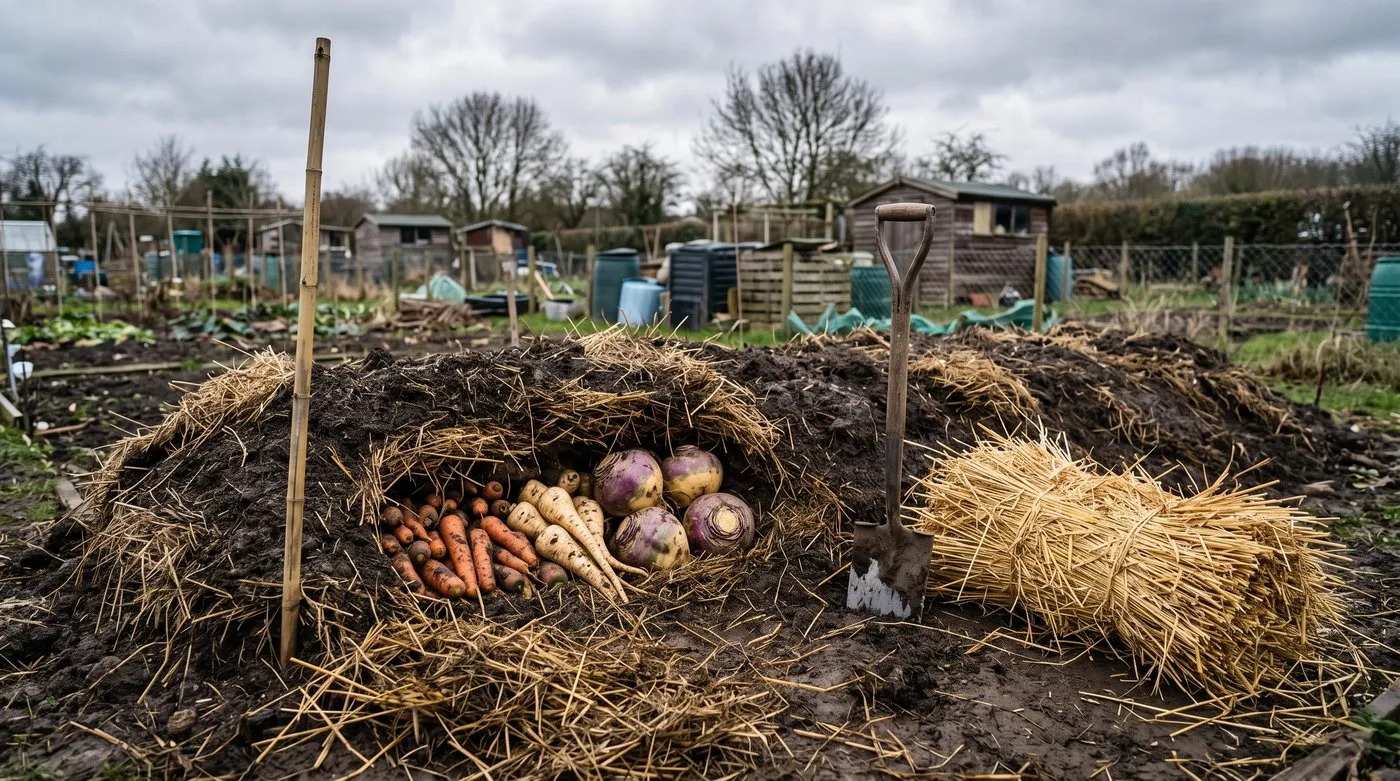
- A clamp is roots piled on straw, then covered with straw and firm soil
- Leave a straw chimney on top and dig a drainage trench round the base
- Open one end at a time, re-cover it, and watch out for rats and mice
Many root vegetables store perfectly well outdoors over a UK winter. Tough roots like parsnips and swede can simply stay in the ground. Bigger harvests can go into a clamp, an old-fashioned mound of straw and soil that keeps roots cool, dark and frost-free.
This guide covers both outdoor options. If you’d rather keep roots indoors in boxes of sand, the guide to storing root vegetables over winter covers sand boxes in a shed or garage.
Which root vegetables can stay outdoors in winter?
Some roots are hardy enough to stay in the soil all winter. Others are safer lifted and clamped or brought inside.
| Crop | Leave in the ground? | Clamp? | Notes |
|---|---|---|---|
| Parsnips | Yes | Yes | Frost improves the flavour |
| Swede | Yes | Yes | Very hardy |
| Jerusalem artichokes | Yes | Not needed | Dig as needed all winter |
| Carrots | On light, well-drained soil | Yes | Lift on heavy, wet soil, where slugs and rot set in |
| Celeriac | In milder areas, with straw | Yes | Lift in cold areas before hard frosts |
| Beetroot | No | Yes | Lift before hard frosts |
| Turnips | Not for long | Yes | Eat these first, they keep least well |
| Maincrop potatoes | No | Separate clamp | Frost ruins them |
Leaving root vegetables in the ground
This is the easiest storage of all: no lifting, no boxes. Just dig them up as you need them.
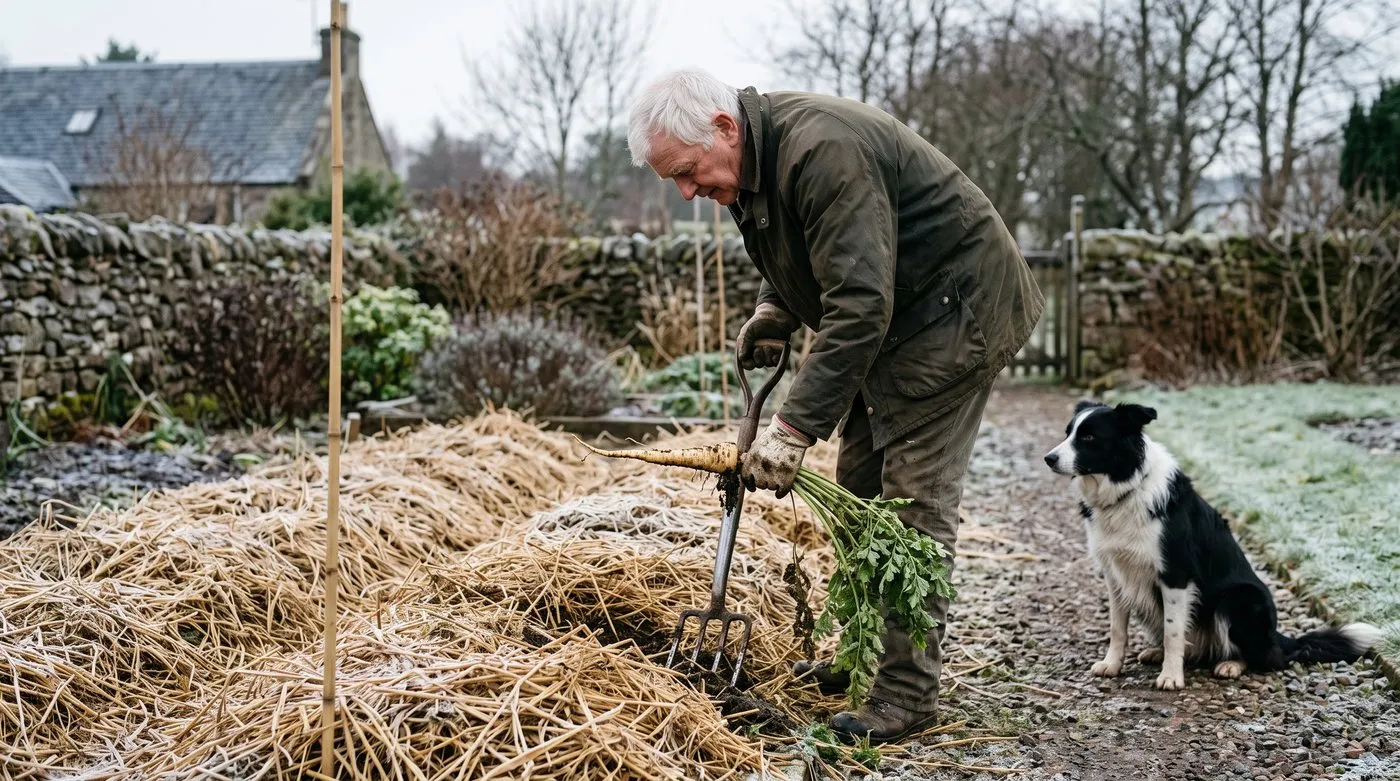
A thick straw mulch stops the soil freezing hard, so you can still dig parsnips in a cold snap.
- Cut off the old leaves in late autumn, leaving a short stump so you can find the roots.
- Mark the rows at each end with canes. They’re easy to lose under straw or snow.
- Cover with a thick layer of straw or bracken, about 15-20cm deep. It stops the top of the soil freezing hard, so you can still dig in a cold snap.
- Lift a few extra before a long freeze is forecast and keep them in the shed.
Leave roots in the ground only where the soil drains well. In waterlogged ground they can rot or split, and slugs do more damage. Carrot root fly larvae can also keep feeding in roots left in the ground, so lift carrots if you’ve had damage. The guide to carrot root fly explains the signs.
Parsnips are the classic choice. Many gardeners lift them only after the first frosts, which can make them sweeter. The guide on how to grow parsnips covers sowing for a winter crop.
When and how to lift roots for a clamp
Lift in October or November, on a dry day, before the hard frosts. Dry soil brushes off easily, and roots go into store without extra damp.
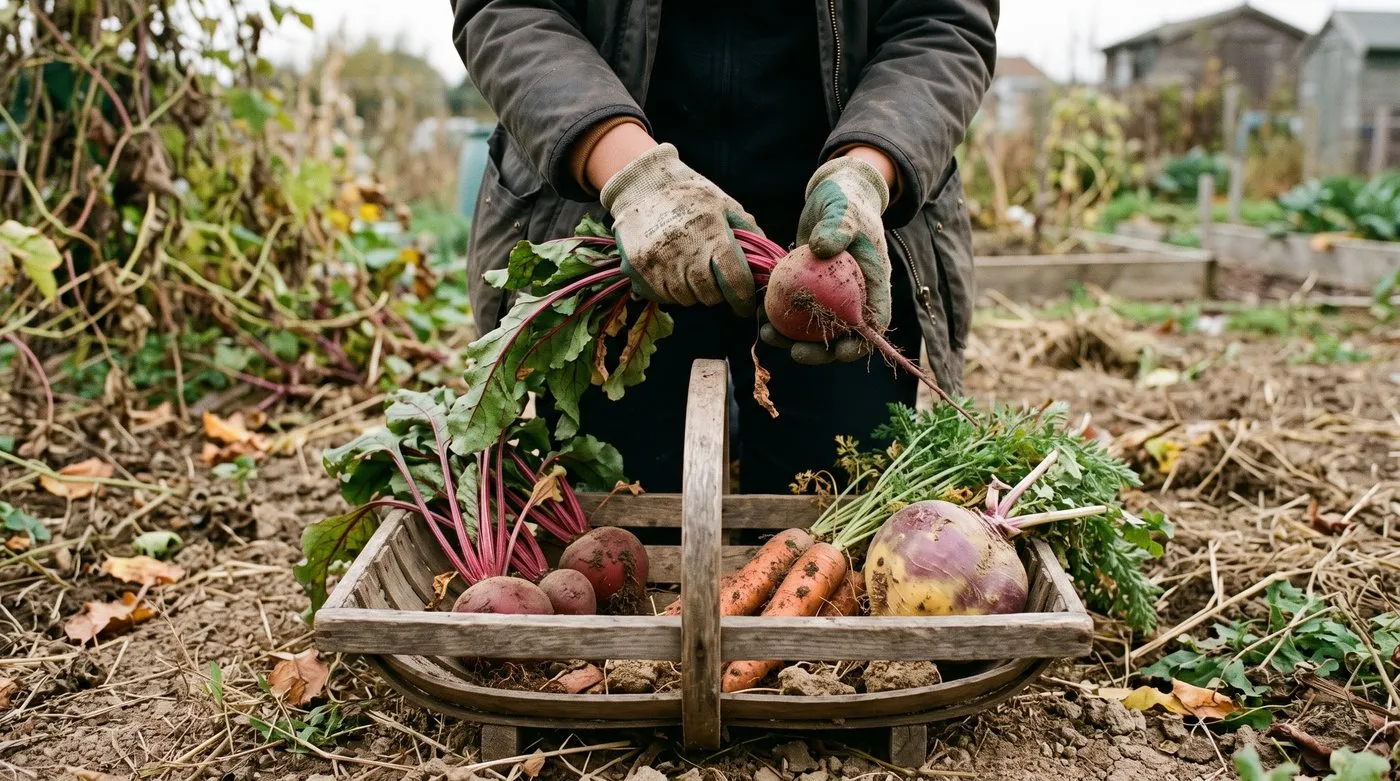
Twist the leaves off rather than cutting, and leave the soil on. Clean, dry, undamaged roots store best.
- Twist off the leaves, leaving a short stub. With beetroot, twist rather than cut, so they don’t bleed.
- Don’t wash them. Just brush or rub off loose soil.
- Sort carefully. Only firm, undamaged roots go in the clamp. Eat any forked, split, slug-holed or bruised roots first.
- Let them dry on the soil surface for a few hours if the weather allows.
How to build a vegetable clamp
A clamp works by layering. The straw keeps out frost and lets damp escape, and the soil keeps out rain and light.
- Choose the spot. Pick a sheltered, well-drained place, not a frost pocket or anywhere puddles form.
- Lay the base. Spread a bed of dry straw about 20cm thick, roughly 1m wide and as long as you need. A sheet of fine wire mesh underneath helps keep out rats and mice.
- Stack the roots. Pile them in a neat ridge or pyramid on the straw, biggest at the bottom. You can mix carrots, parsnips, beetroot, swede and celeriac in one clamp.
- Cover with straw. Add 15-20cm of straw over the whole heap, tucked down to the ground.
- Add soil. Dig a shallow trench all round the clamp and pile the soil over the straw, about 15cm thick. Pat it firm and smooth with the back of a spade so rain runs off.
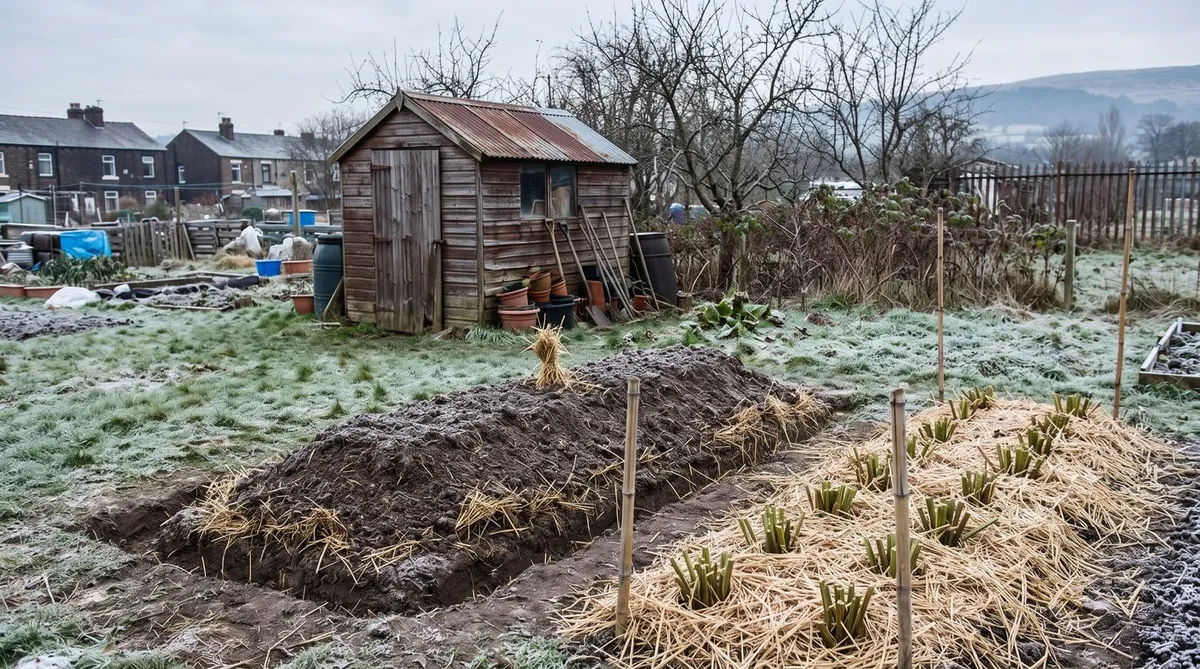
- Leave a chimney. Pull a twist of straw up through the soil at the top. It lets warm, damp air escape.

A finished clamp. The twist of straw on top is the chimney that lets damp air out.
Opening and looking after a clamp
Open the clamp from one end, not the top. Take out what you need, then pack fresh straw and soil back over the gap straight away.
Open one end, take what you need, then pack straw and soil straight back over the gap.
- Use roots from an opened face within a week or two.
- Push a tall cane in at each end, so you can find the clamp in snow.
- Check for holes and tunnels after rain and frost, and patch the soil.
- If you spot signs of rats, take action quickly. The guide to getting rid of rats has humane and practical ideas.
A good clamp usually lasts from late autumn into March. Empty it before spring warmth arrives, or the roots start to sprout and go soft.
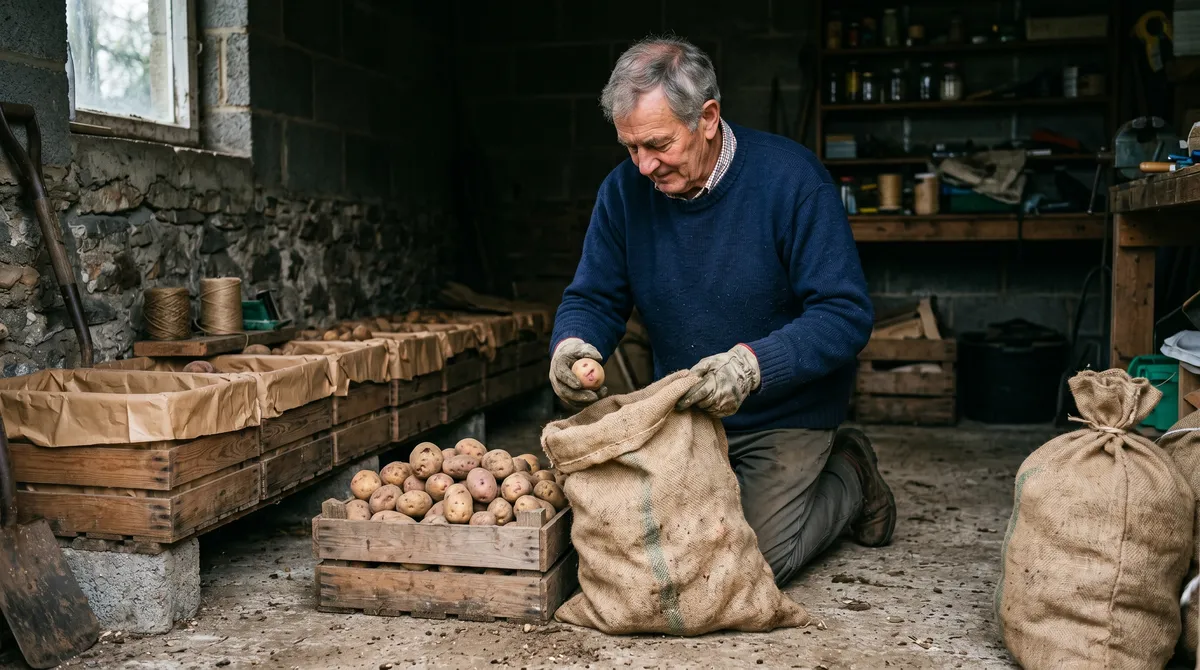
No space for a full clamp? Smaller amounts can go in a wooden box or an old dustbin with drainage holes, layered with sand or straw and tucked in a sheltered corner. Indoor sand boxes are another option.
Checking stored roots for rot
Whether roots are in a clamp, a box or the ground, check them now and then. Rot usually starts at a bruise or cut, so careful lifting and sorting prevents most of it.
Throw away any roots that are soft, slimy, or covered in grey fluff. Use roots with small marks straight away, cutting off the bad bits. One rotten root in a clamp can spoil those touching it, so remove problems as soon as you find them.

Firm, clean roots on the left; soft, mouldy ones on the right. Pull out any like these before the rot spreads.
Winter root storage calendar
| Month | Job |
|---|---|
| October | Lift beetroot, and carrots on heavy soil. Build clamps on a dry day |
| November | Cut back parsnip and swede leaves. Mulch rows with straw and mark them |
| December | Dig parsnips and swede as needed. Check clamps after heavy rain |
| January | Lift extra roots before long freezes. Patch any damage to clamps |
| February | Use up turnips and beetroot. Check for rodent holes |
| March | Finish clamped roots. Lift remaining parsnips before they regrow |
Common mistakes with outdoor root storage
- Clamping wet or damaged roots. They rot and spread trouble. Lift on a dry day and sort carefully.
- Washing roots first. Brush them instead. Damp skins rot.
- Forgetting the chimney. Without it, damp builds up inside and roots go mouldy.
- Building in a wet spot. Water collects and rots the base. Pick a well-drained place and dig a trench.
- Leaving roots in waterlogged ground. They split and rot. Lift them and clamp or box them instead.
- Leaving the clamp too long. Spring warmth makes roots sprout. Finish it by March.
Frequently asked questions
Which root vegetables can I leave in the ground over winter?
Parsnips, swede and Jerusalem artichokes are the easiest. Carrots and celeriac can stay too on well-drained soil, under straw. Lift beetroot and turnips before hard frosts, and carrots on heavy, wet ground.
What is a vegetable clamp?
A clamp is an outdoor mound of stored roots under straw and soil. The straw insulates and the soil keeps out frost and rain. A straw chimney on top lets damp air escape.
How long does a vegetable clamp last?
A well-built clamp usually lasts from late autumn into March. Once you open a face, use those roots within a week or two. Empty it before spring warmth makes the roots sprout.
Can I put potatoes in the same clamp as carrots?
It’s best to clamp potatoes separately. They like slightly different conditions and are checked differently. Build a separate small clamp or store them in sacks indoors.
How do I stop rats getting into a clamp?
Lay fine wire mesh under the straw base and keep the soil cover firm. Site the clamp away from compost heaps and sheds where rats shelter. Check it regularly for holes.
Do parsnips taste better after frost?
Yes, many gardeners find frost makes them sweeter. Cold weather turns some of the starch into sugar. That’s one reason parsnips are happy left in the ground.
Storing potatoes too? Read our guide to storing potatoes in sacks, boxes and clamps for the next step, and find more in the growing hub.
Our team produces practical UK gardening guidance from source research, contributor records and established horticultural practice. Editorial standards are overseen by Matt W.