
Key takeaways
- A motion-activated sprinkler is the most effective kind deterrent
- Chicken wire laid flat over soil stops cats digging in seedbeds and veg plots
- Rough bark, stone chippings and pine cones make soil horrible to dig in
- Plants like Coleus canina, lavender and rue put some cats off, but none works alone
- Cats are free to roam in the UK, so deter them kindly and never harm them
Finding cat mess among your new seedlings is one of gardening’s least pleasant surprises. Cats are creatures of habit, so once they’ve found a spot they like, they keep coming back. The good news is there are plenty of kind ways to change their minds.
Why cats choose your garden
Cats don’t go just anywhere. Knowing what they look for helps you make your garden less inviting.
Soft, freshly dug soil is the big draw. Cats scrape a shallow hole, use it and cover it over. New seedbeds, freshly planted borders and finely raked veg plots are irresistible. Soil you’ve just forked over is an open invitation.
Peace and quiet matter too. Cats like tucked-away spots behind sheds, under hedges and in sheltered corners. They feel exposed on open grass, which is why they rarely go on a short, well-kept lawn.
Dry, warm soil beats cold, wet ground. Sunny beds with dry soil get more visits than damp, shady ones. Raised beds, with their loose, free-draining soil, are especially popular.
If you’re starting a vegetable garden, building in some cat protection from the start will save you a lot of bother.
 Freshly dug veg beds with fine, loose soil are a cat’s favourite toilet.
The law on cats in UK gardens
In the UK, cats are free to roam. Their owners don’t have to keep them in, and a cat wandering into your garden isn’t breaking any law.
You must never hurt a cat. Causing an animal unnecessary suffering is a criminal offence, so trapping, poisoning or injuring a cat is out. Kind deterrents, like sprinklers, mesh, mulches, smells and plants, are perfectly fine. The RSPCA has advice on deterring cats if you’d like to read more.
Please note: Never use antifreeze, poison, sharp objects or anything else that could harm a cat. Skip home-made repellent sprays too, as they aren’t approved for use as repellents.
Motion-activated water sprinklers
A motion-activated sprinkler is the most effective cat deterrent you can buy. It connects to a hose and sits on a spike in the ground. When a sensor spots a cat, it fires a quick burst of water. The sudden noise and spray startle the cat without hurting it. After a few soakings, most cats keep away.
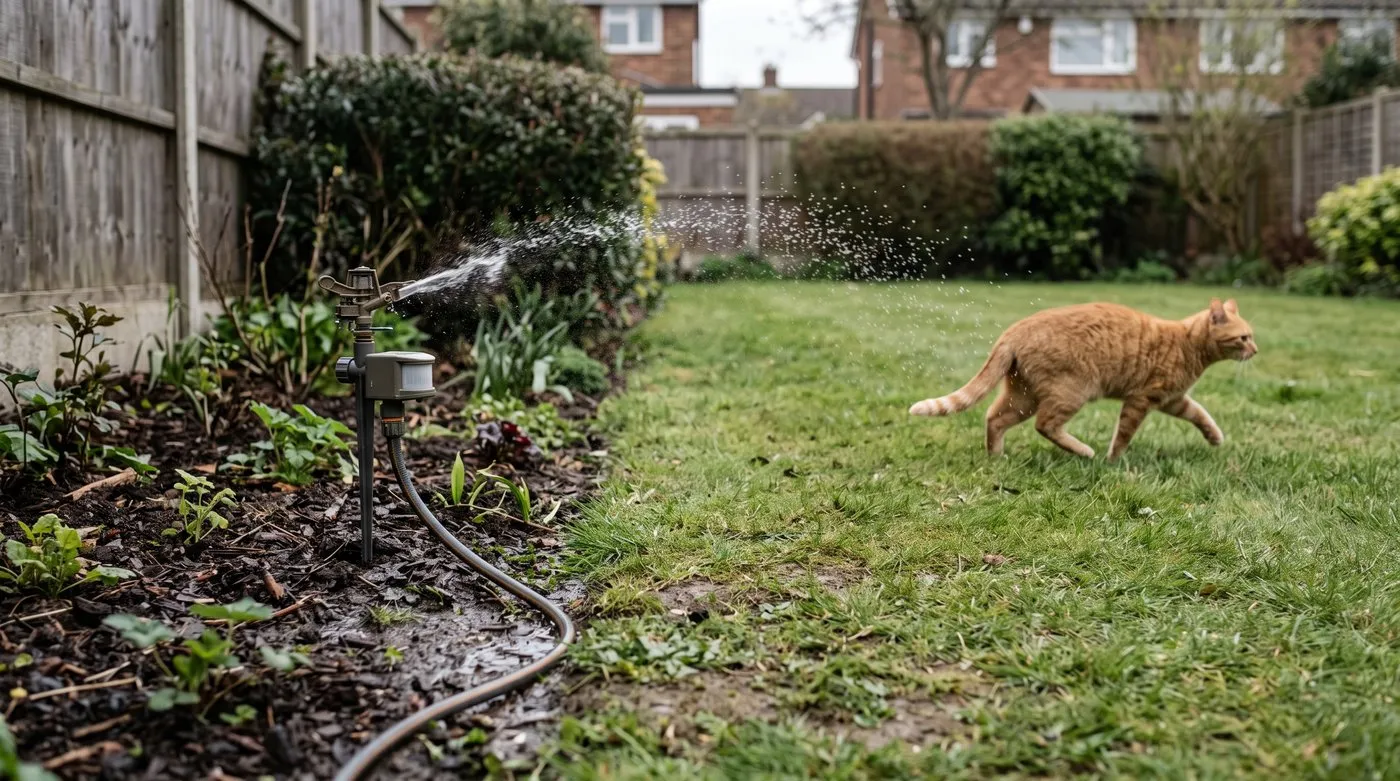
A motion sprinkler startles cats without hurting them. Aim it at the bed and the route cats use, and keep it away from your own paths.
Setting one up
Point the sensor at the area the cat is using, and at the route it takes to get there. One unit covers one bed well. Bigger gardens may need two or three.
Good to know:
- You need an outside tap and a hose run to the unit
- The sensor runs on batteries, so check them regularly
- Turn it off or point it elsewhere in hot weather, so it isn’t watering plants for no reason
- It can’t tell a cat from you, so keep it away from paths you use
Tip: Set the sprinkler up before you plant out in spring. A cat that already thinks your bed is its toilet needs to break the habit before tender seedlings go in.
Cat deterrents compared
Some deterrents work much better than others. Here’s how they stack up.
| Method | How well it works | Cost | Upkeep | Best for |
|---|---|---|---|---|
| Motion-activated sprinkler | Very well | Medium | Change batteries now and then | Open beds, borders, lawns |
| Chicken wire over soil | Very well | Low | None once laid | Seedbeds, veg plots |
| Prickle strips | Very well | Low | None | Fence tops, wall tops |
| Coleus canina | Fairly well | Low | Replant yearly (not hardy) | Borders, bed edges |
| Rough bark mulch | Fairly well | Low | Top up yearly | Flower beds, borders |
| Ultrasonic device | Hit and miss | Medium | Batteries or solar | General area |
| Citrus peel | Not very | Free | Replace every few days | Short-term, small spots |
| Coffee grounds | Not very | Free | Replace weekly | Stopgap |
| Shop-bought repellent | Hit and miss | Low | Reapply after rain | Spot treatment |
Physical barriers
Barriers are the surest way to protect a particular bed. They make the soil awkward or impossible to dig.
Chicken wire and mesh
Laying chicken wire flat on the soil is one of the best ways to protect a bed. Cats can’t dig through it and don’t like the feel of it under their paws. Use galvanised mesh with holes about 5cm across. Lay it straight on the soil after planting, cutting holes for plants to grow through.
For raised beds, cut the mesh to fit inside the frame and pin the edges down with U-shaped pegs. Take it off once the plants have covered the soil. A roll lasts several seasons.
Prickle strips
Plastic prickle strips sit along fence tops, wall tops and bed edges. The blunt plastic spikes are uncomfortable to walk on but don’t cause injury. Fix them with cable ties or glue wherever cats use as a walkway.
They work especially well on fence tops where cats hop into the garden. Most cats simply find another way round.
Twiggy sticks
Push twiggy prunings into bare soil every 10-15cm. With sticks in the way, a cat can’t squat. It’s free, uses up garden waste and looks natural. Replace them as they rot.
 Chicken wire laid flat over a raised bed. Plants grow up through it, but cats can’t dig.
Mulches that put cats off
Cats want fine, dry, crumbly soil to dig in. Cover it with something rough or prickly and they’ll go elsewhere.
Rough bark mulch
Chunky bark chippings (not fine composted bark) make a bumpy surface cats dislike. Spread it at least 5cm deep over bare soil. As a bonus, it keeps weeds down, holds in moisture and makes life harder for slugs. Our guide on how to make compost shows you how to make your own soil improver too.
Stone chippings and gravel
Stone chippings are too heavy and sharp for cats to dig through. They’re great around established shrubs and anywhere you want a permanent, low-fuss surface. In small gardens, gravel paths and mulched borders look smart and keep cats away.
Pine cones
Scatter pine cones over bare soil for a free, natural deterrent. Their prickly shape is uncomfortable to walk or dig on. Gather fallen ones on woodland walks or from your own conifers. They look lovely in woodland-style planting and last a season or two.
Tip: Mix them up. Bark mulch with pine cones scattered on top covers the soil well and is twice as unpleasant to dig in.
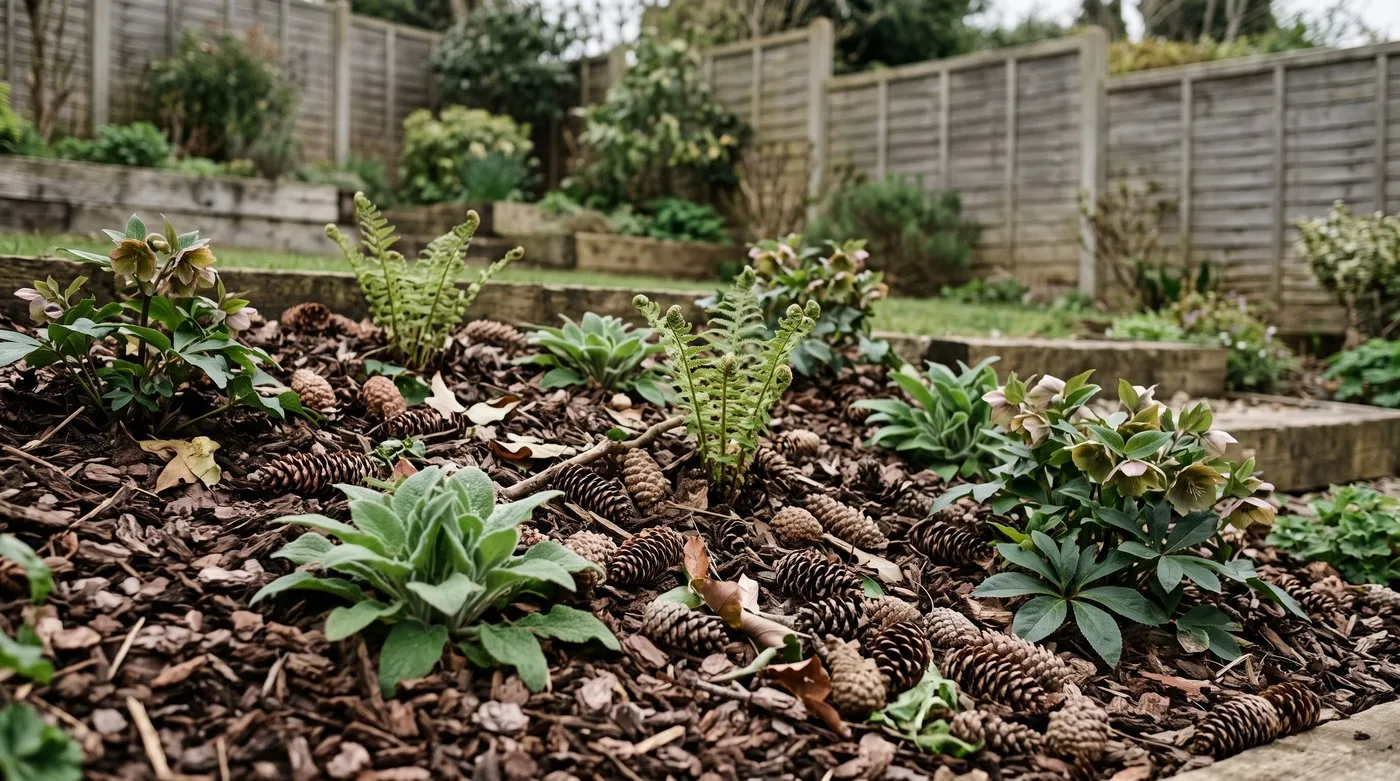
Pine cones on top of rough bark make a surface cats really don’t want to dig in. They’re free and last a season or two.
Plants that cats dislike
Some plants have smells that many cats can’t stand. Grow them in your borders and you get a pretty deterrent too.
Coleus canina (scaredy cat plant)
Coleus canina is sold as the scaredy cat plant. Its leaves give off a strong smell, often likened to fox, that cats dislike. You’ll only notice it if you brush against it or crush a leaf.
Plant it along bed edges, every 60-90cm or so. It isn’t frost-hardy, so treat it as a summer plant or bring it indoors for winter. It grows to about 40cm with grey-green leaves.
Lavender
Lavender has a strong scent that many cats avoid. It loves sun and well-drained soil. Plant it along paths and around veg plots. English lavender is fully hardy and flowers from June to August. ‘Hidcote’ and ‘Munstead’ suit most borders.
Rosemary
Rosemary has strongly scented evergreen leaves that cats tend to dislike. It’s happy in poor, dry soil. Use it as a low hedge along a bed edge or at the corners of veg beds, and snip some for the kitchen while you’re there.
Rue
Rue has a bitter smell that many cats really dislike. Grow it in full sun and well-drained soil, where it reaches about 60cm. Wear gloves when you handle it, as the sap can blister skin in sunlight.
Other strong-smelling plants
- Pennyroyal: a strong minty smell and a spreading habit. It’s harmful if eaten, so skip it if you have pets of your own.
- Curry plant: a strong curry smell and pretty silver leaves.
- Lemon balm: a lemony scent. It spreads fast, so grow it in a pot.
Good to know: No plant keeps every cat out. Cats often just walk round them to find bare soil elsewhere. Use plants alongside barriers and other methods.
 Lavender along a border edge smells lovely to us, puts many cats off and brings in the bees.
Smells that put cats off
Cats have a far better sense of smell than we do, so strong, unfamiliar smells can make them steer clear.
Citrus peel
Fresh orange, lemon or grapefruit peel scattered on the soil puts some cats off. The trouble is the smell fades within a few days as the peel dries, so you’d need to replace it a couple of times a week. It’s a handy stopgap while you set up something longer-lasting.
Coffee grounds
Used coffee grounds sprinkled thinly over soil may put some cats off with their bitter smell and gritty feel. Refresh them weekly. Many coffee shops give them away for free.
Shop-bought repellents
Results vary. Most need reapplying after rain. Granules last longer than sprays but are still short-lived. Use them alongside other methods, and follow the label exactly.
Why to skip homemade sprays
Vinegar and essential oil mixes often pop up online, but home-made mixes aren’t legal to use as repellents in the UK. Vinegar also scorches any leaves it touches, and the smell washes off in the first shower. Barriers, a sprinkler or an approved shop-bought repellent do a better job.
Ultrasonic deterrents
Ultrasonic deterrents give off a high-pitched sound when a sensor spots movement. Most adults can’t hear it, but cats find it unpleasant.
Results are mixed. Some cats stay away within a week, others ignore it after a few days. Mount it at cat height, low to the ground, and point it at the route cats use. Keep the batteries fresh, and remember walls, fences and thick planting block the sound.
They’re best as one part of a mix, not on their own.
Protecting veg beds and seedbeds
Veg plots need the most protection, as their fine, freshly worked soil is exactly what cats want. A few methods work well together.
When sowing
- Lay chicken wire or mesh flat over the soil straight after sowing. Seedlings grow up through 5cm mesh easily.
- Push short sticks into the soil every 8-10cm across the bed, so cats can’t squat.
- Cover seed rows with cloches or fleece. That keeps out cats, birds and late frosts all at once.
- Keep seedbeds watered. Cats prefer dry soil, so a damp surface is less tempting.
Around growing plants
- Spread rough bark mulch 5-8cm deep between rows. It also keeps weeds down and holds in moisture.
- Plant lavender or rosemary at the corners and ends of beds. They put cats off and bring in pollinators for your crops.
- Point a motion-activated sprinkler at the veg patch through the main growing season, April to October.
A permanent fix for raised beds
Make a hinged mesh lid. Build a wooden frame the size of the bed, staple chicken wire across it and hinge it at one end. Lift it to harvest and drop it back down to keep cats out.
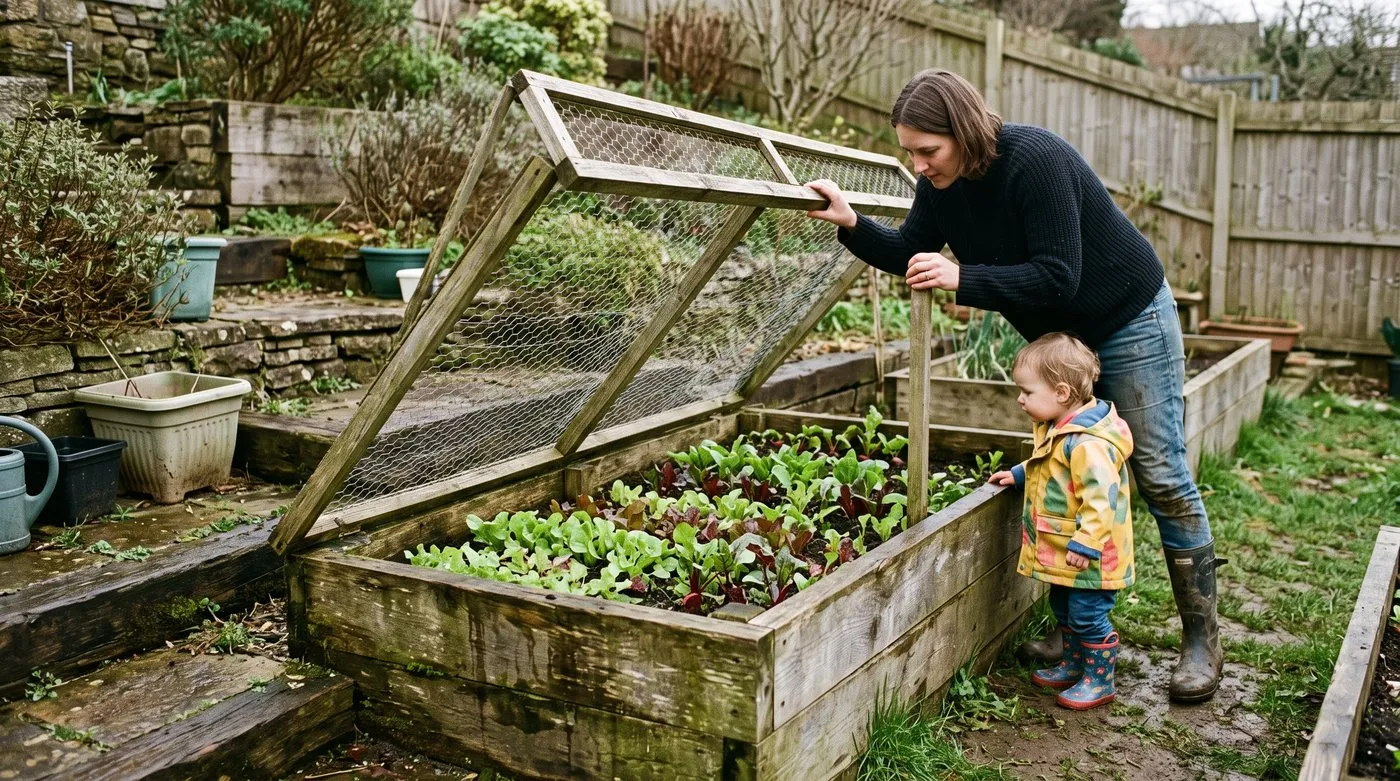
A hinged mesh lid keeps cats off a raised bed for good. Lift it to harvest and drop it back down when you’re done.
Common mistakes
Relying on one method
No single trick works on every cat. A sprinkler that sends one cat flying may barely bother another after the first surprise. Use two or three methods together. Try barriers over beds, smelly plants in borders and a sprinkler for open areas.
Not keeping it up
Smells that aren’t topped up after rain stop working. Ultrasonic devices with flat batteries do nothing. Set yourself a weekly reminder to check your deterrents in the growing season.
Only protecting the spot they used last
Block one spot and a cat will just move to the next. Think about the whole garden. Cover all your seedbeds, not just the one that got fouled, and put deterrents where the cat comes in.
Expecting instant results
A cat that’s used your garden for months needs time to change its ways. Keep your deterrents going for at least a month before you decide whether they’re working.
Falling out with the neighbours
Cat disputes between neighbours can get heated. Remember that owners don’t have to keep their cat out of your garden. A friendly chat often helps, though. Many owners are happy to keep cats in at night or put a litter tray indoors.
Giving cats somewhere else to go
Instead of trying to keep cats out completely, you could give them a spot of their own. A patch of catmint or catnip in a far corner can tempt them away from your veg beds. Add some loose, dry soil or sand nearby as an alternative toilet.
If you love having birds in your garden, it’s also worth keeping feeders well away from places cats can hide and pounce.
When to get help
If you have a colony of feral cats, contact your local council or Cats Protection for advice. Cats Protection runs neutering schemes, and neutered cats tend to roam less and settle down.
Frequently asked questions
What is the most effective cat deterrent for gardens?
A motion-activated water sprinkler works best. It spots movement and fires a quick burst of water. The surprise sends cats on their way without hurting them, and most soon learn to stay clear. Pair it with chicken wire over seedbeds for the best protection.
Is it illegal to stop cats coming into my garden UK?
No, you can deter cats, but you must never harm them. Cats are free to roam in the UK, and an owner isn’t breaking the law when their cat wanders in. Hurting or causing a cat to suffer is a criminal offence. Kind deterrents like sprinklers, mesh, mulches and plants are all fine.
Do ultrasonic cat deterrents actually work?
Some cats mind them and some don’t. They give off a high-pitched sound that cats dislike, but it depends on where you put them and on the cat. Some cats ignore them after a few days. A motion-activated sprinkler is more reliable for a determined cat.
What plants keep cats out of the garden?
Coleus canina, known as the scaredy cat plant, is the best known. Lavender, rosemary and rue have strong smells that many cats avoid too. Plant them along the edges of beds. No plant keeps every cat out, so use them alongside other methods.
Why do cats keep pooing in my garden?
They love soft, freshly dug soil that’s easy to scrape. Quiet, sheltered, dry spots are favourites. Newly planted beds, veg plots and fine seedbeds are top of the list. Covering the soil with mesh or a rough mulch makes it far less tempting.
Does citrus peel stop cats fouling in the garden?
It puts some cats off, but only briefly. The smell fades within a few days as the peel dries out. You’d need to replace it a couple of times a week. It’s best as a stopgap while you set up mesh, mulch or a sprinkler.
How do I stop cats digging in my vegetable beds?
Lay chicken wire or plastic mesh flat on the soil. Cats can’t dig through it and don’t like the feel of it on their paws. Cut holes for plants to grow through. You could also use rough bark mulch at least 5cm deep, or push short sticks into the soil about 10cm apart.
Our team produces practical UK gardening guidance from source research, contributor records and established horticultural practice. Editorial standards are overseen by Matt W.


