
Key takeaways
- March to May is the main sowing season, so get seeds ordered in winter
- Chit seed potatoes indoors from late January
- Plant tender crops like courgettes and beans out only after the last frost
- Sow salads and radishes every 2-3 weeks from April to August for steady pickings
- Sow green manures on empty beds from late summer to protect the soil over winter
- Northern and exposed plots run about two to three weeks behind the south
A month-by-month plan takes the guesswork out of your allotment year. Without one, it’s easy to miss sowing times, then end up with a glut in August and bare beds by October. Here’s what to do and when.

Seed trays labelled and ready for sowing on the potting bench in March.
January: plan, order seeds and chit potatoes
January is for planning. The ground is usually too cold and wet to work, but what you do now sets up the whole year.
Order seeds early, as popular ones sell out. Plan your crop rotation and order to match. Jot down what worked last year and what didn’t.
Chit seed potatoes from late January. Stand them in egg boxes in a cool, bright room. Short, sturdy shoots will be ready by planting time. Check stored veg for rot and throw out anything soft.
Jobs: Clean and sharpen tools. Mend cold frames and cloches. Check water butts for frost damage. Have a look at our seed sowing calendar and mark the key dates.
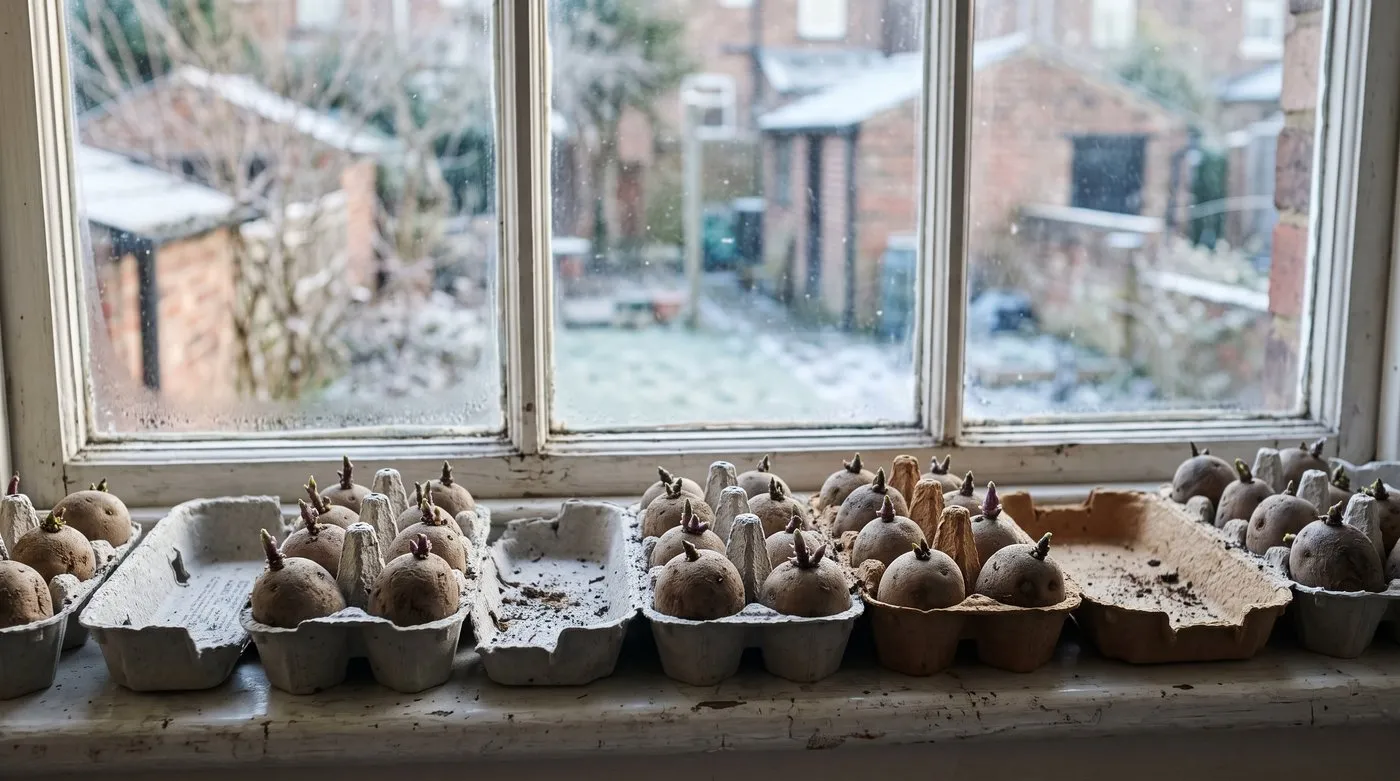
Short, stubby shoots like these are what you’re after. A cool, bright room stops them going long and pale.
February: start sowing indoors
The first seeds go in now, but indoors. The soil outside is still too cold for most seeds.
Sow indoors: Tomatoes, peppers, chillies and aubergines in a heated propagator. They’re slow, so they need a long head start before going out in late May.
Get beds ready on dry days. Spread compost or manure if you didn’t in autumn. Cover beds with black sheeting for a few weeks to warm the soil before sowing. It really helps on heavy clay.
Plant: Jerusalem artichoke tubers can go in now. They don’t mind cold soil.
March: outdoor sowing begins
March is when the allotment year really starts. The soil warms up in most of England during the month. Northern plots may need to wait until late March or April.
Sow outdoors: Broad beans, parsnips, early peas, spinach, rocket and spring onions. They’re all fine in cool soil. Use fresh parsnip seed each year, as old seed comes up poorly.
Sow under cover: Lettuce, beetroot and calabrese in modules, ready to plant out in April. It gives them a head start away from slugs.
Plant: First early potatoes from late March. Plant them 12-15cm deep, 30cm apart in rows 60cm apart. Pull soil up over the shoots as they appear. When to plant potatoes has more on timing each type. Onion sets can go in now too.
Jobs: Hoe weed seedlings on dry days while they’re small. Check your allotment layout plan and decide what goes where.
April: the busiest sowing month
April is the big one. The soil is warming and the days are getting longer, so almost everything can be started now.
Sow outdoors: Carrots, beetroot, turnips, radishes, Swiss chard, lettuce, spring onions and more peas. Sow salads every 2-3 weeks. Succession planting helps you avoid gluts.
Sow indoors: Courgettes, squash, pumpkins, French beans and runner beans in single pots. They can’t take frost, so they stay inside for a few weeks.
Plant out: Onion sets, shallots and early potatoes if you didn’t in March. Plant out lettuce and calabrese under fleece.
Jobs: Keep on top of weeds. Earth up potatoes as the shoots grow. Net cabbage-family beds against pigeons. Water onion sets if April is dry.
May: harden off and plant out tender crops
May is when tender crops go outside, once the frosts are over. The last frost in most of England comes between late April and mid-May. Northern plots and frost pockets can get frost into early June.
Plant out after the last frost: Courgettes, squash, pumpkins, runner beans, French beans, outdoor tomatoes and sweetcorn. Harden them off first: stand them outside by day for a week or so before planting. Cover with fleece for the first week if nights are chilly.
Sow outdoors: More carrots, beetroot and salad leaves. Sow runner and French beans straight into the ground from mid-May. Sow swede and kale for autumn and winter.
Jobs: Water new plants every day until they settle in. Give peas something to climb. Pinch out broad bean tips when the first pods form, which also puts off blackfly. Not sure about bean frames or netting on your site? Check your allotment rules.
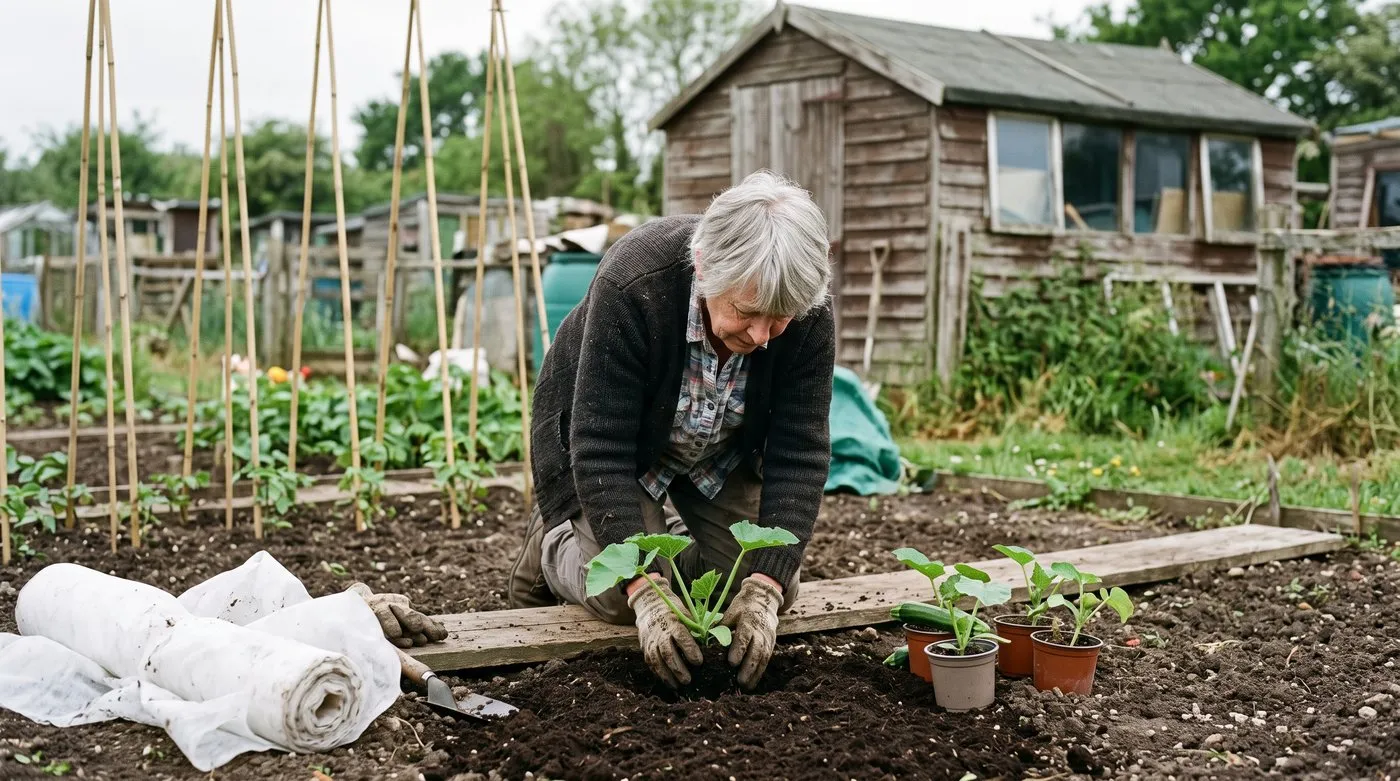
Wait until the frosts are over and the plants have spent a week outside by day. Keep fleece handy for chilly nights.
June: growing fast, weeding faster
June is all about keeping up. Everything grows fast now, weeds included. Keep hoeing and summer will reward you.
Sow: A last batch of salad leaves, radishes and spring onions. Sow French beans for a late crop, and Florence fennel.
Start picking: Early potatoes, broad beans, peas, lettuce, radishes, spring onions, spinach and gooseberries. Pick courgettes small, at about 15-20cm, for the best flavour.
Jobs: Water deeply once or twice a week rather than a little every day. Mulch courgettes, beans and tomatoes with compost to hold in moisture. Pinch out side shoots on cordon tomatoes and tie the main stem in. Earth up maincrop potatoes one last time.

July on a busy plot, with runner beans, greenhouse tomatoes and onions drying.
July: peak harvest month
July is the best month on the allotment. On a well-planned plot, there’s loads to pick.
Pick: Runner and French beans, courgettes, greenhouse tomatoes, beetroot, carrots, new potatoes, onions once the tops flop over, shallots, garlic, peas, chard, calabrese and soft fruit. Keep picking and the plants keep cropping.
Sow for autumn and winter: Spring cabbage, kale and turnips. Sow a last batch of beetroot and carrots for late pickings.
Jobs: Water regularly, especially beans and courgettes. Feed tomatoes weekly with a tomato feed once the first fruits set. Remove yellow leaves from the bottom of tomato plants. Check cabbages for caterpillars and pick them off by hand.
August: more harvests and autumn prep
August keeps the harvest going and starts the turn towards autumn. Some beds are emptying now, ready for green manure or winter crops.
Pick: Sweetcorn when the tassels turn brown, maincrop potatoes, outdoor tomatoes, runner beans, courgettes, onions, plums and blackberries. Lift onions and dry them on a rack for a couple of weeks before storing.
Sow: Spring cabbage and winter lettuce. Sow quick green manures like mustard or phacelia on empty beds. They cover the soil and add goodness when dug in.
Plant: Strawberry runners. Plant spring cabbage into its final spot.
Jobs: Keep watering and feeding. Cut down summer raspberry canes that have fruited. Sort out your allotment shed and check your seed stocks for autumn.
September: the switch to autumn
The harvest carries on, but things slow down. Shorter days and cooler nights mean it’s time to start looking after the soil for next year.
Pick: Squash and pumpkins once the stalks go dry and woody, sweetcorn, runner beans, tomatoes, apples and pears. Bring green tomatoes indoors to ripen on a windowsill.
Sow: Green manures such as field beans, grazing rye or crimson clover on every empty bed. They stop winter rain washing the soil away.
Plant: Autumn onion sets. Get beds ready for garlic next month.
Jobs: Clear finished crops onto the compost heap. When you pull out bean plants, leave the roots in the soil to feed next year’s crops.
October: feed the soil and plant garlic
October is about looking after the soil. The growing season is winding down, but there’s still plenty to do.
Plant: Garlic cloves 15cm apart and about 5cm deep. Plant autumn onion sets and spring cabbage. Sow broad beans for an early crop next year, using a hardy variety like ‘Aquadulce Claudia’.
Pick: The last squash, late beetroot, carrots (lift and store in sand), leeks and sprouts. Leave parsnips in the ground, as frost makes them sweeter.
Jobs: Spread 5-8cm of well-rotted manure or compost on empty beds and let the worms pull it in. Check our UK vegetable planting calendar for any last planting before winter.

October jobs: sowing green manure on empty beds and turning the compost.
November and December: rest, repair and plan
These are the quiet months. Very little grows, and wet soil is best left alone so you don’t squash it.
Pick as you need: Leeks, parsnips, sprouts, kale, celeriac and winter cabbage. They’re all happy to stand in the ground until you want them.
November jobs: Finish spreading manure. Resow any patchy green manure. Drain and store hosepipes. Clean out the greenhouse. Prune fruit bushes and trees while they’re dormant.
December jobs: Get the seed catalogues out and plan next year’s rotation. Sharpen and oil your tools. Mend bed edges, paths and structures. Check stored onions and potatoes for rot. Look back at what worked this year.
Month-by-month sowing and harvest calendar
Here’s when to sow, plant and pick 15 allotment favourites. S = sow, P = plant out, H = harvest. Add two to three weeks for northern England, Scotland and exposed sites.
| Crop | Jan | Feb | Mar | Apr | May | Jun | Jul | Aug | Sep | Oct | Nov | Dec |
|---|---|---|---|---|---|---|---|---|---|---|---|---|
| Potatoes | P | P | H | H | H | |||||||
| Broad beans | S | H | H | S | ||||||||
| Peas | S | S | H | H | ||||||||
| Runner beans | S | P | H | H | H | |||||||
| Carrots | S | S | S | H | H | H | H | |||||
| Beetroot | S | S | H | H | H | |||||||
| Courgettes | S | P | H | H | H | |||||||
| Tomatoes | S | P | H | H | H | |||||||
| Onions | P | P | H | H | P | P | ||||||
| Garlic | P | P | ||||||||||
| Lettuce | S | S | S | H | H | H | ||||||
| Kale | S | H | H | H | H | |||||||
| Leeks | S | S | P | H | H | H | H | |||||
| Parsnips | S | H | H | H | ||||||||
| Squash | S | P | H | H |
Timing in the north and south of the UK
Spring jobs in the far south can be several weeks ahead of the far north.
Southern England: Follow the dates here as written. Outdoor sowing usually starts in early to mid-March, and the last frost is often in late April.
Northern England, Scotland and high ground: Add two to three weeks to spring sowing dates. Start sowing outdoors from late March or early April. The last frost is often in mid to late May. Pick quick-ripening varieties of tomatoes, squash and sweetcorn so they’re ready before autumn.
Coastal plots have milder winters but more wind. Shelter tall crops like runner beans and sweetcorn.
The National Allotment Society can put you in touch with local allotment groups, and your plot neighbours are a great source of local know-how.
Frequently asked questions
When should I start sowing seeds on my allotment?
Start indoors in February with tomatoes, peppers and aubergines. Outdoor sowing begins in March with broad beans, parsnips and early peas. The main sowing season runs from March to May. Sowing too early into cold, wet soil just wastes seed, so wait for the soil to warm up.
What is the best month to plant potatoes on an allotment?
Plant first earlies in late March and maincrops in mid-April. Chit seed potatoes indoors from late January in egg boxes, somewhere cool and bright. Planting too early risks frost on the new shoots. If a late frost is forecast, cover any shoots with fleece.
How do I plan crop rotation on an allotment?
Split the plot into four beds and move crops on each year. Potatoes go in bed one, peas and beans in bed two, the cabbage family in bed three, and roots and onions in bed four. Each group moves one bed along every year. That keeps pests and diseases down and shares out the goodness in the soil.
What should I do on my allotment in winter?
Feed the soil, mend things and plan. Spread 5-8cm of well-rotted manure on empty beds and sow green manure on bare soil. Plant garlic and autumn onion sets in October or November. Repair sheds, paths and bed edges, and order next year’s seeds by January.
Can I grow vegetables all year round on an allotment?
Yes, with a bit of planning you can pick something every month. Leeks, parsnips, sprouts, kale and winter cabbage carry you through winter. Purple sprouting broccoli and autumn-sown broad beans fill the spring gap. Sowing little and often stretches summer crops into October.
How many hours a week does an allotment need?
The RHS suggests about eight hours a week for a beginner’s half plot. An experienced grower needs about half that, and winter needs far less. A full plot needs more again. Three or four short visits beat one long weekend session for keeping on top of weeds and watering.
What are the easiest vegetables to grow on an allotment?
Courgettes, runner beans, potatoes, beetroot and chard are the easiest. They cope with most soils, crop generously and need no special care. Potatoes also break up rough ground, so they’re great for a new plot.
Our team produces practical UK gardening guidance from source research, contributor records and established horticultural practice. Editorial standards are overseen by Matt W.


