
Key takeaways
- Good drainage matters more than warmth, as wet winter roots kill these plants
- A sunny, south-facing wall gives a warm, sheltered spot
- Lavender, rosemary, cistus and euphorbia are tough, reliable choices
- Mulch with gravel, never bark or compost
- Plant in spring and water only through the first summer
- Go easy on feeding, as lean soil gives tougher plants
Silver leaves, purple lavender, terracotta pots and the scent of rosemary on a warm afternoon. No wonder the Mediterranean look is such a favourite. The worry is always our cold, wet winters, but these plants are tougher than you’d think.
For extra structure in pots, try our guide to growing aeonium.
The secret is drainage, not warmth. A lavender sitting in soggy clay can die in a mild winter, while the same plant in gritty, free-draining soil shrugs off a hard frost. Get the drainage right and you’re halfway there.
Here’s how to choose plants, prepare the soil, design the look and keep it all happy. For more plants that love dry conditions, see our drought-tolerant plants guide.
Why Mediterranean plants work here
The UK and the Mediterranean have more in common than you’d think. Both have mild, wet winters and warm summers. The big differences are that we get more rain and our summers are less hot and dry.
Cold: Most UK winters are well within what lavender, rosemary and cistus can take, especially in the south.
Rain: This is the real challenge. These plants come from thin, rocky soils where water drains away in seconds. In heavy UK clay their roots sit in wet ground all winter and rot.
Sun: Our summer days are long, but the sun is weaker. A sunny wall helps by soaking up warmth and giving it back.
Picking the right spot
The spot you choose makes all the difference.
Sunny walls and fences
A south-facing wall is the best thing you can have for Mediterranean planting. Brick and stone soak up the sun by day and give off warmth at night, making a cosy, sheltered pocket.
Plant 30-60cm out from the base of the wall, as the strip right at the bottom stays dry because rain doesn’t reach it. Train climbers on the wall and run a border along it for shrubs and perennials.
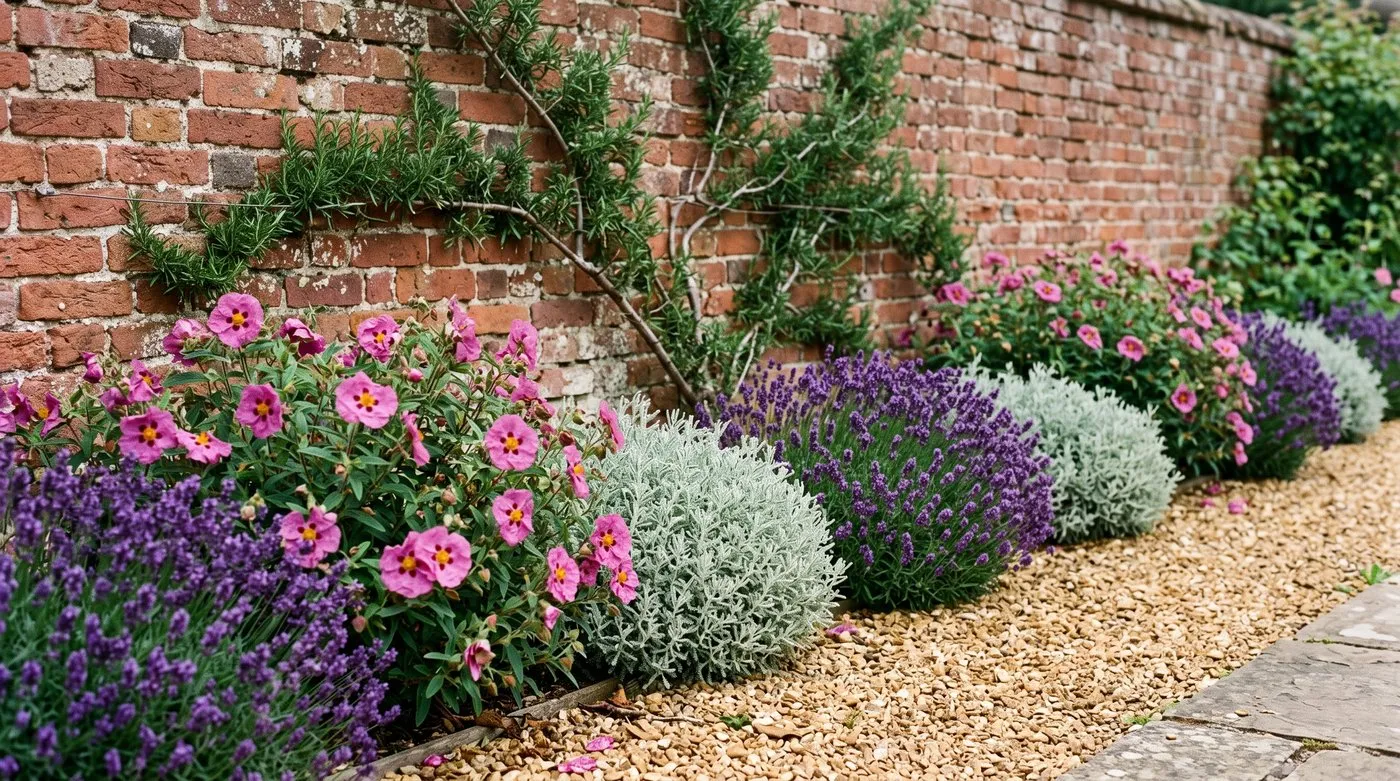
A south-facing wall soaks up the sun and gives off warmth at night. Plant 30-60cm out, as the strip right at the base stays dry.
Raised beds
Lifting the soil 20-30cm above the ground does wonders for drainage. It brings plants nearer eye level too, and gives that terraced, hillside feel. Natural stone, reclaimed sleepers or rusty steel edging all look the part.
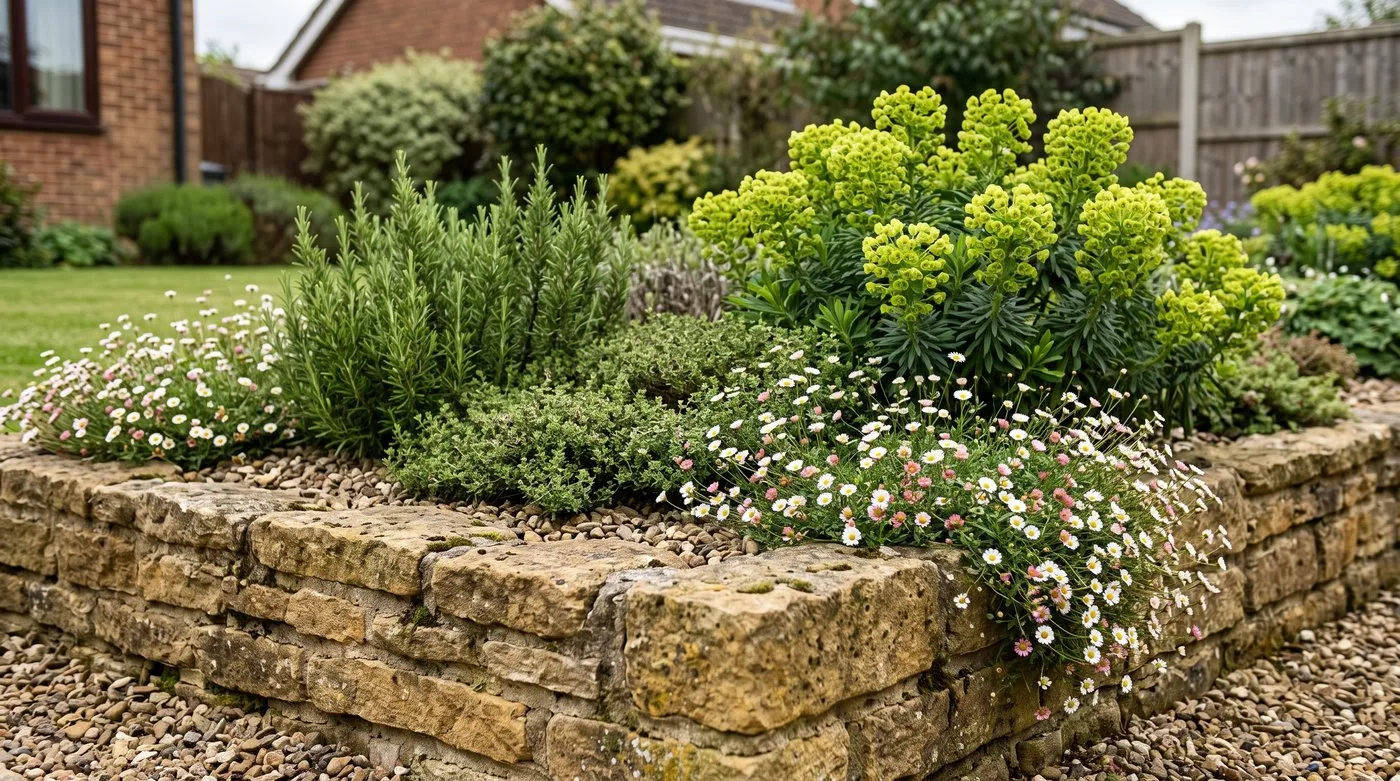
Lifting the soil 20-30cm does wonders for drainage. A mix of topsoil, grit and a little compost suits these plants perfectly.
Sheltered courtyards
Walled courtyard gardens hold onto warmth and keep cold winds out. Even a small walled patio can be warm enough for potted olives, jasmine on the wall and citrus in summer. It’s a great spot for a potted pomegranate too.
Getting the soil right
Drainage matters far more than richness. These plants are used to poor, stony soil. Rich, damp compost makes soft, floppy growth that frost and disease love.
Clay soil: Dig in plenty of horticultural grit or sharp sand, as deep as your spade will go. It’s hard work, but you only do it once.
Sandy soil: It drains well already, so it’s a good start. Add a little compost to help new plants settle.
Chalky soil: Free-draining and alkaline, which lavender, rosemary, cistus and euphorbia love. It’s one of the best soils for this style with no changes at all.
Raised bed mix: About half topsoil, a third grit and the rest peat-free compost. That gives good drainage and just enough food to get plants going.
Tip: Don’t put moisture-holding compost, water-retaining gel or thick bark mulch around these plants. They hold water against the base of the plant in winter and cause rot. Gravel is the mulch to use.
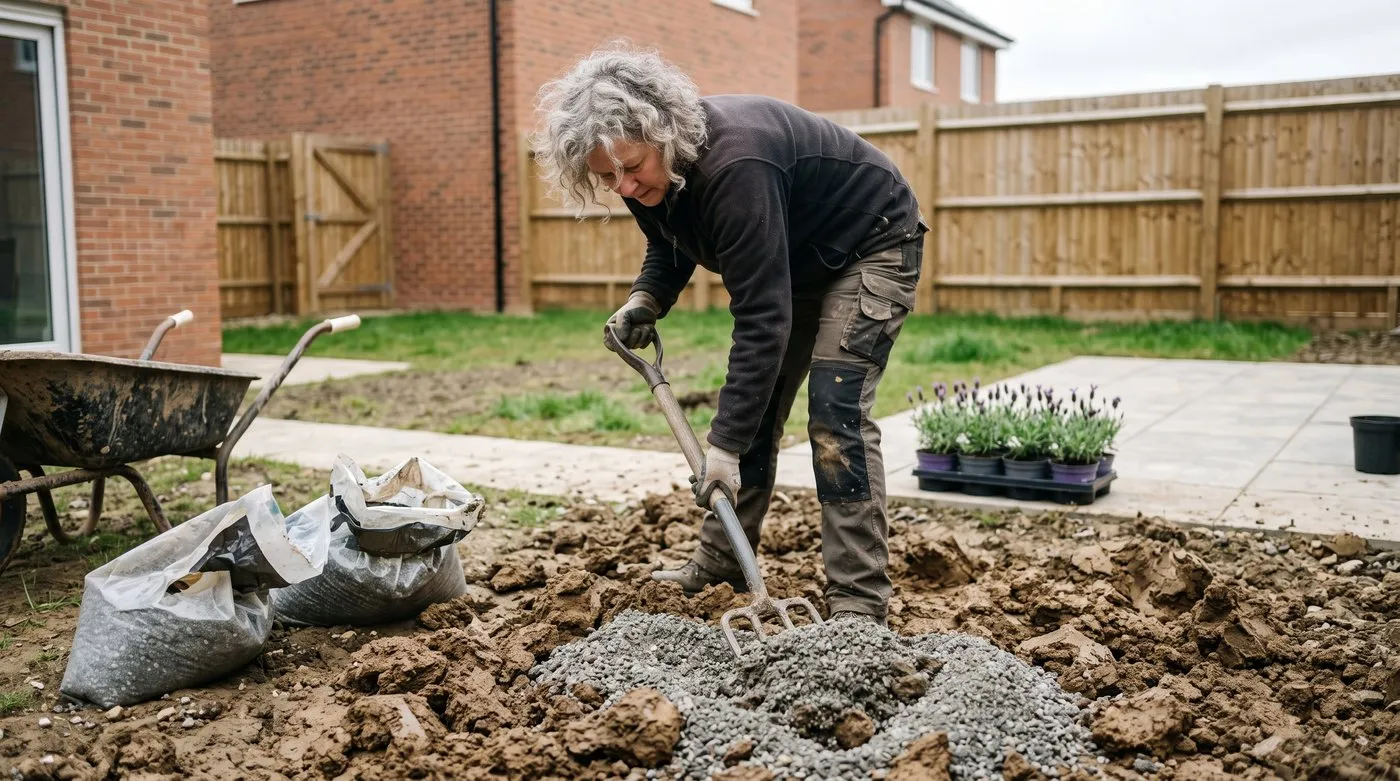
On clay, dig in plenty of grit as deep as your spade goes. It’s hard work, but you only need to do it once.
Plants for a Mediterranean garden
Trees and large shrubs
| Plant | Size | How hardy | Likes | Notes |
|---|---|---|---|---|
| Olive (Olea europaea) | Medium | Fairly hardy | Full sun, sharp drainage | Slow; fleece young trees in cold areas |
| Judas tree (Cercis siliquastrum) | Medium to large | Hardy | Sun, any well-drained soil | Pink flowers on bare branches in May |
| Strawberry tree (Arbutus unedo) | Medium | Fairly hardy | Sun or part shade | Evergreen with autumn fruit |
| Crepe myrtle (Lagerstroemia) | Small to medium | Needs shelter | Sun, warm wall | Late summer flowers; tricky in the north |
| Italian cypress (Cupressus sempervirens ‘Totem’) | Medium | Fairly hardy | Full sun | Slim, upright, classic Italian look |
Shrubs
| Plant | Size | How hardy | Why grow it |
|---|---|---|---|
| Lavender ‘Hidcote’ | Small | Hardy | Deep purple flowers and silver leaves |
| Rosemary ‘Miss Jessopp’s Upright’ | Medium | Fairly hardy | Upright, blue flowers, great for cooking |
| Cistus x purpureus | Medium | Fairly hardy | Magenta flowers with dark spots in early summer |
| Jerusalem sage (Phlomis fruticosa) | Medium | Fairly hardy | Yellow flowers and woolly grey leaves |
| Tree germander (Teucrium fruticans) | Medium | Needs shelter | Silver leaves and pale blue flowers |
Perennials and grasses
| Plant | Size | How hardy | Why grow it |
|---|---|---|---|
| Agapanthus ‘Headbourne Hybrids’ | Medium | Fairly hardy | Blue or white flower balls in late summer |
| Euphorbia characias subsp. wulfenii | Medium | Fairly hardy | Big lime-green flower heads |
| Verbena bonariensis | Tall | Fairly hardy | Airy purple flowers, seeds itself about |
| Stipa tenuissima | Small | Fairly hardy | Fine, blonde grass that sways in any breeze |
| Mexican fleabane (Erigeron karvinskianus) | Small | Fairly hardy | Little daisies that tumble over walls |
| Pennisetum alopecuroides ‘Hameln’ | Small | Fairly hardy | Fluffy bottlebrush flower heads |
For tall spires, our guide on how to grow Eremurus covers the foxtail lily, which loves the same gritty soil. For late-summer scent, see how to grow crinum, a bulb that thrives against a warm wall. Our best flowering shrubs guide has more ideas, and if you’ve got a dry, sunny bank with room to spare, our pampas grass guide explains the one tidy-up it needs each spring.
The Mediterranean colour palette
A simple colour scheme pulls the look together.
Silver and grey leaves: Lavender, artemisia, santolina, lamb’s ears and Senecio cineraria. The curry plant adds the same silvery look with a warm, spicy scent on hot days.
Purple and blue flowers: Lavender, agapanthus, rosemary, catmint, salvia and Russian sage. These cool colours look lovely against warm stone and gravel.
White flowers: Cistus, gaura, white agapanthus and oleander in pots. White glows in the evening light.
Warm touches: Terracotta pots, golden gravel and sandstone paving. Cool grey paving tends to fight the look.
What to skip: Bright red bedding, orange marigolds and primary-coloured pots. They pull the eye away from the soft silver, purple and blue.
Gravel gardens and mulching
Gravel is the signature of a Mediterranean garden. It keeps weeds down, stops the soil drying out and gives that sun-baked feel.
Choosing gravel: Warm colours work best, such as honey Cotswold stone, golden flint or buff limestone. Avoid stark white or dark grey. Use 10-20mm for paths and mulch, and smaller stones close around plants. Angular gravel stays put better than round pea gravel.
Laying it: Clear turf and weeds. Lay a woven membrane, not plastic sheet, which stops water draining. Overlap the edges, spread the gravel about 5cm deep, and cut crosses in the membrane to plant through.
Beth Chatto’s famous gravel garden in Essex showed just how well this style works in the UK, and is famously not watered. The RHS gravel garden guide has more design ideas.
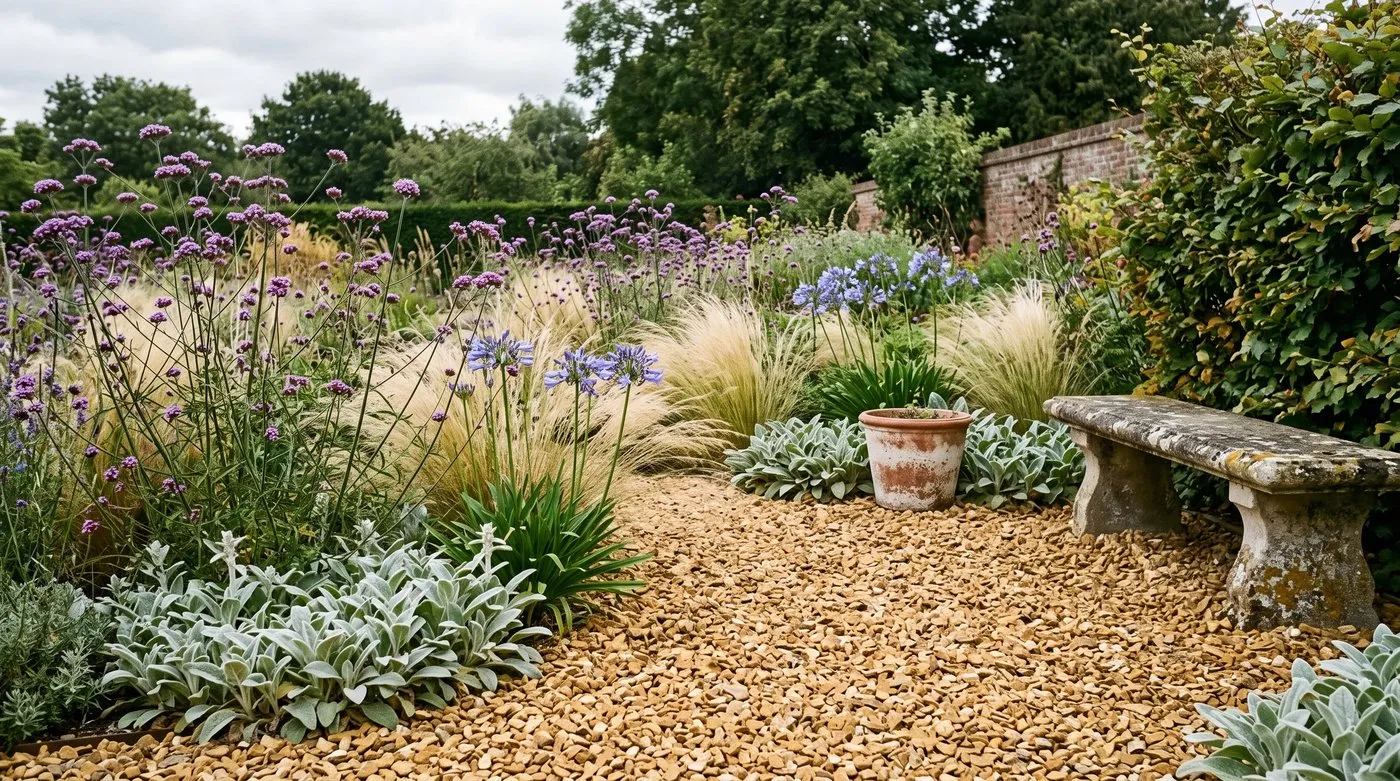
Gravel is the mulch these plants love. It keeps weeds down and stops wet soil sitting against the stems in winter.
Saving money
You can start small with a few terracotta pots, an olive, some lavender and rosemary, then spread out from there.
Where to save: Take cuttings of lavender in summer. They root easily and are free. Buy perennials and grasses in small pots, as they settle in quickly and cost far less than big ones.
Where to splurge: A good-sized olive tree. It gives instant structure and atmosphere. One lovely olive does more for the feel of the garden than twenty lavenders.
Winter care for less hardy plants
Most Mediterranean plants get through a UK winter without help. A few need a hand in colder areas or a really hard frost.
Wrap or mulch these in colder areas: young olive trees (wrap in fleece), Melianthus major (cut back and mulch the crown), agapanthus (mulch over the crowns) and citrus (move under cover or into a cold greenhouse).
Give these sharp drainage everywhere: lavender, cistus and Convolvulus cneorum. They don’t need fleece. They need gravel and free-draining soil.
Pots: Move terracotta pots against a sunny wall in autumn and group them together. Stand them on pot feet so they drain, and wrap the pots in bubble wrap. It’s a frozen, soggy root ball that kills, not the cold on the leaves.
For more ways to save water across the garden, see our water-efficient gardening guide.
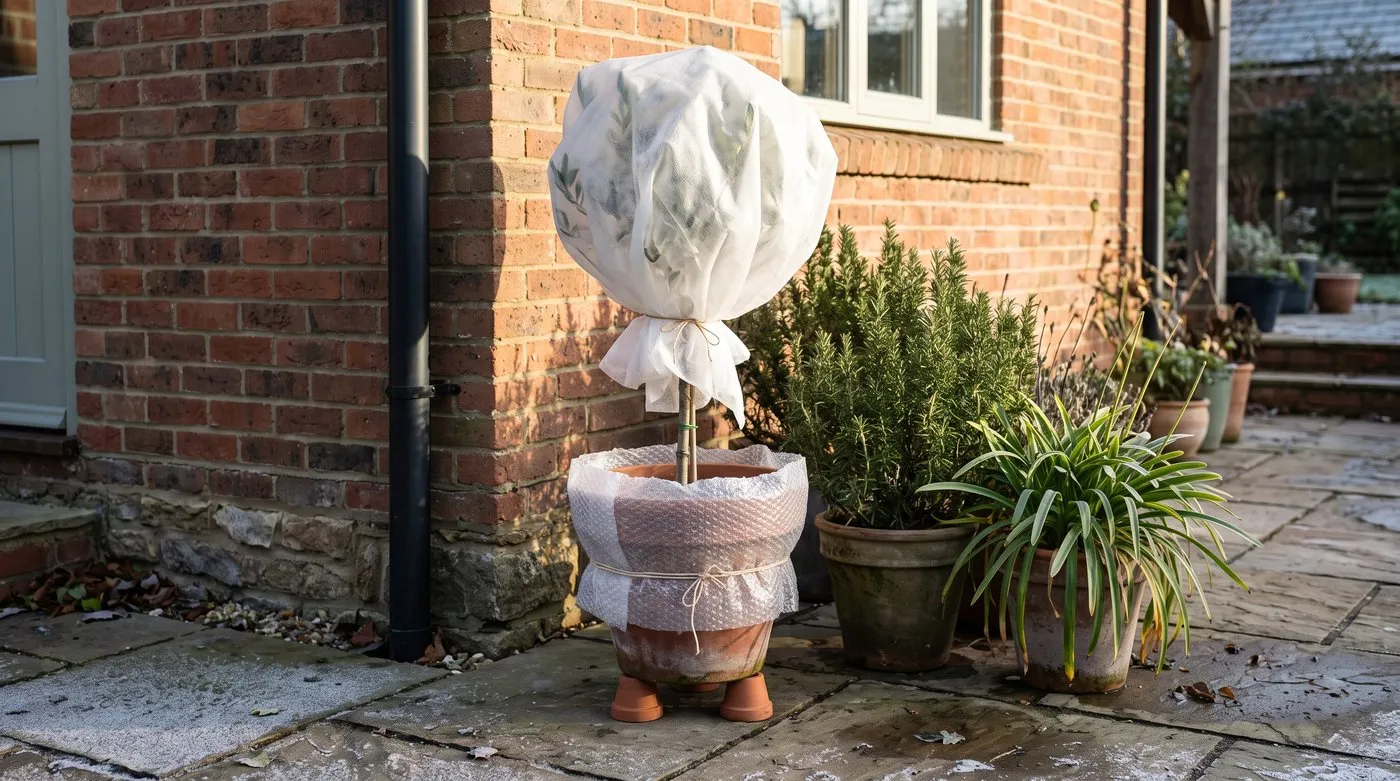
Stand pots on feet and wrap them up for winter. It’s a frozen, soggy root ball that kills these plants, not cold on the leaves.
Herbs: the tastiest way to start
A herb garden is the easiest way into this style. A raised bed or big pot of rosemary, thyme, oregano, sage and lavender is a mini Mediterranean garden. It looks good, smells wonderful and feeds the kitchen.
Design: Try a formal herb wheel divided with bricks, or a relaxed drift along a sunny border. Tall herbs like rosemary and bay go at the back, sage and lavender in the middle, and creeping thyme and oregano at the front, spilling over the edge.
Pots: Use wide, shallow terracotta bowls at least 30cm across. Mix peat-free compost with plenty of grit or perlite. Keep rosemary and thyme apart from basil and parsley, which like it much wetter.
Plant a few herbs by the kitchen door and you can nip out for a sprig of rosemary for the Sunday roast.
Common mistakes to avoid
Watering too much. Once these plants are through their first year, they rarely need watering. Extra water makes growth soft.
Planting in heavy clay without fixing it. Clay holds water around the roots all winter. Dig in grit before you plant anything.
Using the wrong mulch. Bark and compost hold moisture against the stems. Stick to gravel. This is the most important rule of all.
Picking tender types. French lavender is less hardy than English lavender. Check the hardiness on the label before you buy, and look for plants rated RHS H4 or hardier.
Feeding too much. Rich soil gives floppy growth that suffers in frost. Lean soil grows tougher plants. You can stop feeding after the first season.
Want more plants for dry spots? Our guide to drought-tolerant plants for UK gardens has plenty more beyond the Mediterranean classics.
Frequently asked questions
Can you grow Mediterranean plants in the UK?
Yes, lots of them grow happily here. Lavender, rosemary, cistus, agapanthus and olive trees are all reliable in southern and central England. Further north, give them a sheltered, south-facing spot, raised beds and really good drainage.
What is the best gravel for a Mediterranean garden?
Go for warm-toned gravel, about 10-20mm in size. Honey, buff or golden flint colours look best. Spread it about 5cm deep over a woven membrane. Angular stone stays put better than round pea gravel, and very white gravel can be glaring.
Will olive trees survive a UK winter?
Established olive trees cope with a fair bit of cold. Young trees need wrapping in fleece in colder areas. Plant in your warmest spot, ideally against a south-facing wall. Olives in pots are easiest, as you can move them under cover for the worst of winter.
How do I improve drainage for Mediterranean plants?
Dig plenty of horticultural grit into heavy soil. Raised beds help a lot too. For filling them, mix about half topsoil with grit and a little compost. Don’t add lots of moisture-holding compost to planting holes.
Do Mediterranean gardens need watering?
Hardly at all once plants are settled. Water new plants weekly through their first spring and summer. After that, normal UK rain is usually enough. A gravel mulch helps hold moisture in the soil.
What are the best drought-tolerant plants for UK gardens?
Lavender, rosemary, cistus, euphorbia, agapanthus and Verbena bonariensis are all brilliant. Grasses like Stipa tenuissima and Pennisetum cope well too. See our full guide to drought-tolerant plants for more ideas.
Can I create a Mediterranean garden in the north of England?
Yes, with the right plants and some soil prep. Pick the hardiest kinds: English lavender rather than French, and a tough rosemary like Miss Jessopp’s Upright. Use south-facing walls, raised beds and great drainage. Skip borderline plants like Melianthus and tender salvias.
When should I plant Mediterranean plants in the UK?
April to May, after the last frost. Spring planting gives roots a whole summer to settle before winter. Avoid autumn planting for less hardy plants, as wet winter soil can kill them. Potted plants can go in through summer if you keep them watered.
Further reading
- Drought-tolerant plants for UK gardens: lots more plants for dry spots
- Water-efficient gardening: using less water across the whole garden
- Pergola ideas: shady structures for climbing plants
- Patio garden ideas for small spaces: small Mediterranean patios
- Garden ideas for every budget: ideas that don’t cost the earth
Our team produces practical UK gardening guidance from source research, contributor records and established horticultural practice. Editorial standards are overseen by Matt W.


