Key takeaways
- Full-size pampas grass reaches 2.5-3m in flower, so it needs a big, open spot
- Dwarf 'Pumila' grows to about 1.5m and suits most UK gardens
- Plant in spring, April to May, so young plants root before winter
- Give it full sun and free-draining soil, and established clumps cope with drought
- Cut back in late winter with gauntlet gloves and long sleeves, and never set fire to it
- For dried plumes, cut in early September and hang upside down for two to three weeks
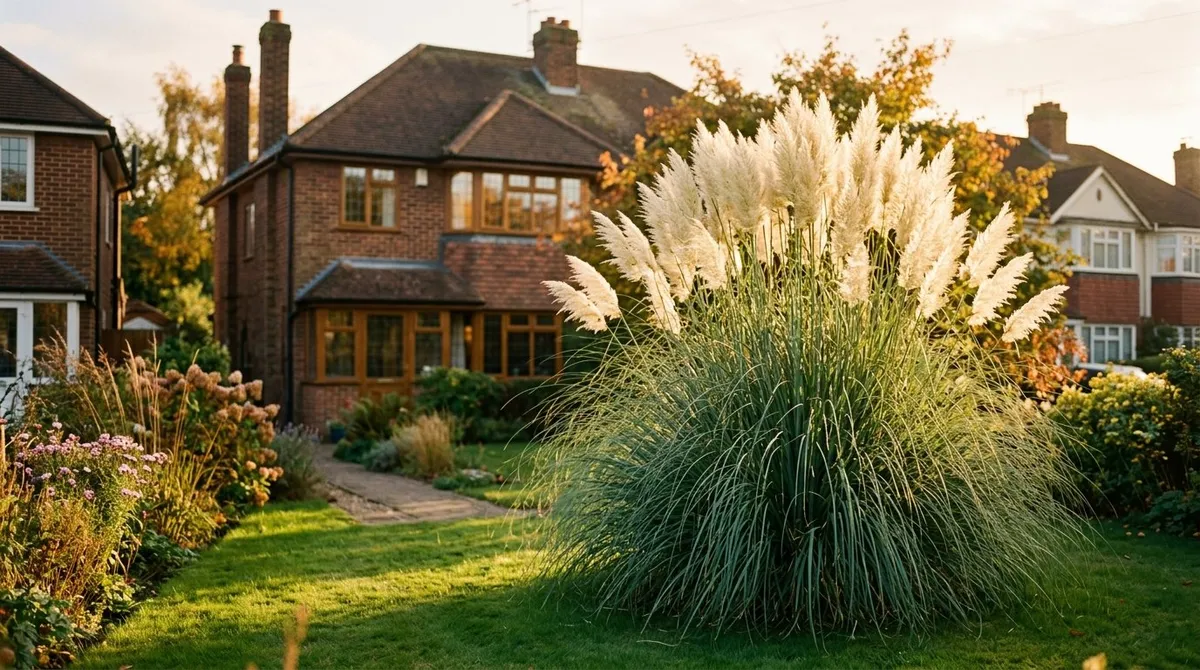
Pampas grass is easy to grow. The tricky part is keeping it in proportion. The full-size plant sends 2.5-3m plumes up from a clump that can reach 2m across, so the variety and spot you choose matter more than anything else.
Pick the right one and it gives you a big autumn show for very little work. This guide covers choosing a variety, planting, cutting back safely and drying the plumes for indoors.
How big does pampas grass actually get?
The full-size species reaches 2.5-3m in flower on a clump up to 2m across. Most pampas regrets start with a small pot planted in a narrow border. A few years later it swallows the path and turns pruning into a battle.
If your border is less than about 3m deep, grow dwarf ‘Pumila’ instead. Save the full-size plant for an island bed in a lawn, a big gravel garden or a far corner where you can admire it from a distance. In the right spot, it lives for many years with one tidy-up a year.
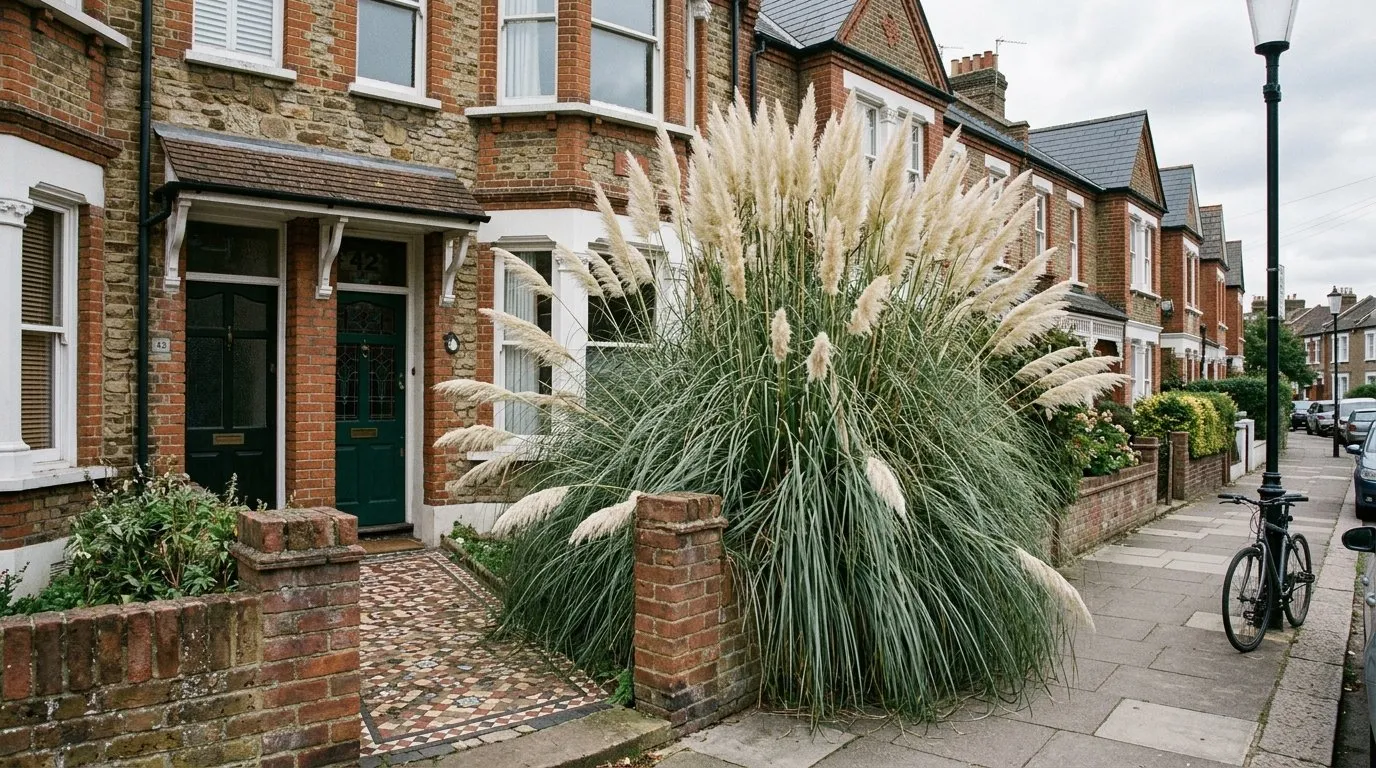
The classic mistake: a full-size pampas in a tiny front garden. ‘Pumila’ would have fitted for good.
Which pampas grass variety should you choose?
For most gardens, choose ‘Pumila’. Named varieties also behave far better than cheap unnamed seedlings, which vary a lot in size and flowering.
| Variety | Height in flower | Why choose it |
|---|---|---|
| ’Pumila’ (AGM) | About 1.5m | Dwarf and free-flowering, right for most gardens |
| ’Sunningdale Silver’ (AGM) | Up to 3m | Huge loose silver plumes for a big open spot |
| ’Rosea’ | 2-2.5m | Plumes with a soft pink flush |
| ’Aureolineata’ (AGM) | About 2m | Gold-edged leaves that look good all year |
| Cortaderia richardii (AGM) | About 2.5m | Earlier, arching, more graceful plumes |
AGM means the RHS Award of Garden Merit, given to plants that perform reliably. Cortaderia richardii, the New Zealand toetoe, flowers earlier in summer and sways in the wind. It is a little less hardy, so give it shelter in cold inland gardens.
Want height without the sharp leaves? Miscanthus gives tall feathery plumes on softer foliage. Our ornamental grasses guide compares the main garden grasses by height and site.
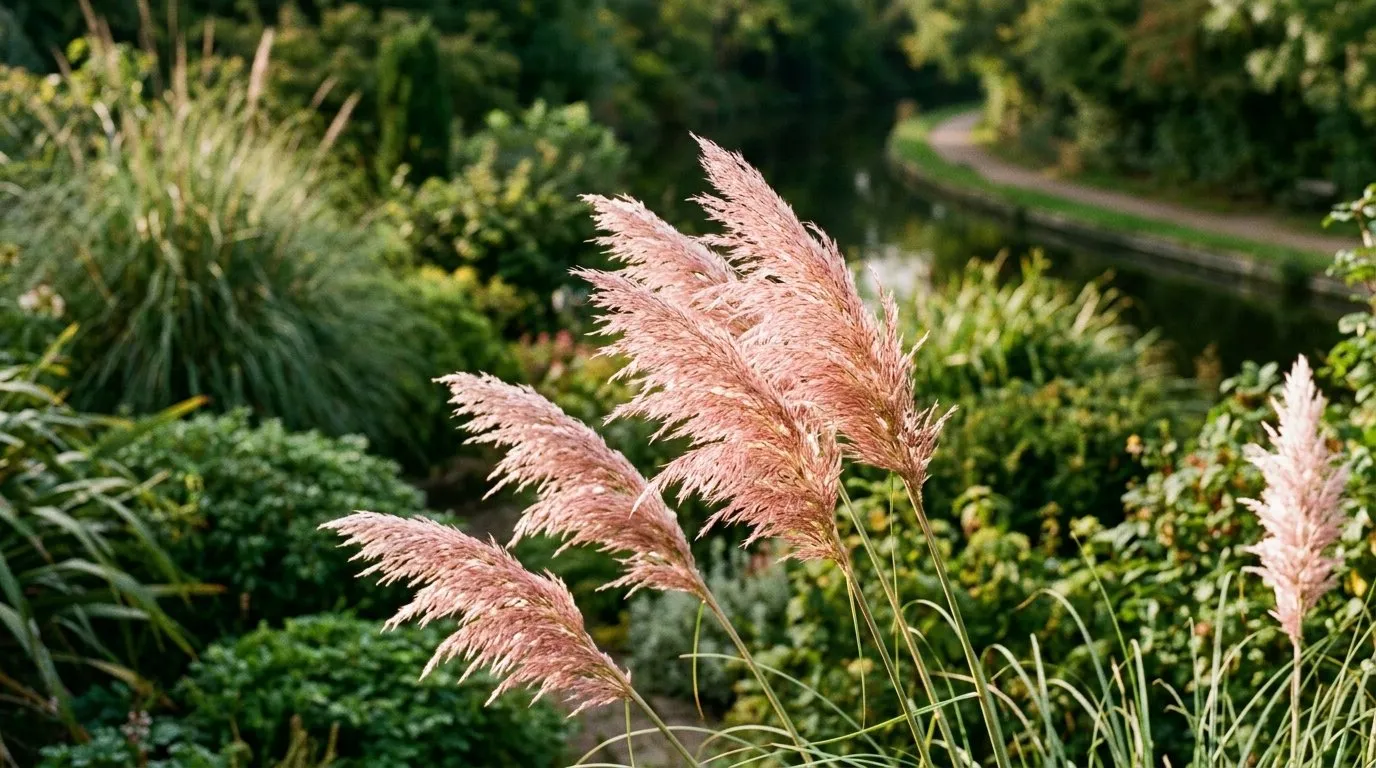
‘Rosea’ has a soft pink flush that’s at its best in early autumn before fading to silver.
Where should you plant pampas grass?
Plant pampas grass in full sun and free-draining soil. It copes with dry spells, wind and salty seaside air once established. Shade and heavy, wet clay are what it hates.
Keep it at least 1.5m from paths, washing lines and play areas, because the leaf edges cut skin. Keep it away from low windows too, as it will block them within a few years. Our drought-tolerant plants guide lists partners that like the same dry, sunny conditions. For a shady spot, grow hakonechloa instead and save the sun for pampas.
When is the best time to plant pampas grass?
Plant in spring, April to May. Autumn planting is risky, because young plants sit in cold, wet soil all winter and the crown can rot before it roots.
Spring planting gives a whole warm season to settle in. Water well after planting, then water weekly through the first summer in dry spells. In cold areas, tuck a loose layer of dry straw around (not over) the crown for its first winter. After that, it looks after itself.
Growing pampas grass in a small garden or pot
Grow ‘Pumila’ and treat it as a feature plant, not a filler. At about 1.5m it fits a suburban border, flanks a drive or anchors the corner of a new-build plot without threatening the fence.
It will grow in a pot, but it’s hard work. Use a container of at least 50 litres filled with John Innes No 3 and a few handfuls of grit. Stand it in full sun and water weekly from June to September. Expect fewer, shorter plumes than in the ground, and refresh the top 5cm of compost each spring.
If even ‘Pumila’ feels big, try a lighter grass. Stipa gigantea sends tall golden oat-like heads over a low clump you can see through. Pennisetum gives soft bottlebrush heads from late summer on a much smaller plant.
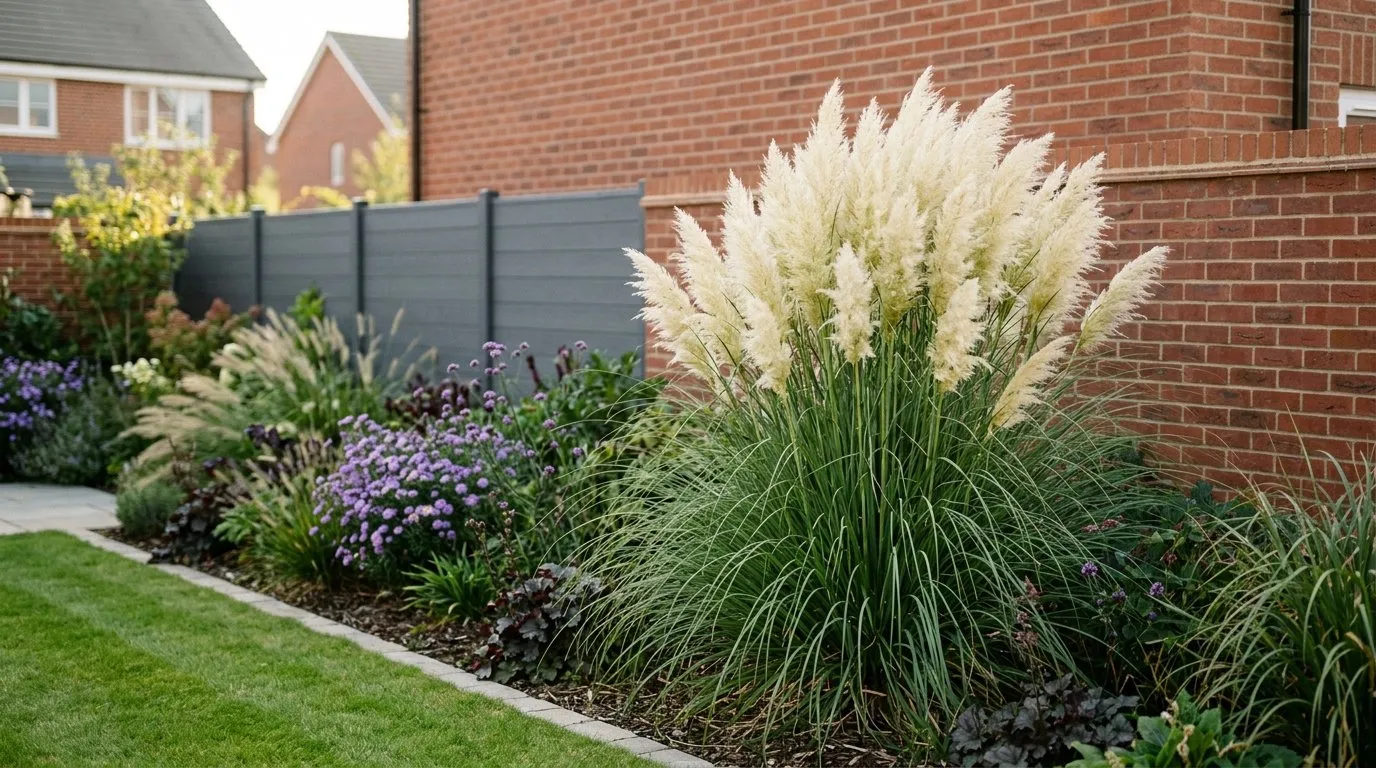
‘Pumila’ gives you the plumes in about half the height, which is perfect for a new-build border.
How to cut back pampas grass safely
Cut back in late winter, February to early March, before new shoots grow long. Take the old plumes and dead leaves down to 30-40cm with shears or a hedge trimmer. Then comb out the loose dead growth with gloved hands. Don’t cut into fresh green shoots at the base.
Wear gauntlet gloves, long sleeves and eye protection. The leaf edges are sharp enough to cut skin.
Gardener’s tip: Tie the clump into a tight bundle with rope at about chest height before you cut. The leaves then come away in a few neat armfuls instead of a loose, prickly heap.
Never set fire to pampas grass. It’s an old trick, but fires easily get out of control and spread to fences and hedges. Hedgehogs and other wildlife also shelter in the dry base of the clump over winter, so check the base gently before you start. Our guide to a hedgehog-friendly garden has more on keeping them safe.
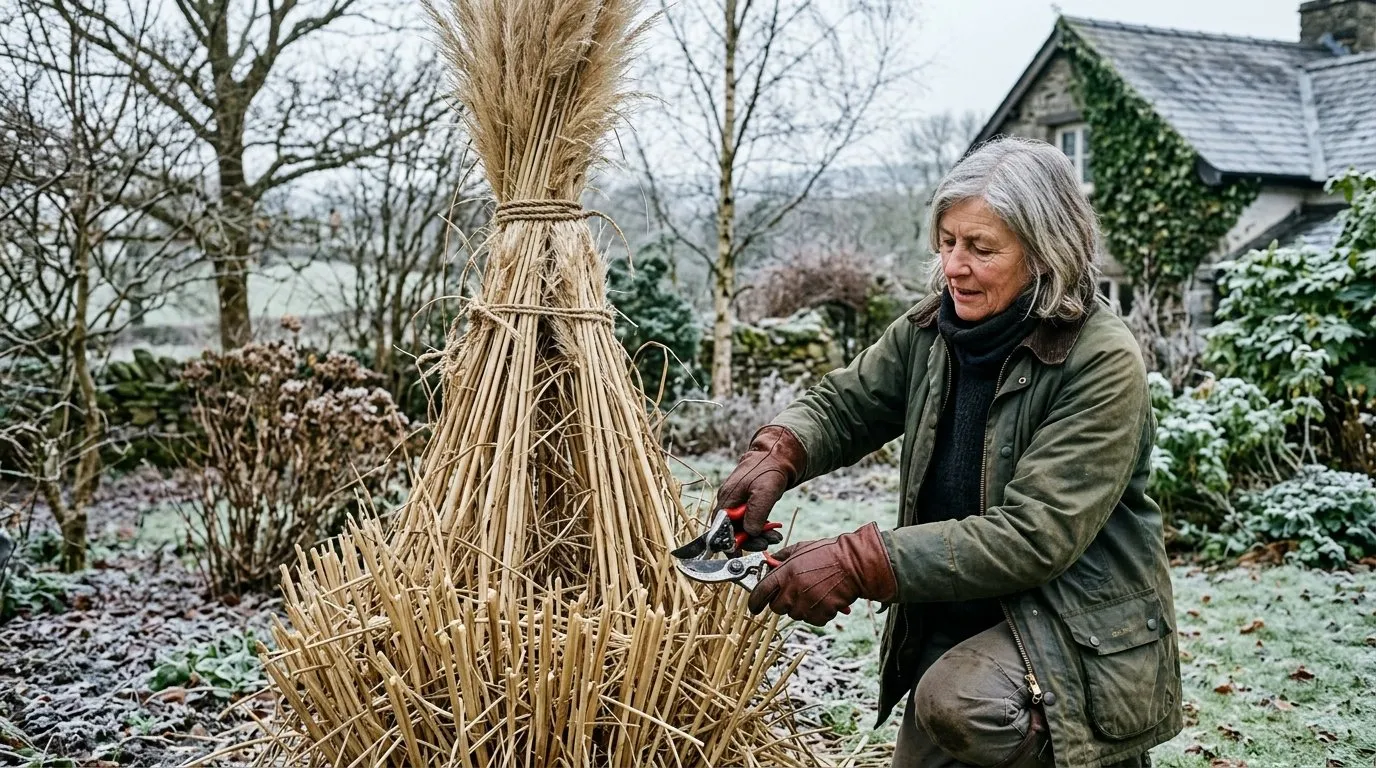
Tying the clump first makes cutting back much quicker, and gloves keep your hands in one piece.
How to divide pampas grass
Division in spring is the easiest way to get more plants. Seed-raised plants vary a lot in size, so they are a gamble.
Wait until new growth is just showing in April. Use a sharp spade to slice rooted sections off the edge of the clump. Each piece needs shoots on top and a good handful of roots below. Replant straight away at the same depth and water weekly for the first month. Wear gloves throughout.
How to dry pampas grass plumes
Cut plumes in early September, just before they fully fluff out. Plumes cut later shed all over the house.
- Choose a dry morning and cut stems about 60-90cm long.
- Strip off the leaves, wearing gloves.
- Tie the stems in bunches of five or six.
- Hang them upside down somewhere warm, dry and airy, such as a dry shed.
- Leave for two to three weeks until stiff.
A light mist of hairspray helps stop the plumes shedding. Display them dry in a vase, with no water.
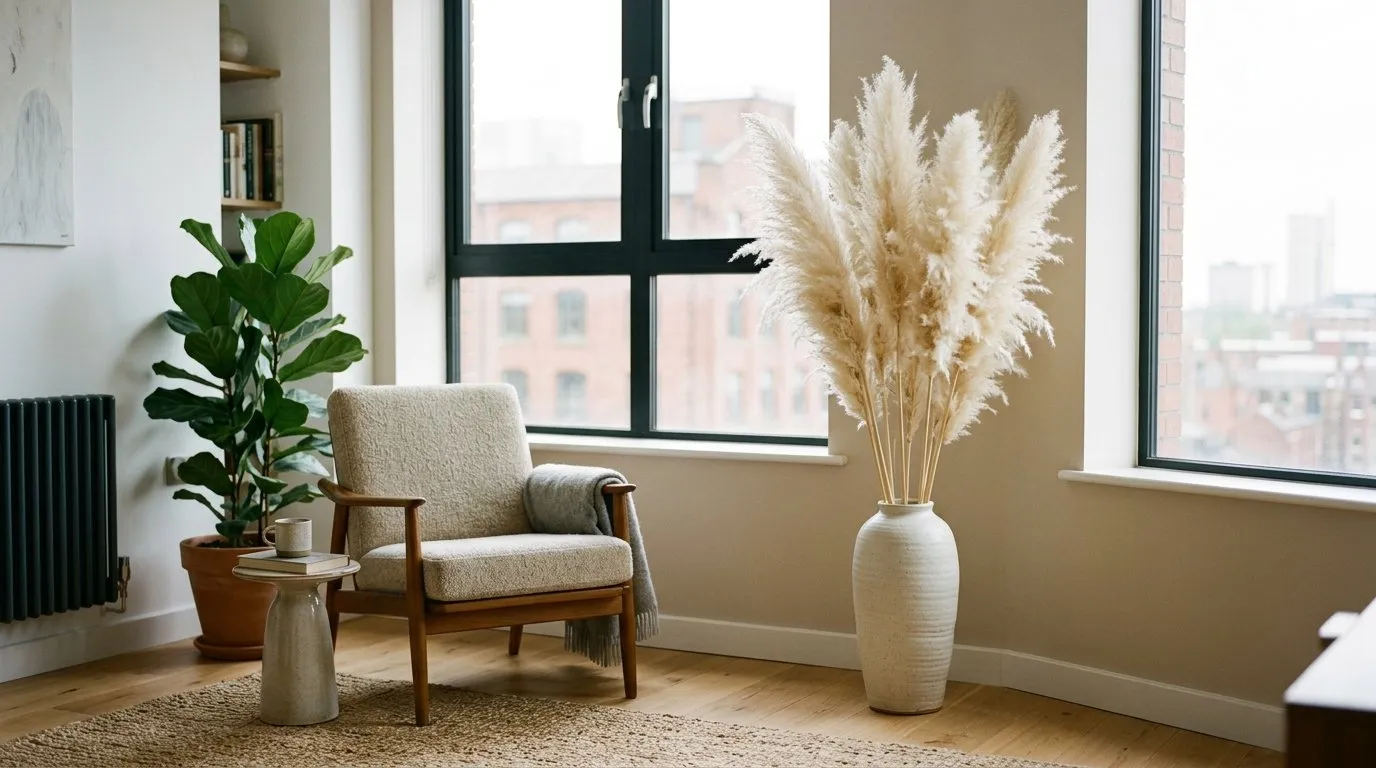
Plumes cut in early September and dried upside down hold their shape for a long time indoors.
Does pampas grass self-seed in the UK?
Not often, but it can. Many garden pampas plants are female, so they set little seed without a male plant nearby. Seedlings do sometimes appear in the wild, especially on coastal dunes and waste ground in the south.
If you garden near dunes, heath or open countryside, cut the plumes off by late winter so they can’t scatter seed. You lose nothing, as the plumes are looking tatty by then anyway. Sticking with named varieties helps too.
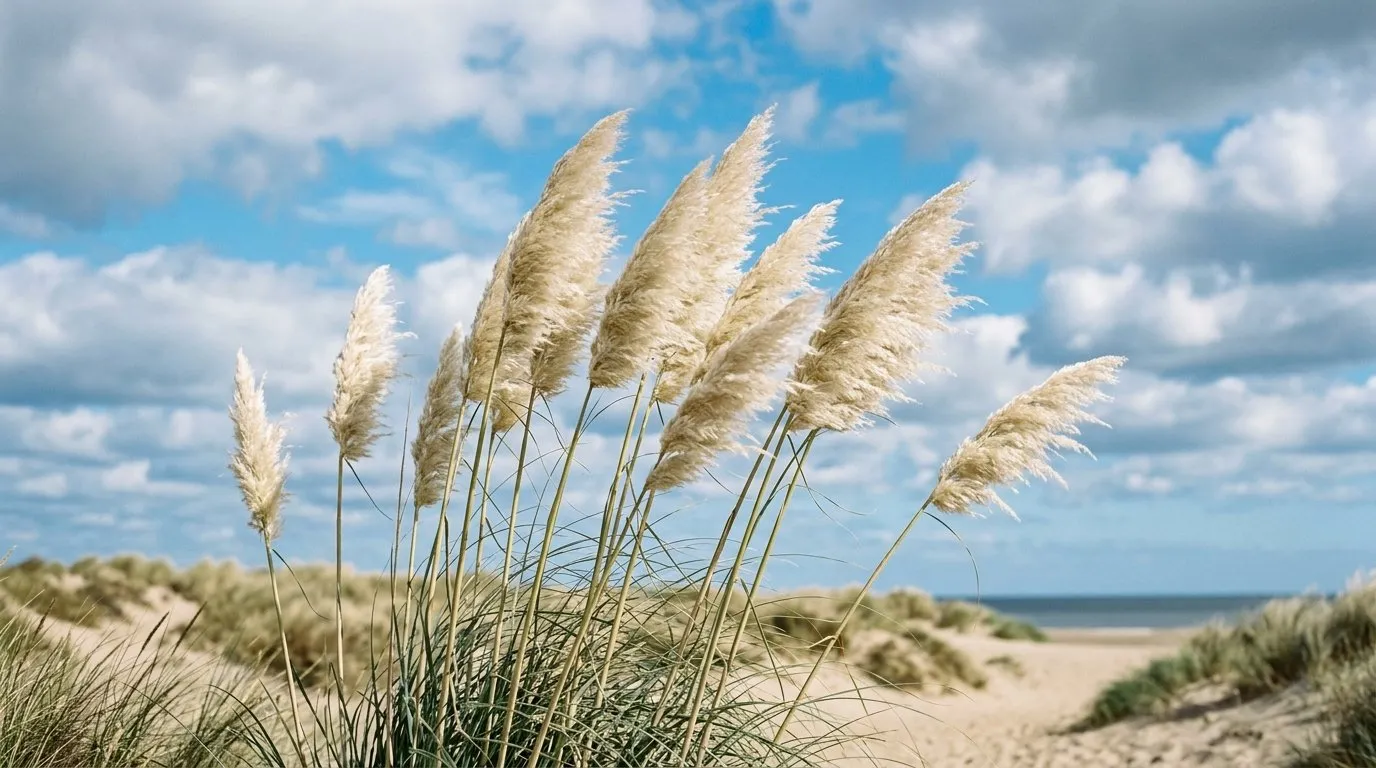
Pampas loves seaside conditions, which is exactly why coastal gardeners should cut the plumes before they shed seed.
Pampas grass through the year
| Month | Task |
|---|---|
| February to early March | Cut back to 30-40cm with gloves on |
| April to May | Plant new clumps and divide old ones |
| June to August | Water young and potted plants in dry spells |
| September | Plumes open. Cut some for drying |
| October to January | Enjoy the plumes. Leave the clump standing for winter |
Common mistakes with pampas grass
- Planting the full-size species in a small border. Check the final size first and choose ‘Pumila’ for small spaces.
- Planting in autumn. Young plants can rot in cold, wet soil. Wait until spring.
- Cutting back without gloves. The leaf edges cut skin, so cover up.
- Burning the clump. It’s dangerous and harms wildlife sheltering inside.
- Growing it in shade. It needs full sun to flower well.
Once your pampas is sorted, see our pick of the best plants for winter seedheads for more winter structure, or browse the plants hub for ideas.
Frequently asked questions
Does pampas grass come back every year?
Yes, pampas grass is a long-lived evergreen perennial. The leaves stay through winter and the plumes often hold into February. It is fully hardy in the UK once established. Young plants in cold, wet soil are the only ones really at risk.
How long does pampas grass take to flower?
Expect the first good plumes two to three years after planting. A young plant makes a leafy clump in its first summer and may flower lightly in its second. Feeding won’t hurry it. Sun and drainage matter far more.
Is pampas grass invasive in the UK?
It can self-seed, but it is legal to plant in UK gardens. Many garden plants are female and set little seed on their own, but seedlings do sometimes turn up in the wild, especially near the coast. If you live near dunes, heath or open countryside, cut the plumes off by late winter.
Can you grow pampas grass in a pot?
Only the dwarf ‘Pumila’, in a pot of at least 50 litres. Use John Innes No 3 with some grit, stand it in full sun and water weekly in summer. The full-size species gets far too big for any pot you can move.
When should you cut back pampas grass?
Cut back in late winter, February to early March, before new growth starts. Take plumes and dead leaves down to 30-40cm, then comb out the loose dead stuff. Wear gauntlet gloves and long sleeves, as the leaf edges are sharp. Never set fire to the clump.
Why is my pampas grass not flowering?
Usually it is too shady or still too young. Pampas grass needs full sun for most of the day, and new plants take two to three years to flower. Rich feeding makes leaves rather than plumes. Move it to a sunnier spot, or simply give it time.
Our team produces practical UK gardening guidance from source research, contributor records and established horticultural practice. Editorial standards are overseen by Matt W.