
Key takeaways
- Golden oats (S. gigantea) sends up 2m stems of golden, oat-like heads from June
- Mexican feather grass (S. tenuissima) self-seeds freely, so cut the heads off in July if that worries you
- Every Stipa needs sun and free-draining soil, as wet winter clay rots them
- Don't cut golden oats hard. Just pull out old stems and dead leaves in March
- Split tired clumps of Mexican feather grass in April every 3-4 years
- Lavender, Verbena bonariensis and Echinacea make lovely partners
Stand next to a drift of feather grass on a breezy evening and you’ll see why garden designers use so much of it. The whole lot moves like water, and when the sun is low it lights up gold. It’s also one of the easiest plants you can grow, as long as you give it the one thing it insists on: sun and soil that drains.
There are three Stipa you’re likely to come across in UK garden centres. Golden oats (S. gigantea) is tall and dramatic, Mexican feather grass (S. tenuissima) is soft and low, and pheasant’s tail (S. arundinacea) sits in between with fiery autumn colour. Here’s how to choose between them and keep them happy. For more grasses, see our ornamental grasses guide.
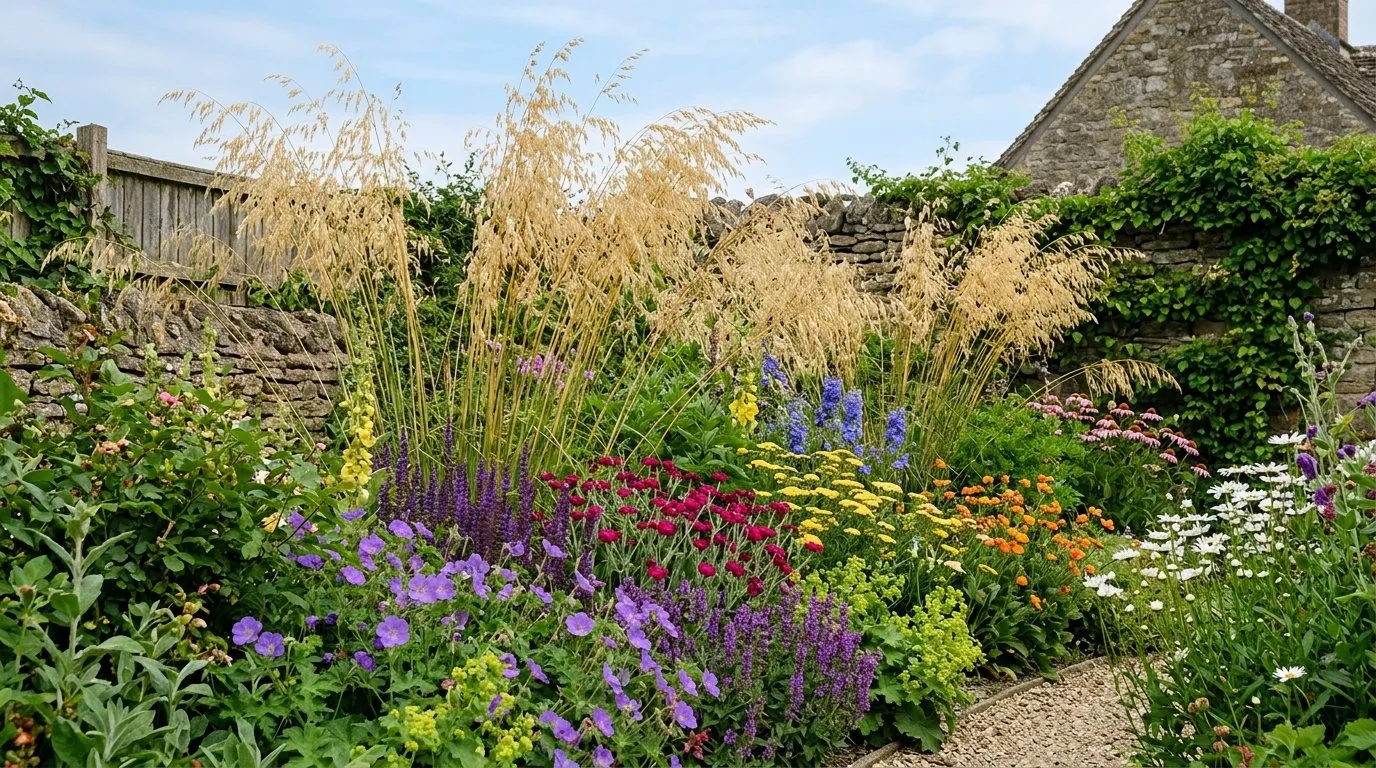
Golden oats sends up tall stems of golden, oat-like heads from a low clump of leaves.
Which Stipa should I grow?
Choose by height, and by how relaxed you are about self-seeding.
Golden oats (Stipa gigantea) is the showstopper. From a low, tidy clump of leaves it sends up flower stems around 2m tall from June. The heads open purple-green and turn a shimmering gold, and they hang on into winter. It’s fully hardy, needs no hard pruning and is happy to be left alone for years.
Mexican feather grass (Stipa tenuissima) makes a soft, hair-fine tuft about 60cm tall that ripples in the lightest breeze. Pale green flowers in June fade to straw-blonde by August. Botanists have moved it to Nassella tenuissima, but you’ll still find it sold as Stipa. Each plant only lasts a few years, but it self-seeds so freely that you’ll rarely be without it.
Pheasant’s tail grass (Stipa arundinacea) grows to about 1m, with arching leaves that turn bronze, orange and copper through autumn and winter. It has a newer name too, Anemanthele lessoniana, though most nurseries still label it Stipa. It’s the only one of the three that copes with a bit of shade.
| Type | Height | Leaves | Self-seeding |
|---|---|---|---|
| Golden oats (S. gigantea) | Up to 2m in flower | Semi-evergreen clump | A little |
| Mexican feather grass (S. tenuissima) | About 60cm | Fine tuft, dies back | Lots |
| Pheasant’s tail (S. arundinacea) | About 1m | Evergreen, arching | Some |
How to plant Stipa feather grass
April or May is the best time. The soil is warming up and the roots have all summer to settle before winter. Golden oats can also go in during autumn, but Mexican feather grass planted then often rots in cold, wet ground. All three want full sun.
Dig a hole twice as wide as the pot and the same depth. On heavy soil, mix what you dig out half and half with horticultural grit. Set the plant so the crown, where leaves meet roots, sits level with the soil surface. Plant it deeper and it’s likely to rot. Firm it in gently, water well, then mulch with gravel. Bark and compost hold moisture against the crown, which is exactly what you don’t want.
How far apart:
- Golden oats: 80cm to 1m, usually as single plants
- Mexican feather grass: groups of three to five, about 30cm apart
- Pheasant’s tail: about 60cm
They all grow happily in pots. Use a loam-based compost such as John Innes No. 2 with some grit or perlite stirred in, and make sure the drainage holes are clear. Mexican feather grass makes the best pot plant, since it stays compact and spills over the rim.
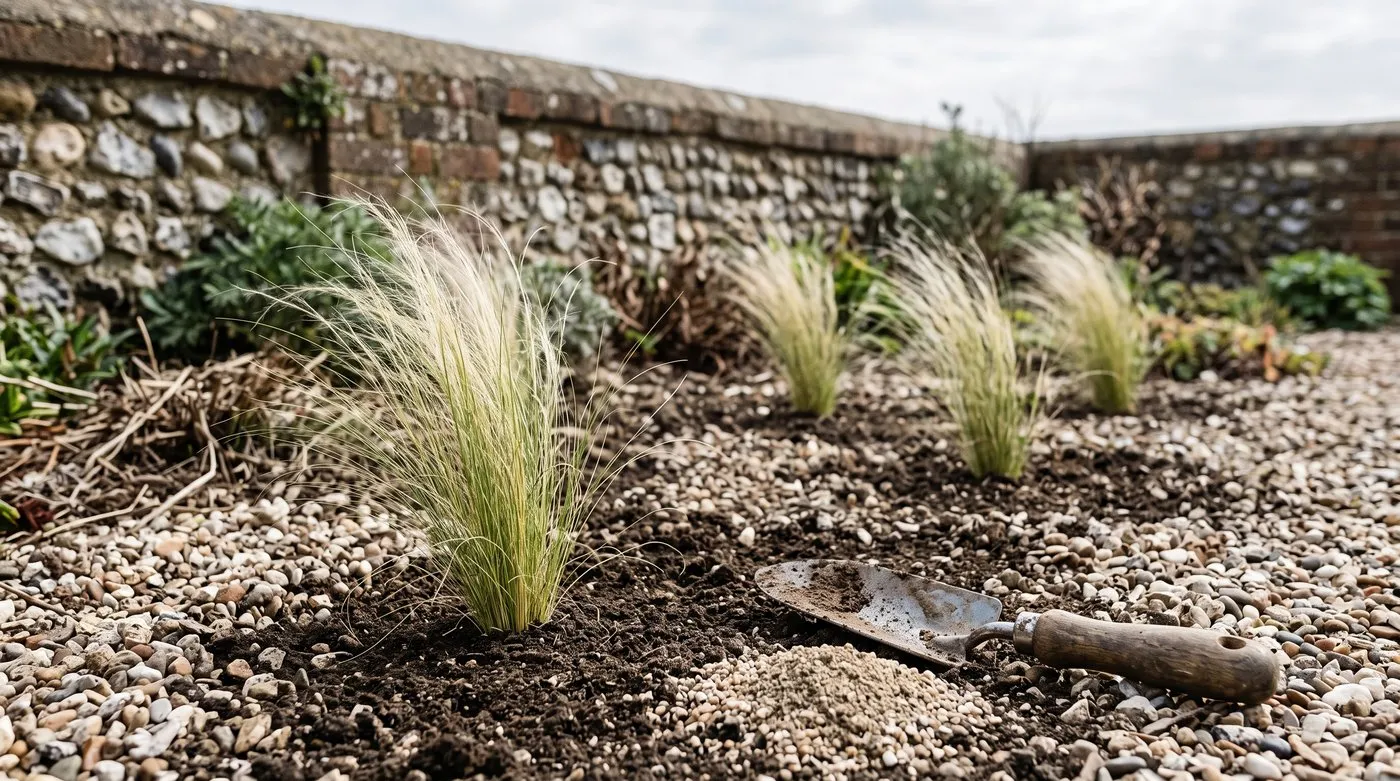
Keep the crown level with the soil and mulch with gravel, not bark. Wet mulch against the base is what makes Stipa rot.
What soil does Stipa need?
Free-draining soil. A winter sat in cold, wet ground kills far more Stipa than frost ever does. Sandy and chalky soils suit them as they are, but clay needs some work first.
On heavy clay, dig a hole about 40cm wide and 30cm deep and refill it with the soil mixed half and half with sharp grit. That gives the roots a free-draining pocket. A raised bed of gritty compost is more reliable still. Our guide to plants for sandy soil has plenty more plants that enjoy the same dry, lean conditions.
Resist the urge to spoil them. Rich soil and fertiliser give soft, lush growth that flops over in the first heavy shower. Thin, poor soil keeps them upright and airy, so leave the feed in the shed.

Mexican feather grass seeds itself happily into gravel. Lovely, but keep an eye on it.
Does Mexican feather grass spread too much?
On warm, dry soil, it can. It isn’t classed as invasive in the UK, but it self-seeds very freely. Gravel, paving cracks and the tops of dry walls are its favourite spots, and the seedlings start appearing from late spring. On cold, wet clay most of them never make it, so there it behaves itself.
To keep numbers down, cut the flower stems off in July before the seed ripens. Or wait until spring and pull the seedlings while they’re small; they come out easily. In a gravel garden, a lot of people are glad of the self-seeding because it gives a relaxed, natural look and fills gaps for free. Next to a formal border, or anywhere it could wander into wild land, keep on top of it.
If you love the look but not the seedlings, choose golden oats. It seeds far less and stays put as a neat clump.
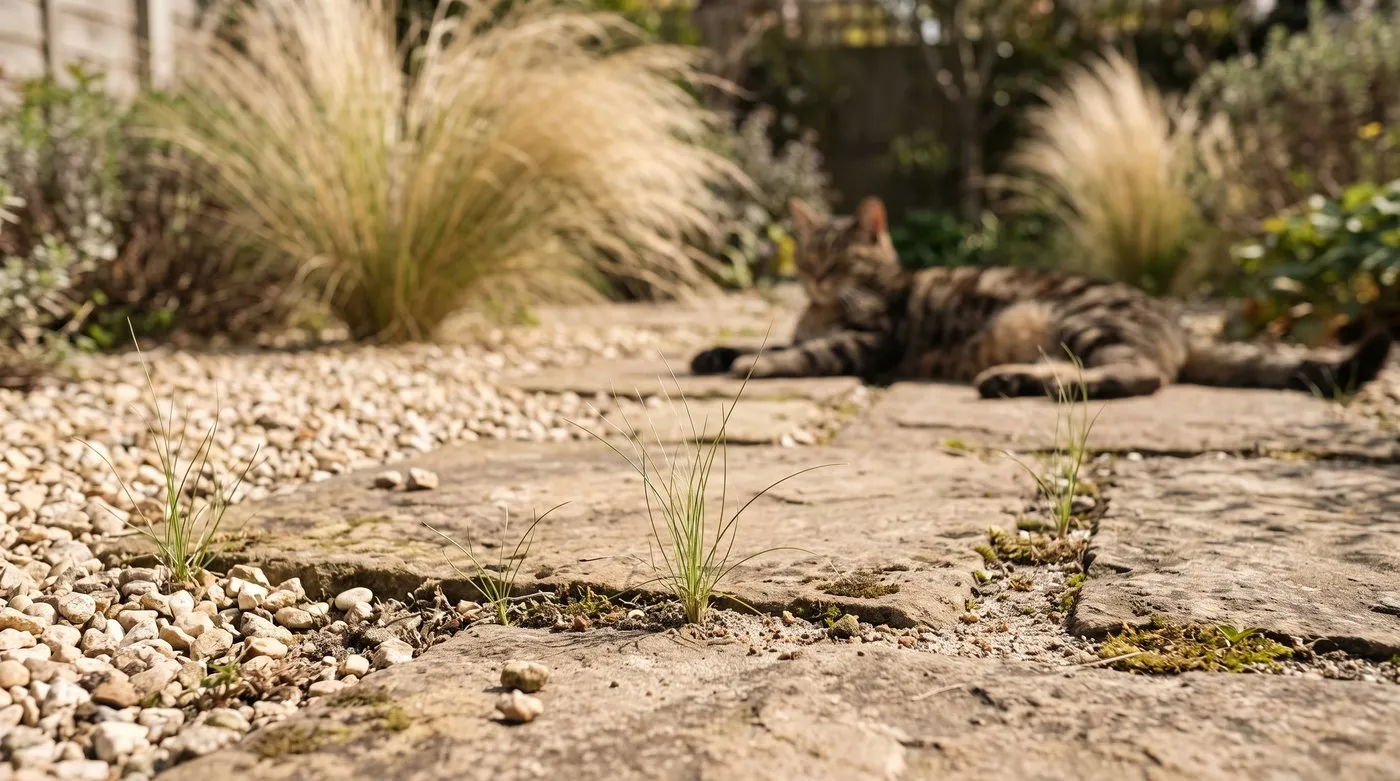
Seedlings are easy to spot and pull in spring while they’re small. Cutting the flower stems before late July stops most of them.
How to cut back Stipa grass
This is where people go wrong, because each type wants something different. Cutting the wrong one hard can kill it. Check the label before you pick up the shears.
Mexican feather grass. Cut the whole tuft down to about 10cm in late February, before new growth starts. Shears are fine. After three or four years the middle dies out, and then it’s time to divide it or swap it for a self-sown youngster.
Golden oats. Never cut the clump of leaves hard. In March, cut the old flower stems off at the base. Then put on a pair of gloves and comb your fingers through the leaves to pull out the dead ones. It’s a satisfying ten-minute job.
Pheasant’s tail. Leave it standing all winter, since the bronze colour is half the reason to grow it. In April, trim it to about 30cm and tug out the oldest, brownest leaves.
Our Chelsea chop guide covers cutting back other perennials in late spring. Don’t try it on Stipa, though. Its flower stems come up from the base, so a chop just removes this year’s flowers.
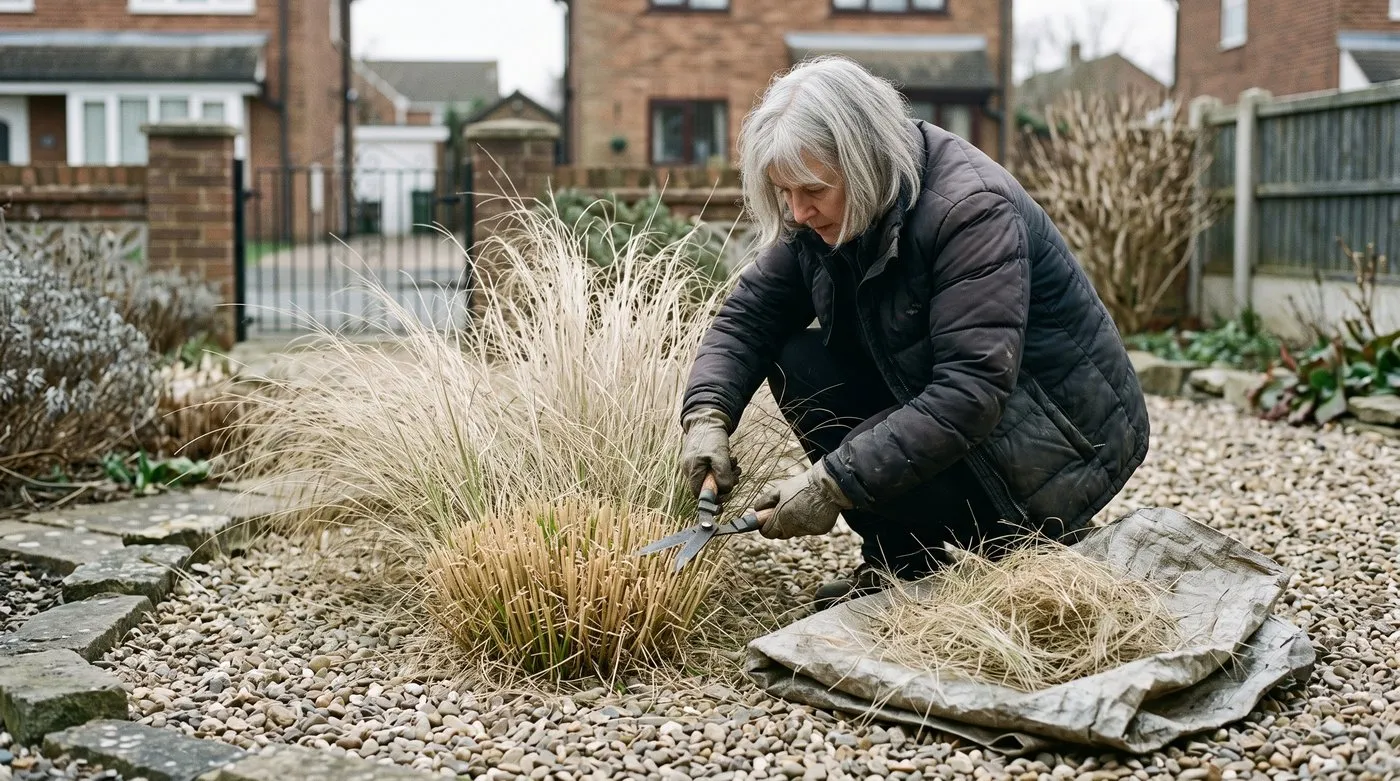
Mexican feather grass is the one to cut back hard, before new growth starts. Golden oats should never be cut this way.
How to divide Stipa grasses
Mexican feather grass benefits from dividing every three or four years, in April. Lift the clump with a fork and pull or cut it into pieces, each with roots and some green shoots. Throw the dead brown middle on the compost heap. Replant at the same depth, water in and mulch with gravel.
Golden oats really doesn’t like being disturbed and seldom needs dividing. If you have to move one, do it in April with as big a rootball as you can manage. Expect it to sulk for a season before it flowers properly again.
Pheasant’s tail divides easily in spring into three or four chunks.
If you’re growing a particular named variety, divide it rather than relying on seedlings, which may not look quite like the parent.
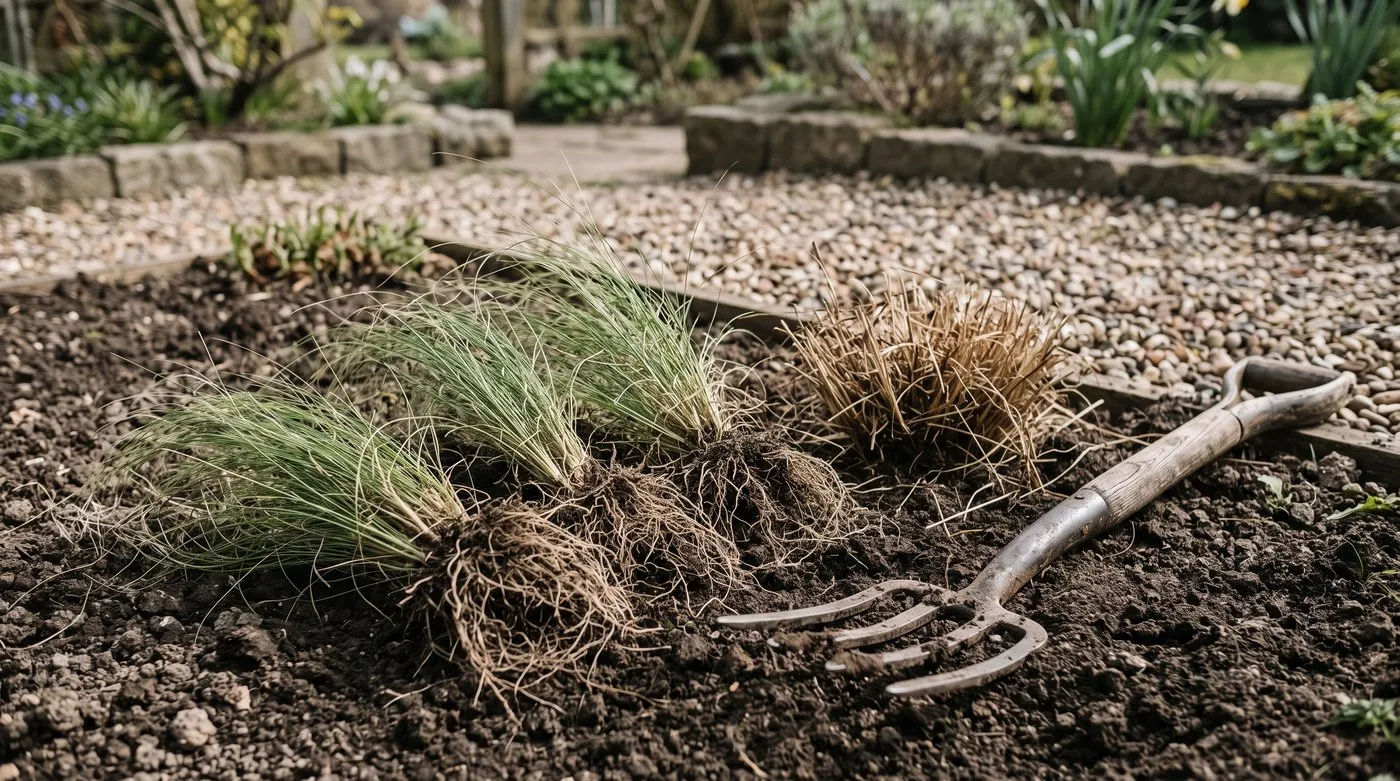
Throw away the dead brown middle and replant the healthy outer pieces at the same depth. Water them in and add a gravel mulch.
Best companion plants for Stipa grasses
Put Stipa with other plants that like sun and sharp drainage. The airy grass looks its best against solid flower shapes and chunky leaves.
| Stipa | Good partners | Style |
|---|---|---|
| Golden oats | Verbena bonariensis, Crocosmia, Echinops | Prairie border, see-through screen |
| Mexican feather grass | Lavender, Eryngium, Sedum, Salvia nemorosa | Gravel garden, Mediterranean |
| Pheasant’s tail | Heuchera, Astilbe, Japanese anemone | Woodland edge, part shade |
In mixed border planting combinations, Mexican feather grass softens the gaps between roses and hardy geraniums. In gravel it sits beautifully with Echinacea, Achillea and self-seeding Verbascum.
In cottage garden schemes, golden oats works as a tall, see-through layer. You can put it surprisingly close to the front, because you look straight through the stems to the planting behind.
Of all the best perennials for UK gardens, Stipa grasses need about the least attention once they’re in the right spot.
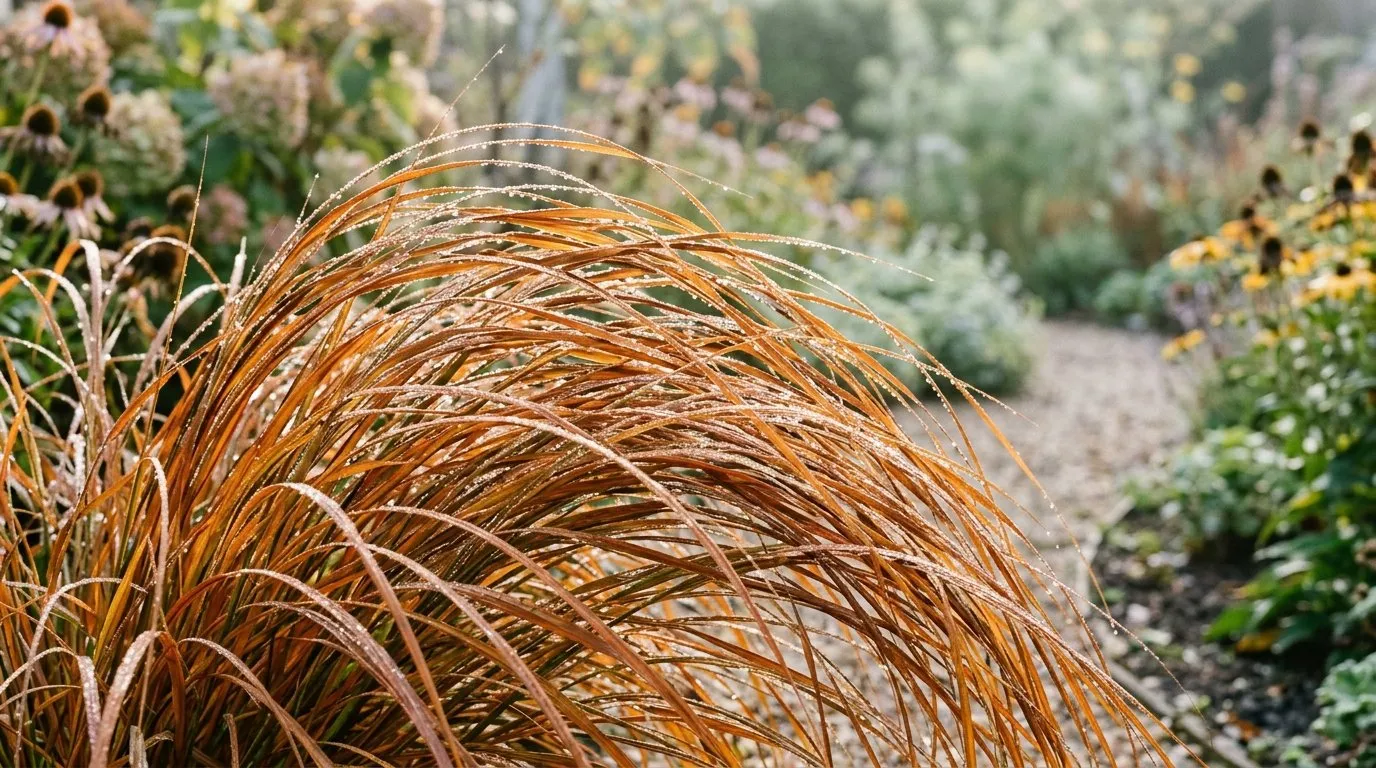
Pheasant’s tail grass turns bronze and copper through autumn, which is how it got its name.
Where to use Stipa in the garden
Gravel gardens, prairie-style borders and sunny patios are where Stipa really comes into its own.
Gravel gardens. Mexican feather grass is the classic choice. Plant drifts of five to seven between stepping stones with Verbena bonariensis and drumstick alliums, and let the self-seeding fill the gaps. The Beth Chatto gravel garden in Essex made this style famous, and it’s never watered, which tells you how tough these plants are.
Prairie borders. Golden oats makes a brilliant see-through screen in the middle of a border, especially where low evening light catches the stems from behind. Add Rudbeckia, Sanguisorba and Helenium for late colour.
Pots and courtyards. A pair of terracotta pots of Mexican feather grass either side of a door looks smart, and rosemary or lavender alongside gives it a Mediterranean feel. Use gritty compost and never leave the pots standing in saucers of water.
Common Stipa problems
Wet soil is the main one. Sort the drainage and these grasses are close to trouble-free.
Rotting at the base. Leaves yellow and collapse from the bottom up. Wet soil or mulch piled against the crown is the cause. Plant in free-draining soil and use gravel as the only mulch.
Dead middle. Mexican feather grass browns in the centre after a few years. That’s old age rather than disease. Divide it in spring or replace it with a seedling.
Flopping. Too much feed or too much shade. Move it into sun and stop feeding.
Rust. Orange spots sometimes show up on pheasant’s tail leaves in a damp summer. Pull off the worst leaves and give the plant more space. It rarely does any lasting harm.
Pests hardly touch Stipa, and rabbits and deer tend to leave it alone, which makes it a useful choice for a rural garden.
Frequently asked questions
Is Stipa tenuissima invasive in the UK?
It isn’t classed as invasive, but it does self-seed with enthusiasm. On warm, dry, gravelly ground you’ll find seedlings in paving cracks and along paths. Cut off the flower heads in July before the seed ripens, or pull seedlings in spring while they’re tiny. On cold, wet clay it hardly spreads at all.
When should I cut back Stipa grass?
That depends on which one you have. Cut Mexican feather grass down to 10cm in late February. Never cut golden oats hard; in March, remove the old flower stems and comb out dead leaves by hand. Trim pheasant’s tail grass lightly to about 30cm in April.
Can Stipa grow in clay soil?
Only once you’ve sorted the drainage. Mix the soil from the planting hole half and half with horticultural grit, or use a raised bed filled with gritty compost. Golden oats copes with heavier ground better than Mexican feather grass, which is the most likely to rot in a wet winter.
How tall does Stipa gigantea grow?
The flower stems reach about 1.8 to 2m. They rise from a low clump of leaves about 60-70cm high. The oat-like heads appear in June, open purple-green, turn gold and hang on well into autumn.
How do I divide Stipa grasses?
Divide them in April as new growth starts. Lift the clump with a fork, pull it into pieces that each have roots and green shoots, and throw away the dead middle. Replant at the same depth and water in. Golden oats resents disturbance, so leave it alone unless you must move it.
What plants go well with Stipa grasses?
Anything else that loves sun and sharp drainage. Lavender, Verbena bonariensis, Echinacea, Salvia nemorosa and Eryngium are all good. In gravel, try Mexican feather grass with Sedum and Achillea. Golden oats looks great with Crocosmia, Rudbeckia and Sanguisorba in late summer.
Does Stipa tenuissima come back every year?
Yes, but each plant only lives a few years. After 3-5 years the clump browns in the middle and fades. It self-seeds so freely, though, that a sunny, well-drained spot usually has young plants ready to take over.
Our team produces practical UK gardening guidance from source research, contributor records and established horticultural practice. Editorial standards are overseen by Matt W.


