
Key takeaways
- Tall grasses like Miscanthus and Stipa gigantea make striking focal points and see-through screens
- Stipa tenuissima is a soft, swaying favourite for gravel gardens and borders
- Cut deciduous grasses back to 10-15cm in late February or early March
- Comb out evergreen grasses like Festuca glauca instead of cutting them
- Divide clumps every few years in spring when the middle starts to die
- Most grasses love sun and free-draining soil, and don't need feeding in the ground
Ornamental grasses bring movement, sound and structure to a garden all year. A single clump of Stipa gigantea catching the evening light can turn an ordinary border into something special. There’s a grass for every spot, from tall Miscanthus screens to little Festuca edging a path.
Grasses ask for very little. Give them sun, free-draining soil and a yearly trim, and they’ll shrug off drought and poor soil and rarely suffer pests. For more tough plants for dry spots, see our guide to drought-tolerant plants. And for winter, grasses are among the best plants for winter seedheads.
Tall grasses (1.5m and above)
Tall grasses make a bold statement. Use them as a centrepiece, a natural screen or a backdrop behind lower plants. Plant them where they catch low evening sun for the best show. For the biggest grass of all, our pampas grass growing guide covers Cortaderia selloana and its huge plumes.
Miscanthus sinensis is the king of tall grasses. It reaches about 2-2.5m, with arching leaves and silky plumes from September. ‘Malepartus’ has red-bronze plumes that fade to silver. ‘Gracillimus’ has very fine leaves and makes an elegant fountain. ‘Morning Light’ has white-edged leaves that glow in low light. All are fully hardy and grow in neat clumps that don’t run.
Stipa gigantea (golden oats) is one of the most dramatic grasses you can grow. Tall flower stems shoot up from a low, leafy base. The oat-like flowers open purple-green in June and ripen to gold, lasting well into winter. It’s semi-evergreen, so it never needs a hard cut. Just pull out the old flower stems in spring. It makes a lovely see-through screen in a cottage garden planting scheme.
Calamagrostis x acutiflora ‘Karl Foerster’ is the most upright grass going. Its stiff stems stand tall and don’t flop, even in heavy rain. Plumes appear in June, earlier than most, and turn from pinky-bronze to golden buff. It takes up very little ground, so it’s great for tight borders or in rows along a path.
Gardener’s tip: Give tall Miscanthus plenty of room, at least 1m from a fence or wall. The clump gets wide over the years, and it likes air around it. Squeezing one into a narrow gap only causes trouble later.
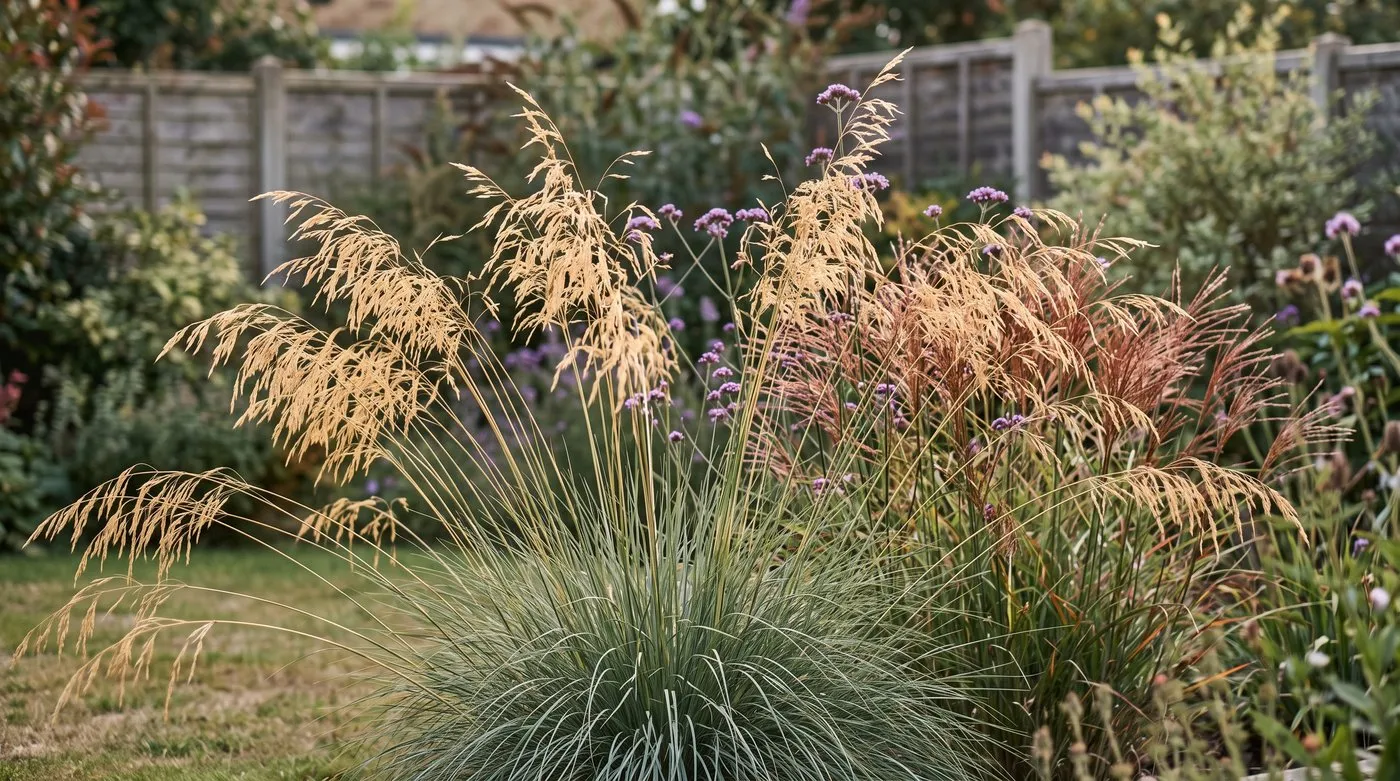
Plant tall grasses where the low evening sun can shine through them. Stipa gigantea is see-through, so it can go nearer the front than you’d think.
Medium grasses (50cm to 1.5m)
Medium grasses are the hard workers of the border. They fill gaps, soften edges and add movement.
Stipa tenuissima (Mexican feather grass) is one of the UK’s favourite grasses. It makes a soft tuft of hair-fine leaves, about 60cm tall, that sways in the lightest breeze. Pale green flower heads appear in June and age to straw-gold. It seeds itself about, which is lovely in gravel but a nuisance elsewhere. Snip off the flower heads before they seed if you want to keep it in check.
Pennisetum alopecuroides (fountain grass) has fluffy bottlebrush flowers from August to October. ‘Hameln’ is a reliable choice, with soft pinky-brown spikes that sparkle with dew on autumn mornings. Give it a warm, sheltered, well-drained spot, especially in colder northern gardens.
Molinia caerulea (purple moor grass) is a British native that loves damp, acid soil where other grasses sulk. ‘Transparent’ has airy, see-through flower heads on wiry stems. ‘Edith Dudszus’ is shorter, with dark purple stems. Both turn lovely colours in autumn.
Deschampsia cespitosa (tufted hair grass) is one of the few grasses that likes some shade. It copes with heavy clay, damp soil and spots under trees. Cloud-like flower heads appear in June. ‘Goldtau’ and ‘Bronzeschleier’ are good named forms. It’s handy for shady garden areas.
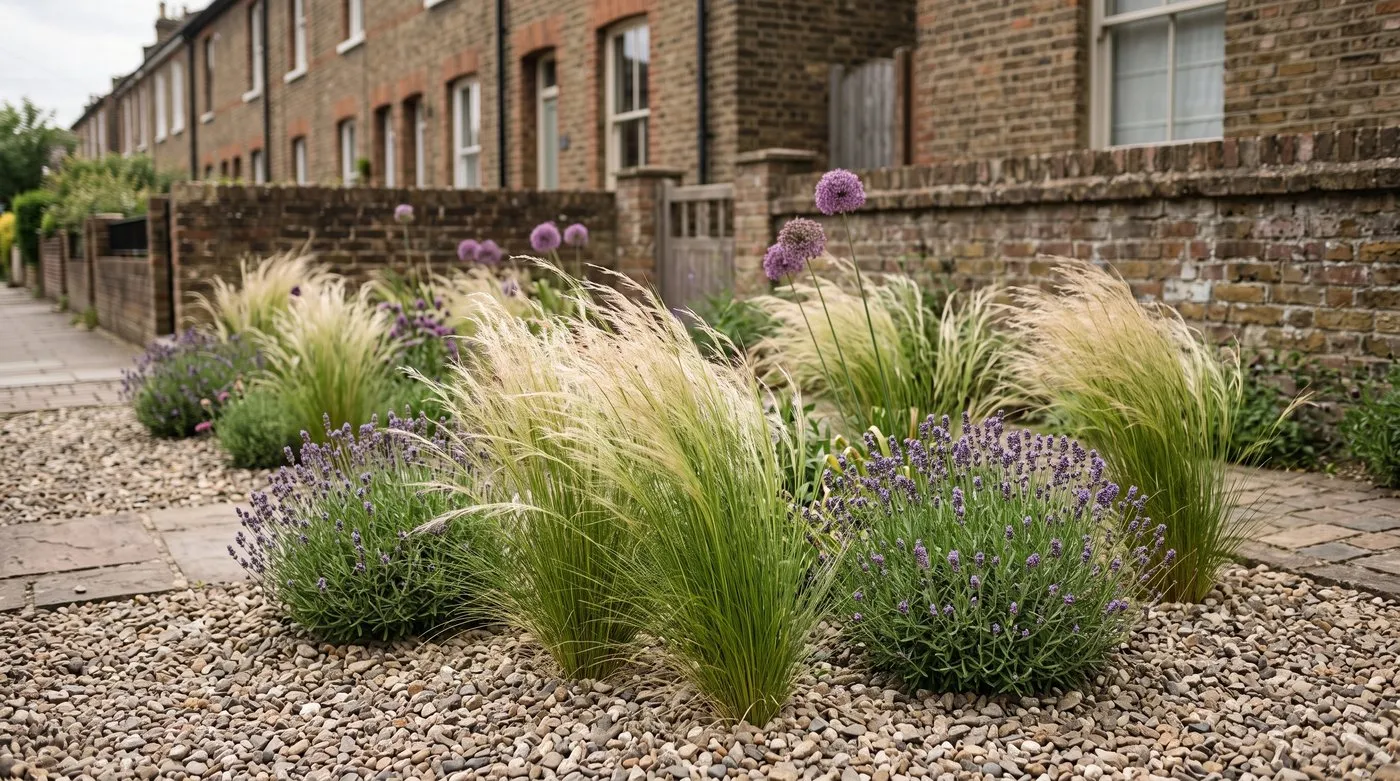
Mexican feather grass loves gravel and seeds itself into it. Snip the heads off before they ripen if you’d rather it stayed put.
Low grasses (under 50cm)
Low grasses are great for ground cover, path edges and pots. They suit small gardens and the front of borders.
Festuca glauca (blue fescue) makes neat, steely-blue domes about 25cm tall and wide. ‘Elijah Blue’ and ‘Intense Blue’ have the best colour. It needs sharp drainage and full sun, and it rots in heavy clay. Grow it in gravel, raised beds or pots. Plants don’t live very long, but they’re easy to replace by dividing.
Hakonechloa macra (Japanese forest grass) is a gorgeous grass for part shade. Its tumbling, bamboo-like leaves turn from fresh green to amber in autumn. ‘Aureola’ has golden striped leaves that light up dark corners. It’s slow to get going but spreads into a lovely carpet over a few years. Give it moist, rich soil and shelter from drying winds.
Carex oshimensis ‘Evergold’ is really a sedge, but it does the same job as a grass. Its cream-and-green striped leaves stay bright all year. At about 30cm tall, it’s great in pots, under shrubs and as edging. It’s hardy and happy in shade, and one of the best low-maintenance plants around.
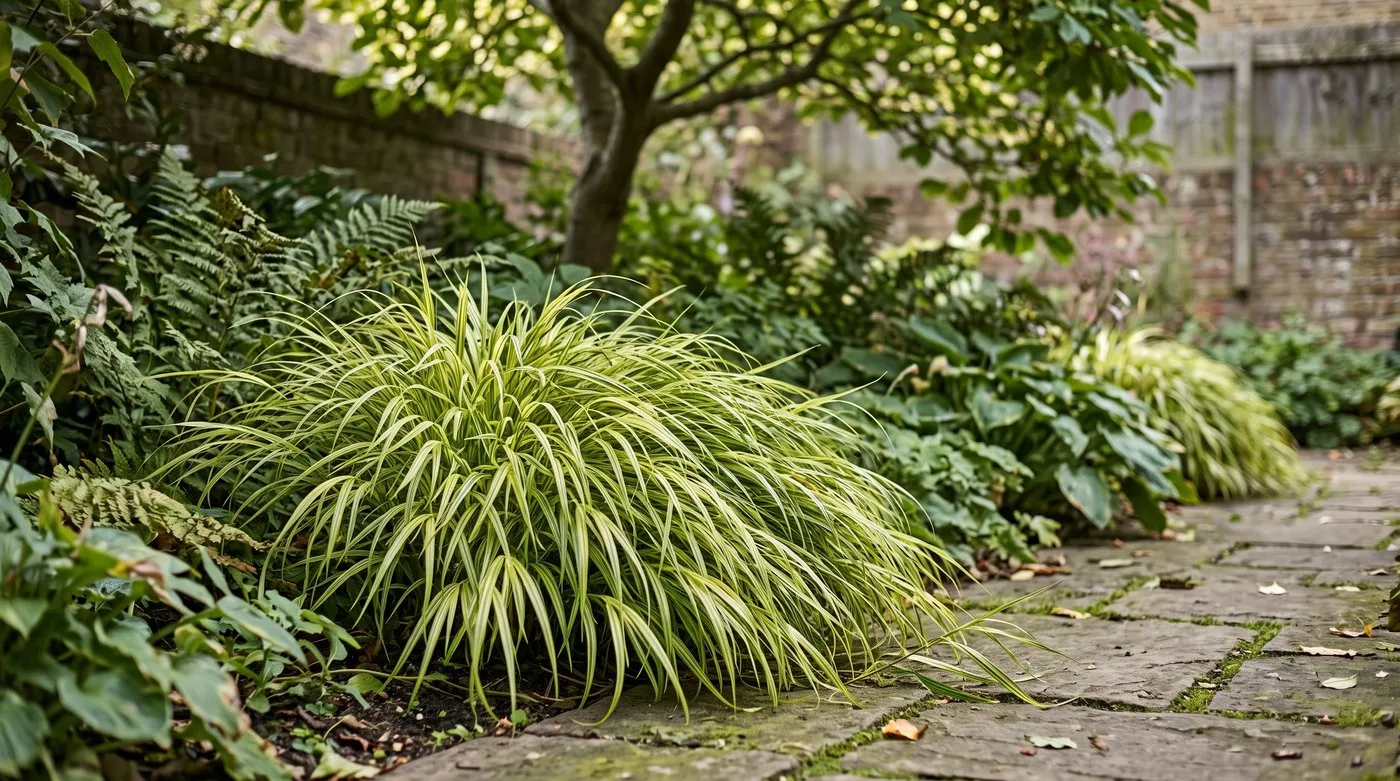
Japanese forest grass is slow to start but worth the wait. In part shade with moist soil it brightens a dark corner all summer.
Ornamental grass comparison table
| Grass | Size | Flowers | Evergreen? | Light | Best use |
|---|---|---|---|---|---|
| Miscanthus sinensis ‘Malepartus’ | Tall | Red-bronze plumes, September-October | No | Sun | Centrepiece, screen |
| Stipa gigantea | Tall | Golden oats, June-July | Semi | Sun | See-through screen |
| Calamagrostis ‘Karl Foerster’ | Tall | Pink-bronze, June | No | Sun | Upright accent |
| Stipa tenuissima | Medium | Pale green to straw, June | No | Sun | Gravel, drifts |
| Pennisetum ‘Hameln’ | Medium | Pink-brown bottlebrush, August-October | No | Sun | Warm borders, pots |
| Molinia ‘Transparent’ | Medium to tall | Airy purple, August-September | No | Sun | Damp borders |
| Deschampsia cespitosa | Medium | Cloud-like, June | Semi | Sun or part shade | Shade, clay |
| Festuca glauca ‘Elijah Blue’ | Low | Blue-grey, June | Yes | Sun | Edging, gravel, pots |
| Hakonechloa macra ‘Aureola’ | Low | Barely noticeable | No | Part shade | Shade, pots, ground cover |
| Carex oshimensis ‘Evergold’ | Low | Barely noticeable | Yes | Part shade or shade | Edging, shade, pots |
How to plant ornamental grasses
Plant most grasses in spring (April to May), once the soil has warmed up. That gives the roots a whole summer to settle before winter. Hardy grasses like Miscanthus and Calamagrostis can go in during autumn too, but plant Pennisetum in spring.
Choose a spot in full sun with free-draining soil, as most grasses rot in soggy ground over winter. Dig a hole twice as wide as the pot and just as deep. Set the plant so the crown sits level with the soil, not buried. Backfill, firm gently and water well. Gravel makes a better mulch than bark for sun-lovers like Stipa and Festuca.
Space grasses by their final width. Miscanthus needs about 1m between plants. Calamagrostis looks great about 50cm apart in a row. Stipa tenuissima planted about 30cm apart fills in within a season. Plant in odd numbers (3, 5, 7) for a natural look. Even a budget garden scheme looks great with a bold drift of one grass.
How to cut back ornamental grasses
Timing is everything. Cut too early and you lose the winter show. Cut too late and you chop the new shoots.
Leave deciduous grasses standing through autumn and winter. They look stunning with frost on them, and they shelter overwintering insects. In late February or early March, cut the whole clump down to 10-15cm with shears or a hedge trimmer. Do it before the new green shoots are more than a few centimetres tall, or you’ll snip their tips and the plant will look ragged for weeks.
Tie big Miscanthus clumps with string first. It bundles the stems together, so you can cut across the bundle and carry it straight to the compost heap.
Evergreen grasses like Festuca, Carex and Stipa gigantea should never be cut hard. Instead, comb through them in March with gloved hands or a spring-tine rake. Pull out the dead brown blades and leave the green ones alone.
Gardener’s tip: Wear long sleeves and gloves when cutting back big grasses. The leaf edges can give you nasty paper-cut slashes, and Miscanthus is the worst for it.
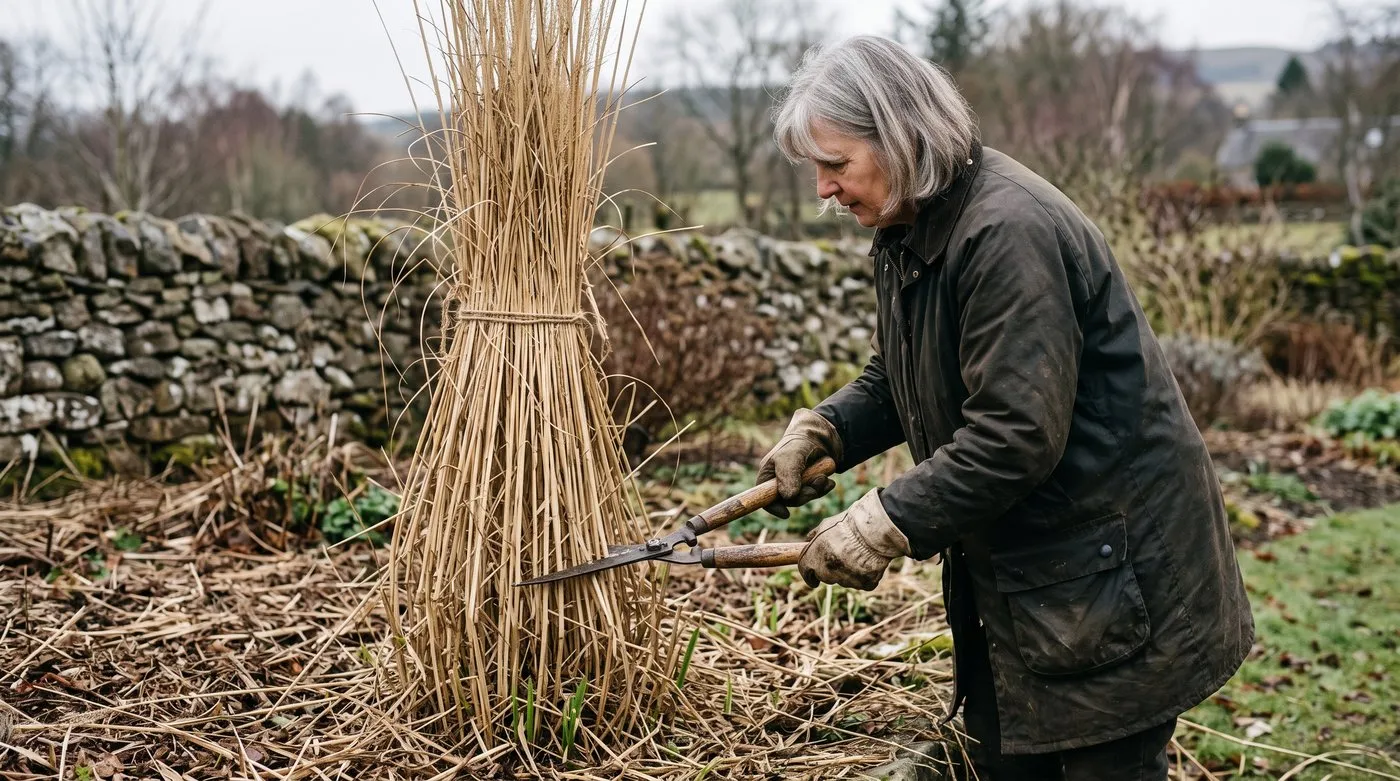
Tie the clump with string before you cut, so the stems come away in one tidy bundle. Long sleeves and gloves save your arms from sharp leaf edges.
How to divide ornamental grasses
Grasses grow outwards. After a few years, the middle of the clump dies off and you’re left with a ring of growth around a bare patch. Dividing perks the plant up and gives you free plants.
Divide in spring (April to May) when new growth is about 10-15cm tall. That gives the pieces all summer to settle. Avoid autumn and winter, as freshly split roots can rot in cold, wet soil.
Lift the whole clump with a garden fork. A big Miscanthus may need two forks and a strong friend. Shake off the loose soil. Split the clump with two forks back to back, levered apart, or cut through with a sharp spade or an old bread knife. Each piece needs a fist-sized chunk of root and a few shoots.
Throw away the dead middle. Replant the outer pieces at the same depth, water well and mulch. Strong growers like Calamagrostis and Miscanthus look good again within a couple of seasons.
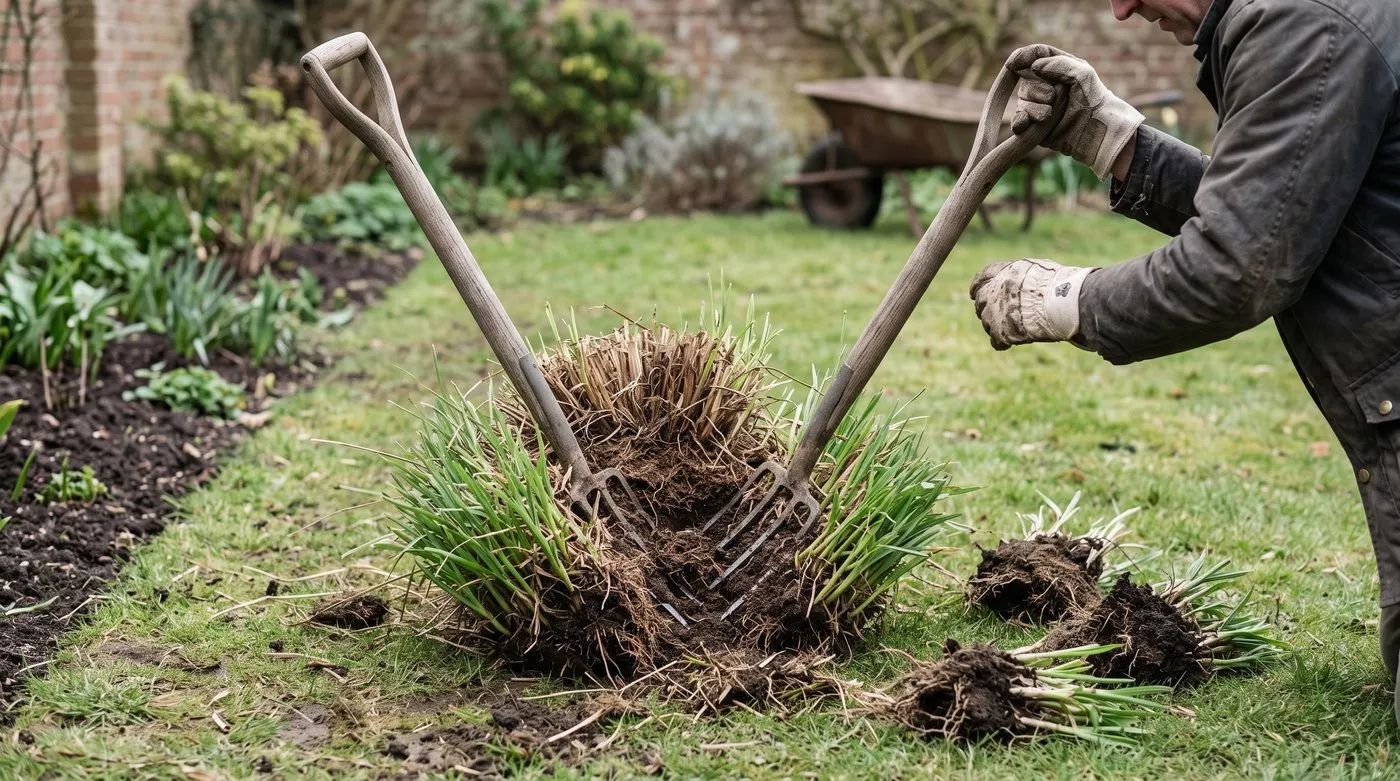
Two forks back to back give you leverage without much effort. Bin the tired middle and replant the lively outer pieces.
Designing with ornamental grasses
Grasses look wonderful with flat-topped flowers like sedum, echinacea, achillea and Verbena bonariensis. The upright grass blades and flat flower heads play off each other beautifully.
Tall grasses usually go at the back, but try them in the middle too. Stipa gigantea is see-through, so it won’t block the view. Repeated clumps of Calamagrostis ‘Karl Foerster’ along a path give a lovely rhythm, even in small garden designs.
For a prairie look, use plenty of grasses as the backbone and weave flowering perennials through them for colour. Tall spires like veronicastrum rise neatly through the grasses and keep their shape into winter.
Grasses look great in pots too. Hakonechloa ‘Aureola’ in a tall pot by the front door looks smart all year. Pennisetum ‘Hameln’ in a terracotta pot on a sunny patio flowers from August to October. Use loam-based compost so the pot is stable, and feed monthly in summer.
The RHS ornamental grasses guide is a great place to check varieties and hardiness before you buy.
Common problems with ornamental grasses
Flopping is the most common complaint. It usually means the soil is too rich or the spot too shady. Grasses come from poor, open places, and rich soil makes soft growth that can’t hold itself up. Don’t feed grasses in borders. If flopping carries on, try a stiffer grass like Calamagrostis ‘Karl Foerster’.
Brown centres in older clumps simply mean it’s time to divide. It’s natural ageing, not disease. Lift and split the clump in spring and throw away the dead middle.
Winter losses can hit Pennisetum alopecuroides in cold, exposed gardens. Add grit to the planting hole for better drainage. Don’t cut it back in autumn, as the old stems help keep rain off the crown. In very cold areas, mulch around the base over winter.
Rust sometimes shows as orange-brown spots on the leaves. It rarely does much harm. Pick off the worst leaves and give the plant more space and air.
Grasses are some of the most climate-resilient plants you can grow. They cope with heat and drought that would flatten many border plants.
Ready for more tough plants? Our guide to drought-tolerant plants is the perfect next step for a low-maintenance border.
Frequently asked questions
When should I cut back ornamental grasses in the UK?
Cut deciduous grasses back in late February or early March. Leave them standing over winter for structure and to shelter insects. Cut to 10-15cm above the ground before the new green shoots get going. Don’t cut evergreen grasses like Festuca and Carex hard. Just comb out the dead blades with gloved hands.
Can ornamental grasses grow in shade?
Most prefer sun, but a few are happy in shade. Hakonechloa macra loves part shade and moist soil. Deschampsia cespitosa copes with part shade and heavy clay. Luzula nivea handles dry shade under trees. In shade, grasses may lean towards the light and flower less.
How do I stop ornamental grasses spreading?
Pick grasses that grow in neat clumps. Miscanthus, Calamagrostis, Stipa gigantea and Festuca all stay put. Stipa tenuissima seeds itself around, so cut off the flower heads before the seed ripens if you want to stop it. Avoid ribbon grass (Phalaris arundinacea) and Glyceria maxima, which spread fast and are very hard to remove.
Are ornamental grasses hardy in the UK?
Yes, most are fully hardy across the UK. Miscanthus, Calamagrostis, Molinia, Deschampsia, Festuca and Stipa gigantea shrug off cold winters. Pennisetum alopecuroides can struggle in cold, wet, exposed gardens, so give it good drainage and shelter. Pennisetum setaceum isn’t hardy, so treat it as an annual.
How do I divide ornamental grasses?
Divide them in spring when new growth is about 10-15cm tall. Lift the clump with a fork and split it with two forks back to back or a sharp spade. Each piece needs a fist-sized chunk of root and some shoots. Throw away the dead middle, replant the rest at the same depth, water well and mulch.
Which ornamental grasses are evergreen?
Festuca glauca, Carex oshimensis, Carex testacea and Luzula nivea stay green all year. Stipa gigantea is semi-evergreen, keeping its leafy base through winter. Evergreen grasses fill the gap deciduous ones leave in spring. They only need a tidy-up, not a hard cut.
Do ornamental grasses need feeding?
Grasses in the ground rarely need feeding. Most grow best in poor soil, and rich soil makes them soft and floppy. Grasses in pots are different. Give them a balanced liquid feed once a month from April to August, and use loam-based compost.
What is the best ornamental grass for a small garden?
Festuca glauca is perfect for the smallest spaces. It makes a neat blue-grey dome about 25cm tall, great for edging, gravel or pots. Stipa tenuissima adds height and movement without bulk. Calamagrostis ‘Karl Foerster’ gives you height but takes up very little ground.
Our team produces practical UK gardening guidance from source research, contributor records and established horticultural practice. Editorial standards are overseen by Matt W.


