Key takeaways
- Free jobs like dividing perennials, moving plants and edging beds change a garden for nothing
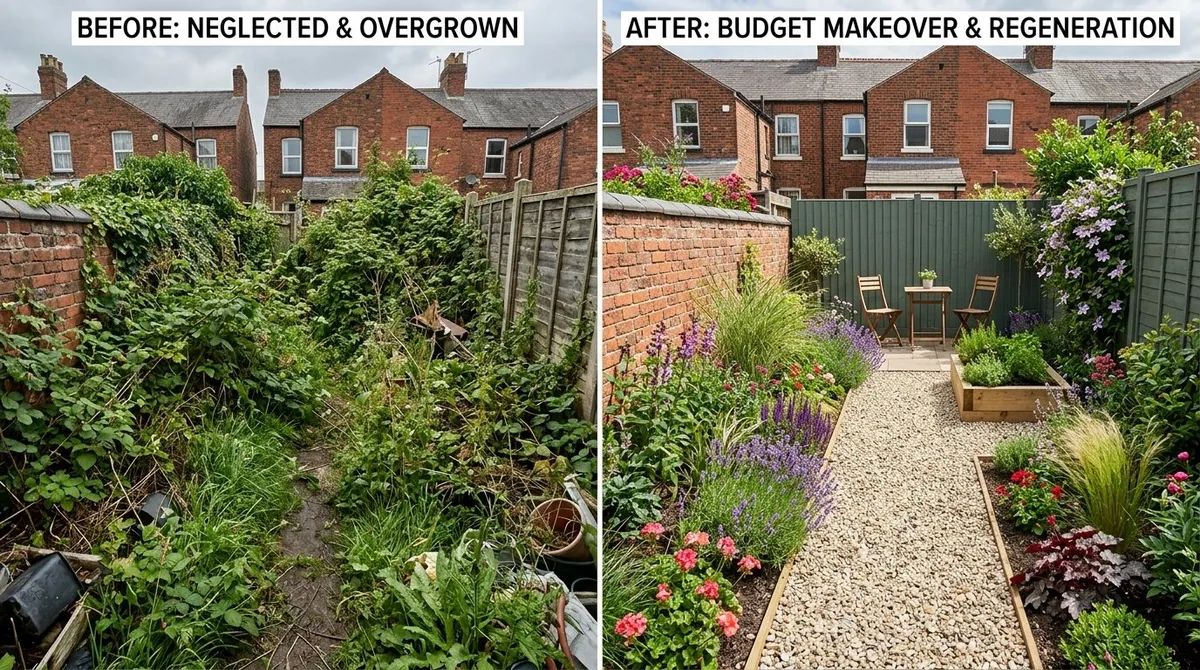
- A tin of dark fence paint is one of the cheapest makeovers going
- Bulbs planted in drifts give lots of colour for little money
- Gravel over weed membrane is a quick, low-cost way to replace tired lawn
- Spend on lasting things like paving and trees, and phase big jobs over time
A garden doesn’t need a big budget to look good. Some of the loveliest gardens cost very little. The difference isn’t money, it’s having a plan. For a real example, see this £500 garden makeover.
Free: garden ideas that cost nothing
Move and divide plants
Most gardens have plants in the wrong place. A shade-loving fern frying in the sun, or a big shrub blocking the path. Moving plants costs nothing and often saves them.
Dividing perennials gives you free plants. Dig up big clumps of geraniums, hostas or grasses in autumn or spring. Split them with a spade, or two forks back to back. Replant the pieces at the same depth.
Tidy edges and clear beds
Nothing smartens a garden faster than crisp edges. Use a half-moon edger or a flat spade to cut neat lines between lawn and borders. Pull weeds, deadhead and rake bare soil smooth. While you’re at it, clean the patio. An afternoon’s work makes the whole garden look loved.
Take cuttings
Take cuttings from your shrubs in September. Lavender, rosemary, hydrangea and fuchsia all root easily. Push 10cm pieces into pots of gritty compost. By spring you’ll have free plants for borders or to give away.
Rearrange what you have
Before you buy anything, stand at the back door and have a proper look. Where does your eye go? Where do the paths lead? Often a garden just needs shuffling: best plants to the front, ugly corners screened, and a clear view to one eye-catching feature.
Under fifty pounds
Paint fences and sheds
A tin of exterior wood paint goes a long way. Dark colours like charcoal, slate blue and deep green make fences fade back so your plants stand out. Pale colours bounce light into shady corners.
 One tin of dark paint changes the whole backdrop of the garden.
Plant bulbs in bulk
Bulbs are brilliant value. Daffodils, crocus and snowdrops come back year after year. Tulips are showier but often fade after a few years.
Plant drifts of one kind rather than a mixed handful. A cluster of the same tulip looks bold and planned, while lots of different ones can look messy.
| Bulb | Flowers | Comes back? |
|---|---|---|
| Daffodils | March to April | Yes, for years |
| Crocus | February to March | Yes |
| Tulips | April to May | Often fades after a few years |
| Alliums (‘Purple Sensation’) | May to June | Yes |
| Snowdrops (bought “in the green”) | January to February | Yes, for years |
Sow a wildflower patch
A packet of native wildflower seed is cheap and covers a decent patch. Strip the turf from a sunny corner, rake the soil and scatter the seed in September or March. The next summer you’ll have ox-eye daisies, knapweed and scabious buzzing with bees. Our guide to creating a mini meadow has the full method.
Add containers and pots
A few well-placed pots give instant structure. Old terracotta from a reclamation yard looks far nicer than plastic. Fill them with seasonal bedding, herbs or one bold plant like a phormium or bay tree.
Group pots in threes or fives by the door, on steps or at the end of a path. Mix the heights: tall at the back, medium in the middle and low at the front.
Under two hundred pounds
Lay a gravel area
Gravel over weed membrane is one of the cheapest ways to make a seating area or replace tired lawn. A small patch is easily a weekend job.
How: clear the area down to firm ground, lay weed membrane, edge it with timber or metal strip, then spread about 5cm of 10-20mm gravel and rake it level.
Gravel suits Mediterranean-style planting like lavender, rosemary and grasses, and needs very little looking after. It drains fast, looks good wet or dry, and crunches nicely underfoot.
 A gravel seating area with Mediterranean planting is a lovely weekend project.
Replant a border
You can give a whole border a fresh start without spending a fortune. Plug plants bought online are good value and settle in quickly. If you shop locally, check our garden centre best buys by season.
Plant a border in three layers:
- Back: two or three shrubs for year-round shape (Viburnum tinus, Choisya, evergreen grasses)
- Middle: perennials for colour (geraniums, catmint, echinacea, Japanese anemones)
- Front: ground cover to keep weeds down (Geranium macrorrhizum, Vinca minor, creeping thyme)
A cottage garden planting plan is great on a budget. Foxgloves, hollyhocks and aquilegia seed themselves about and fill gaps for free.
 Planting up a fresh border with perennials, shrubs and ground cover.
Build a raised bed
A timber raised bed about 1.2m x 2.4m is a simple project. Fill it with half topsoil and half compost, and you’ve got a tidy, productive growing space.
Raised beds look good too. Two matching beds with a gravel path between them make a kitchen garden that looks planned.
Tip: Visiting real gardens is a great source of ideas. The Royal Horticultural Society lists gardens you can visit around the UK.
Under one thousand pounds
Lay a patio or seating area
Porcelain pavers and concrete flags cost less than natural stone, so they’re a good choice when money’s tight. Put the patio where it gets the most sun, usually the south or south-west side of the house. A patio in constant shade rarely gets used.
A garden path linking the house to your new patio ties it all together. Our step-by-step guide on how to lay a patio covers it from the base to the pointing.
Plant a hedge
A native mixed hedge of hawthorn, blackthorn, field maple and holly is cheapest bought as bare-root whips in winter. Plant about three per metre.
A hedge gives privacy, shelter from the wind, a home for wildlife and green all year round.
Add some lighting
Lighting lets you enjoy the garden after dark. Solar stake lights and festoon strings are cheap and easy. Low-voltage LED uplights cost more but look stunning on trees and shrubs.
Light trees from below for drama. Hang festoons over a seating area for a warm glow. Mark paths with low solar lights. Skip floodlights, as they flatten everything.
Full makeover: one thousand to five thousand pounds
With this budget you can redesign the whole garden. Mix hard landscaping (paving, fencing, paths), structure (hedges, trees, shrubs) and the fun stuff (borders, pots, climbers).
Where the money goes
The biggest costs are usually paving and fencing. Planting, lighting, a new lawn and clearing rubbish (skip hire) come after. Get a few quotes for any work you’re not doing yourself.
Ways to make the money go further
Keep materials simple. Stick to two hard materials, like one paving and one edging. More materials mean more cutting, more waste and a busier look.
Spend on what lasts. Put more into paving, fencing and trees, and less into plants that only last a season.
Do it in stages. You don’t have to do everything at once. Build the patio this year, add a raised deck next summer and plant the borders the spring after. It spreads the cost and lets you tweak the plan as you go.
Frequently asked questions
How much does a garden makeover cost in the UK?
Anything from almost nothing to several thousand pounds. A tidy-up with paint and some new plants can cost very little. Gravel, a new border and pots cost more, and a full redesign with paving, fencing and lighting is the biggest spend.
What is the cheapest way to improve a garden?
Tidy up, then paint the fence. Clear the weeds and cut crisp lawn edges, which costs nothing. Split big clumps of perennials for free plants, and sow a packet of wildflower seed in a sunny corner. A tin of dark paint transforms the backdrop.
How can I make my garden look nice on a budget?
Focus on tidy edges, bold planting and one eye-catching feature. Cut neat edges with a half-moon edger. Plant perennials in groups of three or five of the same kind. Then add one feature, like a big pot, a bench or a climbing rose on the fence.
What adds the most value to a garden?
A tidy lawn, clear borders and a patio or seating area. Buyers like a garden that looks cared for and easy to use. Mature trees, established hedges and good-quality paving are also worth looking after.
Can I redesign my garden myself?
Yes, most garden projects are fine to do yourself. Laying gravel, painting fences, planting borders, building raised beds and laying turf all suit keen beginners. Get help with paving, outdoor electrics and taking down big trees.
When is the best time for a garden makeover?
Plan in winter, build in spring and plant in autumn. Autumn is great for planting trees, shrubs, hedges and perennials. Spring suits paving, lawn work and sowing. Avoid heavy work in summer heat or winter frost.
Our team produces practical UK gardening guidance from source research, contributor records and established horticultural practice. Editorial standards are overseen by Matt W.