Key takeaways
- Concrete works for patios, walls, paths, planters, benches, edging and bases
- Pour patios at least 100mm thick over a compacted hardcore base, with steel mesh
- Cut joints every 3-4m and give the slab a gentle fall away from the house
- Concrete is walkable after a day or two but needs about 28 days to reach full strength
- In England, solid front garden surfaces over 5 square metres need permission unless water drains into the garden
- Wet cement can burn skin, so wear gloves, long sleeves and eye protection
Concrete is one of the most useful materials in a garden. It makes smooth patios, bold walls, grippy paths, planters, benches and the bases that sheds and bins sit on. Done well, it looks clean and modern and lasts for decades.
Below are 12 ideas for using concrete, followed by the basics you need to get it right: base depths, mixes, curing, joints and the front garden drainage rule. If you’re after the wider look, the guide to modernist garden design shows how concrete fits into a clean, bold scheme.
Warning: Wet cement and concrete can cause skin burns. Wear waterproof gloves, long sleeves and eye protection, and wash any splashes off straight away.
12 ways to use concrete in your garden
1. A poured concrete patio
A poured patio is one continuous slab, so there are no joints between slabs to weed. It gives a clean, modern look that paving can’t quite match.
Pour at least 100mm thick over 100-150mm of compacted hardcore, with steel mesh in the lower part. Give it a gentle fall away from the house, about 1 in 80, so rain runs off. A wood float or brushed finish gives grip, while a machine-smoothed finish looks sleek but can be slippery when wet.
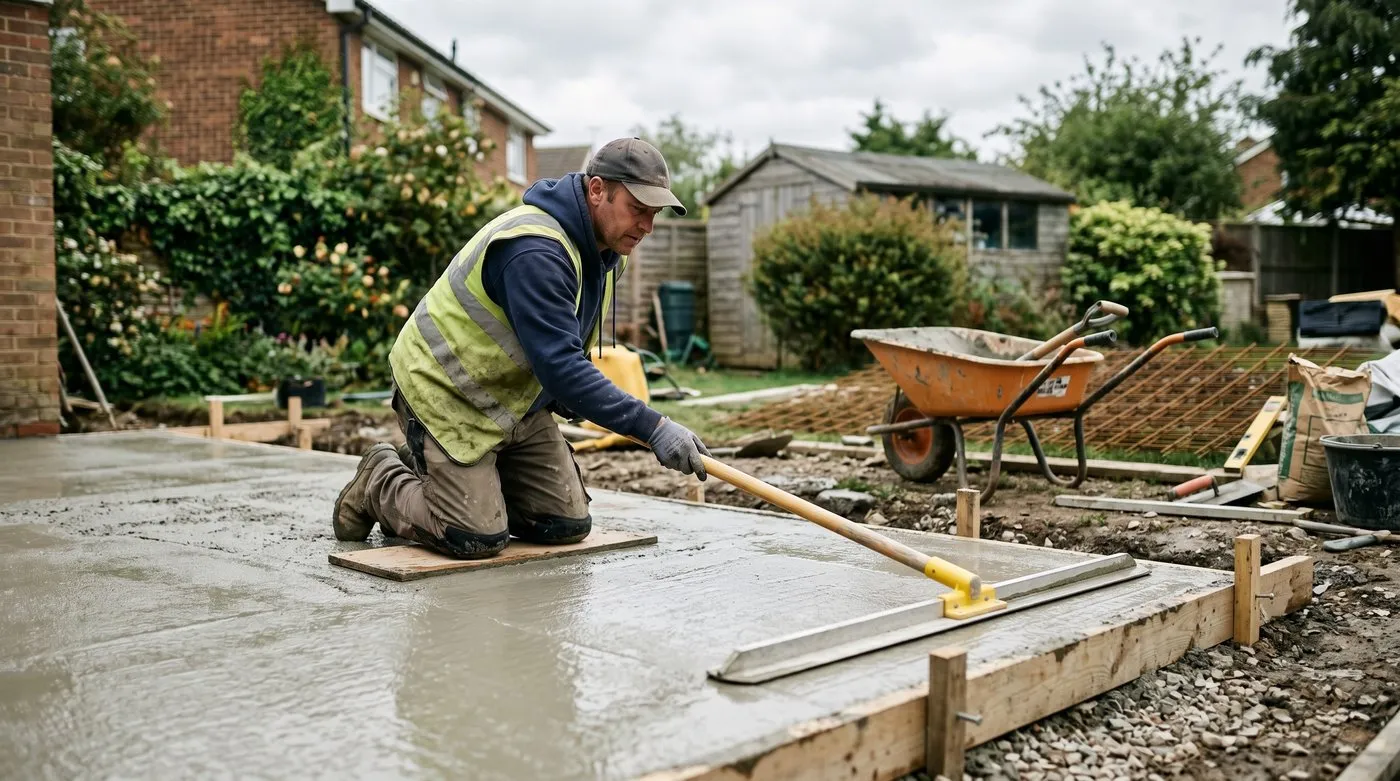
Smoothing a new slab inside timber formwork. The steel mesh and hardcore underneath matter as much as the finish on top.
2. Board-marked concrete walls
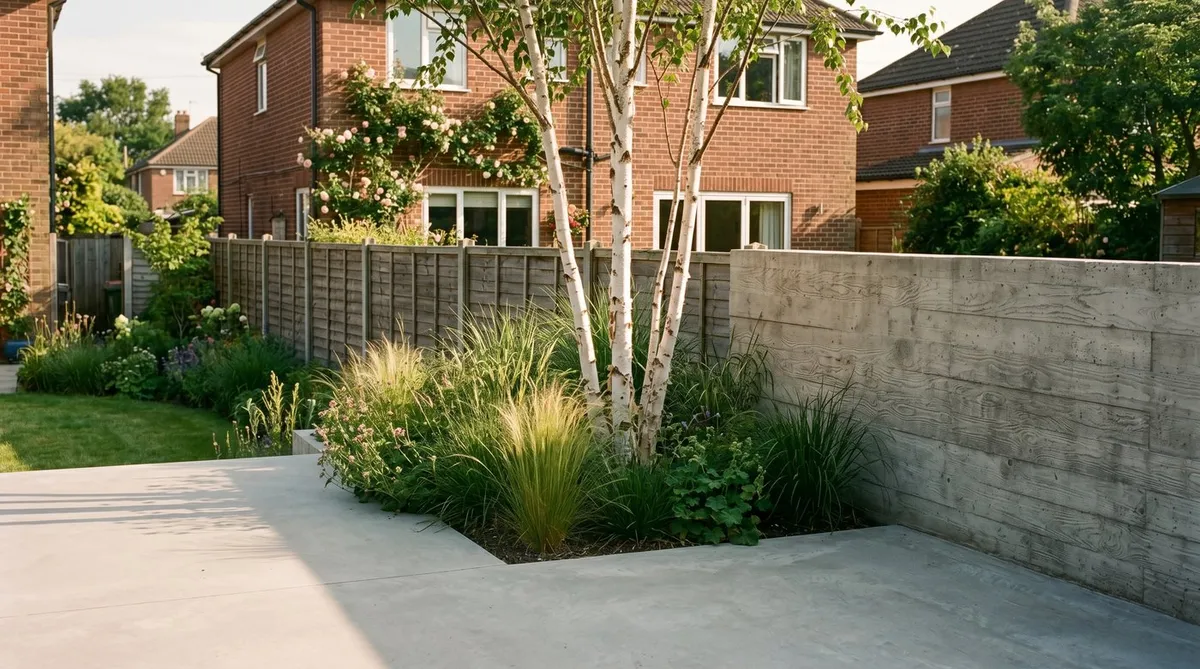
A board-marked wall is poured into rough timber shuttering, so the concrete takes on the grain of the wood. It’s a striking backdrop for planting, especially ferns, grasses and dark foliage.
Retaining walls hold back a lot of weight. Anything more than knee height should be designed and built by a professional, with proper foundations and reinforcement. The guide to creating a sunken garden shows walls like this at their best.
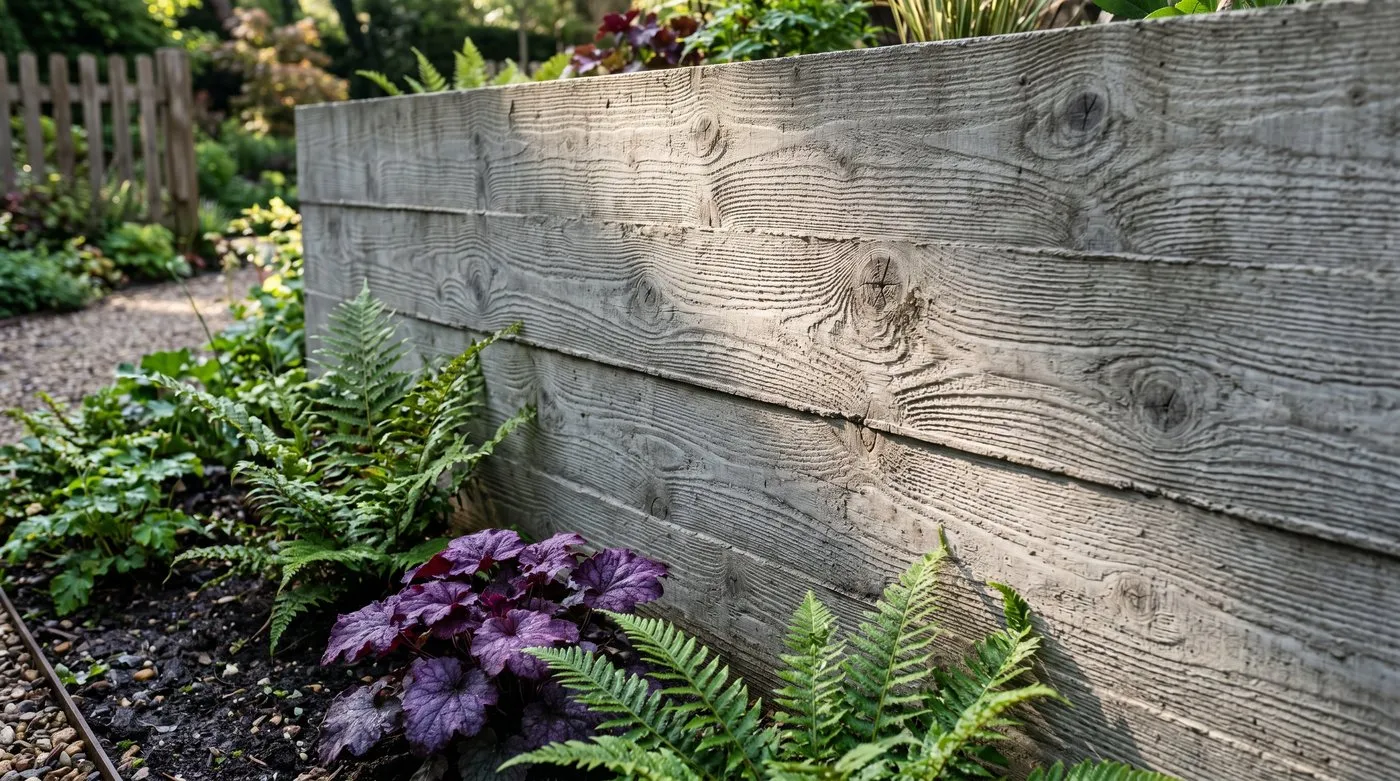
The wood grain from the shuttering is printed into the concrete. Ferns and dark heuchera look great against it.
3. Exposed-aggregate paths
Exposed aggregate is concrete with the top layer washed off to reveal the stones inside. It looks like gravel but doesn’t scatter, and it grips well in rain and frost. That makes it a good choice for paths and slopes.

Exposed aggregate looks like gravel but stays put. It’s grippy in wet weather too.
4. Polished or smooth concrete floors
Polished and machine-smoothed concrete give a sleek, joint-free floor. They suit covered patios, garden rooms and outdoor kitchens, where a floor flowing from inside to out looks great. Smooth concrete is slippery when wet, so use an anti-slip sealer outdoors. This is usually a job for a specialist.
5. Pattern-imprinted concrete
Imprinted concrete is pressed with rubber moulds while wet to look like stone, brick or timber. It covers a large area for less than natural stone. Cheap work looks fake, though, and the surface needs resealing every few years to keep its colour. Choose a skilled installer and avoid high-gloss sealers, which get slick in rain.
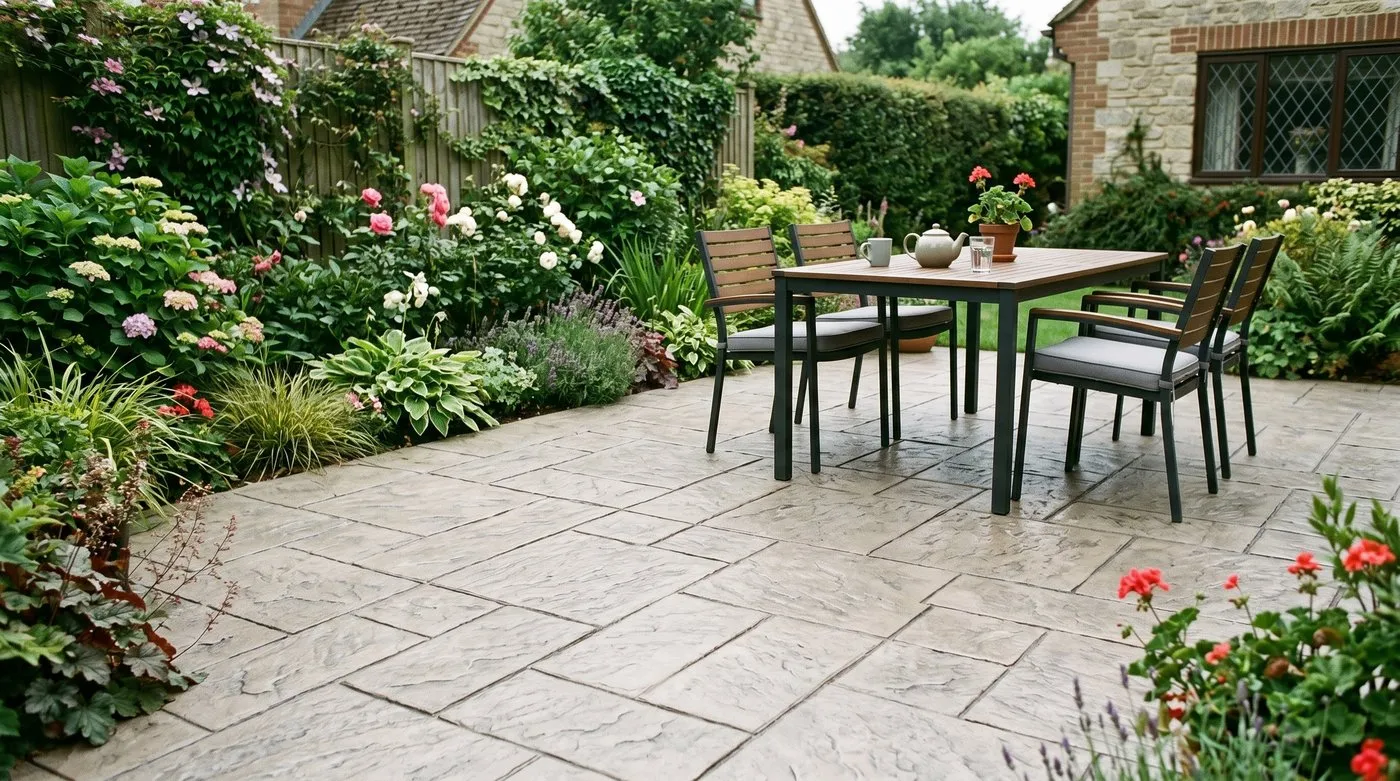
Imprinted concrete can pass for stone slabs at a glance. A good installer makes all the difference.
6. Concrete screen blocks
Decorative screen blocks, popular in the 1960s, are back in fashion. Stack them to make a garden divider or patio screen that lets light and air through. They throw lovely patterned shadows in low sun. Build on a proper footing and check any wall height near a boundary with your council.
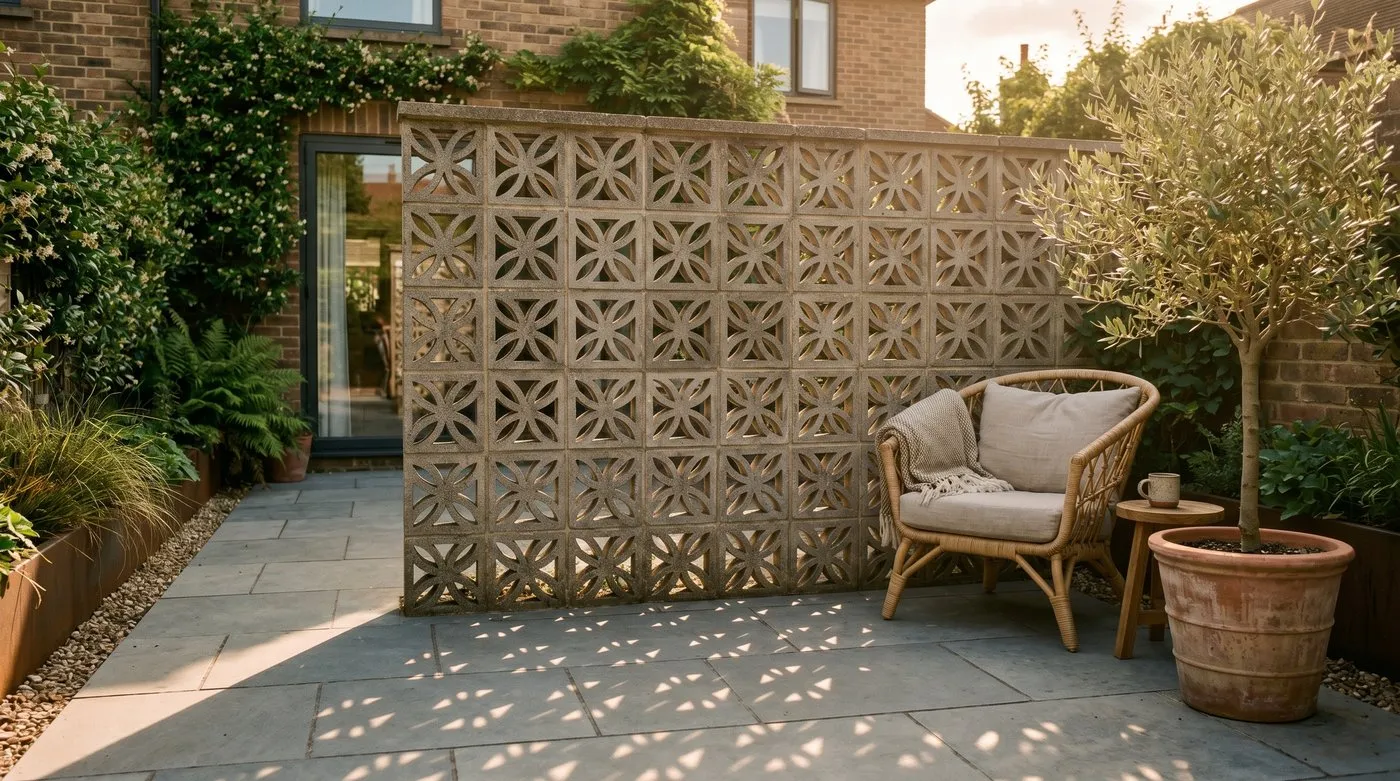
Screen blocks let light and air through while still dividing the space. The shadows are a bonus.
7. Cast concrete planters
You can cast your own planters using two boxes, one inside the other, and pouring concrete into the gap. Leave a drainage hole by setting a length of dowel in the base. Make the walls thick enough to resist frost, around 4cm or more.
Fresh concrete is alkaline. Seal or line the inside before planting, or leave the planter to weather for a while first.
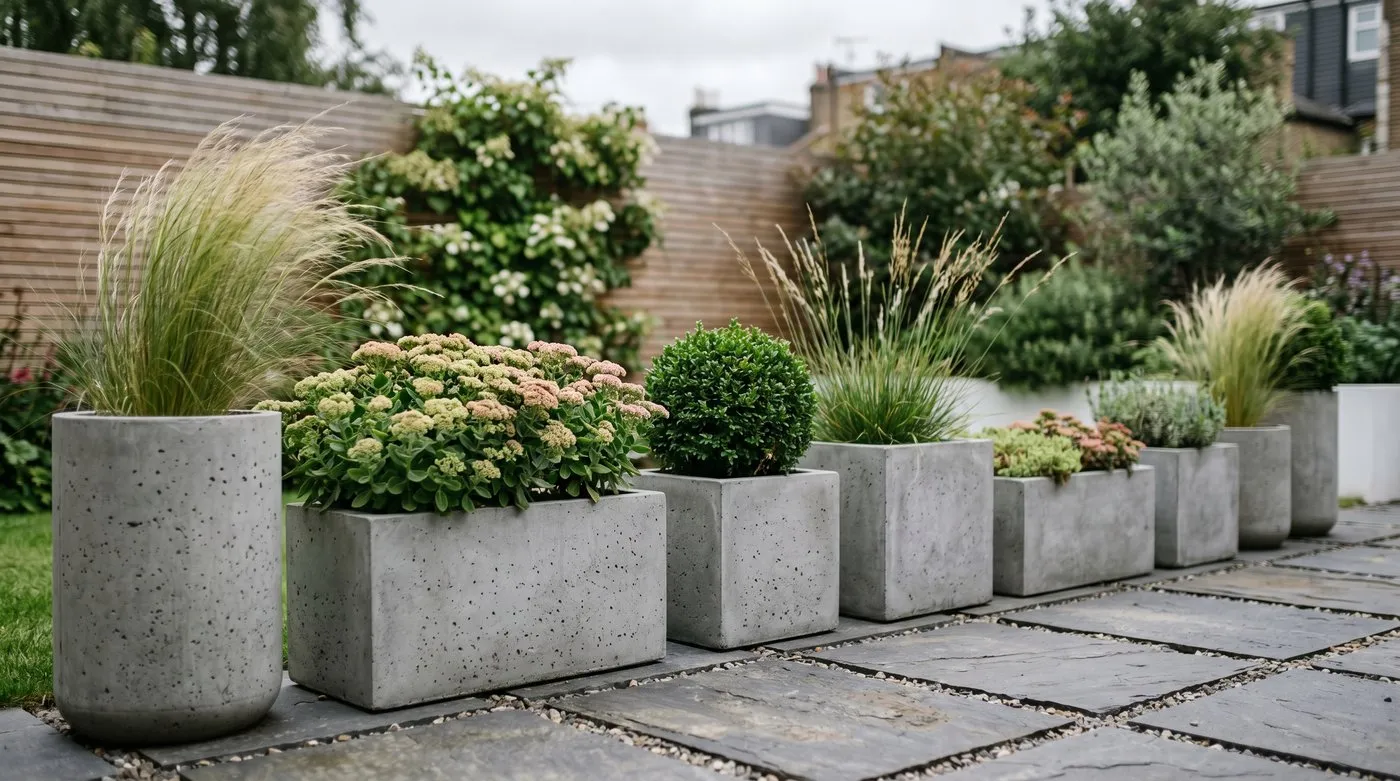
A row of concrete planters in different heights looks smart and modern. Grasses soften the hard edges.
8. Concrete benches
A concrete bench never needs storing or treating. The simplest version is a timber or concrete seat on two chunky concrete piers. You can also build a bench into a retaining wall to save space. Add timber slats or cushions to take the chill off.
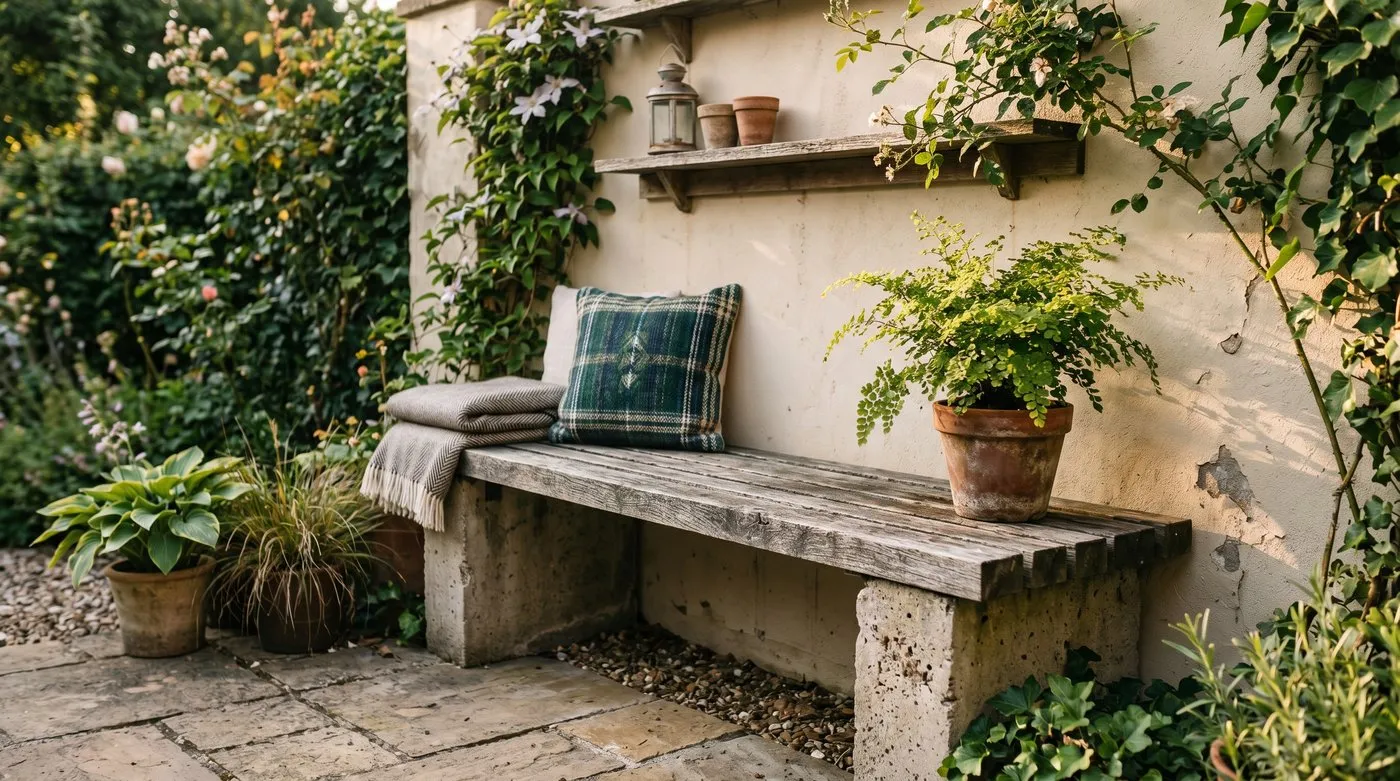
A timber seat on solid concrete piers is simple to build. Cushions and a throw make it far more inviting.
9. Concrete raised beds
Poured concrete raised beds have crisp, permanent edges that timber can’t match long-term. They suit modern kitchen gardens and formal schemes. They need sturdy formwork and steel reinforcement, as wet soil pushes hard against the walls. Line the inside with a breathable membrane to protect the concrete and keep lime away from roots.
10. Stepping stones
Cast stepping stones are the easiest concrete project for a beginner. Use a bought mould, a cut-down bucket or a simple timber frame. Press in leaves, pebbles or a child’s handprint for character. Leave them in the mould for a couple of days and cure them for a week before laying. Set them on sharp sand at a comfortable stride.
11. Bases for sheds, bins and outdoor kitchens
A concrete pad gives a stable, level base for a shed, bin store, water butt or heavy pots. Get it level and square, or a shed frame will twist. Give bin pads a slight fall so they drain and hose clean. For an outdoor kitchen or pizza oven, pour a reinforced base and cast worktops in concrete too. The guide on how to design an outdoor kitchen has layout ideas.
12. Mowing strips, edging and rills
A concrete mowing strip laid flush with the lawn lets the mower run along it, so you rarely need to trim the edge by hand. It also stops gravel creeping into beds. Dig a shallow trench, peg a timber form and pour to lawn level. The guide to garden edging ideas compares concrete with sleepers and stone.
Concrete also makes a neat, narrow channel of water called a rill. See the guide to water rill design for how to build one.
Concrete finishes compared
The same slab can take very different finishes. Choose by where it is and how slippery it might get.
| Finish | How it’s made | Grip when wet | Best for |
|---|---|---|---|
| Wood float | Smoothed with a wooden float | Good | General patios, shed bases |
| Brushed | Brushed while still wet | Very good | Paths, slopes, drives |
| Exposed aggregate | Top layer washed off | Very good | Paths and patios |
| Machine smoothed | Power-trowelled smooth | Poor unless sealed | Covered patios, garden rooms |
| Polished | Ground and sealed | Poor unless sealed | Covered outdoor kitchens |
| Imprinted | Pressed with moulds | Moderate | Feature patios, drives |
DIY or hire a professional?
Small jobs suit DIY; big pours and walls are best left to the pros. Stepping stones, planters, edging, post bases and small pads are well within reach. You need a level base, solid formwork and a hired mixer for anything more than a few barrow loads.
A large patio has to be poured and finished in one go, before the concrete starts to set. A groundworker brings a team, a ready-mix lorry and the experience to get the fall and finish right. Hire help for big slabs, retaining walls and polished floors. Ask to see recent work in the finish you want.
Mixes, ready-mix and curing
For most garden jobs, use 1 part cement, 2 parts sharp sand and 3 parts gravel, by volume. Add water gradually. You want a mix that holds its shape on a shovel, not a soupy one, which is weaker.
- Ready-mix from a lorry suits patios and anything poured in one go. It’s consistent and saves hours of mixing.
- Bagged concrete suits small jobs such as post bases, stepping stones and planters.
Curing is a slow chemical change, not just drying out. Concrete is usually walkable after a day or two and reaches full strength after about 28 days. Cover a fresh slab with polythene for the first few days, especially in warm or windy weather, and mist it if it dries too fast.
Avoid pouring in frost or on very hot days. Frost can ruin the surface before it sets, and heat makes it dry too fast and crack.
Mesh and joints: how to stop concrete cracking
Steel mesh holds a slab together if it does crack. For a patio, lay mesh in the lower part of the slab on plastic spacers, not flat on the ground where it does nothing.
Joints give the slab room to move as it shrinks and as the weather warms and cools. Without them, it cracks at random. Form joints with a timber strip during the pour, or cut them with a saw soon after. Space them every 3-4m, and add one at any corner or change in width.
Front garden drainage rules for concrete
In England, a new solid surface over 5 square metres in a front garden needs planning permission if rain runs off onto the road or into the drains. Solid front gardens shed rain into the street and add to local flooding.
You don’t need permission if:
- The area of solid concrete is 5 square metres or less
- You use a permeable surface instead, such as gravel or permeable block paving
- The rain drains off the concrete into a lawn, border, rain garden or soakaway in your own garden
Rules differ in Wales, Scotland and Northern Ireland, so check with your council. The guide to permeable paving for front gardens covers the options.
Looking after concrete in the garden
Concrete is low-maintenance, not no-maintenance. A few simple habits keep it sound for years.
- Seal it with a breathable masonry sealer once it’s fully cured, then every few years. Sealing helps resist stains, frost damage and algae.
- Clean off green algae on shady slabs with a stiff brush, or a pressure washer on a gentle setting held well back. The guide on how to clean a patio covers the right settings.
- Fill hairline cracks with a flexible concrete filler so water can’t get in and freeze. Wide or stepped cracks suggest a base problem and may need a section re-laid.
Common concrete mistakes
Pouring onto bare soil. Without a compacted hardcore base, the slab sinks and cracks.
No fall. A flat slab holds puddles and grows algae. Slope it gently away from the house.
No joints or mesh. Concrete always moves a little. Give it joints and reinforcement.
Pouring in the wrong weather. Avoid frost and hot, drying days.
Ignoring front garden drainage. A solid front garden with nowhere for rain to go can need planning permission.
Bare skin. Wet cement burns. Gloves, long sleeves and goggles every time.
Frequently asked questions
How thick should a concrete patio be in the UK?
At least 100mm thick for a patio you walk on. Lay it over 100-150mm of compacted hardcore, with steel mesh set into the lower part of the slab. Go thicker where a car, hot tub or heavy structure will sit on it. Thin slabs on soft ground crack.
How long does concrete take to cure before you can walk on it?
You can usually walk on it after one or two days. It keeps hardening for weeks and reaches full strength after about 28 days. Keep it covered with polythene for the first few days in warm or windy weather. Slow curing gives a harder, less crack-prone surface.
Do I need planning permission for a concrete front garden?
In England, yes if it’s over 5 square metres and drains onto the road. You don’t if the surface is permeable or the rain drains into a lawn, border or soakaway in your own garden. Rules differ in Wales, Scotland and Northern Ireland, so check with your council.
Should I use ready-mix or bagged concrete for a garden project?
Use ready-mix for larger pours and bags for small jobs. A ready-mix lorry delivers a consistent mix all at once, which matters for a patio poured in one go. Bagged concrete suits post bases, stepping stones, planters and small pads. Mixing lots of bags by hand is slow and risks an uneven set.
How do I stop a concrete patio from cracking?
Use a firm base, steel mesh and joints every 3-4m. Never pour straight onto soft soil. Avoid pouring in frost or on very hot days, and cover the slab while it cures. Most random cracks come from no joints, no mesh, a poor base or the wrong weather.
Is concrete bad for plants?
Fresh concrete is very alkaline, which some plants dislike. The effect fades as it weathers. Seal the inside of new concrete planters or line them, and leave lime-hating plants such as camellias out of new concrete beds. Most plants grow happily beside a cured concrete path or wall.
Now you have your concrete plan, browse more garden design ideas or get the base right first with the step-by-step guide on how to lay a patio.
Our team produces practical UK gardening guidance from source research, contributor records and established horticultural practice. Editorial standards are overseen by Matt W.