Key takeaways
- In England, a permeable front garden surface needs no planning permission
- Over 5 square metres of impermeable surface draining to the road does need permission
- The sub-base does the work: clean, open-graded stone with the dust screened out
- Resin-bound gravel drains; resin-bonded gravel doesn't, and the two are easy to confuse
- Grass or gravel-filled grids give a parking bay that stays green and drains
- A dropped kerb always needs the council's permission, whatever surface you lay
Permeable paving lets rain soak through your front garden instead of rushing off into the road. In England it’s also the easy way to stay on the right side of the planning rules when you pave a front garden or make a driveway.
This guide is all about front gardens and drives: the rule, the build and the best surfaces. If you’re choosing a patio or path surface out the back, our guide to paving slab alternatives compares the options there.
Do you need planning permission to pave a front garden?
In England, not if the surface is permeable. You also don’t need it if the rain is directed onto a lawn, border or soakaway within your own garden.
You do need permission to cover more than 5 square metres with a sealed (impermeable) surface such as ordinary tarmac or slabs that drains onto the road. This rule has applied since October 2008. It’s there because paved-over front gardens send so much rain into the drains.
So your choice of surface decides the paperwork. Pick a permeable finish and you can pave the area you need without applying.
Wales has a similar rule. Scotland and Northern Ireland have their own planning systems, so check with your council. Listed buildings, flats and homes covered by an Article 4 direction may need permission whatever you lay. The government’s guidance on permeable surfacing of front gardens sets out the details for England.
Warning: A dropped kerb across a public pavement always needs your council’s permission, whatever surface you lay behind it. Never let an installer cut a kerb without it.
Why paved front gardens cause flooding
A sealed drive sends every drop of rain straight to the kerb. When a whole street does the same, the drains can’t cope in a heavy downpour.
Soil and plants soak up rain and let it seep away slowly. Hard, sealed surfaces don’t. They also lose the soil life, the planting and the cooling effect a green front garden gives on a hot day.
A permeable surface holds back the rain and lets it drain into the ground. Keep some planting too and you get the best of both. Our guide to plants that help prevent garden flooding covers the toughest choices.
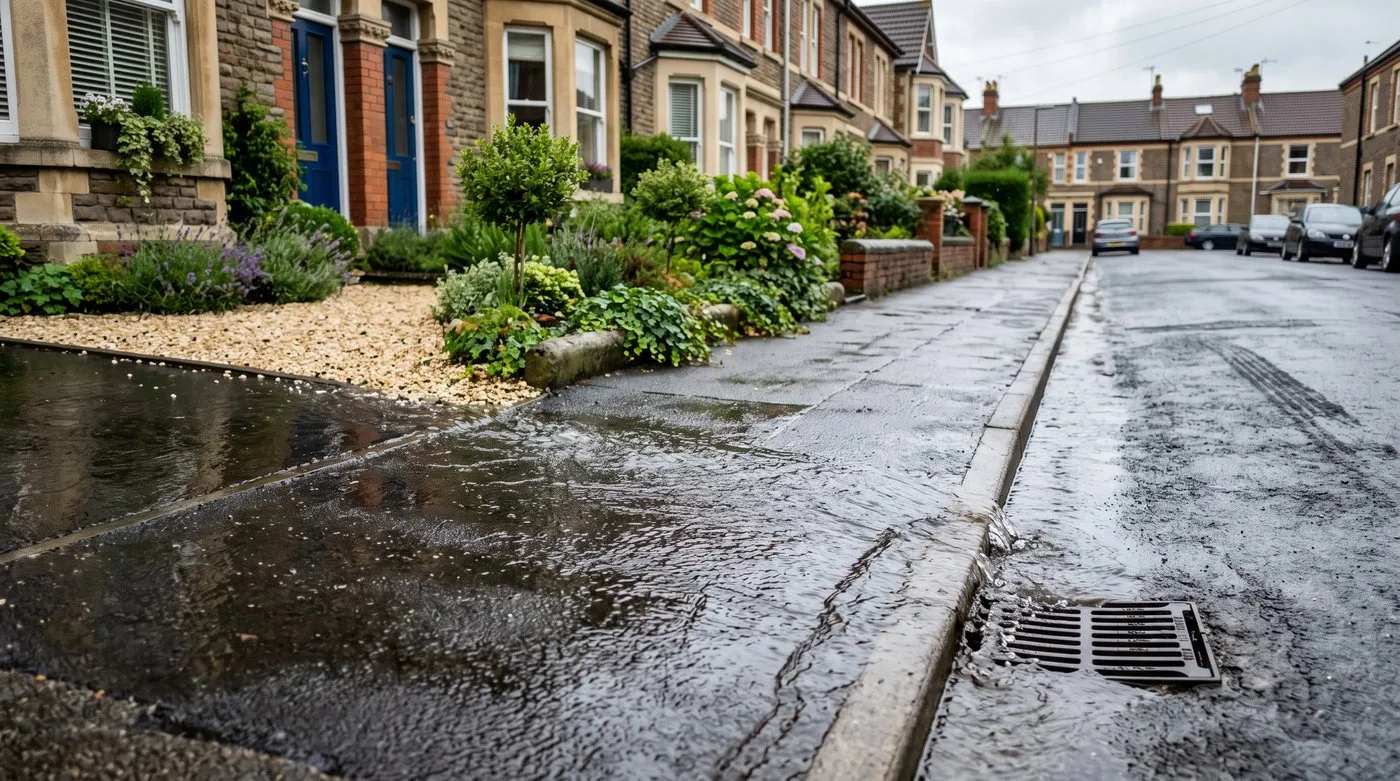
Rain that can’t soak in runs straight to the drain, which is why sealed front gardens add to street flooding.
The sub-base: what really makes paving permeable
The layer under the surface is what makes paving permeable. Get it wrong and even permeable blocks sit on a sealed floor and puddle.
A permeable sub-base is open-graded and no-fines. That means crushed stone with the dust screened out, so the gaps between the stones stay open. Rain drains into those gaps, which hold it like a sponge and let it seep away into the ground below.
Use clean 4-20mm crushed stone or Type 3 aggregate over a geotextile membrane. Paths need less depth than a drive that takes a car, so follow your paving supplier’s guide for the depth.
Ordinary MOT Type 1 is fine for a standard patio, but not here. It contains fine dust that packs down hard, and water runs across it instead of through.
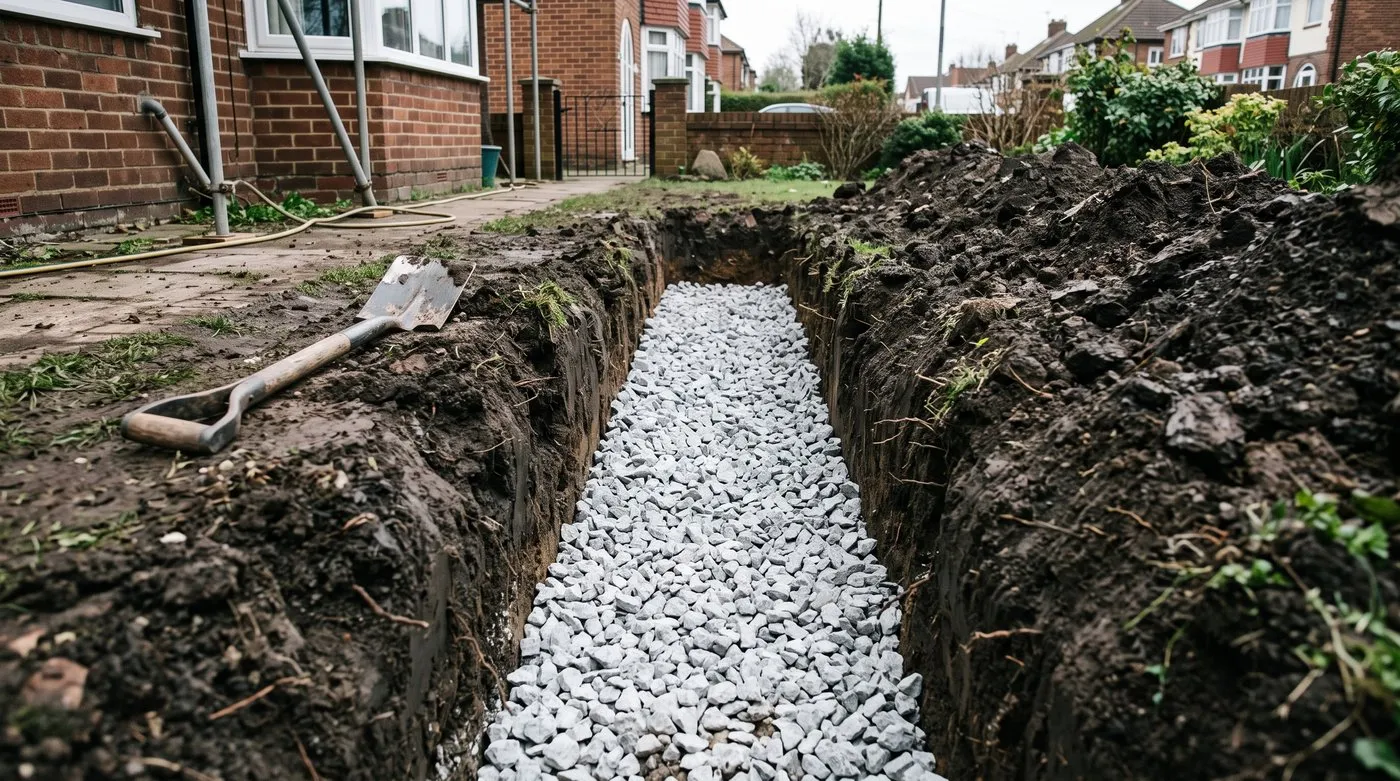
Clean, dust-free stone like this leaves gaps for rain to collect in and soak away.
Gardener’s tip: Ask any installer which sub-base they’ll use, and get it in writing. If the answer is MOT Type 1, the finished drive won’t drain properly. You want to hear “no-fines” or “Type 3”.
Which permeable surface should you choose?
Gravel is the cheapest, resin-bound the smartest, block paving the most formal and grids the greenest. All of them count as permeable when laid on the right base.
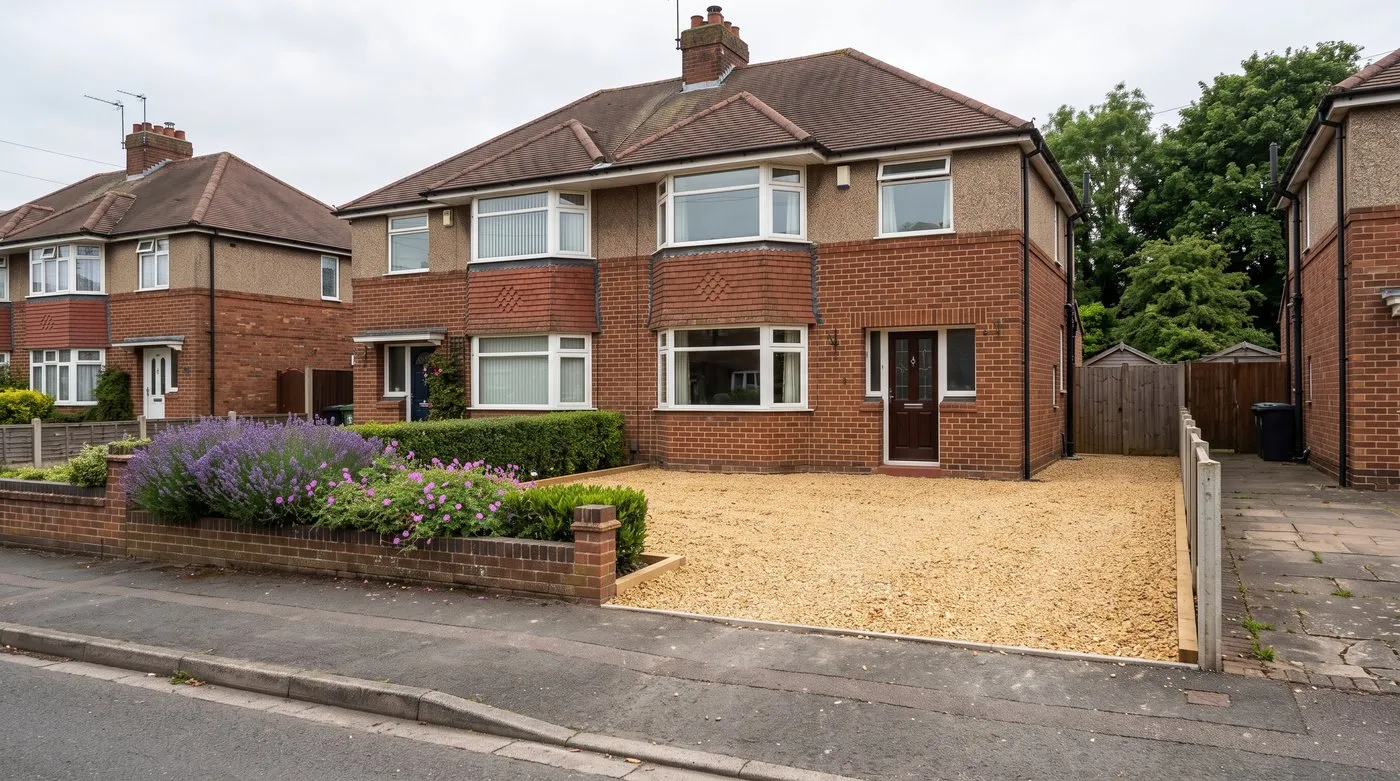
Angular gravel held in by firm edging drains naturally and stays off the pavement.
| Surface | Look | Upkeep | Good for parking? | Cost |
|---|---|---|---|---|
| Gravel | Informal | Rake and top up | Yes, but scatters | Low |
| Resin-bound gravel | Smooth, no joints | Low, sweep and wash | Yes | Medium to high |
| Permeable block paving | Neat, formal | Sweep, top up joint grit | Yes | Medium to high |
| Porous asphalt | Plain, matt black | Sweep to keep it open | Yes | Medium |
| Grass or gravel grid | Green or gravel | Mow, or top up gravel | Yes | Low to medium |
Gravel drains naturally and is quick to lay. Choose angular gravel that locks together, and fit firm edging so stones don’t end up on the pavement.
Permeable block paving looks like normal block paving, but has wider joints filled with grit. Rain drains between the blocks into the open sub-base below.
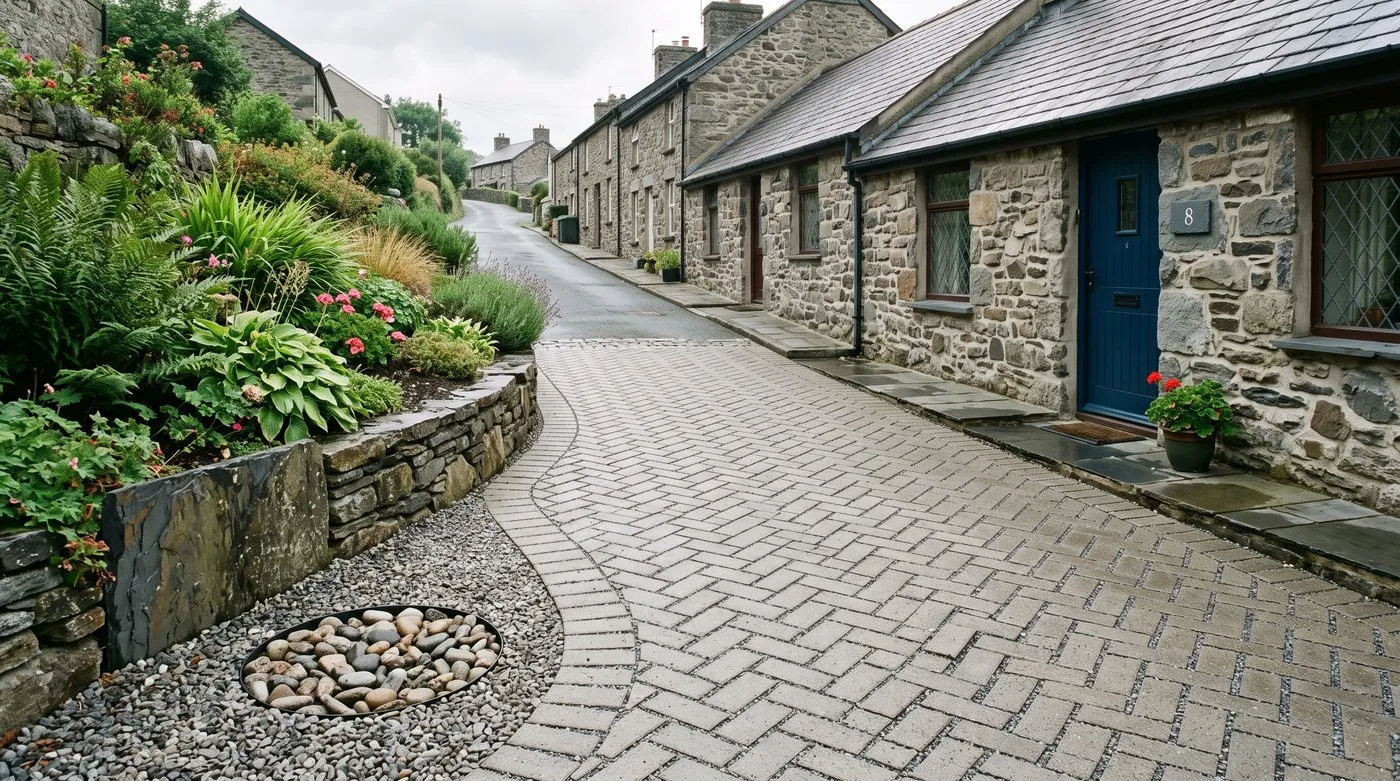
Permeable block paving drains through its grit-filled joints, and a pebble soakaway takes any extra water.
Resin-bound vs resin-bonded: the costly mix-up
Resin-bound drains; resin-bonded doesn’t. The names sound alike, but they behave in opposite ways.
Resin-bound gravel is stone and resin mixed together, then trowelled on like mortar. It sets with tiny gaps between the coated stones, so water passes through. On a permeable base, it counts as a permeable surface.
Resin-bonded gravel is a coat of resin spread on a solid base, with loose stones scattered on top. The resin underneath is sealed, so water runs off like tarmac. Cover more than 5 square metres of it draining to the road and you need permission.
The easy way to remember: bound drains, bonded seals. If a quote says resin-bonded, ask for resin-bound instead.
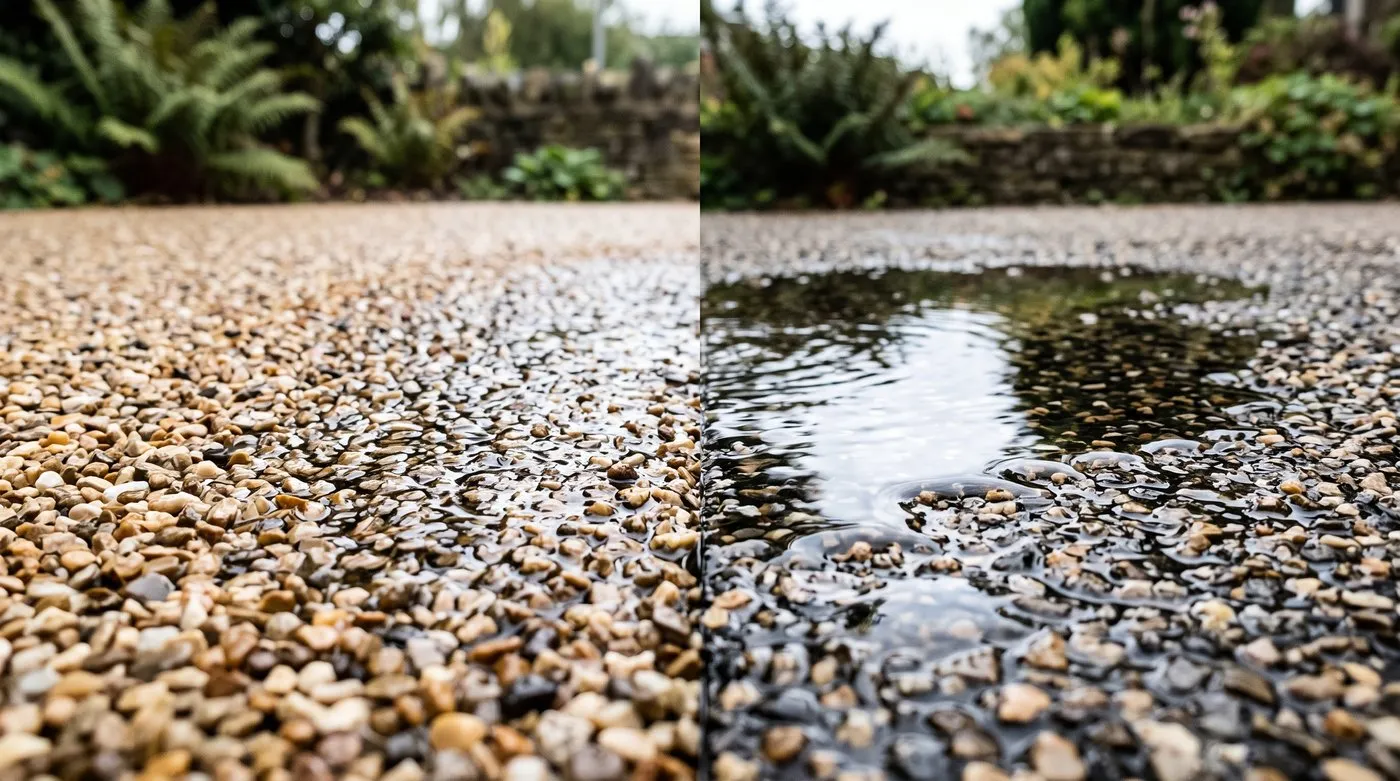
Water soaks into resin-bound gravel on the left but sits in a puddle on sealed resin-bonded gravel on the right.
Grass grids for green parking
Plastic honeycomb grids let you park on grass without turning it to mud. Lay them over a no-fines base and fill them with soil and grass seed, or with gravel.
The cell walls take the car’s weight, so the grass roots aren’t crushed. A grass-filled grid looks like a lawn until you drive on it. It needs mowing and a little water in dry spells, and grass struggles if a car sits on it for days on end.
Fill the same grid with gravel for a firm parking bay that won’t scatter under turning wheels. That’s the better choice for a drive used every day.
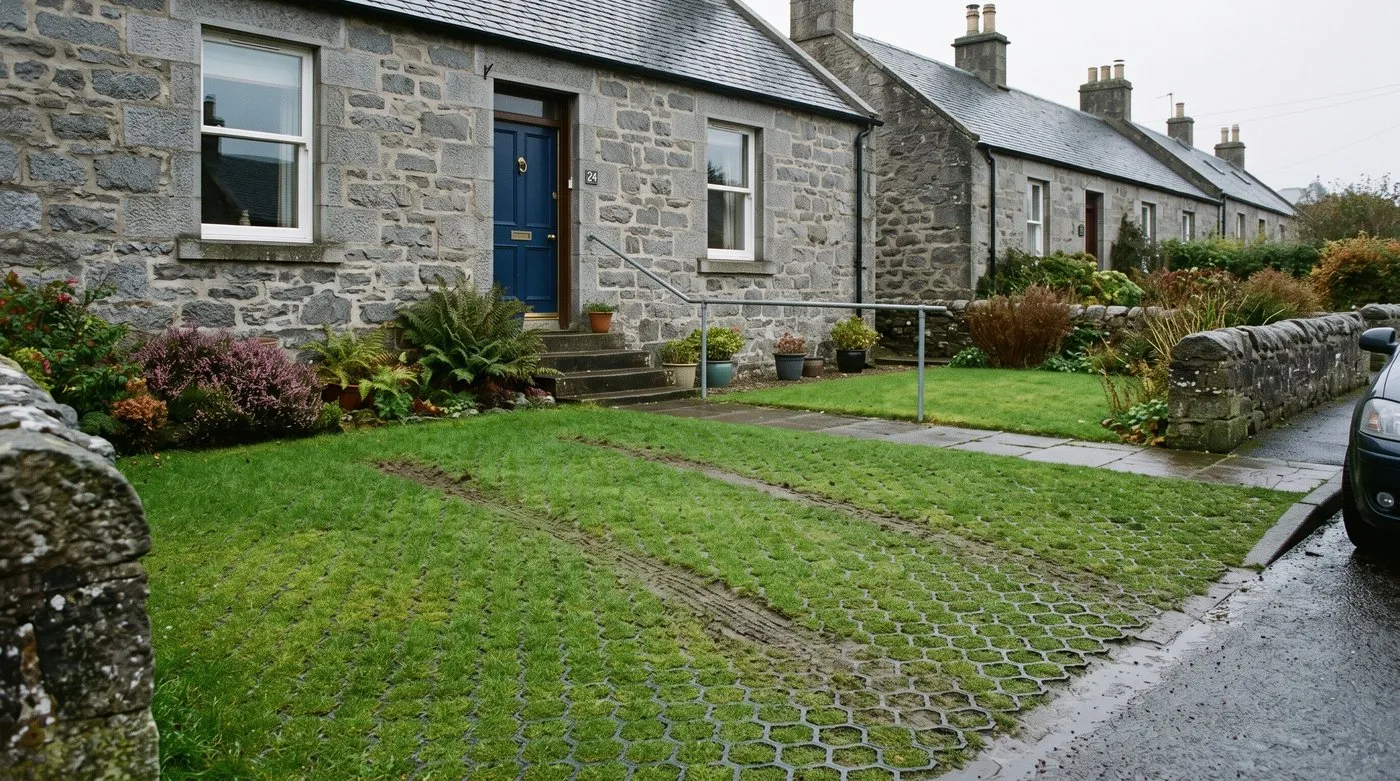
A grass-filled grid keeps a front garden green while still taking a parked car.
How to build a permeable front garden
Dig out, check drainage, lay the membrane and sub-base, then the surface and edging. For driveways, especially on clay, it’s worth using an experienced installer.
- Dig out the old surface and topsoil to the depth your chosen system needs.
- Check the ground drains. Dig a test hole, fill it with water and see how fast it falls.
- Lay a geotextile membrane to stop soil mixing into the stone.
- Add the no-fines sub-base in layers, firming it lightly rather than hammering it solid.
- Add a laying course of clean 2-6mm grit if you’re using blocks. Gravel and grids don’t need one.
- Lay the surface, then fit firm edging to stop it spreading.
On heavy clay that barely drains, a soakaway under or beside the drive can hold water while it seeps away. Our guide to soil drainage and structure explains why clay is slow. A rain garden at the low point of the plot is another lovely way to catch run-off.
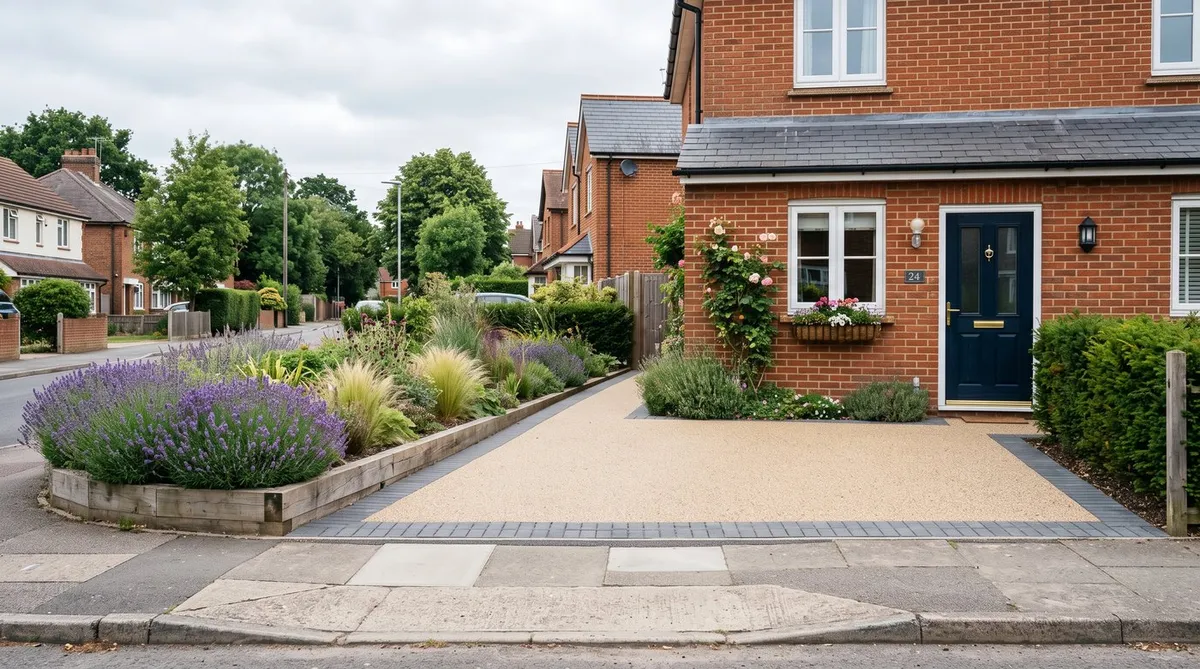
Keep some planting in your front garden
Pave only what you need and keep the rest planted. Borders give rain somewhere to soak in and give bees and birds somewhere to live.
Even a narrow strip of tough plants, a low hedge or a few shrubs beside the drive softens the look. Lavender, grasses and low evergreens cope well with a sunny frontage. Our front garden ideas have planting plans that work alongside a drive.
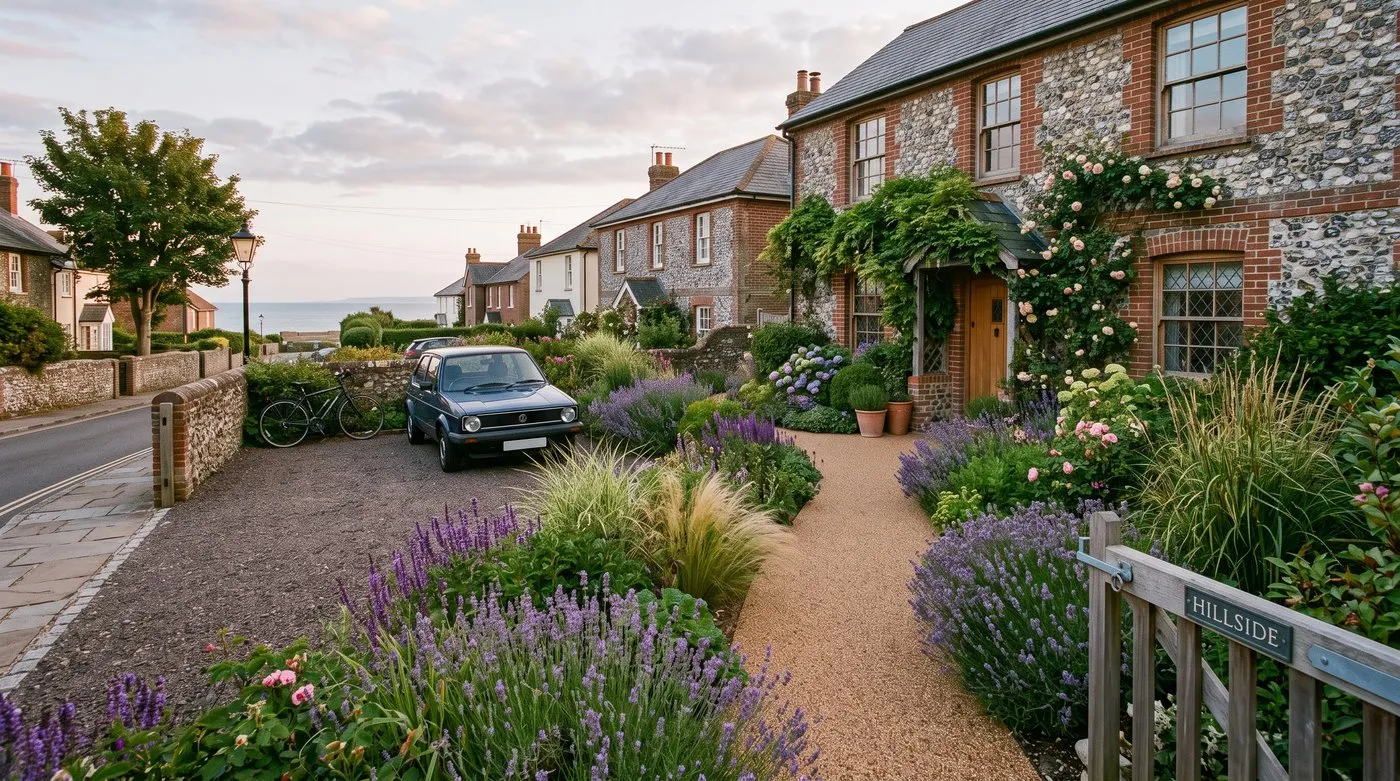
Keeping wide planted borders beside the drive lets rain soak in and gives pollinators a home.
Common permeable paving mistakes
- Laying a sealed surface over 5 square metres. Ordinary tarmac or slabs draining to the road need permission. Choose a permeable finish or send the water onto a border.
- Permeable blocks on a Type 1 base. The base sheds water, so the blocks puddle. Use a no-fines sub-base.
- Mixing up resin-bonded and resin-bound. Check the quote says “bound”.
- Too shallow a sub-base. A thin layer can’t hold a downpour, and it won’t carry a car. Follow the supplier’s depth guide.
- Paving the whole lot. You lose the planting, the wildlife and much of the drainage. Keep beds and borders.
For more ideas on planning your outdoor space, visit our garden design hub.
Frequently asked questions
Do I need planning permission to pave my front garden in the UK?
Not in England if the surface is permeable or drains onto your own garden. You only need it to cover over 5 square metres with a sealed surface draining to the road. Wales has a similar rule. Scotland and Northern Ireland have their own, so check with your council.
What makes paving permeable?
An open stone sub-base with the fine dust removed. Ordinary MOT Type 1 contains dust that packs down solid and sheds water. A permeable build uses clean, open-graded stone such as Type 3, so rain drains through the surface and soaks away below.
Is resin-bound gravel permeable?
Yes, resin-bound gravel lets water through when laid on a permeable base. The stones are mixed with resin and trowelled on, leaving tiny gaps. Resin-bonded gravel is different. Stones are scattered on a sealed resin coat, so water runs off.
What is the cheapest permeable surface for a front garden?
Loose gravel is usually the cheapest. It drains naturally, is quick to lay and easy to top up. The downsides are stones wandering onto the pavement and needing a rake now and then. A gravel-filled grid solves both.
Can you park a car on permeable paving?
Yes, with a deep enough sub-base built for vehicles. Resin-bound gravel, permeable block paving and filled grids all take a family car. Loose gravel works too but scatters under turning wheels, so a grid suits a busy parking bay better.
Does permeable paving get blocked over time?
It can, if leaves and soil are left to rot into it. Sweep permeable block paving and porous surfaces once or twice a year to keep the gaps open. Top up the grit in block paving joints when it sinks.
What sub-base do you use for permeable paving?
Clean, open-graded crushed stone such as Type 3 or 4-20mm. Lay it over a geotextile membrane, deeper for driveways than paths, and follow the paving supplier’s depth guide. Never use ordinary MOT Type 1, which packs down into a layer water can’t pass.
Once your drive is sorted, catch the rain from the roof too with our guide to installing a water butt.
Our team produces practical UK gardening guidance from source research, contributor records and established horticultural practice. Editorial standards are overseen by Matt W.