Key takeaways
- A hose-fed shower head on a bracket is the quickest and simplest garden shower
- Solar shower bags give a warm rinse on sunny days, with no running cost
- Hot plumbed showers need a plumber, and any electric heater needs an electrician
- Drain shower water to a gravel soakaway at least 5 metres from the house
- Use brass and stainless steel fittings, which cope with wet and frost far better than plastic
- Drain and isolate the pipes before the first frost or they can split
An outdoor shower is handy for rinsing off after the beach, the allotment, the paddling pool or a muddy run. It keeps the worst of the dirt out of the house, and on a hot day it’s a treat. The simplest version is just a shower head on a bracket and a hose from the outside tap.
This guide covers the main types, from hose-fed and solar to plumbed hot water, plus the bits that make it last: drainage, privacy, materials and draining it down for winter.
Which type of outdoor shower suits your garden?
For most UK gardens, a cold or solar shower is plenty, as you’ll mostly use it on warm days. Go for hot water if you want a longer season or daily use.
| Shower type | Hot or cold | Fitting | Best for |
|---|---|---|---|
| Hose-fed wall shower | Cold | Easy DIY | Quick summer rinses, paddling pool days |
| Solar bag or solar shower | Warm on sunny days | Easy DIY | Allotments, campsites, no plumbing |
| Freestanding portable shower | Cold or warm | No fixing needed | Renters, patios, no drilling |
| Plumbed cold shower | Cold | Plumber or confident DIY | A permanent fixture, coastal homes |
| Plumbed hot shower | Hot | Plumber, plus electrician for a heater | Longer season, daily use |
A hose-fed wall shower is the easiest. Fix a shower head bracket to a wall or post and run a hose from the outside tap. A quick-release connector lets you unclip it for winter. Freestanding showers connect to a hose and can be moved or stored, which suits renters.
A plumbed cold shower has its own pipe from the mains, with a valve indoors so you can turn it off. A plumbed hot shower has hot and cold feeds to an outdoor mixer. Both are permanent and best fitted by a plumber.

Left, a simple hose-fed shower off the garden tap. Right, a plumbed shower with hot and cold feeds to a mixer.
How to get water to a garden shower
You have two routes: a hose from the outside tap, or a dedicated plumbed pipe. The hose is quick. The pipe is permanent.
A hose from the outside tap needs no tools beyond a bracket and a connector. Use a brass quick-release coupling rather than a plastic one, as plastic cracks in sunlight over time. Keep the hose run short and use a decent-quality hose for a steady spray. Water sitting in a hose in the sun can come out very hot, so run it for a few seconds before you step under.
A plumbed feed runs a pipe from the house supply to the shower. Fit an isolation valve indoors or in an accessible box so you can turn it off and drain it. Outside taps and feeds need a double-check valve to stop water flowing back into the mains, which the water regulations require. A plumber will know this and fit it as standard.
Hot water options for an outdoor shower
There are three main ways to get warm water outside, from free to a proper plumbing job.
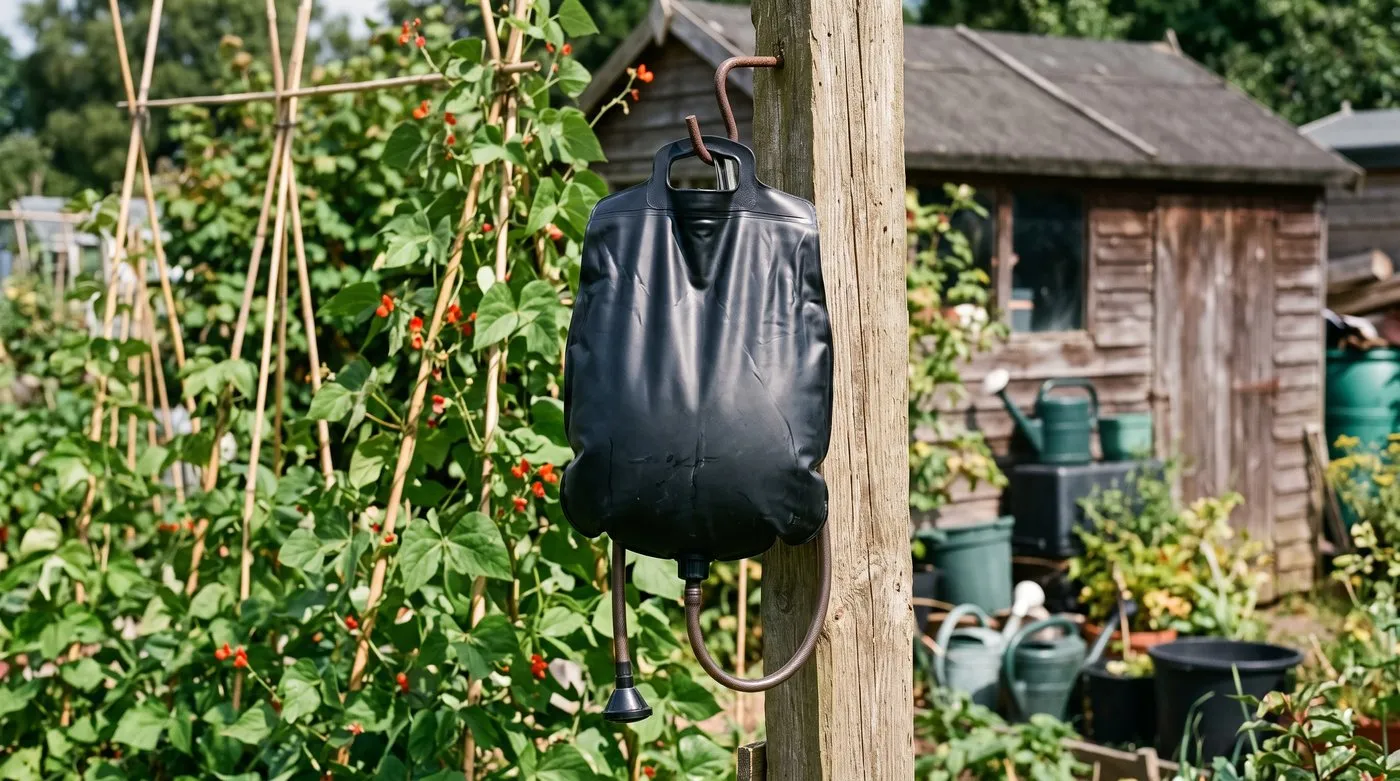
A solar bag warms up in a few hours of sun. Handy on an allotment with no plumbing at all.
Solar shower bags are black bags you hang in the sun for a few hours. They warm enough for a short rinse and cost nothing to run. No sun means no warmth, and they empty quickly. Test the temperature before use, as they can get hotter than you’d expect.
Plumbed hot water from the house gives the best shower. A plumber runs hot and cold pipes from your boiler or hot water system to an outdoor thermostatic mixer. The thermostatic part keeps the temperature steady and helps prevent scalding.
An electric instant heater suits a shower away from the house. It needs a weatherproof unit, RCD protection and a dedicated circuit fitted by a qualified electrician. Never try to wire anything outdoors yourself near water.
Drainage: where does the shower water go?
Into a gravel soakaway, at least 5 metres from the house. Get the drainage right first and the shower stays pleasant. Skip it and you’ll be standing in a bog.
A soakaway is a pit under or near the shower, lined with permeable membrane and filled with clean gravel. Water trickles through the gravel and soaks into the soil. For a garden shower, a pit roughly a metre across and a little over half a metre deep is a common size. Keep it well away from the house, so water doesn’t collect around the foundations.
On heavy clay, water drains slowly and a simple pit can fill up. A French drain, a gravel trench with a perforated pipe, can carry water to a lower part of the garden. If you’re unsure, the guide to soil drainage and structure explains how to test your soil.
Keep shower water on your own land. Plain water and a little biodegradable soap can soak away into the garden. Never pipe it to a stream, ditch or surface-water drain.

A gravel soakaway under a slatted deck. Water drops straight through the boards and soaks away into the soil.
What base works under an outdoor shower?
Something that drains freely and isn’t slippery. A muddy patch under the shower defeats the point.
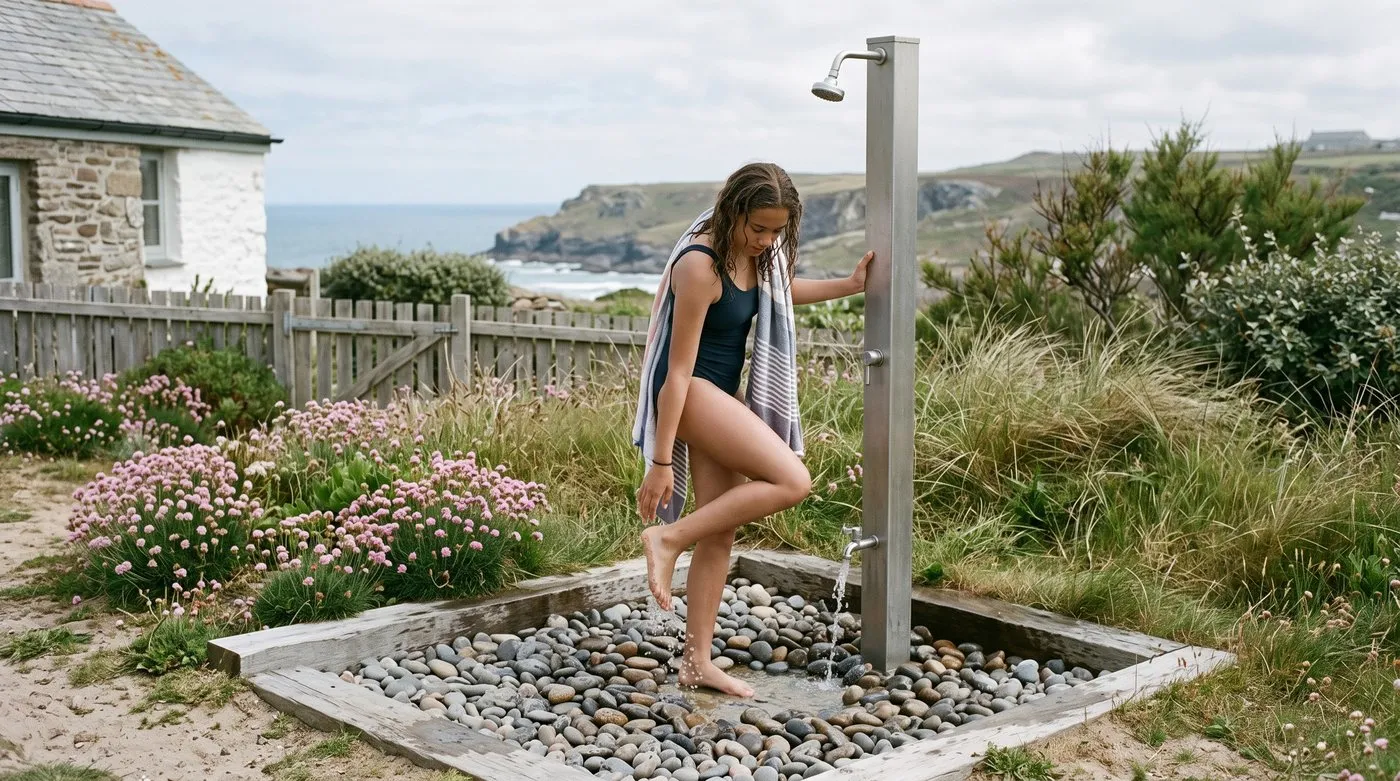
A pebble base drains fast and stops the ground under the shower turning to mud.
Slatted timber decking is the most popular. Leave gaps between the boards so water falls through to the gravel below. Use pressure-treated timber or a durable hardwood, and keep it raised so it dries between uses. The decking ideas guide has more on materials.
Gravel or pebbles are the cheapest base. They drain well and feel fine with sandals on. Lay them over membrane straight above the soakaway.
Textured stone or porcelain paving, laid with a slight slope towards a drain or gravel strip, gives a smarter look. Choose an anti-slip finish, as smooth wet stone is treacherous. The guide on how to lay a patio covers slopes and bedding.
Privacy screens and enclosures for garden showers
Most people want some screening before they’ll use a garden shower, even in swimwear.
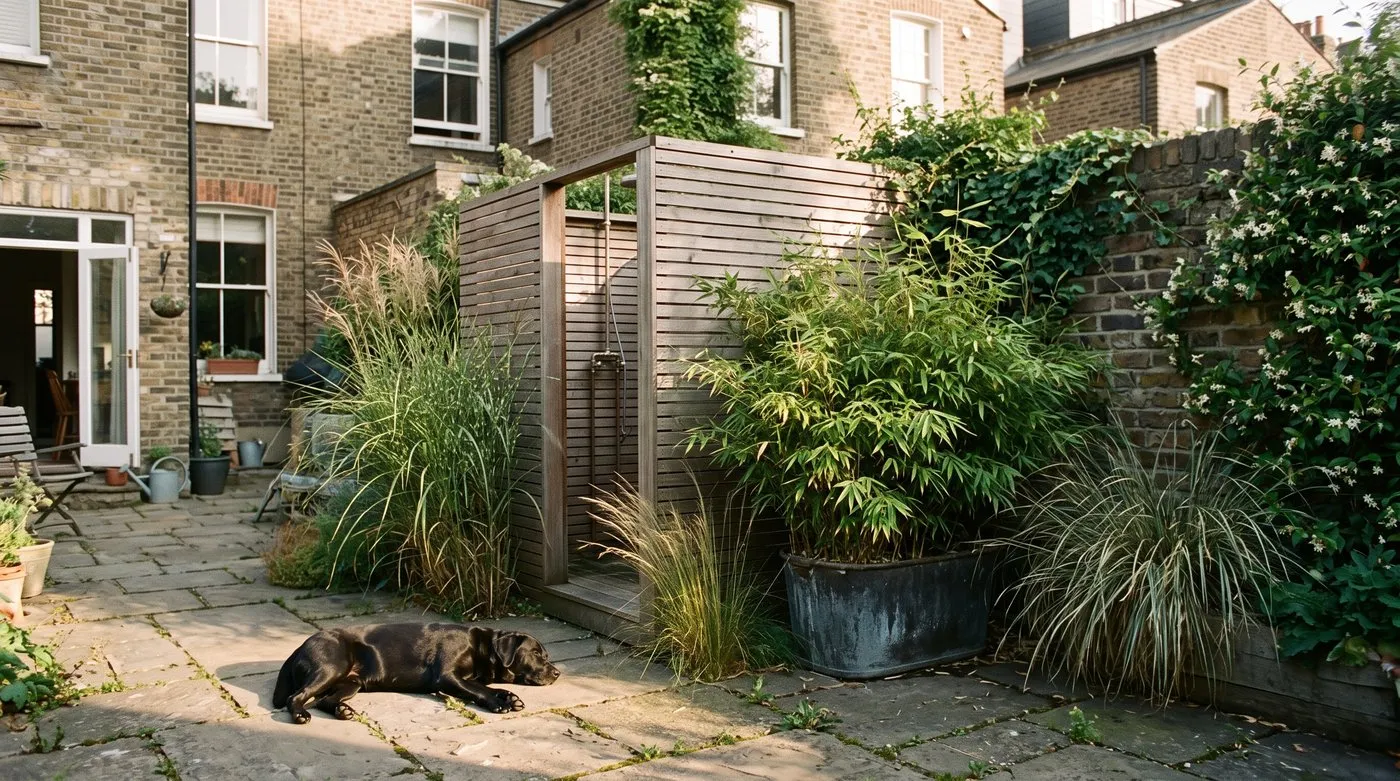
Slatted screens give privacy but let air through, so the timber dries out between uses.
A single slatted screen, around head height, on the overlooked side blocks the main view while keeping things airy. Slats let air through, so the timber dries out and doesn’t go mossy.
A three-sided enclosure gives full privacy for a permanent shower. Leave the top open so it stays bright and dries quickly. Leave a gap at the bottom for water to escape.
Planting softens any screen. Tall grasses, clumping bamboo or an evergreen shrub all work. Avoid running bamboo unless it’s contained by a proper root barrier. The guide to privacy screening with hedges and trees has more ideas.
Gardener’s tip: Face the open side of the shower towards a wall, fence or thick planting, not a neighbour’s window. Check the sightlines from upstairs windows before you fix anything.
Which materials last outdoors in UK weather?
Stainless steel and solid brass. Rain, frost and sunlight quickly ruin plastic and cheap chrome.
Marine-grade 316 stainless steel resists rust and salty air, so it’s the one to choose by the coast. Solid brass valves and connectors cope well with constant wet and frost. Make sure it’s solid brass, not brass-plated.
For the structure, use pressure-treated softwood, a durable hardwood or natural stone. Avoid indoor bathroom fittings made of plastic or chrome-plated metal. They crack, flake or seize outdoors, and split if water freezes inside them.

Marine-grade stainless steel copes best with salty sea air in coastal gardens.
How to winterise an outdoor shower
Drain it before the first frost, usually in October or November. Water left in pipes freezes, expands and splits fittings, and you won’t know until it floods on the thaw.
- Turn off the isolation valve so no more water can enter the line.
- Open the shower and any drain valve at the lowest point to let the pipe empty.
- Clear any water left in low spots and in the mixer, following the maker’s instructions.
- Disconnect a hose-fed shower and store the head and hose in the shed.
If you’re installing a plumbed shower, ask for a drain-down valve at the lowest point. It makes winterising a two-minute job. Lagging exposed pipes helps a little, but only draining reliably prevents frost damage.

Opening the drain valve in autumn empties the line, so there’s nothing left in the pipe to freeze and split.
Do you need permission for an outdoor shower?
Usually not for a simple shower. A wall-mounted or freestanding shower fed from your own supply doesn’t normally need planning permission. A large roofed enclosure is more like a small outbuilding, so check the rules if it’s tall or near a boundary. Ask your council first if your home is listed or in a conservation area.
The plumbing and electrics matter more. New water pipes must meet the water regulations, including a valve to stop backflow into the mains. Any outdoor electrical work, such as a heater, should be done by a registered electrician with RCD protection.
Common mistakes with outdoor showers
- Skipping the drainage. The ground turns to mud within days. Dig the soakaway first.
- Using indoor fittings. Plastic and chrome-plated parts crack and flake outside. Buy brass or stainless.
- Forgetting to drain down. One hard frost can split a full pipe. Drain it every autumn.
- Ignoring the neighbours’ view. A shower in full view rarely gets used. Plan the screen first.
- Draining near the house. Keep the soakaway at least 5 metres from the walls.
When can you use an outdoor shower in the UK?
Most people use one from late spring to early autumn, with July and August the peak. A plumbed hot shower stretches the season a little either side. For most gardens it’s a summer feature. Drain it down in autumn and bring it back to life in spring.
An outdoor shower pairs well with a sheltered seating corner and some planting. For more ways to make the most of water in the garden, see the water feature ideas guide. A rainwater harvesting system can also keep the plants around your shower watered for free.
Frequently asked questions
Do I need planning permission for an outdoor shower?
A simple garden shower doesn’t usually need planning permission. A large roofed enclosure is treated more like an outbuilding, so check if it’s tall or close to a boundary. Always check first if your home is listed or in a conservation area. Shower water must stay on your own land, never running to a stream or ditch.
How do you get hot water to an outdoor shower?
Use a solar bag, or have a plumber run a hot feed from the house. A solar bag warms water in the sun for a short rinse. For a proper hot shower, a plumber can run hot and cold pipes to an outdoor thermostatic mixer. An electric instant heater is another option, fitted by a qualified electrician.
Where does the water from an outdoor shower go?
Into a gravel soakaway, at least 5 metres from the house. A soakaway is a pit filled with clean gravel that lets water seep into the soil. Plain water and a little biodegradable soap are fine on free-draining ground. On heavy clay you may need a gravel trench with a perforated pipe to carry water further away.
How do I stop outdoor shower pipes freezing in winter?
Turn off the supply indoors and drain the pipes before the first frost. Open the shower and any drain valve at the lowest point so the line empties completely. Water left in the pipes can freeze and split fittings. Disconnect hose-fed showers and store the head and hose indoors.
What is the best material for an outdoor shower?
Stainless steel and solid brass last longest outdoors. Marine-grade 316 stainless suits coastal gardens, where salty air corrodes cheaper metal. Avoid plastic and chrome-plated indoor fittings, which crack or flake outdoors. For the screen and base, use treated timber, hardwood or textured stone.
Can I use my outdoor shower all year?
Most people use one from late spring to early autumn. A plumbed hot shower can stretch into spring and autumn. In winter, drain it down to protect the pipes. Hardy sea and cold-water swimmers sometimes keep a hose-fed rinse for milder days.
Planning the space around your shower? Read the guide to garden room ideas for ways to build a proper outdoor retreat, or browse the garden design hub.
Our team produces practical UK gardening guidance from source research, contributor records and established horticultural practice. Editorial standards are overseen by Matt W.