
Key takeaways
- A simple hole-and-water test shows how fast your soil drains
- A jar of soil and water shows how much sand, silt and clay you have
- Mulching with compost or manure every autumn improves both clay and sandy soil
- Never add sand to clay, as it sets like concrete
- Raised beds are the quick fix on very wet or rubble-filled ground
- Stay off wet soil, as treading on it squashes out the air
Drainage decides whether your plants thrive or drown. Most UK gardeners battle it one way or another, whether it’s heavy clay that stays soggy for days or sandy soil that dries out in hours. Here’s how to find out what you’ve got and how to fix it.
What is soil structure and why does it matter?
Soil structure is how the tiny bits of sand, silt and clay clump together. The gaps between those clumps decide how fast water drains, how much air gets to the roots and how easily roots can push through.
Good soil feels like coarse breadcrumbs. Pick up a handful and it should break apart easily. If it smears into a shiny ribbon between your fingers, there’s a lot of clay. If it runs through your fingers like dry sand, it needs something to bind it.
Structure matters more than most people think. A well-looked-after clay soil will grow better plants than a squashed loam. The RHS guide to soil types is a handy read if you want more.
How to test your soil drainage
Two easy tests tell you most of what you need. The hole test shows how fast your soil drains. The jar test shows what it’s made of. All you need is a spade, a jar and some water.
The percolation test
- Dig a hole 30cm wide and 30cm deep
- Fill it with water and let it drain away completely, which soaks the soil around it
- Fill it again straight away
- Time how long the second lot takes to drain
What your result means:
| How long it takes | Drainage | Likely soil | What it means |
|---|---|---|---|
| Under 15 minutes | Very fast | Sandy or gravelly | Water and food wash away too quickly |
| 15-30 minutes | Fast | Sandy loam | Great for Mediterranean and drought-loving plants |
| 30 minutes to 4 hours | Just right | Loam or improved clay | Suits most plants |
| 4-12 hours | Slow | Clay or silt | Many plants struggle, so improve it |
| Over 12 hours | Very poor | Heavy clay or squashed soil | Likely to waterlog, needs real work |
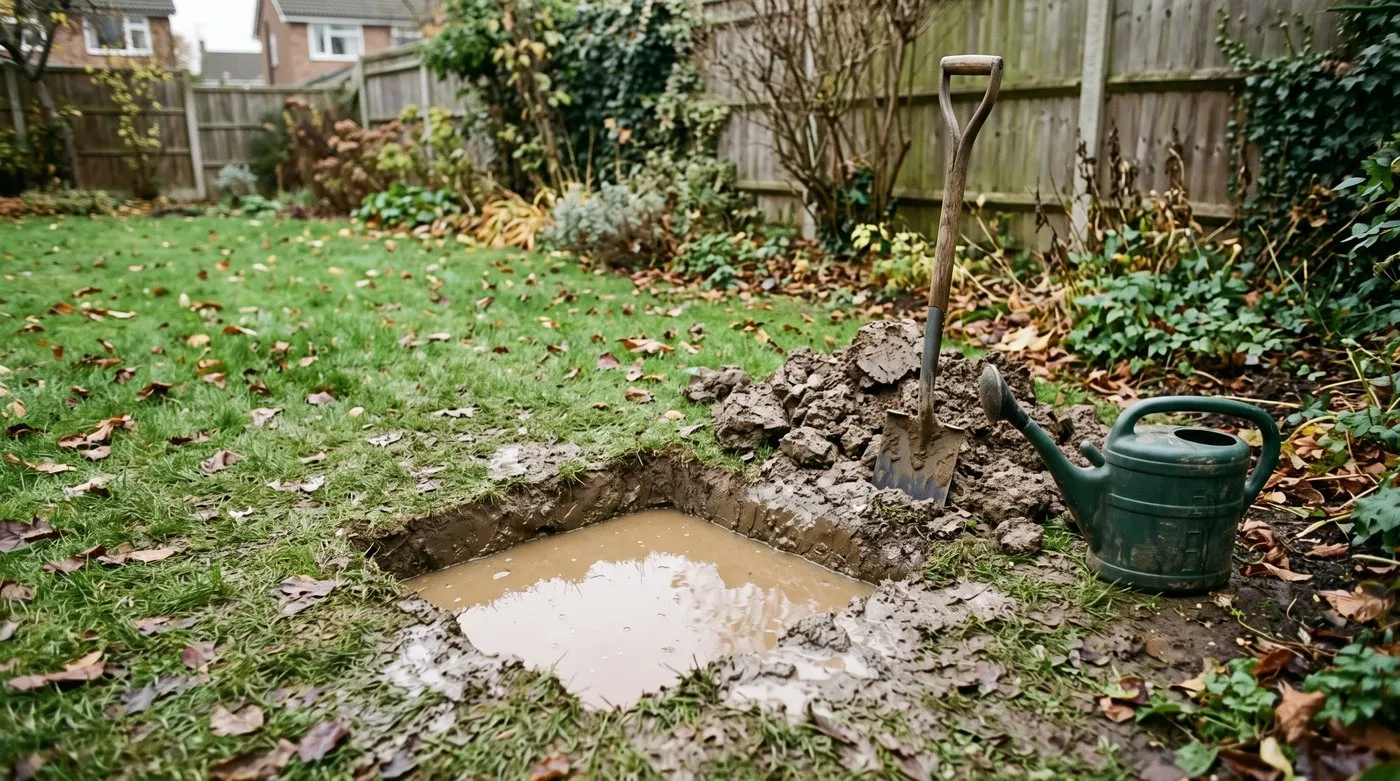
Fill the hole twice and time the second lot. Gone within a few hours is fine, but water still sitting there next morning means the soil needs help.
The jar test
The jar test shows roughly how much sand, silt and clay is in your soil.
- Fill a tall glass jar a third full with soil from about 15cm down
- Top up with water and add a small squirt of washing-up liquid to help separate the soil
- Put the lid on, shake hard for 2 minutes and leave it alone
- After a minute, mark the bottom layer. That’s sand.
- After a couple of hours, mark the next layer. That’s silt.
- After a day or two, once the water clears, mark the top layer. That’s clay.
Compare the thickness of the layers. If the clay layer is a big share of the total, improving drainage will make a real difference.
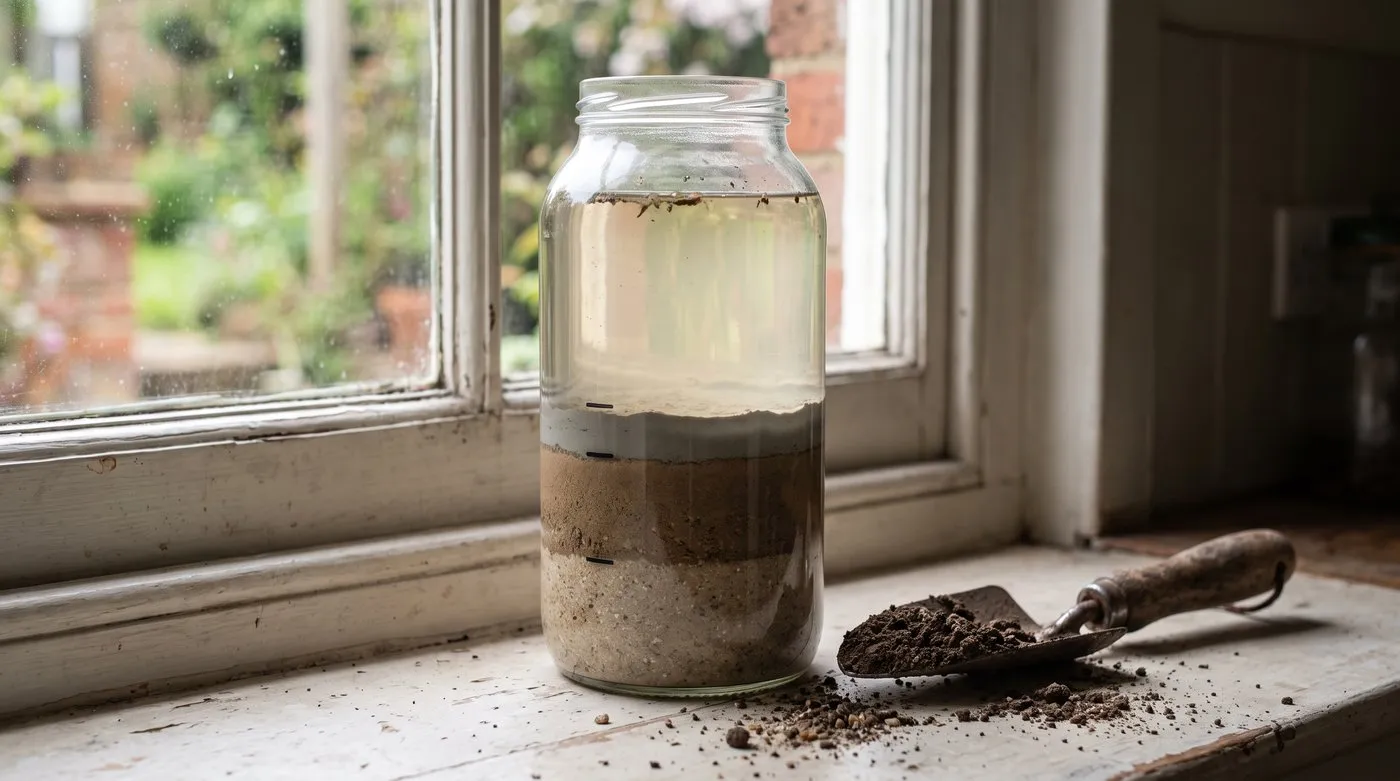
Each layer settles at its own speed: sand first, then silt, then clay. Compare their thickness to see what your soil is mostly made of.
UK soil types and their drainage characteristics
Britain has five main soil types, and each behaves differently. Knowing yours saves a lot of trial and error.
| Soil type | Drainage | Holds water? | How it digs | Common in | Main problem |
|---|---|---|---|---|---|
| Heavy clay | Very slow | Lots | Sticky when wet, rock-hard when dry | Midlands, Thames Valley, Essex, the Weald | Soggy in winter, cracks in summer |
| Sandy | Very fast | Very little | Easy all year | Suffolk, Norfolk, Surrey heaths, coasts | Dries out, food washes away |
| Silt | Fairly slow | Lots | Smooth, packs down easily | River valleys, Fens, Somerset Levels | Forms a crust on top |
| Chalk | Fast | Not much | Stony, thin topsoil | South Downs, Chilterns, Yorkshire Wolds | Limey soil limits what you can grow |
| Loam | Just right | Balanced | Crumbly and pleasant | Here and there | Keeping it that way |
Heavy clay is very common in English gardens. If it sticks to your boots, smears shiny when squeezed and stays soggy for days after rain, it’s clay. Our guide on how to improve clay soil has step-by-step help.
Sandy soil has the opposite problem. Water runs straight through, taking plant food with it, and plants wilt quickly in dry spells. Our guide to improving sandy soil covers what to add.

Clay soil after winter rain. The water sits on top for days because it can’t drain through.
How to improve clay soil drainage
Clay gets better slowly, with plenty of organic matter. Quick fixes like sand make it worse. The aim is to turn a sticky, airless lump into crumbly soil that holds moisture without getting soggy.
Annual organic mulching
This is the best thing you can do. Spread 5-10cm of well-rotted organic matter over the soil every autumn. Don’t dig it in. Let the worms and frost do it for you. Good choices are:
- Well-rotted farmyard manure, the favourite for heavy clay
- Garden compost from your own compost heap
- Leaf mould, great for structure though low in food
- Council green waste compost, often the cheapest way to buy a lot
Keep it up and within a few years the clay drains faster, crumbles instead of smearing and cracks less in summer. It’s the idea behind the no-dig method, and it really works.
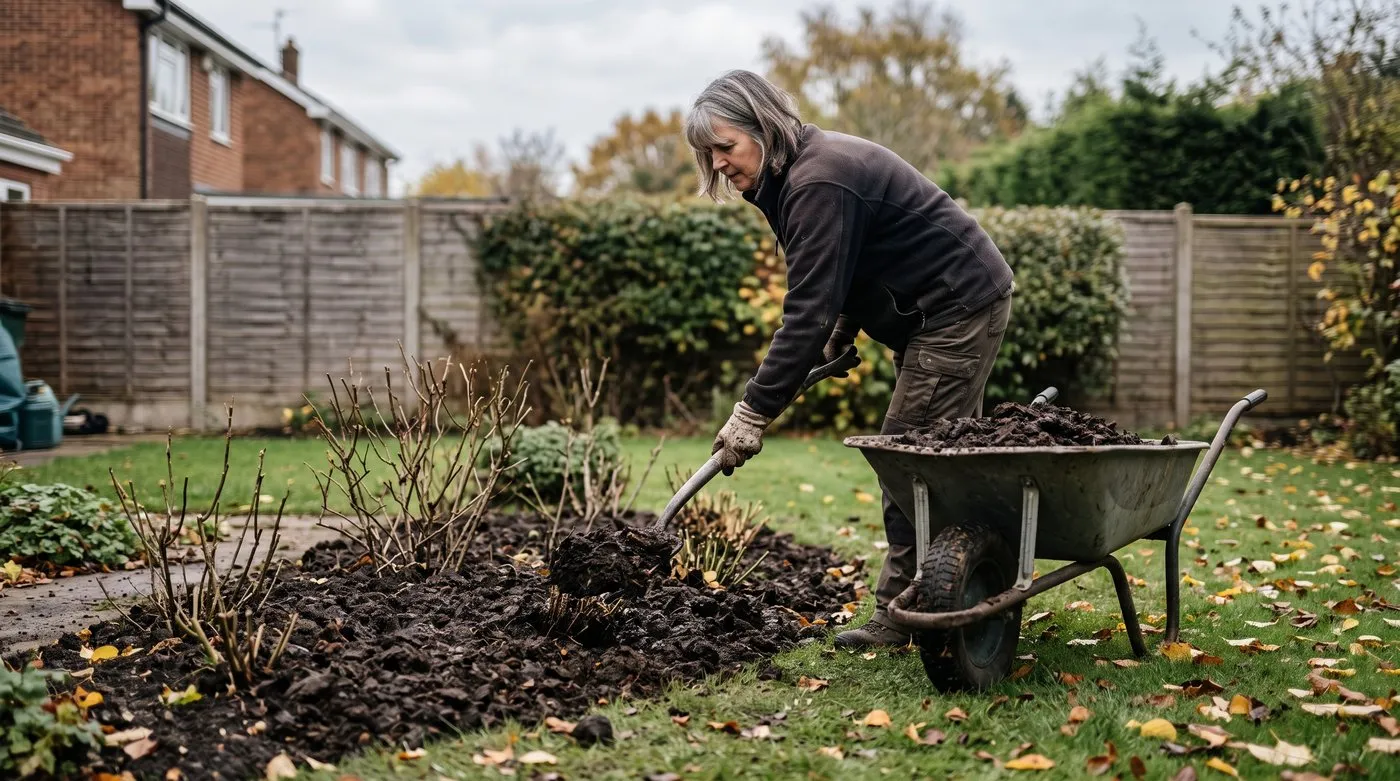
Spread it on top and let the worms and frost do the digging. A few autumns of this and sticky clay starts to crumble.
Grit for planting holes
When planting shrubs or perennials into clay, mix plenty of horticultural grit into the soil you put back. It helps water drain away from the roots straight away. Don’t use builder’s sand, which is too fine and clogs the clay. Sharp, angular grit is best, as it keeps the gaps open.
How to improve sandy soil water retention
Sandy soil needs the opposite. The grains are big with lots of air between them, so water and plant food drain away before roots can use them.
Building water-holding capacity
Organic matter is the answer again, but here it acts like a sponge. It holds water and food where the roots can reach. Spread the same 5-10cm mulch each year, choosing things that hold lots of water:
- Leaf mould, the best choice for sandy soil
- Well-rotted garden compost
- Coir (coconut fibre), which holds plenty of water but has to be shipped a long way
Skip peat. Digging it up damages precious wild habitats, and there are good peat-free options.

Adding well-rotted organic matter is the best way to improve both clay and sandy soil.
The role of organic matter in soil structure
Organic matter helps every kind of soil. It just does a slightly different job in each.
In clay soil, it gets between the tiny clay particles. As worms and microbes break it down, they make sticky substances that glue the clay into crumbs. The gaps between the crumbs let air and water through. Worms also dig channels that help water drain down.
In sandy soil, it fills the gaps between the grains and soaks up water that would otherwise drain straight through.
In every soil, it feeds the worms, fungi and microbes that keep soil healthy. They’re the real workers behind good structure.
A compost heap gives you a steady free supply. A heap you turn often can be ready in a few months. One you leave alone takes about a year but needs no effort.
When to use raised beds versus amending in-situ
Sometimes the ground is just too tricky to fix quickly. Raised beds sidestep the problem by giving you fresh soil above it.
Choose raised beds when
- A hard packed layer below the surface stops water draining
- The site is flat and water just sits there
- The water table is high, as in parts of the Fens
- The garden is full of builder’s rubble, common on new-builds
- You want to grow now and can’t wait a few years
Choose in-situ amendment when
- The soil is reasonable and just needs a boost
- The garden is already planted and you want to keep it
- Your budget is tight, as filling raised beds adds up
- You’re happy to let mulching work over a few years
For help getting started, see our raised bed gardening for beginners guide. Beds just 20cm deep, filled with half topsoil and half compost, solve most drainage problems.
French drains and physical drainage solutions
If mulching alone can’t fix serious waterlogging, a drain is the next step. A French drain is the most practical choice for a home garden.
How a French drain works
A French drain is a gravel-filled trench that catches water and carries it away. Dig a trench 30-45cm deep and 15-20cm wide, sloping gently downhill along its length. Line it with landscape fabric, fill with clean gravel and fold the fabric over before covering with soil. Run the low end to a soakaway, ditch or drain.
When you need physical drainage
- Puddles sit on the surface for two days or more after heavy rain
- Plants have yellowing leaves and rotting roots
- The soil smells sour or eggy when you dig, a sign it’s short of air (our soil testing guide covers other checks)
- A few years of mulching hasn’t helped
You can dig a French drain yourself in a weekend, or pay a landscaper to do it.
Seasonal soil management calendar
| Season | Task | Why |
|---|---|---|
| Spring (March to April) | Lightly fork squashed areas when the soil is moist, not wet | Lets air back in without upsetting soil life |
| Summer (June to August) | Mulch around plants with 5cm of compost | Stops clay baking and cracking |
| Autumn (October to November) | Spread 5-10cm of organic mulch on bare soil | Worms pull it in over winter and frost breaks up lumps |
| Winter (December to February) | Keep off wet soil | Treading on soggy clay squashes out the air you’ve worked to build |
The worst thing you can do to any soil is walk on it when it’s wet. If you have to get onto beds in winter, stand on a plank to spread your weight.
Frequently asked questions
How do I test soil drainage in my garden?
Dig a 30cm hole and fill it with water. Let it drain, then fill it again and time how long it takes to empty. Under 30 minutes is fast, like sandy soil. One to four hours suits most plants. Over four hours means poor drainage.
What causes poor drainage in UK gardens?
Heavy clay is the most common cause. Clay is made of tiny particles with tiny gaps, so water gets stuck. Treading on the soil, vehicles and building work squash out the air and make it worse. New-build gardens often have a hard, packed layer below the surface that stops water draining away.
How long does it take to improve clay soil?
Expect a real difference within about three years. Spread 5-10cm of well-rotted compost, leaf mould or manure every autumn. Worms pull it down into the clay, making channels and crumbs. You’ll see a little change after the first winter, and a big one by year three.
Should I add sand to clay soil for drainage?
No, it makes things worse. The clay fills the gaps between the sand grains and sets hard. Use organic matter instead, which turns clay into crumbs. For a quick fix in a planting hole, mix in plenty of horticultural grit, not sand.
When should I use raised beds instead of improving soil?
Use raised beds when the ground is too wet or too poor to fix easily. That includes a hard packed layer below the surface, a flat site where water sits, a high water table or builder’s rubble. Fill them with a mix of topsoil and compost and you can start growing straight away.
How does organic matter improve soil structure?
It feeds the worms and tiny soil life that rebuild your soil. Worms dig channels that let water drain down. Fungi and microbes make sticky stuff that glues soil into crumbs. Those crumbs hold moisture while letting air and water move through the gaps.
What is the best organic matter for improving drainage?
Well-rotted farmyard manure is best for heavy clay. It opens the soil and feeds it too. Leaf mould is lovely on sandy soil because it holds lots of water. Garden compost suits every soil. Council green waste compost is often the cheapest way to buy in bulk. Avoid fresh manure, which can scorch roots.
Our team produces practical UK gardening guidance from source research, contributor records and established horticultural practice. Editorial standards are overseen by Matt W.


