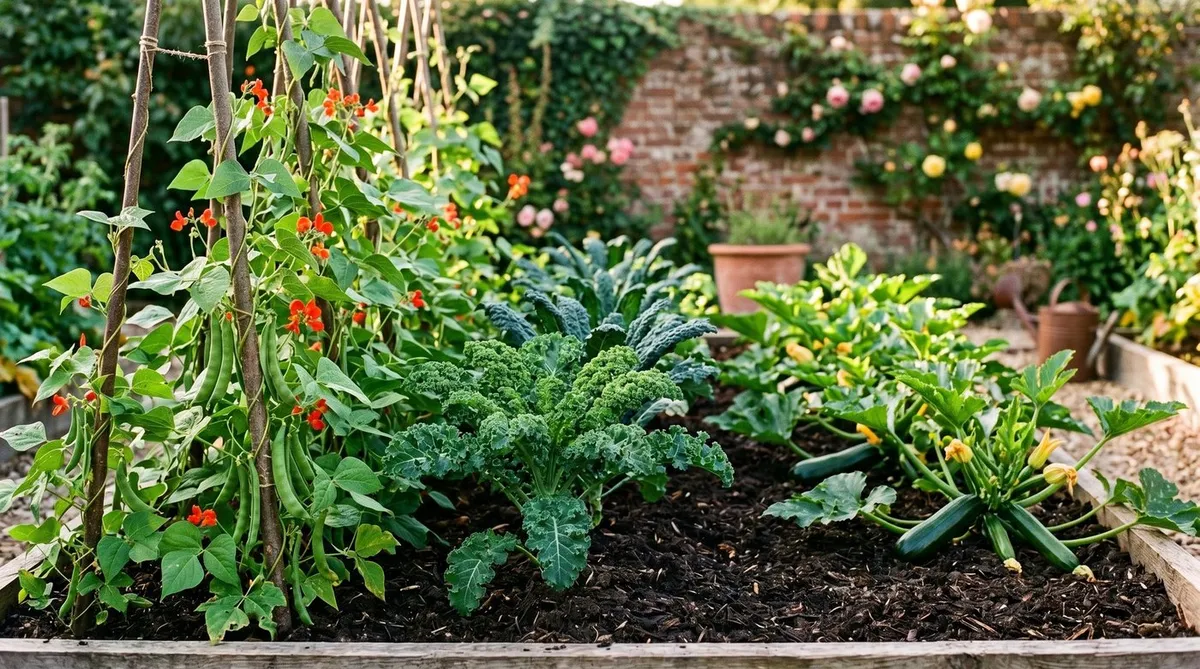
Key takeaways
- Add a thick layer of organic matter every year, as it breaks down fast in sandy soil
- Keep a mulch on the surface to stop the soil drying out
- Feed little and often, because plant food washes through quickly
- Water thoroughly and more often in dry weather, ideally in the morning
- Green manures add organic matter for the price of a packet of seed
- Sandy soil warms up early in spring and is easy to dig all year
Sandy soil can be tricky, but it’s lovely to garden on once you know how to look after it. Water runs straight through, plant food washes away, and in summer it dries to a dusty crust. But it also warms up early in spring, is easy to dig almost any time, and grows brilliant root vegetables and herbs. The secret is plenty of organic matter, a good mulch and feeding little and often.
How to identify sandy soil
First, check what you’ve got. Sandy soil is pretty easy to spot.
The feel test: Rub a handful of moist soil between your fingers. Sandy soil feels gritty, a bit like coarse breadcrumbs, and falls apart when you open your hand. Clay holds its shape and feels sticky. Loam holds together loosely and crumbles when prodded.
The jar test: Fill a jar two-thirds with soil, top up with water, give it a good shake and leave it to settle. Sand drops to the bottom within minutes, leaving fairly clear water. Clay keeps the water cloudy for hours. Loam settles in layers.
The drainage test: Pour a bucket of water on the ground and watch. On sandy soil it vanishes in a few minutes. On clay it can sit there for an hour or more.
A bucket test: on sandy soil, the water disappears in minutes.
For a detailed breakdown, the RHS soil analysis service will send you a full soil report for a small fee.
To see how sandy soil compares with others, our guide to identifying UK soil types covers everything from clay to chalk.
Why sandy soil is difficult to grow in
Sand grains are big compared with clay, so there are big gaps between them. Water runs straight through those gaps instead of staying put. That causes a few knock-on problems.
Plant food washes away. When it rains or you water, nutrients dissolve and drain down past the roots. That’s why plants on sand often have yellowing leaves or poor flowers, even soon after a feed.
It dries out fast. Sandy soil holds much less water than clay or loam. In a dry spell, plants can run short within a few days.
Organic matter gets used up quickly. All that air in the soil speeds up rotting, so compost you add disappears faster than on clay. You need to top it up every year.
It tends to be acid. Rain washes out the calcium that keeps soil neutral, so many sandy soils slowly turn acid. A soil testing kit will tell you where you stand.
The upside is that sand warms up early in spring and you can work it almost any time without squashing it.
Adding organic matter: the most important step
Organic matter is the single best thing for sandy soil. It fills the big gaps between grains, slows the water down, holds on to plant food and feeds the worms and soil life.
Spread a thick layer, around 8-10cm, over the surface every year. On sand you really can’t overdo it. It breaks down quickly, so make it a yearly habit.
A thick layer of well-rotted compost each autumn makes the biggest difference.
Best organic matter for sandy soil
| What to add | Helps hold water | Adds plant food | Where to get it |
|---|---|---|---|
| Well-rotted manure | A lot | Lots | Farms, stables or bagged |
| Garden compost | A lot | Some | Your own compost bin |
| Leaf mould | A lot | A little | Free from autumn leaves |
| Council green waste compost | Quite a lot | Some | Council recycling sites |
| Spent mushroom compost | Some | Quite a lot (slightly alkaline) | Mushroom farms, garden centres |
| Seaweed | A lot | Some | Free near the coast, or dried |
Making your own is the cheapest way to keep up. Our guide to how to make compost takes you from choosing a bin to using the finished stuff.
Leaf mould is a real treat for sandy soil. It holds lots of water but adds little food, so it improves the soil without overdoing the nutrients. Our guide to how to make leaf mould shows you how, from a wire cage to a simple black bag.
Adding clay for a longer-lasting change
Unlike organic matter, clay doesn’t rot away, so mixing some in can change sandy soil for good. It helps the soil hold water and food. The catch is that you need a lot of it, mixed in really thoroughly, to make any difference. For most gardens, yearly organic matter is the easier route.
Either way, you won’t turn pure sand into loam in one season. Keep going and it gets better every year.
Mulching: the fastest visible improvement

A thick mulch keeps sandy soil moist for longer and feeds it as it breaks down.
Mulching is the quickest way to stop sandy soil drying out.
Mulch in late spring once the soil has warmed up, usually April to May, after a good rain. Go thicker than you would on heavy soil, up to about 8cm, as sand dries out and heats up faster in summer.
Good mulches for sandy soil:
- Bark chips: last a couple of years and keep weeds down
- Garden compost: breaks down in a season and feeds the soil as it goes
- Leaf mould: brilliant at holding moisture
- Straw: cheap and does the job for a season
- Seaweed: holds moisture well and is free if you live near the coast
Keep mulch a few centimetres away from plant stems so they don’t rot.
Our guide to how to use mulch covers every type and when to put it down.
Green manures for sandy soil
Green manures are crops you sow on bare ground and then dig in. They add organic matter without you having to buy bags of compost, and some, like beans and clover, add nitrogen too.
| Green manure | When to sow | Adds nitrogen? | Good for |
|---|---|---|---|
| Phacelia | March to September | No | Quick cover, bees love it |
| Field beans | October to November | Yes | Hardy, deep roots over winter |
| Crimson clover | April to August | Yes | Pretty flowers, quick growing |
| Buckwheat | April to August | No | Fast summer cover, killed by frost |
| Grazing rye | September to November | No | Holds the soil all winter |
Dig it in at least four weeks before you sow or plant. Chop it up small first, as big pieces are slower to rot down.
Our guide to green manures and cover crops has sowing rates and more ideas.
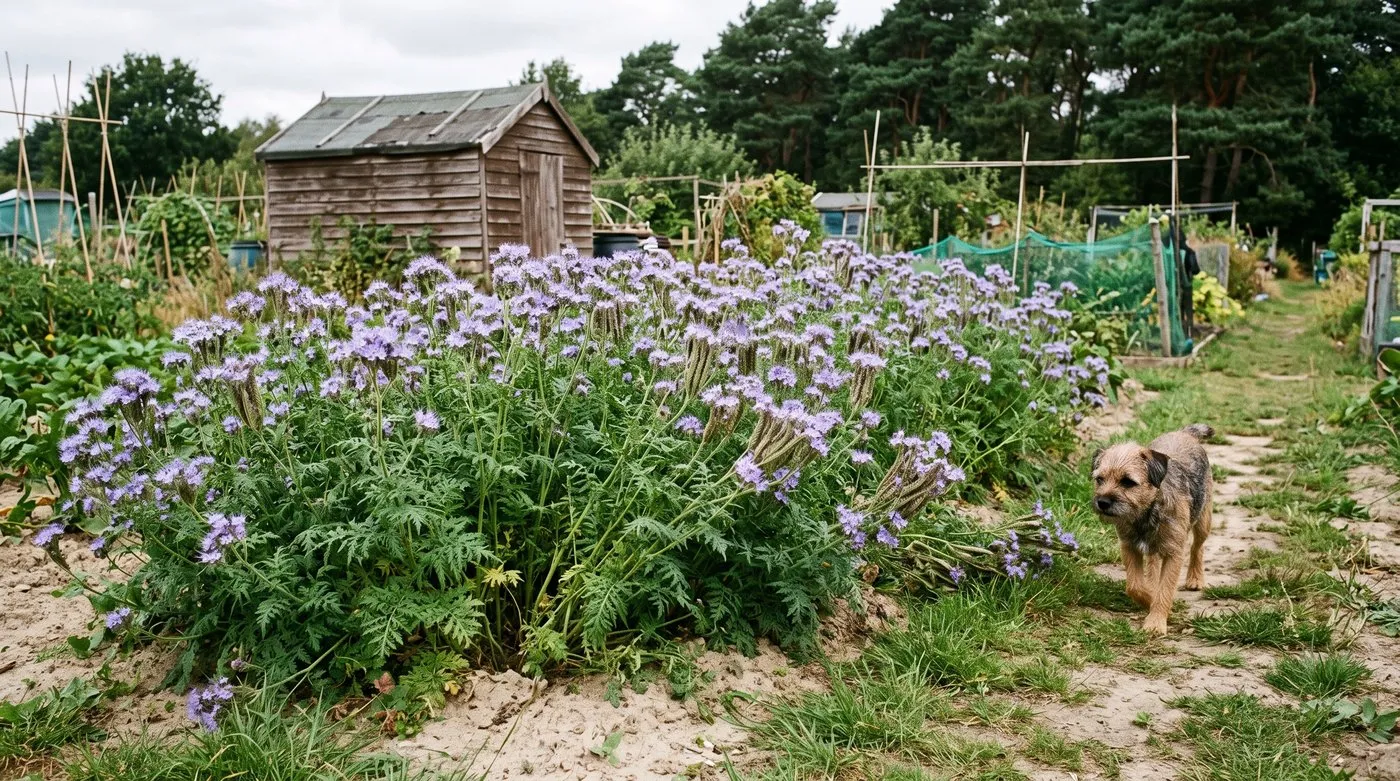
Phacelia covers bare sandy soil quickly and bees love it. Chop it up and dig it in at least four weeks before you sow.
Watering techniques for sandy soil
Sandy soil needs a slightly different approach to watering.
Water thoroughly and more often. One huge soak drains away before roots can use much of it. Two or three good waterings a week in dry weather work better.
Water in the morning. Less is lost to evaporation, and plants have water ready for the warm part of the day.
Try a seep hose or drip system. These let water trickle in slowly at the roots, so the soil has time to soak it up. Sprinklers lose a lot to evaporation. Seep hoses are great in veg beds.
Use a wetting agent if water runs off. Very dry sandy soil can repel water, so it beads up and rolls away. A soil wetting agent from a garden centre helps water soak in again.
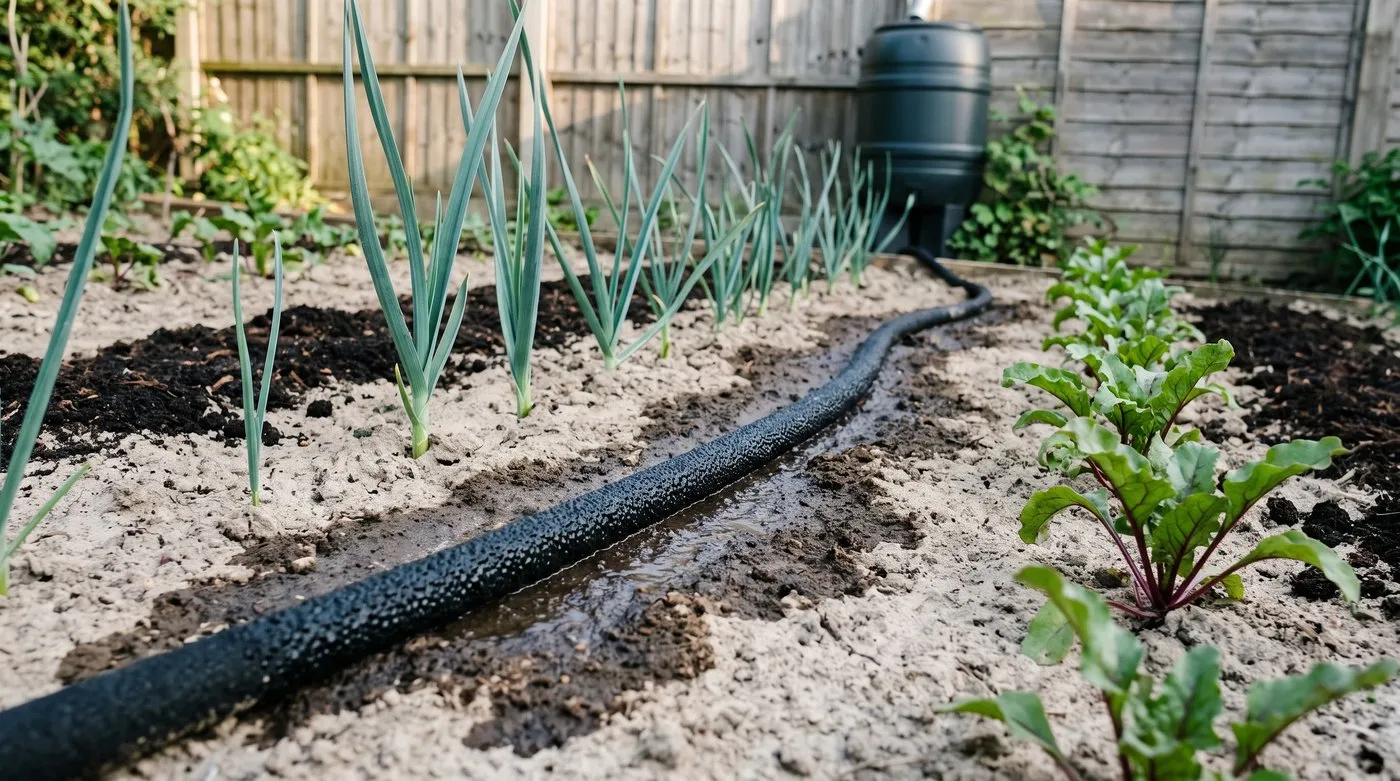
A seep hose lets water soak in slowly at the roots. Running it in the morning means less is lost to evaporation.
Feeding sandy soil: little and often
Sandy soil can’t store plant food the way clay can. A big dose of fertiliser just washes through before plants can use it.
Feed little and often. In the growing season, use liquid feed every couple of weeks at a weaker strength rather than one strong feed a month.
Use slow-release fertiliser at planting. Slow-release granules feed plants gently over a few months, which suits sandy soil much better than ordinary granules.
Go organic where you can. Fish, blood and bone, seaweed meal and chicken manure pellets release food slowly and add a little organic matter too.
Look out for yellowing between the veins. On sandy soil that often means a lack of magnesium. A spray of Epsom salts (20g per litre of water) gives a quick boost. Then keep adding organic matter, and use dolomitic lime if a test shows the soil is acid.
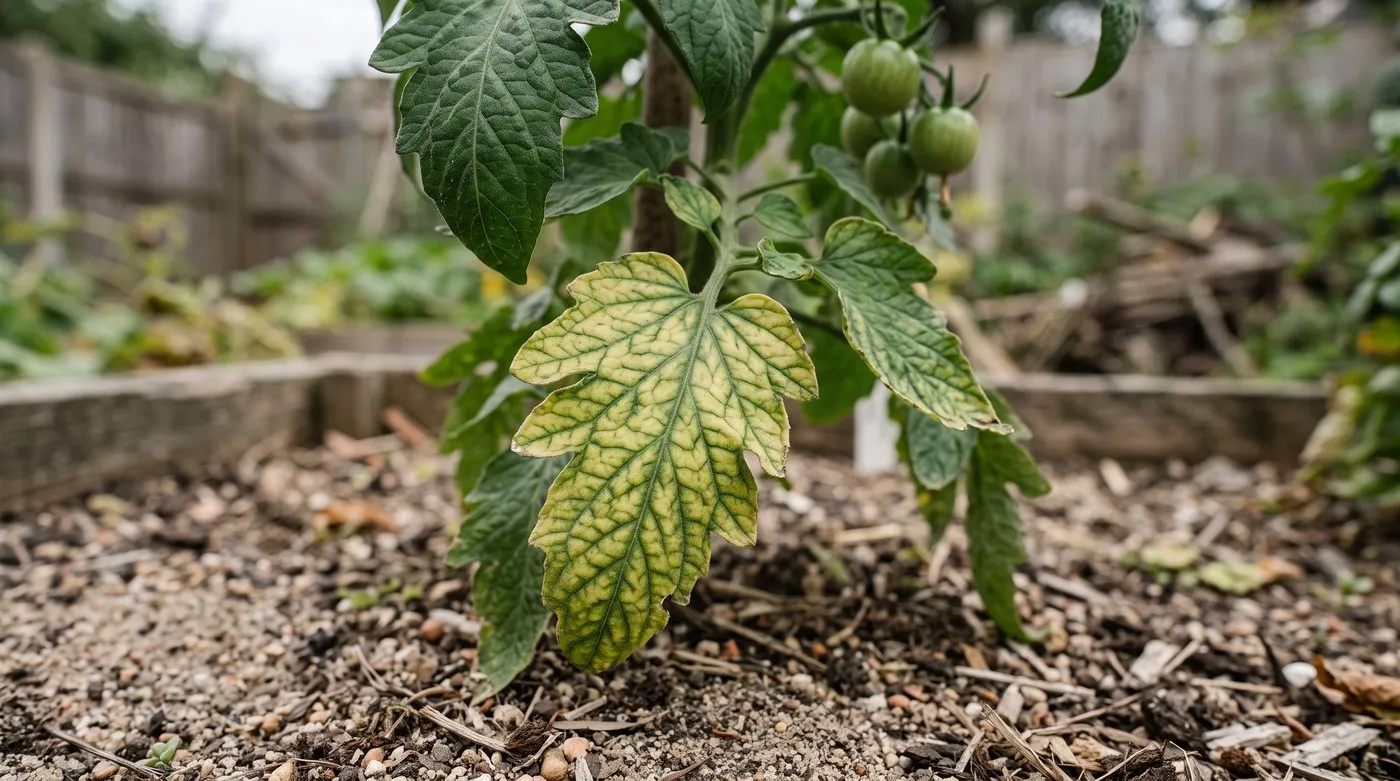
Yellowing between green veins on older leaves often means a lack of magnesium. A quick Epsom salts boost helps, then keep adding organic matter.
Raised beds on sandy ground
Raised beds are a handy way to grow vegetables on very sandy soil. You fill them with better soil, so you skip the worst of the problems.
Make them at least 30cm deep. Fill with roughly two parts topsoil, two parts garden compost and one part leaf mould or well-rotted manure. That drains freely in wet weather but holds much more water than plain sand.
A three-year improvement plan
Improving sandy soil takes a few seasons. Here’s a realistic plan.
Year one, autumn: Test your pH. Spread a thick layer of manure or compost over the beds. Mulch straight away. Sow a winter green manure, like grazing rye or field beans, on bare ground.
Year one, spring: Add a bit more compost before planting. Use slow-release fertiliser at planting, then liquid feed little and often. Put in seep hoses if you can.
Year two, spring and summer: Keep up the regular feeding. Top up the mulch. Sow summer green manures in any gaps.
Year two, autumn: Add another thick layer of organic matter. The soil should look darker and feel a bit heavier, with more worms. Sow a winter green manure again.
Year three: The soil should stay moist for longer after rain, and you may be able to feed a little less often. Keep adding organic matter every autumn for good, as sandy soil never builds up reserves the way clay does.
Plants that love sandy soil
While the soil improves, grow plants that already like free-draining ground. You’ll get great results now.
Vegetables: Carrots, parsnips, beetroot and asparagus do brilliantly. Roots grow long and straight in the loose soil. Potatoes cope well, and courgettes and squash crop heavily if you keep them watered.
Herbs: Lavender, rosemary, thyme, sage and oregano come from dry, sunny places and feel right at home.
Ornamentals: Broom, cistus, heathers, ornamental grasses and most silver-leaved plants suit sand. Many are good for wildlife too.
Bulbs: Tulips and alliums love sandy soil, as they rot in wet clay but thrive where it drains well.
For a full list, see our guides to the best plants for sandy soil and drought-tolerant plants. There’s lots of overlap.
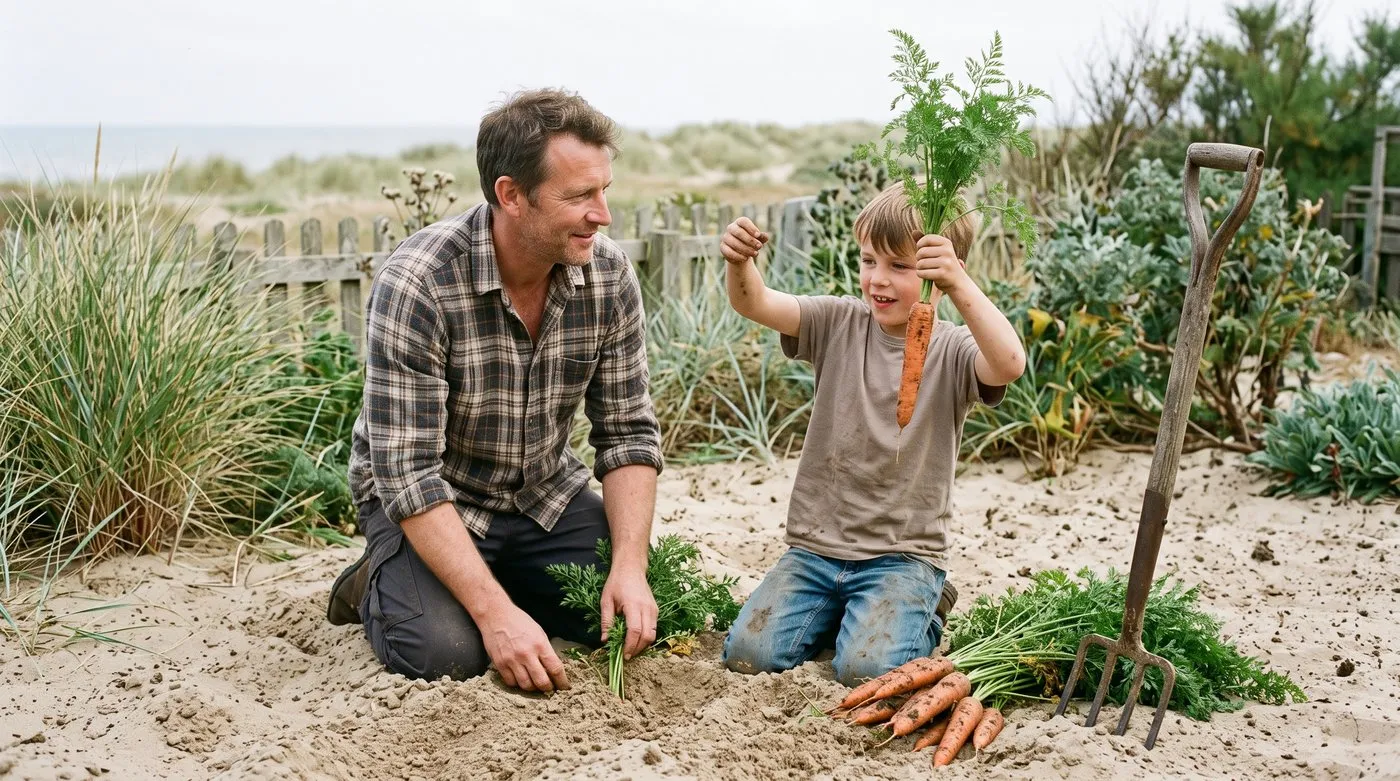
Root crops love sandy soil. Carrots and parsnips grow long and straight where clay would make them fork.
Common mistakes on sandy soil
- Not feeding often enough. A monthly feed leaves plants hungry for weeks on sand. Switch to little and often.
- Pouring on lots at once. A huge feed or soaking mostly drains away past the roots. Small, frequent doses work better.
- Stopping once it improves. Sandy soil slips back within a few years if you stop adding organic matter.
- Forgetting about pH. Sandy soil slowly turns acid. Test every few years and lime only if needed.
- Adding organic matter but skipping the mulch. They work best together. Organic matter improves the soil, and mulch stops it drying out.
Keeping sandy soil improved year after year
Sandy soil isn’t a one-off fix. It rewards little, regular bits of care. The gardeners who do best on sand never miss their autumn layer of organic matter and never let the mulch run out. Get those two habits right and the rest follows.
And sand has real perks. It never gets waterlogged, warms up early and is easy to dig almost all year. Root crops that sulk in clay grow beautifully. For more on soil care, the RHS guide to improving soil is a handy read.

A yearly layer of compost or well-rotted manure is the key to better sandy soil.
Frequently asked questions
How do I know if I have sandy soil?
It feels gritty and won’t hold its shape when squeezed. It drains quickly after rain and feels loose when dry. For a jar test, shake soil and water in a jar and let it settle. Sand drops to the bottom in a thick layer within minutes, while clay keeps the water cloudy for much longer.
What is the best thing to add to sandy soil?
Well-rotted organic matter, such as garden compost or manure. It helps the soil hold water and plant food. Spread a thick layer on top each year and let the worms mix it in. Leaf mould is great too. Keep adding it every year, as it breaks down quickly in sand.
How long does it take to improve sandy soil?
You’ll see a difference within one growing season. Lasting change takes a few years of adding organic matter regularly. Sandy soil also uses it up quickly, so keep adding compost or manure every year to hold on to the gains.
Should I add clay to sandy soil?
It can help, but it’s hard work. You need a lot, mixed in really well, to make a real difference. Lumps that aren’t mixed in do little good. For most gardens, adding organic matter every year is easier and gives quicker results.
Do I need to water more on sandy soil?
Yes, sandy soil needs watering more often. Water runs through it quickly, so plants go short sooner in dry spells. Water thoroughly and often, especially new plants and vegetables. Mulch and organic matter help it hold more, and drought-tolerant plants cut down the watering.
What pH is sandy soil in the UK?
Many UK sandy soils are a bit acid. Rain washes out the calcium that keeps soil neutral. Some sandy soils over chalk or limestone are alkaline instead. Test with a simple kit, and add lime only if the test shows you need it for what you grow.
What grows well in sandy soil?
Lavender, rosemary, thyme and other Mediterranean herbs love it. Carrots, parsnips and beetroot grow long and straight without forking, and asparagus does really well. Spring bulbs, ornamental grasses and lots of drought-tolerant perennials suit sandy ground too. See our guide to the best plants for sandy soil for a full list.
Related reading
Our team produces practical UK gardening guidance from source research, contributor records and established horticultural practice. Editorial standards are overseen by Matt W.