
Key takeaways
- Collect leaves from October to December, ideally when they're damp
- A wire mesh bin or bin bags with a few holes both work well
- Keep the leaves damp, as dry leaves barely rot
- After about a year it's ready to use as mulch
- After about two years it's fine enough for seed sowing and potting mixes
- Shred leaves with a mower first to speed things up
Leaf mould is just fallen leaves left to rot down for a year or two. You rake them up in autumn, pile them in a bin or bags, keep them damp and wait. The result is a dark, crumbly soil improver that costs nothing.
This guide covers leaf mould only: which leaves to use, how to store them and how to use the finished product. For mixed garden and kitchen waste, see our guide on how to make compost at home. To compare faster ways of composting, read our guide to hot vs cold composting.
What is leaf mould?
Leaf mould is leaves broken down slowly, mainly by fungi. You’ll often see white threads running through a damp leaf pile. That’s the fungi at work.
It’s different from compost. A compost heap is a mix of greens and browns, broken down faster and mostly by bacteria. Leaf mould is leaves alone and takes longer. It’s low in nutrients, but brilliant at holding moisture and making soil crumbly.
There are two stages worth knowing:
| Age | What it’s like | Use it for |
|---|---|---|
| About 1 year | Coarse, with bits of leaf still visible | Mulching borders, shrubs and trees |
| About 2 years | Fine, dark and crumbly | Seed sowing, potting mixes, soil improver |
Which leaves make the best leaf mould?
Thin, soft leaves rot fastest. Oak, beech and hornbeam are among the best. Birch, field maple and lime are good too.
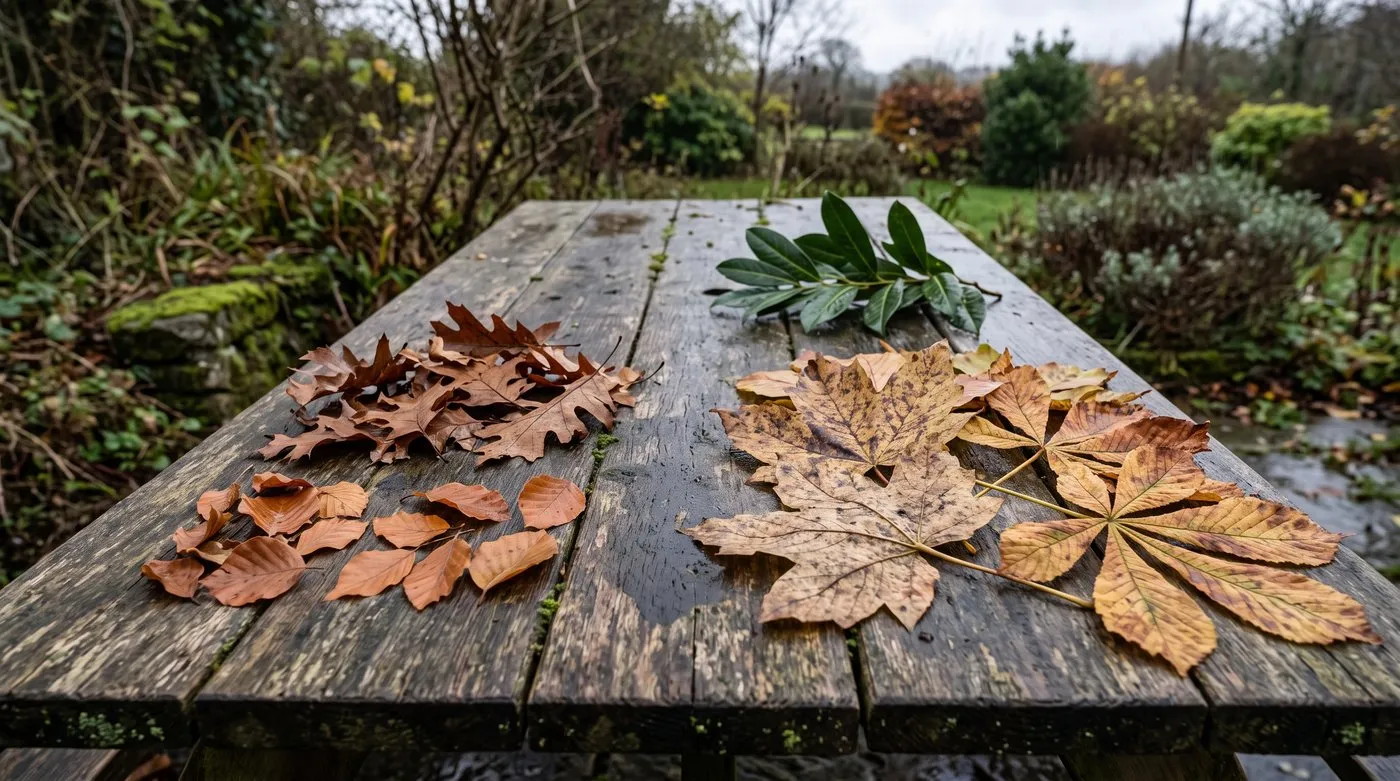
Thin oak and beech leaves rot fastest. Big sycamore and horse chestnut leaves are slower, and laurel is best left out.
Slower leaves. Sycamore, horse chestnut, sweet chestnut, walnut and London plane are tougher and take longer. Shred them first, or mix them with faster leaves. London plane leaves have fine hairs that can irritate your throat when dry, so collect them damp.
Leave out thick evergreen leaves such as laurel, holly and bay. They take years to break down. Add them to the compost heap in small amounts instead, shredded if you can.
Pine needles rot slowly and make an acidic leaf mould. Keep them in a separate bag and use it around acid lovers such as blueberries and rhododendrons.
Diseased leaves are best kept out. A cool leaf pile won’t kill diseases, so put leaves from badly diseased plants in your council green bin.
Gardener’s tip: Mix slower leaves with oak or beech. The fungi from the quick-rotting leaves soon move into the tough ones.
Collecting autumn leaves
Collect leaves from October to December as they fall. Don’t leave them on the lawn all winter, as they block light and leave yellow patches. Wet leaves on paths and steps are slippery too.
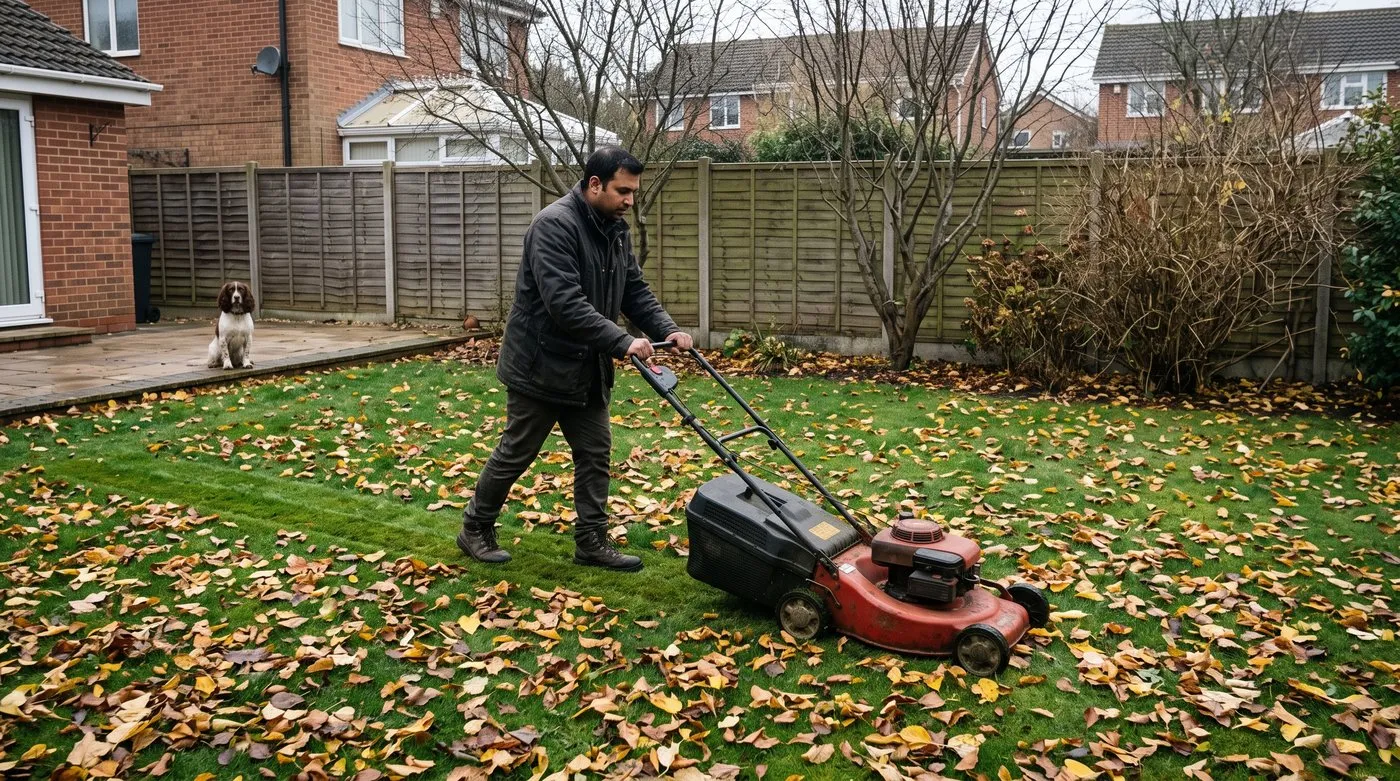
Mowing up leaves chops and collects them in one go, and chopped leaves rot down much faster.
Rake them with a wide spring-tine rake onto an old sheet or tarpaulin, then drag it to the bin.
Mow them on the lawn with the collector on. The mower chops and collects them in one go, and chopped leaves rot much faster.
Use a blower-vac on drives and paths. Many also shred the leaves.
Collect after rain if you can. Damp leaves stay put and pack down better. If you need more leaves, neighbours are often happy to hand theirs over. Avoid leaves from busy roadsides, which can be full of litter and grime.
How to make a leaf mould bin
A simple wire mesh bin is cheap, tidy and holds plenty. It takes about half an hour to build.
You’ll need: four wooden stakes about 1.2m long, a few metres of wire mesh (chicken wire works), and wire or cable ties.
- Hammer the four stakes into the ground in a square, about 1m apart.
- Wrap the wire mesh around the outside of the stakes.
- Fix the mesh to each stake with wire or cable ties.
- Overlap the ends and tie them together.
Put the bin somewhere shady, such as behind a shed or along a fence. Sun dries the leaves out. Fill it with damp leaves, treading them down as you go. If they’re dry, water each layer.

A simple wire bin holds a whole autumn’s leaves. Turning in spring is optional, but it mixes the dry outside with the damp middle.
How to make leaf mould in bin bags
No room for a bin? Bin bags work well for smaller amounts.
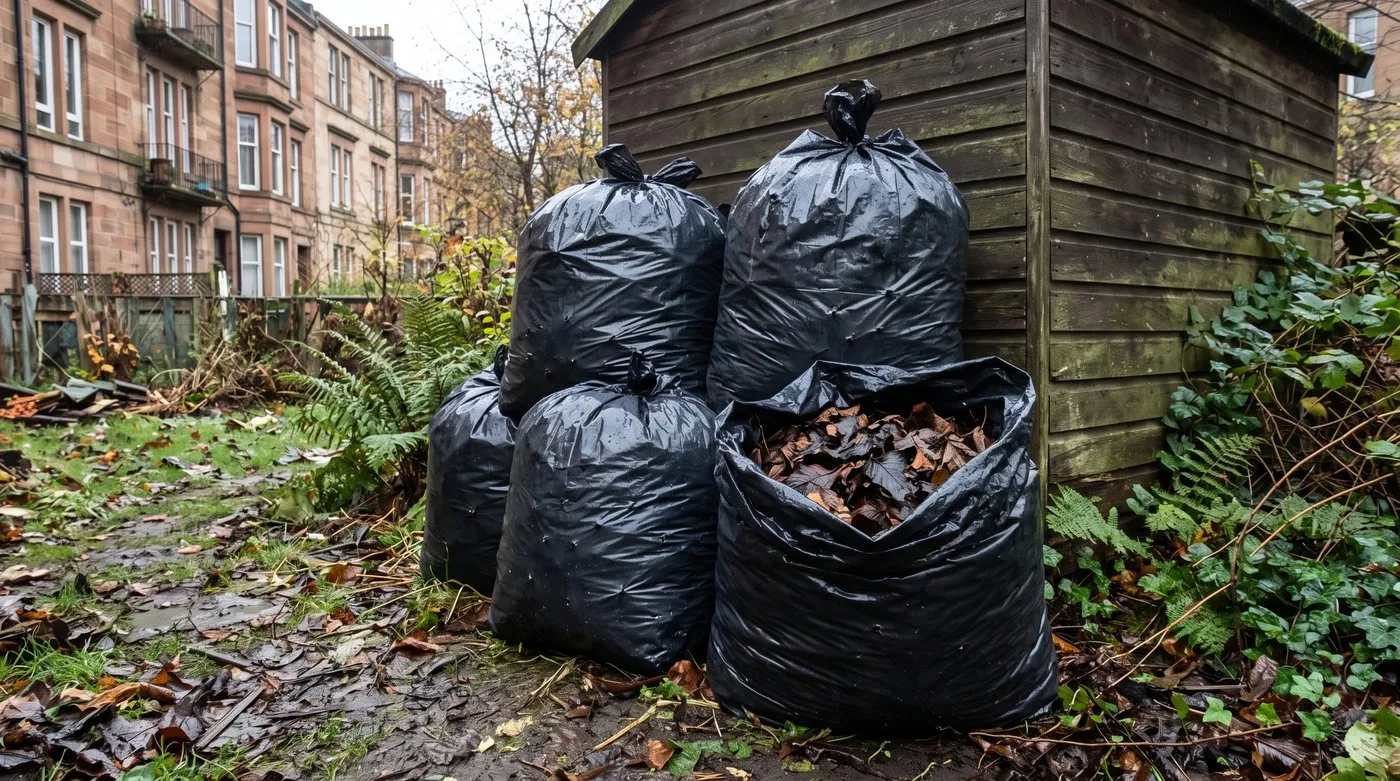
A few fork holes and a shady corner are all bagged leaves need. Check now and then that they’re still damp.
- Fill strong black bin bags with damp leaves. Add water if they’re dry.
- Poke a few holes in each bag with a garden fork.
- Tie the tops loosely.
- Stack them behind a shed or in a quiet corner.
- Give them a shake now and then, and add water if they dry out.
They’re usually ready in a year or two, just like a bin. Reuse old compost bags if you can, rather than buying new plastic.
Looking after leaf mould
Leaf mould needs almost no work. The one thing that matters is moisture.
Keep it damp. Dry leaves just sit there. In a dry spell, give the pile a soak with a watering can. In very wet weather, a piece of old carpet or cardboard on top stops it getting soggy.
Turning is optional. Forking it over once in spring can speed things up a little. It isn’t essential.
Shred for speed. Chopped leaves rot down much faster than whole ones. Running a mower over them before you bag them is the easiest trick there is.
Look out for wildlife. Hedgehogs, toads and beetles love a leaf pile in winter. Fork gently, and leave the base alone from November to March.
How to use leaf mould
Use one-year leaf mould as a mulch, and two-year leaf mould for seeds and pots.
One-year leaf mould
- Mulch borders, shrubs and trees with a layer about 5cm deep. It holds in moisture and keeps weeds down. Woodland plants love it, as our guide to the best plants for shade explains.
- Improve heavy soil. Fork it into clay to make it more open and crumbly. Our guide on how to improve clay soil has more ideas.
- Cover empty veg beds in autumn to protect the soil over winter.
Our guide to what mulch is and how to use it compares leaf mould with bark, compost and other mulches.

A layer of year-old leaf mould around shade plants keeps the soil damp and the weeds down.
Two-year leaf mould
- Seed sowing. Sieve it and use it on its own or mixed with an equal amount of sharp sand. It’s low in nutrients, which suits seedlings.
- Potting mixes. Mix sieved leaf mould into your own potting compost. Our guide to peat-free potting compost recipes shows how.
- Soil improver. Work it into the top of any soil to help it hold water.

Two-year leaf mould is dark and crumbly and smells like a woodland floor. It’s lovely for sowing seeds.
Leaf mould calendar
| Month | What to do |
|---|---|
| October | Start collecting leaves. Fill bins or bags |
| November | Main leaf fall. Collect regularly so the lawn isn’t smothered |
| December | Final leaves. Top up the bin. Water if dry |
| January to March | Leave it alone. Don’t disturb wildlife in the base |
| April | Turn last year’s pile if you like. Water if dry |
| May to August | Check it stays damp. The pile shrinks as it rots |
| September | Use or sieve older leaf mould. Make space for this year’s leaves |
Common leaf mould mistakes
Letting the leaves dry out. Dry leaves barely rot. Wet them when you fill the bin and in dry spells.
Adding grass clippings. Grass turns slimy in a leaf pile. Put it in the compost bin instead.
Using thick evergreen leaves. Laurel and holly take years. Leave them out.
Expecting it too soon. Give it a year for mulch and two for seed sowing.
Putting it in full sun. Sun dries the pile. Choose a shady corner.
Frequently asked questions
How long does leaf mould take to make?
About a year for mulch and two years for a fine, crumbly grade. Shredding leaves first, for example by running a mower over them, speeds it up. Keeping the leaves damp helps too.
Which leaves are best for leaf mould?
Oak, beech and hornbeam rot down well. Most other deciduous leaves work too. Sycamore, horse chestnut, sweet chestnut and London plane are slower, so shred them first. Keep thick evergreen leaves such as laurel and holly out.
Is leaf mould the same as compost?
No, leaf mould is made only from leaves and rots more slowly. It’s broken down mainly by fungi in a cool heap. Compost is richer in nutrients. Leaf mould is low in nutrients but great for holding moisture and improving soil.
Can I put leaves in my compost bin instead?
A few, yes, as a brown ingredient. Large amounts slow a heap down and pack into wet, airless layers. Mix small amounts with greens such as grass clippings and turn bigger piles into leaf mould.
Do I need to turn leaf mould?
No, you don’t need to turn it. The leaves rot down fine on their own. Turning once in spring can mix the drier outside with the damp middle. Keeping it damp matters more.
Can I make leaf mould in bin bags?
Yes, bin bags work well for small amounts. Fill them with damp leaves, poke some holes with a fork and tie the tops loosely. Tuck them out of the way for a year or two, adding water if they dry out.
What can I use leaf mould for?
One-year leaf mould makes a great mulch for borders, shrubs and trees. Two-year leaf mould can be sieved for seed sowing or mixed into potting compost. Both improve sandy and clay soils.
Now your leaves are rotting down, read our guide to no-dig gardening to put your leaf mould to work, or find more projects on the how-to hub.
Our team produces practical UK gardening guidance from source research, contributor records and established horticultural practice. Editorial standards are overseen by Matt W.


