Key takeaways
- Trellis and climbers are the cheapest, easiest way to grow up
- Pocket planters and gutters suit herbs, salads and strawberries
- Pick plants to suit the way your wall faces
- Vertical planters dry out fast, so plan for summer watering
- Fix heavy planters to posts or brick, not thin fence panels
- Add evergreens so the wall still looks good in winter
Growing up your walls and fences is the easiest way to add plants without losing floor space. Most gardens are surrounded by bare fences, and every one of them could be growing something.
There’s an option for every budget, from a simple trellis to a full living wall. It works just as well in a small garden, on a balcony, in a courtyard or in a city garden.
Why go vertical in a UK garden?
Because walls and fences are free growing space. Gardens are getting smaller, but every one has boundaries.
Our climate suits it well. Hardy evergreen climbers like ivy and star jasmine cope with most British winters outdoors. The main thing to watch is wind, especially on balconies and exposed sites.
Trellis and climber systems
This is the simplest and cheapest way to start. Fix trellis or wires to a wall or fence and train a climber along it.
Trellis panels
You’ll find trellis panels at any garden centre or DIY store. Fix them on small spacers so there’s a gap behind. That gap keeps the fence drier and gives twining stems something to grab.
Good trellis climbers:
- Clematis montana is a big, fast climber that covers a large wall. White or pink flowers in May. Trim lightly after flowering.
- Star jasmine (Trachelospermum jasminoides) is evergreen, with scented white flowers in summer. It wants a south or west wall.
- Honeysuckle is a native climber with gorgeous scent in summer. It’s happy in part shade.
- Climbing roses suit south and west walls. ‘New Dawn’ (pale pink) and ‘Climbing Iceberg’ (white) are easy favourites.
For more choices by aspect, see our guide to the best climbing plants for UK gardens.
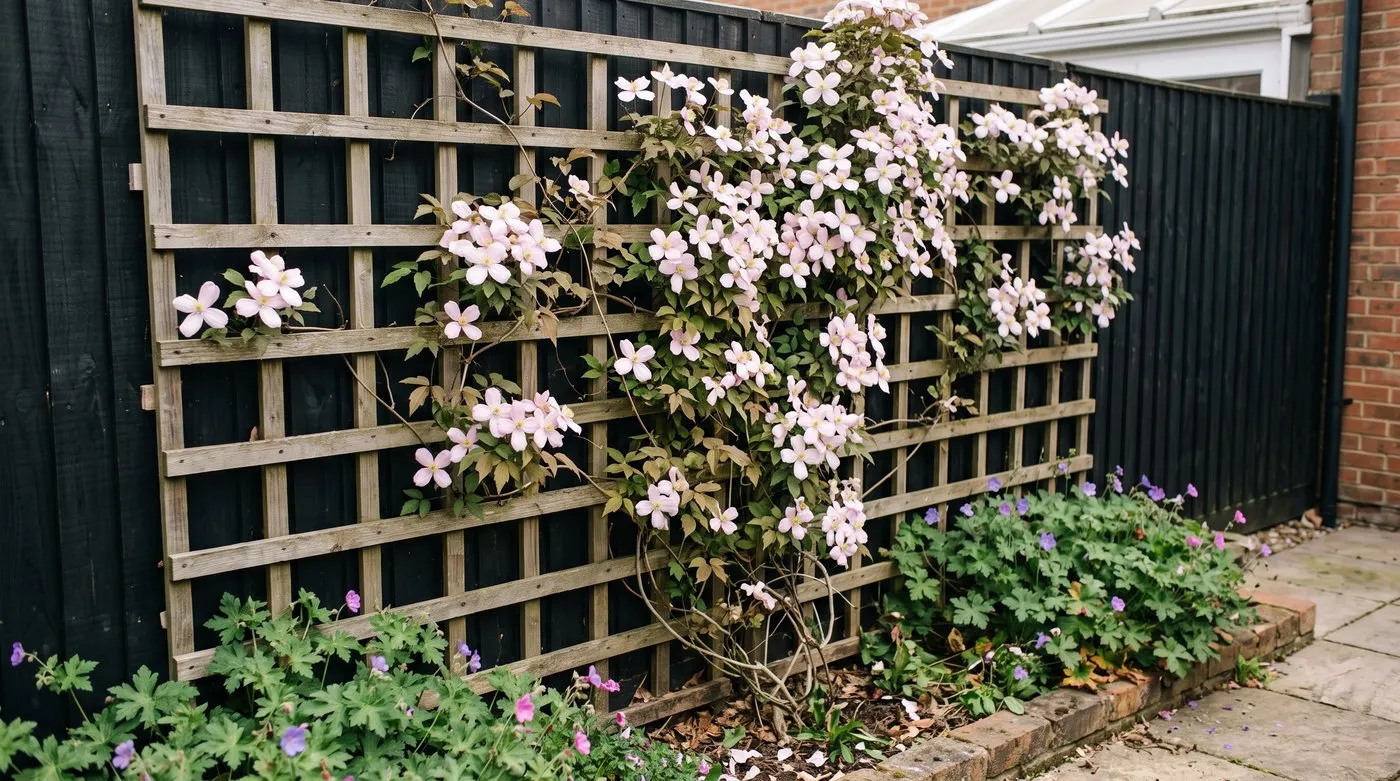
Fixing trellis on small spacers leaves a gap behind, which keeps the fence drier and gives twining stems something to grab.
Horizontal wire systems
Galvanised wire on vine eyes is cheaper than trellis and looks neat on brick. Run the wires about 30 to 45cm apart. This suits trained fruit like espalier apples and fan-trained figs.
A warm south-facing wall is a great spot for trained fruit. The brick soaks up heat and helps ripen it.
Handy tip: Fix vine eyes into the mortar joints, not the bricks. Mortar is much easier to patch if you take the wires down later.
Living wall systems
A living wall is a panel of plants fixed flat to a wall or fence. Plants grow in pockets, modules or troughs, and the result is a solid sheet of green.
Felt pocket planters
Fabric pockets are the cheapest living wall. They’re light, easy to replant and come in all sorts of shapes. The downside is that they dry out fast in summer and the felt wears out after a few years in the sun.
Put one compact or trailing plant in each pocket. Heuchera, small ferns, sedum, trailing ivy and ajuga all work. For food, try strawberries, lettuce or compact herbs.
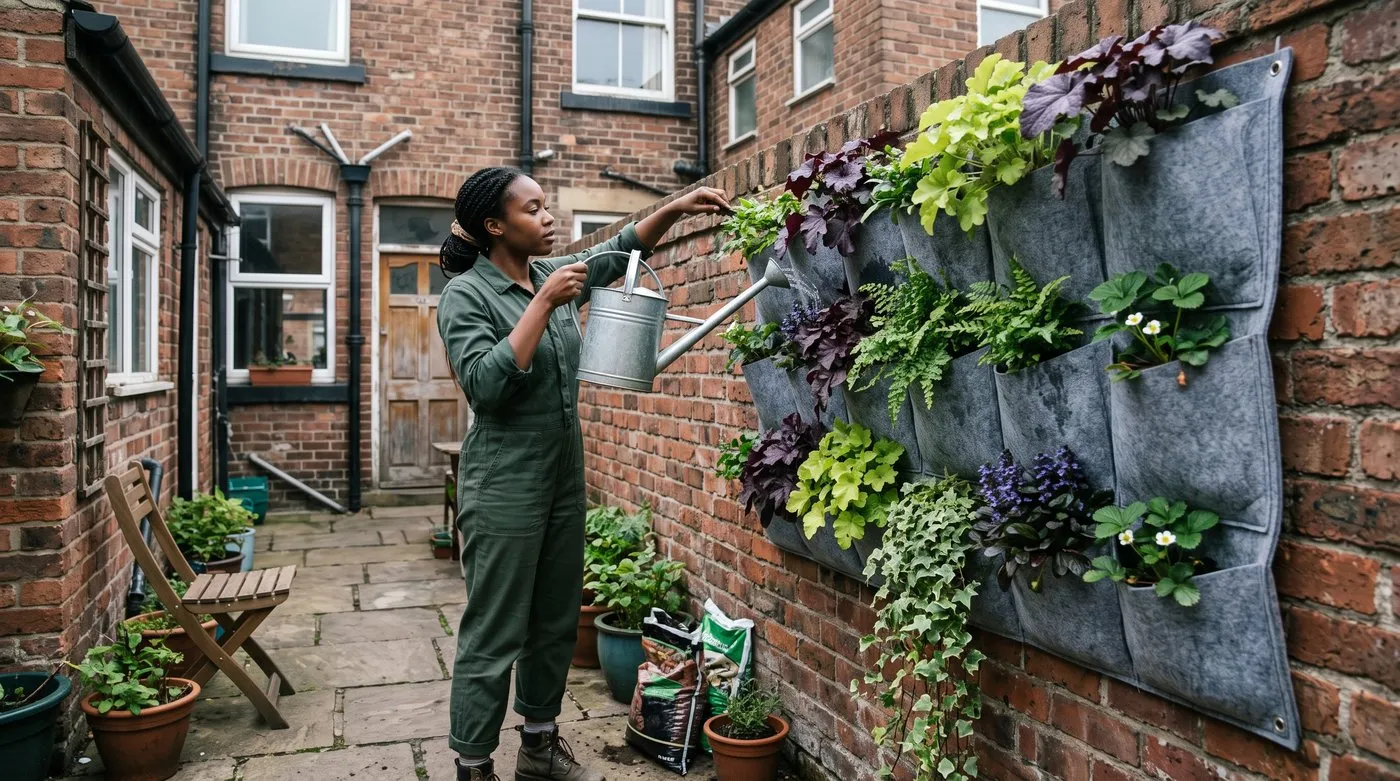
Felt pockets are cheap and light, which makes them great for renters. They dry out fast in summer though, so be ready to water daily.
Modular plastic systems
Interlocking plastic modules with built-in water reservoirs cost more but last much longer. They look tidy and need watering less often. They’re heavier than felt, so they suit brick or block walls best.
DIY pallet gardens
An old wooden pallet lined with landscape fabric and filled with compost makes a cheap wall planter. Stand it up, fix it in place and plant through the gaps between the slats.
Good pallet plants: rosemary, thyme, sage, oregano, strawberries, small lettuces, violas and trailing lobelia.
Safety note: A planted, wet pallet is very heavy. Fix it to fence posts or a wall with strong bolts, not to a fence panel. Use a pallet stamped HT (heat-treated), not MB (chemically treated).
Which living wall system should I choose?
| System | Cost | How long it lasts | Watering in summer | Best for |
|---|---|---|---|---|
| Felt pockets | Low | A few years | Daily | Renters, seasonal displays |
| Modular plastic | Medium | Many years | A couple of times a week | Permanent walls |
| DIY pallet | Very low | A few years | Daily | Herbs on a budget |
| Professional install | High | Many years | Automatic | Big feature walls |
| Gutter garden | Low | Several years | Daily | Strawberries, salads |
Gutter gardens and pocket planters
Gutter gardens
Plastic guttering fixed in rows makes neat little troughs for shallow-rooted plants. Fix three to five rows about 30cm apart, one above the other.
Good gutter plants:
- Strawberries
- Cut-and-come-again lettuce and rocket, sown from April
- Radishes, which are quick and happy in shallow compost
- Trailing herbs like oregano and creeping rosemary
Drill drainage holes along the base. Use multipurpose compost with some perlite mixed in. Gutters do best on a sunny fence.
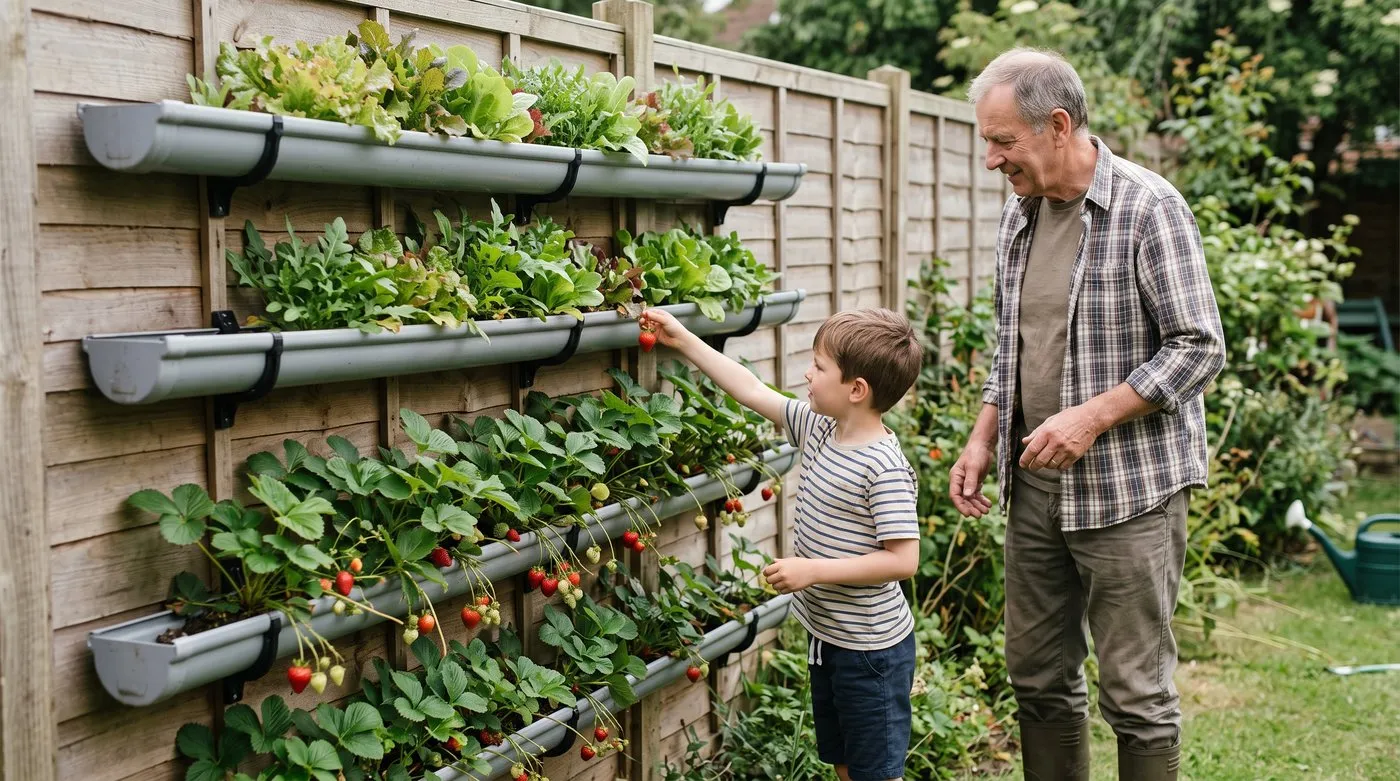
Gutters make neat little troughs for shallow-rooted crops like strawberries and salad leaves. Drill drainage holes along the base first.
Individual pocket planters
Single pockets screw or hook onto a wall, so you can arrange them however you like. Water trickles down from top to bottom. Put thirsty plants like ferns and mint low down, and drought lovers like sedum and thyme at the top.
Stacking and tiered planters
Stacking planters build height from the ground up. They’re ideal for balconies, patios and anywhere you can’t drill.
Tiered shelf units
Shelving units hold lots of pots in a small footprint.
Key points:
- Put the heaviest pots on the bottom
- Fix tall units to a wall or fence so they can’t blow over
- Open metal shelves let more light reach the lower pots than solid wood
Strawberry towers
These are stacking pots with planting holes on every level. They pack a lot of strawberries into a tiny space, which makes them great for balconies. Stand one on a saucer to catch the drips.
Green screens for privacy and wind shelter
A green screen is a climber grown on a freestanding frame. It gives you privacy and shelter without fixing anything to the house. It also softens wind and noise and brings in wildlife.
Quick-growing screen plants
| Plant | Speed | Evergreen? | Aspect |
|---|---|---|---|
| Russian vine | Very fast | No | Any |
| Clematis montana | Fast | No | Any |
| Star jasmine | Slow to start | Yes | South or west |
| Ivy | Medium | Yes | Any |
| Pyracantha | Medium | Yes | Any |
| Honeysuckle | Fast | Semi | Any |
A word on Russian vine: It grows incredibly fast and is very hard to control once it’s settled in. For most gardens, clematis or honeysuckle is a far easier choice.
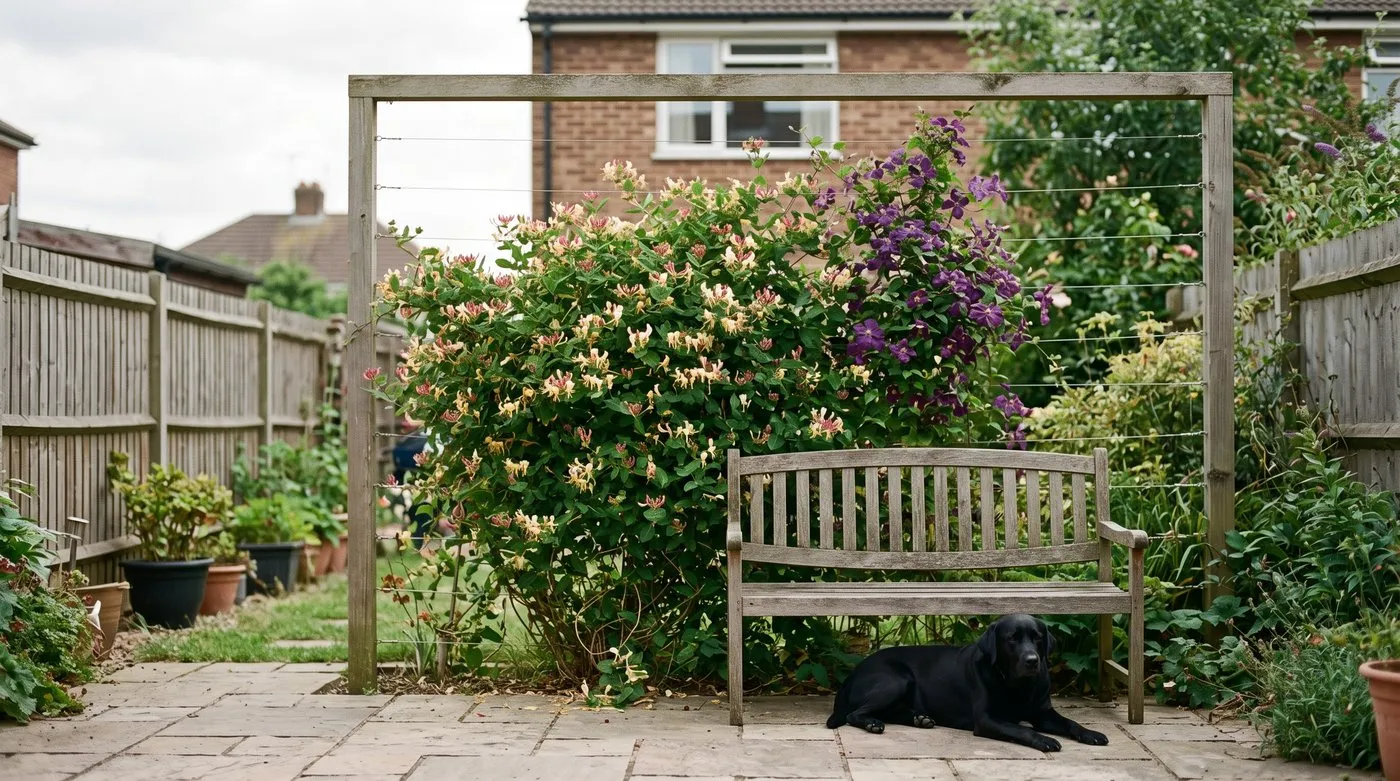
A freestanding frame gives you privacy without fixing anything to the house. Honeysuckle is quick to cover it and the bees love it.
Best plants for vertical gardens by aspect
The way your wall faces decides what will grow. A south-facing wall is warm and sunny. A north-facing one may get no direct sun at all.
South-facing (full sun, warmest)
Star jasmine, climbing roses, wisteria, trained figs, grape vines, tomatoes in pockets, basil, rosemary, thyme, sage, and chilli peppers in wall pots.
East-facing (morning sun)
Most clematis, honeysuckle, climbing hydrangea, ferns, heuchera, hostas and wild strawberries. Avoid early flowers that frost can catch, as the quick thaw in morning sun damages the buds.
West-facing (afternoon sun)
Wisteria, climbing roses, passion flower, fan-trained cherries, espalier pears, jasmine and trailing nasturtiums. You get warm afternoon sun and shelter from cold east winds.
North-facing (full shade)
Climbing hydrangea, ivy, Virginia creeper, ferns like hart’s tongue, Clematis montana, winter jasmine and Euonymus fortunei. Our guide to the best plants for shade has more ideas.
Watering vertical gardens
Vertical planters dry out quickly, so watering is the big job. Water runs straight through and the small pockets hold very little.
Drip irrigation
A drip line along the top lets water trickle down through each row. Kits with a battery timer fit straight onto an outside tap. Run it for a few minutes once or twice a day in summer, less in spring and autumn, and switch it off in winter.
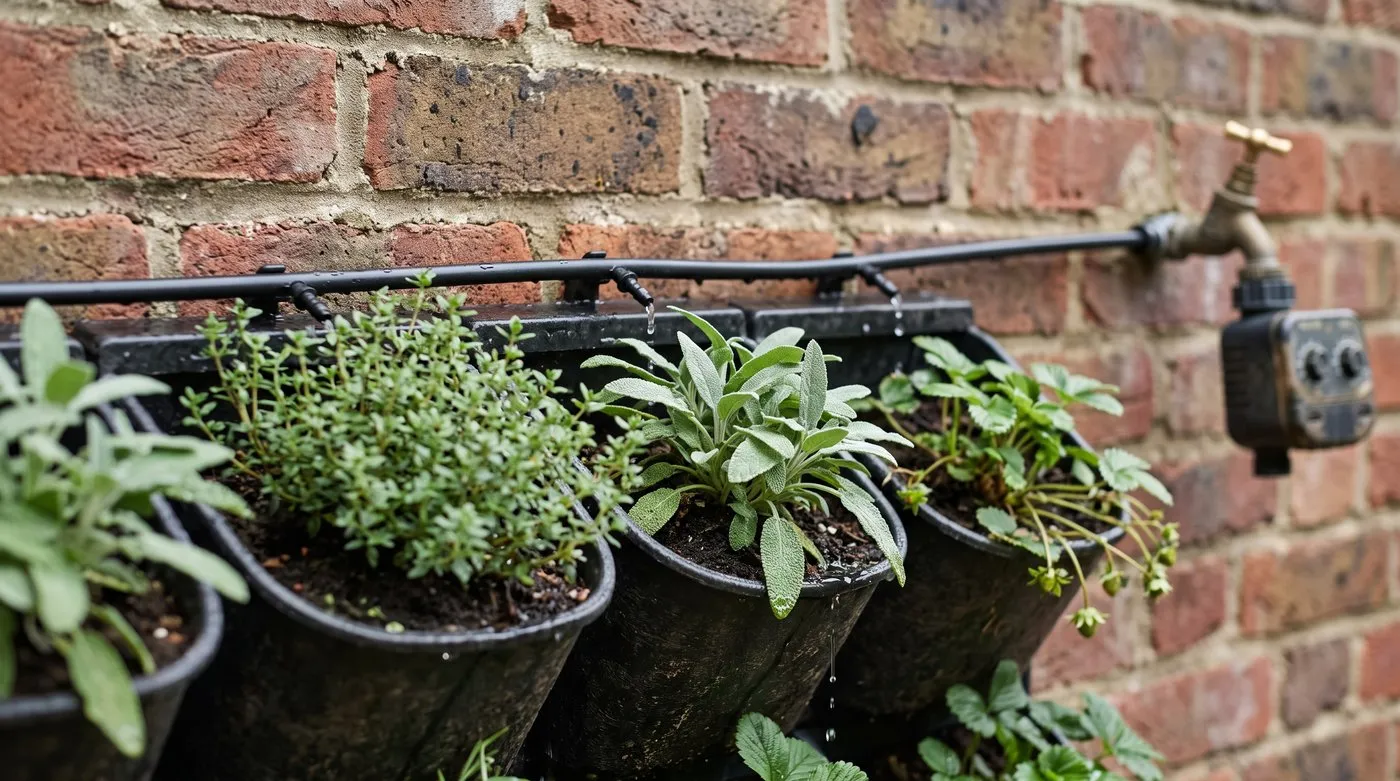
A drip line along the top lets water trickle down through every row. Put it on a timer and summer watering more or less looks after itself.
Self-watering modules
Some modular systems have reservoirs that wick water up to the roots. You just top them up now and then.
Manual watering
For a small vertical garden, a watering can with a long spout is fine. Water from the top and let it run down. Check it every day in hot weather. For more ways to save water, see our water-efficient gardening guide. A trick that helps: put the thirstiest plants on the bottom row, where the run-off collects.
How much work is each project?
| Project | Tools | Time to set up | Ongoing care |
|---|---|---|---|
| Trellis with climbers | Drill, screws | An afternoon | Prune once or twice a year |
| Felt pocket wall | Drill, screws | A couple of hours | Water daily in summer |
| DIY pallet herb garden | Drill, staple gun | An afternoon | Water daily in summer |
| Gutter garden | Drill, brackets | An afternoon | Replant each season |
| Modular living wall | Drill, spirit level | An afternoon | Top up reservoirs weekly |
| Professional living wall | None | A day or two | Regular servicing |
Common mistakes with vertical gardens
1. Overloading weak fences
Wet compost is heavy. Thin overlap fence panels bow under the weight and can come down in a gale. Fix anything heavy to fence posts or brickwork.
2. Choosing the wrong aspect
Sun-loving herbs on a north wall grow leggy and lose their flavour. Watch the wall on a sunny day and note how many hours of direct sun it gets. Then pick plants to suit.
3. Underwatering in summer
Vertical planters dry out much faster than beds, and felt pockets can go bone dry in one hot afternoon. Fit a drip kit for anything big, or be ready to water every day in summer.
4. Using heavy garden soil
Garden soil is too heavy for wall planters and packs down quickly. Use multipurpose compost with some perlite mixed in. Refresh the compost in pockets each year, as the goodness runs out fast.
5. Forgetting winter interest
Annuals and deciduous plants leave a bare wall from November to March. Mix in some evergreens like ivy, ferns, heuchera, rosemary and thyme so it still looks alive in winter.
Vertical gardening for wildlife
Walls of plants give birds, bees and insects food and shelter. Wrens and robins nest in them, and insects hide there over winter. The RHS has a helpful page on encouraging wildlife into your garden.
Good plants for pollinators: honeysuckle, clematis, nasturtiums, lavender and ivy. Together they give flowers from spring right into autumn.
Ivy is a real star. It flowers in autumn when little else does, and its berries feed birds in late winter. Thick ivy also shelters wrens, robins and blackbirds.
Ready to choose? Our guide to the best climbing plants for UK gardens helps you pick the right one for your wall.
Frequently asked questions
What are the best plants for a vertical garden UK?
Ivy, ferns, heuchera and trailing herbs are great all-rounders. For food, strawberries, lettuce and trailing tomatoes do well in pocket planters on a sunny wall. For flowers on trellis, try clematis, jasmine and honeysuckle. Always match the plant to the way your wall faces.
How much does a living wall cost in the UK?
Anything from a few pounds to a lot. A DIY pallet or gutter garden costs very little. Felt pocket panels are cheap and easy, modular plastic systems cost more but last longer, and a professionally installed living wall is a big investment. Start small and see how you get on.
Can I grow vegetables vertically?
Yes, lots of them. Climbing beans, cucumbers and peas love trellis or netting. Trailing tomatoes, strawberries and lettuce suit pocket planters and gutter gardens. A sunny wall of rosemary, thyme, basil and sage gives you fresh herbs all summer.
Will a living wall damage my fence?
It can if the fence is weak. Wet compost is heavy, and thin overlap panels bow under the load. Fix brackets into fence posts or brickwork rather than the panel boards. A freestanding frame or stacking planter avoids loading the fence at all.
How do I water a vertical garden?
A drip line on a timer is the easiest way. It sits along the top and lets water trickle down through each row. Without one, felt pockets may need watering twice a day in hot weather. Planters with built-in reservoirs only need topping up now and then.
What grows on a north-facing wall UK?
Climbing hydrangea, Virginia creeper, ivy and ferns all do well. For flowers, Clematis montana and winter jasmine cope with the shade. Food crops struggle without sun, but mint manages. Our shade plant guide has plenty more ideas.
Do I need planning permission for a living wall?
Usually not, as planting counts as gardening. New fences, walls or frames over 2m high (or 1m next to a road) can need permission. Listed buildings and conservation areas have extra rules, so check with your council if that’s you.
Our team produces practical UK gardening guidance from source research, contributor records and established horticultural practice. Editorial standards are overseen by Matt W.