Key takeaways
- Most UK side returns are 0.9-1.8m wide and get under 3 hours direct sun
- Vertical planters on the walls add growing space without stealing the 600mm walking width
- A 100mm linear channel drain clears the standing water that plagues a shaded brick canyon
- Budget 200 to 1,200 pounds depending on whether you keep gravel or lay porcelain paving
The RHS advice on planting in shade is a useful technical reference for the species side. This guide focuses on the build: the measurements, the storage maths, the drainage fix, and the plants that actually survived.
How wide is a side return and what does that allow?
Width decides everything in a side return. A standard Victorian terrace passage measures 1.0 to 1.3m across. Edwardian and 1930s semis run a little wider, often 1.4 to 1.8m. Anything under 900mm is really just a path, not a usable space.
Vertical growing is how you garden a narrow passage
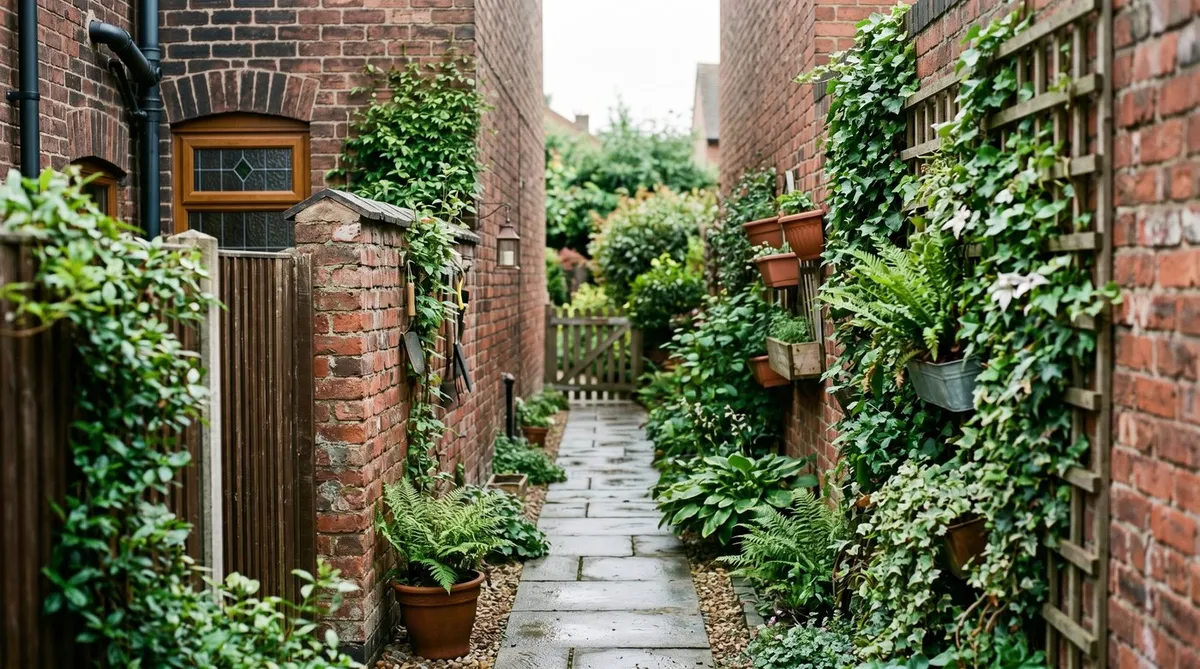
Vertical planting is the single best use of a side return. Wall space is the one dimension you have plenty of. Fixing planters, troughs and trellis to the brick adds growing area without touching the 600mm walking width.
Gardener’s tip: Mount the heaviest planters lowest and water-test the wall first. A single 30cm trough holds around 12kg when wet. Drill into the brick, never the softer mortar joint, and use 8mm frame fixings rated for the load.
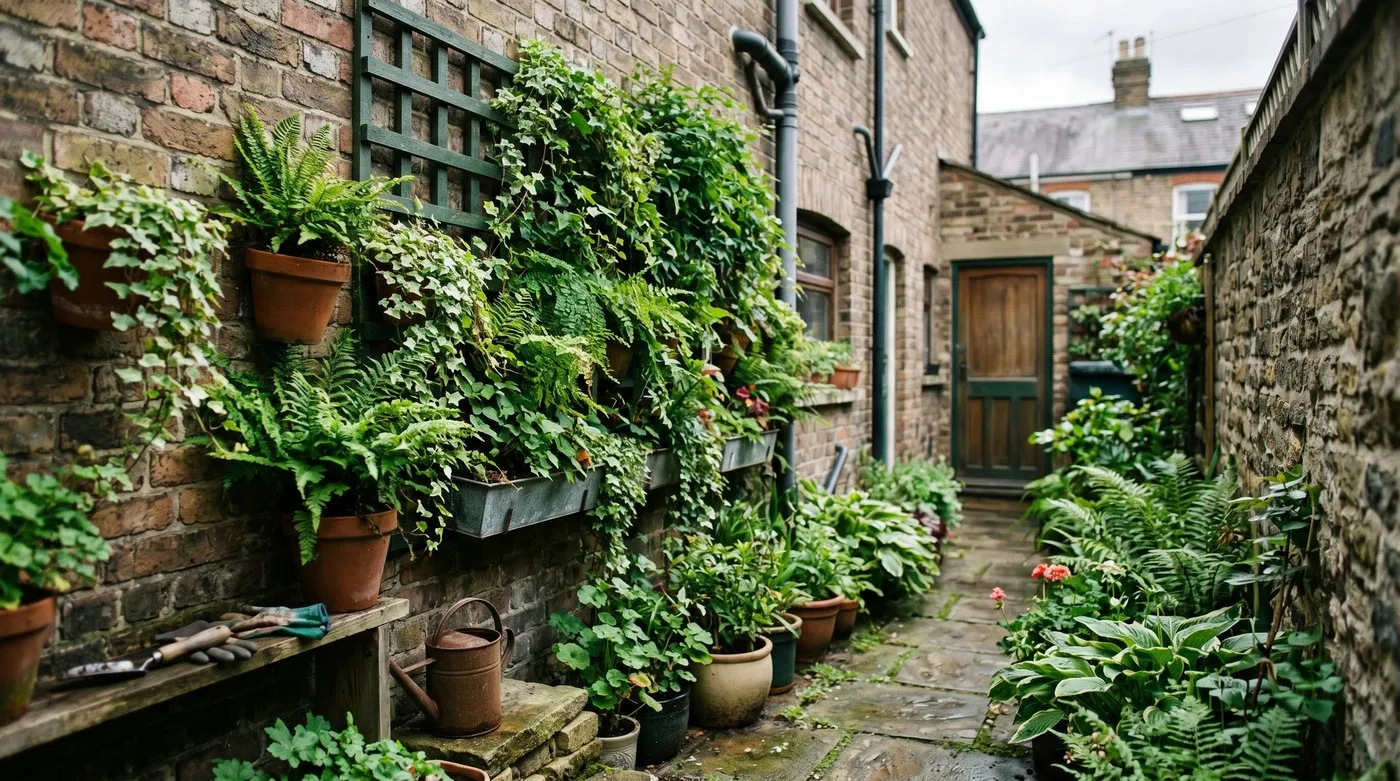 Wall-mounted troughs and a trellis turn dead vertical brick into 0.9 square metres of planting without losing the path.
Slimline storage for bins, bikes and tools
Storage is what most side returns are really used for, and doing it badly eats the whole space. Sprawling wheelie bins and a flat-laid bike can block a passage entirely. Going vertical and slim is the fix.
Drainage in a shaded canyon
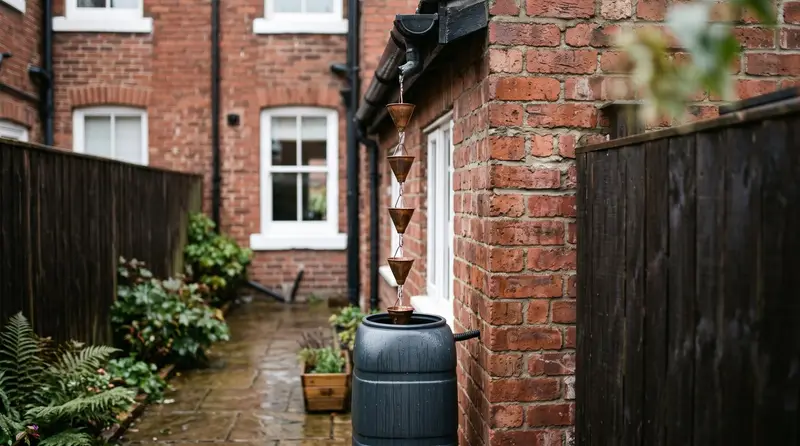
Standing water is the most common side return problem and the most ignored. A narrow passage between two walls acts as a funnel. Rain runs off both roof slopes and the wall faces into a strip with nowhere to go. The shade keeps it wet for hours.
Warning: Never seal a side return with solid concrete and no drainage. A non-permeable surface with no channel turns the passage into a long puddle and pushes water against the house wall, risking damp on the internal plaster.
Paving, gravel and decking for a narrow route
The surface sets the tone and the budget. Three options suit a side return: gravel, paving, or slatted decking. Each handles the damp, the width and the cost differently.
Gravel is cheapest and drains freely. Lay 40mm of 10-14mm angular gravel over a weed membrane on a compacted base. It costs around 200 to 400 pounds for a typical 6m run. The downside is it migrates underfoot and needs edging to hold the 600mm path line.
Porcelain or block paving is the cleanest option underfoot. It stays mud-free and looks deliberate. A laid run with sub-base costs 600 to 1,200 pounds depending on length and tile grade. Choose a textured R11 anti-slip finish; smooth porcelain grows algae and turns lethal in a shaded damp passage.
Plants that survive a deep-shade side return
Planting a side return means planting for shade, and often deep shade. A north or east-facing passage gets under three hours of direct sun. The species that survive are woodland and shade-edge plants that evolved under tree canopy.
Lighting and screening a side return
Light and screening turn a dead alley into a route you actually use. A side return is dark even in daytime, so artificial light extends its hours and makes it safe underfoot at night.
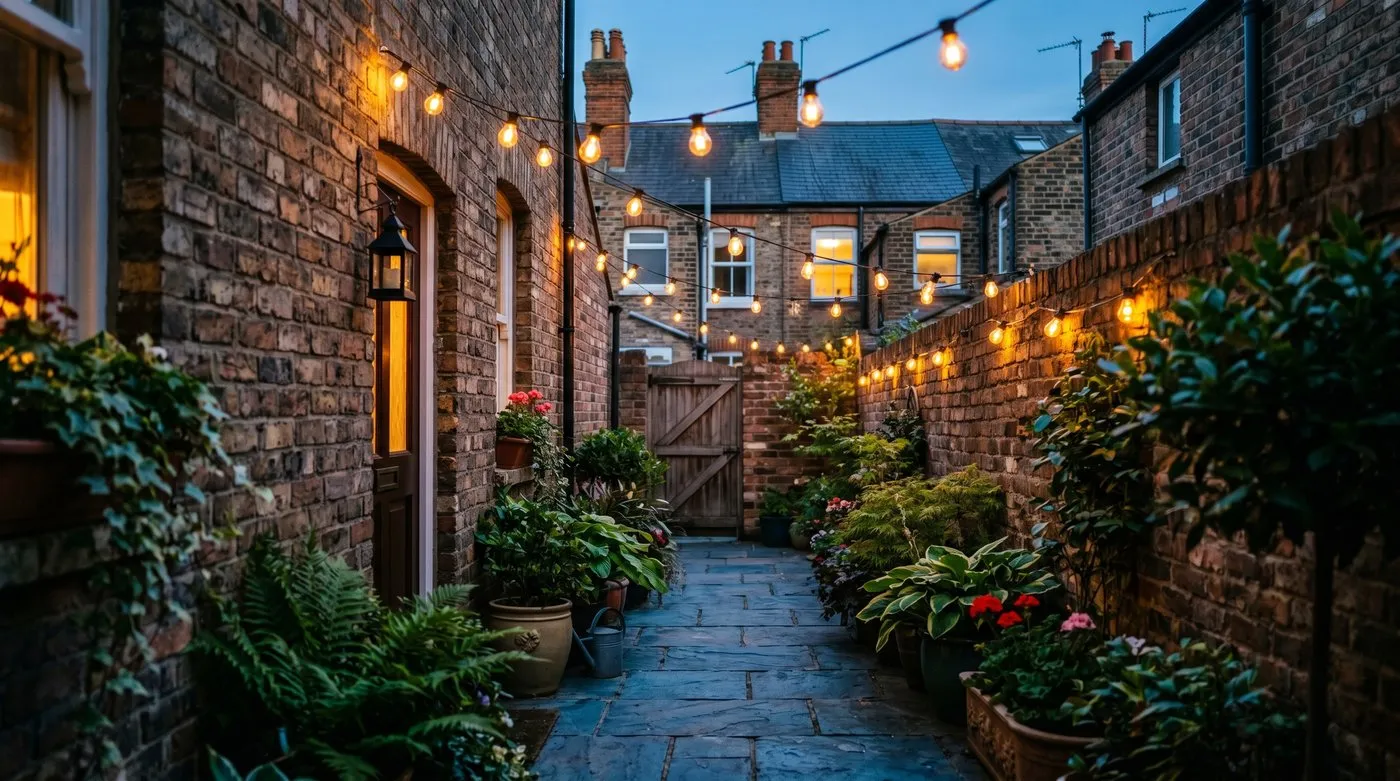 A 5m run of warm-white festoon lights turns a dark side passage into an evening route.
Month-by-month side return calendar
Common mistakes in a side return
Most side return failures come from treating the space like an open garden. The width and the shade punish the wrong choices fast.
Laying solid concrete with no drainage. This is the worst mistake. A non-permeable surface with no channel turns the passage into a standing puddle and drives damp into the house wall. Always include a fall and a drain.
Choosing ground beds over wall planting. A 500mm strip of soil grows little and steals your walking width. Go vertical instead. Wall troughs and trellis give more planting and keep the route clear.
Buying full-depth storage. A standard 800mm shed unit blocks a 1.1m passage. Measure your narrowest point and choose slimline 400 to 700mm units sized to leave 600mm clear.
Planting sun-lovers. Lavender, sedum and most herbs fail in under three hours of sun. Match the planting to the shade, not to what you wish you could grow.
Turning a side return into a usable green corridor
The best side returns do two jobs at once: they store the things a terrace has nowhere else to put, and they green a route you walk daily. Combine the elements above and the strip stops being dead space.
Frequently asked questions about side return gardens
How wide is a typical side return?
Most UK side returns are 0.9 to 1.8m wide. Victorian and Edwardian terraces sit at the narrow end, often 1.0 to 1.3m. You need to keep at least 600mm clear for walking and wheeling bins. That leaves little floor width, which is why wall-mounted vertical planting works far better than ground beds.
What plants grow in a shaded side return?
How do I stop a side return flooding?
Can I store bikes and bins in a side return?
What is the best surface for a narrow side passage?
Gravel is cheapest and drains freely; porcelain or block paving is cleaner underfoot. A 600mm path width keeps it walkable. Permeable gravel over a membrane costs around 200 to 400 pounds for a typical run. Porcelain paving with a sub-base runs 600 to 1,200 pounds but stays mud-free and looks deliberate.
How much light does a side return get?
Do I need planning permission for a side return?
Planting, storage and paving need no permission. Building over a side return as a kitchen extension does need approval and often a party wall agreement. This guide covers the unbuilt passage only. Always keep a clear route to any rear access, gas meter or drainage point that needs servicing.
How do I light a dark side return?
Festoon lights or low-wattage LED wall lights work best. A run of warm-white festoon lights along one wall turns a dead alley into an evening route. Use outdoor-rated IP44 fittings. Solar struggles in deep shade, so a switched mains spur or a battery festoon set is more reliable here.
Our team produces practical UK gardening guidance from source research, contributor records and established horticultural practice. Editorial standards are overseen by Matt W.