Key takeaways
- Hardy ferns grow best in part or full shade, in damp soil rich in leaf mould
- Male fern, soft shield fern and hart's tongue are tough natives that suit most gardens
- Plant with the crown at soil level, never buried
- Mulch every year with leaf mould to keep the soil moist and spongy
- Cut tatty old fronds back in late winter, before the new ones unfurl
- A fernery can be as simple as a shady corner with logs, stones and mixed ferns
Hardy ferns are the easiest way to bring life to a shady corner. They grow where many plants sulk, live for years and need very little care. Many are native, so they’re perfectly at home in a British garden.
This guide covers the best hardy ferns to grow, how to plant and look after them, and how to turn a shady patch into a fernery. The Victorians went wild for ferns, and a fern corner is still one of the most restful spots a garden can have.
Which hardy ferns grow best in UK gardens?
The most reliable are the male fern, soft shield fern and hart’s tongue fern. They’re native, tough and happy in most shady gardens. Add a Japanese painted fern for colour and a shuttlecock fern for height in damp ground.
| Fern | Height | Evergreen? | Likes |
|---|---|---|---|
| Male fern (Dryopteris filix-mas) | About 1m | Partly | Almost any shade, even fairly dry |
| Soft shield fern (Polystichum setiferum) | 60-90cm | Yes | Shade or part shade |
| Hart’s tongue (Asplenium scolopendrium) | 30-60cm | Yes | Damp shade, walls and chalky soil |
| Japanese painted fern (Athyrium niponicum ‘Pictum’) | 30-45cm | No | Damp part shade |
| Shuttlecock fern (Matteuccia struthiopteris) | 1-1.5m | No | Damp or wet shade, spreads |
| Common polypody (Polypodium vulgare) | 20-40cm | Yes | Dry shade, walls and banks |
| Autumn fern (Dryopteris erythrosora) | 60-90cm | Mostly | Part shade |
| Hard shield fern (Polystichum aculeatum) | 50-80cm | Yes | Shade |
| Himalayan maidenhair (Adiantum venustum) | 20-40cm | Mostly | Damp part shade |
| Royal fern (Osmunda regalis) | 1-1.5m | No | Wet ground, copes with sun if wet |
Male fern is the safe first choice. It copes with almost any shady spot and makes a big, classic fern shape. Soft shield fern keeps its soft, feathery fronds all winter. Hart’s tongue has glossy, strap-shaped leaves that look nothing like a typical fern, and it’s lovely in a damp wall.
Japanese painted fern brings silvery, purple-tinged fronds that light up a dark corner. The shuttlecock fern forms tall green vases in spring but spreads by underground runners, so give it room.

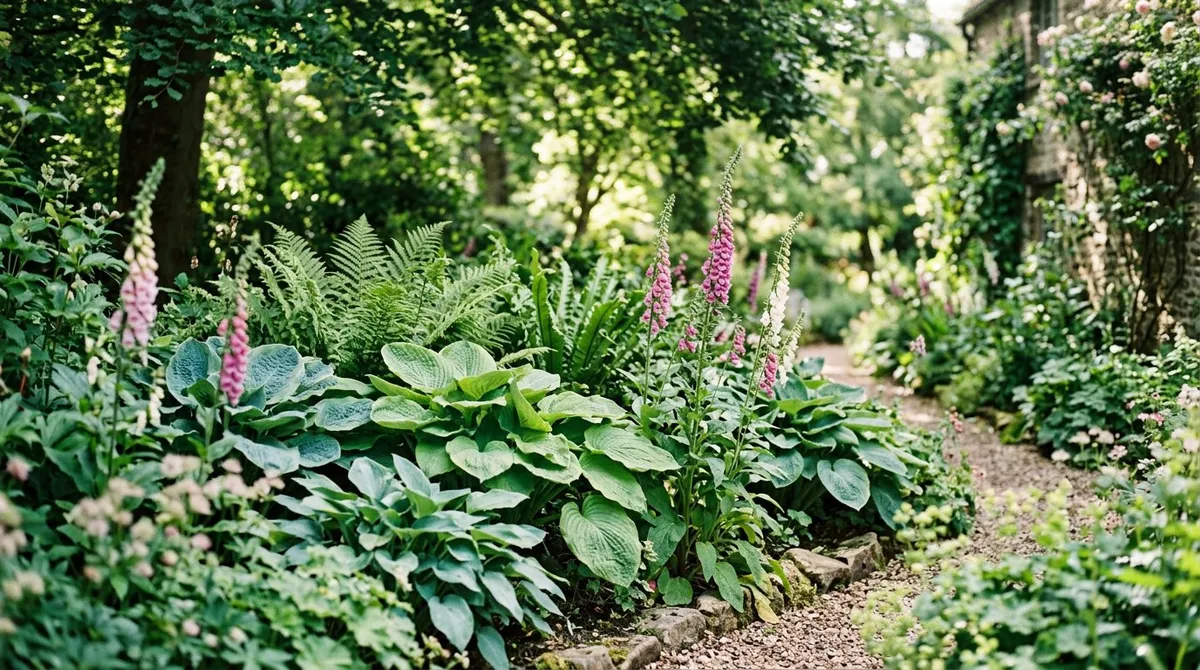
Ferns come in more shapes than you’d think, from feathery to silvery to strap-like. Mixing them gives a fernery its texture.
Where to plant hardy ferns
Plant ferns in part or full shade, out of hot midday sun. A north or east-facing border, the shade of a wall or the space under trees all work well. Shelter from drying wind keeps the fronds looking fresh.
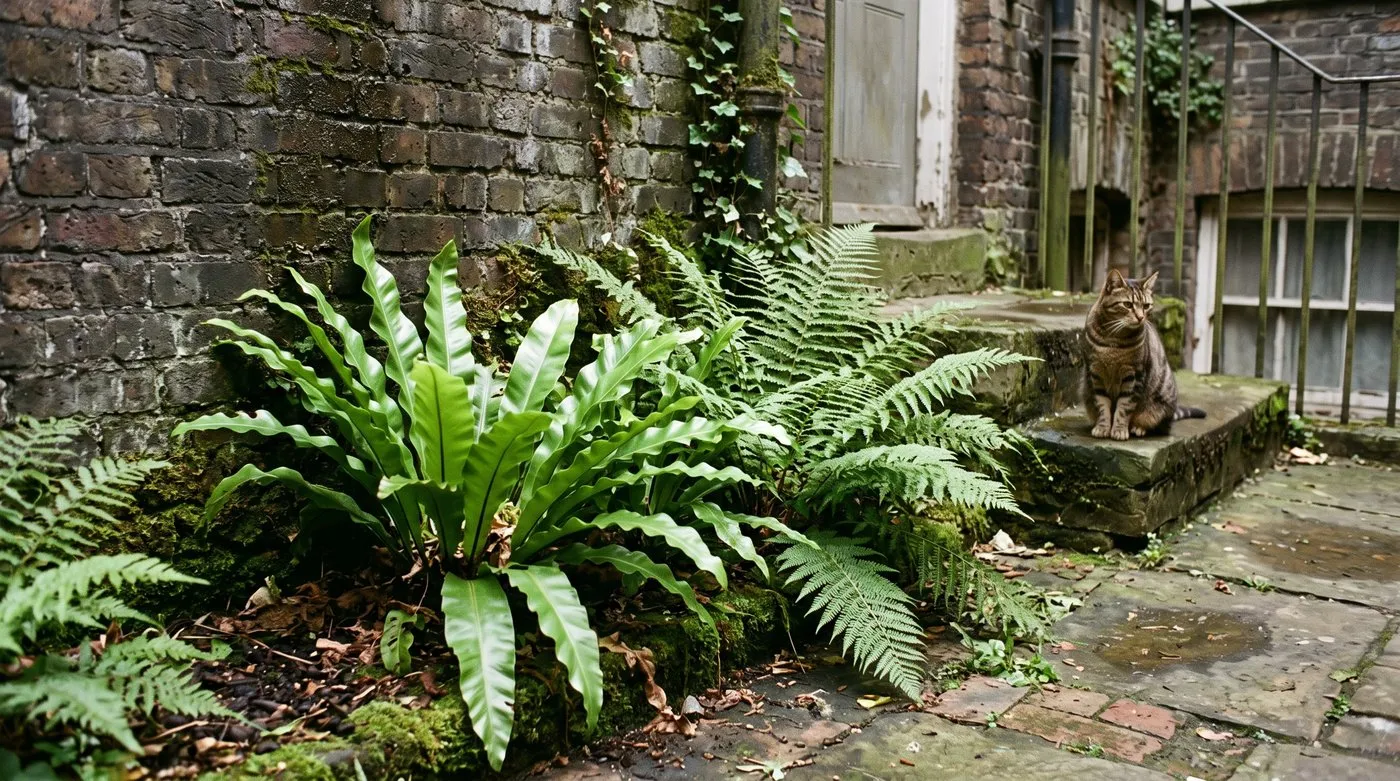
Hart’s tongue ferns love a damp, shady wall. Even a gloomy basement courtyard can look lush with ferns.
Most ferns want soil that stays moist but not waterlogged and is rich in organic matter. Before planting, dig in plenty of leaf mould or well-rotted garden compost. On heavy clay, add a little grit too. Leaf mould is free if you collect fallen leaves: our guide on how to make leaf mould shows how.
For dry shade, choose the tougher types such as male fern and common polypody. Our guide to the best plants for shade has more ideas for gloomy corners.
How to plant ferns
Plant ferns from autumn to spring, when the soil is moist. Pot-grown ferns can go in at other times if you keep them watered.
- Dig a hole twice as wide as the pot and the same depth.
- Mix leaf mould or compost into the soil you dug out.
- Set the fern so its crown (the centre where fronds grow from) sits at soil level. Don’t bury it.
- Backfill, firm gently and water well.
- Mulch around the plant with leaf mould, keeping it off the crown.
Space small ferns such as painted fern about 30-40cm apart. Medium ferns like soft shield fern need about 60cm. Big ones like male fern and royal fern need around 1m.
Watering and mulching ferns
Water new ferns regularly through their first summer, whenever the soil starts to dry. Once settled, ferns in shade rarely need watering except in long dry spells. Ferns in pots need checking often in summer.

A yearly layer of leaf mould keeps the soil moist and spongy. Keep it just clear of the crown in the middle.
The most useful job of the year is a leaf mould mulch in autumn or early spring. A layer a few centimetres thick keeps the soil moist, feeds it slowly and keeps weeds down. Over the years it builds the soft, spongy woodland soil ferns love.
Cut back old fronds in late winter or early spring, before the new ones unfurl. For evergreen ferns, remove only tatty fronds, so the plant still looks good. On deciduous ferns, leave the old fronds on through winter to protect the crown, then cut them away in February or March.

New fronds, called croziers, unfurl in spring. Cut the old fronds away before these appear so you don’t snip them by mistake.
How to create a fernery
A fernery is simply a shady area planted mainly with ferns. Victorian collectors built elaborate ones, but a small shady corner works just as well.
- Choose the spot: a shady, sheltered corner, ideally facing north or east.
- Prepare the soil: dig in plenty of leaf mould or compost.
- Edge the bed: old bricks, stone or reclaimed paving give a Victorian feel.
- Plant in layers: taller ferns at the back, smaller ones in front, with a mix of evergreen and deciduous types for year-round interest.
- Add character: mossy logs, old stones and tree stumps make it feel like woodland and give shelter to wildlife.
For a bigger statement, our guide to building a stumpery shows how to use upturned stumps and roots with ferns. Gentle partners such as sweet woodruff and brunnera fill gaps between the crowns with spring flowers.

A simple fernery with a brick edge and a pile of mossy logs. The logs give it a woodland feel and a home for beetles and frogs.
How to divide ferns
Most ferns don’t need dividing often. Divide clump-forming ferns that have several crowns when they get crowded. Ferns with a single crown, like many shield ferns, don’t divide well, so leave those alone.
- Divide in spring, just as new growth starts.
- Lift the clump with a fork.
- Split it into pieces with a spade or sharp knife. Each piece needs at least one crown and some roots.
- Replant at the same depth straight away and water in well.
- Mulch with leaf mould.
Spreading ferns such as the shuttlecock fern send up new plants from runners. Dig these up in spring to move them or keep the clump in check.

Split a crowded clump into pieces, each with a crown and roots. Replant them straight away so the roots don’t dry out.
Month-by-month fern care
| Month | What to do |
|---|---|
| January | Plant new ferns in mild, moist weather |
| February | Cut back old fronds of deciduous ferns |
| March | Tidy evergreen ferns. Mulch with leaf mould. Divide crowded clumps |
| April | New fronds unfurl. Divide clumps if not done in March |
| May | Water new ferns in dry spells |
| June | Check pots and new plants in warm weather |
| July | Water in long dry spells |
| August | Keep new plants watered |
| September | Plant new ferns while the soil is warm |
| October | Plant ferns. Collect fallen leaves for leaf mould |
| November | Mulch with leaf mould. Leave deciduous fronds on |
| December | Little to do. Enjoy the evergreen ferns |
Common fern-growing mistakes
Planting in hot sun. Most ferns scorch and crisp in full sun. Choose shade, or a sunnier spot only if the soil stays wet.
Burying the crown. Planting too deep can rot the crown. Keep it at soil level.
Letting new ferns dry out. Young ferns need regular water in their first summer. Mulch helps keep moisture in.
Cutting back too late. If you wait until new fronds are up, you’ll damage them. Tidy up in late winter.
Dividing single-crown ferns. Ferns with one crown don’t split well. Only divide clumps with several crowns.
Have a tree fern too? Our guide to tree fern winter protection covers keeping it safe in frost. For more ideas for shady plots, read our north-facing garden ideas, or browse the plants section.
Frequently asked questions
What are the best hardy ferns for UK gardens?
Male fern, soft shield fern and hart’s tongue fern are the most reliable. Add Japanese painted fern for silvery colour and shuttlecock fern for height in damp ground. All of them like shade and moist, leafy soil.
How do I make a Victorian-style fernery in my garden?
Pick a shady, sheltered corner, ideally facing north or east. Improve the soil with leaf mould, edge the bed with old brick or stone, and plant ferns of different heights. Add mossy logs and stones for a woodland feel.
Do hardy ferns need watering?
Established ferns in shade rarely need watering except in long dry spells. New ferns need regular watering through their first summer. A thick leaf mould mulch helps keep the soil moist.
When should I divide ferns?
Divide clump-forming ferns in spring, just as new growth starts. Only ferns with several crowns divide well. Lift the clump, split it into pieces that each have a crown and roots, and replant at the same depth.
Can I grow ferns in containers?
Yes, many smaller ferns grow well in pots. Japanese painted fern, soft shield fern and hart’s tongue suit containers. Use peat-free compost mixed with leaf mould, keep it moist and stand the pot in shade.
Our team produces practical UK gardening guidance from source research, contributor records and established horticultural practice. Editorial standards are overseen by Matt W.