Key takeaways
- A stumpery sets tree stumps and roots roots-upward in shade; the first was built around 1855 at Biddulph Grange, Staffordshire
- Part-bury each stump base 20 to 30cm deep so it stays stable and starts to draw up moisture
- Oak and dense hardwoods last 10 to 20-plus years; softwoods rot in 3 to 6 years but feed the soil faster
- Plant ferns, hostas, hellebores, epimediums and wood anemones into leafmould-packed pockets
- Decaying wood supports around 1,700 UK invertebrate species, plus fungi, toads and hibernating hedgehogs
- Source stumps free from tree surgeons, your own felled trees or cleared sites; never use treated or painted timber
What a stumpery is and where the idea came from
A stumpery is a garden feature built from tree stumps, roots and logs, arranged in a shady, damp position and planted with woodland shade-lovers. The stumps are often turned roots-upward so the twisted root plates face the sky. The effect is part rockery, part sculpture, and wholly of the woodland floor.
Why a stumpery is the best fix for a shady, damp corner
Most gardens have a dead zone. It sits on the north or east side, under trees or against a fence, where light is thin and the soil is either bone-dry or slow to drain. Grass fails there. Bedding sulks. A stumpery is built for exactly this ground.
The wood does two jobs at once. Part-buried stumps hold moisture in dry shade and lift plants clear of standing water in wet shade. As the timber rots it releases a slow, steady feed and builds a spongy, humus-rich soil that woodland plants love. You are copying the floor of a native wood, where fallen trunks feed the next generation.
Scale is flexible. A small garden needs only three or four stumps to make the point, tucked against a shady wall or under a single tree. A large plot can run a full Biddulph-style walk. Either way, size the wood to the space so the feature reads as deliberate, not as a wood pile you never cleared.
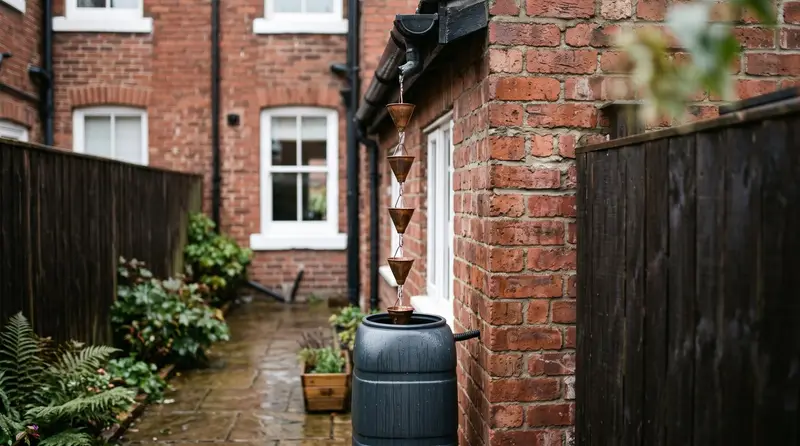
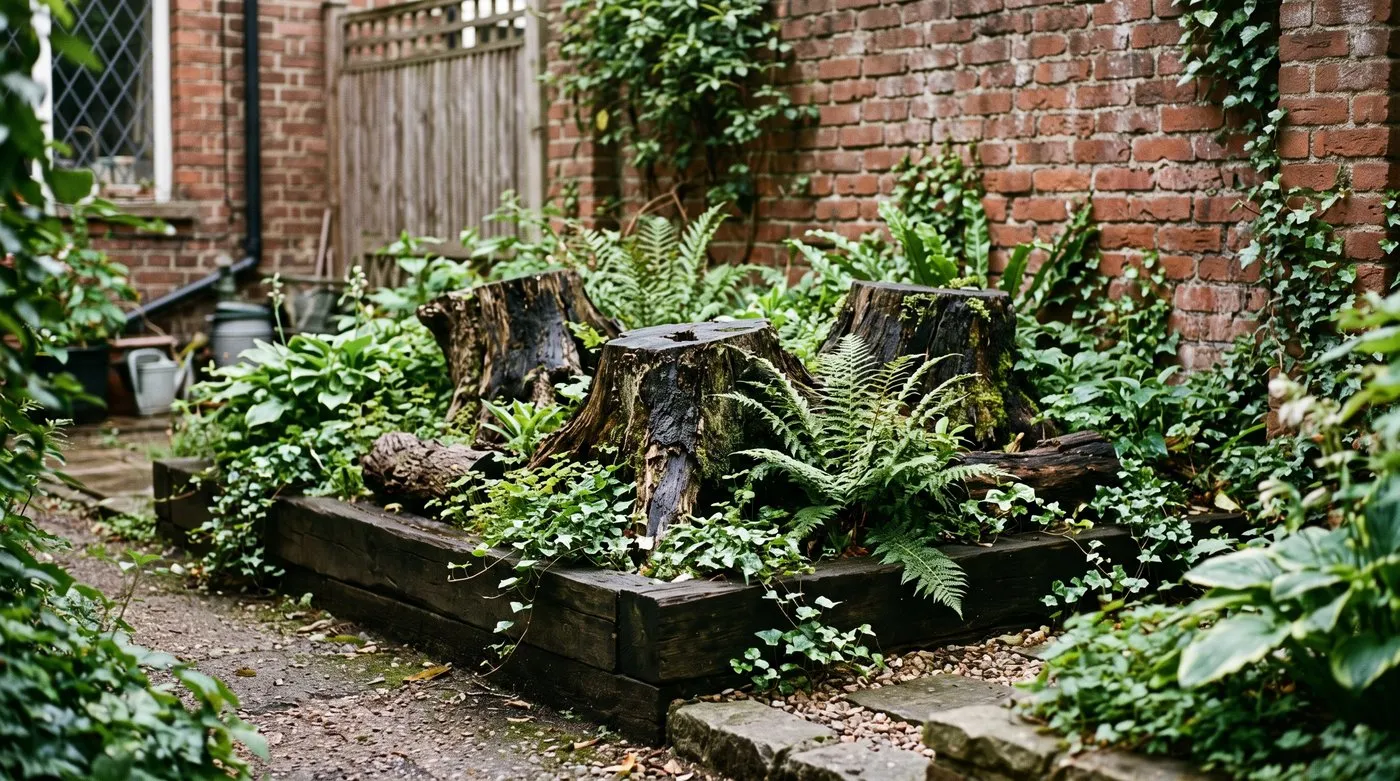 A small-garden stumpery against a brick wall in a London townhouse garden. Three stumps and a skirt of ferns turn a dead shady corner into a feature.
Where to source stumps, roots and logs for free
Good stumpery wood is easy to find and usually free. Tree surgeons pay to dispose of stumps and root-balls at a tip, so many will happily drop a load in your driveway instead. Ring two or three local firms and ask them to keep back interesting roots from their next removal.
Other sources are just as cheap. Your own felled or storm-damaged trees are ideal. Cleared building plots often have stumps grubbed out and skipped. Firewood merchants sell butts and root-balls for a few pounds each. Council tree work and woodland thinning sometimes leave usable material on verges, though always ask before you take any.
Aim for a mix of sizes. You want a few large root-balls of 60 to 100cm across for the backbone, plus smaller stumps and logs to build up the levels. Roots with character, all twists and hollows, make the best upturned pieces. Avoid anything painted, treated, tanalised or oiled. Those chemicals leach into the soil and poison the wildlife you are trying to feed.
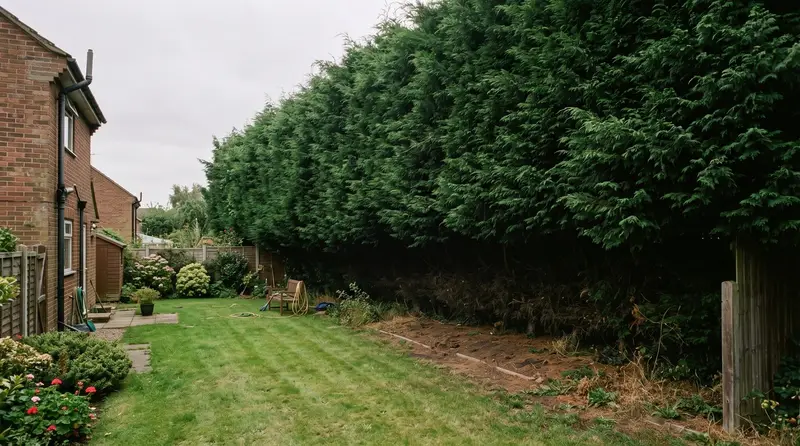
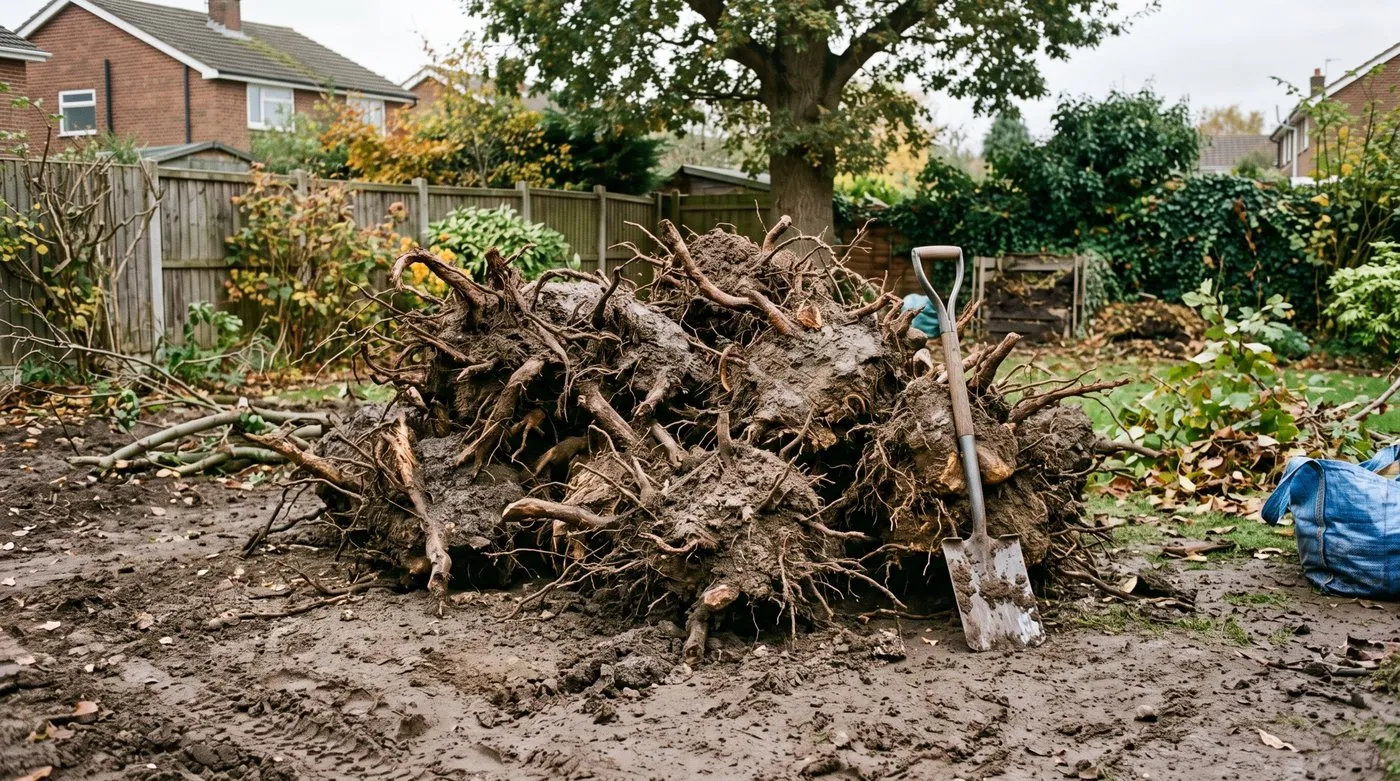 Freshly dug root-balls from a tree surgeon. This much character wood is usually free for collection, saving the contractor a tip fee.
Which timber lasts longest in a stumpery
Not all wood rots at the same rate, and this decides how often you rebuild. Dense hardwoods like oak, sweet chestnut and yew resist decay for a decade or more. Softwoods like pine and spruce break down in a few years. Neither is wrong. The slow rotters give you structure; the fast rotters feed the soil and the beetles sooner.
How to build a stumpery step by step
The build is straightforward and needs no cement, no membrane and no power tools beyond a spade and a strong back. Work through these stages in order. The whole job takes a weekend for a bed of around 4 square metres, plus a helper for the heavy lifting.
- Pick the site. Choose a shady, sheltered spot: north or east-facing, under trees, or against a wall. Damp ground is a bonus but not essential. Clear it of turf, weeds and perennial roots first.
- Set the biggest pieces. Position your large root-balls first, roots-upward, as the backbone. Turn them so the most sculptural faces show. Work from the back or centre outward, tallest to shortest.
- Part-bury each base. Dig each stump in 20 to 30cm deep and firm the soil hard around it. This stops the stump shifting and starts the buried wood rotting and drawing moisture.
- Build the levels. Slot smaller stumps and logs around and between the big pieces. Overlap and lean them so they interlock. Aim for hollows, ledges and planting pockets, not a flat pile.
- Backfill the gaps. Pack the spaces between stumps with leafmould, garden compost and topsoil, roughly half and half. This is your planting medium. Firm it into every crevice so no air pockets remain.
- Plant the pockets. Set ferns and shade-lovers into the filled gaps and around the base. Tease out the roots, plant to the same depth as the pot, and firm in. Water each one well.
- Mulch and settle. Cover all bare soil with a 5cm layer of leafmould or leaf litter. Water the whole feature, then leave it. It settles and knits together over the first year.
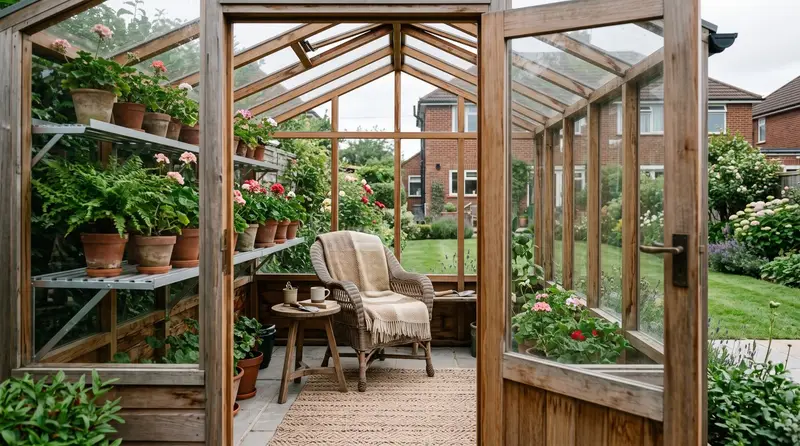
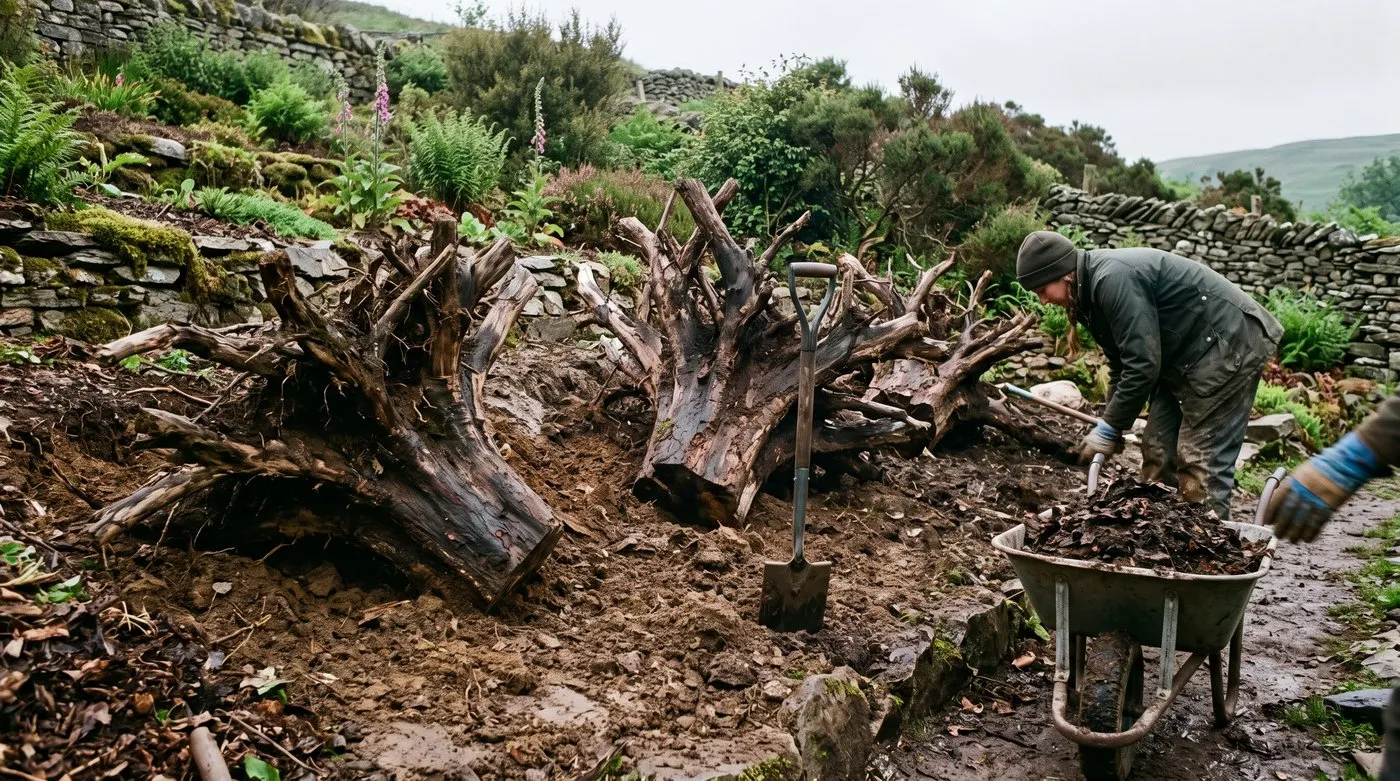 The frame stage: large oak root-balls set roots-up with bases buried 25cm deep. Firm the soil hard so nothing shifts before you plant.
Gardener’s tip: Soak every stump with a hosepipe for ten minutes before you plant around it. Dry deadwood is thirsty and will pull moisture out of your new ferns for weeks. A pre-soaked stump lets the plants settle without a fight, and it wakes up the fungi that begin the rot.
The best ferns and shade plants for a stumpery
The planting is what turns a wood pile into a garden. Ferns are the heart of it, exactly as the Victorians intended. Set them into the pockets and let their fronds arch over the roots. Around and below, add the broad-leaved woodlanders that carpet a shady floor.
Match the plant to the light and moisture. Our guide to the best plants for dry shade covers the tougher end for spots baked by tree roots. For the ferns themselves, the hardy fern and fernery guide runs through the reliable UK species. Hostas thrive in the damper pockets; our guide to growing hostas covers the slug problem you will meet. For late-winter flowers, hellebores are hard to beat, and our hellebore growing guide explains their shade needs.
The table ranks the core palette by how well each one copes with the dry, shaded conditions a stumpery often creates.
| Plant | Type | Height | Evergreen? | Position | Shade tolerance |
|---|---|---|---|---|---|
| Male fern (Dryopteris filix-mas) | Fern | 90-120cm | Semi-evergreen | Damp or dry shade | Very high |
| Hart’s tongue (Asplenium scolopendrium) | Fern | 40-60cm | Evergreen | Damp shade, wall bases | Very high |
| Soft shield fern (Polystichum setiferum) | Fern | 60-90cm | Evergreen | Dappled to deep shade | Very high |
| Lady fern (Athyrium filix-femina) | Fern | 60-90cm | Deciduous | Damp shade | High |
| Epimedium | Ground cover | 20-40cm | Semi-evergreen | Dry shade | Very high |
| Hosta | Foliage perennial | 30-70cm | Deciduous | Damp shade | High |
| Hellebore | Perennial | 30-45cm | Evergreen | Dappled shade | High |
| Wood anemone (Anemone nemorosa) | Spring bulb | 10-15cm | Deciduous | Dappled shade | High |
For quick cover, add tiarella, sweet woodruff, foxgloves, ivy and mosses in the smaller crevices. Mosses arrive on their own within a season or two in a damp stumpery. Do not fight them. They are the finishing touch that makes the wood look ancient.
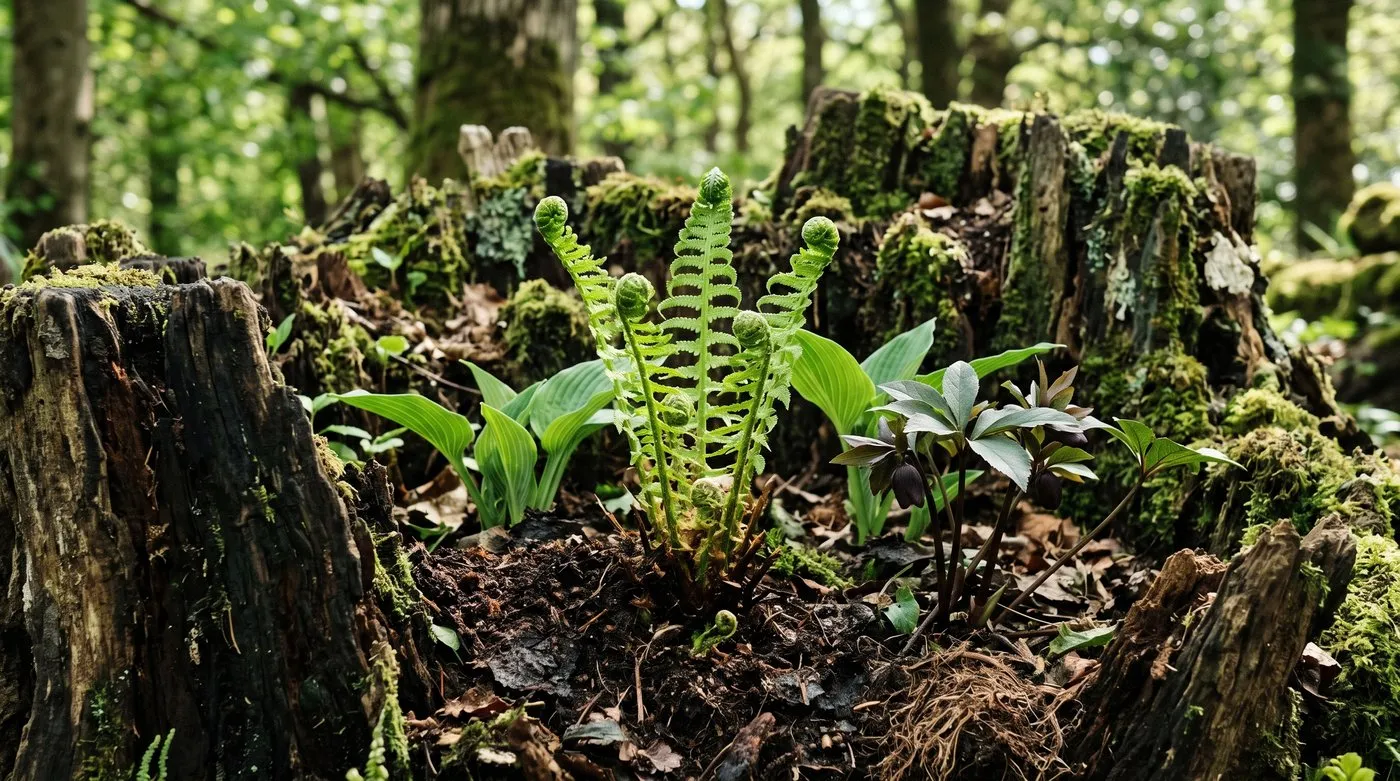 Male ferns, hostas and hellebores planted into leafmould-packed pockets. Within two seasons the fronds hide the soil and soften every root.
How a stumpery becomes a deadwood wildlife habitat
This is where a stumpery beats almost every other garden feature. Decaying wood, or deadwood, is one of the scarcest habitats in the modern countryside. The Woodland Trust notes that deadwood supports around 1,700 UK invertebrate species that live nowhere else. A stumpery brings that habitat into your garden on purpose.
The buried, rotting wood feeds beetle larvae first. In southern England the prize is the stag beetle, whose larvae spend three to six years chewing through underground deadwood before they emerge. Further north, lesser stag beetles and dozens of other beetles use the same resource. Add the fungi that break the wood down, and you have the base of a whole food web.
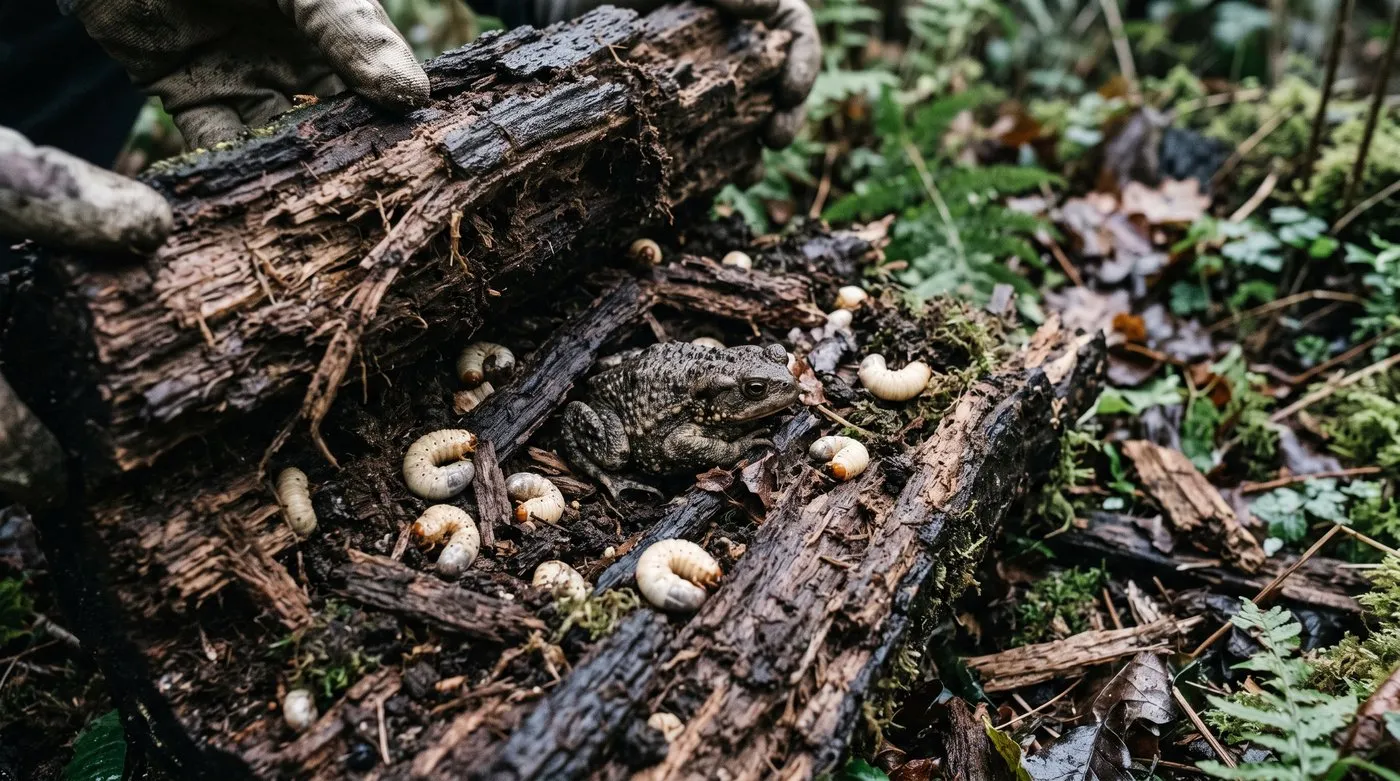 Roll back a softening log and you find the reason to build a stumpery: beetle larvae and amphibians using the decaying wood as home.
Month-by-month stumpery care through the UK year
A stumpery is low-maintenance, not no-maintenance. The jobs are light and seasonal. This calendar keeps the feature looking deliberate and the planting healthy through a UK year.
| Month | Task |
|---|---|
| January | Leave everything standing. Deadwood and old fronds shelter hibernating wildlife. Do nothing. |
| February | Order bare-root ferns and woodland plants. Check no stumps have loosened in winter storms. |
| March | Cut back tired evergreen fern fronds to the crown before new growth uncurls. Clear excess leaves off crowns. |
| April | Plant new ferns and shade perennials. Top up leafmould in any pockets that have slumped. |
| May | Watch for slugs on fresh hosta shoots. Water new plants until roots take hold. |
| June | Full leaf now. Water in dry spells; the wood and leafmould hold moisture well but new plants still need help. |
| July | Peak shade cover. Leave the moss and leaf litter in place. Enjoy the cool, green corner in heat. |
| August | Keep new plants watered through any drought. Established ferns cope alone. |
| September | Divide and move any overcrowded ferns or hostas. Lift and replant self-set seedlings. |
| October | Pile fallen leaves onto the feature as free mulch and habitat. Do not tidy the crevices. |
| November | Add fresh stumps or logs where older wood has collapsed. Firm in any new pieces. |
| December | Leave all top-growth and leaf litter for winter shelter. The bare roots give structure and frost interest. |
Common mistakes when building a stumpery
- Choosing a spot that is too sunny or dry. A stumpery baked in full sun cooks the ferns and dries the wood to dust. It wants shade and shelter. A north or east aspect under trees is ideal. Sun-drenched corners suit a rockery, not a stumpery.
- Not anchoring the stumps. Stumps set on the surface shift, lean and topple, especially once children or dogs test them. Bury every base 20 to 30cm deep and firm the soil hard. Stability is a safety point, not just a tidiness one.
- Skipping the leafmould. Bare gaps between stumps grow nothing. The plants need a moisture-holding, humus-rich medium in every pocket. Pack the crevices with leafmould and compost before you plant, or the ferns starve.
- Planting sun-lovers. Lavender, sedum and grasses belong in the open, not a stumpery. They stretch, flop and rot in the shade. Stick to the woodland palette: ferns, hostas, hellebores, epimediums and their kin.
- Using treated or painted timber. Tanalised fence posts, oiled sleepers and painted logs leach chemicals as they weather. That poisons the fungi and beetles you built the feature to support. Use only clean, untreated stumps and logs.
Warning: Never build a stumpery from wood you cannot identify as untreated. Old fence posts, decking offcuts and reclaimed sleepers are often tanalised or creosoted. Those preservatives are toxic to the invertebrates and amphibians a stumpery is meant to shelter, and they do not break down. If in doubt, leave it out.
Making the leafmould that fills and mulches the feature is a job worth starting now. Our guide to making leafmould shows how autumn leaves become the crumbly, dark compost a stumpery runs on. Bag your leaves this autumn and you will have the perfect backfill by the following year.
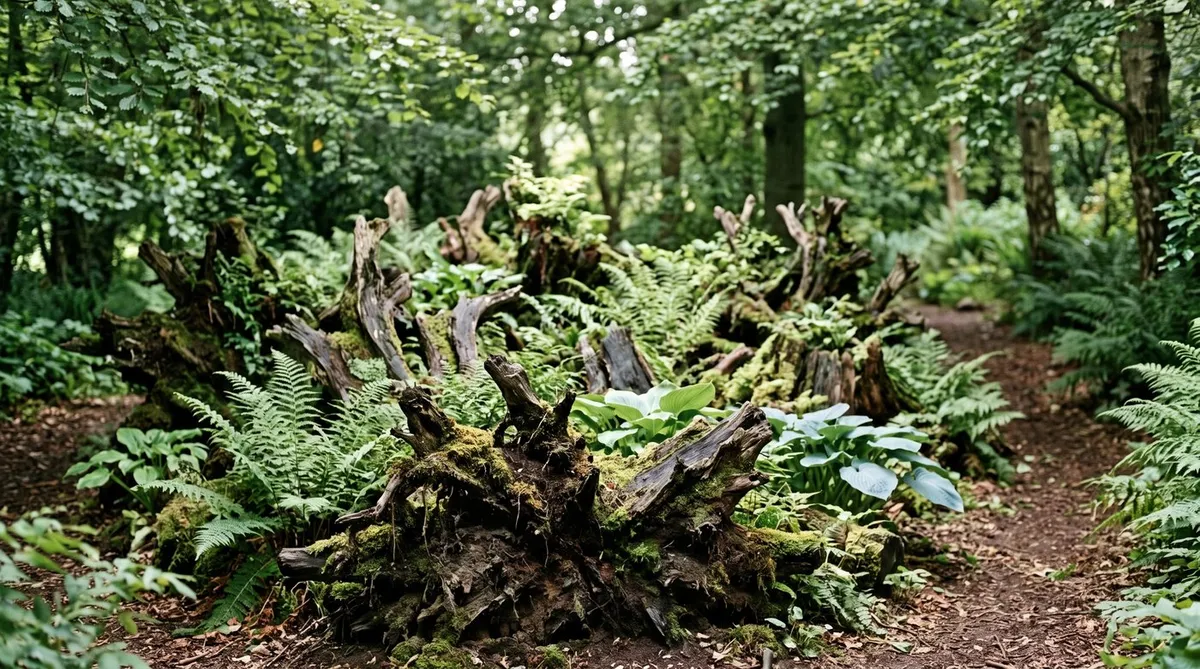
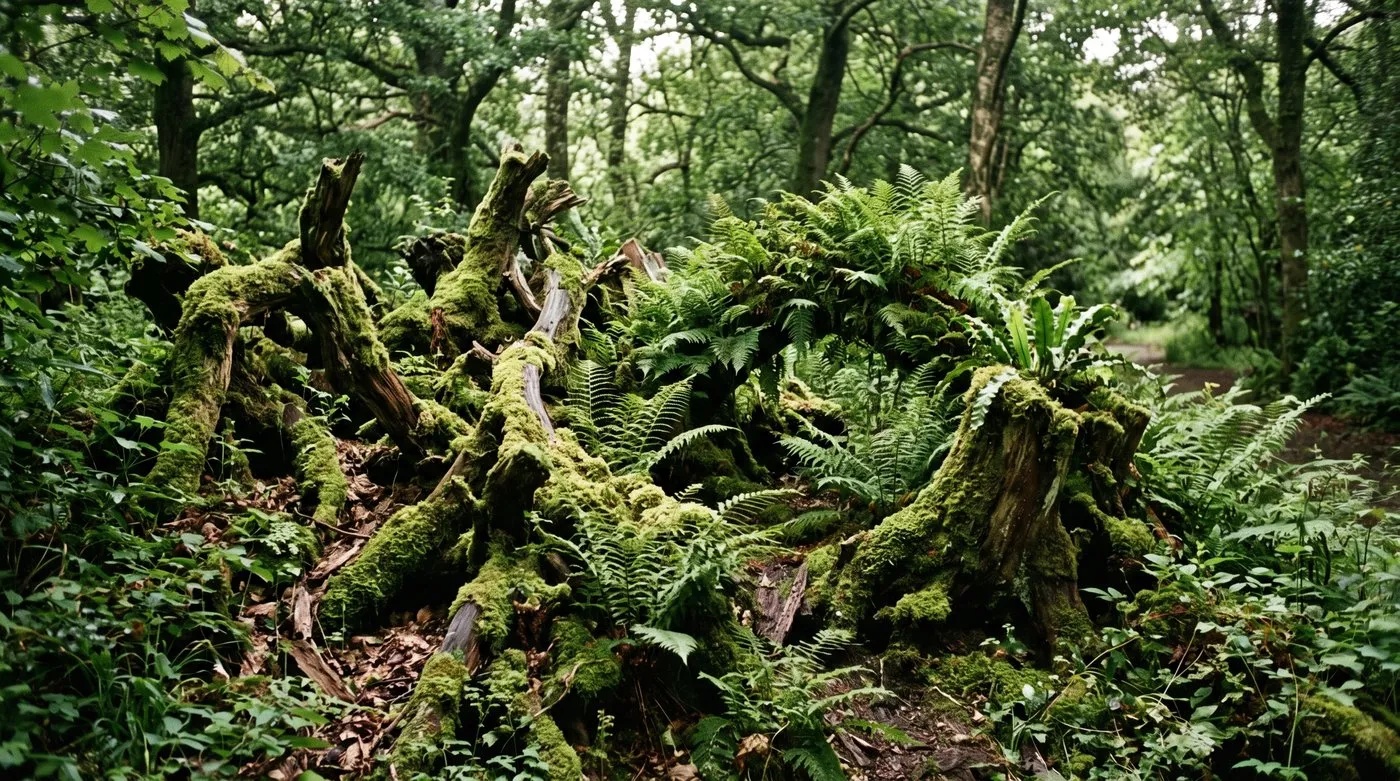 A stumpery at maturity: moss has clothed the wood, the ferns have knitted together, and the whole corner reads as ancient woodland floor.
Frequently asked questions
What is a stumpery in a garden?
A stumpery is an arrangement of tree stumps, roots and logs in shade. The stumps often sit roots-upward for drama. Gardeners plant ferns, mosses and other shade-lovers into the gaps. The first known stumpery was built around 1855 at Biddulph Grange in Staffordshire.
Where do I get stumps for a stumpery?
Ask local tree surgeons for free stumps and root-balls. Most pay to dump this waste, so they will often deliver it to you. Cleared building sites, your own felled trees and firewood merchants are other free sources. Oak, sweet chestnut and other dense hardwoods last longest.
How deep do you bury stumpery stumps?
Bury each base 20 to 30cm below the soil. This anchors the stump so it cannot shift or topple. The buried wood also draws up moisture and starts to rot from below, which feeds the fungi and beetles. Firm the soil hard around each base.
What plants grow best in a stumpery?
Ferns, hostas, hellebores, epimediums and wood anemones grow best. Add mosses, ivy, foxgloves and sweet woodruff for cover. All of these tolerate the shade and damp that a stumpery creates. Match the plant to the light: deep shade or dappled shade under trees.
Do stumperies attract stag beetles?
Yes, buried decaying wood is prime stag beetle habitat. The larvae feed on rotting underground wood for three to six years. A stumpery in southern England, where stag beetles live, gives them exactly this. Elsewhere the same wood feeds lesser stag beetles, other beetles and their larvae.
How long does a stumpery last?
Oak stumps last 10 to 20-plus years before renewal. Sweet chestnut and yew are similar. Softwoods like pine rot in three to six years. You do not rebuild all at once: slot in fresh stumps as older ones collapse, and the feature carries on indefinitely.
Can you build a stumpery in a small garden?
Yes, even three or four logs make a small stumpery. Tuck it into a shady corner, against a north wall, or under a single tree. A raised root-ball with ferns around it works in a courtyard. Scale the stumps to the space so it reads as deliberate.
Our team produces practical UK gardening guidance from source research, contributor records and established horticultural practice. Editorial standards are overseen by Matt W.