Key takeaways
- Sweet woodruff is a low, native ground cover with white flowers from April to June
- It loves shade and copes with dry shade under trees once established
- Plant about 30cm apart in autumn or spring and water well in the first summer
- It spreads fast on rich, moist soil, so give it room or edge it in
- Dried leaves smell of fresh hay and vanilla, lovely in linen sachets
- Divide clumps in autumn or early spring to make more plants
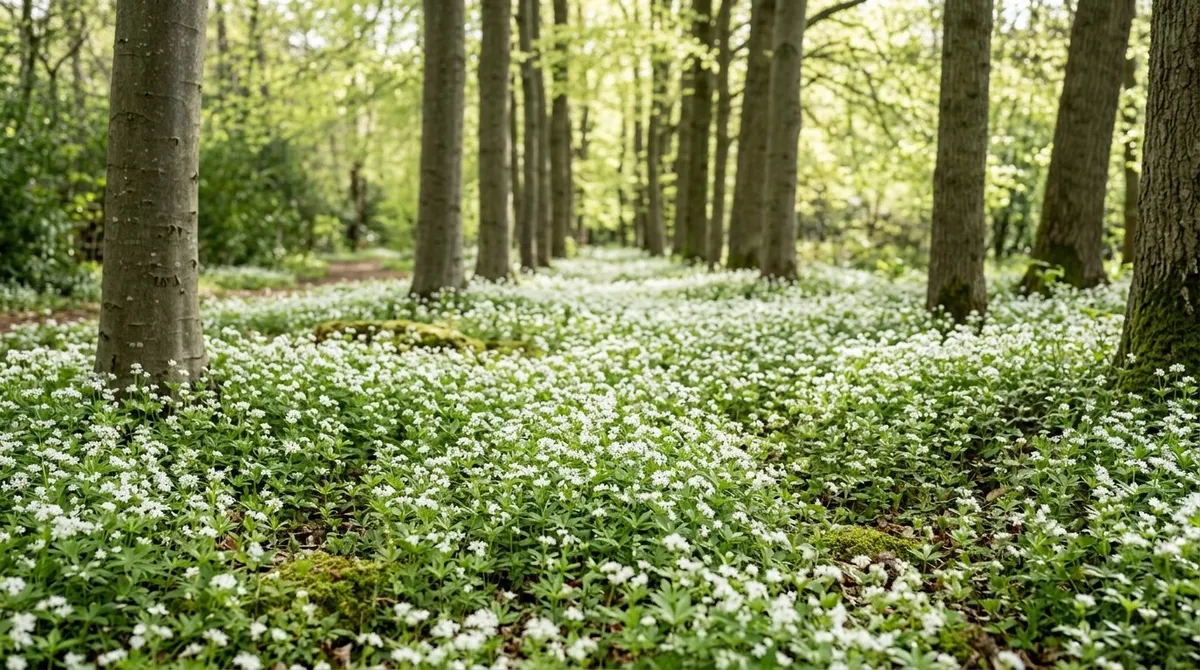
Sweet woodruff is a low, pretty ground cover for the shady spots where grass and most flowers give up. In spring it’s covered in tiny white stars. Later, its dried leaves smell wonderfully of fresh hay and vanilla.
It’s a native woodland plant, so it’s right at home under trees and on the shady side of a house. The only catch is that it spreads happily on good soil. Plant it in the right spot and that’s exactly what you want.
What is sweet woodruff?
Sweet woodruff (Galium odoratum) is a hardy perennial in the bedstraw family. It grows wild in woodland across Britain, forming loose green carpets under beech and oak trees.
It grows about 20cm tall. The narrow leaves sit in neat rings, or whorls, around the stem, like the spokes of a wheel. From April to June, clusters of tiny white four-petalled flowers sit on top.
It spreads by creeping underground stems and by seed. It dies back in winter and pops up again in early spring.
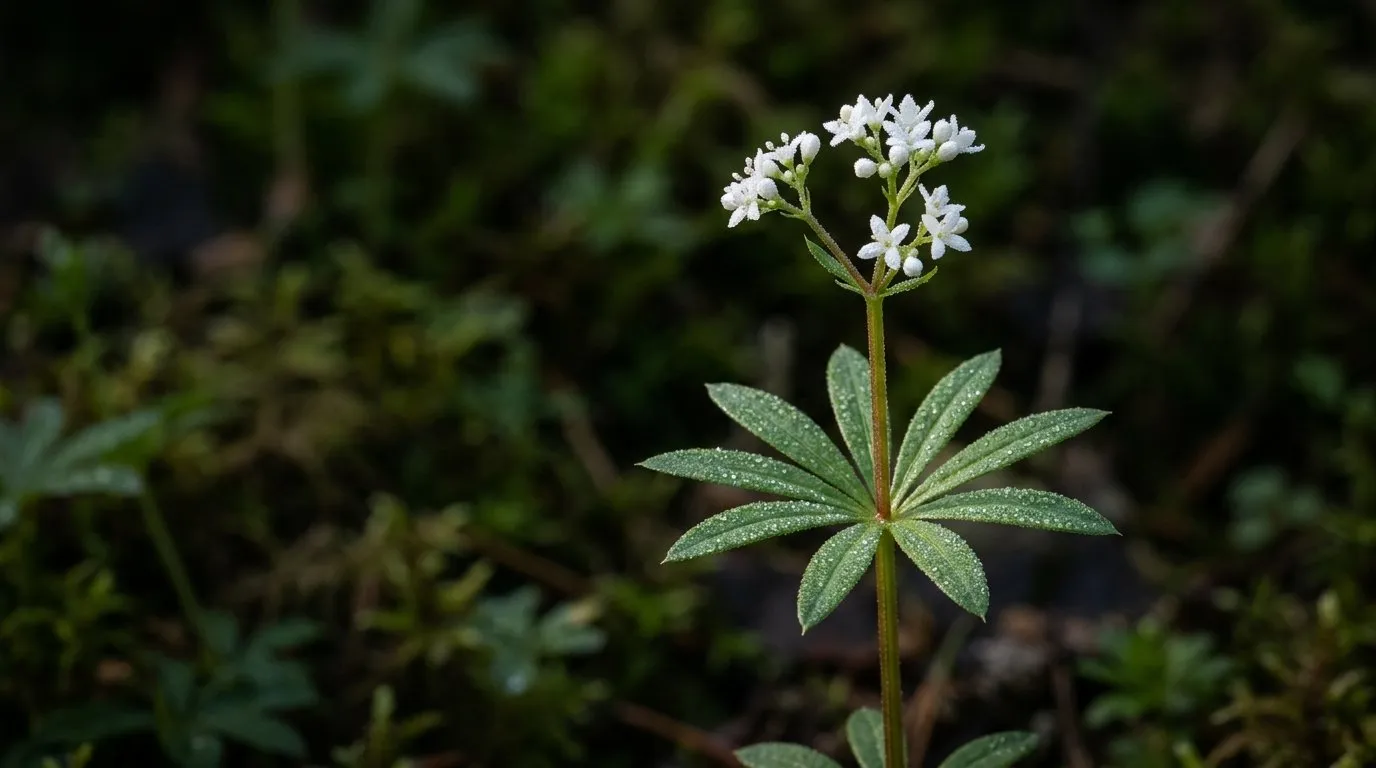
The ring of narrow leaves around each stem is the easiest way to recognise sweet woodruff.
Where to grow sweet woodruff
Grow sweet woodruff in part or full shade. It’s perfect under trees and shrubs, at the foot of a shady wall or hedge, and at the front of a north-facing border.
- Light: dappled to deep shade. Full sun scorches the leaves and the plant sulks.
- Soil: it loves moist, leafy soil, and grows well on chalk and limestone. Once settled, it copes with dry shade under trees.
- How fast it spreads depends on the soil. On rich, moist soil it runs quickly. On dry, poorer soil under trees it stays much more restrained.
That makes it one of the best plants for dry shade, as long as you water it through its first summer. For more ideas, see our guide to the best plants for shade.
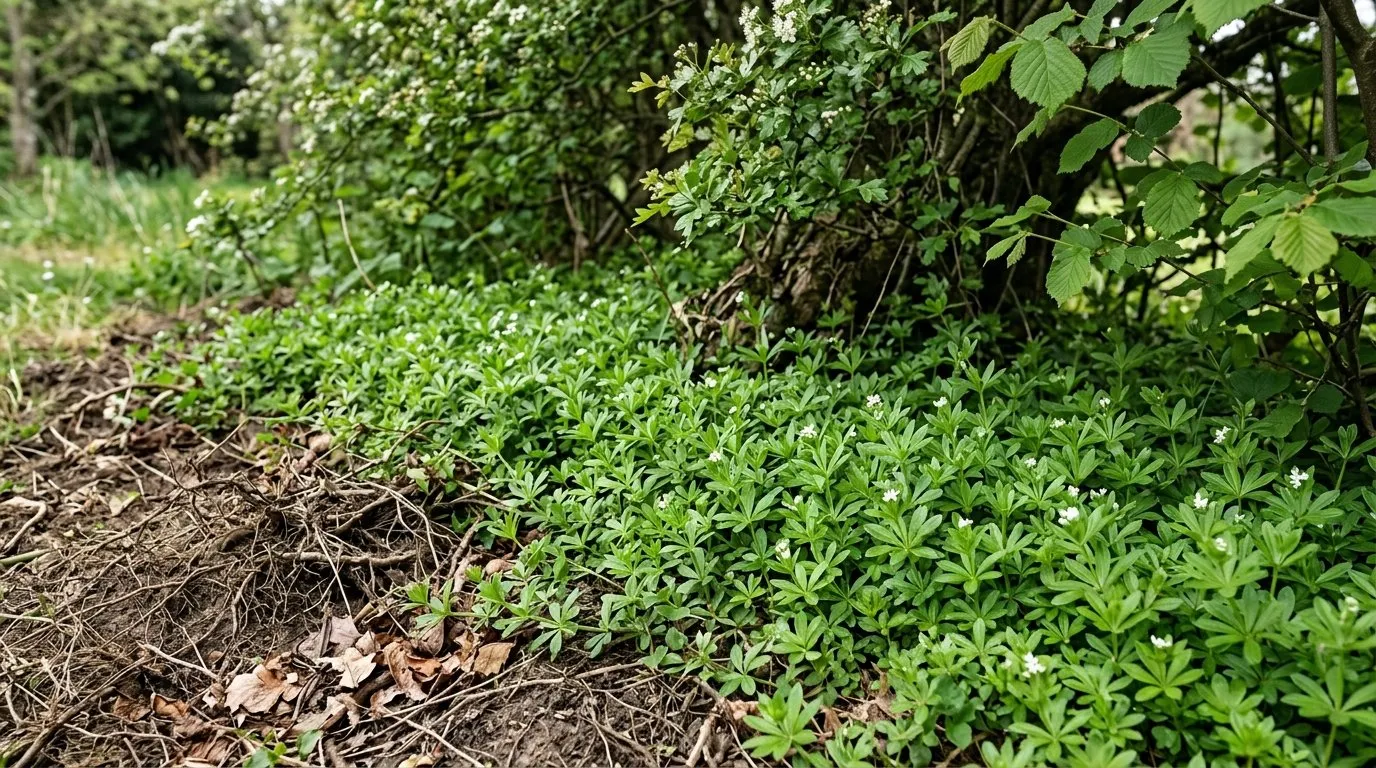
In dry shade at the foot of a hedge, sweet woodruff spreads more slowly and stays easy to manage.
How to plant sweet woodruff
Plant sweet woodruff in autumn or spring, when the soil is moist.
- Decide where you want it to spread. Give it room, or plan an edge to stop it.
- Fork in some leaf mould or compost if the soil is very dry or poor.
- Plant about 30cm apart, at the same depth as in the pot.
- Water well and keep the soil moist through the first summer.
- Mulch with leaf mould in autumn.
It’s a great choice for a shady town garden, such as a north-facing bed against a wall. In a small space, sink an edge of slates or plastic lawn edging about 15cm deep to keep it in its patch.
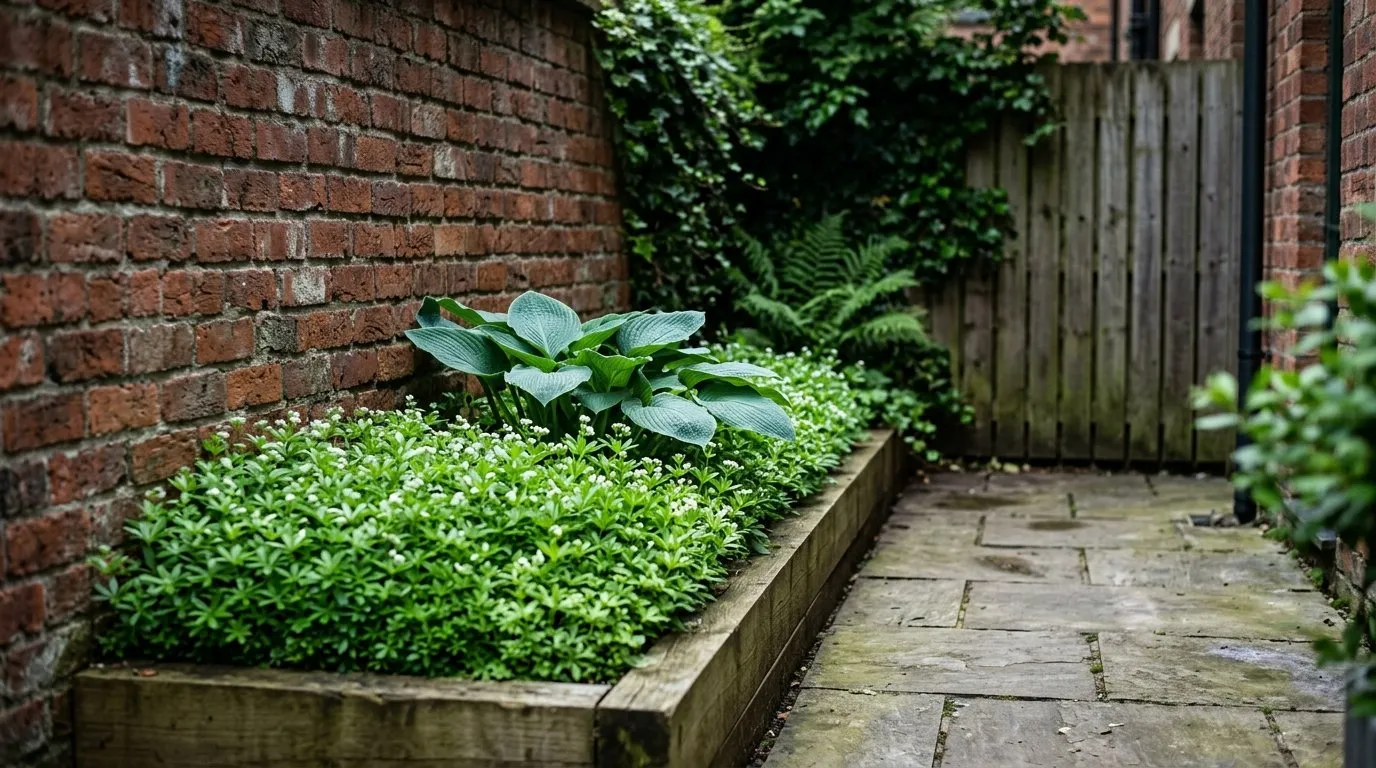
A raised bed keeps sweet woodruff neatly in its place in a shady town garden.
Sweet woodruff compared with other shade ground covers
Several plants cover shady ground. Choose sweet woodruff if you want soft texture, spring flowers and scent, and don’t mind it dying back in winter.
| Plant | Evergreen? | Flowers | Best for |
|---|---|---|---|
| Sweet woodruff | No | White, April to June | Soft texture, scent, quick cover |
| Lesser periwinkle (Vinca minor) | Yes | Blue, spring | Dense year-round cover |
| Epimedium | Partly | Yellow, pink or white, spring | Dry shade, slow and tidy |
| Bugle (Ajuga reptans) | Yes | Blue spikes, late spring | Damp part shade |
| Pulmonaria | Some leaves stay | Pink and blue, early spring | Spotted leaves, bees |
Pulmonaria makes a lovely partner too. Our guide to growing pulmonaria covers it in full, and our list of best ground cover plants has more options.
The hay scent and traditional uses
The sweet smell comes from coumarin, which is released as the leaves wilt and dry. Fresh leaves barely smell. Cut a handful, leave it for a day or two, and the scent of new-mown hay and vanilla appears.
Dried sprigs were traditionally tucked into linen sachets and drawers to freshen sheets and clothes. The scent lasts for months.
Sweet woodruff is also the traditional flavouring for German May wine. Coumarin can be harmful in larger amounts, though, so it’s safest to enjoy the plant for its scent rather than in food or drink.
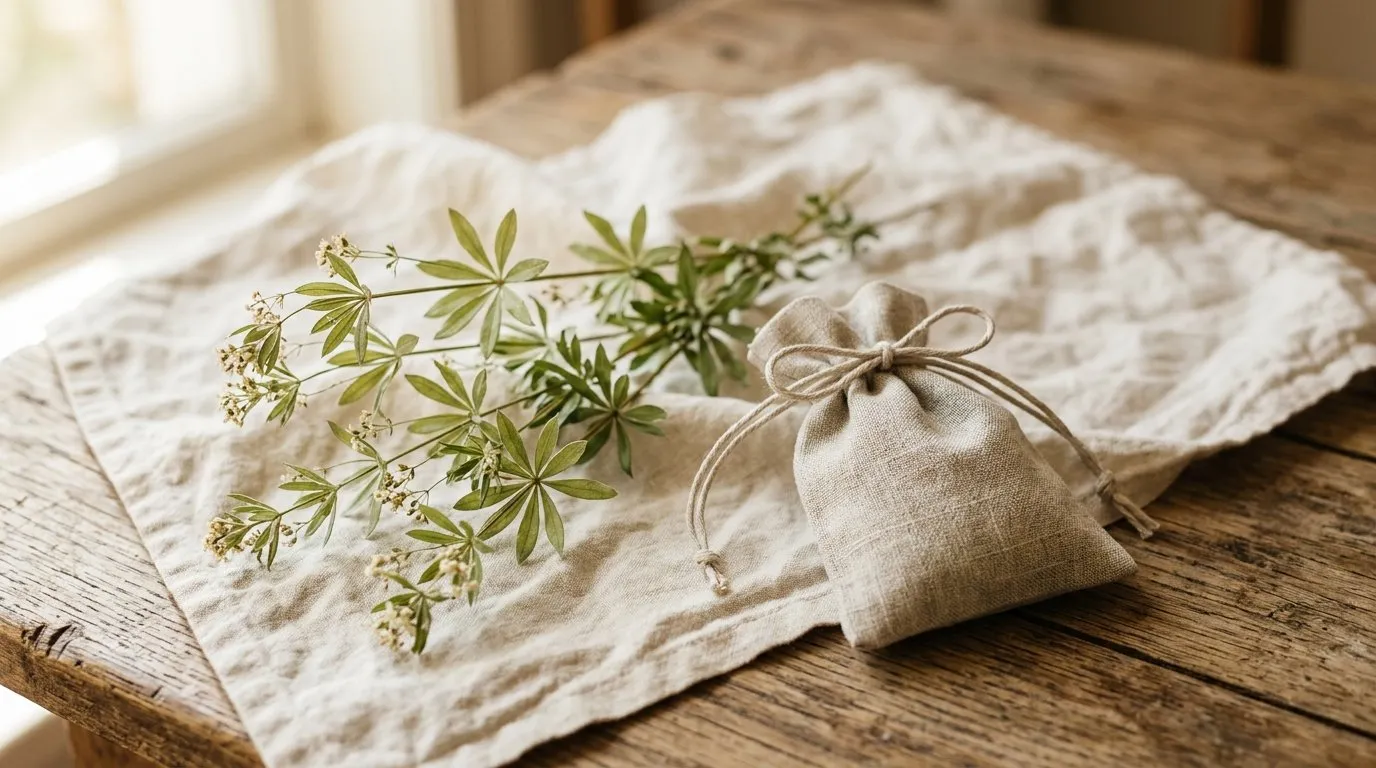
Dried sprigs tucked in a linen bag keep sheets smelling of summer hay for months.
Keeping sweet woodruff in bounds
Sweet woodruff spreads by shallow roots, which makes it easy to pull up. A quick check of the edges each spring is usually enough.
- Pull stray runners in March and April as new growth appears.
- Use an edge of slates, bricks on end or lawn edging in small or rich beds.
- Keep it away from small, slow-growing plants in rich soil, which it can swamp.
- Avoid troughs and alpine beds, where it quickly crowds out choice plants.
Plants to grow with sweet woodruff
Sweet woodruff makes a lovely under-layer for bigger shade plants. Its fine leaves fill the gaps without smothering them.
- Ferns give a lovely contrast of textures. See our guide to hardy ferns.
- Hostas unfurl above it in late spring. Our hosta growing guide explains how to keep slugs off them.
- Spring bulbs such as snowdrops and wood anemones flower first, and the woodruff covers their fading leaves.
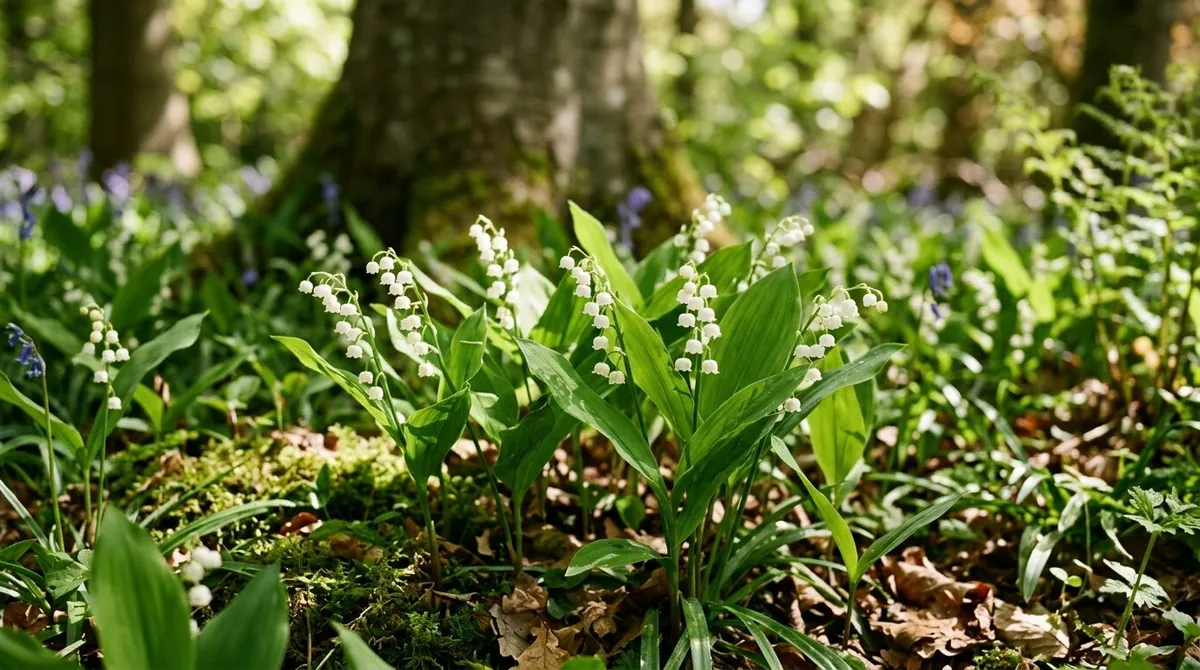
- Lily of the valley enjoys the same shady spots, though it’s another spreader.
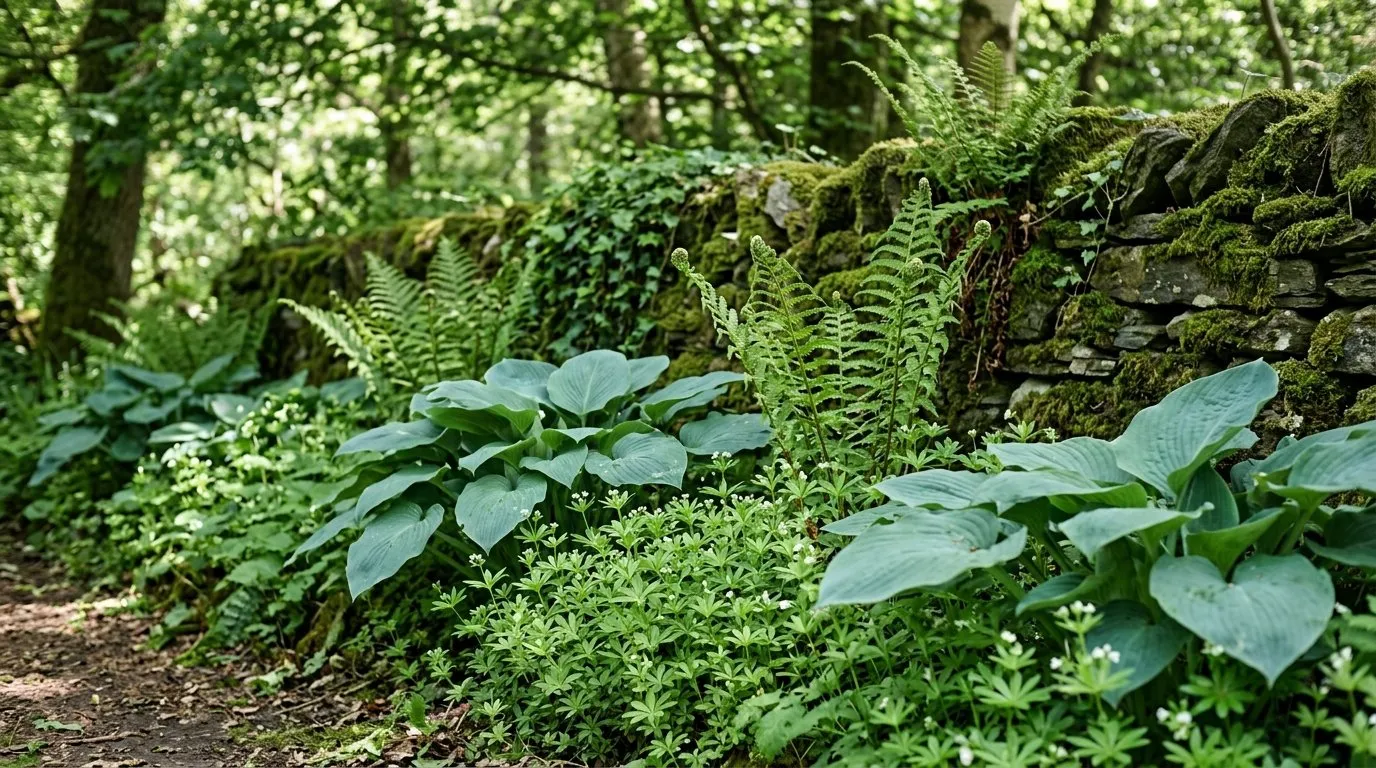
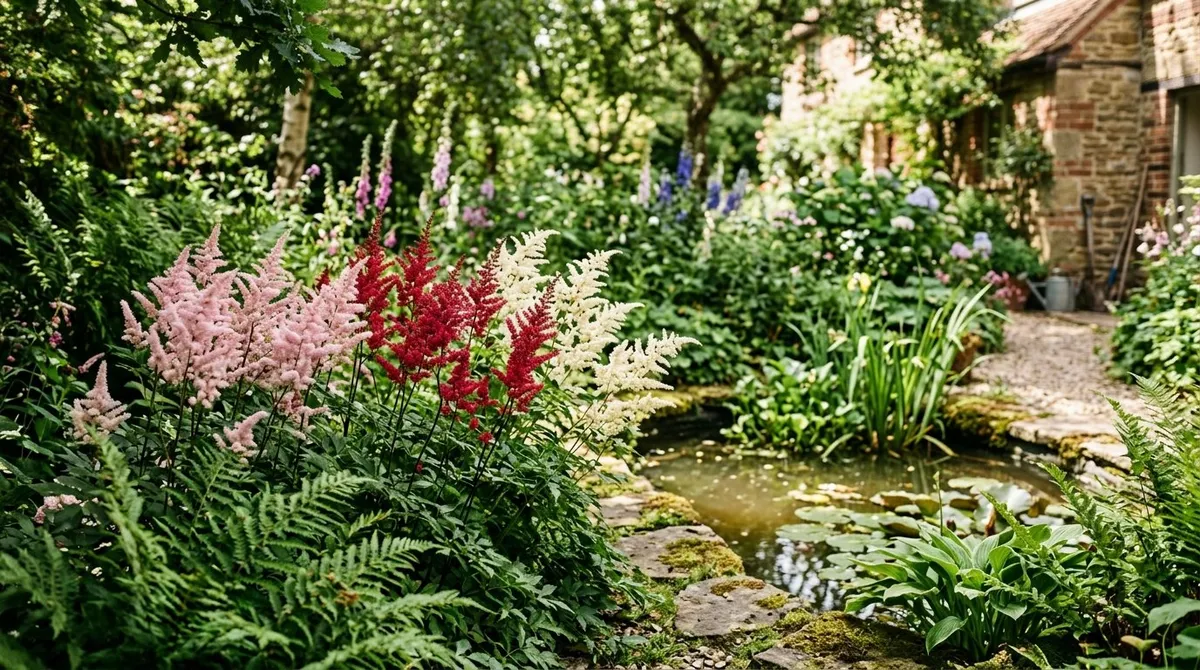
Sweet woodruff knits hostas and ferns together into a lush, layered shady border.
How to divide sweet woodruff
Division is the quickest way to make more plants. Do it in autumn or early spring.
- Water the clump the day before.
- Lift it with a fork, keeping plenty of roots.
- Pull it apart by hand into rooted pieces about the size of your fist.
- Replant straight away, about 30cm apart, and water well.
- Keep the new pieces moist for the next few weeks.
The roots are fine and shallow, so don’t leave divisions lying around to dry out. Self-sown seedlings can also be dug up and moved.

Pull a clump apart into fist-sized pieces and replant them straight away, before the fine roots dry out.
Month-by-month sweet woodruff calendar
| Month | What to do |
|---|---|
| January to February | Nothing to do. Clear fallen leaves if they smother it |
| March | New growth appears. Pull stray runners. Divide if needed |
| April | Flowering starts. Water new plants in dry spells |
| May | Peak flowering. Cut a few sprigs to dry |
| June | Flowering ends. Watch for self-sown seedlings |
| July to August | Water young plants in dry spells. Trim if it looks tired |
| September to October | Plant and divide. Mulch with leaf mould |
| November to December | Plants die back. Leave them be |
Common mistakes with sweet woodruff
- Planting in full sun. It’s a woodland plant and scorches in sun. Keep it in shade.
- Planting it next to precious small plants. On rich soil it can swamp them. Give it room or an edge.
- Expecting fresh leaves to smell. The scent only appears as the leaves dry.
- Forgetting to water in year one. It copes with dry shade later, but young plants need water.
Want more for shady corners? Browse our plant guides, or see our guide to growing lily of the valley, another scented plant for shade.
Frequently asked questions
How do you grow sweet woodruff in the UK?
Plant it in shade, about 30cm apart, in autumn or spring. It likes moist, leafy soil but copes with dry shade once settled. Water well in the first summer and mulch with leaf mould in autumn.
Does sweet woodruff spread aggressively?
It can spread quickly on rich, moist soil. It creeps by shallow underground stems and also self-seeds. On drier soil under trees it is much more polite. Pull stray runners in spring to keep it in bounds.
Why does sweet woodruff smell of hay?
The scent comes from coumarin, released as the leaves wilt and dry. Fresh leaves barely smell. Cut a handful, leave it to dry for a day or two, and the hay-and-vanilla scent appears.
Is sweet woodruff safe to use in May wine?
Only in tiny amounts, and many people skip it altogether. Coumarin can be harmful in larger amounts. It’s safest to enjoy sweet woodruff for its scent rather than in food or drink.
Will sweet woodruff grow in dry shade under trees?
Yes, once it’s established. Water it well for the first summer while the roots settle. After that it copes with the dry, rooty soil under trees and hedges, where it also spreads more slowly.
When does sweet woodruff flower?
Usually from April to June. Tiny white four-petalled stars appear above the whorled leaves for several weeks. Flowering may start a little later in a cold northern spring.
How do you propagate sweet woodruff?
Division is the easiest way. Lift a clump in autumn or early spring and pull it apart into rooted pieces. Replant straight away about 30cm apart and keep them watered while they settle.
What can I plant with sweet woodruff?
Ferns, hostas and spring woodland bulbs make good partners. Its low foliage fills the gaps between taller shade plants. Keep it away from small, slow-growing plants in rich soil, where it can swamp them.
Our team produces practical UK gardening guidance from source research, contributor records and established horticultural practice. Editorial standards are overseen by Matt W.