
Key takeaways
- Pulmonaria flowers from February to May, just when hungry queen bumblebees wake up
- It's happy in part or full shade on clay, chalk or loam
- 'Blue Ensign' has the deepest blue flowers; 'Diana Clare' has the best silver leaves
- Cut all the leaves to the ground after flowering to keep mildew away
- Divide clumps every 3-4 years in September or October
Pulmonaria is a tough, shade-loving perennial that flowers from February to May. Its little tubular flowers open pink and turn blue on the same stem. They’re one of the first meals for queen bumblebees waking up in early spring.
It’s a brilliant plant for tricky shade. It’s happy under trees, against north-facing walls and in heavy clay where many flowers sulk. The silver-spotted leaves look good for months after the flowers fade, and a single plant spreads into a weed-smothering clump within two or three years.
Which pulmonaria variety should I grow?
There are plenty of varieties in UK garden centres and nurseries. Pick one for the best flowers, the best leaves or the best ground cover.
Pulmonaria is a cousin of comfrey and forget-me-nots, and all the garden types are fully hardy.
| Variety | Flower colour | Leaves | Height | Best for |
|---|---|---|---|---|
| ’Blue Ensign’ | Deep gentian blue | Plain dark green | 25cm | Deepest blue flowers |
| ’Sissinghurst White’ | Pure white | Silver-spotted | 30cm | White shade gardens |
| ’Diana Clare’ | Violet-blue | Almost all silver | 30cm | Showy leaves |
| ’Trevi Fountain’ | Cobalt blue | Silver-spotted | 30cm | Vigorous ground cover |
| ’Opal’ | Pale icy blue | Silver-spotted | 25cm | Pastel schemes |
| ’Raspberry Splash’ | Coral-pink to rose | Heavily spotted silver | 25cm | Warm colours |
| P. officinalis | Pink turning blue | White-spotted | 30cm | Naturalising |
| ’Majeste’ | Pink to blue | Almost all silver | 25cm | Maximum silver |
Why ‘Blue Ensign’ is a top pick: it has wonderfully rich blue flowers, copes well on clay and its plain green leaves tend to suffer less from mildew than many silver-leaved types.
Pulmonaria sits happily with other shade-tolerant perennials such as hellebores, brunnera and epimedium. It fills the gap between winter hellebores and late spring woodland plants beautifully.
 Pulmonaria ‘Blue Ensign’ with rich gentian-blue flowers in dappled shade.
Where to plant pulmonaria in the garden
Give it shade and soil that holds moisture. Full sun scorches the leaves, especially the silver ones. Part shade with a few hours of soft morning sun is ideal, so north and east-facing borders are perfect.
The most important thing is that the roots never dry out completely. Dry soil brings on mildew faster than anything. That’s why planting under big trees needs extra care. Large trees like oak and beech drink a lot, leaving dry shade that pulmonaria puts up with but doesn’t enjoy.
Great spots:
- Under deciduous trees and large shrubs
- North and east-facing borders
- The shady side of hedges and walls
- Woodland gardens and mixed borders
- As ground cover under roses and clematis
- Damp, shady corners and stream banks
Avoid: hot south-facing spots, dry raised beds, sunny patios and very free-draining gravel. If you have clay soil, pulmonaria is one of the best perennials you can choose, as clay holds the moisture it loves.
How to plant pulmonaria step by step
Plant from September to November for the best spring show. Spring (March to April) is fine for pot-grown plants. Avoid summer heat.
-
Dig the hole. Make it twice as wide as the root ball and the same depth. Don’t plant deeper than it was in the pot.
-
Improve the soil if needed. Mix a handful of leaf mould or compost into the soil you dug out. Sandy soil needs extra. Clay usually needs nothing.
-
Soak the pot in a bucket of water for 10 minutes before planting.
-
Plant it with the crown level with the soil. Fill in, firm gently with your fingers and water well.
-
Mulch around it with 5cm of leaf mould, bark or compost. Keep the mulch a few centimetres away from the crown so it doesn’t rot.
-
Space plants 40-45cm apart for ground cover. One plant fills a 45cm circle in about two years.
In the first winter, check for frost lifting young plants out of clay soil. If you see roots showing, firm the plant back in and add a little more mulch. Our guide to improving clay soil has more tips that help pulmonaria and all shade plants.
Pulmonaria as early bee food
Pulmonaria is a lifeline for early bumblebees. Queens wake from hibernation in February and March, desperate for food, when very little else is in flower. Pulmonaria offers nectar and pollen from February, bridging the gap between winter mahonia and spring bulbs.
 Pulmonaria carpeting the ground under a tree. Its pink and blue flowers feed early bumblebees.
Bumblebees you might spot on it:
- Buff-tailed bumblebee, often one of the first queens out in late winter
- Early bumblebee, one of the first species active in spring
- Garden bumblebee, a long-tongued bee that loves tube-shaped flowers
- White-tailed bumblebee, a common garden visitor from March
- Red-tailed bumblebee, out from late March
- Common carder bee, a regular visitor later in spring
The tube-shaped flowers suit long-tongued bumblebees best. Plant a few clumps near a window and enjoy the show.
How to care for pulmonaria through the year
Pulmonaria only needs three jobs a year. Get them right and it will thrive for years.
The post-flowering chop (May)
This is the most important job. When the last flowers fade in May, cut every leaf and stem to the ground with shears or secateurs. This gets rid of the old leaves that catch mildew, and a fresh flush of clean leaves follows in a few weeks.
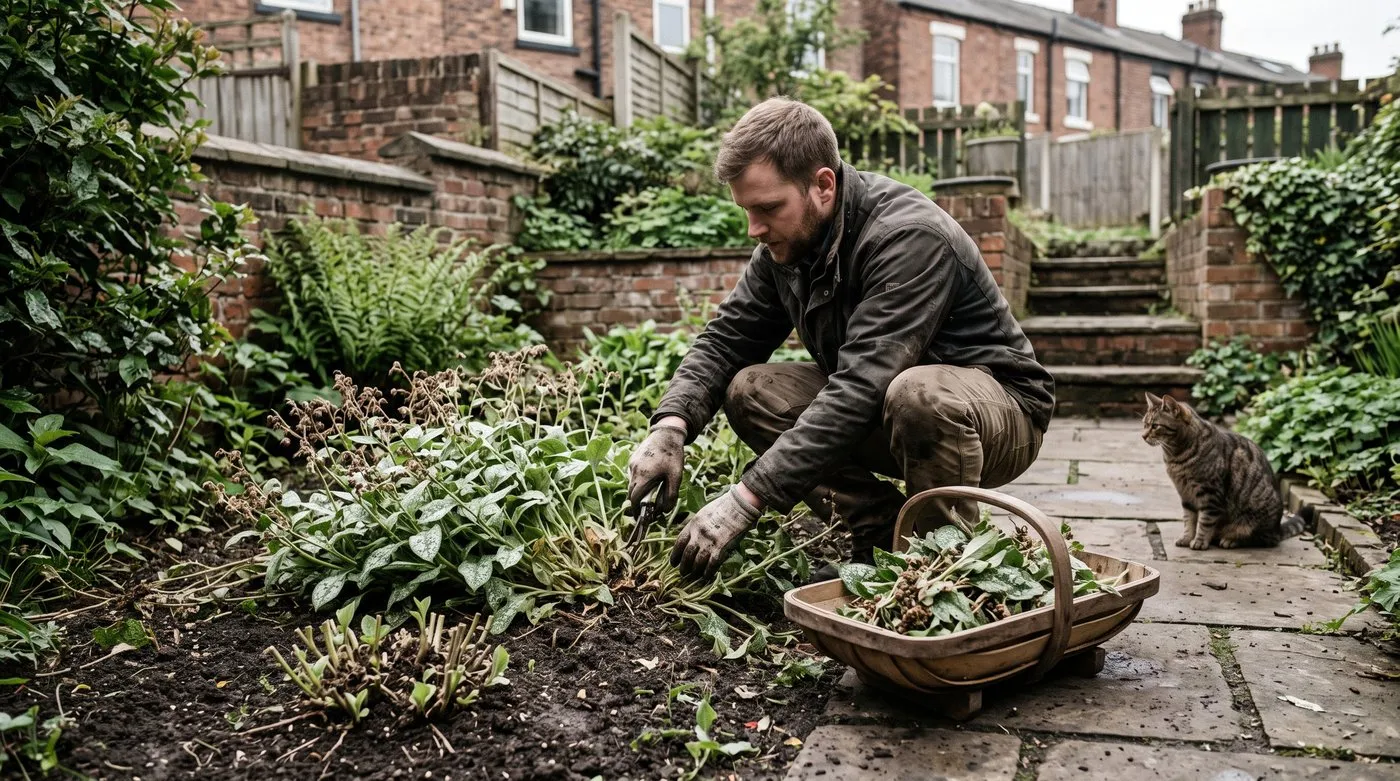
Cutting every leaf to the ground in May clears out the ones that catch mildew. A fresh flush of clean leaves follows in a few weeks.
Watering (June to September)
Water in dry spells, especially in the first year. Established plants cope with some drought but look much better with steady moisture. Water the soil with a can or soaker hose. A sprinkler wets the leaves and encourages mildew.
On clay you’ll rarely need to water after the first year. On sandy or chalky soil, water weekly in dry spells through the summer.
Autumn mulch (October to November)
Spread 5cm of leaf mould or compost around each plant in autumn. It’s just like the natural leaf fall in a wood. It feeds the soil and keeps the roots snug in winter. Our guide to making leaf mould shows you how.
| Month | Task |
|---|---|
| February | First flowers. Top up the mulch if last autumn’s has rotted away. |
| March | Peak flowering. Leave the plants alone and enjoy the bees. |
| April | Still flowering. Mark any clumps to divide in autumn. |
| May | Cut all leaves to the ground when flowering ends. Water well afterwards. |
| June | Fresh leaves appear. Water weekly in dry weather. |
| July | Full, fresh leaves. Watch uncut plants for mildew. |
| August | Leaves at their best. Silver types look great in late summer. |
| September | Divide crowded clumps and replant straight away. |
| October | Mulch with leaf mould or compost. Clear heavy fallen leaves off the plants. |
| November | Plants die back. Leave the old leaves in place over winter. |
| December | Rest time. Order new varieties for spring. |
How to divide and propagate pulmonaria
Division is the best way to get more plants. It gives you exact copies of the parent. Seed is hit and miss, as most named varieties don’t come true.
When: September to October, once autumn rain has softened the soil. You can divide in March, but it interrupts flowering.
How:
- Water the plant well the day before.
- Lift the whole clump with a fork, working around the edge to save the roots.
- Shake off loose soil so you can see the roots.
- Pull it apart by hand. Each piece needs at least 3 buds or leaf rosettes and some healthy roots.
- Trim any damaged or very long roots with clean secateurs.
- Replant at the same depth, 40-45cm apart. Water well and mulch.
Divisions settle quickly and usually flower the first spring after an autumn split.
Pulmonaria also seeds itself about. Seedlings pop up around the parent from March. Move them when they have 4-6 leaves. Just remember that seedlings from named varieties won’t look the same as the parent, so you might get a nice surprise.
 ‘Sissinghurst White’ with hellebores and ferns. White flowers really light up a dark corner.
Common problems and how to fix them
Powdery mildew
Cutting back after flowering stops most mildew. It’s a white, dusty coating on the leaves, usually from July. It’s very common on uncut plants by late summer. It won’t kill the plant, but it doesn’t look great.
If it still turns up: Remove the worst leaves. Thin neighbouring plants so air can move. Water the soil in dry spells. The RHS powdery mildew guide explains more, and there’s no need to spray.
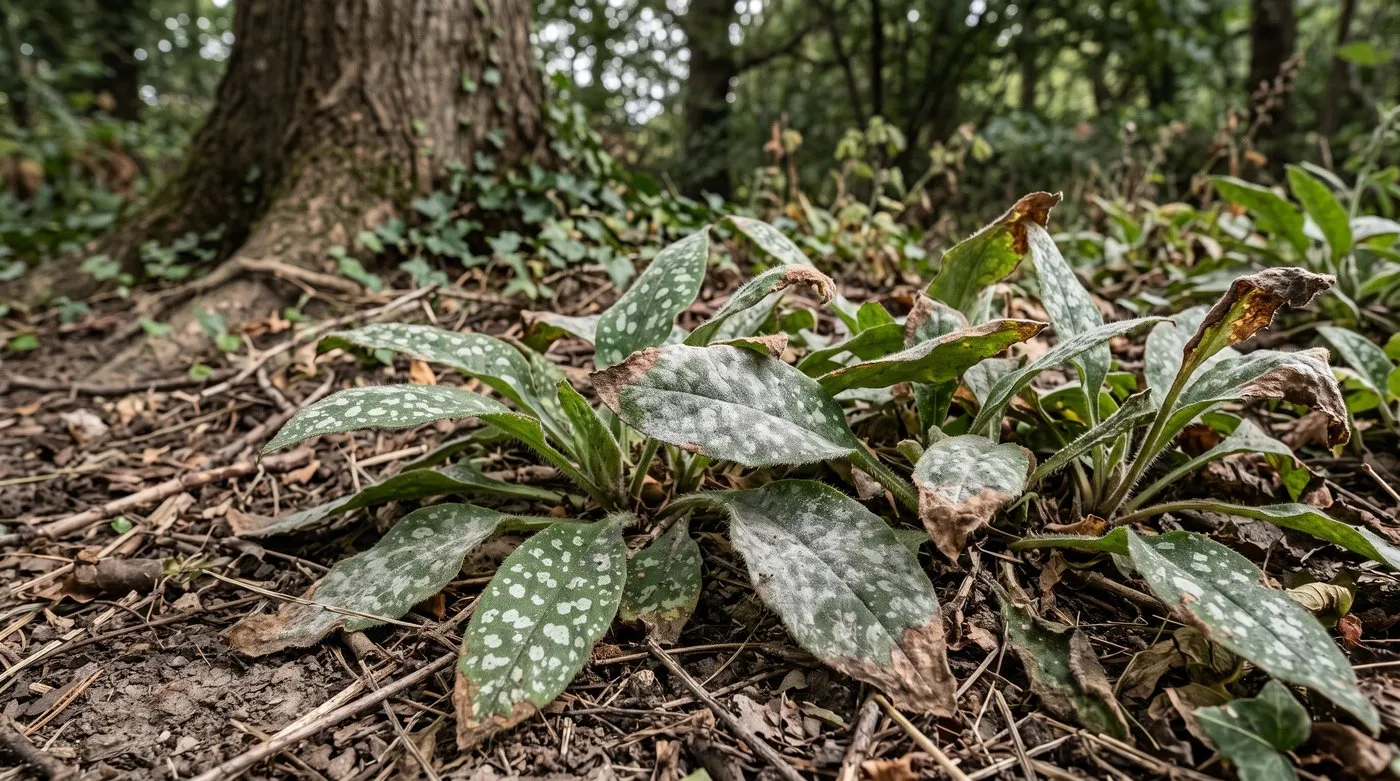
This dusty white coating is powdery mildew, common on plants left uncut. It won’t kill them, and a May chop plus watering in dry spells stops most of it.
Slugs and snails
Pulmonaria bothers slugs much less than hostas do, as the hairy leaves put most of them off. Young shoots in February and March can still get nibbled. Put a ring of grit around the crown, or use ferric phosphate slug pellets in early spring.
Crown rot
This is rare and usually comes from planting too deep or piling mulch on the crown. The plant suddenly wilts and the crown goes soft and brown. Lift it, cut away the rotten parts and replant with the crown level with the soil.
Vine weevil
Adult vine weevils nibble notches in the leaf edges from spring to autumn, and the grubs eat roots. It’s rarely bad enough to kill an established plant. For a heavy attack, water on vine weevil nematodes in late summer or early autumn while the soil is still warm.
Pulmonaria in garden design
Pulmonaria is a hard-working plant for shady borders and spring planting. With flowers in spring and fresh leaves from early summer to autumn, it earns its space in a small garden.
Lovely shade partners:
- Pulmonaria, hellebores and snowdrops: the perfect early spring trio for a north-facing border
- Pulmonaria, hostas and ferns: a leafy mix that looks good from March to October
- Pulmonaria, brunnera and epimedium: three ground cover plants that make a weed-proof carpet under trees
- Pulmonaria, primroses and wood anemones: a natural woodland floor look
Silver-leaved types such as ‘Diana Clare’, ‘Majeste’ and ‘Opal’ are great for lighting up dark corners. The silver leaves seem to glow in evening shade. Pair them with dark-leaved heuchera and black mondo grass for a smart contrast.
For more shade-loving plants to grow with pulmonaria, read our guide to the best plants for shade in UK gardens.
Frequently asked questions
Is pulmonaria easy to grow in the UK?
Yes, it’s one of the easiest shade plants you can grow. It copes with heavy clay, chalk and loam, and it’s fully hardy. Apart from cutting it back after flowering, it needs almost nothing from you. It’s a great plant for beginners.
When is the best time to plant pulmonaria?
Plant from September to November or March to April. Autumn planting lets the roots settle before winter, so you get a better show the next spring. Pot-grown plants can go in any time the ground isn’t frozen or waterlogged. Avoid hot, dry spells in summer.
Does pulmonaria grow in full shade?
Yes, pulmonaria grows well in full shade. That includes north-facing borders that get no direct sun at all. The silver-leaved types like ‘Diana Clare’ look especially good there, brightening a dark corner.
How do I stop pulmonaria getting mildew?
Cut all the leaves to the ground as soon as flowering ends in May. Fresh, clean leaves grow back in a few weeks. Don’t let the roots dry out, as dry soil is the main trigger for mildew. Water the soil, not the leaves.
Can I divide pulmonaria and when should I do it?
Yes, divide it every 3-4 years in September or October. Lift the clump with a fork, shake off loose soil and pull it apart by hand. Each piece needs at least three buds and some healthy roots. Replant straight away at the same depth, water well and mulch with leaf mould.
Why are my pulmonaria flowers different colours on the same plant?
The flowers change colour as they age, and that’s normal. Buds open pink and turn blue or violet as they get older. That’s why you see both colours on one plant, and it’s part of pulmonaria’s charm.
Is pulmonaria toxic to pets or children?
Pulmonaria isn’t generally listed as a poisonous garden plant. The hairy leaves aren’t appealing to chew, so problems are unlikely. Even so, don’t eat it, and call your vet if a pet has eaten a lot of any plant and seems unwell.
Our team produces practical UK gardening guidance from source research, contributor records and established horticultural practice. Editorial standards are overseen by Matt W.


