Key takeaways
- Mix bulbs, perennials, shrubs and trees so something new opens every few weeks
- Plant daffodils in September and October and tulips in late October or November
- Tulips, cherry blossom and camellias make April the peak of spring
- Late tulips, alliums, aquilegia and wisteria carry the show through May
- Magnolia and camellia flowers are spoilt by late frost, so give them a sheltered spot
- Leave bulb leaves for about six weeks after flowering so they flower again next year
The best spring flowers for UK gardens give you colour from March right through to the end of May. Daffodils and forsythia start things off, tulips and cherry blossom make April the peak, and alliums, aquilegia and wisteria carry on into May. The trick is to mix bulbs, perennials, shrubs and trees, so something new is always opening.
This guide covers the main spring season, from March to May. For snowdrops, aconites and the very first flowers of the year, see our guide to early spring flowers.
March: daffodils, forsythia and magnolia
March is when the garden properly wakes up. Daffodils are at their best and the first shrubs burst into flower.
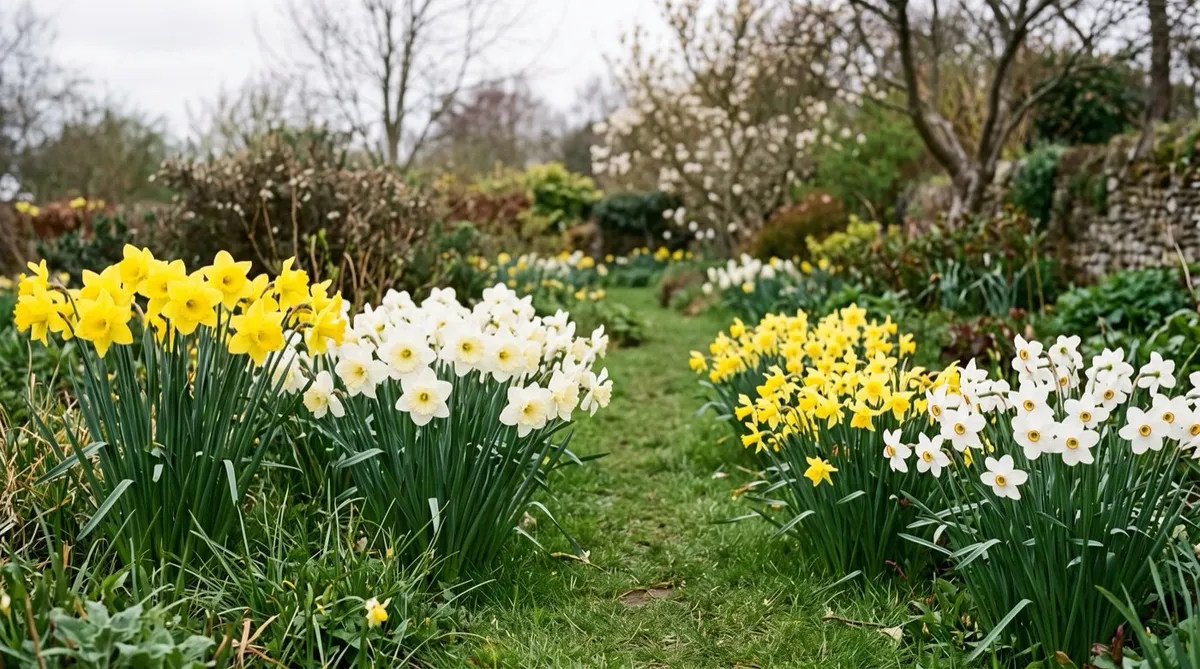
Daffodils are the most reliable spring bulb in the UK. Early types such as ‘February Gold’ and dwarf ‘Tête-à-Tête’ are joined by taller ones like ‘Ice Follies’ and ‘Carlton’. They come back year after year and spread in grass and borders. Squirrels usually leave them alone.
Forsythia covers its bare stems in bright yellow flowers before the leaves appear. It grows almost anywhere, in sun or part shade. Prune it straight after flowering, as it flowers on last year’s stems.
Magnolia stellata opens white, starry flowers in March and April. It grows slowly into a rounded shrub about 3m tall, so it suits smaller gardens. Plant it out of cold winds and away from frost pockets, as a hard frost browns the open flowers.

Daffodils, primroses and forsythia make a cheerful March border, even in a fairly shady corner.
April: tulips, cherry blossom and camellias
April is the busiest month of spring. Almost everything seems to flower at once.
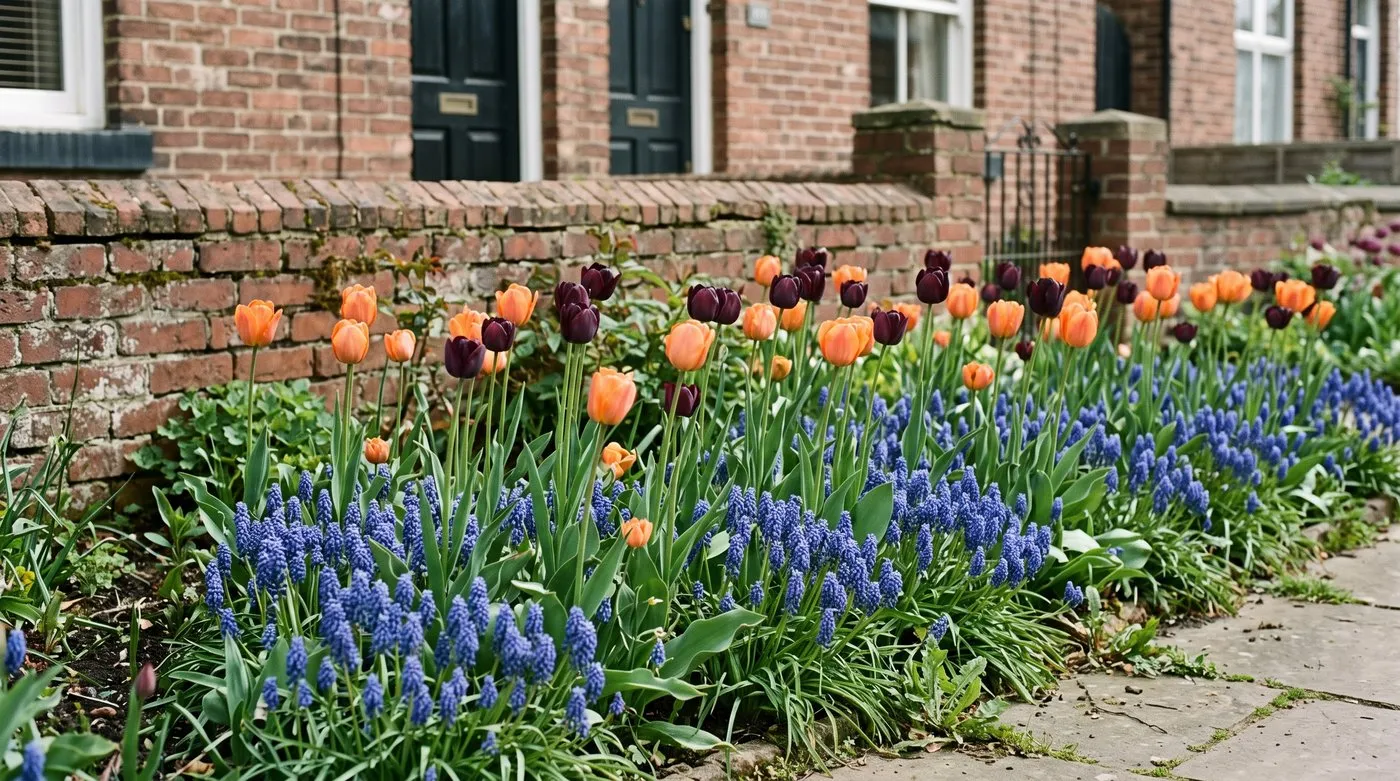
Tulips above a carpet of muscari is an easy April combination for a sunny border.
Tulips come in almost every colour and shape, from short early types to tall, frilly parrot tulips. Plant them in sunny spots, about 15cm deep, from late October into November. Our tulip growing guide covers varieties and care.
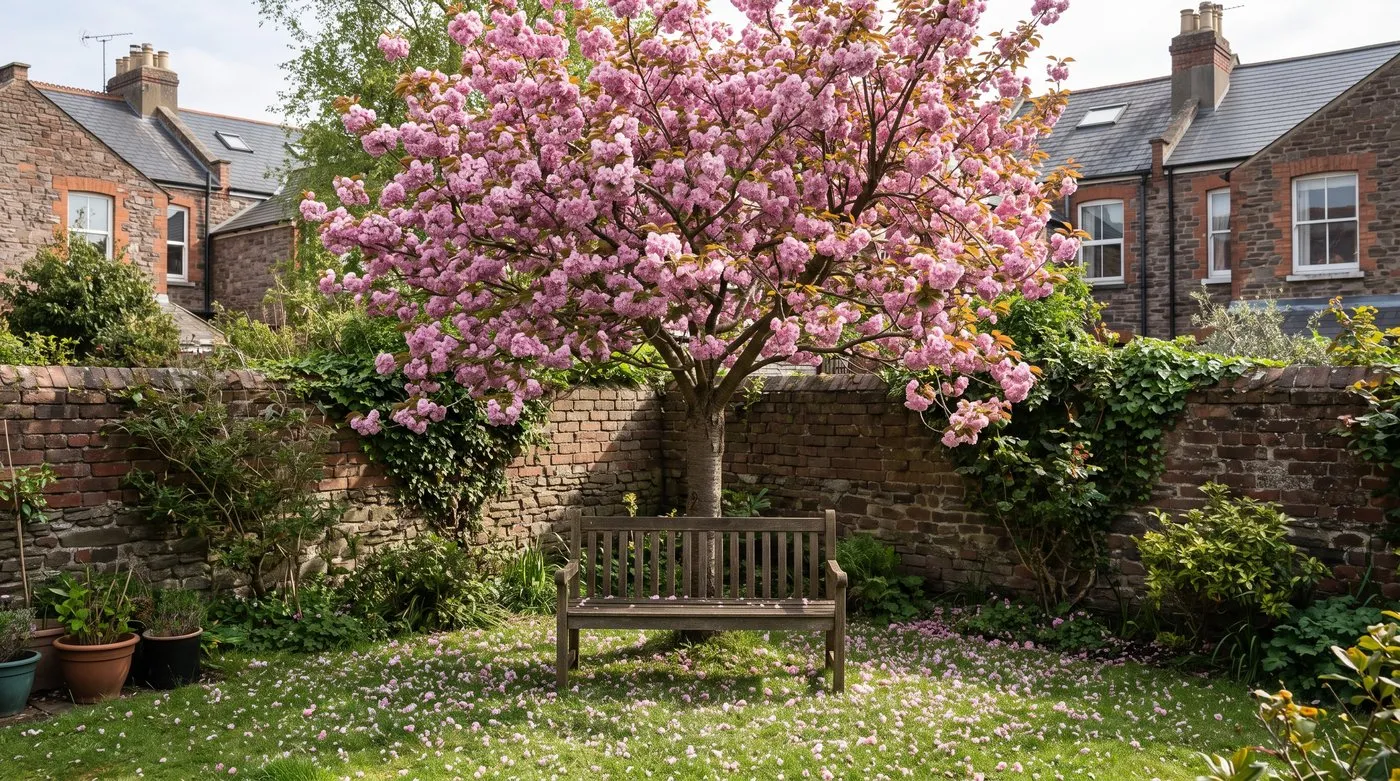
Cherry ‘Kanzan’ flowers in late April. Each tree’s peak is short, so enjoy it while it lasts.
Cherry blossom gives one of the most memorable sights of the British spring, though each tree’s peak lasts only a week or two. ‘Accolade’ has semi-double pale pink flowers in early April, and ‘Kanzan’ follows with deep pink double flowers later in the month. Prune cherries only in summer, to avoid silver leaf disease. Our guide to growing a flowering cherry helps you pick one.
Camellias have glossy evergreen leaves and rose-like flowers. They need acid soil, or a large pot of ericaceous compost. Camellia × williamsii ‘Donation’ has clear pink, semi-double flowers and drops faded blooms cleanly. Avoid east-facing spots, where early sun on frozen buds turns them brown.
Magnolia × soulangeana has big goblet flowers in pink and white. It grows into a small tree about 6m tall, so give it space. Our magnolia guide covers siting and pruning.
Muscari (grape hyacinths) give dense blue spikes in April and look lovely under yellow daffodils. Bleeding heart has arching sprays of pink, heart-shaped flowers in part shade. It dies down by midsummer, as our bleeding heart guide explains, so plant summer perennials around it.
May: late tulips, alliums and wisteria
May bridges spring and summer, with some of the showiest plants of the season.
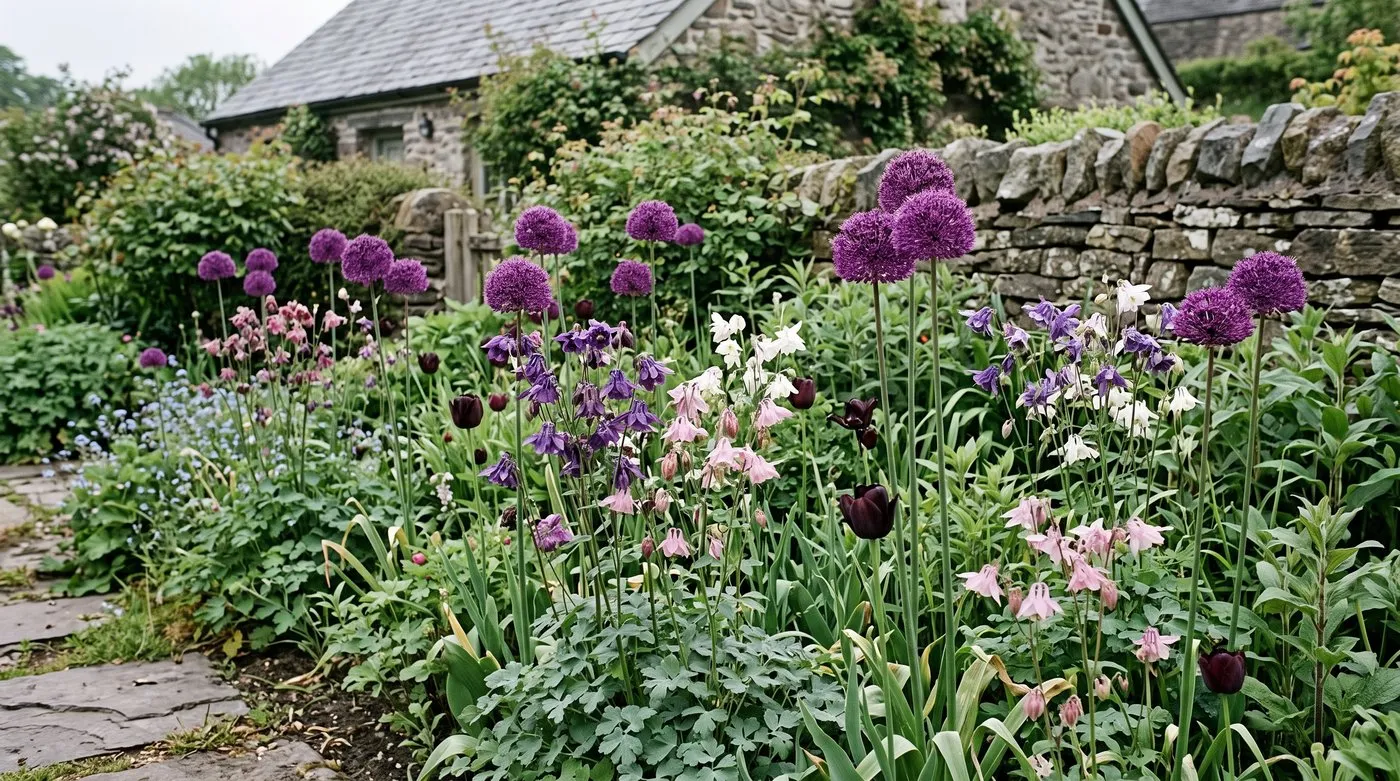
Alliums and aquilegias take over from the tulips in May and fill the gap before summer.
Late tulips flower from late April into May. Dark ‘Queen of Night’ and the red-and-white parrot tulip ‘Estella Rijnveld’ are both striking.
Alliums send up round purple heads on tall stems. ‘Purple Sensation’ flowers in May at about 90cm. Their seedheads look good well into summer.
Aquilegia (granny’s bonnet) flowers in blue, purple, pink and white, and self-seeds into gaps. It hides fading tulip leaves nicely.
Wisteria covers sunny walls with long, scented, lilac flower clusters in May. Prune it twice a year to keep it flowering: shorten the long whippy shoots in July or August, then cut them back to two or three buds in February.
Native bluebells carpet the ground under trees in late April and May. Buy them from a reputable nursery and never dig them from the wild.
Spring flowers calendar at a glance
This shows typical flowering times in southern England. Further north, flowers often open a week or two later.
| Plant | Type | Flowers | Colour | Height |
|---|---|---|---|---|
| Daffodils | Bulb | March to April | Yellow, white | 15-45cm |
| Forsythia | Shrub | March to April | Yellow | 2-3m |
| Magnolia stellata | Shrub | March to April | White | About 3m |
| Hellebores | Perennial | February to April | White, pink, plum | 45-60cm |
| Muscari | Bulb | April | Blue | 15-20cm |
| Mid-season tulips | Bulb | April | All colours | 40-55cm |
| Cherry ‘Accolade’ | Tree | Early April | Pale pink | Small tree |
| Camellia × williamsii | Shrub | March to May | Pink, white | 2-3m |
| Magnolia × soulangeana | Small tree | April | Pink, white | About 6m |
| Bleeding heart | Perennial | April to May | Pink and white | 60-90cm |
| Cherry ‘Kanzan’ | Tree | Late April | Deep pink | Medium tree |
| Late tulips | Bulb | Late April to May | All colours | 50-70cm |
| Allium ‘Purple Sensation’ | Bulb | May | Purple | 90cm |
| Aquilegia | Perennial | May to June | Many colours | 50-80cm |
| Wisteria | Climber | May | Lilac, white | Large |
Spring flowers for different spots
| Spot | Good choices |
|---|---|
| Sunny border | Tulips, late daffodils, muscari, alliums, forsythia |
| Shady border | Hellebores, primroses, pulmonaria, bleeding heart |
| Under deciduous trees | Native bluebells, primroses, lily of the valley |
| Small courtyard or patio | Tulips and dwarf daffodils in pots, camellia in a tub |
| Acid soil | Camellias, magnolias, rhododendrons |
| Cottage garden | Tulips, aquilegia, bleeding heart, alliums |
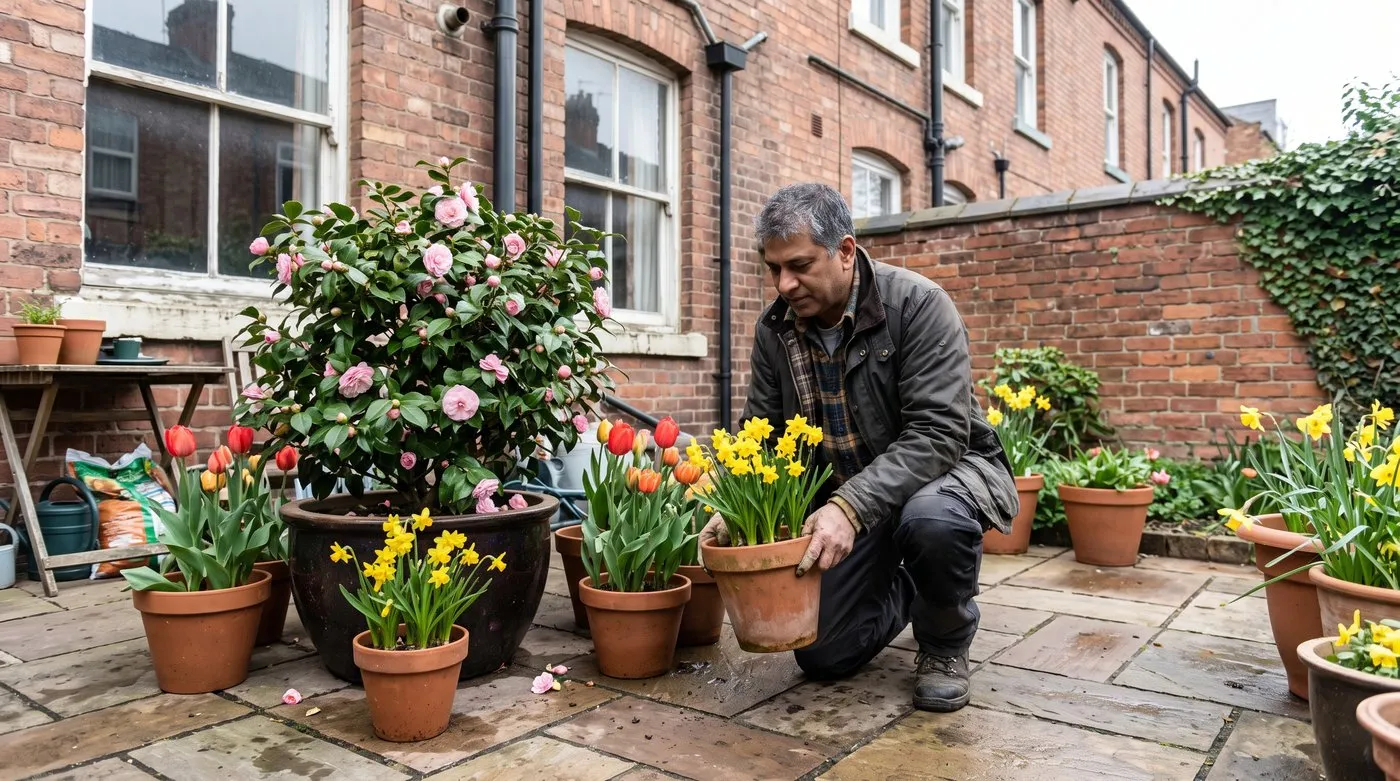
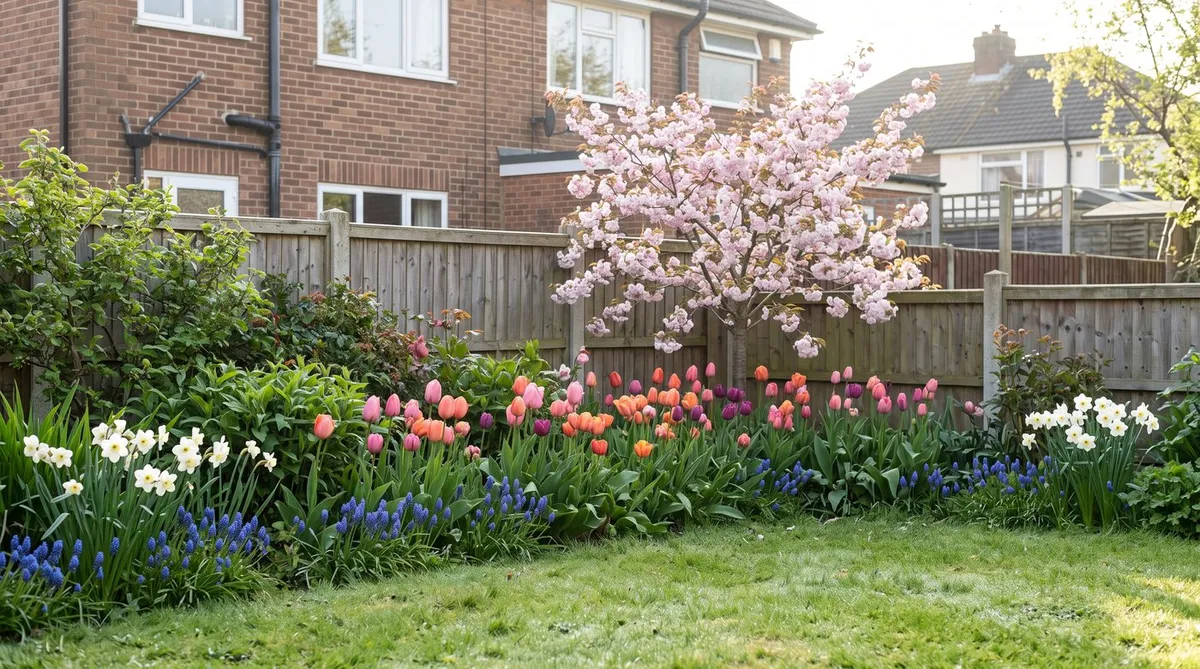
No border? Pots of tulips, dwarf daffodils and a camellia in a tub bring spring to a small patio.
For a pot that flowers for weeks, try layering bulbs at different depths. Our guide to bulb lasagne planting shows how.
Protecting spring flowers from late frost
Late frosts are the biggest risk to spring flowers. Low spots where cold air collects, called frost pockets, can get frost weeks after the rest of the garden.

A sheet of fleece on frosty nights keeps tulip buds and magnolia flowers from browning.
- Throw fleece over low plants and tulip buds on nights when frost is forecast.
- Plant magnolias and camellias away from frost pockets and out of cold north and east winds.
- Grow tender-flowered shrubs against a sunny south or west-facing wall, which stays a little warmer at night.
- Avoid east-facing spots for camellias, as fast thawing in early sun damages frozen buds.
Bulbs such as daffodils and tulips are hardy and usually shrug off frost.
Spring flowers for bees
Spring flowers feed queen bumblebees and other early insects just as they wake up. Muscari, pulmonaria, flowering cherries and fruit blossom are all popular. Alliums are busy with bees in May. Single flowers are easier for bees to feed from than big doubles.
Warning: Daffodils, tulips, alliums, bluebells, hellebores and lily of the valley are poisonous to cats and dogs, especially the bulbs. Keep bags of bulbs out of reach and watch dogs that like to dig.
Common mistakes with spring flowers
- Planting tulips too early. Warm autumn soil encourages tulip fire. Wait until late October or November.
- Planting for one month only. A garden of March daffodils looks great for a few weeks, then goes quiet. Mix early, mid and late flowers.
- Planting magnolias in a frost pocket. One cold night can brown every open flower. Choose a sheltered spot.
- Cutting bulb leaves too soon. The leaves feed next year’s flowers. Leave them for about six weeks after flowering, as our guide to caring for bulbs after flowering explains.
- Ignoring shady corners. Hellebores, bleeding heart and bluebells love the shade under trees.
Frequently asked questions
What are the best spring flowers for a UK garden?
Daffodils, tulips and cherry blossom are the stars of a UK spring. Add forsythia for March yellow, magnolia and camellias for big flowers in April, and alliums and aquilegia for May. Together they give colour from March to the end of May.
What spring flowers bloom in April in the UK?
Tulips, cherry blossom and camellias are the stars of April. Muscari, late daffodils, magnolias, bluebells and bleeding heart flower then too. April is usually the busiest month of the whole spring.
When should I plant spring bulbs in the UK?
Plant most spring bulbs in September and October. Daffodils, crocuses and muscari go in first. Tulips go in last, from late October into November, about 15cm deep. Later planting helps tulips avoid a fungal disease called tulip fire.
Which spring flowers grow in shade in the UK?
Hellebores, primroses, bleeding heart and pulmonaria all flower in shade. Native bluebells and lily of the valley suit dappled shade under trees. Camellias like light shade and shelter from early morning sun.
How do I get continuous spring colour from March to May?
Plant early, mid and late flowering plants of every type. Use early daffodils and forsythia for March, tulips and cherries for April, and late tulips, alliums and aquilegia for May. Shrubs and trees add height above the bulbs.
Do tulips come back every year in UK gardens?
Species tulips usually do, but big hybrid tulips fade after a year or two. Plant hybrids deep, or treat them as annuals and plant fresh bulbs each autumn. Small species tulips such as Tulipa sylvestris come back in sunny, well-drained spots.
What is the best magnolia for a small UK garden?
Magnolia stellata is the best choice for a small garden. It grows slowly into a rounded shrub about 3m tall, with white starry flowers in March and April. Magnolia x soulangeana is much bigger and better for larger gardens.
Now you’ve picked your spring stars, read our guide on when to plant spring bulbs to get the timing right this autumn, or browse the plants hub for more ideas.
Our team produces practical UK gardening guidance from source research, contributor records and established horticultural practice. Editorial standards are overseen by Matt W.