Key takeaways
- The RHS sorts daffodils into 13 divisions, and Divisions 1 to 3 are split by cup length alone
- A trumpet's cup is as long as the petals or longer; a small cup is a third of their length or less
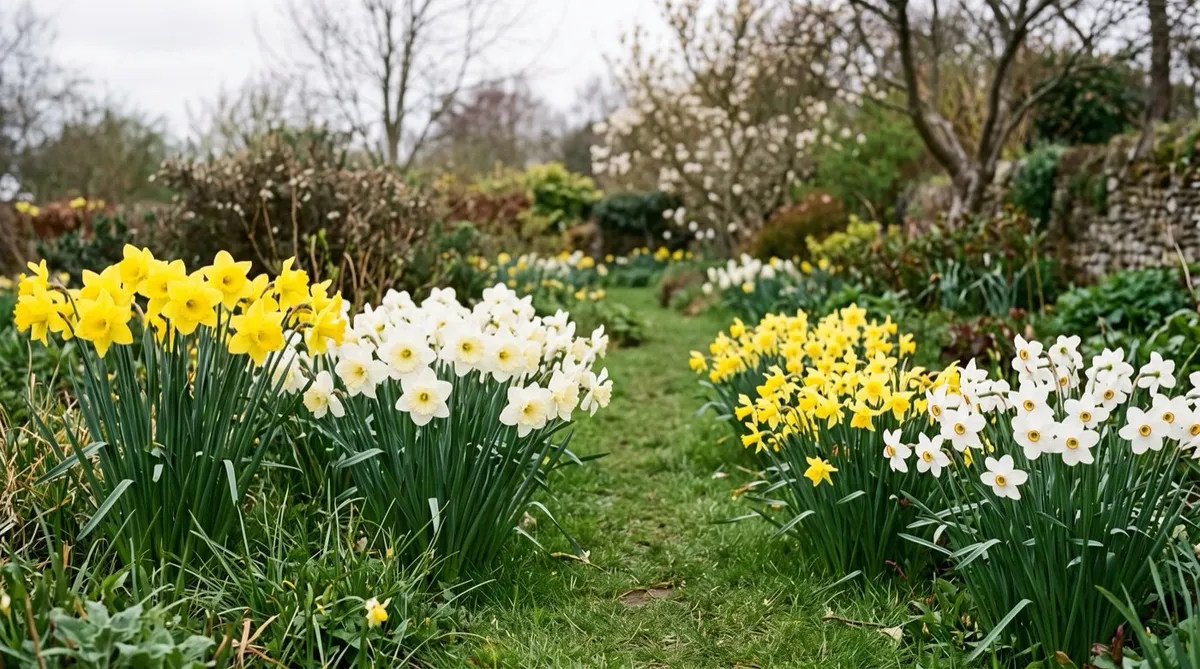
- Early Cyclamineus types such as 'February Gold' are good for naturalising in grass
- Heavy double daffodils often flop in wind and rain, so give them a sheltered border
- 'Tete-a-Tete' sits in Division 12, the group for daffodils that fit nowhere else
- Choose a mix of divisions to have daffodils in flower from January to May
Daffodil types are easier to tell apart than you might think. The first three RHS divisions, which cover most daffodils sold in Britain, are split by one thing: how long the cup is compared with the petals. Not colour, not size, just cup length.
This guide explains all 13 divisions in plain words, then helps you choose the right type for grass, borders or pots. For planting and aftercare, see the guide on how to grow daffodils.
How the RHS sorts daffodils into 13 divisions
The RHS keeps the international daffodil register and sets the divisions used around the world. There are three different ways a daffodil earns its division, which is why it can seem confusing.
- Divisions 1 to 3 go by measurement. One flower per stem, sorted by cup length against petal length. Botanists call the cup the corona.
- Divisions 5 to 10 go by wild parent. Each is named after the wild species whose look dominates, such as Cyclamineus or Jonquilla.
- Divisions 4, 11, 12 and 13 go by everything else. Doubles, split cups, misfits and the wild species themselves.
The measurement rule settles most arguments in a garden centre.
| Division | Cup compared with petals | What you see |
|---|---|---|
| 1, Trumpet | As long as the petals or longer | A classic long trumpet |
| 2, Large-cupped | More than a third, but shorter than the petals | A medium cup, the most common shape |
| 3, Small-cupped | A third of the petal length or less | A shallow cup, almost a saucer |
| 9, Poeticus | A tiny flat disc, petals pure white | A small red-rimmed eye |
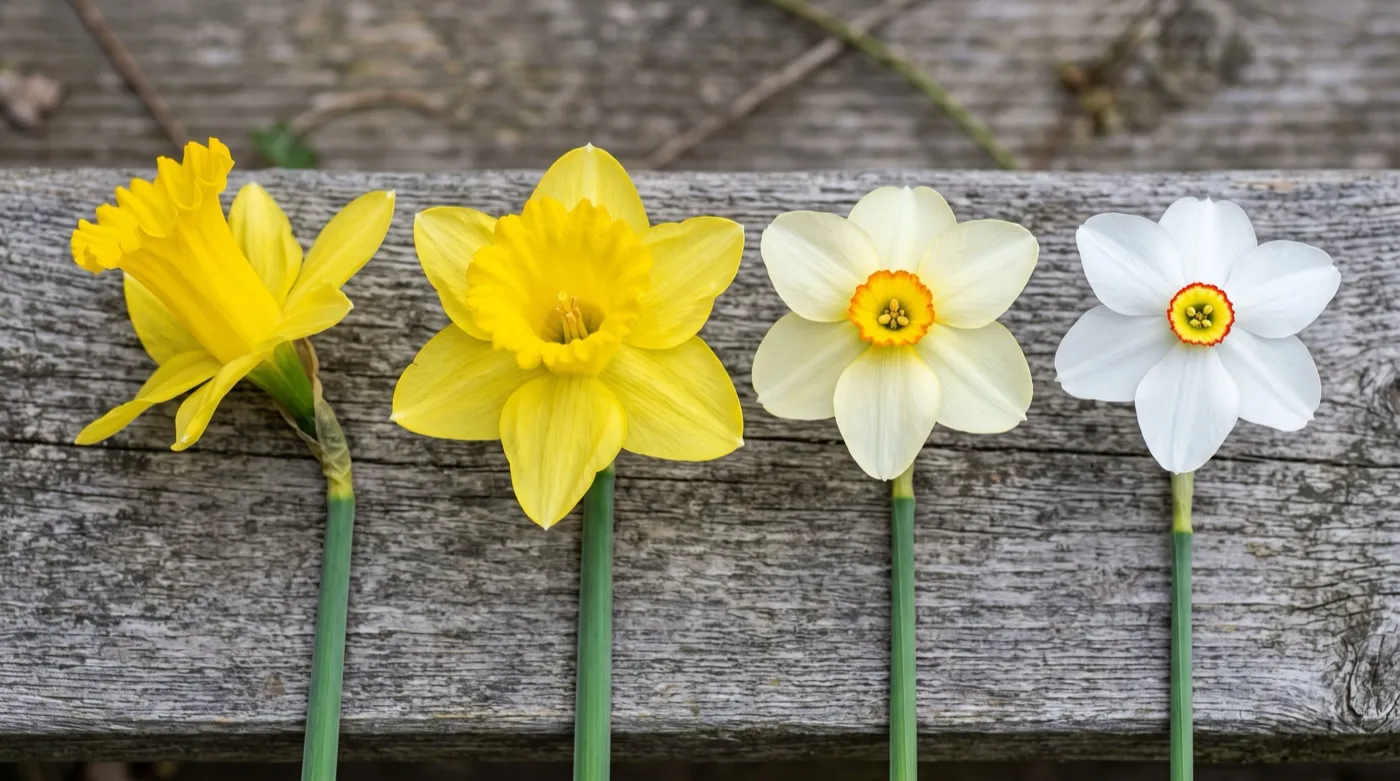
Line them up and the differences jump out. Compare the cup with the petals and you can read the division.
Divisions 1 to 3: trumpets, large cups and small cups
Division 1, Trumpet. One flower per stem, with a cup as long as the petals or longer. This is the daffodil a child draws. ‘King Alfred’ is the famous name, though many bulbs sold under it today are similar varieties such as ‘Dutch Master’. ‘Rijnveld’s Early Sensation’ is a trumpet too, and one of the earliest daffodils, often flowering in January.
Division 2, Large-cupped. The cup is more than a third of the petal length but shorter than the petals. This is the biggest group, and where many bicolours sit. ‘Carlton’ and ‘Ice Follies’ are familiar examples, flowering in March and April.
Division 3, Small-cupped. The cup is a third of the petal length or less, so it looks like a shallow saucer. Crisp white and orange ‘Barrett Browning’ is a good example. Most flower in April.
Division 4: double daffodils and why they flop
Doubles have extra petals, an extra-full cup, or both. ‘Cheerfulness’, ‘Tahiti’ and ‘Rip van Winkle’ are well-known ones. They’re lovely up close, but the heavy heads hold rain. In a wet, windy April the stems often bend over.
Give doubles a sheltered border, or grow them in pots near the house. They’re less suited to open grass, where flattened stems sit in the wet. The guide to daffodil blindness explains why some double types also fail to open in a dry spring.
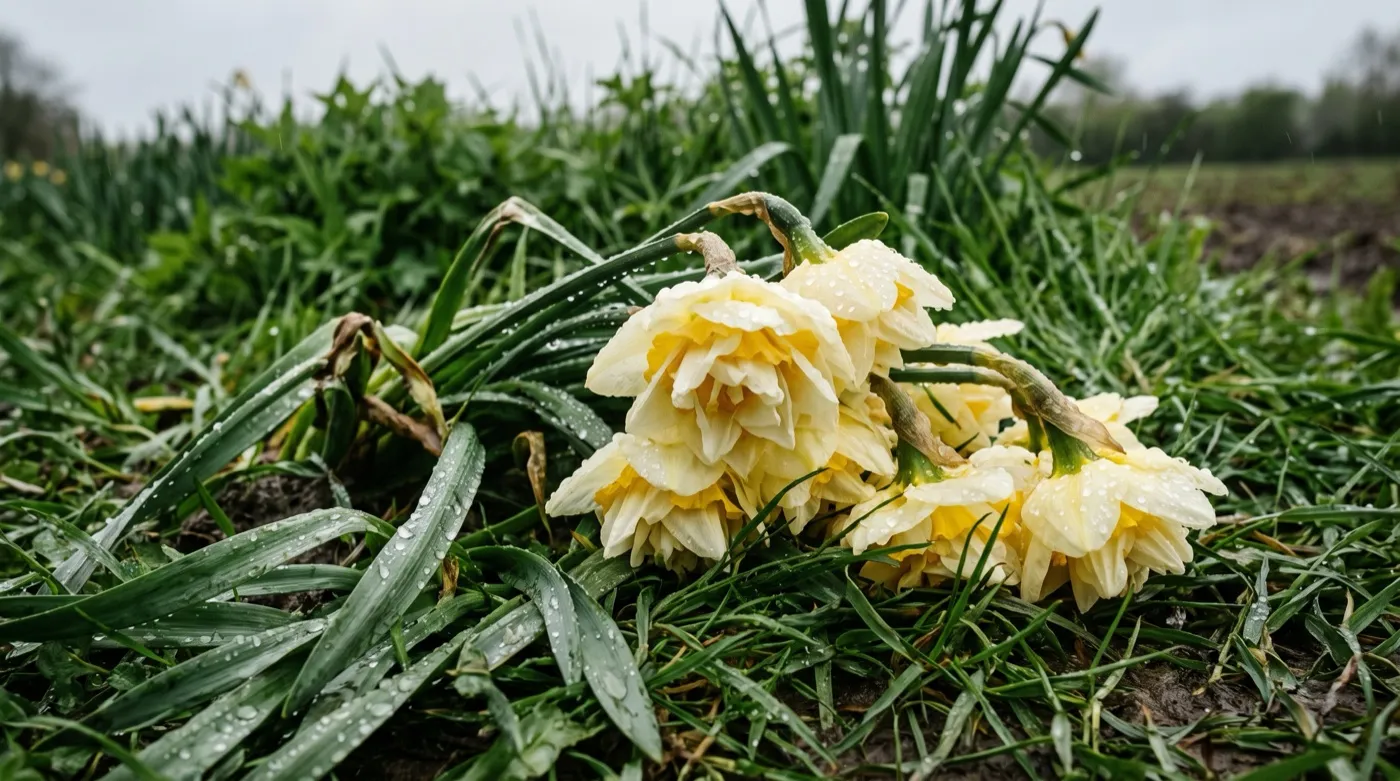
Heavy double heads soak up rain and pull the stems down. A sheltered border keeps them upright.
Divisions 5 to 7: Triandrus, Cyclamineus and Jonquilla
Division 5, Triandrus. Two or more nodding flowers per stem, with petals swept back. ‘Thalia’, a pure white, is the famous one and looks lovely in light shade in April.
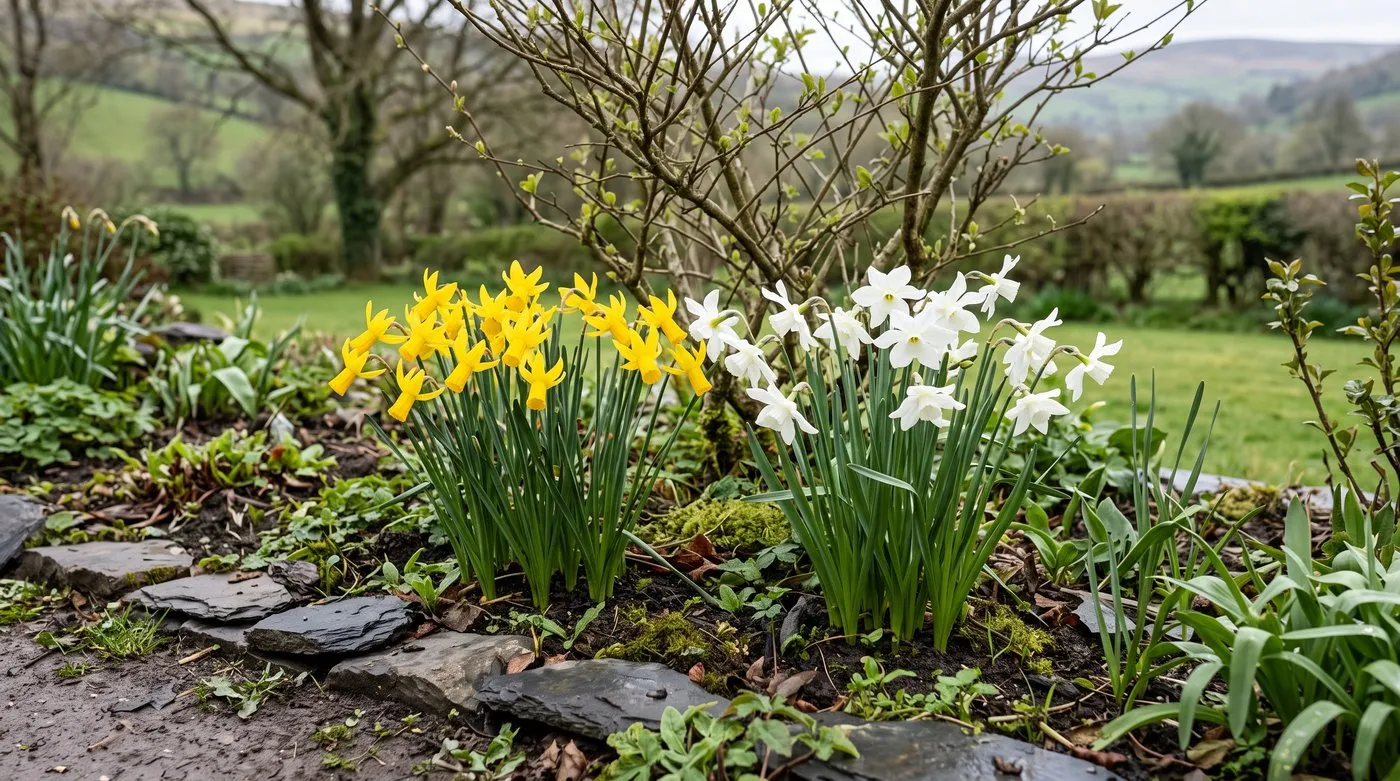
Swept-back petals mark out Cyclamineus types, while Thalia carries several nodding white flowers on each stem.
Division 6, Cyclamineus. One flower per stem, with petals swept right back like a cyclamen. They’re small, sturdy and early. ‘February Gold’, ‘Jetfire’ and ‘Jack Snipe’ are good ones. They’re some of the best for naturalising in grass, as they finish flowering early and their leaves die down sooner.
Division 7, Jonquilla. Usually one to five small flowers per stem, with narrow, rush-like leaves and a lovely sweet scent. ‘Pipit’ and ‘Sweetness’ are worth planting by a path so you catch the perfume. Most flower in April.
Divisions 8 to 10: Tazetta, Poeticus and hoop petticoats
Division 8, Tazetta. Clusters of small, very scented flowers on each stout stem. This group includes paperwhites and ‘Grand Soleil d’Or’. Many are on the tender side and do best in mild coastal gardens or in pots. The guide to growing paperwhites indoors covers the indoor route.
Division 9, Poeticus. Pure white petals and a tiny flat cup, often green and yellow with a red rim. These are the last daffodils of spring, flowering from late April into May. ‘Actaea’ and the old Pheasant’s Eye are both strongly scented.
Division 10, Bulbocodium. The hoop petticoat daffodils, with a wide, funnel-shaped cup and tiny thin petals. They’re small, usually 10-20cm, and like sharp drainage, so they suit pots, troughs and rock gardens.
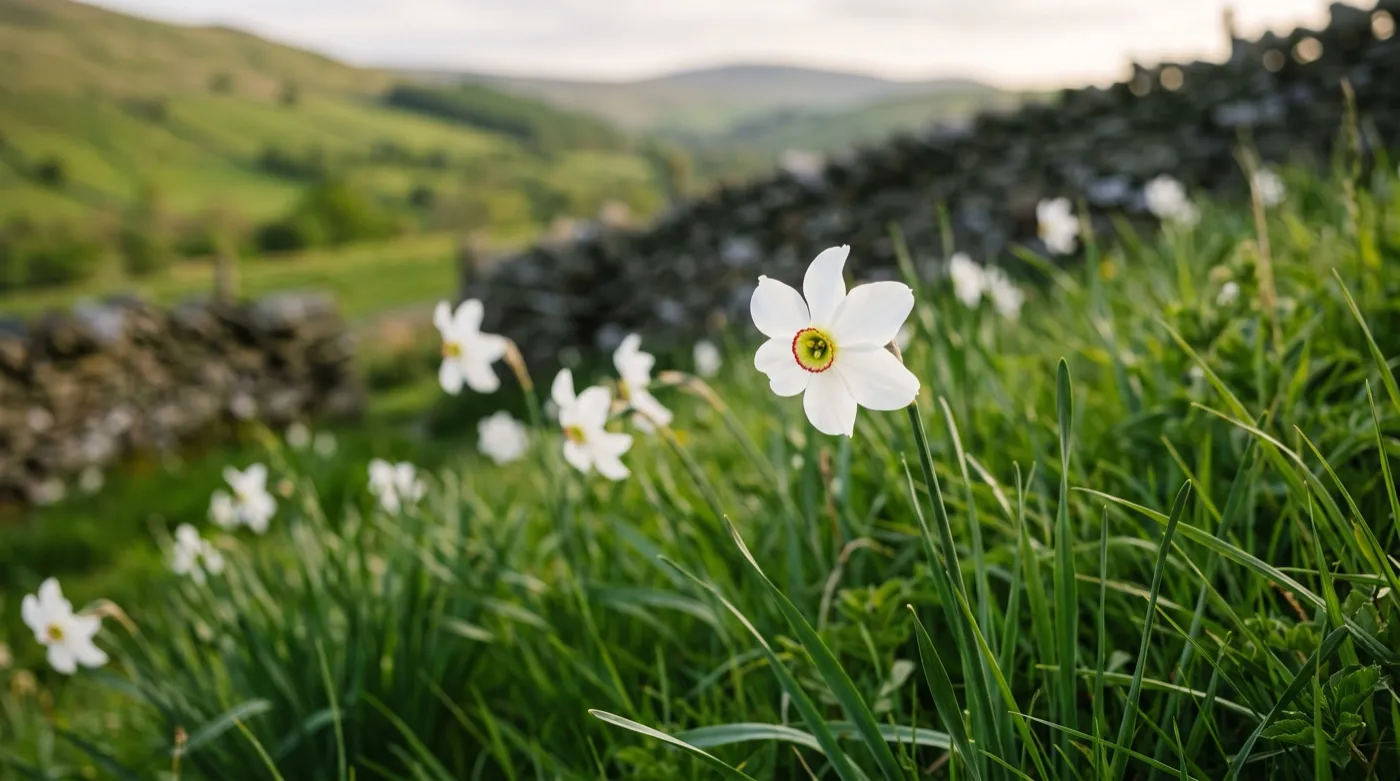
Poeticus daffodils close the season in late spring. Their tiny red-rimmed eyes and scent are worth the wait.
Divisions 11 to 13: split cups, misfits and wild daffodils
Division 11, Split-corona. The cup is split for more than half its length and lies back against the petals, giving a flat face. In Collar types (11a) the cup segments sit in front of the petals. In Papillon types (11b) they sit between them. ‘Cassata’ and ‘Orangery’ are easy to find. They’re best in borders rather than grass.
Division 12, Other Cultivars. The home for daffodils whose looks or parentage don’t fit any single division. Its most famous member is ‘Tete-a-Tete’, a small, early golden daffodil that’s hugely popular in pots. ‘Jumblie’ is another.
Division 13, Species. Wild daffodils and their natural hybrids, named by botanical name. This includes the native wild daffodil, Narcissus pseudonarcissus, the Lent lily. It still carpets places such as Farndale in North Yorkshire each spring. The Tenby daffodil of south Wales belongs here too. Wild daffodils naturalise well and look right in a hedge bottom or orchard.
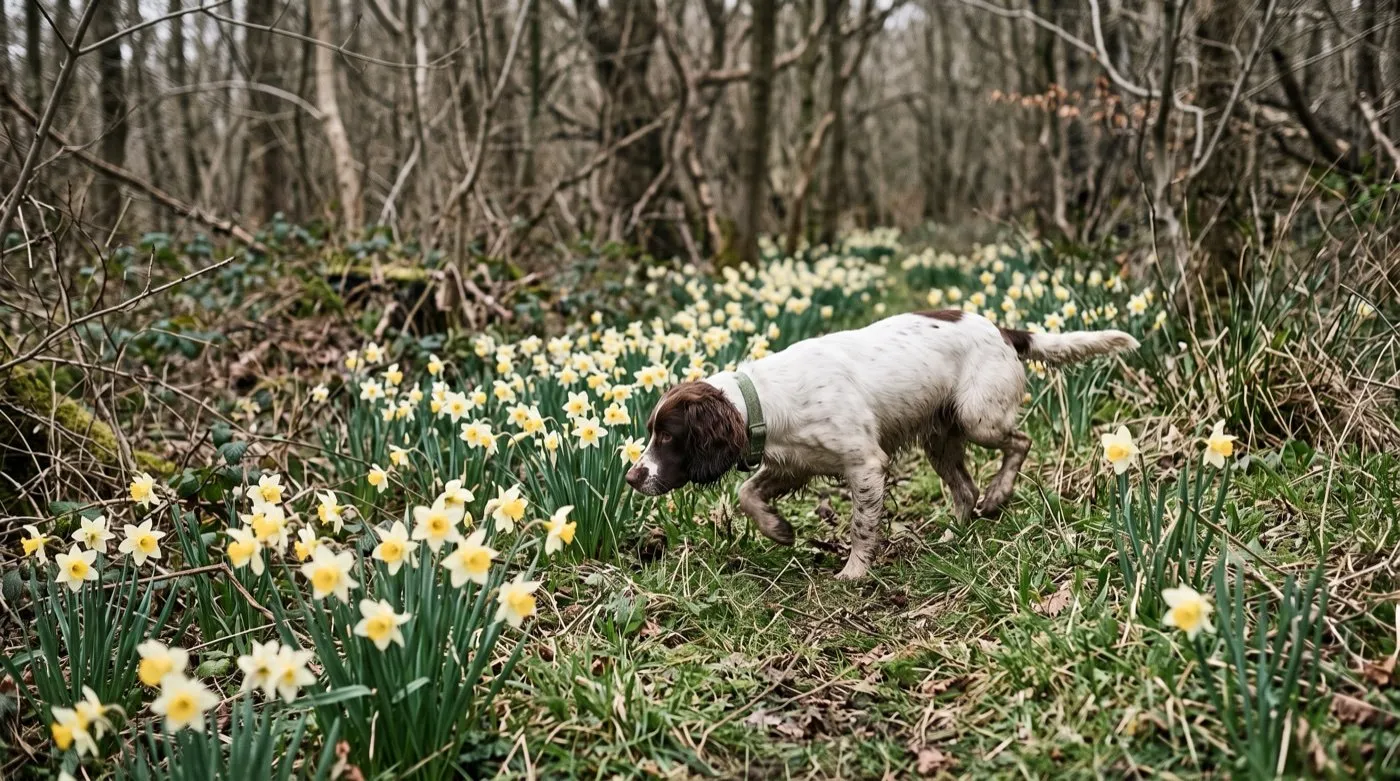
The native Lent lily is smaller and paler than garden trumpets. It spreads slowly by seed as well as by bulb.
Which daffodil types are best for grass?
Choose early, sturdy types for grass. Daffodil leaves need to stay for at least six weeks after flowering to feed next year’s flower. If they finish early, you can mow sooner.
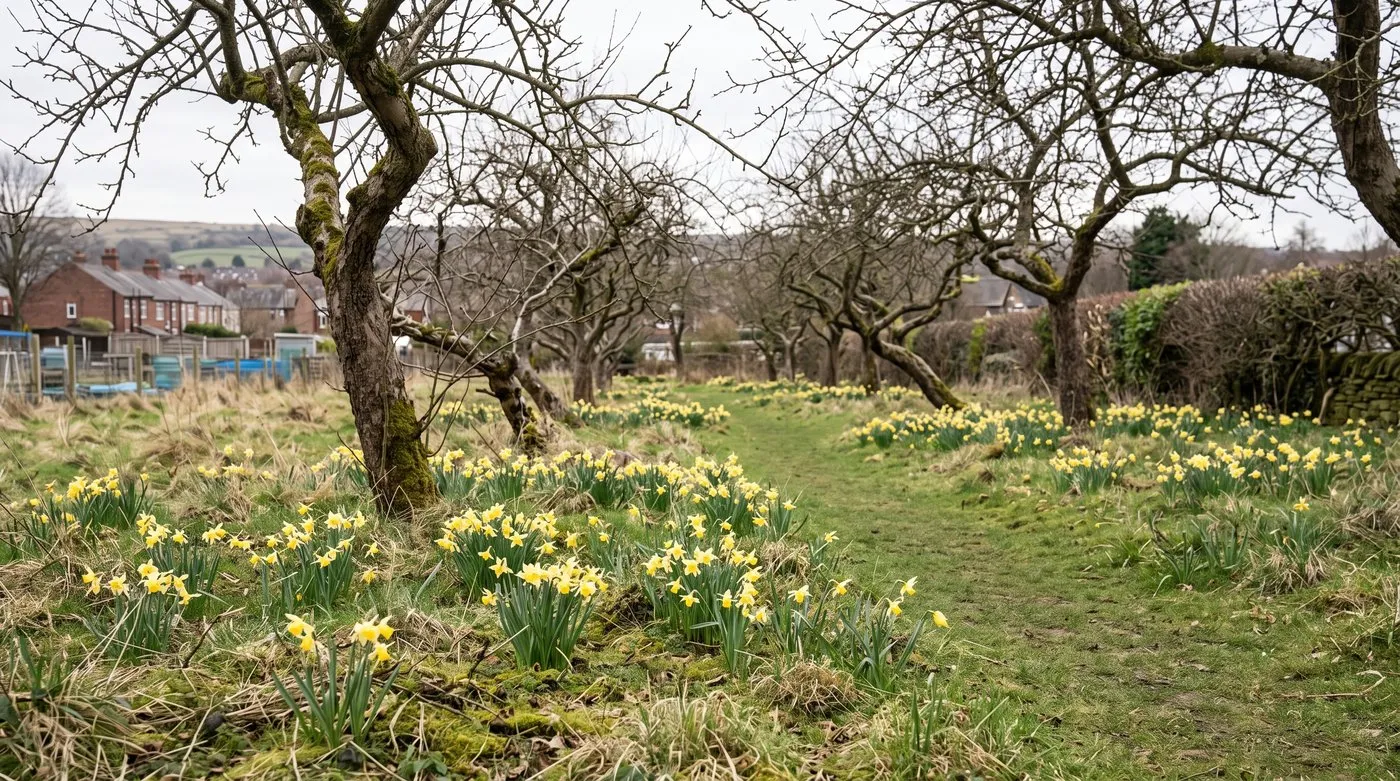
Small, early daffodils suit rough grass best. Their leaves die down sooner, so mowing can start earlier.
- Best for grass: Cyclamineus (Division 6), wild species (Division 13) and sturdy trumpets (Division 1)
- Keep for borders and pots: doubles (Division 4) and split cups (Division 11), which flower later and are top-heavy
The guide to naturalising bulbs in grass explains how to plant drifts and when to mow. The daffodil myths guide covers leaf-tying and other habits that cost you flowers.
Daffodil flowering calendar month by month
Mixing divisions gives you daffodils for months. Timings vary with region and weather.
| Month | What’s happening |
|---|---|
| January | The earliest trumpets, such as ‘Rijnveld’s Early Sensation’, open in mild gardens |
| February | Early Cyclamineus types and hoop petticoats begin |
| March | Peak for trumpets, Cyclamineus and wild Lent lilies |
| April | Large cups, small cups, Triandrus, Jonquilla and split cups |
| May | Poeticus types finish the season |
| June | Leave leaves to die down naturally. Deadhead to stop seed forming |
| July | Leaves have yellowed. Lift and divide crowded clumps if needed |
| August | Order bulbs for autumn |
| September | The main planting month, at 10-15cm deep |
| October | Still a good time to plant |
| November | Late, but bulbs planted now usually still flower |
| December | Plant any leftover firm bulbs as soon as you can |
The guide to when to plant daffodil bulbs has more on timing.
Picking a daffodil type for the job
- Rough grass and orchards: Cyclamineus, wild species and sturdy trumpets.
- Borders: large cups, small cups, Triandrus and Jonquilla. Jonquilla scent by a path is a treat.
- Pots: ‘Tete-a-Tete’, hoop petticoats and Tazettas.
- Scent: Jonquilla and Poeticus.
- The last flowers of spring: Poeticus.
- A native look: the wild Lent lily or the Tenby daffodil.
- Cutting for the house: large and small cups.
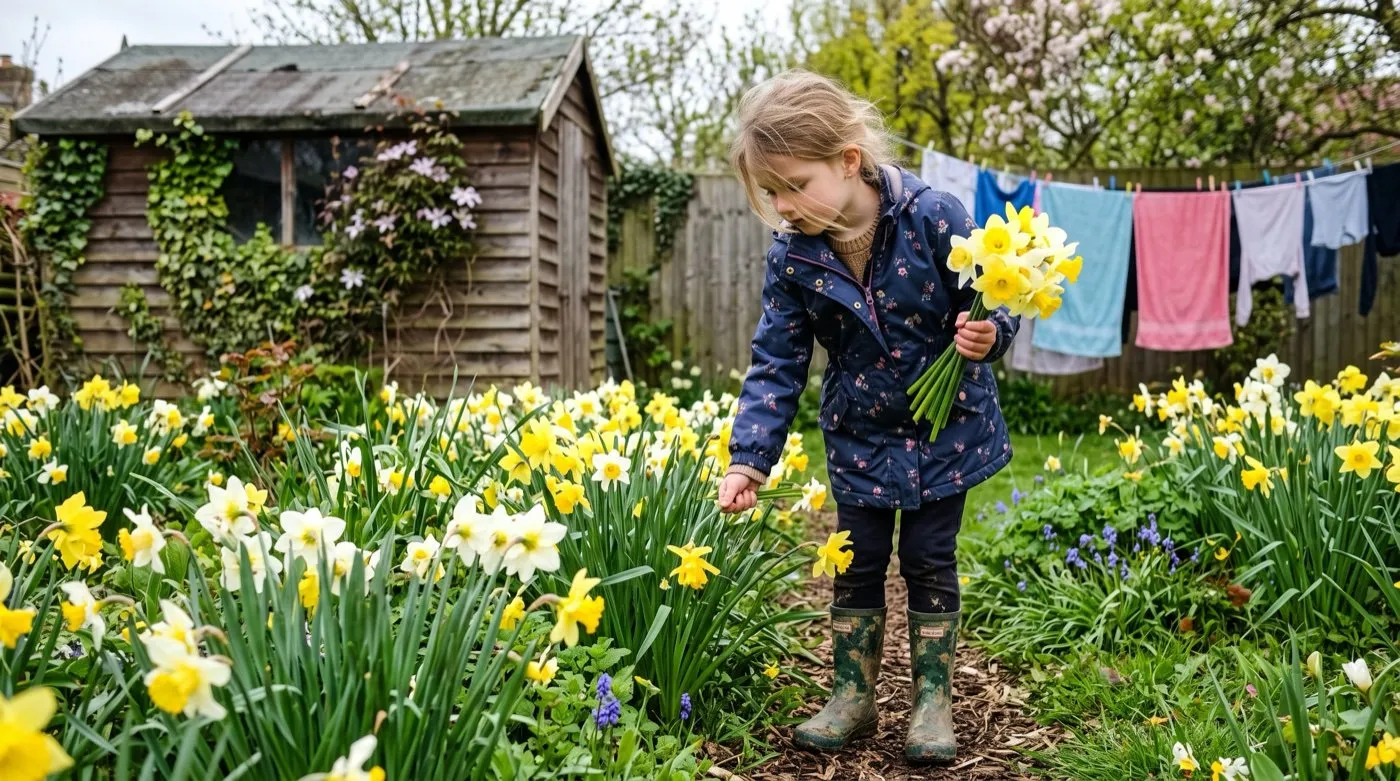
Large and small-cupped daffodils make great cut flowers. Stand them in water on their own for a few hours before mixing with other flowers.
Fresh-cut daffodils leak a sap that shortens the life of other flowers in a vase. The sap can also irritate skin, and all parts of daffodils are poisonous if eaten, so keep an eye on small children and pets.
Common mistakes when choosing daffodil types
- Putting doubles in open grass. Heavy heads flop in rain. Use them in sheltered borders instead.
- Planting late-flowering types where you mow. The leaves need six weeks after flowering, which can delay mowing into summer.
- Expecting tender Tazettas to thrive outdoors everywhere. In cold inland gardens, grow them in pots.
- Buying one type only. A mix of divisions spreads the show from January to May.
Frequently asked questions
How many types of daffodil are there?
There are 13 daffodil divisions, set by the RHS. Divisions 1 to 12 hold garden varieties, grouped by cup length, flower form or wild parent. Division 13 holds the wild species, such as the native Lent lily. Every named daffodil you buy fits into one of them.
What is the difference between a trumpet and a large-cupped daffodil?
It’s all about cup length. A trumpet daffodil’s cup is as long as the petals or longer. A large-cupped daffodil’s cup is more than a third of the petal length but shorter than the petals. Colour and size don’t decide it.
Which daffodils naturalise best in grass?
Early, sturdy types such as Cyclamineus daffodils and the wild Lent lily. They finish flowering early, so their leaves die down sooner and you can mow earlier. ‘February Gold’ is a classic choice. Heavy doubles are best kept out of grass.
What division is Tete-a-Tete?
‘Tete-a-Tete’ is in Division 12, Other Cultivars. It looks like a Cyclamineus daffodil but has mixed parentage, so it doesn’t fit one division cleanly. It’s a small, early, golden daffodil about 15-20cm tall, and brilliant in pots.
Which daffodils flower last in spring?
Poeticus daffodils, also called Pheasant’s Eye, flower last. They open from late April into May. Look for pure white petals and a tiny flat cup with a red rim. ‘Actaea’ is a popular, strongly scented variety.
How deep should I plant daffodil bulbs?
About three times the bulb’s own height, usually 10-15cm. Big trumpet and large-cupped bulbs go deepest, around 15cm. Small bulbs of dwarf and wild types need about 8-10cm. Plant from September to early October for the best show.
Are split-corona daffodils real daffodils?
Yes, they’re Division 11, a full RHS division. The cup is split for more than half its length and lies back against the petals. Collar types have the cup segments in front of the petals. Papillon types have them between the petals.
Now you can tell your daffodil types apart, the guide to tulip types does the same for the other big spring bulb, or browse more bulbs in the plants section.
Our team produces practical UK gardening guidance from source research, contributor records and established horticultural practice. Editorial standards are overseen by Matt W.