
Key takeaways
- Plant daffodil bulbs in September and October, earlier than tulips
- Plant 10-15cm deep, about three times the bulb's height, pointy end up
- Daffodils are brilliant in grass and multiply for years
- Leave the leaves for at least 6 weeks after flowering to feed next year's flowers
- Tete-a-tete, February Gold, Carlton and Ice Follies are easy, reliable choices
Daffodils are one of the most dependable spring bulbs in British gardens. They come back year after year, multiply on their own and cope with most conditions. From the first Tete-a-tete in February to Pheasant’s Eye in May, they give you weeks of spring colour for very little work.
Plant them at the right time and depth and you’re most of the way there. This guide covers when to plant around the UK, how to plant, the best varieties and the aftercare that keeps them flowering. For the full growing guide, see how to grow daffodils. Planning a bigger bulb display? See our guide on when to plant tulip bulbs, and our October planting guide for other autumn jobs.
When to plant daffodil bulbs
Plant daffodil bulbs in September and October. That’s earlier than tulips, which go in from late October. The RHS daffodil growing guide says early autumn, ideally September. Planting early gives the bulbs the most time to root before the soil gets cold.
Why plant daffodils earlier than tulips?
Daffodils start making roots in early autumn, while the soil is still warm. A bulb planted in September has good roots by winter, which means stronger growth and bigger flowers in spring.
Late-planted daffodils often give smaller flowers on shorter stems in their first spring, especially if they go in after mid-November. Tulips are planted late to dodge a disease called tulip fire, but daffodils don’t get it, so there’s no reason to wait.
Regional planting times
| Region | Best time to plant | Notes |
|---|---|---|
| Scotland and Northern England | Early September to mid-October | Colder winters, so plant early |
| Midlands and Wales | Mid-September to late October | Standard timing |
| Southern England | September to late October | Plant before mid-November |
| South-west and coastal areas | September to early November | Mildest soils, most leeway |
These are a rough guide. Anywhere in the UK, September and early October planting gives the best show in the first spring.
Can I plant daffodils in November?
Yes, but it’s not ideal. The bulbs have less time to root before the ground gets really cold, so first-year flowers may be smaller. If your bulbs arrive late, plant them straight away rather than keeping them. A late-planted bulb always beats one left in a bag.
Is it too late to plant daffodil bulbs in December or January?
No, as long as the bulbs are still firm and the ground isn’t frozen. Plant them straight away at the normal depth. Expect shorter stems, fewer flowers and a later show in the first spring. They usually get back to full flowering in their second year, as long as you leave the leaves to die down.
Check each bulb first. Throw out any that are soft, mouldy or very light, as they’ve dried out or rotted. If the ground is frozen or waterlogged, plant them in pots of multipurpose compost instead. Keep the pots outside in a sheltered spot and plant them out after flowering.
Can you plant daffodils in spring?
Yes, if you buy them already growing. Potted daffodils can go in during spring before they flower. Many nurseries also sell daffodils “in the green” just after flowering, with their leaves still on. Plant them at the same depth they were growing before and water them in.
Dry bulbs left over in spring are less reliable. They’ve missed their autumn rooting time and may only give leaves in the first year. Our guide to planting bulbs in the green has more on spring planting.
Tip: Don’t keep daffodil bulbs for months before planting. They dry out and lose their oomph. Plant them as soon as you can after buying.
How to plant daffodil bulbs
Plant daffodil bulbs pointy end up, about three times their own height deep, in generous groups. Get the depth right and they’ll flower strongly and come back every year.

Planting daffodils in early autumn gives them plenty of time to root before spring.
Planting depth
Plant daffodil bulbs 10-15cm deep, counting from the bottom of the bulb to the soil surface. That’s about three times the bulb’s height. Big bulbs, like trumpet daffodils, go down to 15cm. Little ones like Tete-a-tete only need 10cm.
Planting deep:
- Keeps the bulb steady in wind and frost
- Protects it from the worst of the cold and heat
- Helps it keep flowering in future years
- Keeps bulbs cooler and moister in dry springs
Good news: squirrels tend to leave daffodil bulbs alone.
Spacing
In borders, space bulbs 10-15cm apart. In grass, scatter them by hand and plant each one where it lands, which gives a lovely natural drift. For mowing and good bulbs to mix in, see our naturalising bulbs in grass guide.
In pots, plant closer, about 5-8cm apart, for a full display.
Planting method
- Dig a hole to the right depth with a trowel or bulb planter
- Pop the bulb in pointy end up, flat base down
- On heavy clay, add a handful of horticultural grit under the bulb
- Fill in with soil and firm gently
- Water once to settle the soil
For lots of bulbs in a border, dig a wide hole to the right depth, set all the bulbs in, and fill it back in. Much quicker than single holes.
Gardener’s tip: A long-handled bulb planter is the best tool for daffodils in grass. It pulls out a neat plug of turf, you drop the bulb in and put the plug back on top. A trowel is fine in borders. For big numbers, you can get a bulb auger that fits a cordless drill.
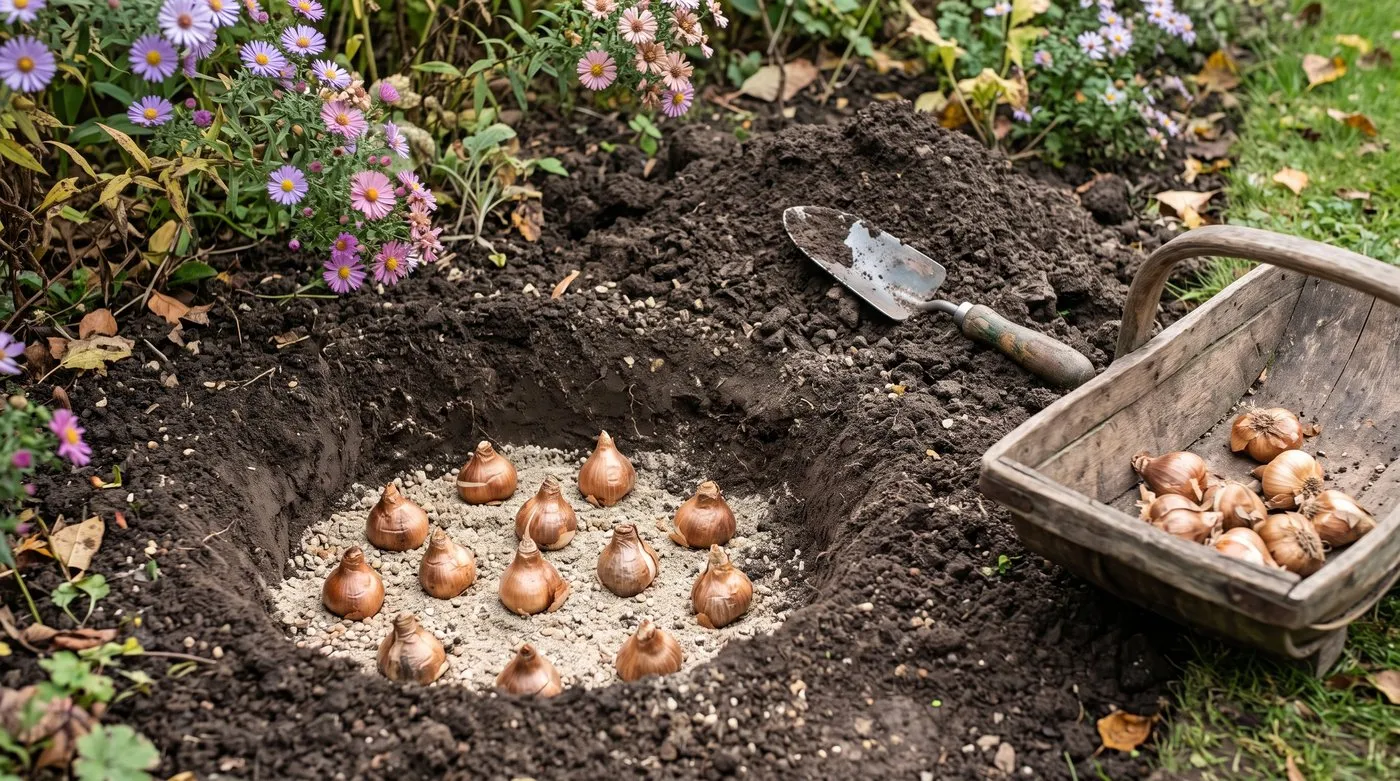
For lots of bulbs, dig one wide hole to the right depth, set them all in pointy end up, then fill it back in. A little grit helps on heavy clay.
Soil and position
Daffodils grow in most UK soils, from sandy to heavy clay, as long as water drains away.
Full sun gives the best flowers, but they’re happy in part shade too. They’re one of the few spring bulbs that flower well under deciduous trees, as they bloom before the leaves come out overhead.
Avoid soggy spots, as bulbs sitting in wet soil over winter rot. On heavy, wet ground, raise the bed or dig in coarse grit and compost. Our how to improve clay soil guide has more on drainage.
Best daffodil varieties for UK gardens
The best daffodils for most UK gardens are tough ones that come back every year, like Tete-a-tete, February Gold, Carlton and Thalia. Daffodils are sorted into 13 groups by flower shape, and you’ll often see the group number in brackets in catalogues.
Variety comparison
| Variety | Height | Flowers | Colour | Best for |
|---|---|---|---|---|
| Tete-a-tete | 15-20cm | Feb-March | Golden yellow | Pots, front of border, rockeries |
| February Gold | 25-30cm | Feb-March | Deep yellow | Early colour, grass |
| Carlton | 40-45cm | March-April | Yellow | Borders, cutting, grass |
| Ice Follies | 35-40cm | March-April | White with lemon cup | Borders, formal displays |
| Thalia | 30-35cm | April-May | Pure white, several per stem | Shade, cottage gardens, cutting |
| King Alfred type | 40-45cm | March-April | Deep golden yellow | Classic border daffodil |
| Cheerfulness | 35-40cm | April-May | Cream and yellow, scented | Cutting, late colour |
| Hawera | 20-25cm | April-May | Pale lemon, several per stem | Pots, rockeries, grass |
| Pheasant’s Eye | 35-40cm | May | White with red-rimmed eye | Grass, late flowers |
| Jetfire | 20-25cm | Feb-March | Yellow with orange trumpet | Early colour, front of border |
Early-flowering varieties (February to March)
Tete-a-tete is one of the best-loved daffodils in the UK. It flowers from late February, grows just 15-20cm tall, and is perfect for pots, window boxes and the front of borders. Stems often carry 1-3 flowers. It’s tough and multiplies steadily.
February Gold is one of the earliest full-sized daffodils, flowering from late February in a mild year. Its deep yellow flowers on 25-30cm stems are great in grass and come back strongly every year.
Jetfire has yellow petals and a bright orange trumpet. It flowers in late February to March at 20-25cm and is great in pots and at the front of borders.
Mid-season varieties (March to April)
Carlton is the trusty workhorse. Big, soft yellow flowers on 40cm stems suit borders, vases and grass. It multiplies well and copes with poor soil.
Ice Follies opens with white petals and a lemon cup that fades to cream. At 35-40cm it makes elegant drifts, and looks lovely next to blue forget-me-nots or grape hyacinths.
The classic trumpet daffodil, often sold as King Alfred, is the picture-book British daffodil. Deep golden yellow, 40-45cm tall and vigorous. The ones sold as King Alfred types today come back reliably.
Late-flowering varieties (April to May)
Thalia is one of the loveliest late daffodils. Each stem carries 2-3 pure white, nodding flowers with a soft sweet scent. At 30-35cm it’s elegant in cottage borders and beautiful in a vase. It’s happy in part shade under trees.
Pheasant’s Eye (Narcissus poeticus var. recurvus) is the last daffodil to flower, opening in May when most others are over. Its white flowers have a little yellow eye with a red rim. It’s wonderful in meadow grass and damper ground. For meadow ideas, see our mini meadow guide.
Cheerfulness is a double, multi-headed daffodil with a sweet scent. Its cream and yellow flowers open in late April and May on 35-40cm stems. A great cut flower.
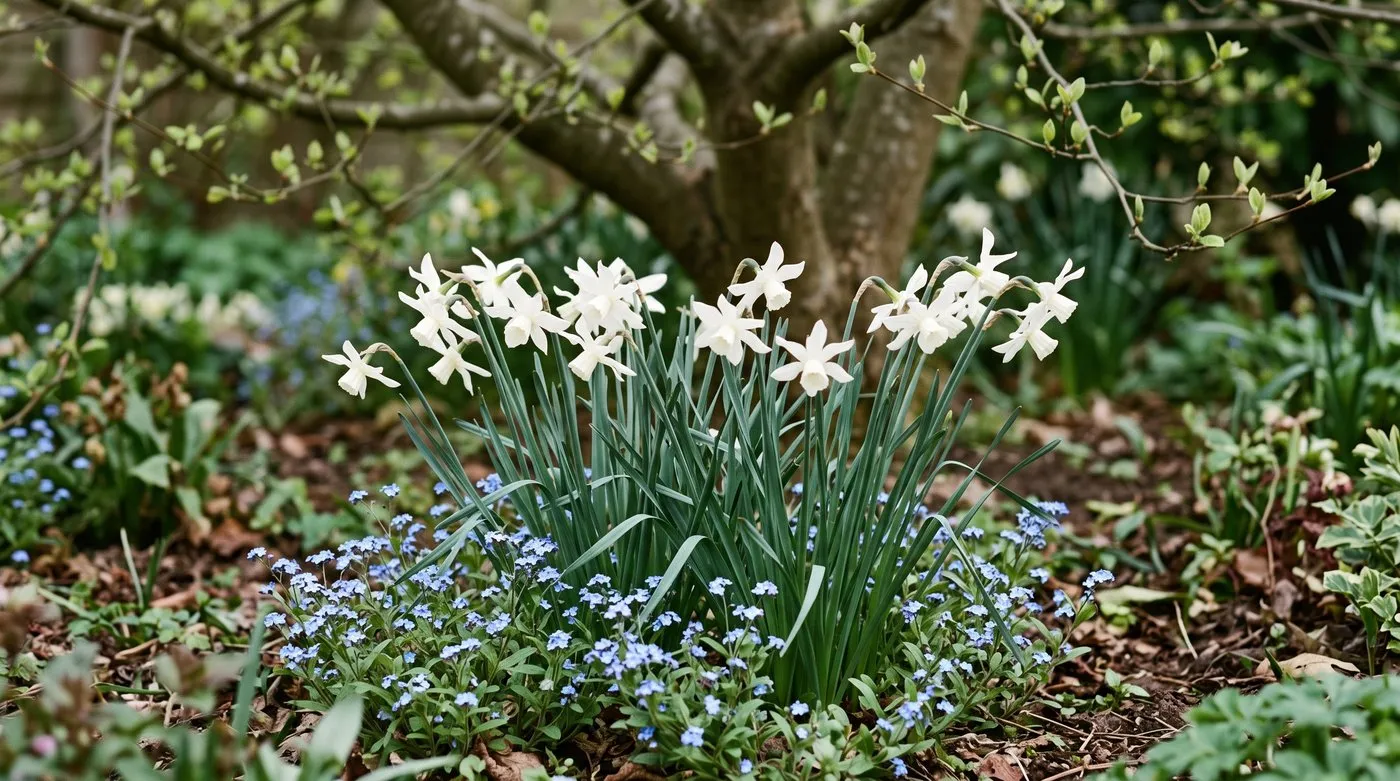
Thalia carries two or three white, nodding flowers per stem late in the season. It’s happy in part shade under trees.
Naturalising daffodils in grass
Daffodils are one of the best bulbs for growing in grass, which gardeners call naturalising. Most tulips fade away in a lawn, but daffodils love it. A good drift in a lawn or orchard can come back and spread for decades.

Daffodils in grass come back and spread year after year, with no replanting needed.
How to plant in grass
- Pick an area of lawn or rough grass you can leave unmown until mid-June
- Scatter the bulbs by hand for a natural, random look
- Plant each bulb where it lands, using a long-handled bulb planter
- Put the turf plug back on top and tread it down
- Water if it’s dry
Go for drifts and clusters, not lines. The most natural look has busy groups that thin out at the edges, like a stream running through the grass.
Best varieties for naturalising
Some daffodils do better in grass than others. Look for strong early to mid-season types whose leaves die down sooner.
| Variety | Height | Why it works in grass |
|---|---|---|
| February Gold | 25-30cm | Early, short leaves, very vigorous |
| Carlton | 40-45cm | Tough, spreads fast, copes with the grass |
| Tete-a-tete | 15-20cm | Low, finishes early, suits small lawns |
| Ice Follies | 35-40cm | Reliable, spreads well, pretty in drifts |
| Pheasant’s Eye | 35-40cm | Late, loves damp grass, wildflower look |
| Lent Lily (N. pseudonarcissus) | 20-30cm | Our native wild daffodil, perfect for meadows |
The Lent Lily (Narcissus pseudonarcissus) is Britain’s own wild daffodil. It’s smaller and daintier than garden types, with pale lemon petals and a deeper yellow trumpet. It loves damp grassland and is perfect for a wildflower lawn or meadow patch.
Mowing around naturalised daffodils
The big rule: don’t mow until at least 6 weeks after the last flowers fade. The leaves need that time to feed the bulbs for next year. For most varieties, that means no mowing in the daffodil patch until mid to late June.
Ways to make the long grass look tidy:
- Mow paths through the daffodil patch so it looks deliberate
- Pick early varieties (February Gold, Tete-a-tete) that finish sooner
- Plant them in rough grass you hardly mow anyway
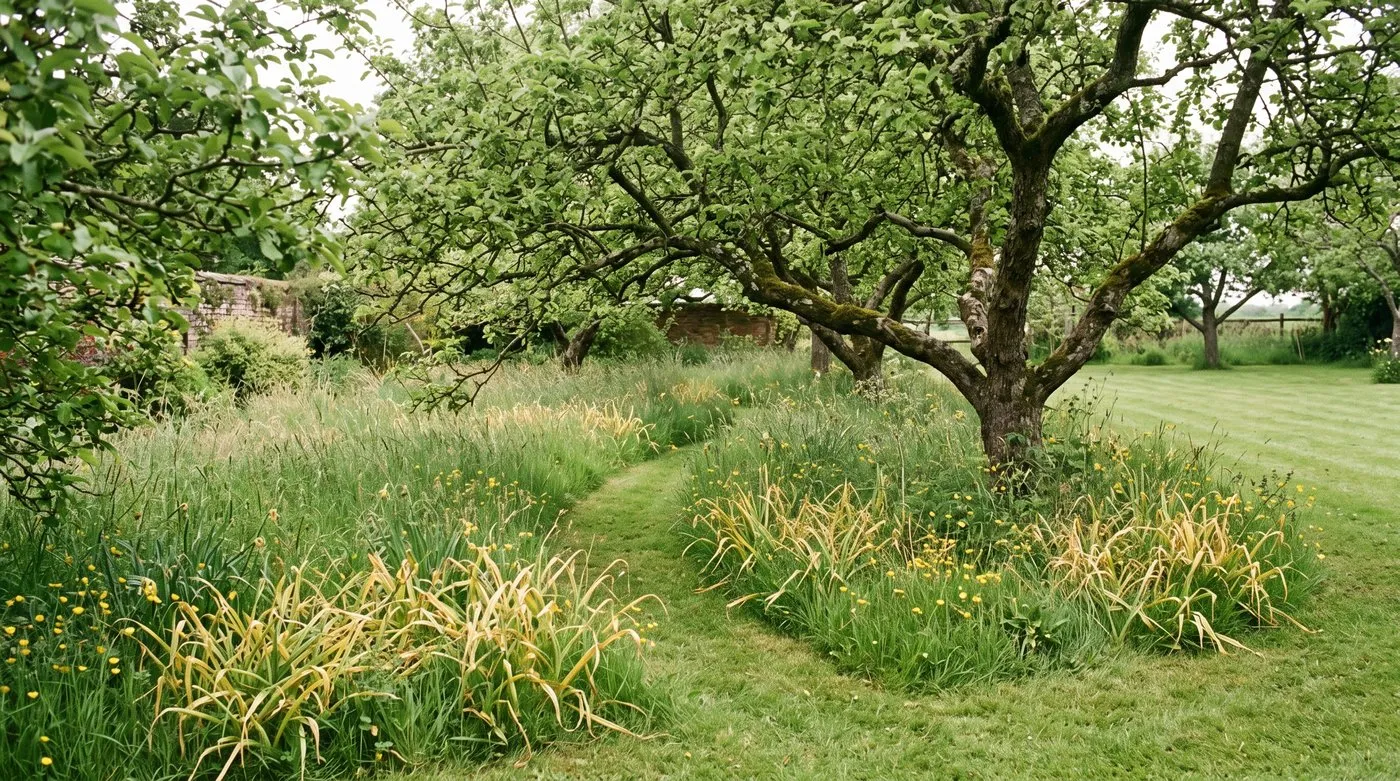
Leave the daffodil patch unmown for at least six weeks after flowering. A mown path through it makes the long grass look planned.
Month-by-month daffodil calendar
The daffodil year is all about planting in September and October, flowers in spring, then six weeks of leaving the leaves alone.
| Month | What to do |
|---|---|
| January | Enjoy any potted bulbs flowering early on the windowsill |
| February | First daffodils open (Tete-a-tete, February Gold) in sheltered southern gardens |
| March | Main daffodil season starts. Scatter a seaweed or general granular feed around the shoots |
| April | Mid and late varieties at their best. Snap off dead flowers |
| May | Late varieties (Thalia, Pheasant’s Eye) flower. Water in dry spells. Firm the soil around plants to keep bulb fly out |
| June | Leaves turn yellow and die down. Mark where they are in borders. Start mowing grass areas |
| July | Lift and divide crowded clumps once the leaves have died back. Replant quickly |
| August | Order new bulbs from the autumn catalogues. Plan new planting spots |
| September | Plant bulbs as soon as they’re in the shops. The earlier the better |
| October | Keep planting. The main planting month for most UK gardens |
| November | Last chance. Get any remaining bulbs in without delay |
| December | Bulbs are rooting underground. Nothing to do. Mulch beds if you haven’t already |
Growing daffodils in containers
Daffodils are great in pots, especially the small and dwarf ones. A pot of daffodils by the front door or on the patio brings spring colour where there’s no soil.

Little daffodils like Tete-a-tete are perfect for pots by the door or on the patio.
Container selection
Use pots at least 20cm deep for dwarf varieties and 25-30cm deep for standard ones. Any material works, as long as there are drainage holes. Stand pots on pot feet so they don’t sit in water.
Compost and planting
Fill the pot with multipurpose compost mixed with a handful of grit. Plant the bulbs 10-15cm deep and 5-8cm apart for a full display. Water once after planting.
Best container varieties
Tete-a-tete is the top choice for pots, at 15-20cm tall. Minnow (10-15cm, several cream and yellow flowers per stem) and Hawera (20-25cm, pale lemon) are lovely too. Avoid tall varieties over 40cm in windy spots, as they get blown about.
For a longer show, try a “bulb lasagne”: layers of bulbs in one pot. Put daffodils at 10-12cm deep, hyacinths at 8cm and crocuses at 5cm. Each layer flowers in turn. Our September planting guide has more on autumn pots.
Aftercare for container daffodils
After flowering, feed every week or two with tomato feed until the leaves turn yellow, and let them die down naturally. Move the pot somewhere out of the way while it looks tatty. Once the leaves have died, either leave the bulbs in the pot and top up with fresh compost in autumn, or plant them out in the garden.
Feeding and aftercare for repeat flowering
To keep daffodils flowering, snap off dead flowers, leave the leaves for six weeks, water in dry springs and split clumps that stop flowering.
Deadheading
Snap off the flower heads as soon as the petals wither, so the plant doesn’t waste energy making seed. Leave the stem, as it helps feed the bulb along with the leaves.
The 6-week rule
Leave all the leaves for at least 6 weeks after flowering. It’s the most important thing you can do for next year’s flowers. The leaves make food that’s stored in the bulb.
Don’t cut, tie, plait or put rubber bands on the leaves. All of these cut down how much food the leaves can make. If the floppy leaves bother you, plant daffodils among perennials that grow up and hide them.
Feeding
Daffodils in borders and grass rarely need much feeding. If flowering starts to tail off, scatter a granular seaweed feed around the bulbs in spring as the shoots appear. For daffodils in pots, give a tomato feed every week or two from when the flowers fade until the leaves turn yellow. Avoid high-nitrogen feeds, which give lots of soft leaves.
Water matters as much as food. Dry springs are one of the most common reasons daffodils stop flowering. Water clumps well in dry weather after flowering, until the leaves turn yellow. Early bumblebees and solitary bees visit daffodils too, and our guide to bee-friendly garden plants has more early flowers they love.
Dividing overcrowded clumps
After 3-5 years, daffodil clumps often get crowded. The bulbs multiply and squash each other, so you get smaller flowers and, in the end, “blind” bulbs with leaves but no flowers.
Lift clumps once the leaves have died back in summer, or in early autumn before new roots start:
- Dig up the whole clump with a garden fork
- Shake off the loose soil
- Gently twist the bulbs apart by hand
- Throw out any that are soft, mouldy or very small
- Add some compost to the soil and replant the good bulbs straight away at the right depth
They usually flower a little less the first spring after dividing, then get back to full flowering in the second year.
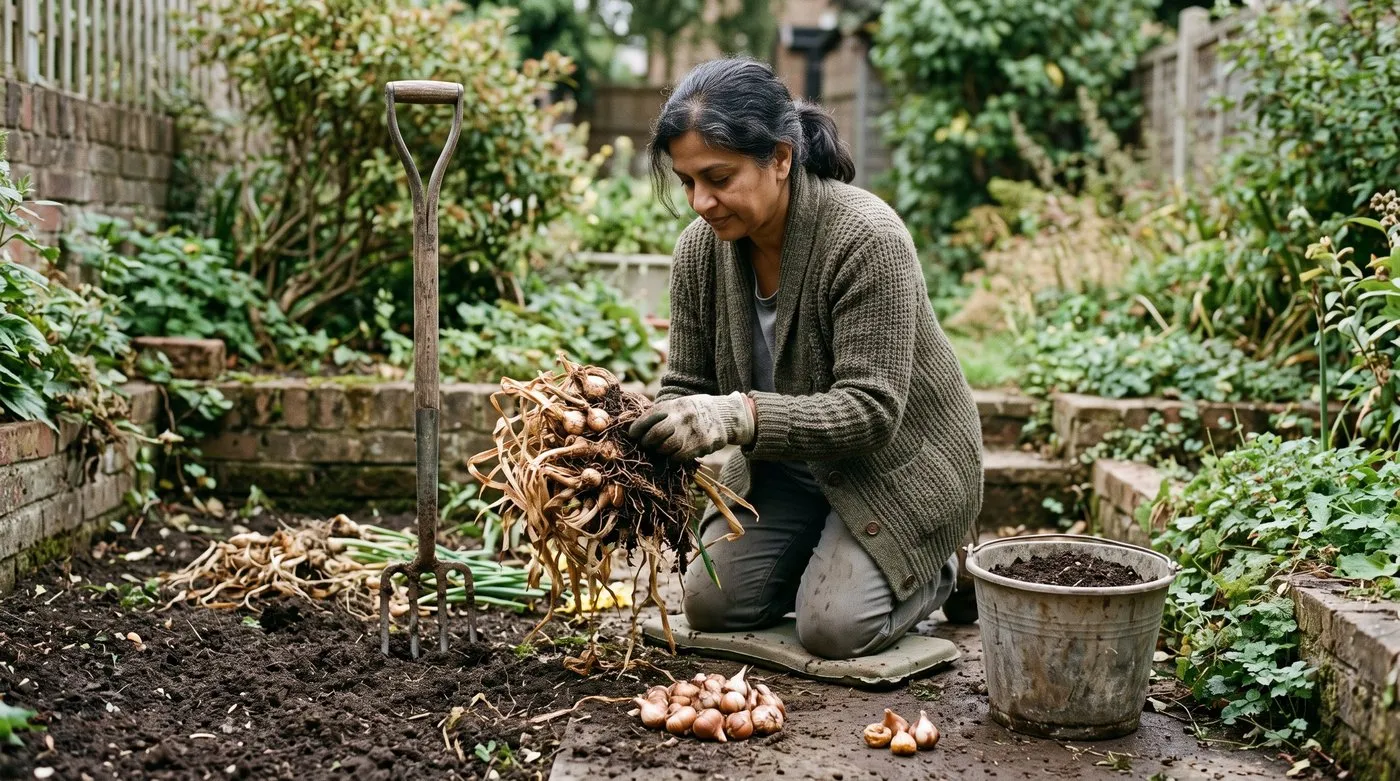
Every three to five years, lift crowded clumps once the leaves have died back. Pull the bulbs apart and replant the firm ones straight away.
Daffodil problems and solutions
The main daffodil problems in UK gardens are narcissus bulb fly, basal rot and blindness (leaves but no flowers).
Narcissus bulb fly
The large narcissus bulb fly looks a bit like a small bumblebee. It lays eggs at the base of daffodils from mid-May to June. A single grub tunnels into the bulb and eats the middle. Affected bulbs rot or give just a few grassy leaves and no flowers.
The RHS narcissus bulb fly guide suggests firming the soil around plants after flowering, so the flies can’t easily reach the bulbs. Cover special new plantings with insect mesh from mid-May to June. The flies prefer warm, sheltered spots, so exposed or shady plantings suffer less.
Basal rot
Basal rot is a fungus that makes the bottom of the bulb go soft and rot. It’s worst in warm, wet soil and heavy clay. Improve the drainage, don’t replant where it’s been, and throw out any soft or discoloured bulbs when planting.
Daffodil blindness
“Blind” daffodils give leaves but no flowers. The usual reasons are:
- Dry springs, which make the leaves die down early
- Crowded clumps (divide every 3-5 years)
- Leaves cut too early the year before
- Too much shade
- Planting too shallow (less than 10cm deep)
- Soggy soil rotting the bulb
Sort out the cause and most blind daffodils recover within a season or two. Our guide to daffodil blindness goes through each one.
Common mistakes
The mistakes that do most harm are cutting the leaves early, planting late and leaving clumps to get crowded.
Cutting foliage too early
This is a very common one. Mowing or cutting the leaves before they’ve turned yellow (about 6 weeks after flowering) starves the bulb. The flowers get weaker each year until you only get leaves. Let them look untidy for a while, as they’re feeding next year’s show.
Planting too late
Daffodils planted in November or December miss their best rooting time. They still flower, but not as well as September or October plantings in the first year. Buy and plant as early in autumn as you can. If bulbs arrive late, plant them the same day.
Planting in straight lines
Rows of daffodils look stiff, especially in grass. Scatter the bulbs by hand and plant them where they land. Groups of uneven size with irregular gaps look most natural, in borders as well as lawns.
Ignoring overcrowding
A clump that flowered beautifully five years ago may now be mostly leaves. That’s overcrowding. Lift, split and replant with proper spacing every 3-5 years. Our spring gardening jobs guide includes a bulb care checklist.
Tying or braiding foliage
Some people knot or plait daffodil leaves to tidy them up. Sadly this cuts down the light the leaves get and weakens the bulb. Leave them loose. Plant hostas, hardy geraniums or other perennials nearby to hide them as they fade.
Are daffodils poisonous to pets and people?
Yes, all parts of a daffodil are poisonous if eaten, and the bulbs are the worst. Dogs that dig up and chew bulbs are most at risk. Call your vet straight away if a pet has eaten any part of a daffodil.
Daffodil bulbs can be mistaken for onions, so store them away from food and label the bags. The sap can irritate skin if you handle lots of stems, so wear gloves for big picking jobs. Cut daffodils also release sap that makes other flowers wilt sooner. Stand them in water on their own for a few hours before mixing them in a vase.
Why the RHS Award of Garden Merit helps
The RHS Award of Garden Merit (AGM) is given to plants that have done well in RHS assessments. When choosing daffodils, an AGM is a handy sign that a variety will grow well in a British garden without fuss. Look for the little trophy symbol in catalogues.
Frequently asked questions
When should I plant daffodil bulbs in the UK?
September to October is best. September gives them the longest time to root. October is fine too. November is getting late for daffodils, unlike tulips, which are happy going in later.
How deep should I plant daffodil bulbs?
10-15cm deep, about three times the bulb’s height. Measure from the bottom of the bulb to the soil surface. Planting deep keeps them steady and helps them flower well year after year. On heavy clay, put a little grit under each bulb.
Can I plant daffodils in grass?
Yes, they’re one of the best bulbs for it. Scatter the bulbs by hand and plant them where they land for a natural look. A long-handled bulb planter makes the holes easy. Don’t mow until 6 weeks after the last flowers fade.
Why are my daffodils not flowering?
Often a dry spring or leaves cut too early. The leaves need 6 weeks after flowering to feed the bulb, and they need water in dry weather. Crowded clumps, shallow planting, deep shade and soggy soil can all stop flowering too.
When should I divide daffodil clumps?
Once the leaves have died back in summer, or in early autumn. Dig up the clump with a fork, pull the bulbs apart, throw out any soft ones and replant straight away. Doing this every 3-5 years keeps them flowering well.
Can I plant daffodils in pots?
Yes, in a pot at least 20cm deep. Use multipurpose compost with a bit of grit mixed in. Plant the bulbs 10cm deep and 5cm apart for a packed display. Little ones like Tete-a-tete and Hawera are perfect for pots and window boxes.
Do daffodils come back every year?
Yes, they’re perennials and come back reliably. In a spot they like, they multiply into bigger clumps over time. Some drifts in grass last for decades. They’re one of the most dependable spring bulbs you can grow.
What should I do with daffodils after they finish flowering?
Snap off the dead flowers but leave the leaves for 6 weeks. The leaves are busy feeding the bulb for next spring. Water in dry weather, and feed potted daffodils with tomato feed. Don’t tie, plait or cut the leaves until they’ve turned yellow and flopped.
Our team produces practical UK gardening guidance from source research, contributor records and established horticultural practice. Editorial standards are overseen by Matt W.


