Key takeaways
- In the green means moving bulbs in leaf after flowering, not as dry autumn bulbs
- Snowdrops and aconites move in February and March, bluebells in March and April
- Replant at the pale soil mark on each stem, about 5-8cm deep for snowdrops
- Work on a dull, still day and replant within minutes so the roots stay moist
- Leave the leaves to die back naturally so the bulbs can feed for next year
Planting bulbs in the green means moving them while they still have leaves, just after flowering. It’s the easiest way to spread snowdrops, winter aconites and native bluebells around a UK garden, and to fill gaps from a clump you already have.
Dry bulbs bought in autumn work well for daffodils and tulips. Small woodland bulbs are different. They dislike drying out, so they settle in much better when moved with their roots still working. Here’s which bulbs suit the method, when to move each one and how to lift, split and replant a clump without losing it.
What does planting bulbs in the green mean?
In the green means handling a bulb while its leaves are still up and its roots are active. You lift, split or plant it in the short window after flowering, before it dies back for summer.
The bulb is never dried, bagged or stored. It goes straight from one patch of soil to another. That matters for snowdrops and other small woodland bulbs, which lose moisture quickly once out of the ground and often struggle if planted dry.
You’ll see “in the green” on nursery lists in late winter and spring. It just means the bulbs arrive in leaf, ready to plant straight away.
Which bulbs should you plant in the green?
Four woodland favourites do best moved in leaf. Everything else can go in the usual way, as dry bulbs in autumn.
- Snowdrops (Galanthus) are the classic. Almost every specialist sells them in leaf for this reason.
- Native bluebells (Hyacinthoides non-scripta) have soft bulbs that shrivel quickly once lifted.
- Winter aconites (Eranthis hyemalis) have small knobbly tubers that dry to hard pellets in packets.
- Wood anemones (Anemone nemorosa) have thin rhizomes that dry out fast. Divisions in leaf, or pot-grown plants, are the reliable route.
Our guide to growing winter aconites has more on where those golden cups thrive.
Tulips, daffodils, crocus and alliums store well dry, so plant those in autumn. Our guide on when to plant spring bulbs covers timings for the dry ones.
Warning: Snowdrop, bluebell and winter aconite bulbs are poisonous if eaten. Wash your hands after handling them and keep lifted bulbs away from dogs.
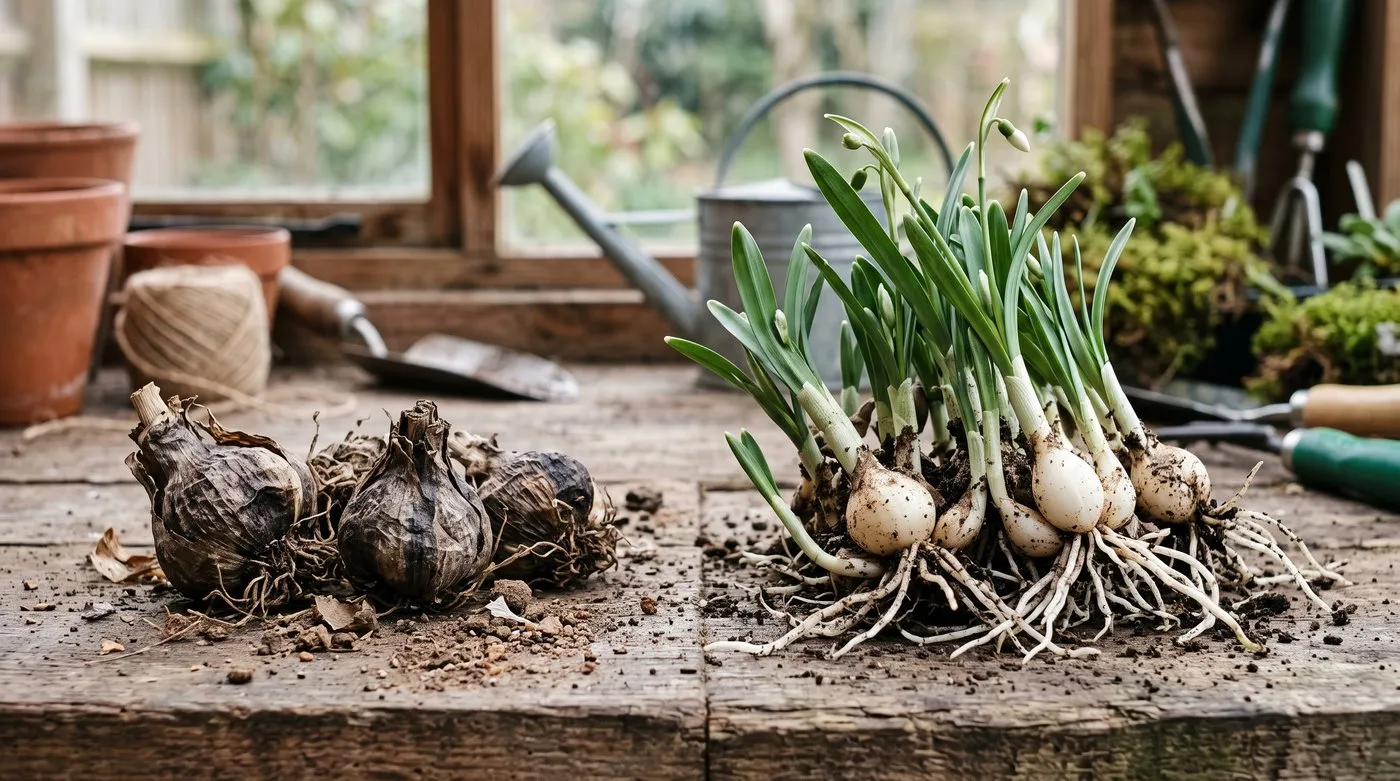
Plump bulbs with live roots, right, settle in far more easily than bulbs that have dried out in storage, left.
When to plant bulbs in the green
Move each plant as its flowers fade but while the leaves are still green and firm. Each one has its own window.
| Plant | When to move in the green | Replanting depth |
|---|---|---|
| Winter aconite | February to March | About 3-5cm |
| Snowdrop | Late February to March | About 5-8cm |
| Native bluebell | March to April | About 8-10cm |
| Wood anemone | March to April | Shallow, about 5cm |
Don’t wait until the leaves turn yellow. By then the plant is heading into its summer rest and you’ve lost the advantage. In full flower is fine if you need to move them, but just after flowering is ideal.
Once your bulbs are in, our guide to spring bulb care after flowering covers the aftercare that keeps a colony strong.
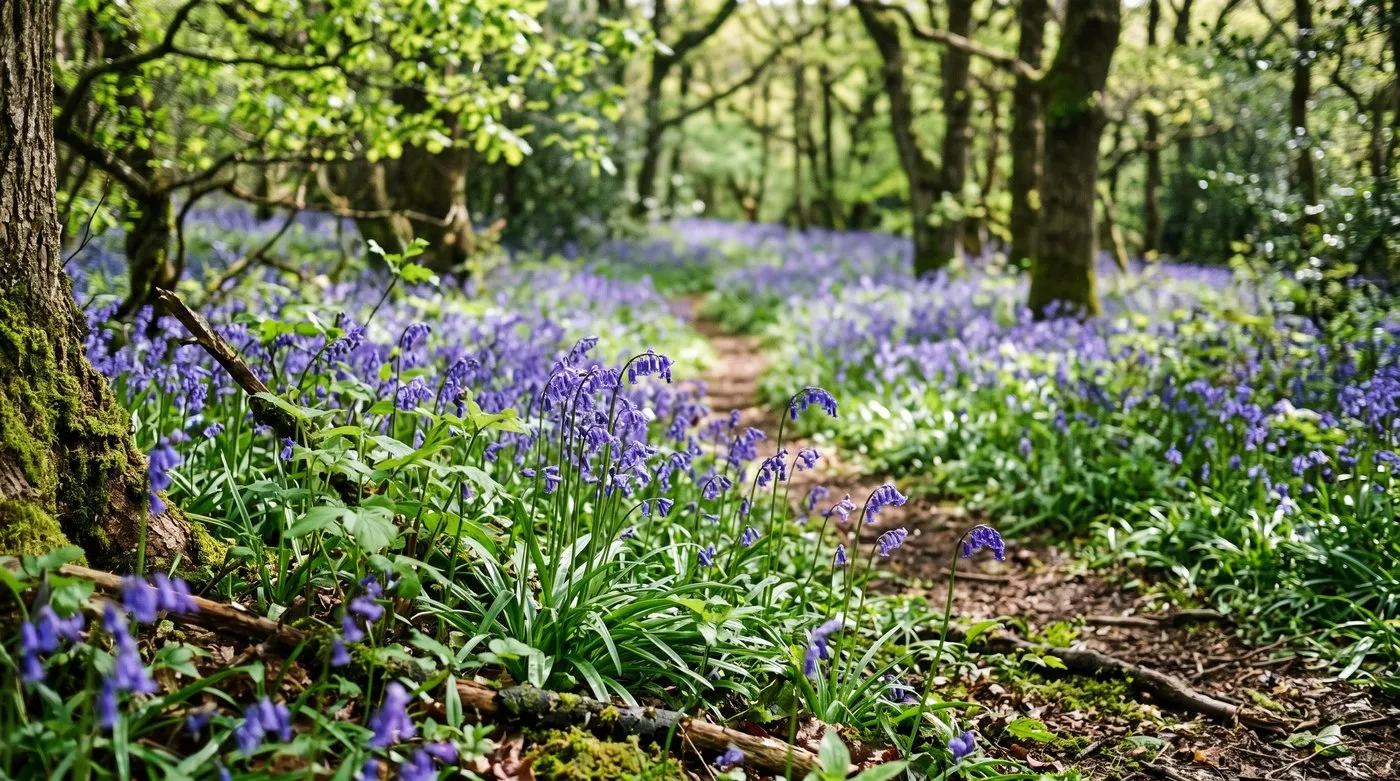
This is the stage to move bluebells in your own garden, as the flowers start to fade. Admire wild ones but leave them where they are.
How to lift, divide and replant snowdrops in the green
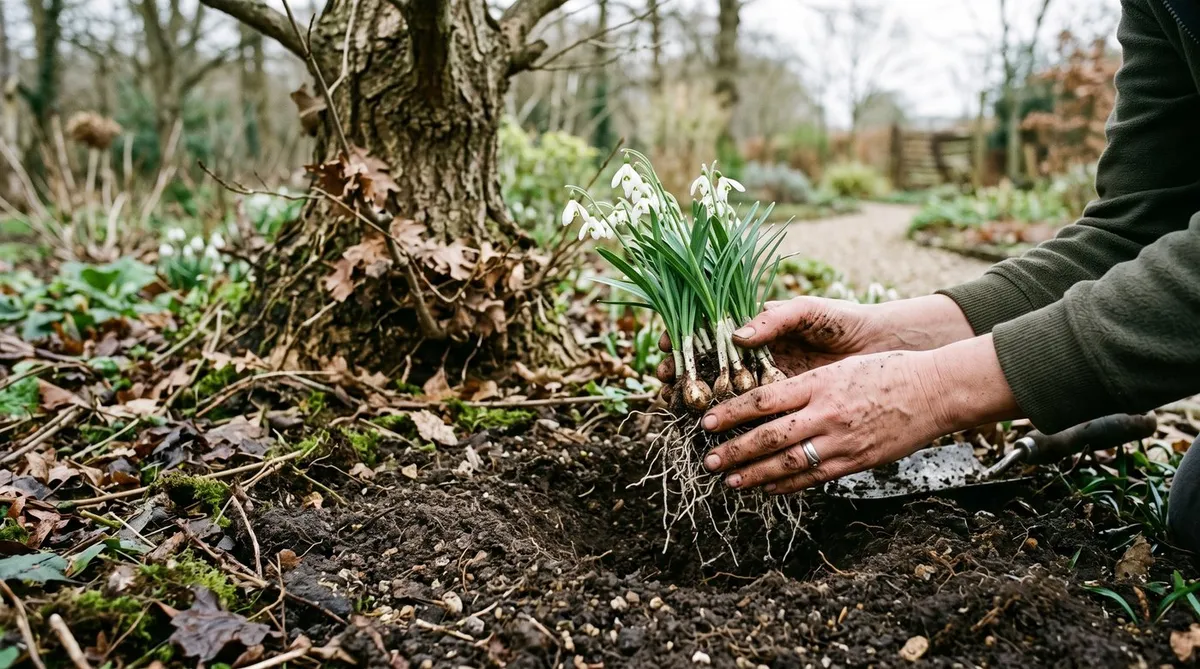
Lift the whole clump, split it into small groups and replant straight away at the same depth. Each clump takes a few minutes.
- Pick a dull, still day so the roots don’t dry in wind or sun. Dig the new holes first.
- Push a fork in about 15cm out from the clump and lever the whole lump up with soil attached.
- Shake off the loose soil so you can see the bulbs and their white roots.
- Tease the clump apart from the base into groups of three to five bulbs. Don’t pull on the leaves.
- Replant each group at the soil mark, firm it in and water well.
If a batch has to wait, stand the roots in a bucket of water. Divide snowdrops when clumps get crowded and flower less, usually every few years. Our guide to growing snowdrops covers choosing a spot, soil and the best varieties.
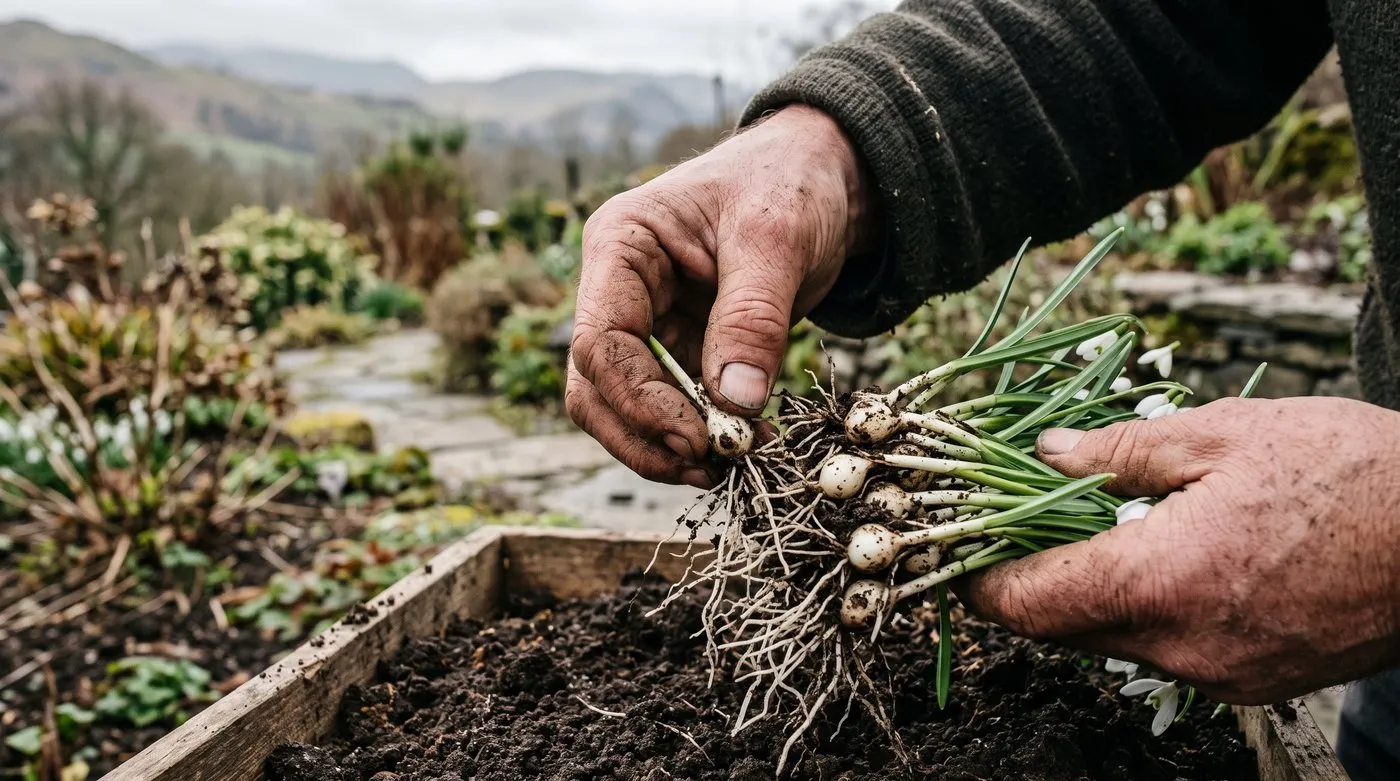
Split the clump from the base and keep those white roots intact. The faster they’re back in the ground, the better.
How deep do you plant bulbs in the green?
Plant them at the same depth they grew before. Every bulb you lift shows you exactly where that is.
Look at the base of the stems. You’ll see a pale band where the white, buried part meets the green. That line marks the old soil surface. Set it level with the ground when you replant.
For snowdrops that usually works out at 5-8cm deep. Bluebells sit a bit deeper, aconites a bit shallower. Plant too shallow and the bulbs dry out or get pushed up by frost. Plant too deep and they may skip a year of flowering.
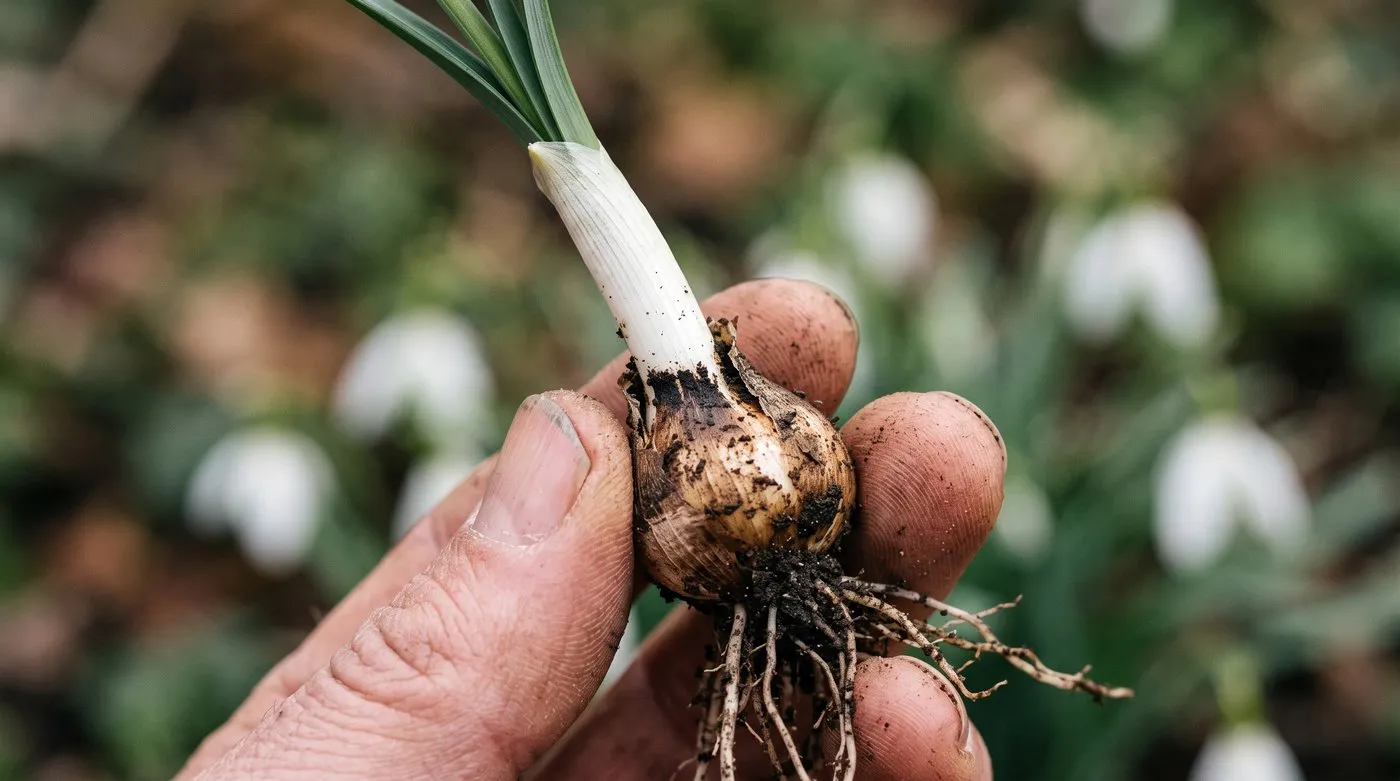
The white part of the stem was underground. Match the point where white turns green to the soil surface and the depth takes care of itself.
Buying snowdrops and bluebells in the green by post
Specialist nurseries send bulbs in leaf through late winter and spring. They usually arrive wrapped in damp paper, with roots and leaves still on.
Plant them the day they arrive. Don’t leave the parcel on a shelf. If the roots look a bit dry, stand them in water for an hour first. Plant in loose groups of five to nine for a natural look, not in rows.
For bluebells, buy from a nursery that guarantees native Hyacinthoides non-scripta. Cheap bulbs labelled just “bluebells” may be the Spanish bluebell or a hybrid, which crosses with our native plants. Our guide to spotting and removing Spanish bluebells shows how to tell them apart.
Never dig bulbs from the wild. Uprooting wild plants without the landowner’s permission is against the law, and wild bluebells are protected from being taken for sale.
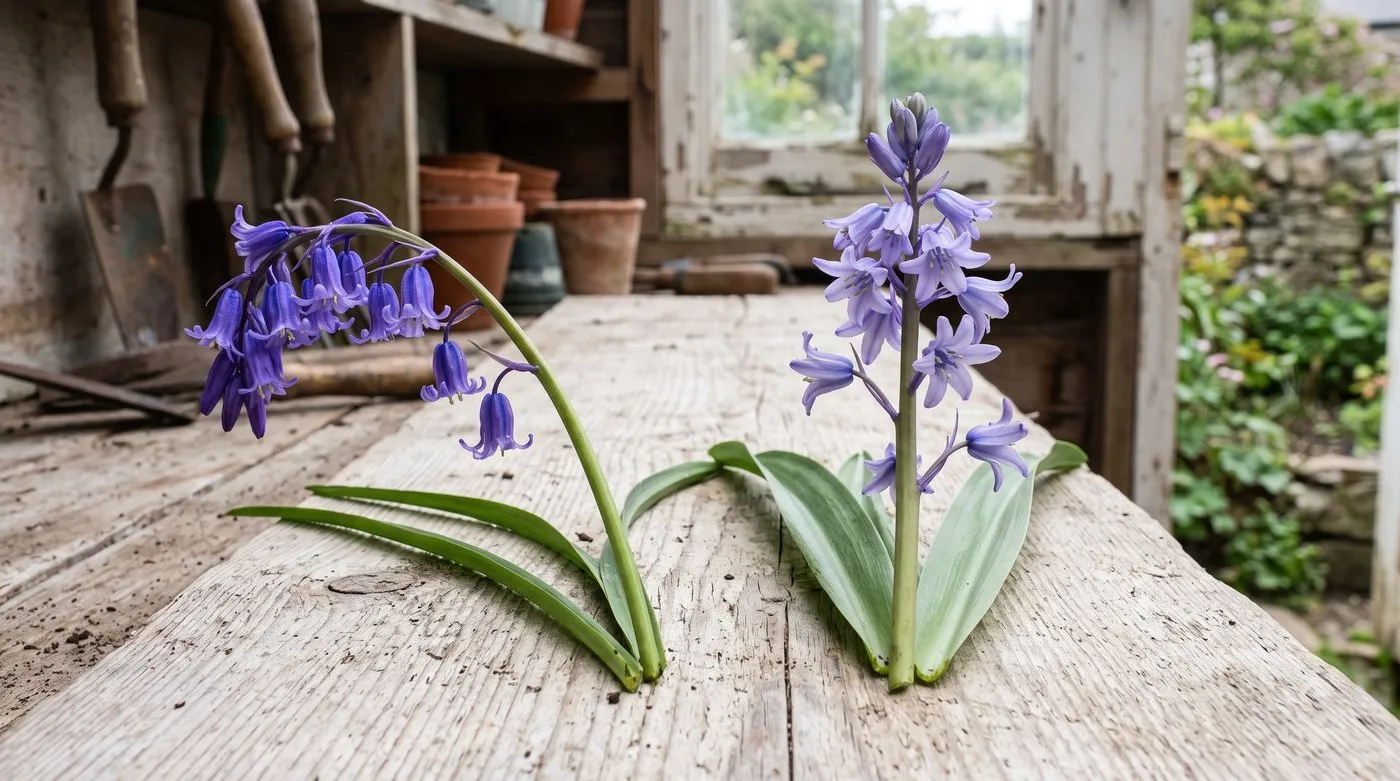
The native bluebell, left, droops to one side with narrow leaves. The Spanish one, right, stands straight with flowers all round the stem.
Naturalising snowdrops and bluebells under trees
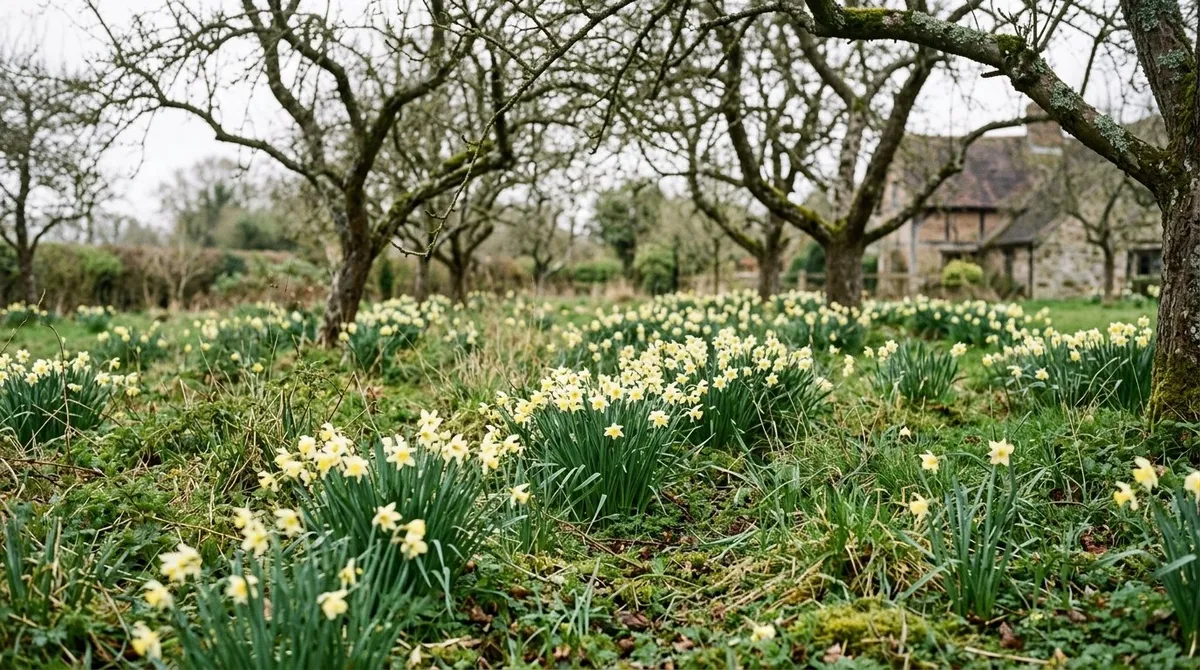
Under deciduous trees is the perfect spot. It’s bright in late winter, when these bulbs are growing, and shady and cool in summer.
Plant in loose drifts rather than lines. A simple trick is to toss a handful of groups gently and plant them where they land. Bluebells and wood anemones also do well under shrubs and along hedge bottoms.
In grass, lift a flap of turf with a spade, set a small group underneath and fold the turf back. Don’t mow that patch until the leaves have yellowed. Our guide to naturalising bulbs in grass has more on bulbs for lawns. For plants that cover the ground after the bulbs die down, try our list of the best plants for dry shade.
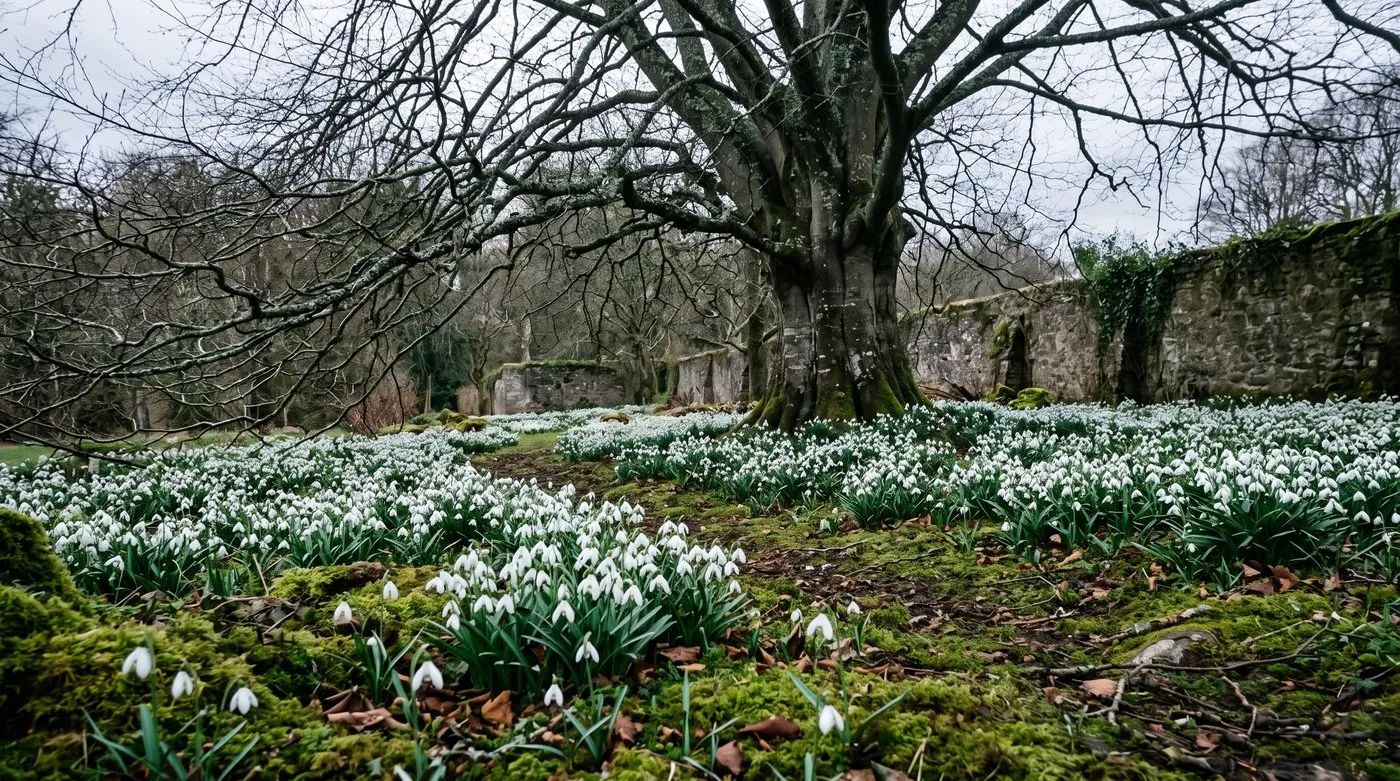
Under a deciduous tree, snowdrops get winter light and summer shade. Split and spread a few clumps each spring and a drift soon builds up.
Month-by-month calendar for in-the-green bulbs
| Month | What to do |
|---|---|
| January | Order in-the-green bulbs from specialist nurseries. Mark where clumps are as they appear |
| February | Lift and split winter aconites and early snowdrops as the flowers fade. Plant posted bulbs the day they arrive |
| March | Main month for splitting snowdrops. Start on bluebells late in the month |
| April | Move native bluebells and wood anemones in leaf. Water new plantings if the soil dries |
| May | Let all the leaves die back naturally. Don’t tie, cut or mow them |
| June | Leaves disappear. Mark colony edges with canes so you don’t dig into them later |
| July to September | Bulbs are resting. Skip dry snowdrop and bluebell bulbs and plant daffodils and crocus instead |
| October to December | Mulch bulb areas with leaf mould. Order for the coming season |
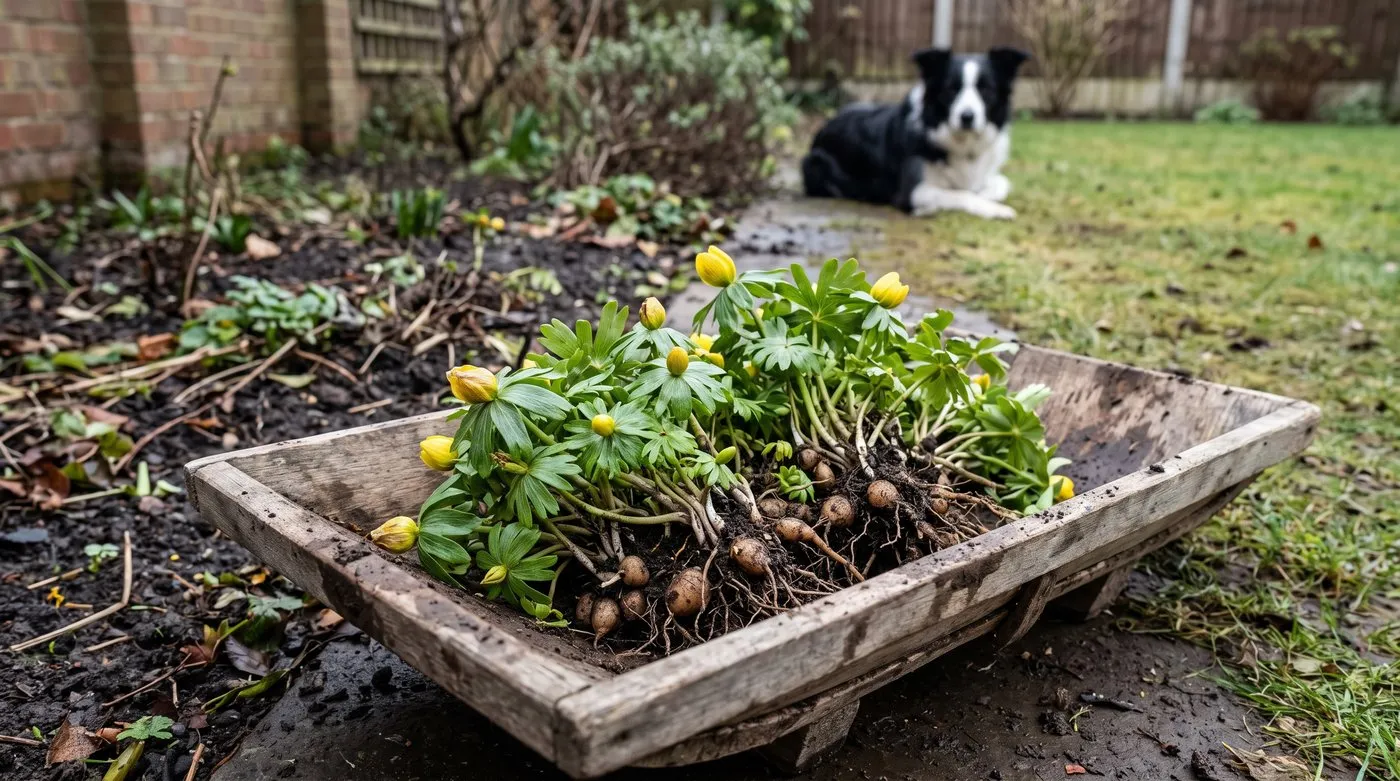
Winter aconites are the first to move, in February or March as the yellow flowers fade. Keep the clumps together and replant them straight away.
Common mistakes when planting bulbs in the green
- Letting the roots dry out. Exposed roots dry in minutes on a breezy day. Lift and replant one clump at a time and keep a bucket of water handy.
- Guessing the depth. Use the pale soil mark on the stems instead. It’s the easiest depth guide there is.
- Waiting too long. Once the leaves yellow, the bulb is going to sleep. Move it while the leaves are still green.
- Buying unlabelled bluebells. Look for a supplier that guarantees native stock.
- Cutting the leaves off. The leaves feed next year’s flowers. Leave them until they die back on their own.
Gardener’s tip: Lay damp sacking or a wet newspaper over lifted bulbs while you dig the next hole. It keeps the roots moist without slowing you down.
Ready to fill a shady corner with blue next spring? Read our guide on how to grow bluebells, or browse more seasonal jobs in our how-to guides.
Frequently asked questions
What does planting bulbs in the green mean?
It means moving or planting bulbs while they still have leaves. You lift and replant them just after flowering, with roots still working, instead of planting dry bulbs in autumn. It suits woodland bulbs that dislike drying out.
When should you plant snowdrops in the green?
Plant snowdrops in the green from late February to March. Move them as the flowers fade but the leaves are still green and upright. Replant the same day.
Why do dry snowdrop bulbs often fail?
They dry out in storage and many never recover. Snowdrop bulbs are small and lose moisture quickly once lifted. Bulbs moved in leaf never get the chance to dry out, so they settle in better.
How deep do you plant bulbs in the green?
Replant them at the same depth they grew before. Look for the pale band at the base of the stems, which shows the old soil level. Set it level with the surface. For snowdrops that is usually 5-8cm deep.
Can you plant bluebells in the green?
Yes, native bluebells move well in leaf in March or April. Lift and split garden clumps, or buy from a nursery that guarantees native Hyacinthoides non-scripta. Never dig bluebells from the wild.
How often should you divide snowdrops?
Divide snowdrops when clumps get crowded and flower less. That is usually every few years. Lift the clump in the green, split it into small groups and replant them more widely.
Do winter aconites transplant well in the green?
Yes, winter aconites settle far better moved in leaf than as dry tubers. Lift and split them in February or March as the flowers fade and replant straight away.
Our team produces practical UK gardening guidance from source research, contributor records and established horticultural practice. Editorial standards are overseen by Matt W.