Key takeaways
- Buy nursery-grown native bulbs. Digging up wild bluebells is against the law
- Plant 10 to 12cm deep between September and November
- Dappled shade under deciduous trees suits them best
- Natives droop to one side and have cream pollen. Spanish ones stand upright with blue pollen
- Let the leaves die down naturally before you mow or tidy
Bluebells are the star of a British spring, and they’re easy to grow at home. There’s just one thing to sort out first: native or Spanish?
Native English bluebells (Hyacinthoides non-scripta) are protected in the wild. Spanish bluebells are thugs by comparison. They cross with our natives and threaten wild bluebell woods. Below you’ll learn how to tell them apart, where to get genuine native bulbs, and how to grow a patch that comes back for years.
How to identify native vs Spanish bluebells
Check the stem, the bells and the pollen before you plant. Spanish bluebells cross with natives to make hybrids, and over time these push out the true natives. So it pays to be sure what you’re growing.
Once you know what to look for, the differences are easy to spot.
| Feature | Native bluebell | Spanish bluebell | Hybrid |
|---|---|---|---|
| Stem | Droops to one side | Upright and straight | Slightly arched |
| Bells | All on one side | All round the stem | Mixed, mostly one side |
| Bell shape | Narrow and tube-like | Wide and open | In between |
| Petal tips | Curled right back | Barely curled | Slightly curled |
| Pollen | Cream or white | Blue | Pale blue |
| Scent | Sweet | Little or none | Faint |
| Leaves | Narrow | Broad | In between |
| Status | Native and protected | Introduced, invasive | Spreading |
 Left: a native bluebell, drooping to one side with cream pollen. Right: a Spanish bluebell, upright with open bells.
Are bluebells legally protected in the UK?
Yes. You mustn’t dig up wild bluebells, and wild-collected bulbs can’t be sold. Under the Wildlife and Countryside Act 1981 it’s an offence to uproot a wild plant without the landowner’s permission. Native bluebells have extra protection that bans trading in wild-collected bulbs and plants.
What’s fine:
- Buying and planting nursery-grown native bulbs
- Collecting seed from bluebells in your own garden
- Dividing bulbs growing on your own land
- Picking a few flowers from your own garden
What’s not allowed:
- Digging up wild bluebells, including on common land or in council parks
- Selling wild-collected bulbs or plants
- Uprooting plants on someone else’s land without permission
Buy from a good nursery that grows its own stock. Be wary of cheap bulbs “from the countryside” at markets or online, as they’re likely to have been dug from the wild.
When and how to plant bluebell bulbs
Plant bulbs between September and November for flowers the following spring. Get them in early so the roots can settle before winter.
Where: Pick a spot under deciduous trees or shrubs. It should get dappled light in late winter and spring, then shade in summer. Bluebells flower before the trees come into full leaf. North-facing borders, the base of a hedge and the ground under big trees all work well. Hot, sunny south-facing spots make the flowers go over quicker.
Soil: Bluebells grow in almost any soil, from heavy clay to chalk to sand. They just don’t like ground that stays waterlogged. On clay, fork in some leaf mould to help drainage. On sandy soil, leaf mould helps hold moisture.
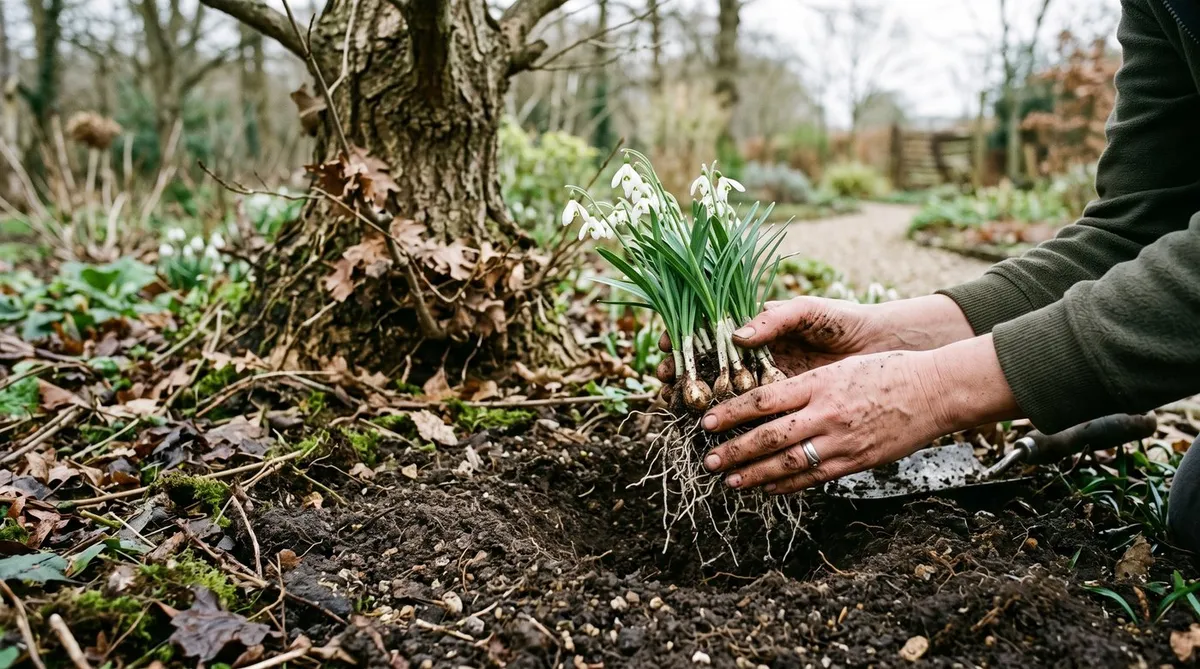
 Planting bluebell bulbs 10 to 12cm deep under trees in autumn.
How to plant:
- Dig holes or a wide trench 10 to 12cm deep
- Set bulbs 10 to 15cm apart, pointy end up
- Scatter them randomly rather than in rows, for a natural look
- Backfill with the soil and press down gently
- Water once, then leave them to it
- Mulch with 3 to 5cm of leaf mould or bark chips
Bluebells also work in a bulb lasagne, the trick of planting layers of bulbs in one pot or patch. Put bluebells at the bottom, about 12cm down, with crocus and snowdrops in shallower layers above. You’ll get several waves of spring colour from one spot.
Growing bluebells from seed
Seed is slow but easy, and it’s how bluebells spread in the wild. Plants from seed take about five years to flower, so it’s one for patient gardeners.
Collecting seed: Wait until the pods turn from green to brown and start to split, usually in early summer. Cut the stems and pop them upside down in a paper bag. The seeds are small, black and shiny.
Sowing: Sow fresh seed straight away, as it doesn’t keep well. Scatter it on pots of half multipurpose compost, half leaf mould. Cover with a thin layer of grit and leave the pots outside in the shade. Winter cold wakes the seed up, and seedlings appear in spring.
Planting out: Grow the seedlings on in pots for two seasons. By then each has a tiny bulb about the size of a pea. Plant them out in autumn, about 8 to 10cm deep.
It’s a lovely way to fill a wildlife garden with bluebells if you’re not in a hurry.
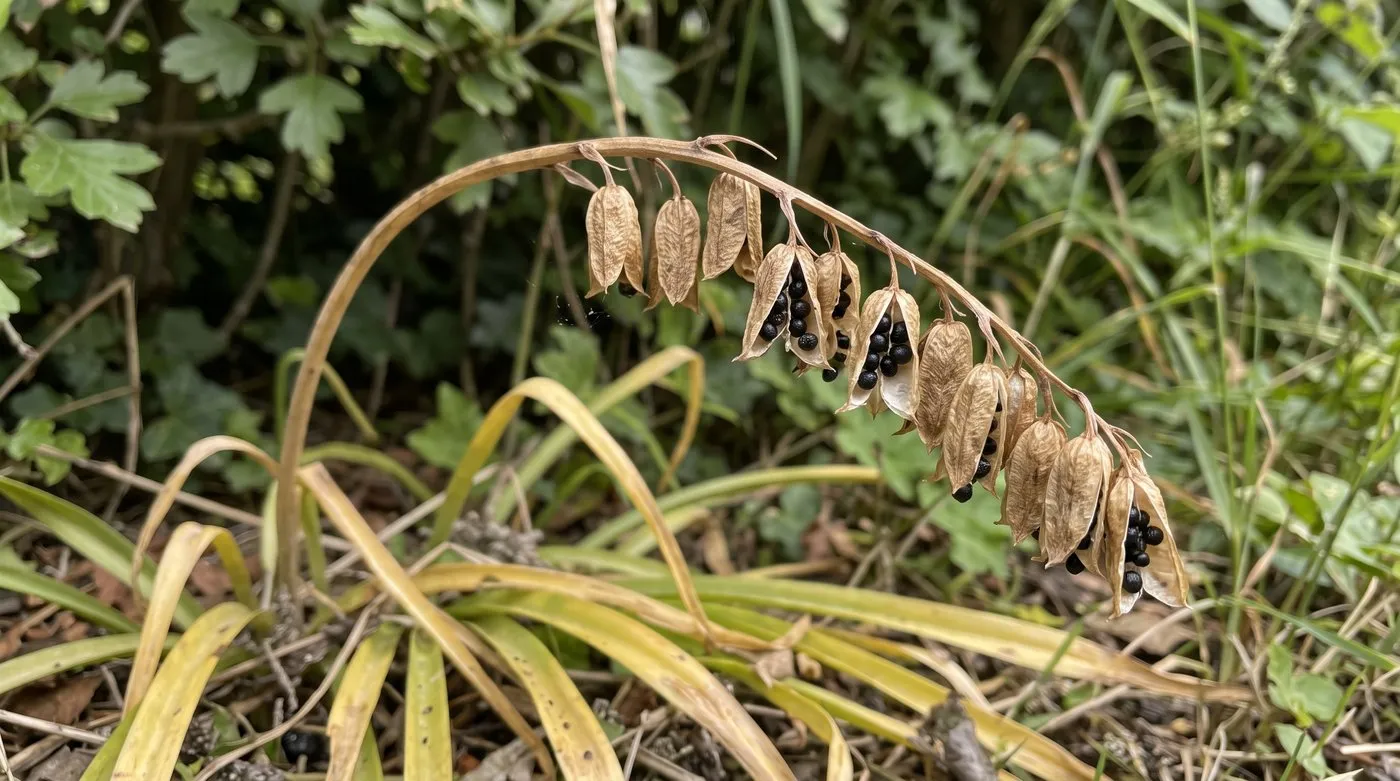
Collect seed once the pods turn brown and start to split. Sow it fresh, as bluebell seed doesn’t keep well.
Month-by-month bluebell care calendar
| Month | What to do |
|---|---|
| January | Order native bulbs from a good nursery |
| February | First shoots appear in mild areas. Try not to tread on them |
| March | Leaves grow fast. Don’t mow where bluebells are growing |
| April | Flowering starts, mid-April in the south and later further north |
| May | Flowering carries on in the north. Leave seed heads to ripen |
| June | Leaves start to yellow. Collect seed from brown pods. Don’t cut the leaves yet |
| July | Leaves die back. Bulbs rest underground |
| August | Mark bluebell patches so you don’t dig into them in autumn |
| September | Start planting bulbs. Sow fresh seed |
| October | Main planting month |
| November | Last chance to plant. Mulch new plantings with leaf mould |
| December | Bulbs rest underground. Nothing to do |
Pair this with a spring flower planting plan for colour from February to June.
Best places to grow bluebells in the garden
Under deciduous trees is perfect. Bluebells grow and flower in spring, before the leaves above them fill in and block the light.
At the foot of a hedge: A mixed native hedge of hawthorn, blackthorn and field maple gives shelter, winter light and summer shade. Plant bulbs about 15cm apart in a strip along the bottom.
In shady borders: Tuck bluebells between later plants like hostas, hardy geraniums and ferns. The bluebell leaves die back by July, just as the others fill the space. It’s ideal for any shade garden.
At the woodland edge: The strip between lawn and trees is great. Mix in wood anemones, wild garlic and primroses for a proper British woodland look. The white starry flowers of Star of Bethlehem like the same dappled spots and carry the show into May.
In pots: Bluebells will grow in a big pot at least 30cm deep with free-draining compost. They’re usually happier in the ground, so plant them out when you can.
 Native bluebells and white wood anemones spreading along a shady garden path.
Common mistakes when growing bluebells
Buying Spanish bluebells by mistake. Lots of bulbs are simply labelled “bluebells”. Check the Latin name. Only Hyacinthoides non-scripta is the true native. If the label says H. hispanica, or doesn’t say, assume it’s Spanish.
Cutting the leaves too soon. After flowering, the leaves feed the bulb for next year. Mow or cut them early and the bulbs get weaker each year. Wait until the leaves have gone yellow, usually by late June.
Planting Spanish or hybrid bluebells near wild ones. Bees carry pollen between gardens and woods. If you live near a bluebell wood, plant only true natives. The Woodland Trust bluebell page explains why this matters.
Fussing over sleeping bulbs. From July to September the bulbs are resting. There’s no need to water or feed them. Just leave them alone.
Giving up on seed too soon. Seedlings spend a few years looking like single blades of grass. Mark the spot, protect it and be patient.
Bluebells for wildlife
Bluebells are a welcome early feast for bees. They flower in spring when there isn’t much else about.
- Bumblebees are the main visitors. Queens just out of hibernation feed on bluebell nectar in April.
- Hoverflies visit for pollen, and their young eat lots of aphids.
- Other spring insects use bluebell woods too, which in turn helps birds feeding young.
For more native plants that work well together, see our guide to wildflower lawns.
Companion plants for bluebells
Bluebells look great with other British woodland plants. The best partners flower at different times, so the display lasts longer and gaps get filled when the bluebells die back.
| Companion | Flowers | Height | Why it works |
|---|---|---|---|
| Snowdrops | January to March | 10 to 15cm | Flowers before the bluebells |
| Wild garlic | April to June | 25 to 35cm | Flowers alongside them |
| Wood anemone | March to May | 10 to 15cm | White flowers next to the blue |
| Primrose | February to May | 10 to 15cm | Cheerful yellow at the edges |
| Hart’s-tongue fern | Evergreen | 30 to 45cm | Fills the summer gap |
| Foxglove | June to August | 90 to 150cm | Takes over as bluebells finish |
| Solomon’s seal | May to June | 60 to 80cm | Arching stems look lovely with them |
Foxgloves are a perfect follow-on. They start flowering in June, just as the last bluebells fade, in the same shady spots.
In sunnier parts of the garden, plant daffodils nearby for a cheery blue and yellow spring.
Now your bluebells are sorted, plan the rest of the season with our guide to spring flowers for UK gardens, from February bulbs right through to May perennials.
Frequently asked questions
Is it illegal to pick bluebells in the UK?
Digging up wild bluebells is illegal, and picking them is best avoided. Uprooting any wild plant without the landowner’s permission is an offence, and selling wild-collected bluebells is banned. Picking the flowers weakens the plants, so leave wild ones be. You can pick from your own garden or buy nursery-grown bulbs.
How do I tell native bluebells from Spanish bluebells?
Look at the stem and the pollen. Native bluebells droop to one side, with narrow, deep blue bells, curled-back tips and cream pollen. Spanish bluebells stand upright with bells all round the stem, wider and paler, with blue pollen. Natives also smell sweet, while Spanish ones have little scent.
When should I plant bluebell bulbs in the UK?
Plant them from September to November. Autumn planting lets the roots settle before winter. Buy bulbs that are firm and plump with no mould, and get them in the ground soon after they arrive.
Can I grow bluebells in my garden?
Yes, they’re happy in most UK gardens. They like part or full shade under deciduous trees or shrubs. Plant bulbs 10 to 12cm deep and 10 to 15cm apart. Clay, chalk, loam and sandy soil all work, as long as the ground doesn’t stay waterlogged.
Do bluebells spread on their own?
Yes, they spread by seed and by new bulbs. Seed drops near the parent plant, and the bulbs slowly multiply underground. Leave them undisturbed and a small patch will gradually turn into a bigger carpet over the years.
Will bluebells grow in full sun?
They cope with sun but do best in dappled shade. In full sun the leaves scorch earlier and the flowers don’t last as long. In the wild they flower under trees before the leaves come out. In a sunny garden, pick a north-facing spot or plant near shrubs for shade.
How long do bluebells take to flower from bulbs?
Bulbs usually flower the first spring after planting. Plant in autumn and look for flowers the next April or May. Bluebells grown from seed take much longer, about five years, before they’re big enough to flower.
Our team produces practical UK gardening guidance from source research, contributor records and established horticultural practice. Editorial standards are overseen by Matt W.