
Key takeaways
- Common foxgloves are biennials. Leaves in year one, flowers in year two, then they die
- Sow seed on the surface from May to July and never cover it
- Partial shade suits them best, so they're great for woodland edges and north-facing borders
- Every part is poisonous to people and pets, so wear gloves and wash your hands
- Leave a few spikes to set seed and you'll get free plants every year
Foxgloves are one of Britain’s best-loved wildflowers, found in woodland clearings and hedgerows all over the country. The common foxglove (Digitalis purpurea) is a native biennial. It makes a rosette of leaves in its first year, then sends up spikes 1-1.5m tall in its second. Once you have a few, they self-seed and look after themselves.
Bumblebees love them too. The tube-shaped flowers are just the right size for long-tongued bumblebees to climb inside. Foxgloves are on the RHS Plants for Pollinators list, so they’re a must for a cottage garden planting plan.
One thing to know first: every part of a foxglove is poisonous to people, dogs and cats. Wear gloves when handling them and wash your hands afterwards. If small children or pets roam the garden freely, think about whether they’re right for you.
Are foxgloves biennials or perennials?
Common foxgloves are biennials. In year one they make a flat rosette of soft, grey-green leaves. In year two they flower in June and July, set seed and die. Because they self-seed so freely, a patch looks permanent even though each plant only lives two years.
Two perennial foxgloves come back from the same roots each year:
- Digitalis grandiflora: pale yellow flowers, 60-80cm, June to July
- Digitalis lutea: small creamy-yellow flowers, 60cm, June to July
They self-seed less than the common foxglove, but you don’t need to keep sowing them.
For most gardens, the native common foxglove is the one to start with. It gives you real height, and one sowing can keep going for years.
How to sow foxglove seed
The seed is dust-fine and needs light to germinate. So scatter it on the surface and don’t cover it. Buried seed won’t come up.
Sowing indoors (May to July)
- Fill a 9cm pot or seed tray with fine seed compost.
- Firm it gently and water it well.
- Scatter the seed thinly on top. Don’t cover it.
- Stand it somewhere warm and light, like a windowsill or unheated greenhouse.
- Mist the surface to keep it moist. Don’t let it dry out.
- Seedlings should appear in 2-3 weeks.
For more help, see our guide on how to sow seeds indoors and the seed sowing calendar for UK gardens.
Sowing outdoors
Scatter seed on bare, raked soil from May to July. Pat it down gently so it touches the soil, but don’t cover it. Keep it damp. When the seedlings are big enough to handle, thin them to 30-45cm apart.
Transplanting
Move pot-grown seedlings into their own 9cm pots once they have their first true leaves. Keep them in a cold frame or sheltered spot over summer. Plant them out in September or October, 45-60cm apart. They settle in quickly and sit through winter as leafy rosettes, ready to flower next June.
Growing foxgloves: position and soil
Foxgloves are woodland edge plants, so think dappled light and soil that stays a bit moist.
Light: Partial shade is best. They’ll cope with full shade but get leggy and flower less. In a hot, dry, sunny border they can struggle. They’re one of the best plants for shade in UK gardens when you want something tall.
Soil: Moist, rich soil gives the tallest plants. They grow in clay, loam and sandy soil, but dislike very dry ground. On dry soil, dig in plenty of compost or leaf mould first, and water well in their first summer.
Acid or chalky: They’re happy in slightly acid soil and fine in most garden soils.
Spacing: 45-60cm apart. Crowded plants get less air, which can lead to mildew on the lower leaves.
Foxglove varieties to grow
The wild foxglove comes in purple, pink and white. Garden varieties add new colours, sizes and habits.
| Variety | Flower colour | Height | Good for |
|---|---|---|---|
| D. purpurea (wild type) | Purple, pink, white | 1-1.5m | Wildlife and self-seeding |
| Excelsior Group | Mixed pastels | 1.5m | Flowers face all round the spike |
| Camelot Series | Mixed | 1.2m | Flowers in its first year if sown early |
| Sutton’s Apricot | Soft apricot-pink | 1m | Gentle cottage garden colour |
| Pam’s Choice | White with purple spots | 1.2m | Bold, eye-catching markings |
| Dalmatian Series | Mixed | 60-80cm | Smaller gardens |
| D. grandiflora | Pale yellow | 60-80cm | A perennial that comes back |
| D. lutea | Creamy yellow | 60cm | A dainty, long-lived perennial |
For bees, go for the wild purple foxglove or Excelsior Group. The spots inside the flower guide bees to the nectar.
For small gardens, the Dalmatian Series gives height without swamping a narrow border.
For flowers this year, sow Camelot Series under glass in January or February and it will flower in its first summer.
 Mixed foxgloves in a cottage border. Let them self-seed and you’ll get new shades popping up each year.
Month-by-month care calendar
| Month | What to do |
|---|---|
| January | Sow Camelot Series under glass for first-year flowers |
| February | Check overwintering rosettes and pick off slugs |
| March | Sow on the surface in a propagator or warm windowsill |
| April | Move seedlings into their own pots |
| May | Sow outdoors; harden off indoor seedlings |
| June | Enjoy the flowers; watch for greenfly on new growth |
| July | Sow outdoors for next year; cut off finished spikes for side shoots |
| August | Collect ripe seed from brown, papery pods |
| September | Plant out young plants where they’re to flower |
| October | Plant out the rest; mulch on dry soils |
| November | Rosettes sit through winter with no protection |
| December | Nothing to do. Foxgloves are fully hardy |
Why foxgloves matter for bumblebees
Foxgloves are a real treat for long-tongued bumblebees. The flower tubes are long, and just wide enough for a bee to crawl in, pick up pollen and back out again. Short-tongued bees can’t reach the nectar.
The garden bumblebee and the common carder bee are two regular visitors you’re likely to spot.
Most bee plants have flat or open flowers, so foxgloves feed bees that other plants miss. Grow them with lavender, catmint and other bee-friendly garden plants to help as many kinds of bee as you can.
 A bumblebee climbing into a foxglove flower. The tube shape fits it perfectly.
How to encourage self-seeding
The easiest way to keep foxgloves is to let them sow themselves. One plant makes thousands of seeds.
Leave some spikes to ripen. After flowering, pods form along the spike and turn from green to brown over a few weeks. When ripe, they split and drop seed around the parent plant.
Leave some bare soil. Seed comes up best on bare, lightly scratched soil. Scrape a few small patches under the plants in August.
Don’t mulch thickly in autumn. A thick mulch stops seed reaching the soil. Mulch in early spring instead, once you can see the seedlings.
Weed carefully. Young rosettes can look like weeds. Look for large, soft, slightly hairy grey-green leaves, and mark where the parent plants stood so you know where to look.
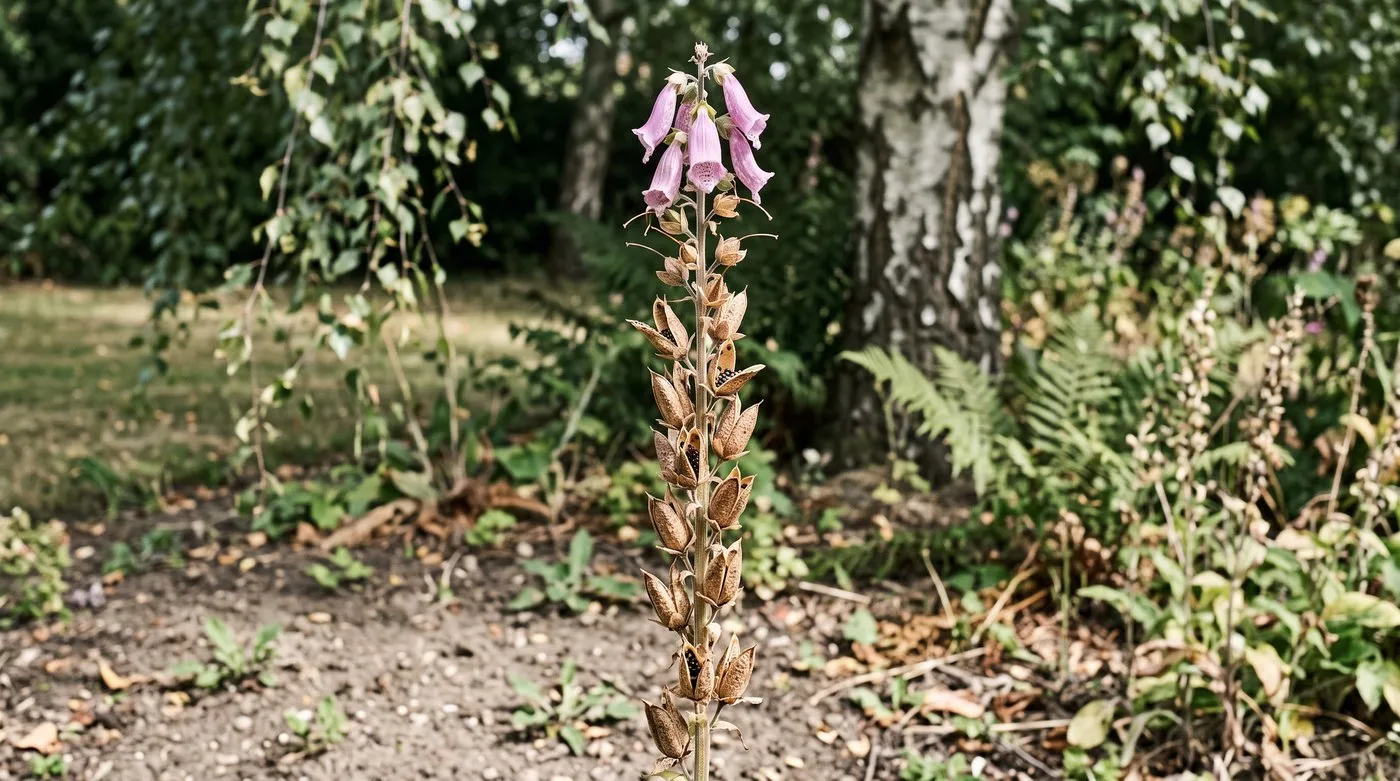
Leave a few spikes to ripen until the pods turn brown and split. A patch of bare soil underneath gives the seed somewhere to land.
Companion plants for foxgloves
Foxgloves look great with other plants that like a bit of shade:
- Ferns, such as male fern and lady fern, for soft ground cover
- Geranium phaeum (mourning widow), with dark purple flowers in shade
- Astrantia, a cottage favourite that likes the same light
- Sweet cicely, ferny and fragrant in the same spots
- Hostas, for big bold leaves at the base of the spikes
- Sweet peas, climbing at the back of a sunny or part-shade border; see our guide on how to grow sweet peas
In a cottage garden, tall foxglove spikes look lovely rising behind the rounded shape of shrub roses.
Common problems
Foxgloves rarely give trouble. They’re native, hardy and tough. Here’s what to look out for.
Slugs and snails go for seedlings and young rosettes, especially in autumn. Use wildlife-friendly ferric phosphate pellets around new plants. Bigger second-year plants cope much better.
Greenfly sometimes cluster at the tips in early summer. Knock them off with a jet of water and let ladybirds clear the rest. Don’t use home-made washing-up liquid sprays. If you really need a spray, use an approved product exactly as the label says.
Powdery mildew can appear on lower leaves in dry summers, mainly on crowded plants. Give them more space, water at the base and pull off affected leaves.
Spikes falling over happens in windy spots. Tie each spike to a cane with soft string, or plant in the shelter of shrubs. Excelsior Group has stiffer stems than the wild type.
For more seasonal jobs, see our spring gardening jobs guide.
 First-year foxglove rosettes in a shady border. Once you know the soft, hairy leaves, you’ll spot them easily.
Frequently asked questions
Are foxgloves easy to grow from seed?
Yes, they’re very easy. Scatter the seed on top of compost from May to July and don’t cover it, because it needs light to sprout. Keep it moist and seedlings should appear in 2-3 weeks. Pot them on when big enough to handle and plant out in autumn for flowers next June.
Do foxgloves come back every year?
Common foxgloves flower once, in their second year, then die. They self-seed so freely that new plants pop up to replace the old ones, so a patch seems to come back every year. If you want true perennials, try Digitalis grandiflora or Digitalis lutea.
Where is the best place to plant foxgloves?
Partial shade is ideal, as they’re woodland edge plants. Try the back of a border in dappled light or under deciduous trees. They grow in most soils but like it moist and rich. They’re also a good choice for north-facing borders where few other tall plants flower well.
Are foxgloves poisonous to dogs and cats?
Yes, every part is poisonous to dogs, cats and people. That includes the leaves, flowers, seeds and roots. Eating any of it can cause sickness and heart problems. Keep children and pets away from them, wear gloves when handling them, and call your vet or doctor if any is eaten.
When do foxgloves flower in the UK?
Common foxgloves flower in June and July. The flowers open from the bottom of the spike upwards over several weeks. Cut off the main spike once it’s finished and smaller side spikes often follow later in summer.
Can foxgloves grow in full shade?
They’ll grow in full shade but flower less. In deep shade the plants stretch towards the light and get leggy. A spot with some dappled light gives the best spikes. Even so, they’re one of the best tall plants for a shady corner.
How do I stop foxgloves from dying out?
Let some flower spikes set seed before you cut them down. The tiny seeds drop around the parent plant and come up as new plants. To spread them about, collect ripe seed in a paper bag in August and scatter it on bare soil in new spots in September or the following May.
Our team produces practical UK gardening guidance from source research, contributor records and established horticultural practice. Editorial standards are overseen by Matt W.


