
Key takeaways
- Hellebores and snowdrops love part shade and moist, well-drained soil
- Winter jasmine brings yellow flowers to a wall or fence
- Cyclamen coum is perfect under deciduous shrubs
- Sweet box adds winter scent and copes with shade
- Witch hazel needs room and neutral to acid soil
- Check the final size and soil needs on the label before you buy
The best winter flowering plants for UK gardens include hellebores, snowdrops, winter jasmine, Cyclamen coum and sweet box. In a bigger garden, add witch hazel, winter viburnum or mahonia. Mix heights and flowering times, rather than asking one plant to carry the whole winter.
Winter flowering dates aren’t fixed. Your local climate, the variety, the spot and the weather all make a difference. Check the label for hardiness, final size and soil before you buy.
Ten winter flowering plants for UK gardens
This list covers low bulbs, perennials, wall shrubs and free-standing shrubs. There’s something for shade, pots, scent and small gardens.
1. Hellebores
Hellebores bring nodding flowers to borders in winter and early spring. Most like part shade and moist soil that drains well. They’re happy under deciduous shrubs, which shade them in summer.
Choose a variety for its size and the way its flowers face. Outward-facing flowers are easier to enjoy from a path. Dark flowers stand out against a pale background, while white ones brighten a shady corner.
The RHS hellebore guide points out that the Christmas rose, Helleborus niger, really hates sitting wet in winter. Improve the drainage rather than trying to make up for it with feed.
Cut off tatty old leaves as the new flowers and leaves appear. Leave healthy leaves alone. Our hellebore growing guide covers planting and aftercare.

2. Snowdrops
Snowdrops are perfect under deciduous trees, beside hedges and at the front of cool borders. They like part shade and soil that’s moist but drains well.
The RHS snowdrop guide suggests planting freshly lifted bulbs as the leaves die back. You can also buy them “in the green”, in leaf just after flowering. Plant them promptly, as the bulbs dry out easily.
Start with a few small groups and let them settle. Don’t disturb them every year. When clumps get crowded, split them, keeping the roots and bulbs moist while you work.
Our guide to growing snowdrops has tips on naturalising them and growing them in pots.
3. Winter jasmine
Winter jasmine has cheerful yellow flowers on bare green stems. It’s great against a wall or fence. It doesn’t twine, so tie its long shoots to wires or a trellis.
It’s tough and hardy, and copes with sun or part shade. It usually flowers best where the stems get plenty of light.
Prune after flowering. Take out some older shoots and shorten anything that’s outgrown its support. Tie in good new stems with soft ties. Keep it clear of gutters, windows and paths.
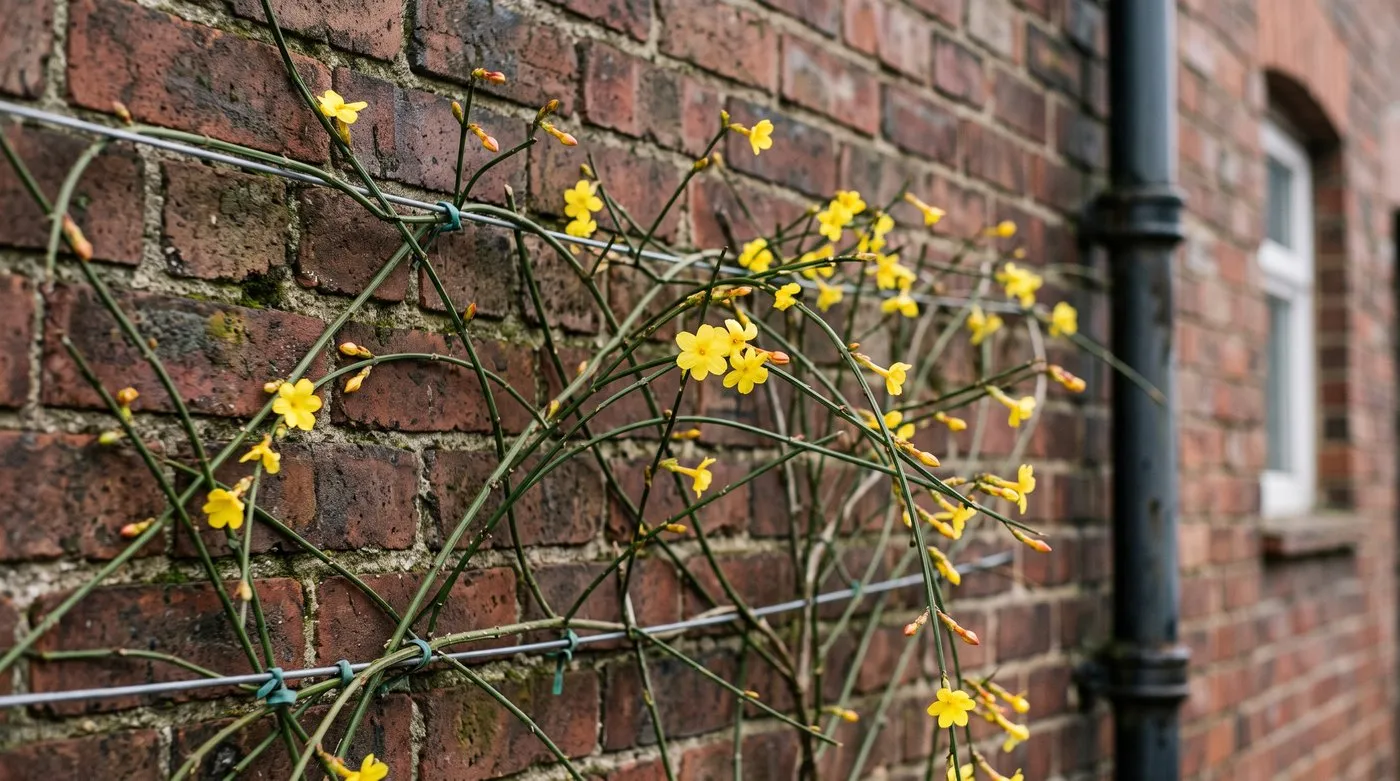
Winter jasmine doesn’t climb on its own, so tie the long shoots to wires. Prune straight after flowering to keep it tidy.
4. Cyclamen coum
Cyclamen coum has little flowers and round, often silver-patterned leaves in winter. It loves part shade under deciduous trees or shrubs. Rich, well-drained soil stops the tubers sitting wet.
It’s a hardy garden cyclamen, not the tender florist’s cyclamen sold as a houseplant, so don’t mix them up.
Plant it where you can see the tiny flowers from a path or window. Mark the spot before it dies down in summer, so you don’t dig into the tubers by mistake.

5. Sweet box
Sweet box, or Sarcococca, is an evergreen shrub with tiny, wonderfully scented winter flowers. It’s brilliant in shade. Plant it by a door or path so you catch the scent as you pass.
Plant it in spring or autumn. Pot-grown plants can go in at other times if the soil isn’t frozen or bone dry and you keep them watered.
Check the label, as size varies between types. A compact one suits a pot or narrow bed. Bigger ones need more room than the little pot at the garden centre suggests.
6. Witch hazel
Witch hazel has spidery, scented flowers along its bare branches. It’s a real showstopper, but it isn’t a tiny shrub. Plan for its final spread before you plant.
It likes well-drained, neutral to acid soil and shelter from cold winds. On chalky soil, pick a different shrub rather than fighting it.
Plant it where low winter sun lights up the flowers. A dark evergreen behind it makes yellow and pale varieties glow. Don’t prune it hard, as its natural shape is part of its charm.

7. Winter-flowering viburnum
Several viburnums flower in the colder months. Viburnum × bodnantense varieties have clusters of pink or white scented flowers on bare stems. They suit a mixed shrub border with room to grow.
Hard frost can brown the open flowers, but more buds often follow. Plant it where you can see it from indoors or along a path you use every day.
Viburnums vary a lot, so check the full name on the label rather than buying a generic one. Our guide to winter-flowering shrubs compares more options.

8. Mahonia
Mahonia gives you evergreen structure and upright spikes of yellow flowers. Some winter varieties are scented too. The leaves are spiny, so keep it back from narrow paths and where children play.
Many mahonias cope with part shade. Sizes vary a lot, from compact types to big architectural shrubs. Check the label and give it the room it needs.
Prune only when you need to, at the time the label suggests. Wear gloves, as the leaves are sharp.
9. Winter aconite
Winter aconites have little yellow flowers sitting on frilly green ruffs. They spread into low carpets under deciduous plants, where the soil stays moist but drains well.
They vanish below ground after spring. Mark young clumps so you don’t dig them up. Plant them among snowdrops for a sweet yellow and white display.
Buy them from a good supplier. Never dig plants up from woods, verges or anyone else’s land.
10. Reticulate iris
Reticulate irises are small bulbs with vivid flowers in late winter or early spring. They like sunny spots with sharp drainage, or pots kept out of the worst winter wet.
Plant them at the depth and spacing on the packet. In heavy soil, a raised bed or pot works better. Put pots near a window, then move them aside once the leaves die down.
Let the leaves turn yellow naturally after flowering, as they feed next year’s bulb.
How to choose the right winter plant
Start with the spot, not the photo on the label. Notice the winter light, how well the soil drains, and how much room there is. Then pick a plant that will fit when it’s fully grown.
For part shade
Hellebores, snowdrops, Cyclamen coum and sweet box are great places to start. They still need decent drainage and some moisture, so shade alone isn’t enough.
For a sunny wall
Train winter jasmine on wires, with room to prune. A sheltered wall also makes small winter flowers easier to enjoy. Keep stems away from vents. For an evergreen wall shrub, garrya has long silver-green catkins from January.
For winter scent
Plant sweet box, witch hazel or scented viburnum by a path you use. Scent carries differently with the cold and wind. One shrub in the right place does more than several hidden at the bottom of the garden.
For pots
Compact hellebores, hardy cyclamen and reticulate irises all work in pots. Use pots with good drainage holes and compost that suits the plant. Raise pots on feet so water can drain away.
Roots in pots get colder, hotter, wetter and drier than roots in the ground. Check the compost in dry, windy weather, and never leave a winter pot standing in water.
Build a longer winter display
Mix plants that work at different heights and times. Snowdrops and cyclamen cover the ground. Hellebores fill the middle. Jasmine climbs a wall, and scented shrubs add height.
Evergreen leaves make a backdrop that shows off the flowers. Ferns, grasses and clipped evergreens hold things together between flushes of flowers. Don’t overdo it, or the small flowers get lost.
Repeat a few plants rather than buying one of everything. Three groups of snowdrops look better than single bulbs dotted about. Repeating one hellebore colour ties separate beds together.
Have a wander round the garden in winter before you plan. Notice where the sun falls and which paths you use. A plant by the kitchen window will give you far more joy than one hidden in a far corner.
Planting and winter care
Autumn and spring are the best times to plant hardy pot-grown plants. Avoid frozen, waterlogged or very dry soil. Water the root ball before planting, and set it level with the ground.
Mulch around shrubs and perennials, but don’t pile it against stems or crowns. Mulch holds moisture and feeds the soil, but it can’t fix a waterlogged spot.
After snow, let it melt on low plants by itself. Gently prop up a bent shrub branch only if you can do it safely. Don’t knock frozen evergreen leaves, as they bruise and snap.
Leave some seed heads and stems standing if they look good. Remove anything diseased or blocking a path. Save big pruning jobs for the right time for each plant.
Common mistakes to avoid
- Buying a big shrub without checking how wide it grows.
- Planting shade-lovers in dry soil under dense evergreens.
- Burying hellebore crowns under thick, wet mulch.
- Leaving winter jasmine with nothing to hold on to.
- Mixing up hardy garden cyclamen with tender houseplant cyclamen.
- Planting bulbs in heavy soil without improving the drainage.
- Hiding small flowers where nobody sees them in winter.
- Expecting exact flowering dates whatever the weather.
Good winter planting isn’t about filling every gap. It’s about putting reliable plants where you’ll actually notice their flowers, scent and shape.
Browse more UK plant guides or plan some pots with our winter container planting guide.
Frequently asked questions
Which flowers bloom in winter in the UK?
Hellebores, snowdrops, winter jasmine, Cyclamen coum and sweet box are reliable choices. The exact flowering time depends on the plant, where you live and the weather that year.
What is the best winter flower for shade?
Hellebores are the best for most part-shaded borders. They like moist, well-drained soil. Snowdrops and Cyclamen coum enjoy the same woodland-style spots, so they make great companions.
Can winter flowering plants grow in pots?
Yes, compact hellebores, cyclamen and winter bedding all suit pots. Make sure the pot has drainage holes, and don’t let the compost dry out.
When should I plant snowdrops?
Plant them just after flowering, while they’re still in leaf. This is called planting in the green. You can also plant freshly lifted bulbs as the leaves die back. Plant them promptly so the bulbs don’t dry out.
Which winter flowering shrub has scent?
Sweet box and witch hazel both smell lovely in winter. Check the final size before you buy, as sweet box stays compact while witch hazel gets much bigger.
Our team produces practical UK gardening guidance from source research, contributor records and established horticultural practice. Editorial standards are overseen by Matt W.


