
Key takeaways
- Autumn is the best time to plant, because warm, moist soil helps roots settle before winter
- Plant daffodils and crocus in September and October, and tulips in November
- Scarify, aerate and overseed the lawn in September
- Bag up fallen leaves to make free leaf mould in a year or two
- Leave some seedheads and leaf litter for birds, insects and hedgehogs
- Lift or protect dahlias and other tender plants once frost blackens the leaves
Autumn is the best planting season in the UK garden. The soil is still warm from summer, the rain comes back, and roots keep growing even as the leaves fall. It’s also the time to put the lawn right, plant bulbs for spring and tuck tender plants away before frost.
This checklist covers September to November, area by area, with a month-by-month table near the end. For the rest of the year, see the summer gardening jobs checklist and its spring and winter partners. If you want ideas for exactly what to put in the ground, the guide to what to plant in October lists flowers, veg and fruit for the month.
What to plant in autumn
Planting is the most worthwhile autumn job. Plants put in now settle in over winter and grow away strongly in spring.
Trees and shrubs
Plant container-grown trees and shrubs from September. Bare-root trees and shrubs arrive from November and can go in any time the ground isn’t frozen or waterlogged until March. They are usually cheaper than potted plants and settle in just as well. If you can’t plant straight away, heel them into a spare patch of soil so the roots don’t dry out.
Stake trees low, about a third of the way up the trunk. A little movement helps the trunk thicken and strengthen.
Hedges
Autumn and winter are perfect for planting a new hedge. Bare-root hawthorn, beech, hornbeam and mixed native hedging are good value. Plant about three per metre in a single row, or five per metre in a staggered double row for a thicker hedge.
Perennials
Lift and divide overgrown clumps of perennials in September and October. Split them with a fork or spade, keep the lively outer pieces and replant at the same depth. Water well. Autumn is also a good time to move perennials and shrubs that are in the wrong spot.
Planting spring bulbs in autumn
Spring bulbs are the easiest autumn win. Pop them in now and forget them until they flower.
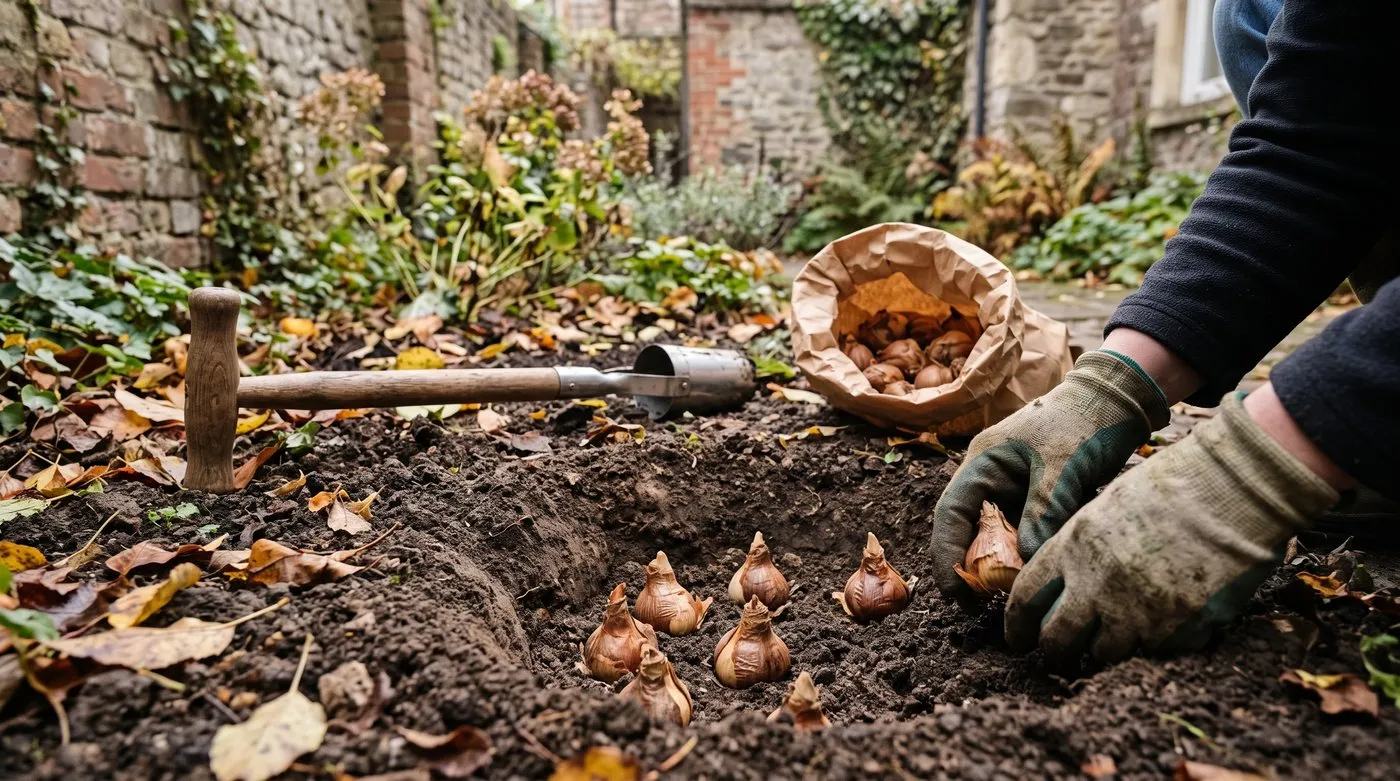
Set daffodil bulbs pointed end up, about 15cm deep. A big hole with a group of bulbs gives a better show than a single row.
| Bulb | When to plant | Depth | Spacing |
|---|---|---|---|
| Daffodils | September to October | About 15cm | 10-15cm |
| Crocus | September to October | About 8cm | 5-8cm |
| Alliums | September to October | About 15cm | 15-20cm |
| Hyacinths | September to October | About 10cm | 10cm |
| Tulips | November | 15-20cm | 10-12cm |
Tulips go in last, in November. Planting them once the soil has cooled helps avoid tulip fire, a fungal disease that leaves brown, scorched-looking patches on leaves and flowers. Deeper planting can help them come back year after year. The guide to when to plant tulip bulbs has more on timing.
Plant bulbs in generous groups of one variety for the best show. Alliums, daffodils, tulips and hyacinths are all harmful to cats and dogs if eaten, so keep spare bulbs bagged up and out of reach.
Autumn lawn care jobs
Autumn is the best time of year to fix a tired lawn. The soil is warm and moist, so grass recovers quickly.
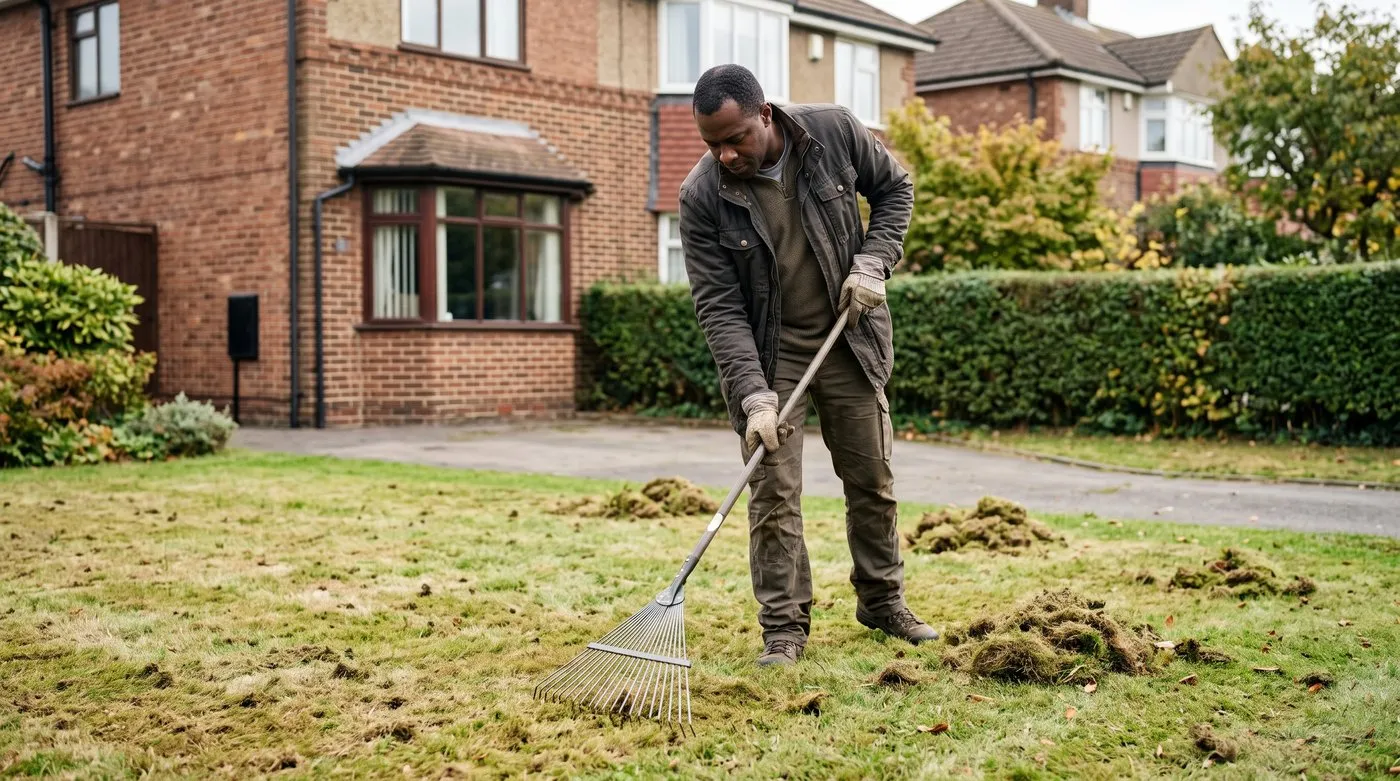
Scarifying pulls out a surprising amount of dead grass and moss. The lawn looks rough for a few weeks, then thickens up.
Scarify in September. Rake out the dead grass and moss with a spring-tine rake, or hire a powered scarifier for a big lawn. It will look rough for a few weeks, then thicken up.
Aerate compacted patches next. Push a garden fork or hollow-tine aerator about 10cm into the soil every 10-15cm. On heavy clay, brush sharp sand into the holes. The guide on how to scarify and aerate your lawn walks through both jobs.
Overseed bare and thin patches in September or early October. Rake the seed in lightly and water if it doesn’t rain for a few days.
Feed with an autumn lawn feed. These are low in nitrogen, so they don’t push soft growth before winter.
Mow less often as growth slows, and raise the blades for the last cuts in October or November. Rake leaves off the grass regularly, as a soggy layer turns the lawn yellow underneath.
Autumn jobs for borders and beds
Cutting back
Cut back perennials that have collapsed or turned to mush. Leave the rest standing. Seedheads on grasses, sedums, echinaceas and rudbeckias look lovely in frost and feed goldfinches and other birds. Insects shelter in hollow stems too.
Mulching
Mulch borders in late autumn with 5-8cm of garden compost, well-rotted manure or bark. Keep it a few centimetres away from stems. Mulch keeps weeds down, protects roots from frost and is pulled into the soil by worms over winter.

Spread mulch on damp soil, about 5-8cm deep. It feeds the soil, smothers weed seedlings and keeps roots snug in frost.
Protecting tender plants
Lift dahlia tubers once the first frost blackens the leaves. Cut the stems back to about 15cm, turn the tubers upside down for a few days to drain, then store them in dry compost somewhere cool and frost-free. In milder gardens you can leave them in the ground under a thick mulch instead.
Wrap the crowns of tender plants like tree ferns with straw or fleece. Move pots of tender plants into a greenhouse, porch or against a sheltered house wall.
Fruit garden jobs in autumn
Plant fruit trees as bare-root plants from November. Apples, pears, plums and cherries all establish well when planted in late autumn and winter.
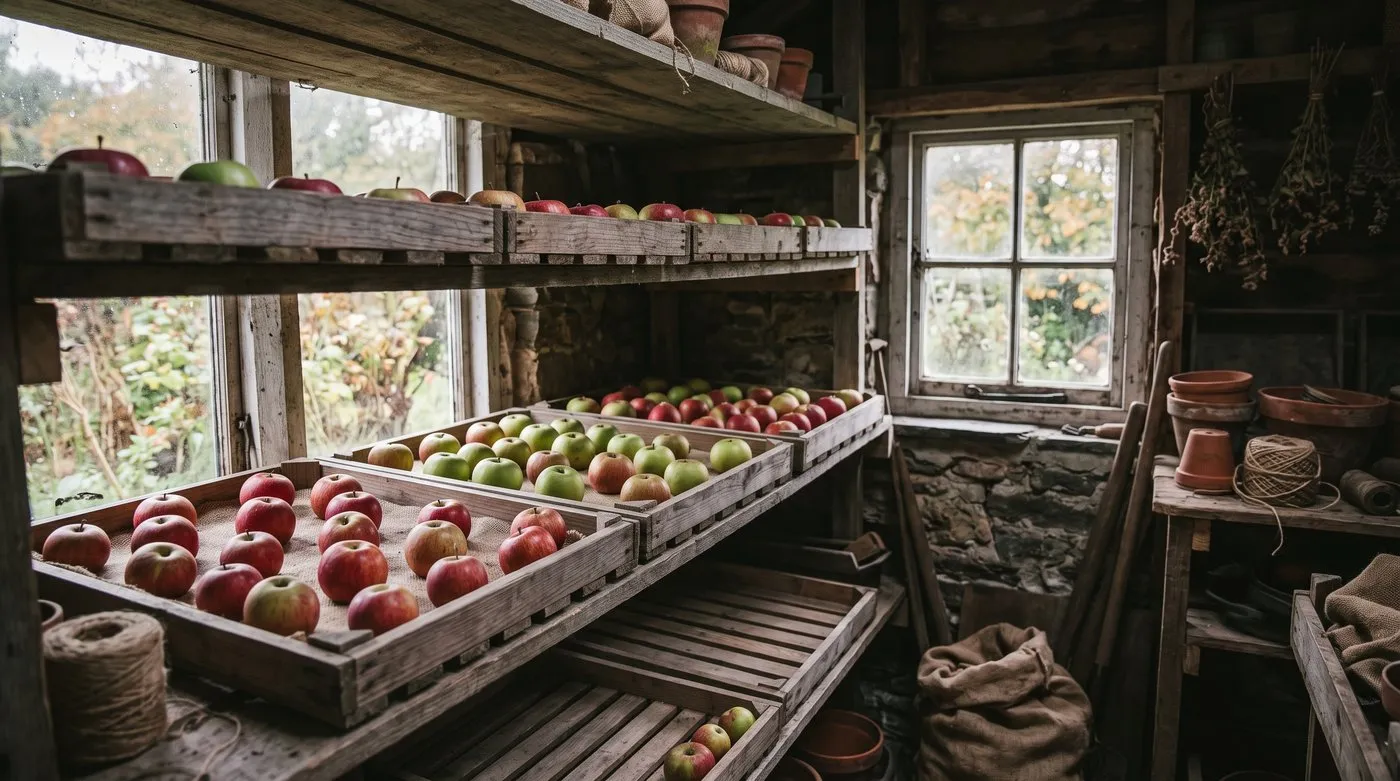
Store only perfect apples, in single layers so they don’t touch. Check them every week or two and remove any that turn.
Prune summer-fruiting raspberries once they’ve finished cropping. Cut the canes that fruited to the ground, and tie in this year’s new green canes to fruit next summer.
Prune blackcurrants once the leaves have fallen. Remove about a third of the oldest, darkest stems at the base to make room for young, fruitful shoots.
Store apples that are perfect, with no bruises or holes. Lay them in single layers, not touching, somewhere cool, dark and airy. Check them often and remove any that start to rot. Late varieties keep much longer than early ones.
Fallen leaves, leaf mould and compost
Autumn gives you more free soil improver than any other season.
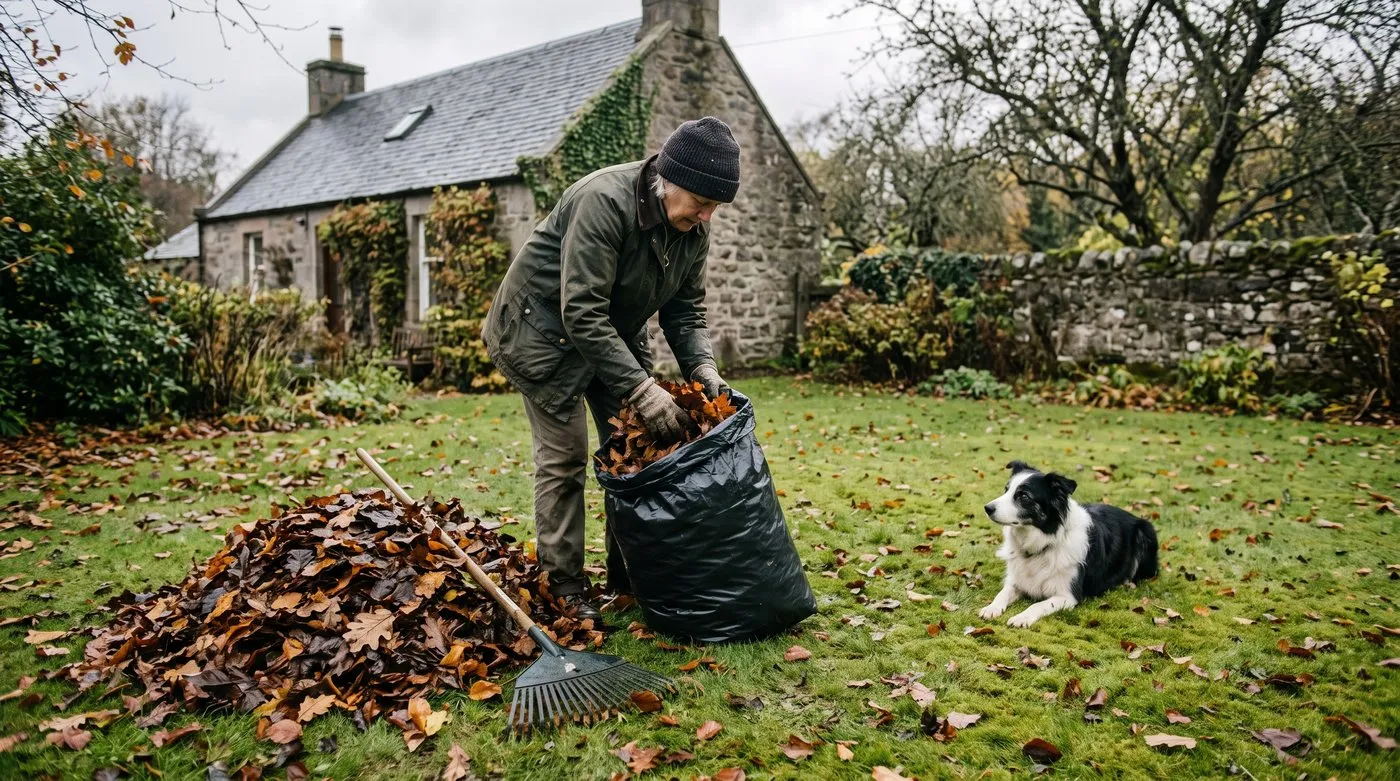
Damp leaves packed into a bag with a few holes punched in will turn into crumbly leaf mould with no further effort.
Leaf mould is the easiest. Rake fallen leaves off lawns and paths, pack them damp into bin bags with a few holes punched in, and stack them somewhere out of the way. In one to two years they turn into dark, crumbly leaf mould for potting mixes and mulch. The guide on how to make leaf mould covers bins and quicker methods.
Compost the spent bedding, veg plants and soft stems you cut back. Turn the heap in autumn to get air in, and water it if it’s dry. Keep out perennial weed roots and anything with clubroot or onion white rot, which can survive in a home heap. Put those in your council garden waste bin instead.
Autumn wildlife jobs
A slightly untidy garden is a far better winter home for wildlife.
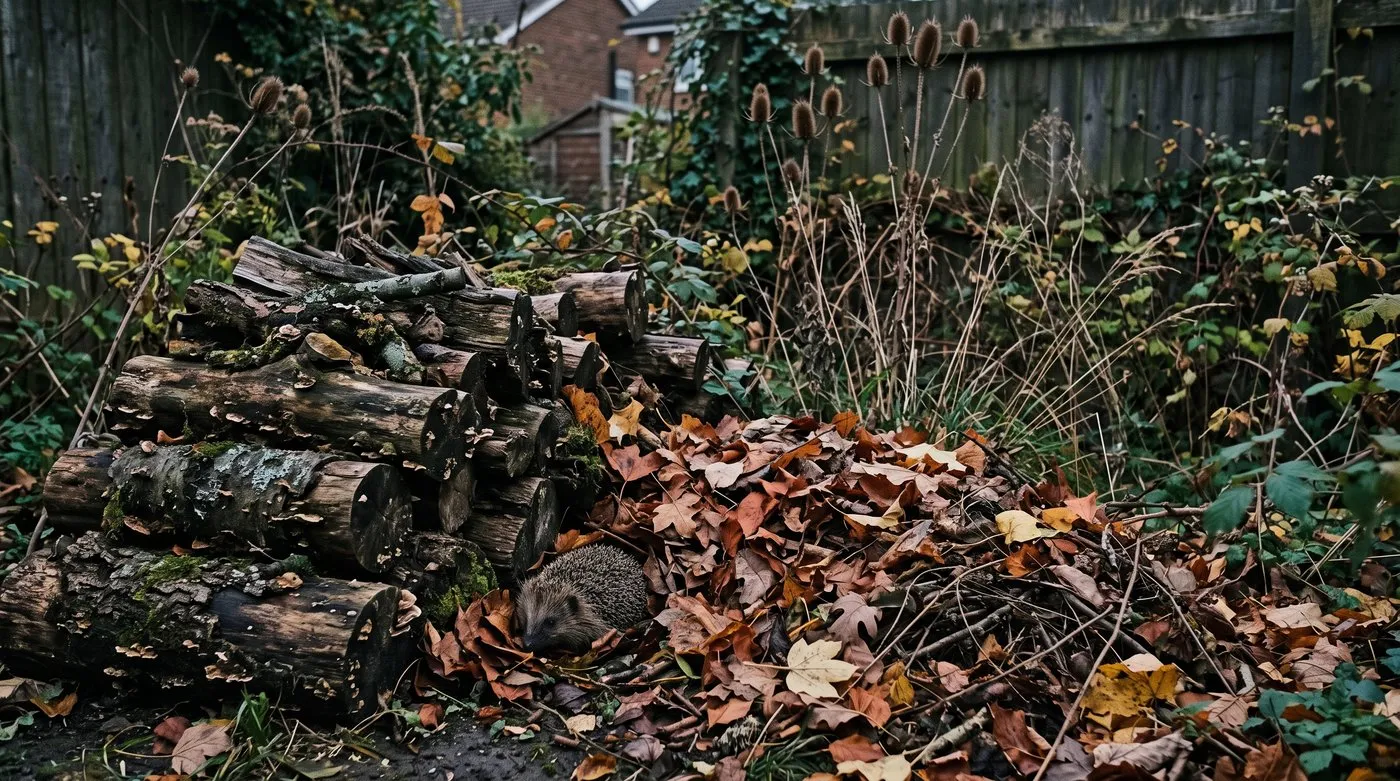
An untidy corner with logs and leaves gives hedgehogs, frogs and beetles a safe place to spend the winter.
- Check bonfire piles before lighting them, as hedgehogs crawl in to sleep. Better still, build the pile on the day you burn it.
- Leave log piles and leaf litter alone. Frogs, toads, beetles and other insects shelter in them through winter.
- Leave seedheads on sunflowers, teasels and grasses for goldfinches and other seed-eating birds.
- Clean and fill bird feeders from October, and keep a shallow dish of fresh water topped up.
- Trim hedges before winter if they need it, once birds have finished nesting. Avoid cutting from March to August, when birds are most likely to be nesting.
Getting the pond ready for winter
Net the pond in September, before the leaves drop. Rotting leaves in the water make it murky and starve it of oxygen, which is bad for fish and other pond life. Take the net off once the leaves have fallen.
Cut back marginal plants such as irises and marsh marigolds to a few centimetres above the water, and remove dead lily leaves. Leave a few hollow stems standing for insects to shelter in.
Feed fish less as the water cools, and stop feeding altogether once the weather turns cold. Fish barely eat in winter, and uneaten food fouls the water.

A fine net over the pond catches the leaves before they sink. Lift it off once the trees are bare.
Tools, greenhouse and structures
Clean tools in November before you put them away. Scrape off soil, wipe metal parts with an oily rag and sharpen anything blunt.
Check fences, sheds and supports before the winter gales. Tighten loose panels, check ties on trees and climbers, and clear gutters.
Clean the greenhouse inside and out in October so plants get as much winter light as possible. Fix cracked panes and draughty gaps, then line it with bubble insulation if you keep tender plants inside.
Month-by-month autumn checklist
| Task | September | October | November |
|---|---|---|---|
| Plant shrubs and perennials | Yes | Yes | If soil is workable |
| Plant bare-root trees and hedges | - | - | Start now |
| Plant bulbs | Daffodils, crocus, alliums | Daffodils, crocus, alliums | Tulips |
| Divide perennials | Yes | Yes | - |
| Scarify, aerate, overseed lawn | Best month | Early October | - |
| Last mows | - | Raise the blades | Final cut if growing |
| Collect leaves | Start | Busiest | Finish |
| Lift dahlias | - | After first frost | After first frost |
| Mulch borders | - | Yes | Yes |
| Net the pond | Yes | Keep on | Remove once leaves are down |
| Clean greenhouse | - | Yes | Insulate |
| Clean and store tools | - | - | Yes |
Common autumn gardening mistakes
- Planting tulips too early. Tulips planted into warm September soil are more prone to tulip fire. Wait until November.
- Tidying everything away. A bare, spotless garden leaves birds, insects and hedgehogs with nowhere to feed or shelter. Leave some seedheads and leaf litter until late winter.
- Skipping lawn care. Autumn work on the lawn gives better results than the same jobs in spring. September is the month to do it.
- Leaving tender plants out too long. One sharp frost can turn dahlias and cannas to mush. Lift or protect them in good time.
- Composting problem material. Perennial weed roots and clubroot-infected brassica roots can survive a home heap. Bin them instead.
Frequently asked questions
What is the most important autumn gardening job?
Planting is the most important autumn job. Trees, shrubs, hedges and perennials planted now settle in while the soil is still warm and moist. They then start spring with roots already growing, and need far less watering next summer.
When should I plant spring bulbs?
Plant daffodils, crocus and alliums in September and October. Plant tulips in November, as later planting helps avoid a disease called tulip fire. As a rough rule, plant bulbs two to three times their own height deep, pointed end up.
Should I cut back perennials in autumn?
Cut back the ones that have collapsed or gone mushy, and leave the rest. Grasses, sedums, echinaceas and rudbeckias look good through winter and feed birds and shelter insects. Cut them back in late winter, before new growth appears.
When should I scarify the lawn?
September is the best month to scarify a lawn. The soil is warm, the grass is still growing, and autumn rain helps it recover. Scarify first, then aerate, overseed thin patches and give an autumn lawn feed.
What should I do with fallen leaves?
Rake them off lawns and paths and turn them into leaf mould. Pack damp leaves into bin bags with a few holes punched in, and tuck them somewhere out of the way. In one to two years they become a lovely crumbly soil improver.
Can I still sow seeds in autumn?
Yes, hardy annuals, green manures and grass seed all go in now. Sow cornflowers, nigella and poppies in September for earlier flowers next year. Sow green manures on empty veg beds, and sow lawn seed in September or early October.
Autumn jobs done? Carry the momentum on with the winter gardening jobs checklist, or browse more seasonal guides on the how-to hub. The RHS garden jobs finder is handy for month-by-month reminders too.
Our team produces practical UK gardening guidance from source research, contributor records and established horticultural practice. Editorial standards are overseen by Matt W.


