Key takeaways
- Plant garlic and autumn onion sets now for the earliest crops next summer
- Finish daffodils, crocuses and hyacinths early in October, then start tulips late in the month
- Sow hardy broad beans such as Aquadulce Claudia or The Sutton in a sheltered spot
- Plant wallflowers and other spring bedding while the soil is still warm
- Autumn raspberry canes and the first bare-root fruit bushes can go in from late October
October is the big autumn planting month. Garlic, onion sets and spring bulbs all go in now, while the soil is still warm from summer. Roots grow through autumn and winter, so these crops and flowers get a flying start in spring.
This guide covers what to plant and sow in October, plus what to pick and store. If you’re catching up, September’s planting guide covers spring cabbage, winter salads and early bulbs.
Vegetables to plant in October
October planting is about cloves, sets and hardy seeds that sit through winter. These give the first harvests of next year.
Garlic
Garlic planted in October builds roots before winter. It needs a cold spell to split into separate cloves, and a UK winter provides it.
Split the bulb and push each clove in pointed end up, tip about 2.5cm below the surface. Space them 15cm apart in rows 30cm apart. Pick a sunny, well-drained spot. On heavy clay, use a raised bed or start cloves in modules and plant out later.
Good varieties to try:
- ‘Solent Wight’: a softneck that stores well
- ‘Lautrec Wight’: a pink-skinned hardneck with a strong flavour
- Elephant garlic: a close relative of the leek, with huge, mild cloves
Buy seed garlic from a garden supplier, not the supermarket. Shop garlic may carry disease or be suited to a much warmer climate. The guide to growing garlic covers aftercare and harvest.
Autumn onion sets
Autumn onion sets are small onions bred to sit through winter. They’re ready in early summer, well before spring-planted onions.
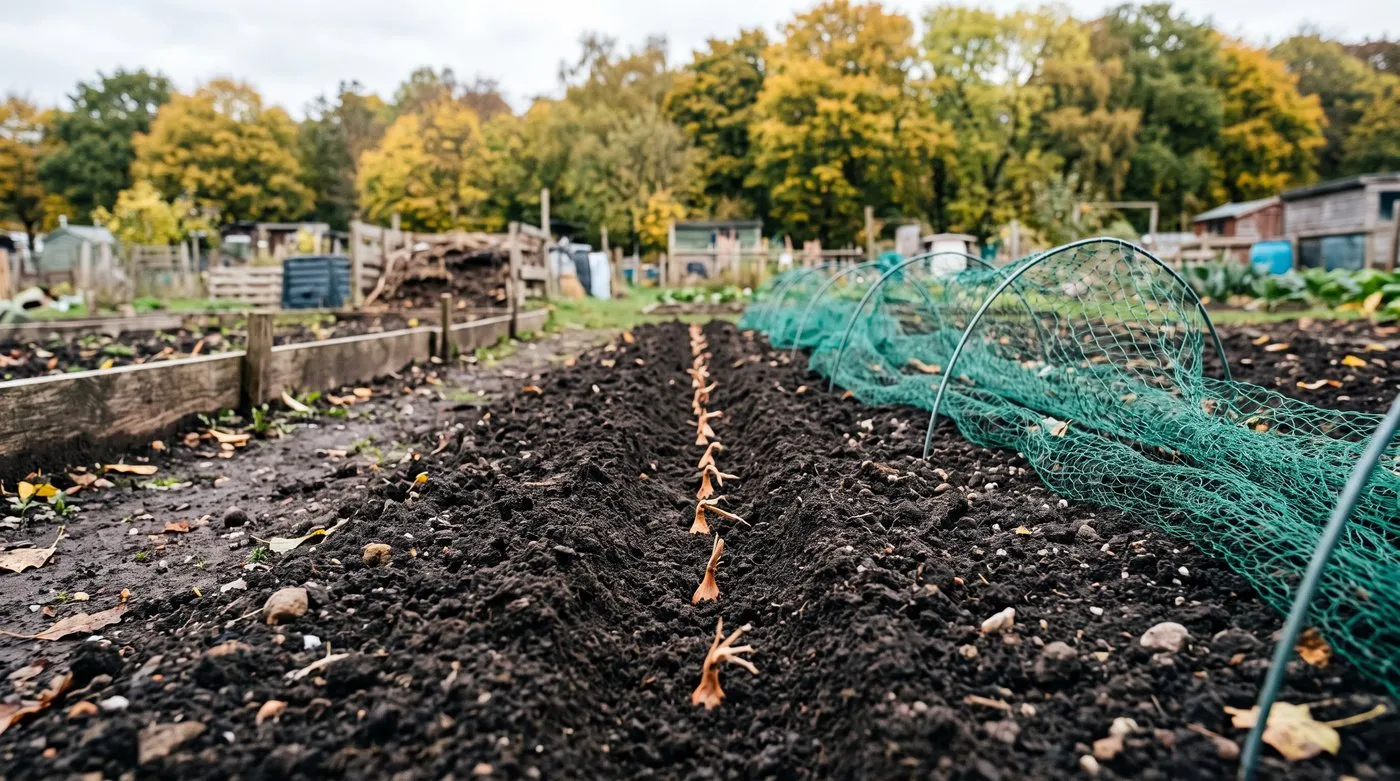
Plant sets with just the tips showing, then net them. Birds love to tug them out before they’ve rooted.
Plant sets 10cm apart in rows about 25cm apart, with the tips just showing. Birds love to pull them out, so cover with netting or fleece until they root. ‘Radar’ and ‘Shakespeare’ are reliable choices. The guide to autumn onion sets has more on varieties and spacing.
Broad beans
Hardy broad beans sown in October sit through winter as small plants and crop early next summer. Choose a sheltered, well-drained spot.
Sow seeds 5cm deep and 20cm apart in double rows. ‘Aquadulce Claudia’ is the classic autumn variety. ‘The Sutton’ is short and bushy, so it suits windy sites and pots. If your soil stays cold and wet, wait until November and sow in deep pots under cover.
Rhubarb crowns
Rhubarb crowns can be planted from October. Dig in plenty of well-rotted manure first, as rhubarb is a hungry plant. Plant with the bud at soil level, not buried, 90cm apart. Don’t pick any stems in the first year.
Spring bulbs to plant in October
October is when most of next spring’s colour goes in. Get the early bulbs in first, then move on to tulips.
Daffodils, crocuses and hyacinths
Daffodils, crocuses and hyacinths should be in the ground early in October. They like a long time to root before winter. Plant daffodils about 10-15cm deep, crocuses about 8cm deep and hyacinths about 10cm deep. As a rule, plant any bulb at two to three times its own height. The guide on when to plant spring bulbs covers each type.
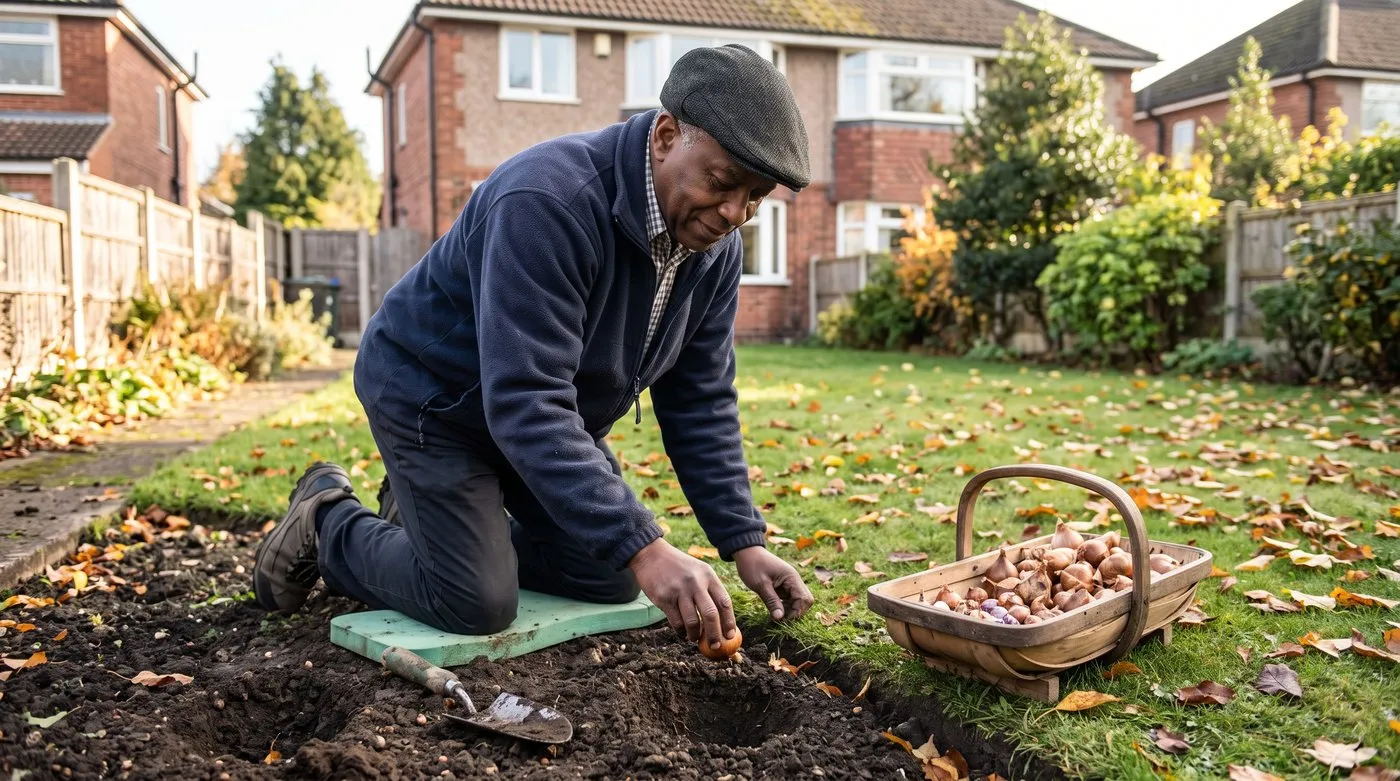
Daffodils like a long time to root, so plant them early in October. Aim for two to three times the bulb’s height.
Tulips
Tulips prefer to go in later than other bulbs, from late October into November. Cooler soil helps prevent tulip fire, a fungal disease that distorts leaves and rots bulbs.
Plant tulips about 15cm deep, 10-15cm apart, in well-drained soil. Deep planting also deters squirrels. Groups of at least ten or so look far better than single bulbs dotted about. The guide on when to plant tulip bulbs has timing for pots and borders.
Flowers to plant and sow in October
Wallflowers and spring bedding
Wallflowers planted in October settle in well while the soil is warm. Plant them about 25-30cm apart in a sunny spot and firm them in. Forget-me-nots, winter pansies, violas and primroses can go into borders and pots now too.
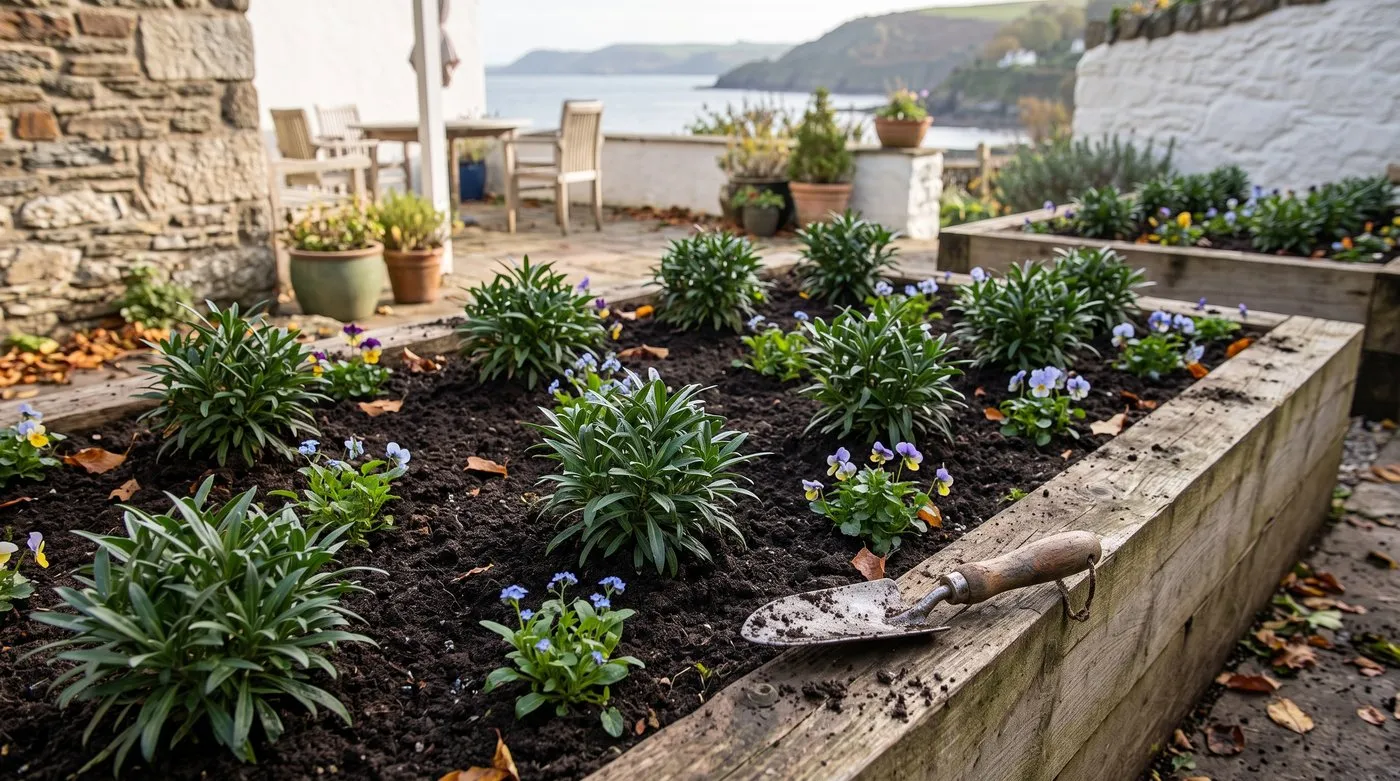
Wallflowers planted while the soil is warm root in quickly. By spring they’re bushy and full of scented flowers.
Sweet peas
Sweet peas sown in October grow into tough little plants that flower earlier next summer. Sow one or two seeds per deep pot or root trainer, 2cm deep. Keep them in a cold frame or unheated greenhouse over winter. The guide to autumn sowing sweet peas explains how to stop them growing too soft.
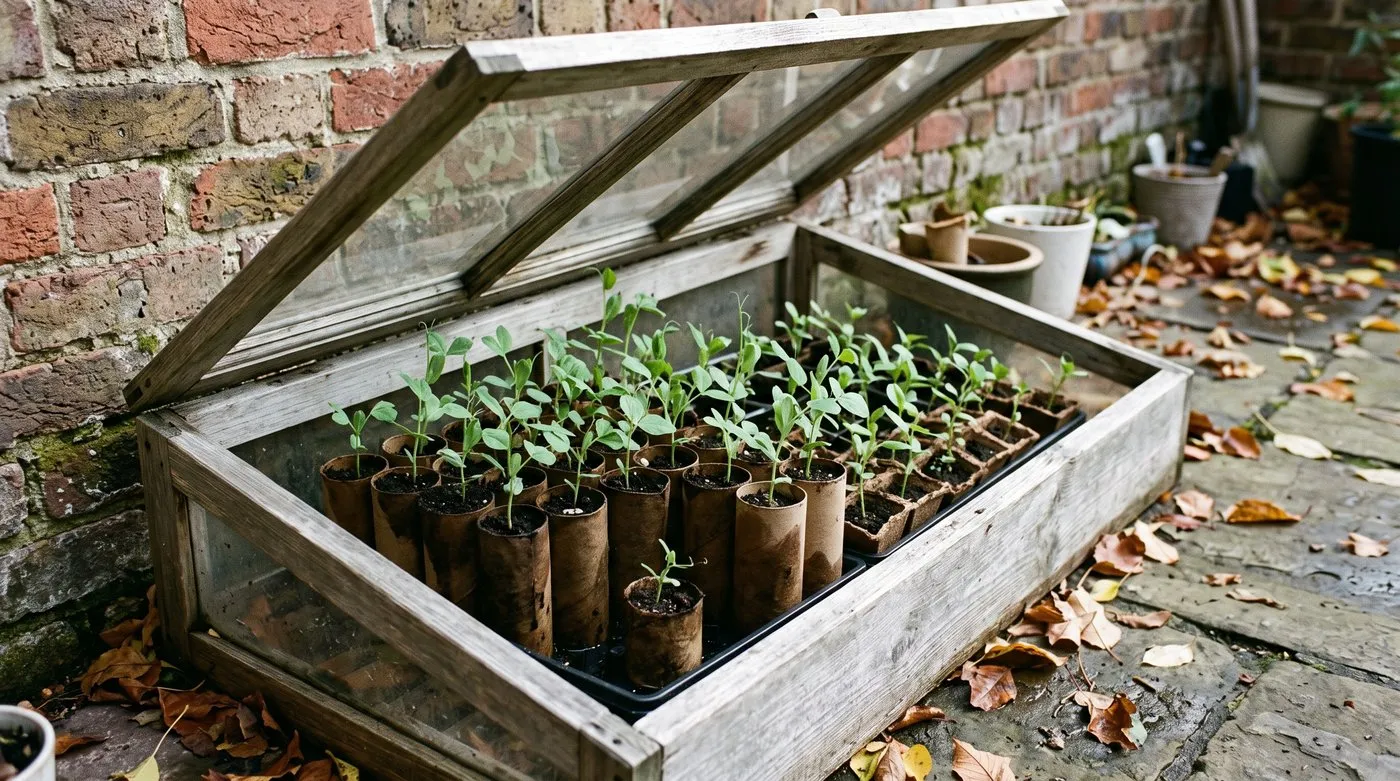
Autumn-sown sweet peas spend winter in a cold frame. They grow into tough plants that flower earlier next summer.
Hardy perennials
Hardy perennials can be planted or divided in October while the soil is still warm. Water them in well. In heavy, wet soil, it’s often better to wait until spring.
Lifting dahlias and moving tender plants
Once the first frost blackens dahlia leaves, cut the stems to about 15cm and lift the tubers. Dry them upside down for a few days, then store in dry compost somewhere cool and frost-free. Move pelargoniums, fuchsias and other tender plants in pots under cover before frosts start.
Fruit to plant in October
Bare-root season starts in late October, so it’s a good time to begin a fruit patch.
Autumn raspberries
Autumn-fruiting raspberries such as ‘Autumn Bliss’, ‘Polka’ and ‘Joan J’ can be planted from October. They fruit on canes grown the same year, so you cut them all down to the ground in late winter. Plant canes 45cm apart in soil enriched with well-rotted manure. They rarely need wires, except on windy sites. The guide to growing autumn raspberries covers pruning and picking.
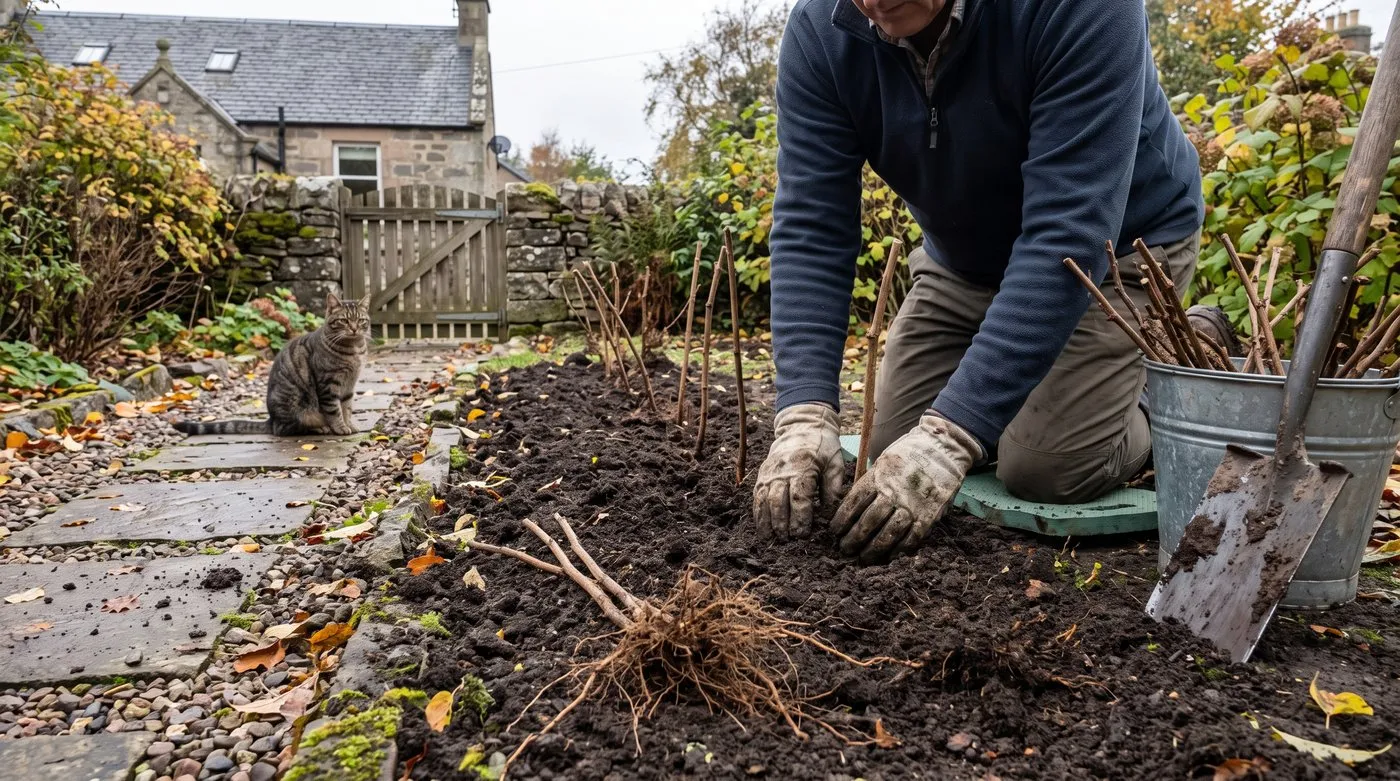
Autumn raspberries fruit on this year’s canes. Plant them 45cm apart and cut them all down in late winter.
Fruit bushes and trees
The first bare-root gooseberries and currants arrive in late October. Space bushes about 1.2-1.5m apart. Plant blackcurrants about 5cm deeper than they grew before, and gooseberries and redcurrants at the same depth.
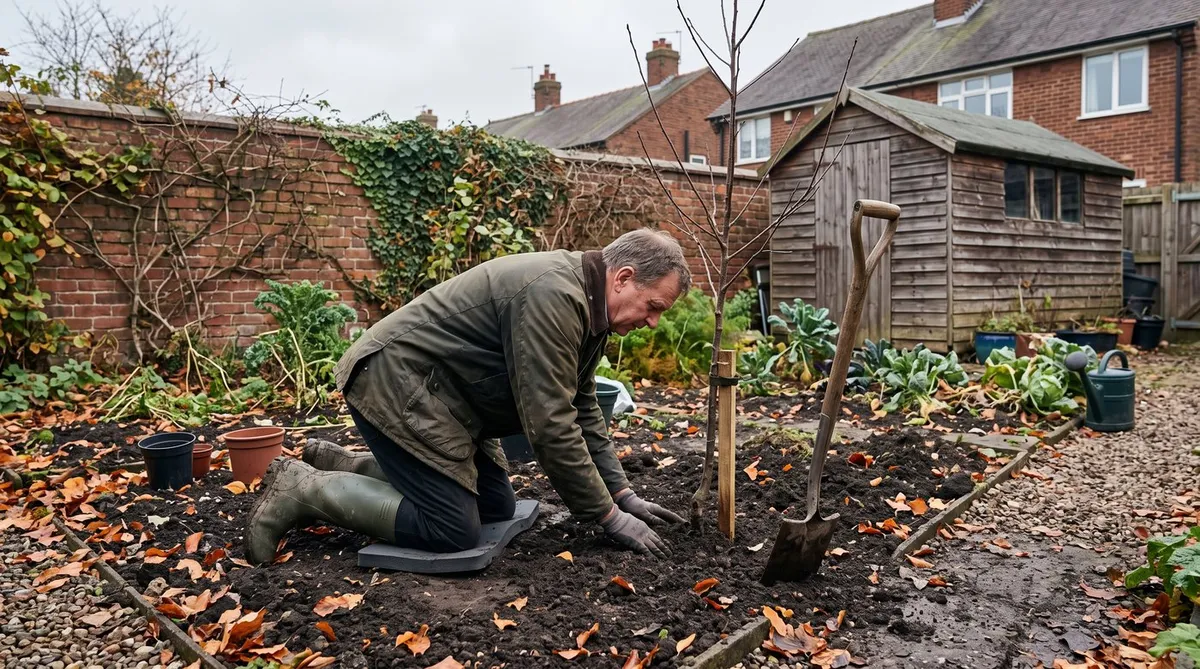
Bare-root fruit trees can be planted once they’re available. Dig a hole wide enough to spread the roots and plant at the depth the tree grew in the nursery, with the graft union well above the soil. Don’t add compost to the hole, as it can hold water in clay soil. Stake on the windward side.
What to harvest and store in October
October brings the last big harvests before winter.
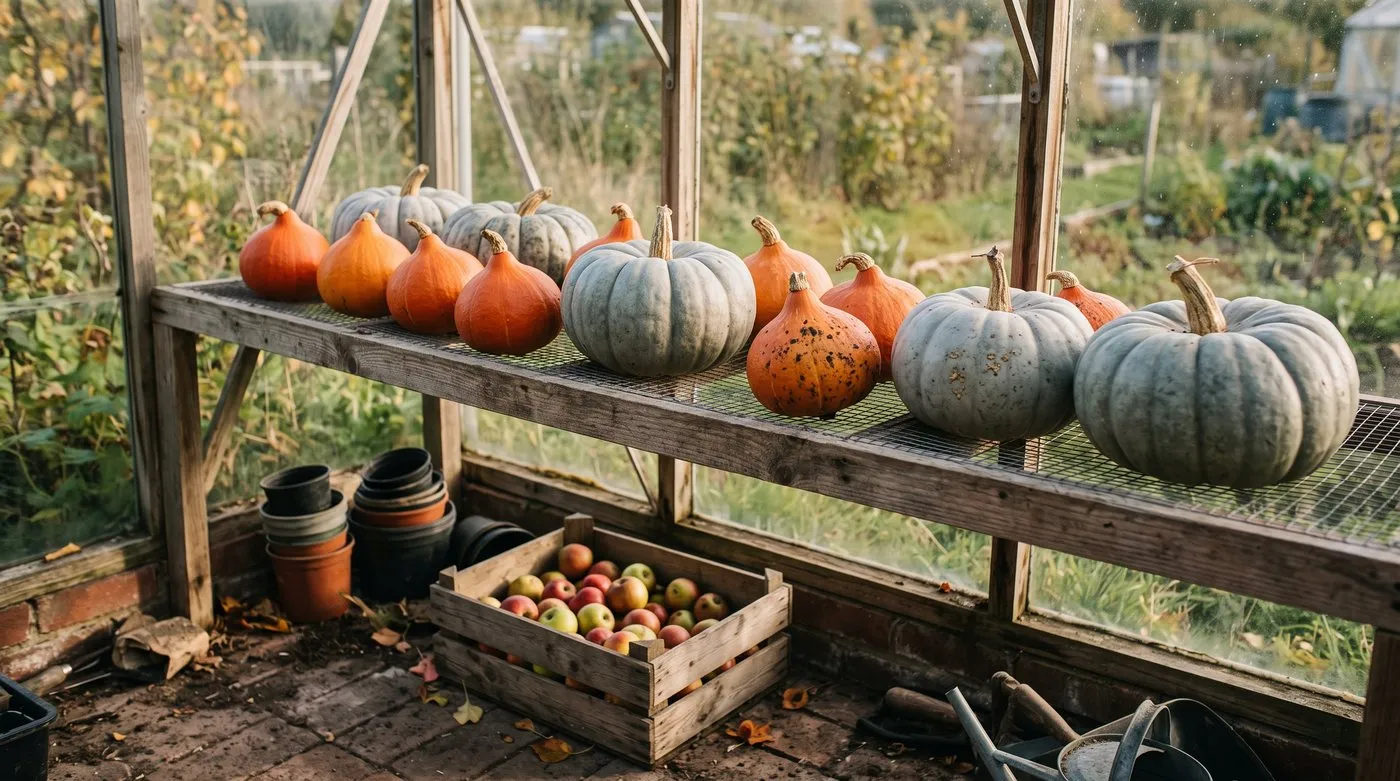
Leave a short stalk on and let squash cure in the sun for a couple of weeks. The skins harden and they store for months.
| Crop | Harvest | Storage |
|---|---|---|
| Apples | Pick when fruit comes away with a gentle lift and twist | Wrap singly or lay apart in trays somewhere cool and frost-free |
| Pears | Pick while still firm and ripen indoors | Check often, as pears ripen fast |
| Winter squash | Cut before frost with a short stalk attached | Cure in a warm, sunny spot for about two weeks, then store somewhere cool and dry |
| Carrots and beetroot | Lift before the soil gets waterlogged | Store in boxes of sand in a cool shed |
| Parsnips and leeks | Leave in the ground | Lift as needed through winter |
October planting at a glance
| When | Plant or sow | Also |
|---|---|---|
| Early October | Daffodils, crocuses, hyacinths, onion sets | Last chance to sow grass seed in mild areas |
| Mid October | Garlic, broad beans, wallflowers, sweet peas | Move tender plants under cover |
| Late October | Tulips, rhubarb crowns, autumn raspberries | Lift dahlias after the first frost |
| Into November | More tulips, bare-root fruit bushes | Store apples and squash |
Common October planting mistakes
Planting tulips too early or too shallow. Warm soil invites tulip fire, and shallow bulbs get dug up by squirrels. Wait until late October and plant about 15cm deep.
Leaving daffodils until last. Daffodils want a long rooting time. Plant them first and tulips last.
Planting garlic and onions in wet soil. They rot over winter. Use raised beds or start garlic in pots on heavy clay.
Using supermarket garlic. It’s often unsuited to UK winters. Buy seed garlic instead.
Burying the rhubarb bud. The crown rots if it’s planted too deep. Keep the bud at soil level.
Frequently asked questions
What vegetables can I plant in October in the UK?
Garlic, autumn onion sets, broad beans and rhubarb crowns. They root over winter and give you the earliest crops next year. Choose a sunny, well-drained spot, as wet soil rots them.
Can I plant tulip bulbs in October?
Yes, from late October onwards. Cooler soil helps prevent tulip fire, a fungal disease, so there’s no rush. Plant about 15cm deep in well-drained soil. Daffodils and crocuses should go in first.
Is October too late for daffodil bulbs?
No, early October is fine for daffodils. Plant them about 10-15cm deep, at least twice the bulb’s own height. They do best planted by mid-autumn, so don’t leave them in the bag.
Can I sow broad beans in October?
Yes, hardy varieties such as Aquadulce Claudia and The Sutton can be sown now. Sow 5cm deep and 20cm apart in a sheltered, well-drained spot. On cold, wet soil, sow in November in pots under cover instead.
When should I plant onion sets in autumn?
September to October is the usual window for autumn onion sets. Plant varieties bred for overwintering, such as Radar or Shakespeare. Space them 10cm apart, with the tips just showing, and net them against birds.
Is October too late to sow grass seed?
Early October is usually still fine in mild areas. The soil is warm and autumn rain keeps it damp. Later in the month, growth slows, so it’s often better to wait until spring.
When October’s bulbs and cloves are in, move on to what to plant in November as bare-root season gets going. There’s more seasonal help in our growing section.
Our team produces practical UK gardening guidance from source research, contributor records and established horticultural practice. Editorial standards are overseen by Matt W.