Key takeaways
- Autumn raspberries fruit on this year's new canes, so cut the whole row to the ground in February
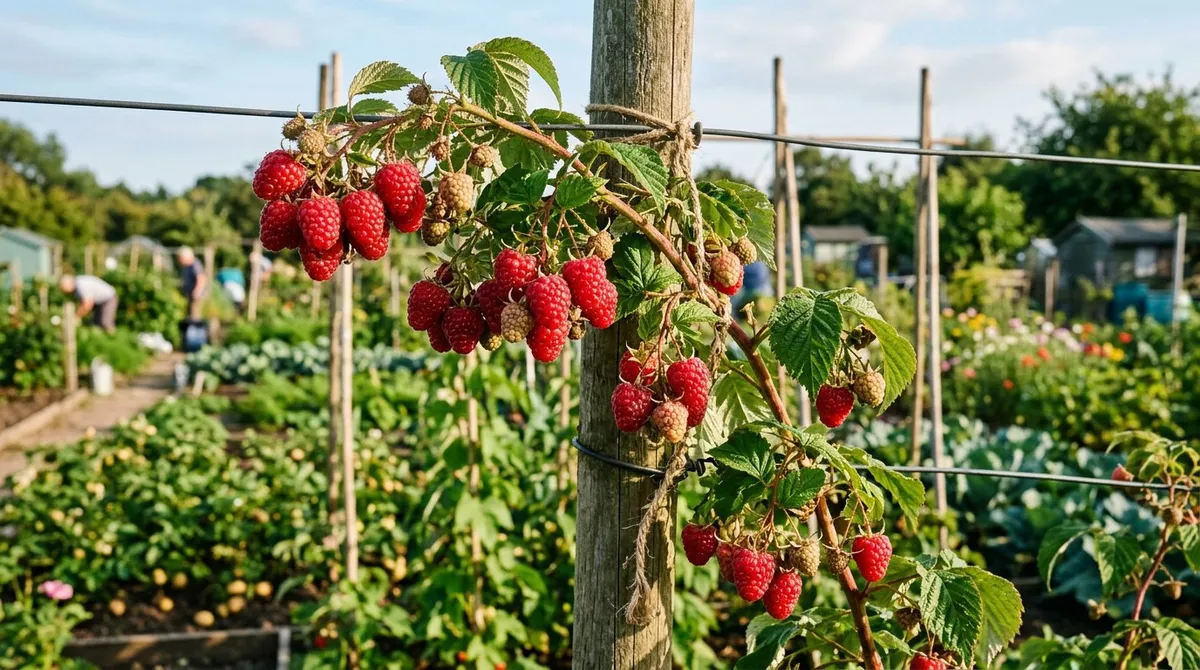
- No posts and wires needed, as the canes are short and mostly stand up by themselves
- Plant bare-root canes November to March, 40 to 45cm apart, in rows 1.5m apart
- Pick every two or three days from mid August until the first hard frost
- They usually get fewer pest problems than summer raspberries
Autumn raspberries are about the easiest soft fruit you can grow. They fruit on canes that grew that same year, not last year’s. That one fact makes life simple. You cut the whole row to the ground each winter, you don’t need posts and wires, and you pick fresh fruit from August until the frosts.
Why autumn raspberries fruit on this year’s canes
Autumn raspberries (sometimes called primocane raspberries) grow a new cane in spring and fruit on it the same year. The canes shoot up in spring, reach full height by midsummer, then flower and fruit at the tips from August.
Summer raspberries work the other way round. Their canes grow one year and fruit the next. That’s why summer types need careful pruning and autumn ones don’t. With autumn raspberries there’s no old wood to keep, so you never have to work out which canes to save.
The canes are also shorter and stiffer, usually about shoulder height, so they hold themselves up. If you’d like to grow summer raspberries too, our guide to growing raspberries in the UK covers them.
When to plant autumn raspberry canes
Plant bare-root canes between November and March, while they’re dormant. Bare-root canes are the cheapest way to start a row, and they settle in quickly because the roots go in before spring growth.
Pick a sunny, sheltered spot. They’ll cope with a little afternoon shade, but avoid frost pockets and windy corners. The soil should hold moisture but drain well, as raspberries hate sitting in water.
They like slightly acid to neutral soil. Before planting, dig in a couple of buckets of well-rotted manure or compost per square metre. On heavy clay, plant on a slight ridge to keep the roots out of winter wet. Our no-dig gardening guide shows how a thick compost mulch builds the kind of soil raspberries love.
Spacing and planting depth
Space canes 40 to 45cm apart in the row, with 1.5m between rows. That gives each cane room and keeps air moving, which helps keep disease away. Plant so the old soil mark on the stem sits level with the ground. Too deep and the plant is slow to send up new canes.
Firm the soil gently and water well. Then cut the cane down to about 25cm, so the plant puts its energy into new roots and shoots. Mulch the row with a few centimetres of compost, keeping it off the stems.
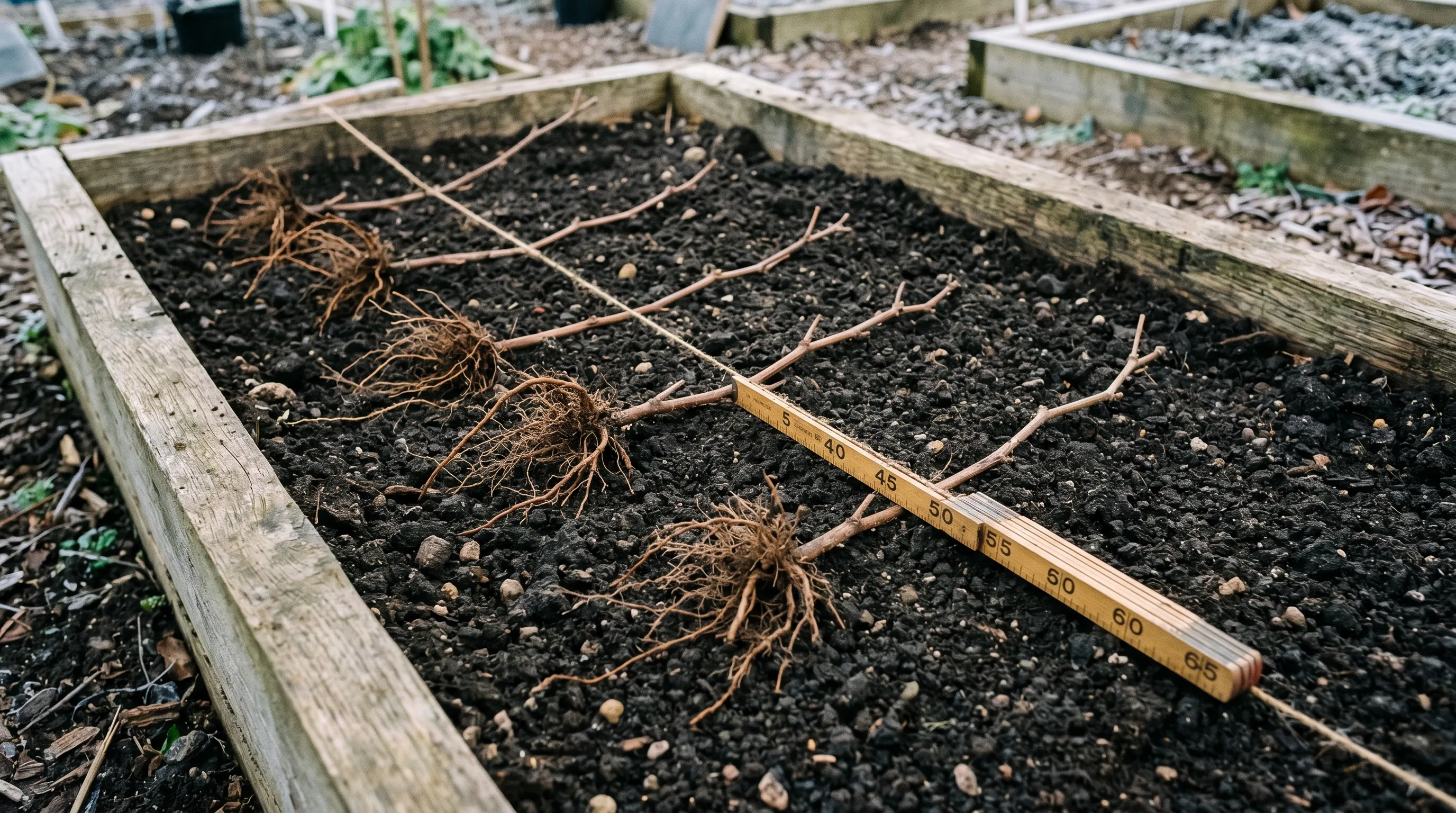 Bare-root canes spaced 45cm apart. The old soil mark on each stem sits level with the surface.
The simple pruning that catches people out
Cut every cane down to the ground in February. That’s the whole job. Use sharp secateurs or shears and cut close to the soil. There’s nothing to save and nothing to sort out.
This is where people who’ve grown summer raspberries go wrong. They try to keep some canes to protect next year’s crop. With autumn types you don’t need to. The new canes that come up in spring carry the harvest.
February is the right time. Cut in autumn and you lose any late fruit still ripening. Leaving the old canes over winter also gives the base of the plant a bit of shelter. After cutting, give the row a feed and a fresh mulch.
The double-cropping option
If you fancy two crops, you can leave a few of the strongest canes standing over winter instead of cutting them. They’ll give a small crop lower down in early summer. Cut them out once they’ve fruited. The new canes still give your autumn crop. If you just want an easy life, cut the lot.
Feeding, watering and mulching for a heavy crop
Feed once in late February with a general fertiliser such as Growmore or fish, blood and bone, following the pack rate. A light sprinkle of sulphate of potash in June helps the fruit. Avoid high-nitrogen feeds after May, which give floppy, leafy growth.
Water matters most from July to October, while the plants flower and fruit. Raspberries have shallow roots and suffer quickly when the top of the soil dries out. In a dry spell, give the row a good soak once a week rather than a little every day. Water at the base to keep the fruit dry.
A thick mulch does a lot of the work for you. Spread 5 to 7cm of well-rotted manure, compost or bark over the roots each spring. It holds in moisture, keeps weeds down and feeds the soil. Keep it a little away from the canes.
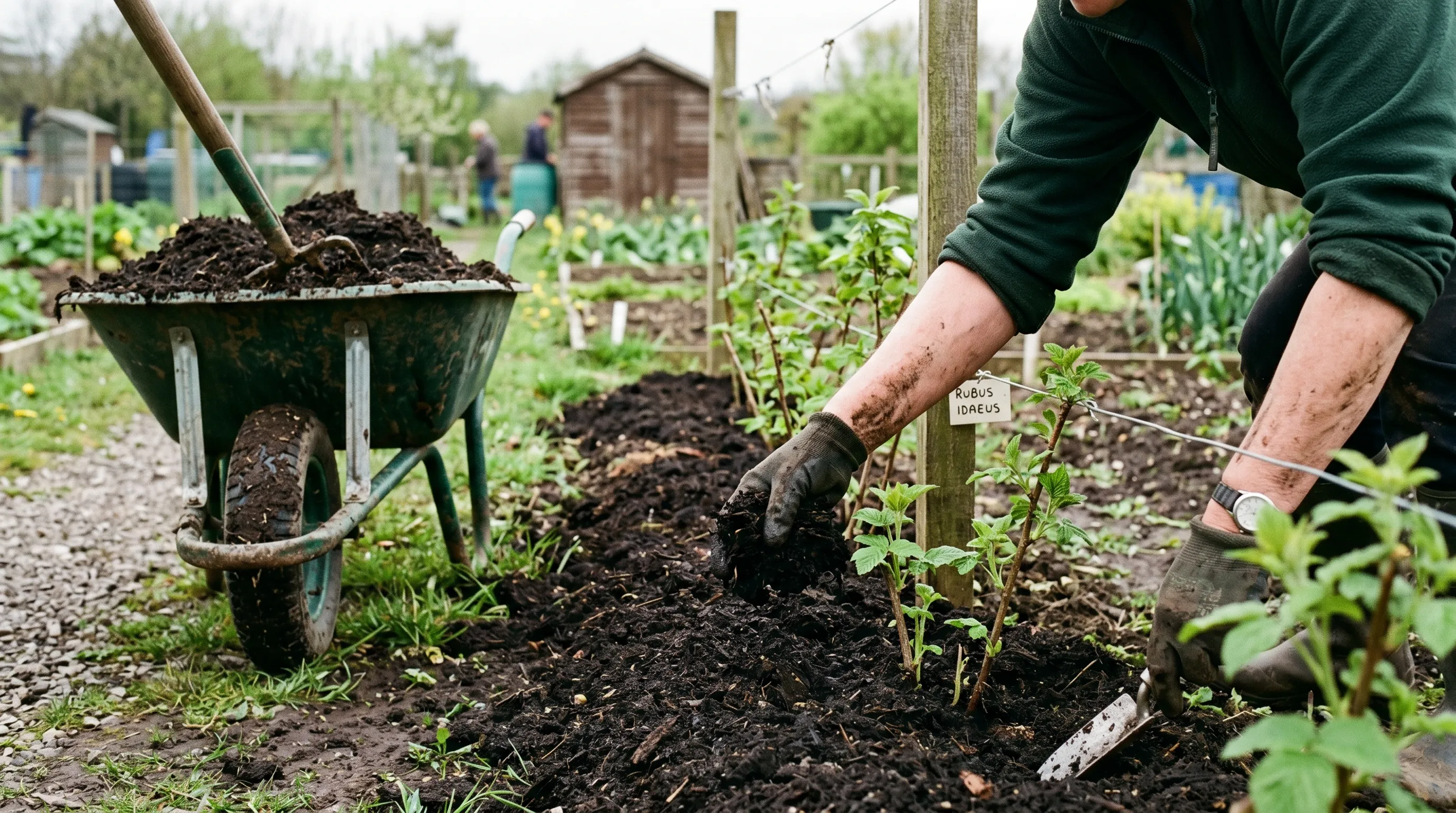 A spring mulch of well-rotted compost keeps the row moist and fed through the summer.
Best autumn raspberry varieties for UK gardens
‘Polka’ is a great choice for a big crop of tasty red fruit. ‘Joan J’ is just as easy and has spine-free canes, so picking is painless. ‘Autumn Bliss’ is a reliable old favourite that starts early. ‘All Gold’ is worth a few canes for its golden colour and sweet, honeyed flavour, though the soft fruit bruises easily. For another fruit to add to the plot, see our best blackcurrant varieties guide.
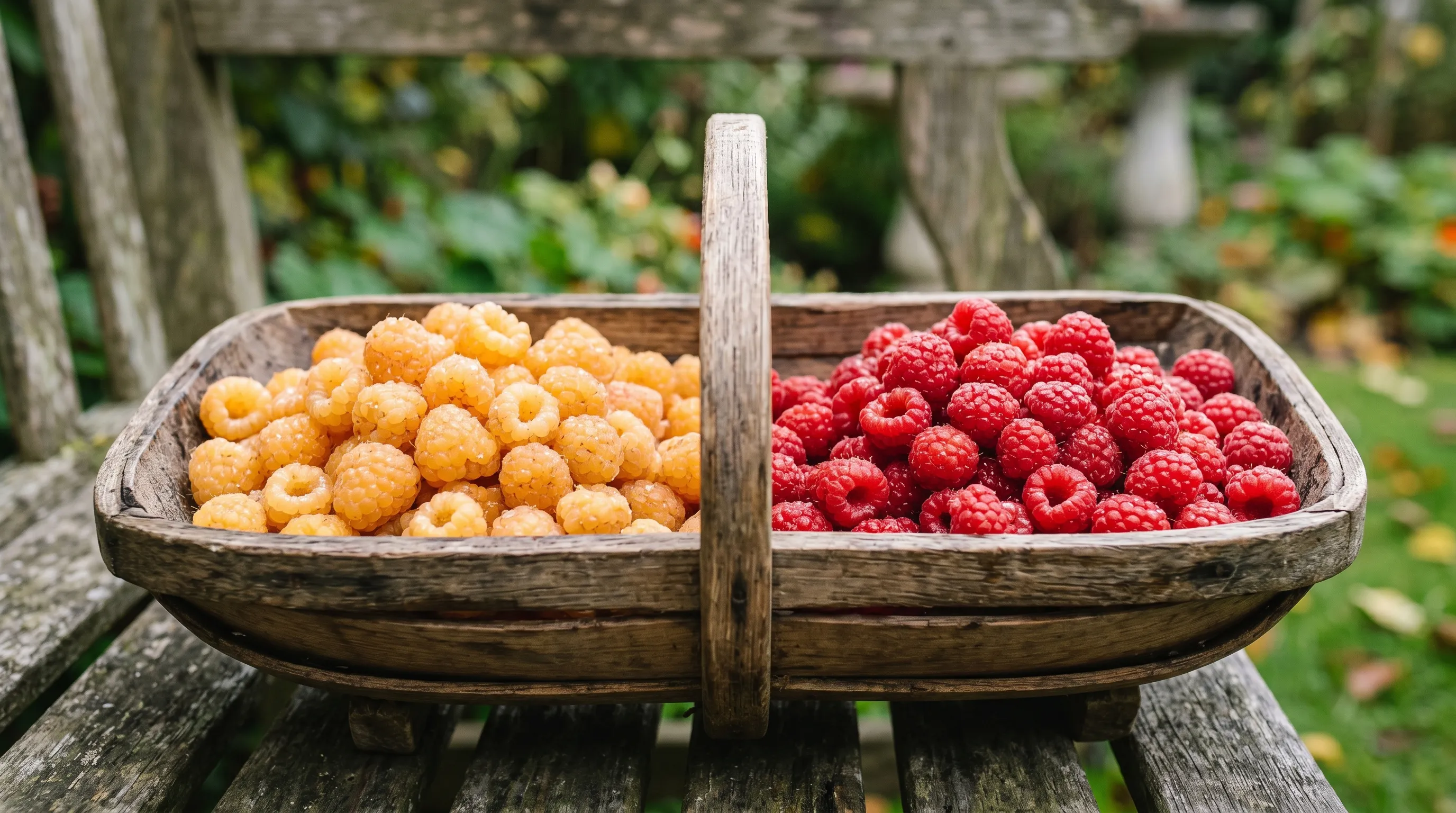 Golden ‘All Gold’ beside red ‘Polka’. The yellow fruit is sweeter and softer, so eat it the day you pick it.
How to harvest autumn raspberries from August to frost
Pick every two or three days once the fruit starts ripening. A ripe raspberry slips off its central plug with a gentle tug. If it hangs on, give it another day. Pick into shallow trays so the berries don’t squash, ideally in the morning while they’re cool.
Keep picking the whole row even if you can’t eat it all. Overripe berries left on the canes go mouldy and attract fruit flies. The good news is that the crop comes in a steady trickle, so it’s easy to freeze as you go.
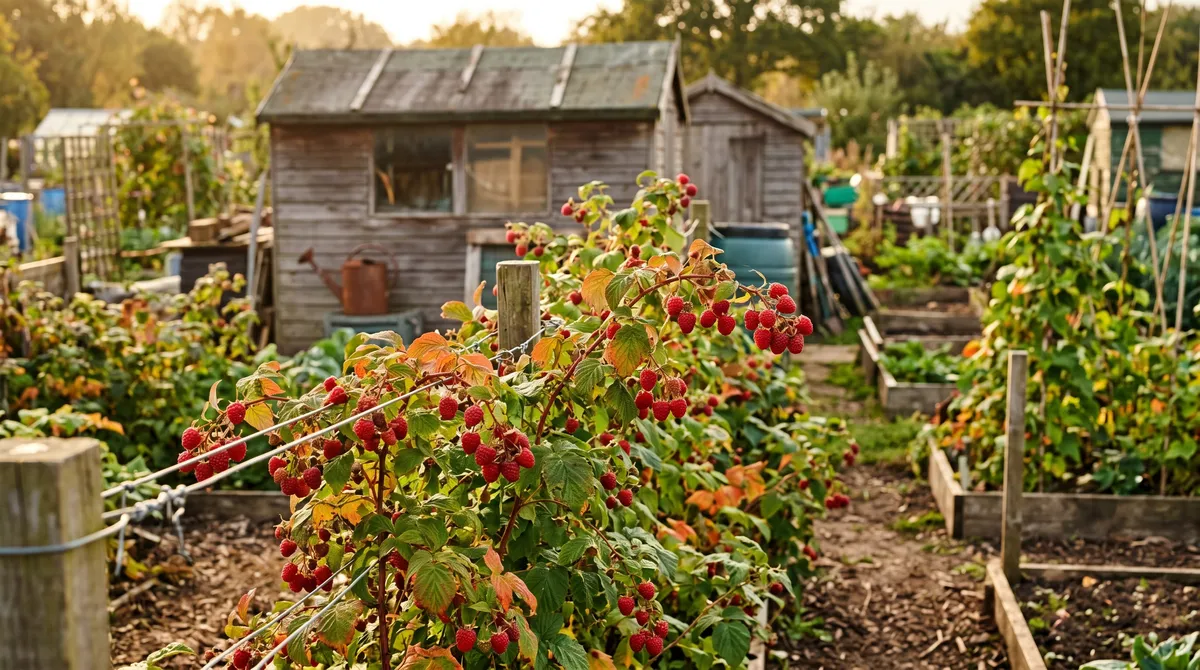
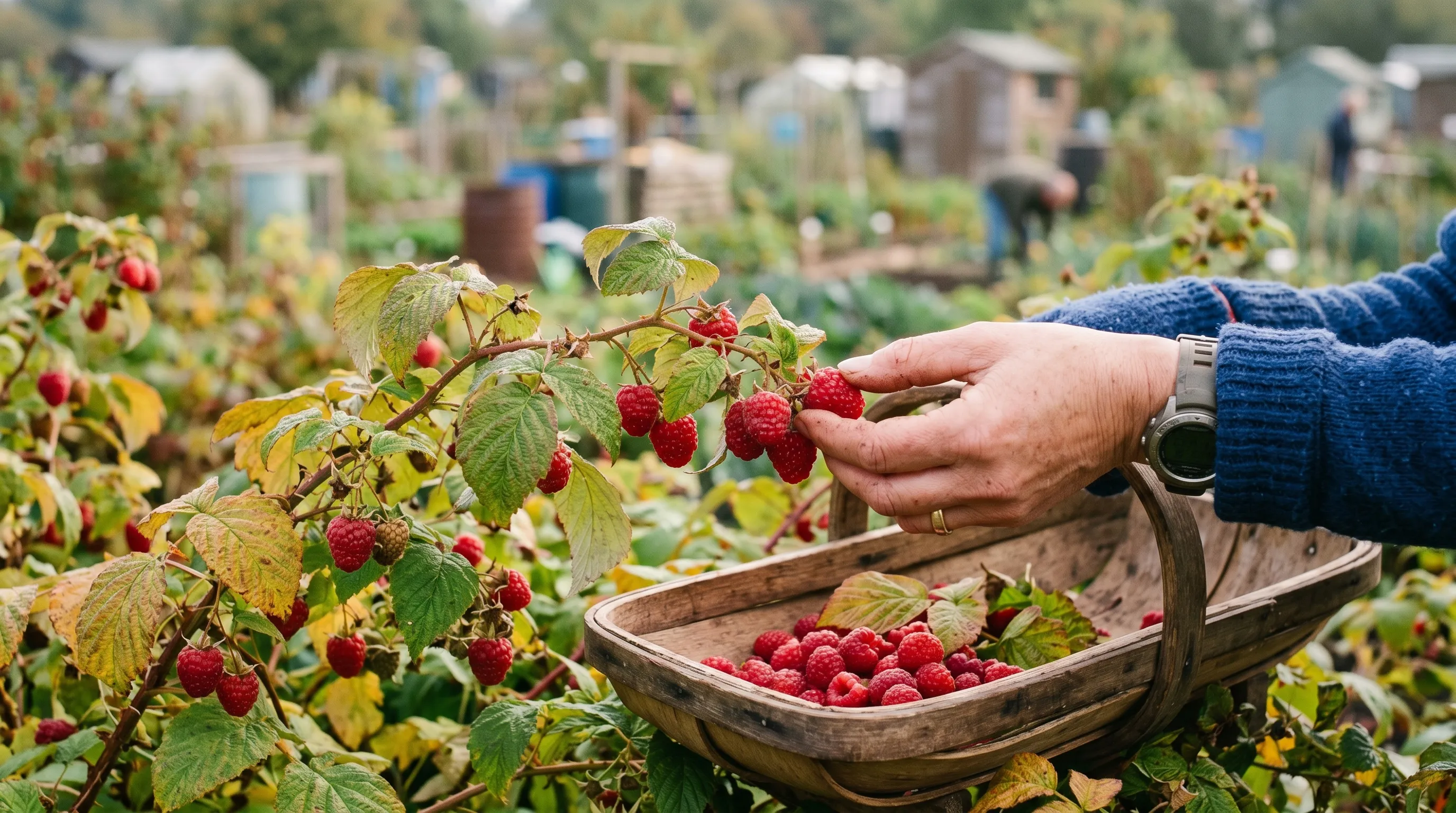 Ripe fruit on a green, this-season cane. A ready berry slips off with a light tug.
Freezing and storing your raspberry crop
Freeze raspberries on a tray first, then bag them, so they stay loose. Spread the berries in a single layer on a baking tray and freeze for a couple of hours. Once solid, tip them into freezer bags or boxes. That way you can pour out just what you need.
Fresh raspberries only last two or three days in the fridge. Store them unwashed in a single layer on kitchen paper. Wash them just before eating, as wet fruit goes mouldy fast.
Why pest pressure is lighter than summer raspberries
Autumn raspberries usually have fewer pest problems than summer ones. The main raspberry pest in UK gardens is raspberry beetle, whose little grubs spoil the fruit. Autumn raspberries flower later, so they often miss the worst of it.
Cutting all the canes down each winter helps too. Several cane pests and diseases spend the winter on old canes. Take the canes away and they have nowhere to hide.
Still keep an eye out for aphids, and for grey mould in wet weather. Our guide to raspberry pests and diseases helps you spot and deal with anything that turns up. The RHS also has a handy page on raspberry beetle if you find grubs in your fruit.
Growing autumn raspberries in pots and containers
Autumn raspberries grow well in a big pot, at least 45cm wide and 40cm deep. That’s perfect for a patio, small yard or balcony. Plant three canes per pot in a soil-based compost such as John Innes No 3, which holds water and food better than multipurpose compost.
Pots dry out fast. In summer, water every day, and maybe twice in a heatwave. Once flowering starts, feed every two weeks with a tomato feed. Add fresh compost to the top each spring after the February cut.
Go for compact types in pots. ‘Polka’ and ‘Autumn Treasure’ stay fairly short and crop well. Our container vegetable gardening guide has more on pot sizes, compost and watering.
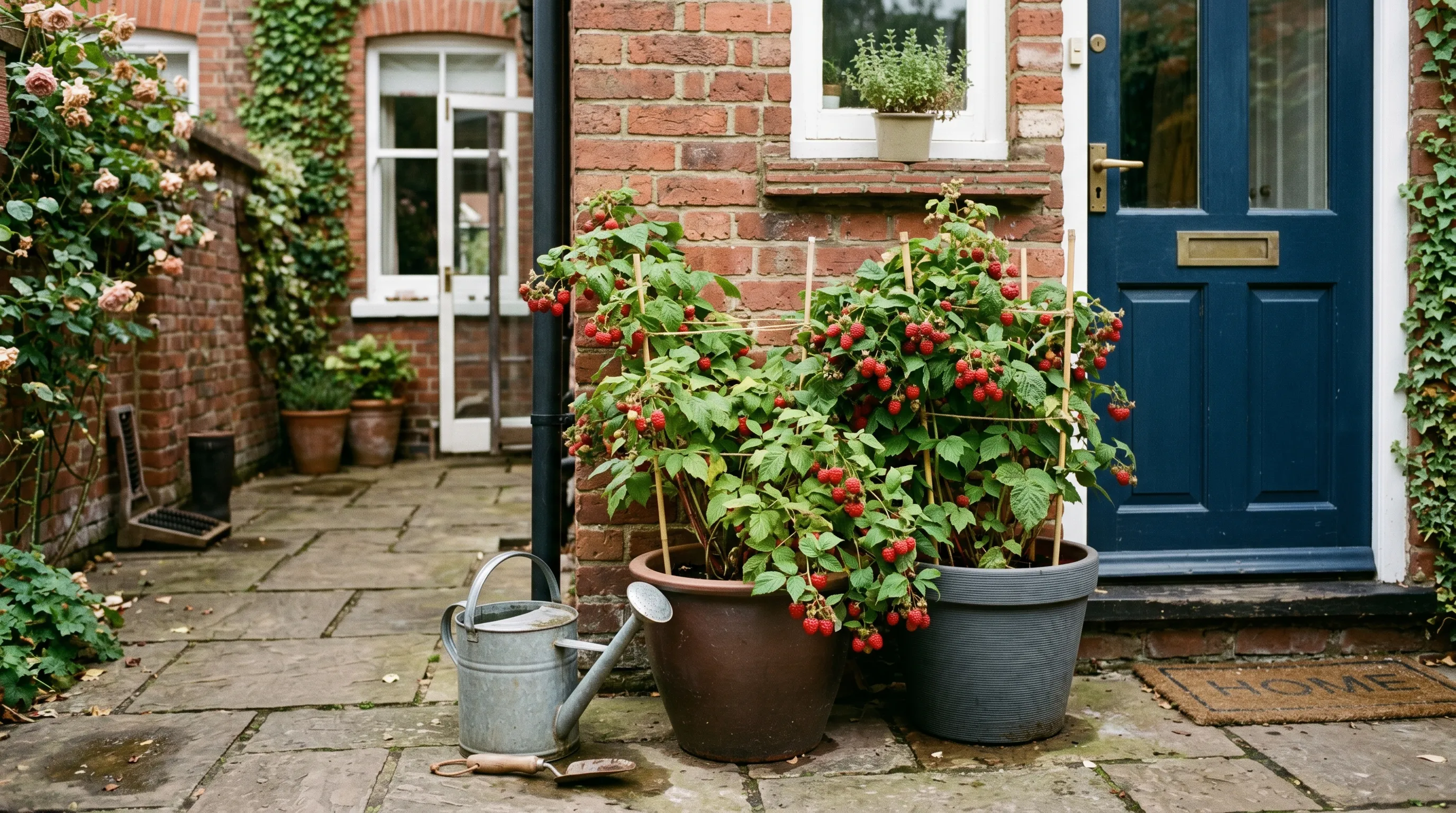 Compact ‘Polka’ cropping in big patio pots. Pot-grown raspberries need daily watering in summer and a regular feed.
Common mistakes with autumn raspberries
A few easy slips can spoil a simple crop. Dodge these and your row will mostly look after itself.
Pruning at the wrong time. Cutting down in autumn loses fruit that’s still ripening. Cutting late in spring damages the new shoots. Stick to February.
Treating them like summer raspberries. There’s no need to build a frame or keep last year’s canes. The new canes carry the real harvest, and old ones just crowd them.
Too much nitrogen. More feed doesn’t mean more fruit. Heavy feeding after May gives soft, leafy growth that flops over and shades the fruit. Feed in February and lightly in June, then stop.
Planting too deep or too wet. A buried crown is slow to send up canes, and waterlogged ground rots the roots. Plant shallow, on a slight ridge if your soil is heavy.
Month-by-month autumn raspberry calendar
Here’s the year at a glance. Timings shift a week or two depending on where you live and the weather.
| Month | Job |
|---|---|
| January | Order bare-root canes. Plant on mild, frost-free days |
| February | Cut every cane to the ground. Feed and mulch |
| March | Finish planting. New canes start to appear |
| April | Hoe weeds gently around the shallow roots. Water if dry |
| May | Canes growing fast. Watch for aphids |
| June | Light feed of sulphate of potash. Start regular watering |
| July | Flowers appear. Keep the soil moist. Add a string line if canes lean |
| August | First fruit from mid month. Pick every 2 to 3 days |
| September | Busiest picking time. Freeze any spare fruit |
| October | Keep picking until the first hard frost |
| November | Plant new bare-root canes. Leave old canes standing |
| December | Tidy up and plan next year’s varieties |
That’s all there is to it. Plant good varieties at the right spacing, feed and water through summer, and cut the whole row down each February. It’s the easiest pruning job in the fruit garden.
For an early summer crop to go with your autumn raspberries, read our guide to growing strawberries in the UK, or browse all our growing guides for more fruit and veg ideas.
Frequently asked questions
When do you prune autumn fruiting raspberries?
Cut every cane down to the ground in February. They fruit on new growth, so the whole row comes out each winter. Use sharp secateurs or shears and cut close to the soil. New canes pop up in spring and fruit that same autumn. It’s much simpler than pruning summer raspberries.
Do autumn raspberries need support?
No, they don’t need a post-and-wire frame. The canes are shorter and sturdier than summer types and mostly stand up on their own. If the outer canes flop after heavy rain, run a string line along each side of the row.
What month do autumn raspberries fruit?
From mid August until the first hard frost. In most of the UK that means picking well into October. ‘Autumn Bliss’ is one of the earliest to start. ‘Polka’ and ‘Joan J’ keep cropping for a long time.
How far apart do you plant autumn raspberries?
Plant them 40 to 45cm apart along the row. Leave about 1.5m between rows so you can get in to pick and air can move through. The plants send up new canes and fill gaps on their own, so don’t be tempted to cram them in.
Can you grow autumn raspberries in pots?
Yes, as long as the pot is big. Go for one at least 45cm wide and 40cm deep. Plant three canes in a soil-based compost like John Innes No 3. Water daily in summer and feed every two weeks. Compact types like ‘Polka’ and ‘Autumn Treasure’ suit pots well.
Our team produces practical UK gardening guidance from source research, contributor records and established horticultural practice. Editorial standards are overseen by Matt W.