
Key takeaways
- One bush crops on its own, so you don't need a partner for pollination
- Blackcurrants fruit on young wood, so cut out a third of the oldest stems each winter
- Redcurrants fruit on a permanent framework and can be grown as cordons 30cm apart
- Plant blackcurrants a little deeper than before, and redcurrants at the same depth
- Blackcurrants want sun and plenty of food, while redcurrants cope with some shade
- Net bushes from early June, before the birds find the fruit
Currants are some of the easiest and most generous fruit you can grow. A healthy bush gives you plenty for jam, cordial and the freezer. Even better, one bush crops on its own.
Blackcurrants and redcurrants look alike in the garden centre, but they grow and fruit differently. Getting the pruning wrong is the main reason for poor crops. Whitecurrants follow the redcurrant rules. For more soft fruit ideas, browse our growing guides, or see our guides to raspberries and blueberries.
Why blackcurrants and redcurrants need different treatment
It all comes down to where the fruit grows. Know that, and the pruning makes sense.
 Redcurrant cordons. Growing them as single stems saves lots of space.
 Blackcurrant and redcurrant bushes side by side. They’re pruned in different ways.
Blackcurrants fruit on young wood that grew the year before. Old, grey-barked stems give less and less fruit. So each winter, you cut out some old stems to make room for fresh ones from the base.
Redcurrants fruit on older wood, on short stubby shoots called spurs that crop year after year. You keep a permanent, open framework of branches. It’s the same idea as gooseberry pruning.
Whitecurrants are a pale form of redcurrant. They need the same care, and the fruit is sweeter and milder.
Because of this, the two types are planted, pruned and placed a little differently.
Choosing the best varieties
Every currant sold in the UK will crop on its own. One bush of each type is plenty to get started.
Blackcurrant varieties
The Ben varieties, bred in Scotland, are the go-to blackcurrants for British gardens.
- Ben Sarek: a compact bush that crops heavily. Great for small gardens and pots, and a good first choice.
- Ben Conmore: big berries with lovely flavour. A good one for jam.
- Ben Hope: bred to resist big bud mite, the worst blackcurrant pest. A strong, reliable grower.
- Big Ben: very large, sweet berries you can eat straight off the bush.
Redcurrant varieties
- Jonkheer van Tets: an early, heavy cropper with long strings of large berries.
- Red Lake: a well-known mid-season classic. Long clusters make picking easy.
- Rovada: a late, heavy cropper with very long strings. Keeps you picking into August.
- Stanza: compact and reliable, good for smaller gardens.
Whitecurrant varieties
- White Versailles: the classic whitecurrant. Large, sweet berries, lovely eaten fresh.
- Blanka: a heavy cropper with large berries, a little later than White Versailles.
Variety comparison table
| Variety | Type | Season | Size of bush | Good for |
|---|---|---|---|---|
| Ben Sarek | Blackcurrant | Mid | Compact | Small gardens, pots |
| Ben Conmore | Blackcurrant | Mid | Strong | Cooking and jam |
| Ben Hope | Blackcurrant | Mid | Strong | Resisting big bud mite |
| Big Ben | Blackcurrant | Mid | Large | Eating fresh |
| Jonkheer van Tets | Redcurrant | Early | Strong | The first picking |
| Red Lake | Redcurrant | Mid | Medium | Easy picking |
| Rovada | Redcurrant | Late | Strong | Big crops |
| Stanza | Redcurrant | Mid | Compact | Small gardens |
| White Versailles | Whitecurrant | Mid | Medium | Eating fresh |
| Blanka | Whitecurrant | Mid to late | Strong | Big crops |
Tip: Plant an early redcurrant like Jonkheer van Tets with a late one like Rovada to spread out the picking. It works for strawberries too, with early, mid and late varieties.
When and how to plant currant bushes
Planting time
Plant bare-root bushes from October to March, while they’re dormant. November is perfect, as the soil is moist but still a little warm. Bare-root bushes are cheaper than potted ones and settle in well.
 Planting a blackcurrant a little deeper than before, so strong new shoots come up from the base.
Pot-grown bushes can go in at any time, but cost more.
Soil and position
Blackcurrants want a sunny, sheltered spot and rich soil that holds moisture. They’re hungry plants, so dig in two or three buckets of well-rotted compost where each one will go.
Redcurrants and whitecurrants are easier going. They cope with some shade and even grow against a north or east-facing wall.
Neither likes soggy soil, so sort out drainage on heavy clay first. Avoid frost pockets, where late frosts can damage the flowers.
Planting depth matters
Here’s where blackcurrants are different.
Plant blackcurrants about 5cm deeper than they were in the nursery. This encourages strong new shoots to come up from below ground, which keeps the bush young.
Plant redcurrants and whitecurrants at the same depth they were before. They grow on a permanent stem, and burying it can lead to unwanted suckers.
Spacing
- Blackcurrant bushes: 1.5m apart
- Redcurrant and whitecurrant bushes: 1.2-1.5m apart
- Redcurrant and whitecurrant cordons: 30cm apart
How to prune blackcurrants
The rule is simple: take out old wood to make room for young wood.
When to prune
Prune between November and February, once the leaves have dropped. With bare stems, it’s easy to see which are old.
What to remove
Each winter, cut out about a third of the oldest stems right at the base. Old stems are thicker and darker, with grey bark. Young ones are smoother and lighter. Use loppers or a pruning saw for the thick ones.
Also take out stems that are:
- Damaged or diseased
- Crossing through the middle of the bush
- Weak and spindly
- Lying along the ground, where the fruit ends up in the mud
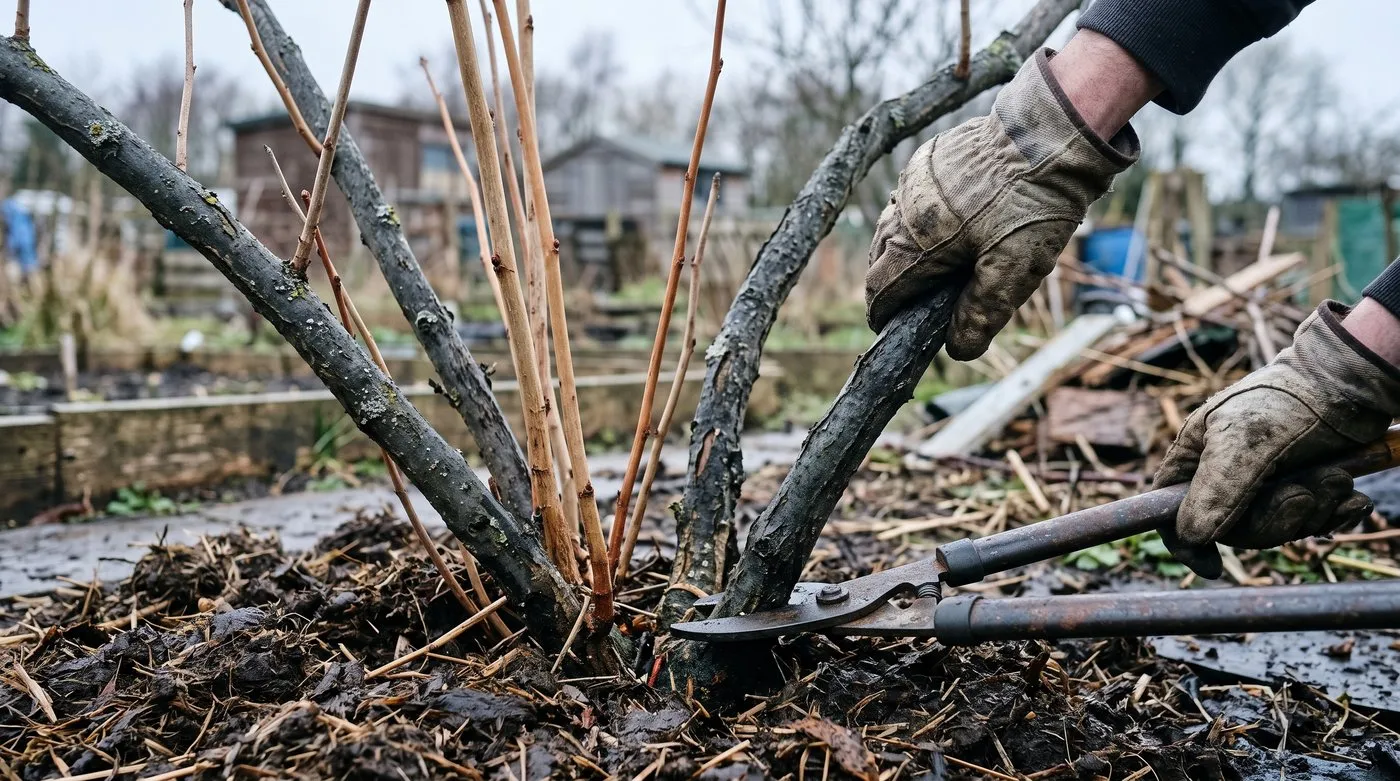
Take out about a third of the oldest, darkest stems each winter, right at the base. That makes room for young wood, which carries the fruit.
After pruning
A well-pruned bush has a mix of one, two and three-year-old stems. Give it a thick mulch of well-rotted manure around the base afterwards.
How to prune redcurrants and whitecurrants
Prune them just like gooseberries. You’re aiming for an open goblet shape with a few strong main branches.
Winter pruning
Prune in January or February, before the buds open.
- Keep 8-10 main branches in an open goblet shape
- Cut back the tip of each main branch by about a third, to an outward-facing bud
- Shorten all sideshoots to one or two buds
- Remove branches growing into the middle
- Cut out dead, diseased or crossing wood
Summer pruning
In late June or July, cut back new sideshoots to five leaves. This helps the fruit ripen and builds up next year’s fruiting spurs.
Growing redcurrants as cordons
A cordon is a single upright stem trained against a wall, fence or wires. It takes up almost no ground, so it’s perfect for small spaces.
Plant cordons 30cm apart and tie each stem to an upright cane fixed to wires. Each winter, shorten the tip by a third and cut sideshoots to one bud. In summer, pinch sideshoots back to five leaves. Four cordons fit along about 1.2m of fence.
Feeding and watering currants
Blackcurrant feeding
Blackcurrants are hungry. Underfed bushes make thin stems and small bunches.
- February: Spread a thick mulch of well-rotted manure around each bush, keeping it off the stems.
- March: Sprinkle a general fertiliser such as Growmore around the bush, at the rate on the pack, and water it in.
- August: Add another mulch of compost after picking.
Redcurrant and whitecurrant feeding
These need less.
- February: Mulch with compost or well-rotted manure
- March: A light sprinkle of sulphate of potash, at the rate on the pack, helps the fruit
Watering
Water regularly while the fruit swells in June and July. Uneven watering can make berries split. A good soak once a week in dry spells beats a little every day.
Pests and diseases to watch for
Big bud mite and reversion virus
Big bud mite is the worst blackcurrant pest. Affected buds swell up round in winter, like tiny Brussels sprouts. They don’t open in spring, so there’s no fruit.
The mite also spreads reversion virus, which can’t be cured and slowly reduces the crop.
What to do:
- Pick off swollen buds in winter and bin them
- Grow resistant varieties such as Ben Hope
- Replace badly affected bushes with certified healthy plants in a new spot
- The RHS guide to blackcurrant gall mite has good photos
Redcurrants rarely get it.
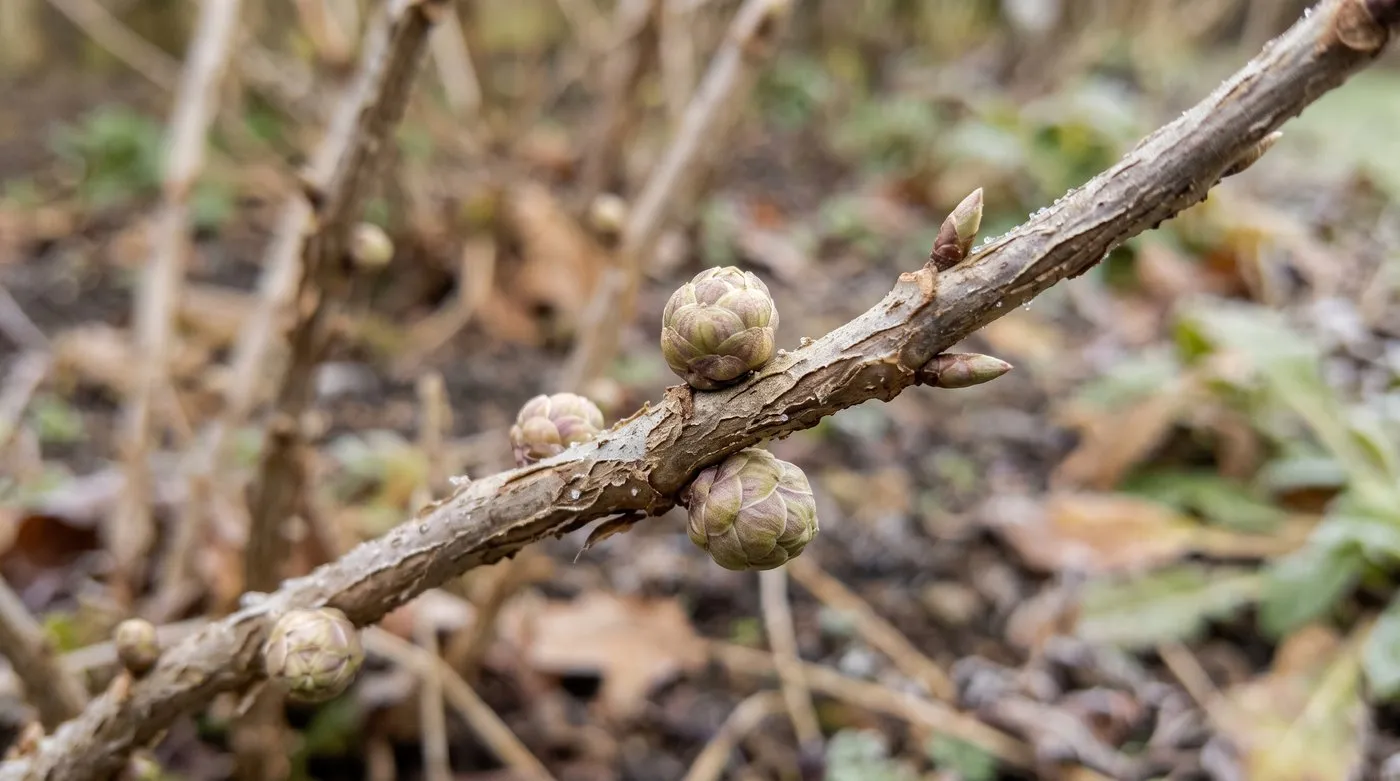
Round, swollen buds like tiny sprouts mean big bud mite. Pick them off and bin them in winter, before they can spread.
Sawfly
Gooseberry sawfly larvae look like small green caterpillars. They can strip a currant bush of leaves in days, starting from the middle.
Check under the leaves from late April. Pick off larvae as soon as you see them.
Bird damage
Bullfinches nip off the buds in late winter and spring. Blackbirds and thrushes take the ripe fruit from July.
Net bushes from early June. A fruit cage is the best long-term answer for several bushes. Check nets every day in case a bird or hedgehog gets caught.
Powdery mildew
American gooseberry mildew sometimes coats redcurrant shoots in white powder. Keep the bush open so air moves through it. Cut off affected shoots, and water the soil rather than the leaves.
Harvesting and using currants
When to harvest
Redcurrants ripen first, from early to mid-July. They turn bright red and slightly see-through. Snip off whole strings, then strip the berries off with a fork in the kitchen.
 Freshly picked currants, ready for jam, cordial or the freezer.
Blackcurrants follow, from mid-July into August. On the Ben varieties, the whole string usually ripens together, so you can pick it in one go. Older varieties may need picking two or three times.
Whitecurrants ripen with the redcurrants, when they turn see-through pale gold.
How much will I get?
A healthy, established bush gives plenty for a family, with enough left over for jam and the freezer.
Good for you
Blackcurrants are packed with vitamin C, more than oranges. Redcurrants and whitecurrants have less, but are still good for you.
Uses
- Blackcurrant jam: the classic. It sets easily.
- Redcurrant jelly: lovely with roast lamb. Strain through muslin for a clear jelly.
- Cordials and syrups: blackcurrant cordial is a real treat.
- Freezing: freeze berries on a tray, then bag them up.
- Puddings: mix currants with blackberries and raspberries for a summer pudding.
Month-by-month currant growing calendar
| Month | What to do |
|---|---|
| January | Prune blackcurrants. Pick off swollen buds. Order bare-root plants |
| February | Prune redcurrants and whitecurrants. Mulch with manure. Plant bare-root bushes |
| March | Last month for bare-root planting. Feed. Watch for sawfly |
| April | Cover flowers with fleece if a late frost is forecast. Check under leaves for sawfly |
| May | Water in dry spells. Pick off sawfly larvae |
| June | Net against birds. Summer-prune redcurrant sideshoots. Water as fruit swells |
| July | Pick redcurrants and whitecurrants. Start on blackcurrants mid-month |
| August | Finish picking blackcurrants. Mulch with compost |
| September | Weed around the bushes |
| October | Plant new bushes. Take hardwood cuttings once the leaves drop |
| November | Best month for planting bare-root currants. Hardwood cuttings can still be taken |
| December | Check blackcurrants for big buds. Plan next year’s varieties |
Common mistakes when growing currants
Pruning blackcurrants like redcurrants
Shortening blackcurrant sideshoots cuts off the young wood that fruits next year. Remove whole old stems at the base instead. If your bush has been trimmed all over and cropping poorly, switch to taking out a third of the oldest stems each winter.
Planting blackcurrants too shallow
Set too high, a blackcurrant grows from one point and doesn’t send up new stems from below. Without them it can’t renew itself, and crops fade. Plant about 5cm deeper than before.
Ignoring big bud mite
Swollen buds look harmless but are full of tiny mites. Pick them off in winter. If a bush is badly affected, replace it with a resistant variety like Ben Hope.
Netting too late
Lots of people net after the birds have found the fruit. Net from early June, before the berries colour.
Not feeding blackcurrants enough
Hungry blackcurrants give thin stems and small bunches. A thick manure mulch in February and a feed in March make a big difference.
Once your currants are sorted, try growing raspberries in the UK. They’re perfect with currants in summer puddings and jam.
Frequently asked questions
When should I plant currant bushes in the UK?
Plant bare-root bushes from October to March. November is ideal, as autumn rain keeps the soil moist. Pot-grown bushes can go in at any time, but bare-root ones are cheaper and settle in well.
What is the difference between blackcurrant and redcurrant pruning?
Blackcurrants fruit on young wood, redcurrants on a permanent framework. For blackcurrants, cut a third of the oldest stems to the ground each winter. For redcurrants, keep an open goblet shape and shorten sideshoots to one or two buds.
Can I grow redcurrants as cordons?
Yes, and they’re great for small gardens. Grow a single upright stem against a wall or fence, with plants 30cm apart. Shorten sideshoots to one bud in winter and pinch new growth back to five leaves in summer.
Do currant bushes need full sun?
Blackcurrants crop best in full sun. Redcurrants and whitecurrants cope with some shade, even against a north or east-facing wall. In shade they ripen a little later but still crop well.
How do I protect currants from birds?
Net the bushes from early June, before the fruit colours. Bullfinches also nibble the buds in late winter and spring. A fruit cage is the easiest answer if you have several bushes. Check nets daily in case anything gets tangled.
What is big bud mite on blackcurrants?
A tiny mite that makes blackcurrant buds swell up round. Those buds don’t open or fruit. The mite also spreads reversion virus, which weakens the bush for good. Pick off and bin swollen buds in winter, and choose resistant varieties like Ben Hope.
How long do currant bushes produce fruit?
Many years, as long as you prune and feed them. Blackcurrants need yearly pruning to keep fresh young wood coming. Redcurrants often last even longer. Replace a bush when it stops cropping well despite good care.
Are whitecurrants different from redcurrants?
They’re simply a pale form of redcurrant. They need exactly the same care and pruning. The fruit is see-through pale gold and sweeter. White Versailles and Blanka are the usual varieties.
Related guides
For more on whitecurrants, see how to grow white currants in the UK, covering White Versailles and Blanka. For a raspberry and blackberry cross, see how to grow tayberries in the UK. Once the fruit is picked, our freezing fruit guide shows a few easy ways to freeze it. The thornless jostaberry, a blackcurrant and gooseberry cross, is fun to try too.
Our team produces practical UK gardening guidance from source research, contributor records and established horticultural practice. Editorial standards are overseen by Matt W.


