
Key takeaways
- Tayberries fruit in July and August on canes that grew the year before
- Plant bare-root canes from November to March, about 2.5m apart
- Train canes on horizontal wires, keeping new canes apart from fruiting ones
- Cut fruited canes to the ground straight after picking and tie in the new ones
- Pick when the berries are deep purple-red, not bright red
- Buckingham is a thornless type that makes picking much easier
The tayberry is a raspberry and blackberry hybrid that gives big, aromatic, sweet-sharp berries in July and August. It’s easy to grow anywhere in the UK, as long as you give it some sun, a set of wires and a quick prune each summer.
Tayberries are too soft to travel well, so you rarely see them in shops. That’s the best reason to grow your own. This guide covers tayberries in particular: choosing a type, training, pruning and picking. For the close cousins, see the guide to growing boysenberries and loganberries.
What is a tayberry?
A tayberry is a cross between a blackberry and a raspberry. It was bred at the Scottish Crop Research Institute near Dundee, released in 1979 and named after the River Tay.
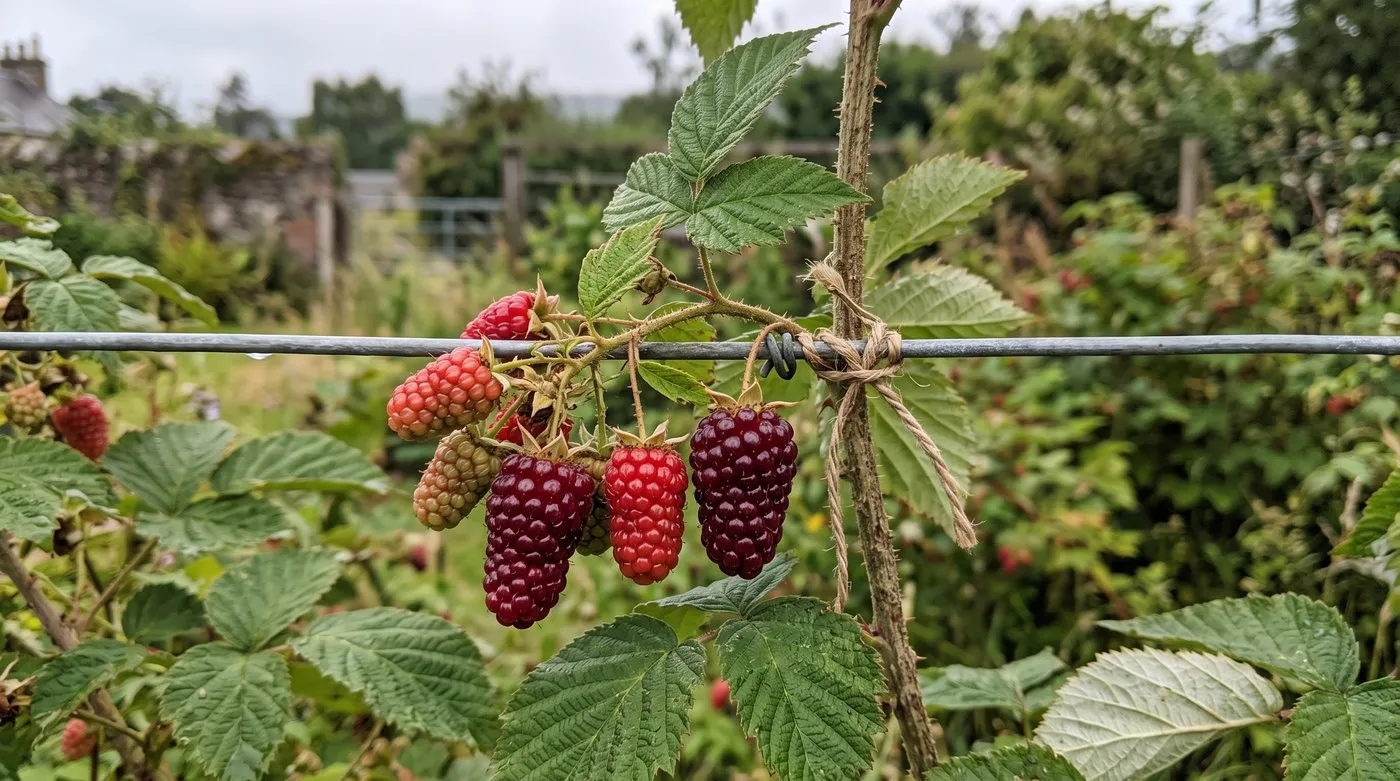
Tayberries are long and cone-shaped. Leave the bright red ones and pick when they turn deep purple-red.
The berries are long and cone-shaped. They turn from red to deep purple-red as they ripen. The flavour is sweeter and more aromatic than a loganberry, with a sharp edge that makes brilliant jam.
Like blackberries, tayberries fruit on canes that grew the previous year. Each summer you pick from last year’s canes while this year’s new ones grow alongside.
Which tayberry should you grow?
Buckingham is the one for most gardens. It’s thornless, so picking and pruning are far less painful. The original prickly tayberry is the other main choice and is often sold as Medana.
| Type | Canes | Good for |
|---|---|---|
| Buckingham | Thornless | Family gardens, easy picking |
| Tayberry / Medana | Prickly | Anyone happy to pick in gloves |
Buy from a fruit nursery that sells certified healthy stock. Cane fruit can carry viruses, so it pays to start clean.
Where to plant tayberries
Tayberries need sun, shelter and good soil. They grow well from the south coast to the north of Scotland.
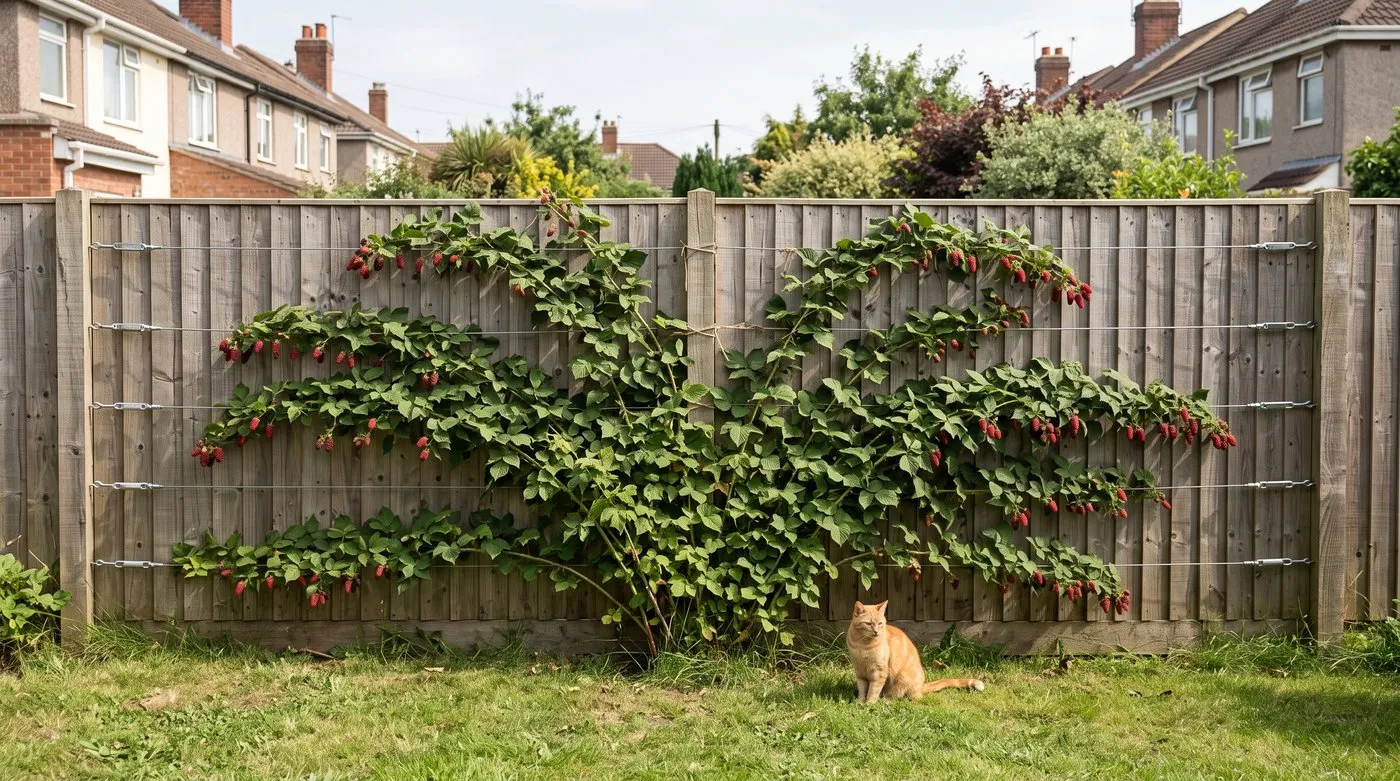
A sunny, sheltered fence with wires is the perfect home for a tayberry, and it takes up hardly any border space.
Sun: pick a sunny spot. Fruit ripens best in full sun, though tayberries cope with a little light shade.
Shelter: the long canes catch the wind and can snap. A fence, wall or hedge on the windy side helps a lot.
Soil: they like rich, well-drained soil that holds some moisture. Dig in plenty of well-rotted manure or compost before planting. On heavy clay, a raised bed avoids waterlogged roots.
Tayberries are big plants. Allow about 2.5m along the wires for each one. A fence or wall makes an ideal support if you fix the wires to it.
How to put up wires for tayberries
Tayberry canes are long and floppy, so they need a permanent wire support. Without one, the plant becomes a tangle of thorns and fruit.
Fix horizontal galvanised wires to a fence or wall, or between sturdy posts. Space them about 30cm apart, starting about 90cm above the ground, with the top wire at about 1.8m. Use straining bolts so you can tighten the wires as they slacken.
Fan training: keeping old and new canes apart
The tidy way to train tayberries is to keep new canes on one side and fruiting canes on the other.
- Tie this year’s fruiting canes in a fan to one side of the plant.
- As new canes grow in summer, tie them loosely to the other side, or bundle them up the middle.
- After picking, cut out the fruited canes and fan the new ones into the empty space.
This way you always know which canes will fruit. In a small space, you can instead weave the canes along the wires, but it makes pruning fiddlier.

Tie new canes to one side while the fruiting canes crop on the other. It makes the summer prune-out easy.
How to plant tayberries
Plant bare-root canes from November to March, when the soil isn’t frozen or waterlogged. Container plants can go in at other times, but water them well through their first summer.
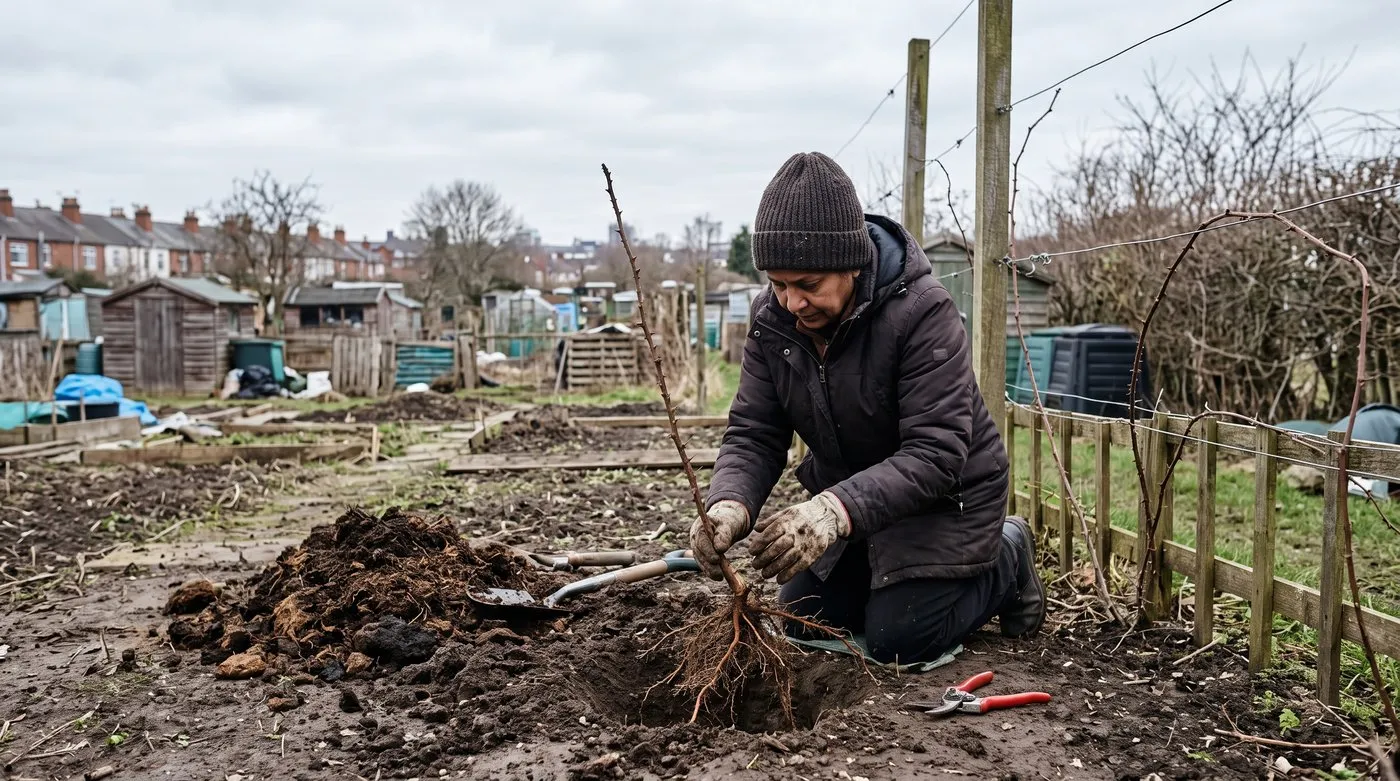
Plant bare-root canes in winter, then cut them back to about 25cm so strong new canes grow up for next year.
- Dig in well-rotted manure or compost along the planting spot.
- Dig a hole wide enough to spread out the roots.
- Plant at the same depth as before, using the soil mark on the cane as a guide.
- Backfill, firm gently and water well.
- Cut the cane back to about 25cm above the ground, just above a bud.
Cutting back feels harsh, but it makes the plant send up strong new canes. Those canes will fruit the following summer. Don’t expect berries in the first year.
Feeding and mulching tayberries
Each spring, spread a mulch of well-rotted manure or compost along the row, keeping it just clear of the canes. It feeds the plant, holds in moisture and keeps weeds down.
Sprinkle a general fruit fertiliser around the plants in early spring if growth looks weak, following the pack rate. Avoid high-nitrogen feeds such as lawn fertiliser. They give soft growth that snaps in the wind.
Water well in dry spells, especially while the fruit is swelling. The guide to mulching explains which materials work best.
How to prune tayberries after fruiting
Pruning tayberries is one simple job a year. Straight after picking, cut every cane that fruited down to the ground.
Fruited canes are easy to spot. They have dried flower stalks and side shoots and often look tired. Cut them at soil level with sharp secateurs or loppers, and take them away.
Then untie the new canes and fan them out across the wires where the old ones were. Tie them in loosely with soft twine. If there are lots of new canes, keep the strongest and cut out weak or crowded ones. This keeps air moving, which helps prevent disease.

Once the last berries are picked, cut the old fruited canes right down to the ground. The green new canes stay to fruit next year.
In late winter, you can trim the tips of any canes that have grown well past the top wire. This keeps the plant tidy.
When and how to pick tayberries
Tayberries ripen from July into August. Pick when the berries are deep purple-red and glossy. Bright red berries are still sharp. A ripe berry comes away with a gentle tug, with its core inside, like a blackberry.
Pick every couple of days, ideally when the fruit is dry. Ripe berries soften quickly. Eat them within a day or two, or freeze them.

Deep purple-red and glossy means ready. Pick every couple of days and enjoy them fresh, or freeze the extras.
Using and freezing tayberries
Tayberries make excellent jam and are great in summer pudding, crumbles, sorbets and fools. They’re lovely fresh with cream or yoghurt too.
To freeze, spread the berries on a tray, freeze until solid, then tip them into a bag. They won’t stick together, so you can take out a handful at a time.
Tayberry pests and diseases
Tayberries share most of their problems with raspberries and blackberries.
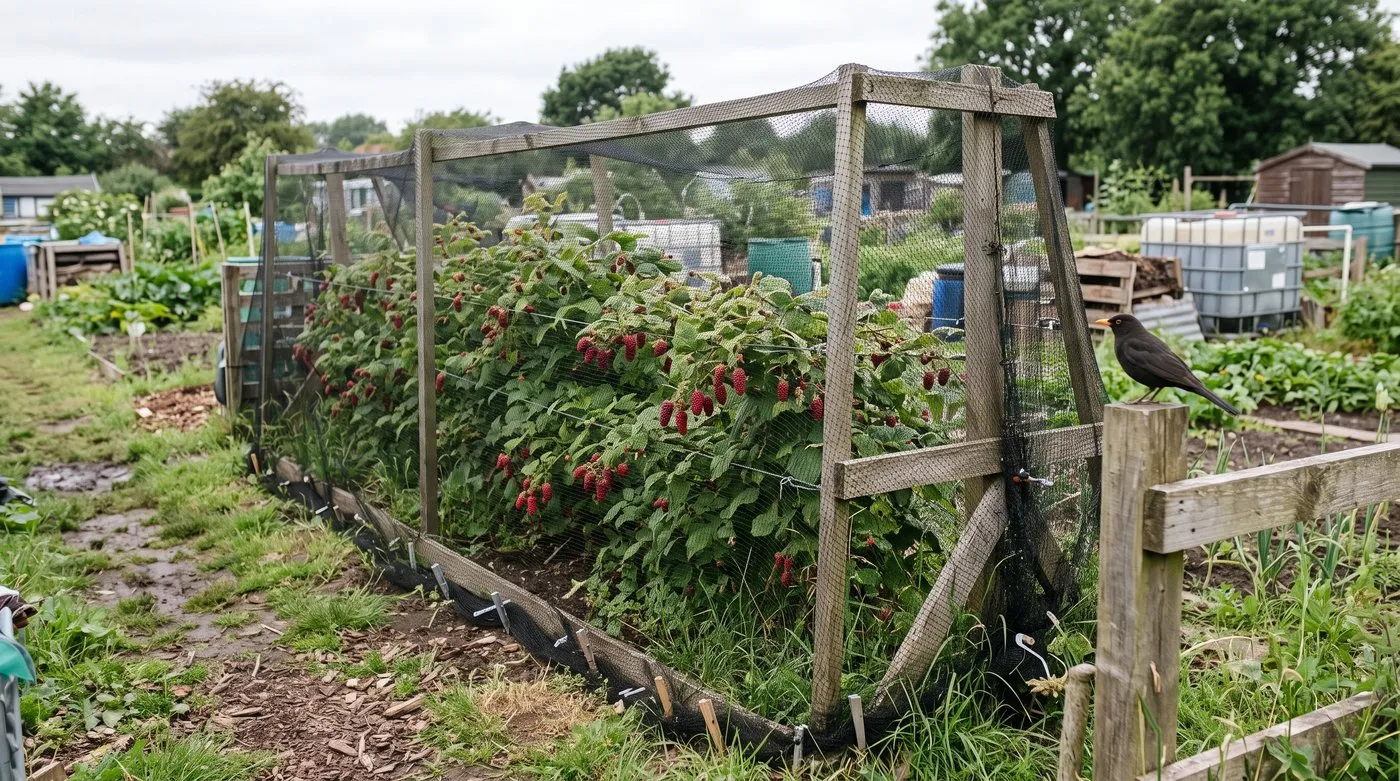
Get the net on in early July. Blackbirds find ripe tayberries just as quickly as you do.
- Birds: blackbirds love ripe berries. Net the plants or grow them in a fruit cage from early July.
- Raspberry beetle: small grubs inside ripe fruit. Pick regularly and clear up fallen fruit.
- Cane spot and grey mould: spots on canes and mouldy fruit in wet summers. Thin crowded canes, cut out affected ones and pick mouldy fruit promptly.
- Viruses: yellow mottling and falling crops. There’s no cure, so replace plants with certified stock on fresh ground.
The guide to raspberry pests and diseases covers these in more detail, with pictures.
Can you grow tayberries in a pot?
You can, but tayberries are vigorous and do much better in the ground. If a patio is your only option, use a large tub of soil-based compost and fix wires to a sunny wall behind it. Water often in summer, as pots dry out fast, and feed with a high-potash liquid feed while the fruit forms.
How to get more tayberry plants
Tayberries tip-layer easily, just like blackberries. In late summer, bend the tip of a new cane down to the soil and bury it a few centimetres deep. Pin it in place. By autumn or winter it will have rooted. Cut it from the parent and plant it out.
Tayberries through the year
| Month | Task |
|---|---|
| November to March | Plant bare-root canes. Cut new plants back to about 25cm |
| February | Trim cane tips that have grown past the top wire |
| March | Mulch with manure or compost. Feed if growth was weak |
| April to June | Tie new canes to their side of the fan. Water in dry spells |
| July | Net the plants. Start picking |
| August | Keep picking. Cut out fruited canes and tie in new ones |
| September | Finish pruning. Tip-layer a cane if you want more plants |
| October | Check ties and wires before winter winds |
Common tayberry mistakes
- No proper support: canes flop, tangle and snap. Put wires up before planting.
- Cutting the wrong canes: remove only the canes that have fruited. The new green ones carry next year’s crop.
- Leaving old canes in: they crowd the plant and harbour disease. Cut them out after picking.
- Picking too early: bright red berries are sour. Wait for deep purple-red.
- Planting in an exposed spot: wind snaps the long canes. Choose a sheltered place.
Frequently asked questions
Are tayberries easy to grow in the UK?
Yes, tayberries are hardy and easy to grow across the UK. They need sun, rich soil that holds some moisture and shelter from strong wind. The main jobs are tying canes to wires and cutting out the old fruited canes each summer.
What is the difference between a tayberry, a loganberry and a boysenberry?
All three are hybrids involving raspberries and blackberries. The tayberry was bred in Scotland and has large, sweet-sharp, aromatic berries. The loganberry comes from California and is sharper, so it’s mostly cooked. The boysenberry is a darker, softer berry with a rich flavour.
How long do tayberry plants live?
A tayberry plant can crop well for many years. Feeding, mulching and yearly pruning keep it going. If cropping falls away or leaves become mottled, replace it with healthy certified stock on a fresh spot.
Do tayberries need a pollination partner?
No, tayberries are self-fertile, so one plant will fruit on its own. Bees and other insects still visit the flowers and help give well-formed berries. A sunny, sheltered spot suits both the plant and the pollinators.
When should I pick tayberries?
Pick when the berries turn deep purple-red, not bright red. Bright red fruit is sharp. Ripe berries are glossy and pull away with a gentle tug. The harvest runs from July into August, so pick every couple of days.
Are there thornless tayberries?
Yes, Buckingham is a thornless tayberry. It’s much kinder on your hands at picking and pruning time. The original tayberry has prickly canes but is just as good for flavour.
Want more summer fruit on the same wires? Read our guide on how to grow blackberries next, compare with growing raspberries, or browse more fruit growing guides.
Our team produces practical UK gardening guidance from source research, contributor records and established horticultural practice. Editorial standards are overseen by Matt W.


