Key takeaways
- White currants are a pale, sweeter form of redcurrant
- Plant bare-root bushes from November to March
- They cope with part shade, even a north-facing wall
- Prune each winter to an open goblet shape
- Net from June or the birds will beat you to them
- Pick in July by cutting whole bunches
White currants aren’t grown nearly as often as they should be, because they give you some of the sweetest berries you’ll ever pick. The see-through, honey-gold fruit is a pale form of the common redcurrant (Ribes rubrum) and grows in exactly the same way. The difference is taste. Redcurrants are sharp, while white currants are mild and sweet enough to eat by the handful.
A white currant bush keeps cropping for many years. It copes with part shade, heavy soil and cold winters. If you can grow gooseberries, you can grow these. Here’s how to choose, plant, prune and pick them, plus the one job you mustn’t skip: netting against birds.
What are white currants and how are they different from redcurrants?
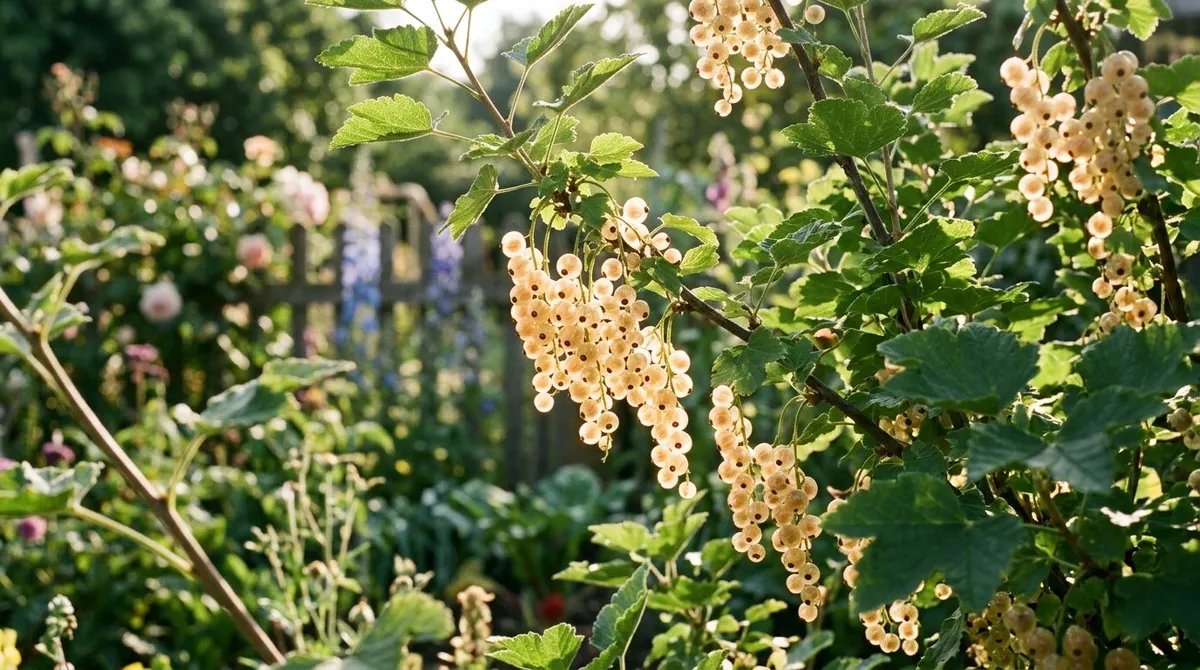
They’re the same plant, just without the red colour. White currants are a natural pale form of redcurrant. When ripe, the berries are see-through white to pale gold, sometimes with a pink blush.
The big difference is flavour. Redcurrants are tart, which is why they’re used for jellies and sauces. White currants are less sharp and much nicer to eat fresh.
They’re lovely fresh, on desserts, as a pale golden jelly or as juice. They grow just like redcurrants and blackcurrants, so if you already grow currants, you know what to do.
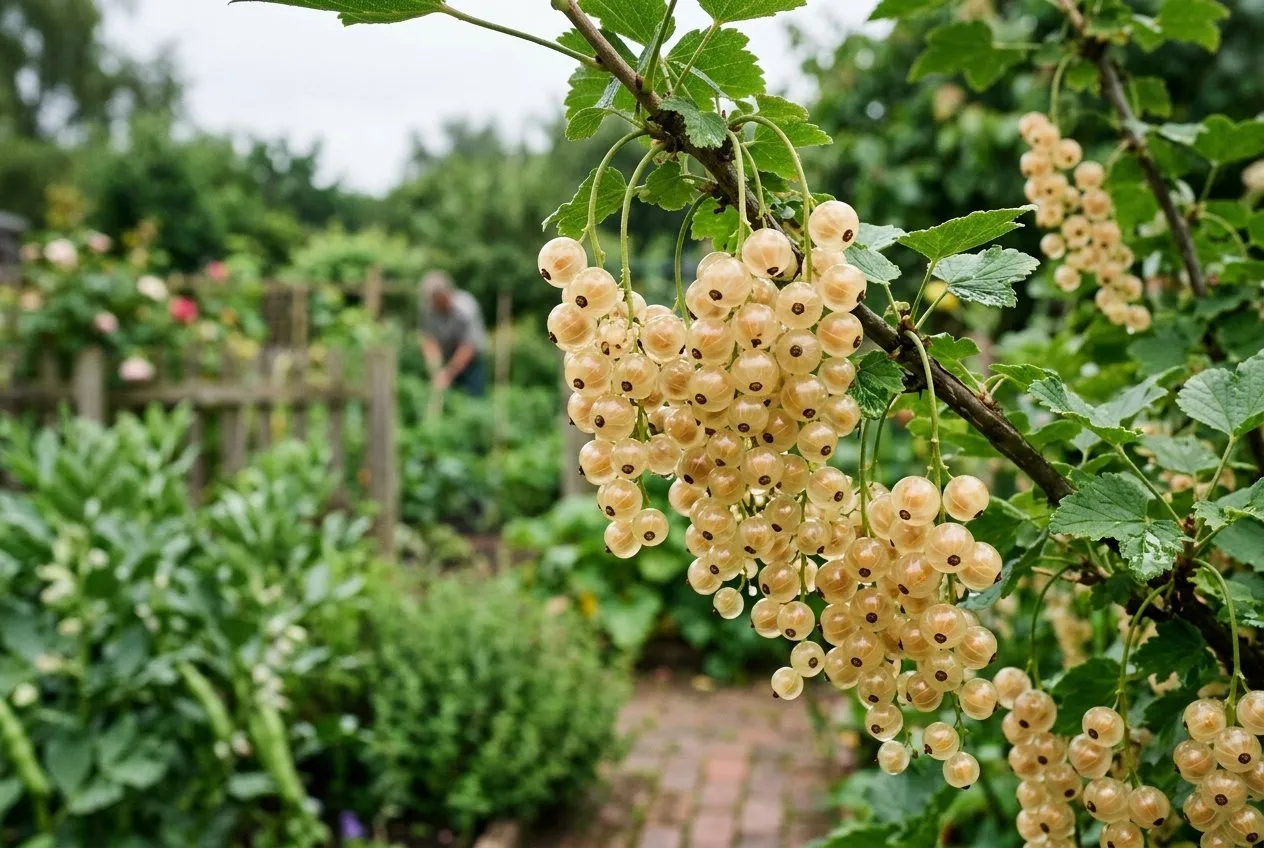 Ripe white currants turn see-through and honey-gold, and they’re sweet enough to eat straight from the bush.
The best white currant varieties for UK gardens
These four are the ones you’ll find most easily.
| Variety | Berries | Taste | Bush | Best for |
|---|---|---|---|---|
| White Versailles | Medium to large | Sweet, balanced | Upright, vigorous | A great all-rounder |
| Blanka | Large | Sweet, mild | Spreading, heavy cropper | Big harvests |
| White Dutch | Small to medium | Sweet, delicate | Compact | Small gardens, pots |
| White Grape | Large | Very sweet | Upright | Eating fresh |
White Versailles is a reliable all-rounder with good crops of sweet berries.
Blanka gives heavy crops of large berries. Pick this one if you want plenty for jelly or juice.
White Dutch stays smaller, so it suits small gardens and pots. The berries are delicate and sweet.
White Grape has very sweet berries, though the crop is smaller. It’s the one for eating fresh.
How to plant white currant bushes
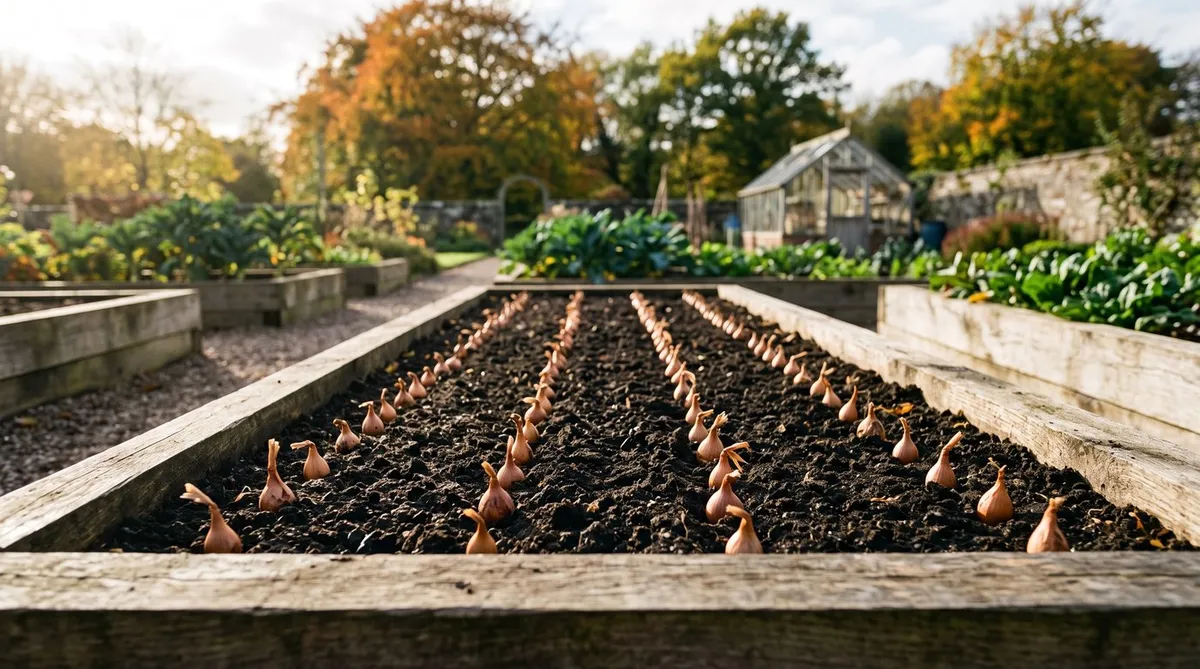
Plant bare-root bushes between November and March, while they’re dormant. Autumn planting is best, as the roots settle in over winter and the bush grows away strongly in spring.
Pick a spot in sun or part shade. White currants cope with more shade than most fruit and will even crop on a north-facing wall. Avoid frost pockets, as late frosts can damage the flowers.
Dig in a bucket of well-rotted manure or garden compost for each bush. They like soil that holds moisture but doesn’t get waterlogged. On heavy clay, add some grit. On sandy soil, add extra compost.
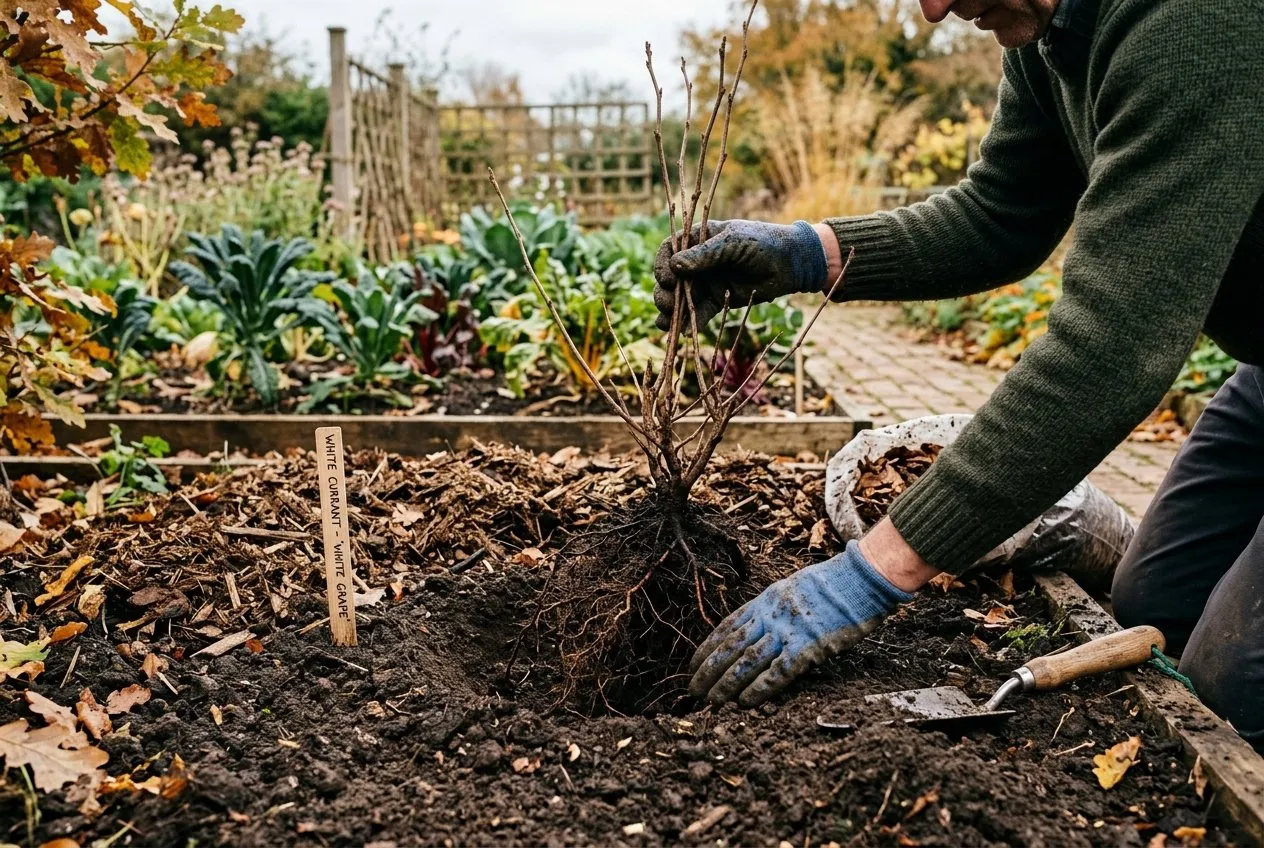 Planting a bare-root white currant in November, while the bush is dormant.
Dig a hole about 60cm wide and 30cm deep. Plant at the same depth the bush was growing before, which you can usually see as a dark mark on the stem. Spread the roots out, backfill and firm gently. Water well. Space bushes 1.5m apart. For cordons (single upright stems trained on a fence), space them 45cm apart.
Mulch with a thick layer of well-rotted manure, keeping it away from the stem. Top it up every spring.
How to prune white currant bushes
Aim for an open goblet shape, with plenty of air and light in the middle. White currants fruit on older wood and at the base of last year’s side shoots, so you want a mix of young and old branches.
Winter pruning (December to February)
Each winter, cut out about a third of the oldest branches at the base. New shoots will grow to replace them. Keep 8 to 10 main branches around an open centre. Shorten side shoots to two or three buds. Take out anything crossing, dead or diseased. You should be able to put your hand into the middle easily.
Summer pruning (early July)
In early summer, shorten this year’s side shoots to five leaves. This lets light reach the fruit, helps air move through the bush and removes aphid-covered tips. It also helps keep powdery mildew at bay.
Growing as cordons
Cordons are great for small gardens. Train a single upright stem against a wall or fence, with short fruiting spurs. Shorten side shoots to three leaves in summer and one or two buds in winter. You’ll get less fruit per plant but more from a small space. Our fruit training guide explains the basics.
How to look after white currants through the year
Spring (March to May)
Sprinkle a general fertiliser around the bushes in March and water in dry spells. You may see raised red or yellow blisters on the leaves. That’s currant blister aphid, and it doesn’t harm the crop. Watch out for gooseberry sawfly larvae, which can strip leaves in days. Check under the leaves from April and pick them off.
Summer (June to August)
Net the bushes from early June. Water regularly while the fruit swells, as a dry bush can drop its berries. Pick in July when the berries look see-through and taste sweet. Cut whole bunches (called strigs) rather than single berries. Then run a fork down the stalk to strip the berries into a bowl.
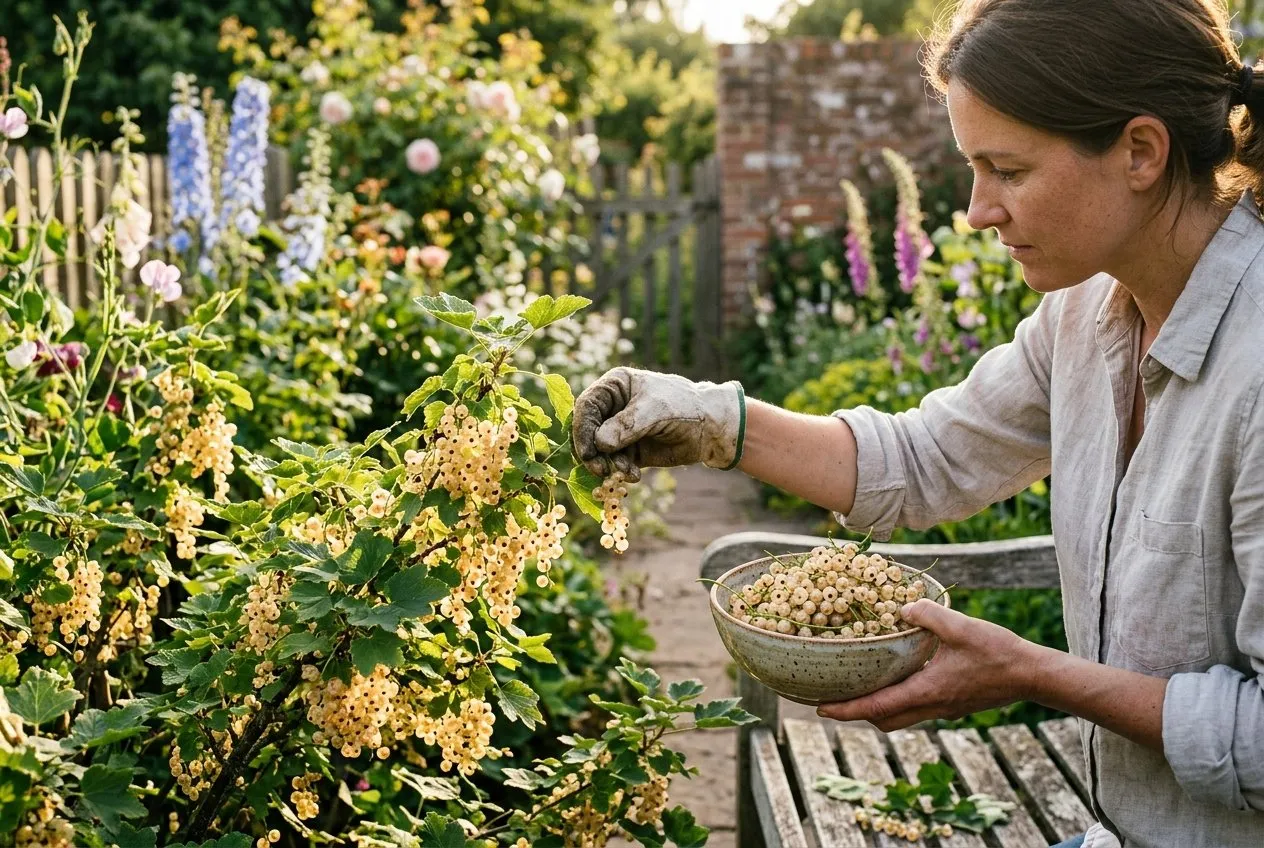 A fork makes quick work of stripping white currants from their stalks.
Autumn and winter (September to February)
Clear fallen leaves and mulch around the base. Prune between December and February. Order any new bare-root bushes for planting. White currants are fully hardy and need no winter protection.
Pests and diseases
Birds
Birds are the biggest threat by far. Blackbirds, starlings and thrushes can clear a bush of ripe berries very quickly. Drape netting over a frame so it sits well clear of the berries and is pulled taut. Loose netting laid on the bush lets birds peck through and can trap them. A fruit cage is the easiest answer if you have several bushes.
Gooseberry sawfly
Pale green caterpillar-like larvae with black spots feed on the leaves from April and can strip a bush fast. Check under the leaves every week from mid-April and pick them off. Biological controls are another option.
Currant blister aphid
Red or yellow blisters on the leaves in spring. It looks bad but barely affects the crop. Snip off badly affected tips when you summer prune. Ladybirds and hoverflies will help keep aphids down.
Powdery mildew
A white, powdery coating on leaves in summer. Prune to keep the bush open, mulch, and water at the base rather than over the leaves. Our powdery mildew guide has more tips.
White currants in the kitchen
Eat them fresh within a couple of days. They don’t keep long in the fridge, but they freeze well. Spread berries on a tray, freeze for a couple of hours, then bag them up.
White currant jelly is a lovely pale gold and goes well with fish, chicken or cheese. Currants are naturally rich in pectin, so the jelly sets easily.
For a summer drink, press the berries through muslin, sweeten to taste and top up with sparkling water.
White currants fit neatly into the soft fruit year. Gooseberries come first, white currants in July, then blackberries from late summer.
Frequently asked questions
Are white currants the same as redcurrants?
Yes, they’re a pale form of redcurrant. They’re the same plant, with see-through white to pale gold berries that taste sweeter and less sharp. You grow, prune and protect them in exactly the same way.
When do you plant white currant bushes?
Plant bare-root bushes from November to March. Potted bushes can go in at other times but settle best in autumn. Avoid soggy or frozen ground. Space bushes 1.5m apart, or 45cm for cordons.
How do you prune white currant bushes?
Prune in winter to an open goblet shape. Cut out about a third of the oldest wood at the base each year and shorten side shoots to two or three buds. Keep 8 to 10 main branches. In early summer, shorten new side shoots to five leaves.
Why are birds eating my white currants?
Blackbirds, thrushes and starlings love ripe currants. Net the bushes from early June, using netting stretched taut over a frame rather than laid on the bush. A fruit cage is the most reliable answer.
Can you grow white currants in containers?
Yes, in a large pot of 40 litres or more. Use John Innes No. 3 compost. Water often and give a high-potash feed, like tomato feed, from flowering to harvest. Repot every few years. You’ll get a smaller crop than in the ground, but it’s great for a patio.
What is the best white currant variety for the UK?
White Versailles is a great all-rounder. It gives good crops of sweet berries on a vigorous bush. Blanka is a heavy cropper, White Dutch is compact for small spaces, and White Grape has very sweet berries.
Our team produces practical UK gardening guidance from source research, contributor records and established horticultural practice. Editorial standards are overseen by Matt W.