
Key takeaways
- Gooseberries crop well in part shade, which few fruits do
- One bush is enough, as they're self-fertile
- Pick mildew-resistant varieties like Invicta or Hinnonmaki Red for an easy life
- Prune every winter to an open goblet shape with a clear centre
- Check leaf undersides for sawfly caterpillars from April
- Thin the fruit in late May, cook the thinnings, and let the rest grow big and sweet
Gooseberries are a proper British classic, perfect for pies, crumbles, jams and fools. They fell out of fashion for a while, which is a shame, because few fruits are this forgiving or generous. A healthy bush keeps cropping for many years.
Our climate suits them well. They cope with cold winters, part shade and most soils, and you only need one plant. If you already grow redcurrants and blackcurrants, you’ll find gooseberries very similar. Here’s how to choose, plant, train, prune and pick them.
Choosing gooseberry varieties
Gooseberries come in two main types. Dessert varieties are sweet enough to eat raw, and culinary ones are tart and best cooked. Some do both, depending on when you pick. Colours run from green through yellow to deep red.
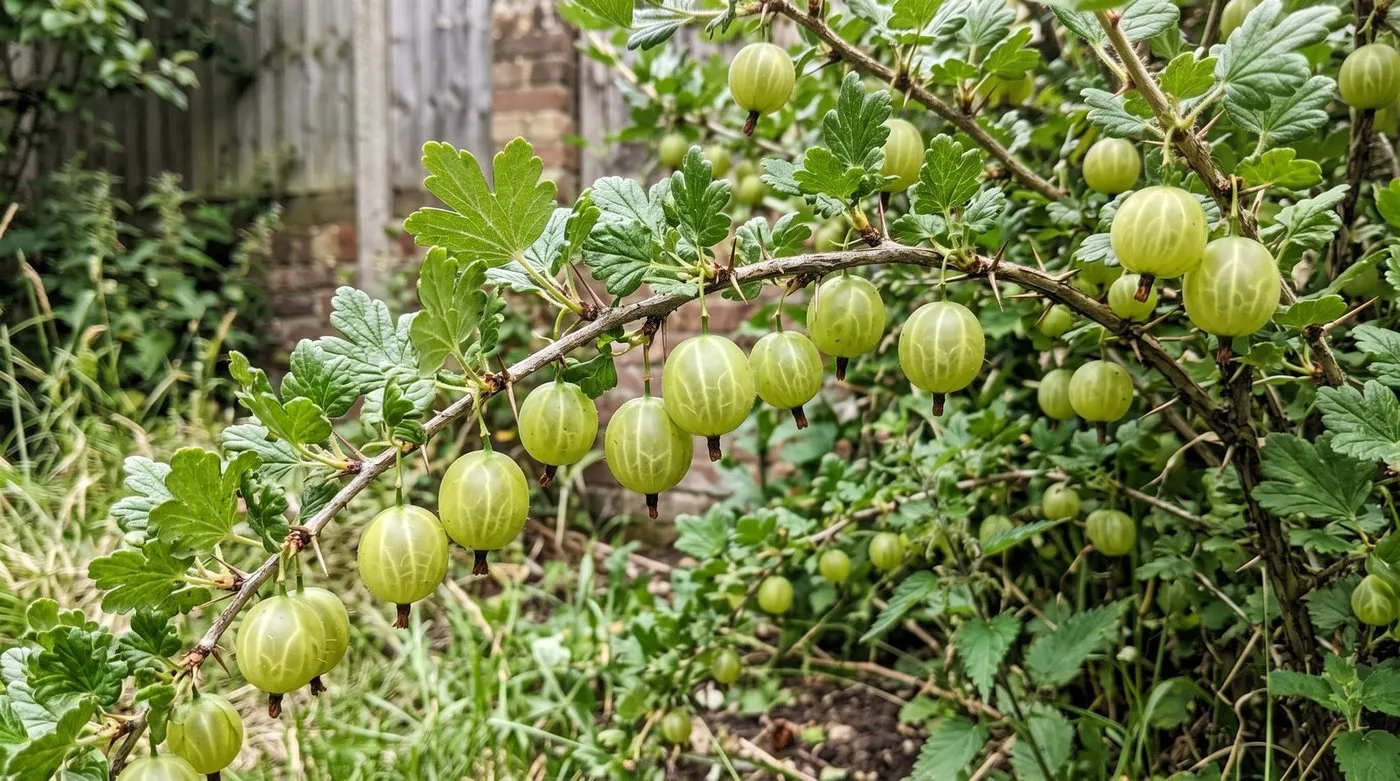 A mature gooseberry bush. The berries glow when the sun shines through them.
The most important thing to look for is mildew resistance. American gooseberry mildew is the main problem in UK gardens, and a resistant variety saves a lot of bother. The RHS gooseberry growing guide lists its current award winners.
Thorns are the other thing to think about. Old varieties are very spiky, which makes picking painful. Some newer ones have few thorns. For a thornless alternative, try the jostaberry, a gooseberry and blackcurrant cross.
Which variety should you grow?
| Variety | Colour | Use | Mildew resistance | Thorns |
|---|---|---|---|---|
| Invicta | Green | Cooking and eating | Very good | Thorny |
| Hinnonmaki Red | Red | Eating | Very good | Some |
| Careless | Green | Cooking | Poor | Thorny |
| Leveller | Yellow | Eating | Poor | Thorny |
| Pax | Red | Eating | Good | Almost none |
| Captivator | Red | Eating | Good | Almost none |
Invicta is the UK’s favourite. It gives heavy crops of big green berries and shrugs off mildew. Pick it green in June for cooking, or leave it to ripen in July for eating. Its only downside is the thorns.
Hinnonmaki Red is a great all-rounder, with rich, sweet red fruit and good disease resistance. It comes from Finland, so cold winters don’t bother it.
Leveller has yellow berries with a wonderful flavour. It is fussier, though, gets mildew more easily and crops less. Grow it if taste matters most and you don’t mind a bit of extra care.
Pax and Captivator are the kinder choices for your hands. Both are red dessert gooseberries with very few thorns. Pax usually crops more heavily.
Gardener’s tip: Grow two varieties if you can. Pick one green in June for cooking (Invicta) and leave the other to ripen in July for eating (Hinnonmaki Red). That’s two harvests from a small space.
Where to plant gooseberries
Gooseberries are happy in spots other fruits won’t tolerate. They’re one of the few that crop well in part shade. That makes them great for north-facing borders and shady walls, where strawberries or raspberries would sulk.
What they like
- Sun: at least four hours of direct light. Full sun gives sweeter dessert fruit, but part shade is fine for cooking types.
- Soil: fertile and well drained, slightly acid to neutral. They hate waterlogged ground.
- Shelter: strong wind damages flowers and knocks off fruit.
- Frost: they flower early, in March and April. Avoid low spots where frost settles, and throw fleece over the bushes on frosty nights.
Dig plenty of garden compost into heavy clay or thin sandy soil before planting. It helps drainage and holds moisture. A layer of compost or bark mulch each spring feeds the soil and keeps weeds down.
How to plant gooseberry bushes
When to plant
Plant bare-root bushes from November to March. They’re cheaper than potted plants, settle in quickly and come in more varieties. Potted plants can go in any time, but autumn is still best.
Planting method
- Soak bare-root plants in a bucket of water for a couple of hours
- Dig a hole twice as wide as the roots and just as deep
- Loosen the bottom of the hole with a fork
- Mix in a handful of blood, fish and bone
- Spread the roots out evenly
- Plant to the same depth as the soil mark on the stem
- Fill in, firm gently with your heel and water well
Spacing
- Bushes: 1.2-1.5m apart, rows 1.5m apart
- Cordons: 30cm apart, rows 1.5m apart
- Standards: 1.2m apart
Gooseberries are self-fertile, so one bush will fruit on its own. Growing two or more varieties stretches out your harvest.
Training methods: bush, cordon, and standard
You can grow gooseberries in a few shapes. Pick the one that suits your space.
Bush form
 Gooseberry cordons 30cm apart along a fence. Perfect for small gardens and narrow borders.
The usual way to grow them. Let the plant form an open goblet shape on a short clear stem of 15-20cm. This keeps branches off the ground, lets air through and makes picking easier. A grown bush takes up about 1.5m each way.
Cordon form
Cordons are brilliant for small gardens. A cordon is a single upright stem tied to a fence, wall or wires. At 30cm apart, you can fit six varieties along 1.8m of fence. Handy if you have a small garden or want to try a few kinds.
To train a cordon:
- Plant against a fence or wall with support wires at 60cm and 120cm
- Tie the main stem to an upright bamboo cane
- In June, cut all side shoots back to five leaves
- In winter, cut those side shoots back to two buds
- Let the main stem grow by about a third each year until it reaches the top wire
Standard (lollipop) form
A standard is a gooseberry grafted on top of a tall stem, making a lollipop-shaped mini tree about 1m high. They look lovely in borders and big pots, and the fruit hangs at waist height. They do cost more than a bush.
Monthly care calendar
Here’s the gooseberry year at a glance. Northern gardens may run a week or two behind.
| Month | What to do |
|---|---|
| December to February | Winter prune. Net against bullfinches. Plant bare-root bushes. |
| March | Mulch with compost. Fleece flowers on frosty nights. |
| April | Start checking under leaves for sawfly every week. |
| May | Thin the fruit when marble-sized. Use the thinnings for cooking. |
| June | Summer prune side shoots to five leaves. Pick cooking berries. Net ripening fruit. |
| July | Pick dessert berries when soft and sweet. |
| August | Keep an eye out for later sawfly. |
| September to October | Take hardwood cuttings. |
| November | Plant new bushes. |
Pruning gooseberry bushes
Winter pruning is the most important job of the year. A well-pruned bush gets less mildew, gives bigger fruit and is much easier to pick. As with blackberries and other soft fruit, an open, uncluttered shape is the goal.
Winter pruning (December to February)
Prune once the leaves have dropped and you can see the branches clearly.
- Remove dead, damaged and diseased branches first
- Cut out branches growing into the middle
- Remove low branches touching the ground
- Shorten side shoots to two buds
- Trim main branch tips by a third, to a bud facing outwards
- Aim for an open goblet with 8-10 main branches and a clear centre
The open shape lets sun and air reach every part of the bush. Good air flow is the best defence against mildew.
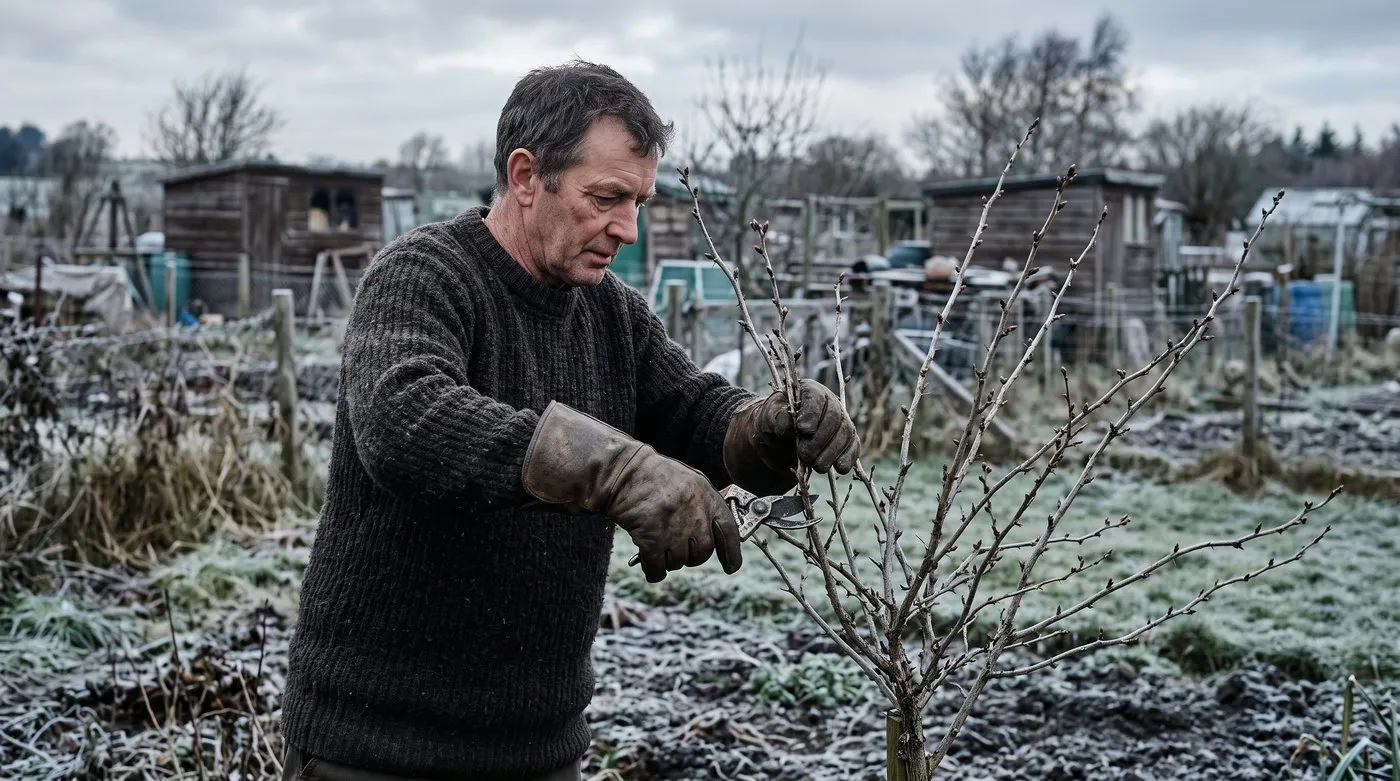
Aim for an open goblet with a clear centre. Letting air through is the best defence against mildew, and it makes picking far less prickly.
Summer pruning (June)
Optional for bushes but a must for cordons. Cut new side shoots back to five leaves. It keeps cordons tidy and lets sun reach the ripening fruit.
Gardener’s tip: Wear thick leather gloves when pruning spiky varieties. The thorns are as sharp as rose thorns. Pax and Captivator are much kinder on the hands.
Thinning fruit for bigger berries
Thinning in late May is a simple trick that makes a big difference. When the berries are marble-sized, pick off every other one. Leave the rest about 5cm apart along each branch.
 Thinning gooseberries in May. Cook the thinnings and leave the rest to swell.
Don’t waste the thinnings. These firm, tart green berries are perfect for fool, crumble and jam. They’re rich in pectin, so jam sets nicely.
The berries left on the bush grow much bigger. By July, dessert types like Hinnonmaki Red and Leveller turn soft and sweet. So you get two harvests: a cooking crop in May and a dessert crop in July.
Pests and diseases
American gooseberry mildew
The main gooseberry disease in the UK. It shows up as a white powdery coating on shoot tips and fruit from late spring, later turning brown and felty. Badly affected fruit isn’t worth eating.
How to keep it away:
- Grow resistant varieties (Invicta, Hinnonmaki Red, Pax)
- Prune to an open shape so air can flow
- Go easy on high-nitrogen feeds, which make soft growth that mildew loves
- Cut off affected shoot tips as soon as you see them
- Mulch with compost rather than fresh manure
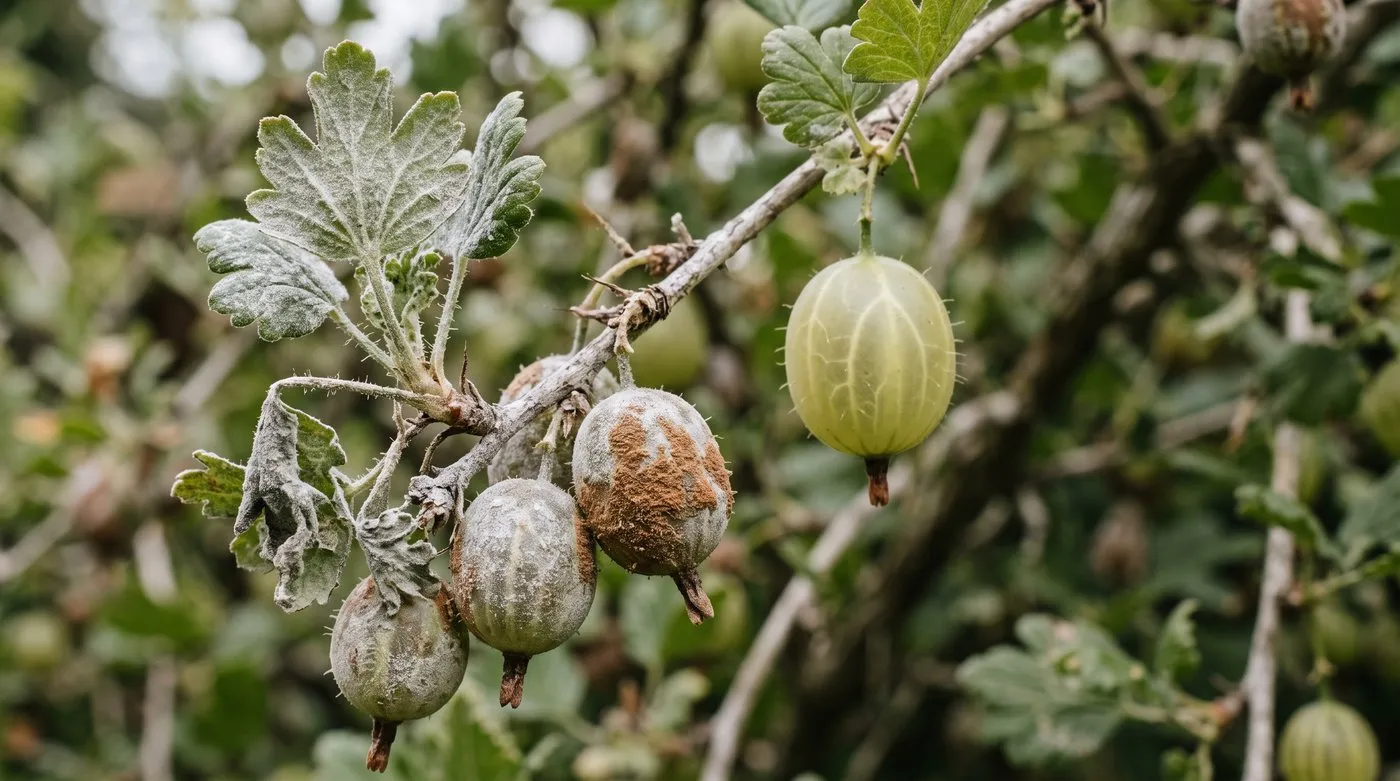
A white coating that turns brown and felty is American gooseberry mildew. Cut off affected tips quickly and go easy on nitrogen feeds.
Gooseberry sawfly
Gooseberry sawfly is the pest to watch. Its pale green caterpillars appear under the leaves from April. They start in the middle of the bush and can strip it to bare ribs in days.
What to do:
- Check under the leaves weekly from April. The caterpillars are well camouflaged.
- Pick them off by hand. This works well for small numbers.
- There can be several generations a year, so keep checking until September.
- For a heavy attack, use an authorised insecticide as the label directs, and don’t spray open flowers.
Bird damage
Bullfinches eat the buds in late winter and early spring, which takes away next summer’s fruit. Netting is the only reliable fix. Net from December to April, then again from June to keep blackbirds and thrushes off the ripening berries.
Other problems
- Capsid bugs make small ragged holes in young leaves and can leave fruit a bit misshapen. It’s mostly cosmetic.
- Grey mould can hit fruit in wet summers. Prune to let air in.
- Leaf spot causes brown spots and early leaf drop. Rake up fallen leaves in autumn and feed the bush well.
Harvesting and using gooseberries
When to pick
Picking runs from late May to July, depending on variety, where you live and what you want them for. Northern gardens are usually a couple of weeks later.
 Freshly picked gooseberries. Green ones for cooking, red and sweet ones for eating fresh.
- For cooking: pick when firm and green, from late May to June.
- For eating: leave them until soft, fully coloured and sweet, around mid-July. Taste one to check.
How much will you get?
A healthy, mature bush gives a generous crop. Cordons give less each, but because they’re so close together you get plenty from a short stretch of fence.
Storing and using
Fresh gooseberries keep for about a week in the fridge. To freeze, spread them on a tray until solid, then bag them up. They hold their shape well for crumbles and pies.
Try gooseberry fool, crumble, jam, chutney with elderflower, or a sharp gooseberry sauce with mackerel. The tang of green gooseberries goes beautifully with oily fish.
Common mistakes when growing gooseberries
A few easy slip-ups catch people out. Dodge these and your bushes will thank you.
1. Skipping the annual prune
Without pruning, the bush turns into a thorny tangle. Air can’t get in, mildew takes hold and picking is a misery. Prune every winter.
2. Ignoring sawfly until it is too late
Sawfly caterpillars work fast. By the time you notice, half the leaves can be gone. Get into the habit of turning over a few leaves each time you pass the bush from April.
3. Planting in a waterlogged spot
Gooseberries cope with most soils but not soggy ones. Wet roots rot. On heavy clay, plant on a slight mound or in a raised bed with grit and compost.
4. Feeding too much nitrogen
High-nitrogen feeds and fresh manure give lots of soft leafy growth, which is just what mildew loves. Use well-rotted compost instead. A spring sprinkle of sulphate of potash helps fruiting.
5. Not netting against birds
Bullfinches take buds in spring and blackbirds take fruit in summer. Without a net you can lose a lot of your crop.
Growing gooseberries in containers
Gooseberries grow well in big pots, so they’re great for patios and balconies. Standards look especially smart in a pot, with fruit at a handy height.
Use a pot at least 40cm wide and 40cm deep. Fill with peat-free multi-purpose compost and mix in some perlite or grit. Feed every fortnight with a high-potash liquid feed from flowering to harvest. Water often, as pots dry out quickly. Refresh the compost every two or three years. Potted bushes give smaller crops than those in the ground, but the fruit is just as good.
Our blueberry growing guide covers another soft fruit that loves a pot.
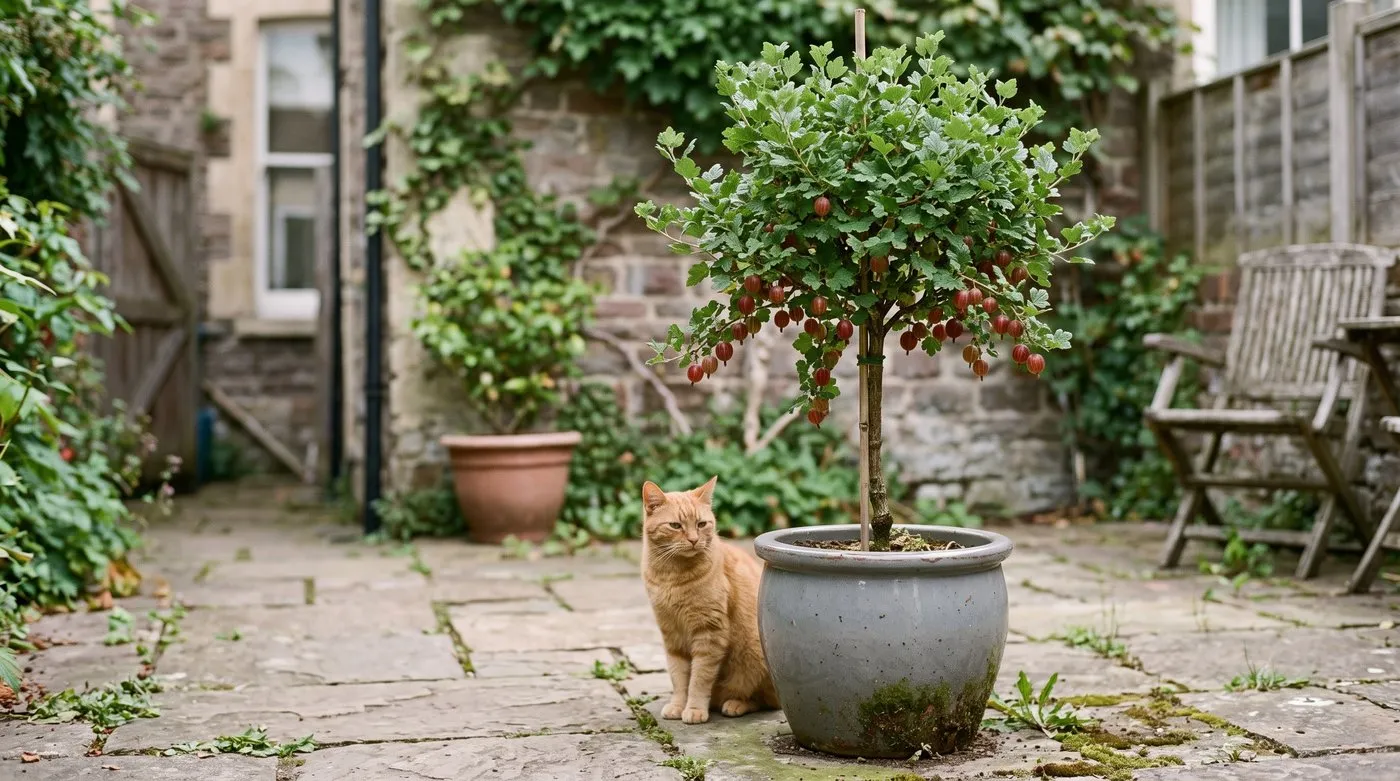
Standards look smart in a pot and hold the fruit at a handy height. Water often, as pots dry out quickly in summer.
Propagation
Gooseberries are easy to grow from hardwood cuttings in September or October.
- Pick a healthy, straight shoot from this year, about 30cm long
- Cut just below a bud at the bottom and just above a bud at the top
- Rub off all buds except the top three or four, to give a clear stem
- Push the cutting 15cm deep into gritty soil in a sheltered spot
- Leave it for a year. By next autumn it should have roots and new shoots.
- Move it to its final spot the following November
It’s free and the easiest way to get more bushes.
Now you’ve got the hang of gooseberries, read our guide on growing redcurrants and blackcurrants to fill your fruit garden with harvests from June to September.
Frequently asked questions
For a heavier crop, see our guide to feeding fruit bushes.
When should I plant gooseberry bushes?
Plant bare-root bushes from November to March, while they’re dormant. Pot-grown plants can go in any time if you keep them watered. Autumn is best, as the roots get longest to settle. Don’t plant into soggy or frozen ground, and mix in some compost first.
Do gooseberries need full sun?
No, gooseberries are happy in part shade. They’re one of the few fruits that crop well in a shadier spot, and cordons can even go on a north-facing fence. Full sun does make dessert berries sweeter. Wherever you plant, give them good air flow to help keep mildew away.
How far apart should I plant gooseberry bushes?
Space bushes about 1.2-1.5m apart, with rows 1.5m apart. Cordons need only 30-45cm each, and standards about 1.2m. Don’t squeeze them closer. Crowded bushes get more mildew and are harder to pick.
Why are my gooseberry leaves being stripped?
It’s almost always gooseberry sawfly caterpillars. These pale green, black-spotted larvae can strip a bush in days. From April, check under the leaves in the middle of the bush and pick them off by hand. For a bad attack, use an authorised insecticide as the label says, and never spray open flowers.
Can I grow gooseberries in pots?
Yes, gooseberries grow well in pots. Choose one at least 40cm across with drainage holes. Fill with peat-free compost mixed with some grit. Water often, as pots dry out quickly, and give a high-potash feed from flowering. Cordons and standards suit pots especially well.
What is the white powder on my gooseberry bush?
It’s usually American gooseberry mildew, a fungal disease. It coats shoots and fruit in white that later turns brown and felty. Prune to an open shape, cut out affected shoots quickly and go easy on nitrogen feed. Resistant varieties such as ‘Invicta’ and ‘Hinnonmäki Red’ make a big difference.
When do you harvest gooseberries?
Pick from late May to July, depending on variety and use. Take some firm green berries early for cooking, which also thins the crop. Leave the rest to swell. Dessert types are ready when soft, full-sized and coloured, and sweet enough to eat off the bush.
How do I prune a gooseberry bush?
Prune in winter while the bush is dormant. Cut side shoots back to one or two buds. Take out dead, crossing and inward-growing branches. Aim for an open goblet shape with a clear centre, which helps air flow and picking. A summer trim of side shoots also helps against mildew.
Our team produces practical UK gardening guidance from source research, contributor records and established horticultural practice. Editorial standards are overseen by Matt W.


